
Review · HIROSHIMA
An Amazing set of Cultural experience: Kimono, Tea Ceremony and Calligraphy
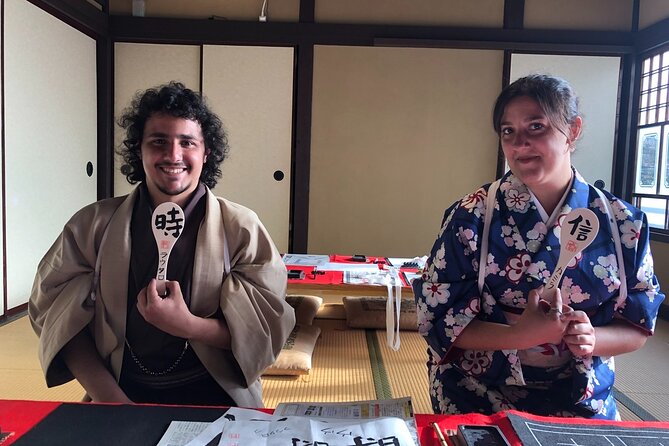
Kimono turns a temple visit into a memory. I like the setting at Tokujuji Temple, where dressing up, tea, and calligraphy feel tied to the place rather than staged in a hotel room. I also like the small group limit of eight, plus the generous photo-taking that helps you keep the day long after Miyajima fades from view.
The main consideration is time. The experience is advertised at about 90 minutes, while the activity details allow roughly two hours, so you should leave room in your Miyajima schedule. The $132.14 price is not cheap, but it covers three hands-on cultural activities in a historic setting, not just a quick costume photo.
Key points to know before you go
- Five minutes from the Miyajima ferry port: Follow the path toward Tokujuji Temple to reach Okeiko Japan Miyajima.
- Three connected activities: You dress in kimono, prepare matcha, and practice Japanese calligraphy.
- Small groups make a difference: The maximum group size is eight, allowing more personal help with clothing and activities.
- Photos are a major part of the visit: Staff take many pictures, including family and group shots, though one booking noted trouble with the photo-sharing app.
- Morning and afternoon times are available: This gives you room to fit the activity around your Miyajima plans.
- It suits children from age six: Most people can participate, and the experience has been enjoyed by men, women, families, and mixed-age groups.
Why this Miyajima cultural experience works
Miyajima is famous for its shrine, friendly deer, waterfront views, and red torii gate. Those sights are worth your time, but the island can also become a quick circuit of photo stops. Okeiko Japan gives you a slower hour or two, with a chance to handle traditional objects and learn how a few Japanese arts work.
The setting matters. You enter a historic Zen temple rather than a generic activity studio. That does not turn you into a tea master or calligrapher in one visit, but it gives the lessons a fitting sense of place.
I especially like the combination of activities. Kimono is visual and social. Tea ceremony is quiet and precise. Calligraphy is hands-on and slightly humbling. Together, they give you three different ways to approach Japanese culture.
The experience has a strong hospitality element, too. Staff help select the kimono and accessories, dress you, guide the ceremony, and take photos. Several visitors appreciated the relaxed atmosphere and the kindness of the women running the activity. That warmth matters when you are trying something unfamiliar.
More Tea and Calligraphy Workshops in Japan
- Kyoto: Tea Ceremony Meditation – Make Matcha with Tea Master
★ 4.8 · 406 reviews - Osaka: Tea Ceremony, Calligraphy, and Kimono Experience
★ 4.9 · 130 reviews - Tokyo: Practicing Zen with a Japanese Tea Ceremony
★ 4.7 · 105 reviews
Finding Okeiko Japan from the ferry port
The meeting point is Okeiko Japan Miyajima, at 741-1 Miyajimacho, Hatsukaichi, Hiroshima 739-0588. It is described as a five-minute walk from the Miyajima ferry port in the direction of Tokujuji.
That short walk is helpful, especially if you are fitting this between the ferry and other island sights. Still, Miyajima days can become crowded with sightseeing, meals, photos, and ferry timing. I would not schedule your appointment too tightly against another fixed activity.
The experience begins and ends at the same point. You will need to make your own way to Miyajima, and the activity does not remove the need to plan your ferry journey. Morning and afternoon start times give you useful flexibility, so pick the slot that leaves space for the sights you care about most.
Since the activity has a maximum of eight participants, the room should feel more personal than a large group demonstration. Small numbers are useful here because kimono dressing and calligraphy both benefit from individual guidance.
Choosing and wearing a traditional kimono
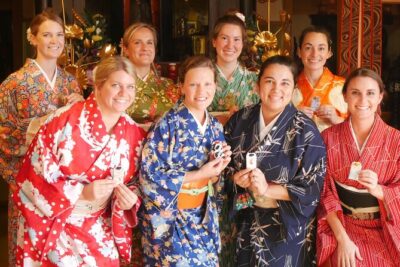
The kimono portion comes first. You choose from the available garments in your size, with help from the staff. The outfit may include the kimono, obi, cords, socks, sandals, and a decorative flower or similar accessory, based on the details described by people who took part.
You do not need to know how to dress yourself. Staff handle the complicated parts and make sure the outfit is properly arranged. That is a real advantage because kimono dressing involves more layers and tying than a quick costume change suggests.
The selection appears to include different colors and patterns, though your exact choices depend on what is available in your size. One person worried about fitting into the clothing and was pleased to find a suitable size. If fit is a concern, keep in mind that the activity states most people can participate, but it does not publish a full size chart.
This is a dress-up moment, but it is not only about clothing. You get a little sense of how formal Japanese dress changes posture and movement. The obi keeps your body upright, the sandals alter your stride, and even a short walk can make you aware of the outfit in a new way.
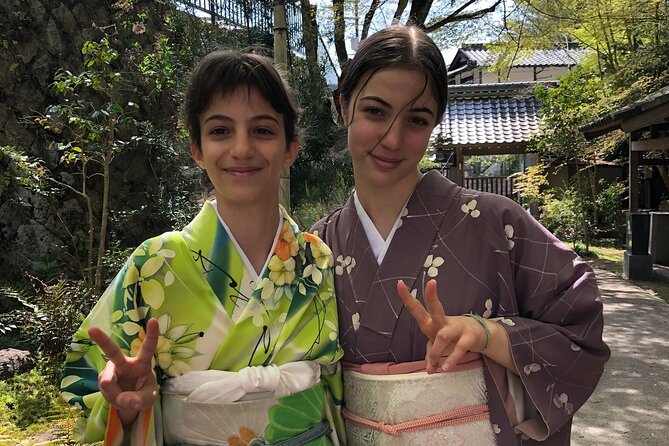
The kimono also creates a natural opening for photographs. Staff take pictures during the activity and in the temple grounds. That service received some of the strongest praise, especially for family groups and couples who otherwise might struggle to get good pictures of everyone together.
One practical point: if you are wearing a kimono, you may not want to plan a long hike immediately afterward. The activity itself is manageable, but the clothing is designed for appearance and tradition rather than fast walking.
The tea ceremony, from watching to whisking
The tea portion begins with a demonstration. You watch the basic movements and manners before trying them yourself. That order helps because the ceremony can look simple at first, but the small gestures have purpose and timing.
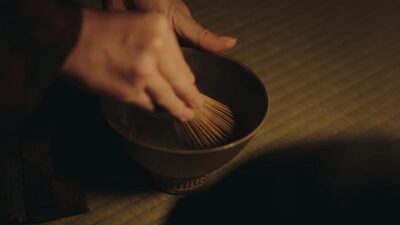
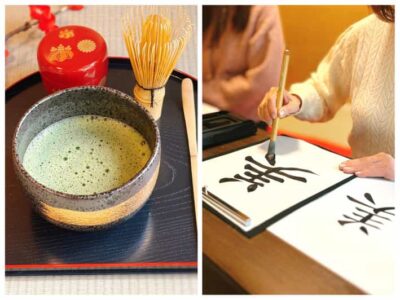
You learn to prepare your own matcha. The hands-on part gives the ceremony more meaning than simply sipping a cup prepared by someone else. You get to whisk the tea and pay attention to the tools, movements, and etiquette.
The activity is presented in English, and one participant specifically praised the clarity of the explanation. That is important because a tea ceremony can otherwise become a pretty performance with little context. Here, you get enough guidance to understand what you are doing, even if you leave with only a beginner’s grasp.
The tea bowls are described as being made by local artisans. That detail adds a tactile connection to the experience. You are not just drinking green tea from a standard cup. You are handling an object chosen for a traditional setting and learning to notice its role.
The pace seems to balance formality with participation. You watch first, then make tea yourself. That makes the ceremony suitable for people who want cultural context but do not want to sit silently through a long formal presentation.
Young children may need help staying attentive during the quieter parts. The minimum age is six, and most people can participate, but the tea ceremony has a calm rhythm that may appeal more to older children and adults than to very restless youngsters.
More Tea Ceremonies in Japan:
- Kyoto: Tea Ceremony in a Traditional Tea House in Kiyomizu
★ 4.9 · 3,519 reviews - Kyoto: Tea Ceremony Ju-An at Jotokuji Temple
★ 4.9 · 3,207 reviews - Kyoto: 45-Minute Tea Ceremony Lesson Experience
★ 4.3 · 2,378 reviews - Osaka: Tea Ceremony Experience
★ 4.9 · 1,426 reviews
Calligraphy that looks easier than it is
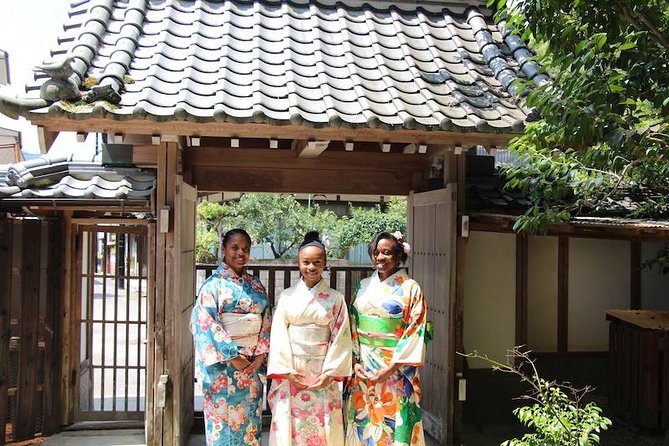
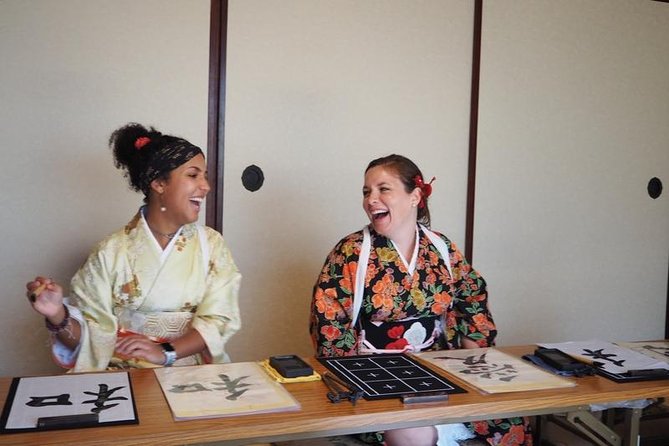
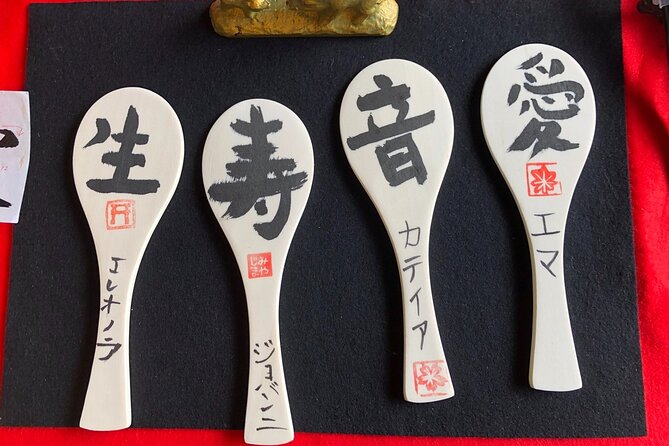
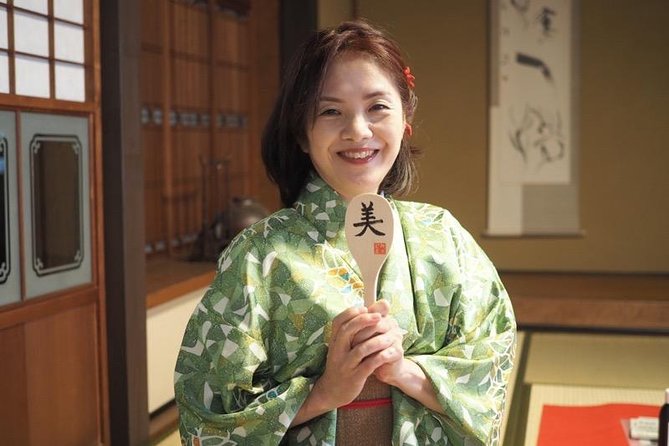
Calligraphy follows the tea activity. You practice Japanese characters, including kanji, and may also write your name. The brushwork looks straightforward until you try to control the ink, pressure, and stroke order.
That small challenge is part of the fun. You will not produce museum-quality calligraphy in one session, but you will gain respect for the control behind even a simple character. The activity gives you something to do with your hands, rather than asking you to simply watch another demonstration.
One particularly nice detail is the souvenir made from the calligraphy practice. Participants described writing on wooden spoons, which were then beautifully wrapped. That gives you a small, useful reminder of the lesson instead of another paper sheet that might get bent in your luggage.
The calligraphy room also changes the energy of the experience. After the quiet concentration of tea, writing characters feels more playful and personal. Names can be easier to connect with than unfamiliar kanji, while the traditional characters offer a glimpse into a writing system that takes years to master.
If you have poor handwriting, do not worry. This is an introduction, not a test. The point is to try the brush, learn a few basic ideas, and enjoy the process.
Photos, temple grounds, and the human touch
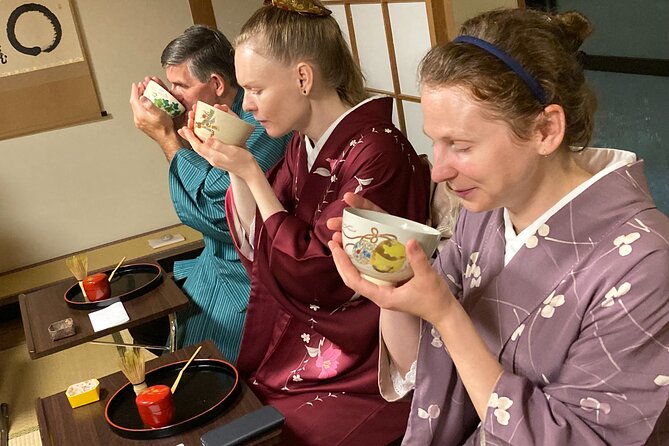
The photography is more than a quick snapshot at the end. Staff take pictures throughout the visit, including time in the temple grounds. That allows you to keep images of the kimono, the tea activity, and the people in your group.
This is especially valuable for families. One person who arrived early because of the heat was allowed to wait comfortably, then enjoyed the large kimono selection and the many photos taken during the session. The attention to pictures seems to be part of the service, not an afterthought.
There is also a shop with cultural items. The information provided does not specify what you can buy or how much it costs, so I would treat it as an optional browse rather than a promised part of the tour.
One small caution concerns photo delivery. A booking noted trouble with the app used to share pictures. That does not mean you will have a problem, but it is sensible to confirm how your photographs will be delivered before you leave.
The staff’s manner is one of the clearest strengths. Descriptions repeatedly point to a warm, relaxed welcome and patient help with dressing and activities. That makes a big difference when you are handling formal clothing, unfamiliar tea etiquette, and a brush for the first time.
Is $132.14 a fair price?
At $132.14 per person, this is a premium short activity. You are paying more than you would for a quick temple visit or a simple tea tasting. The value depends on how much you want personal instruction, dressing assistance, cultural context, and photographs.
I think the price makes more sense for couples, families, and first-time visitors who want one organized cultural activity during a Miyajima day. The group size is capped at eight, and the session combines several elements that would be difficult to arrange independently.
You are not only renting a kimono. You are receiving help with the outfit, learning tea preparation, practicing calligraphy, spending time in a temple setting, and getting photos taken. Those pieces add up.
The value is less convincing if you mainly want a cheap costume rental or a very long formal tea ceremony. The activity is short, and the tea lesson is part of a wider program rather than the entire focus. You should also account for your transport to Miyajima when calculating the full cost of the outing.
The strongest value comes from the variety. In about 90 minutes to two hours, you get a taste of three traditions without giving up your whole day on the island.
Who will enjoy this most?
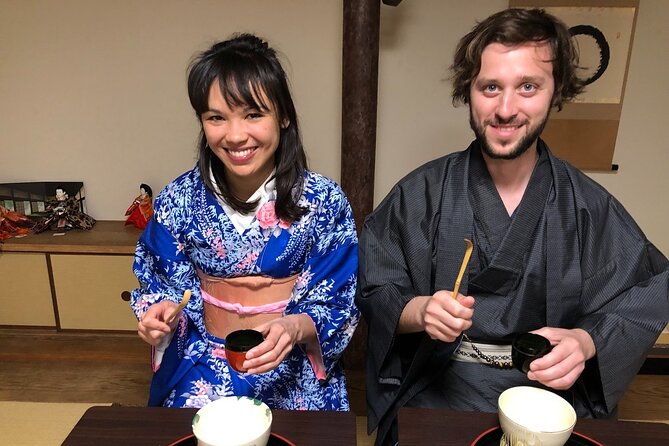
I would recommend it to families with children aged six and older, couples, friends, and solo participants who enjoy guided cultural activities. The small group format should help people who prefer personal attention over a large demonstration.
It is also a good choice if you want photos in traditional clothing. The staff help with selection, dressing, accessories, and pictures, so you do not need to manage the outfit alone.
Men should not assume this is only a women’s activity. A group that included men enjoyed the experience, and the combination of tea and calligraphy gives it more substance than a simple kimono photo stop.
This may also suit you after a serious visit in Hiroshima. One German-speaking participant described the activity as a welcome period of calm reflection after the heavier parts of the city’s history. The temple setting and quiet ceremony can provide a change of pace without leaving the region.
I would be more cautious about booking it for anyone who dislikes structured activities, dressing up, or taking photos. The staff clearly make the mood friendly, but the program does revolve around participation. You are expected to put on the clothing, try the tea, and practice the writing.
Timing, age, and cancellation details
The experience offers morning and afternoon start times. That is useful because you can place it before or after your main Miyajima sightseeing, though you should allow extra time around the appointment rather than rushing from one activity to another.
The stated duration is approximately one hour and 30 minutes, while the activity information also gives a two-hour estimate. I would plan for the longer window. That allows breathing room for dressing, photographs, and transitions between tea and calligraphy.
The minimum age is six, and most people can participate. The activity is near public transportation, uses a mobile ticket, and confirmation is provided at booking.
Free cancellation is available if you cancel at least 24 hours before the local start time. Cancellations or changes made less than 24 hours ahead are not refunded or accepted, so check your Miyajima plans before committing.
Should you book Okeiko Japan?
Book it if you want a friendly, photo-filled introduction to Japanese culture in a fitting temple setting. The best parts are the personal help with kimono dressing, the chance to whisk your own matcha, the surprisingly tricky calligraphy, and the care put into taking pictures.
I would especially choose it for a first visit to Miyajima when you want more than sightseeing but do not want a full-day class. The $132.14 price is substantial, yet the small group and three-part format give it real value for the right person.
Skip it if your priority is a long tea ceremony, independent exploration, or keeping costs low. Otherwise, this is a well-balanced way to slow down, try something new, and leave Miyajima with more than photographs of the famous shrine.
FAQ
Where does the experience begin?
It begins at Okeiko Japan Miyajima, located at 741-1 Miyajimacho, Hatsukaichi, Hiroshima 739-0588, Japan. The meeting point is about a five-minute walk from the Miyajima ferry port toward Tokujuji Temple.
Where does the experience end?
The activity ends back at the same meeting point, Okeiko Japan Miyajima.
How long does the experience last?
The duration is listed as approximately one hour and 30 minutes. The activity details also allow about two hours, so planning for up to two hours is sensible.
What activities are included?
You learn to wear a traditional kimono, take part in a tea ceremony and prepare matcha, and practice Japanese calligraphy.
Is there an age requirement?
The minimum age is six. Most people can participate.
How many people can join?
The activity has a maximum of eight participants.
Are morning and afternoon start times available?
Yes. Both morning and afternoon start times are offered, giving you flexibility when arranging your Miyajima visit.
More Kimono and Tea Ceremonies in Japan
- Kimono Tea Ceremony at Kyoto Maikoya, NISHIKI
★ 5.0 · 911 reviews - Kimono Tea Ceremony at Tokyo, Asakusa Maikoya
★ 5.0 · 638 reviews - Kyoto: Kimono Tea Ceremony at Orizuruya Gion
★ 4.9 · 618 reviews - KYOTO Tea Ceremony with kimono near by Imamiya Jinjya Shrine
★ 5.0 · 343 reviews
Just added around Japan
- Yokohama : Tea Ceremony with Sweets and Souvenir★ 5.0 · 5 reviews
- Walking Tour: Yanaka,Nezu& Sendagi: Tea Ceremony & Old Tokyo★ 5.0 · 3 reviews
- Visit local home for music and tea ceremony near Disney★ 4.9 · 13 reviews
- Trip to Kamakura & Enoshima: Shrines, Seaside, Temples &Tea★ 5.0 · 11 reviews
- Yokohama: Sushi & Gyoza Cooking with Matcha & GreenTea Experience★ 5.0 · 3 reviews
- Kyoto tea town for matcha lovers★ 5.0 · 16 reviews
- Uji: Private immersion into Kyoto’s tea and reglious culture★ 5.0 · 17 reviews
- Uji Tea Ceremony and UNESCO Heritage Walking Tour★ 5.0 · 20 reviews
Tea and Calligraphy Workshops in Japan, compared.
Tea Ceremony Meditation – Make Matcha with Tea Master
Read our review →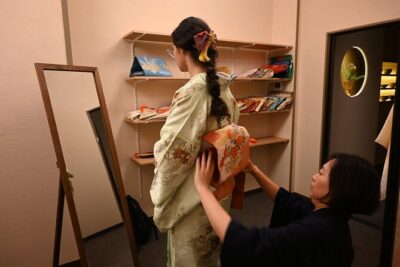
Tea Ceremony, Calligraphy, and Kimono Experience
Read our review →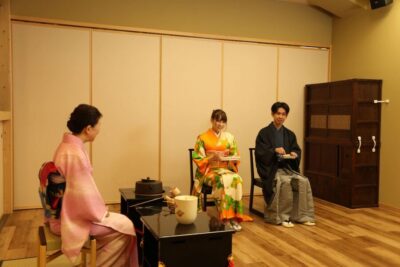
Cultural Activities :Kimono, tea ceremony, Calligraphy and Amulet
Read our review →
Samurai dress-up and shows, plus Tea Ceremony & Calligraphy
Read our review →
Premium Kimono Dressing, Tea Ceremony, Calligraphy, Samurai show
Read our review →Browse the lists this tour appears in