
Review · OSAKA
Osaka: Tea Ceremony Experience
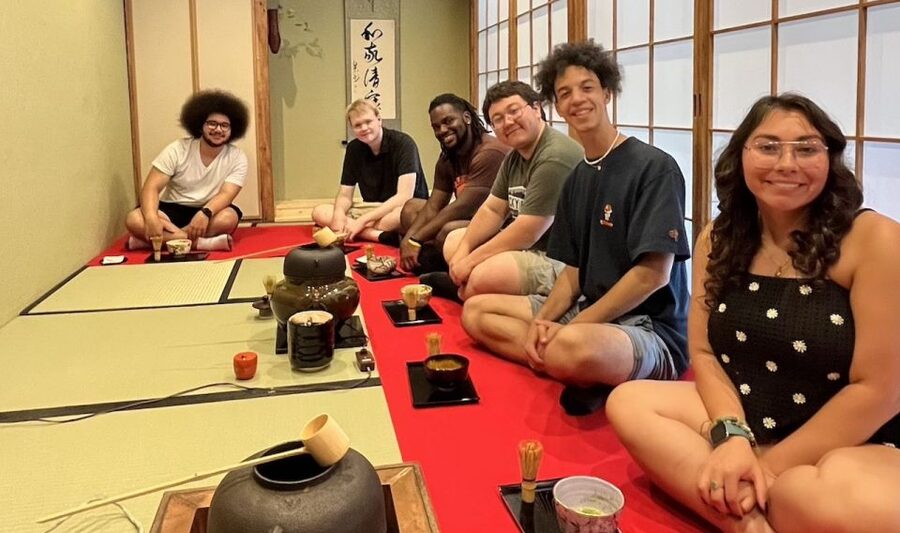
Slow down for 45 minutes in Osaka. This tea ceremony offers a gentle introduction to Japanese culture, with English-speaking instructors in kimono, a traditional tatami room, and a chance to whisk your own matcha. I especially like the hands-on preparation and the careful explanations of each gesture. The seasonal sweets also make the strong green tea easier to appreciate. The main consideration is practical: the address can be difficult to find, and you sit on the floor for much of the experience.
At $25 per person, this is a good-value cultural activity for a short break from Osaka sightseeing. The instructors have more than 10 years of tea ceremony experience, and hosts such as Yuki, Akiko, Kazu, Mayumi, Kana, and Hise have been praised for their warmth and clear English. You should arrive early, but not so early that you are left waiting outside with nowhere to sit.
Key points at a glance
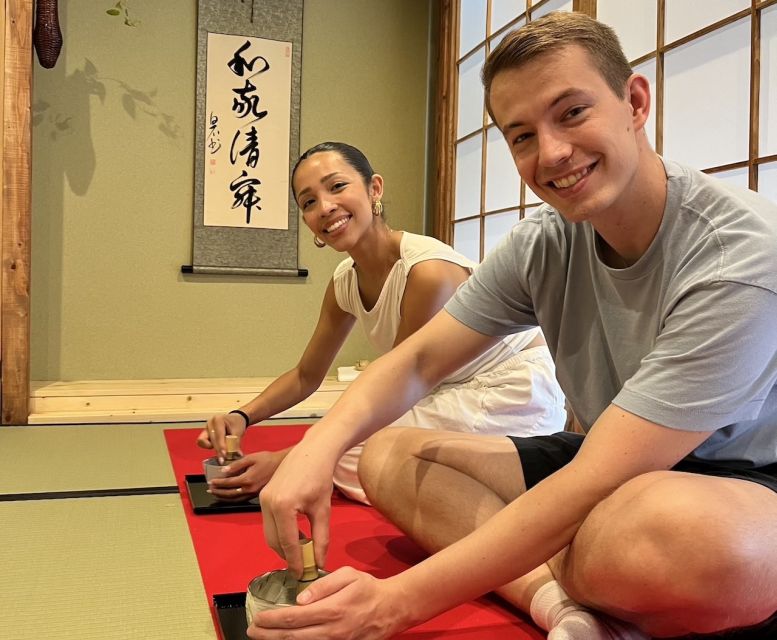
- Make your own matcha: You use authentic tea tools after watching a full demonstration.
- Learn the meaning behind the ritual: The instructor explains the history, manners, gestures, and symbolism of tea preparation.
- Enjoy a calm tatami setting: The quiet room provides a welcome pause from the busy streets around Dotonbori.
- Taste traditional sweets: Seasonal Japanese confections are served with the tea and help balance matcha’s earthy bitterness.
- Expect clear English guidance: The hosts speak English and patiently answer questions throughout the session.
- Plan your arrival carefully: The experience is on the second floor at 1-5-26 Dotonbori, Higashi, Chuo Ward, Osaka.
Why this short Osaka activity works
Osaka is famous for food, bright signs, shopping, and late-night energy. A tea ceremony gives you a very different side of the city. For 45 minutes, the pace becomes measured and quiet. Every movement has a purpose, from handling the tea bowl to whisking the powdered tea.
I like this experience because it does not expect you to understand Japanese customs before you arrive. The instructors explain the basic manners in English, then show you how the ceremony works. You are not simply watching a performance. You get to prepare matcha yourself and drink what you make.
The length is another advantage. A full cultural workshop can take several hours and may be hard to fit into a packed Osaka schedule. This one works well before lunch, between Dotonbori stops, or as a calm finish to a busy afternoon.
Still, 45 minutes means this is an introduction, not a full study of Japanese tea culture. You will learn the basic ideas and enjoy a hands-on demonstration, but you will not become a tea master in one sitting. That is a fair trade for the modest price and short time commitment.
More Tea Ceremonies in Osaka
- Tea Ceremony Experience in Osaka Doutonbori
★ 5.0 · 754 reviews - Osaka: Tea Ceremony, Calligraphy, and Kimono Experience
★ 4.9 · 130 reviews - Osaka: Japanese Traditional Sweets Making and Tea Ceremony
★ 4.7 · 118 reviews
Finding the second-floor tea room
The meeting point is in the Dotonbori area at:
大阪市中央区道頓堀1丁目東5-26
The tea room is on the second floor. Use Google Maps and search for tea ceremony osaka the osaka, then check the map carefully before setting out. The supplied coordinates are 34.66885079999999, 135.5063291.
This is the part of the experience that deserves the most planning. One visitor found the location hard to locate and advised arriving early, but also noted that there is nowhere to sit if you arrive far too early. I would allow extra time to find the entrance, especially if you are navigating Osaka’s busy streets for the first time.
Do not treat this as a place to wander into at the last second. The hosts ask you to arrive with plenty of time because occasional late arrivals or missed meetings can cause problems. Save the address and coordinates before leaving your hotel, and keep your phone ready for map directions.
The setting near Dotonbori is useful for sightseeing. You can combine the ceremony with the area’s restaurants, canals, shops, and bright evening signs. The tea room itself offers a quiet contrast to what is happening outside.
A warm welcome in a traditional room
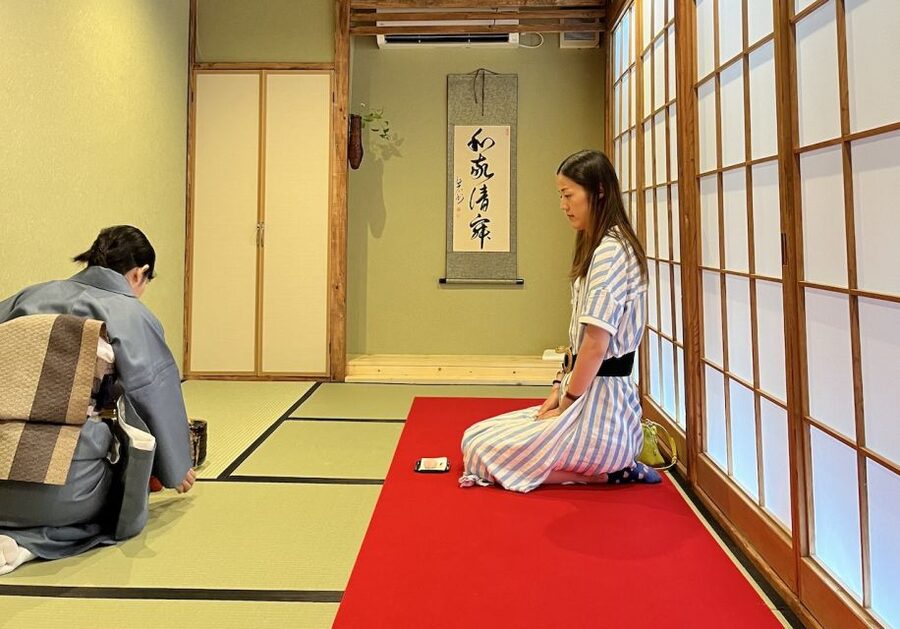
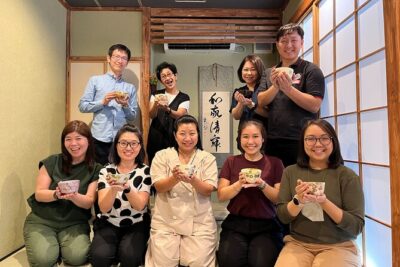
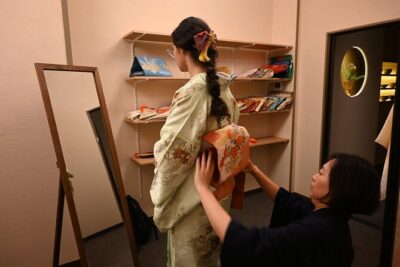
When you arrive, you are welcomed into a traditional Japanese room with tatami flooring. The instructors wear kimono, which adds a visual sense of occasion without making the session feel stiff or overly formal.
The opening explanation covers the meaning and history of the tea ceremony. This matters because the ritual can seem mysterious if you only watch the movements. Once the instructor explains why the tools, gestures, and manners matter, the ceremony becomes easier to follow.
The English guidance is one of the strongest features. Hosts including Yuki, Akiko, Kazu, Mayumi, and Kana have been praised for speaking clearly and taking time with questions. The tone appears friendly rather than academic, so you do not need previous knowledge of Japanese customs.
You should expect to sit on the floor for much of the experience. One visitor specifically noted that the session involved sitting on the floor for about an hour, which is slightly longer than the advertised 45 minutes in that particular case. If floor sitting is uncomfortable for you, this is worth considering before you book.
The rules are simple but important. Food from outside is not allowed, and the activity is intended to be quiet. Jumping, loud noise, baby strollers, and baby carriages are not permitted. These restrictions fit the peaceful nature of the room, but they may make the activity less suitable for very young children.
Watching the tea ceremony demonstration
After the introduction, the instructor performs the tea ceremony. Watch the order of the movements closely. The host shows how to handle the tea tools, prepare the bowl, and observe basic manners when tea is served.
The demonstration is valuable because it gives you a pattern to follow before you try the process yourself. You can focus on the details without worrying about making a mistake. The hosts are there to guide you, not test you.
The ceremony also gives you a feel for the care involved in preparing matcha. The bowl, scoop, whisk, and other tools are not treated as random kitchen equipment. Their handling forms part of the experience, and the instructor explains what you are doing as the demonstration continues.
Several hosts have been praised for making the ritual calm and easy to understand. Kazu, for example, explained the meaning of each part of the ceremony and even discussed the significance of the tea bowls. That kind of detail helps turn a pretty display into a cultural lesson.
Do not expect a silent, highly formal ceremony with no chance to interact. The format is designed for visitors, and the host speaks to you in English. You can ask questions and follow along at a comfortable pace.
Same place, a different pot:
- Matcha Making Class in Osaka with Authentic Japanese Sweets Set
★ 5.0 · 509 reviews - Osaka: Matcha Making Experience with Japanese Sweets
★ 5.0 · 146 reviews - Osaka Temple Cool Foot Bath & Matcha Experience〈45min〉
★ 4.9 · 82 reviews - Samurai Show, Tea Ceremony, Japanese Traditional Activities
★ 5.0 · 56 reviews
Making matcha with traditional tools
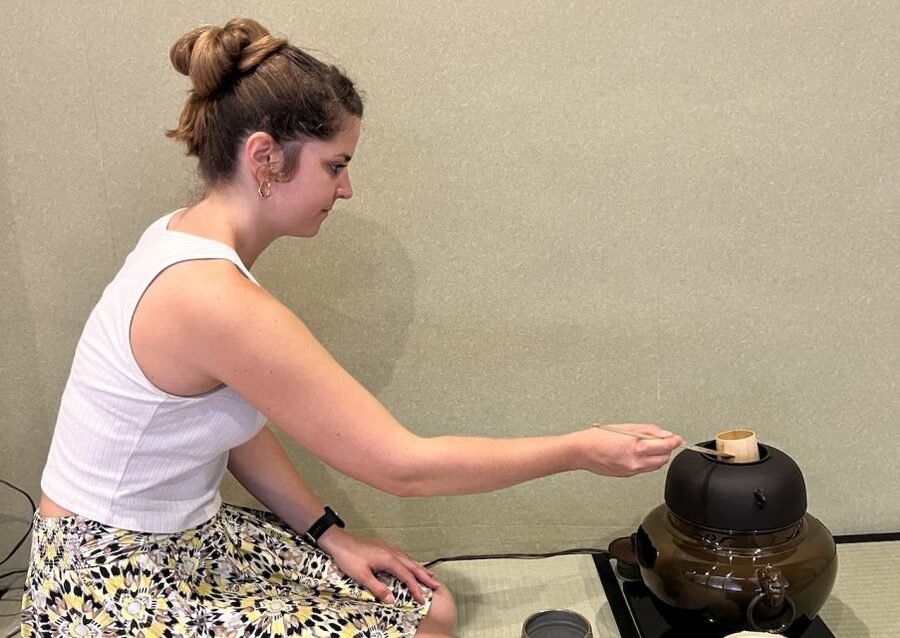
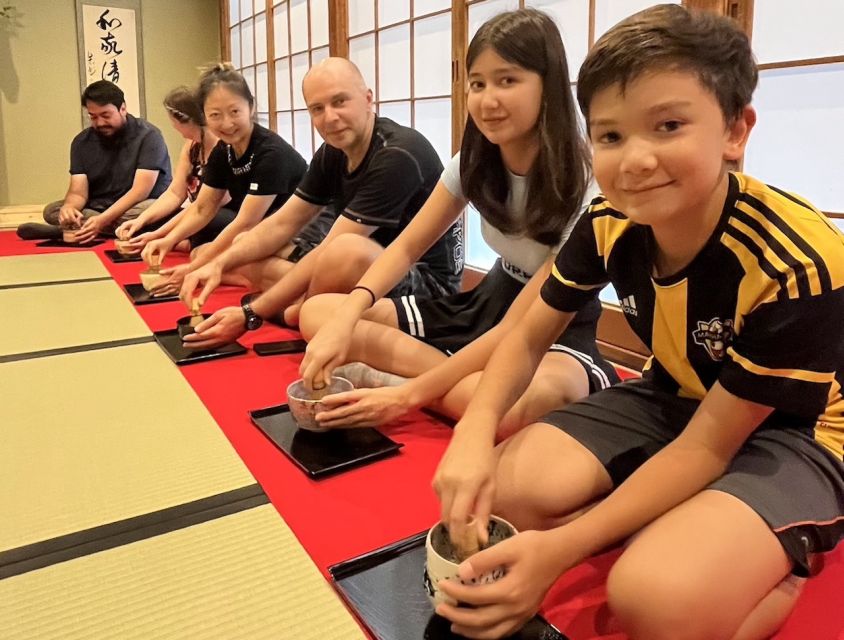
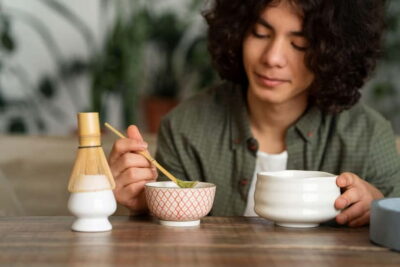
The best part for many people is the hands-on section. After watching the demonstration, you prepare your own bowl of matcha using traditional tea tools.
The process is approachable, even if you have never made matcha before. Your instructor explains how to use the tools and guides you through the preparation. You do not need to bring anything, and matcha, tea equipment, and confections are included in the $25 price.
This is also where you discover whether you actually like matcha. The flavor can be grassy, earthy, and slightly bitter, especially if you are used to sweetened tea drinks. The accompanying confection helps balance the taste, and the ceremony gives you a better sense of how matcha is traditionally enjoyed.
A few people may find the preparation more difficult than expected. Whisking properly takes a little coordination, and your first bowl may not look as smooth as the instructor’s. That is part of the fun. You are learning a traditional method, not trying out for a tea competition.
The experience may include more than one taste of matcha. One visitor particularly enjoyed drinking matcha twice during the session, once as part of the demonstration and again after making it personally. Exact servings may depend on the timing and group, so I would not book it solely for the quantity of tea.
Seasonal sweets make the matcha easier to enjoy
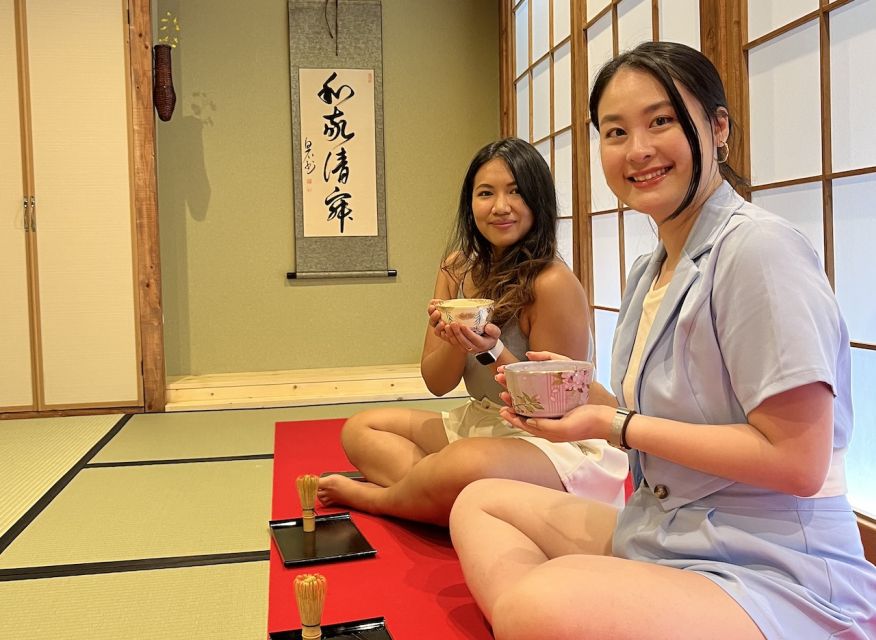
Traditional Japanese confections are served with the tea. These are small, seasonal sweets rather than a full dessert course, but they play an important role.
The sweetness prepares your palate for the matcha and softens its bitter edge. Several people praised the delicate desserts, with some calling them a highlight of the session. One visitor described them as divine, while another said the sweets alone made the experience feel like good value.
The seasonal element gives the food a connection to Japanese custom. You are not simply handed a packaged snack beside a cup of tea. The sweet forms part of the ritual and gives you another way to notice the care in the presentation.
If you have dietary restrictions, the available information does not specify ingredients or substitutions. Ask the provider before booking if this is important to you. Outside food is not allowed in the room.
The instructors shape the experience
The ceremony depends heavily on the person leading it. Here, that is good news. The instructors have more than 10 years of tea ceremony experience, and the hosts are described as patient, warm, and comfortable speaking English.
Yuki has been praised for her kindness and gentle manner. Akiko was noted for her gracious attention to each member of a group. Kazu took time to explain symbolism and tea bowls, while Mayumi has been praised for making the history and practical steps easy to follow.
Kana has also received particular praise for answering questions and explaining Japanese culture. Hise was singled out for explaining the significance of the tea-making ceremony. You cannot normally choose your instructor, but the range of strong feedback suggests that the teaching quality is consistent.
The hosts appear to strike a useful balance. You receive enough historical background to understand the ceremony, but the session does not become a long lecture. The mood stays friendly and relaxed, which is helpful if you feel unsure about making a mistake.
Is $25 good value in Osaka?
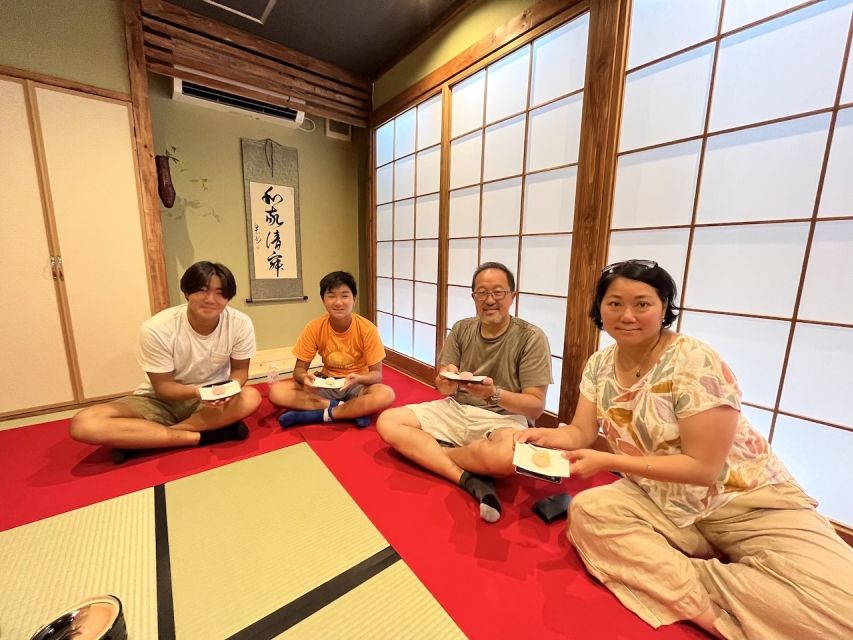
At $25 per person, the price is reasonable for a guided cultural activity in central Osaka. You receive entrance, instruction in English, matcha, traditional sweets, and use of the tea tools. The experience also offers a quiet traditional setting, which has value after several hours of city sightseeing.
I would compare this with the cost of an ordinary snack or drink in a major tourist area. For a little more than a casual purchase, you get a structured cultural experience that gives context to a familiar Japanese food.
The value is strongest if you want participation rather than a photo opportunity. You watch the ceremony, learn the basic customs, prepare your own tea, and taste the result. If you only want to drink matcha, you can find cheaper options elsewhere.
The price is also helped by the free-cancellation policy. You can cancel up to 24 hours in advance for a full refund, and the reserve-now-pay-later option lets you hold a place without paying immediately. These details make it easier to fit the activity into a changing Osaka itinerary.
Who should book this experience?
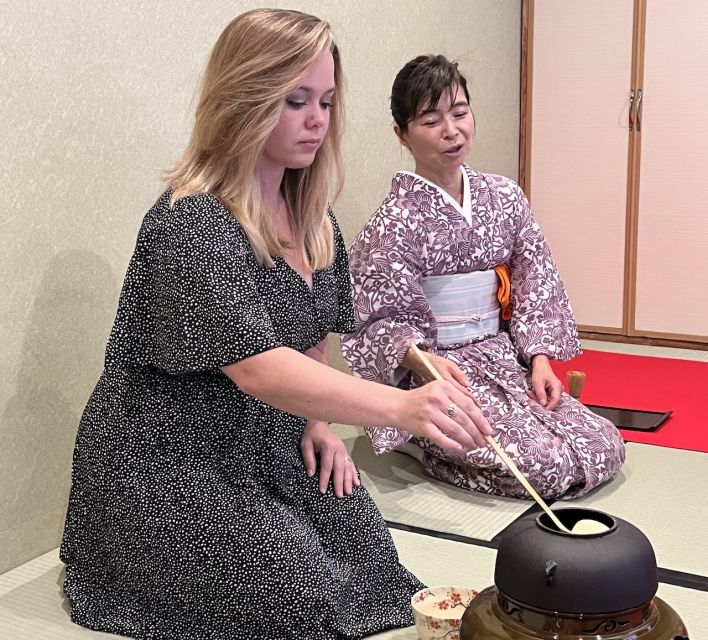
This tea ceremony suits first-time visitors to Japan who want a clear, friendly introduction to a major part of Japanese culture. It is also a good choice for couples, small groups, and solo visitors who want a calm activity with some participation.
You do not need to be a matcha fan. In fact, the session can be useful if you are unsure about the drink. You will learn how matcha is made and served before deciding what you think of it.
It works well for people who enjoy history, food, etiquette, crafts, and quiet cultural activities. It may be less suitable if you dislike sitting on the floor, prefer fast-moving entertainment, or want an extended ceremony with advanced instruction.
Children under 5 are not allowed to participate. Children aged 5 and above must have their own ticket. If you are traveling with a child under 4, contact the provider in advance, though entry may still be refused for children under 5.
Practical advice before you go
Book a starting time that leaves you some breathing room. The session is short, but finding the second-floor location may take longer than expected.
Use the exact Japanese address and map coordinates rather than relying only on a broad search for Dotonbori. Arrive early enough to locate the entrance, but not so early that you face a long wait without seating.
Wear clothing that allows you to sit comfortably on a tatami floor. You should also plan to keep your voice low and avoid bringing food or a stroller into the room.
The activity is conducted in English, with an English host or greeter and an English audio guide included. That makes it a practical choice for international visitors who want explanations without a language barrier.
Should you book the Osaka tea ceremony?
Yes, I would book it if you want a short, affordable cultural experience that lets you do more than watch. The strongest reasons are the clear English instruction, the experienced hosts, the peaceful tatami setting, and the chance to whisk your own matcha with traditional tools.
Book with realistic expectations. This is a 45-minute introduction, not an advanced tea school. You will sit on the floor, the location requires careful navigation, and the tea’s earthy flavor may not suit everyone.
For $25, though, it offers a lot: history, manners, demonstration, participation, sweets, and a quiet pause near Dotonbori. If your Osaka schedule is packed with food and shopping, this is an easy way to add a thoughtful cultural experience without giving up half a day.
FAQ
How long does the Osaka tea ceremony last?
The scheduled duration is 45 minutes. Some sessions may run slightly longer depending on the group and questions.
How much does the tea ceremony cost?
The price is $25 per person.
What is included in the price?
The price includes entrance, matcha, traditional tea tools for the activity, instruction, and Japanese confections.
Is the tea ceremony conducted in English?
Yes. The host or greeter speaks English, and an English audio guide is included.
Where is the meeting point?
The tea room is on the second floor at 大阪市中央区道頓堀1丁目東5-26 in Osaka. The coordinates are 34.66885079999999, 135.5063291.
Should I arrive early?
Yes. The location can be difficult to find, so allow extra time. Avoid arriving excessively early because there may be nowhere to sit while waiting.
Can children participate?
Children under 5 are not allowed to enter. Children aged 5 and above need their own ticket. If you are with a child under 4, contact the provider before booking.
Can I cancel the booking?
You can cancel up to 24 hours in advance for a full refund. A reserve-now-pay-later option is also available.
Just added around Osaka
- Osaka:Zen Tea Ceremony and Foot Bath Experience<45min>★ 5.0 · 7 reviews
- Osaka Japanese Cooking And Matcha Class near Osaka Castle★ 5.0 · 22 reviews
- Osaka: Tea Ceremony, Calligraphy, and Kimono Experience★ 5.0 · 6 reviews
- Osaka: Nara, Todaiji, Uji Matcha, and Hot Spring Tour★ 4.0 · 7 reviews
- Nara Deer Park, Uji Matcha, & Hot Spring Full-Day Tour from Osaka★ 4.0 · 21 reviews
- Craft Sushi and Matcha Ice Cream in Central Osaka (3-Course Meal)★ 5.0 · 2 reviews
- Tea and Calligraphy Session at a Table in Osaka★ 5.0 · 4 reviews
- ZEN therapy | Shiatsu-style massage, EnergyTherapy & Japanese Tea★ 5.0 · 5 reviews
Tea Ceremonies in Osaka, compared.
Tea Ceremony, Calligraphy, and Kimono Experience
Read our review →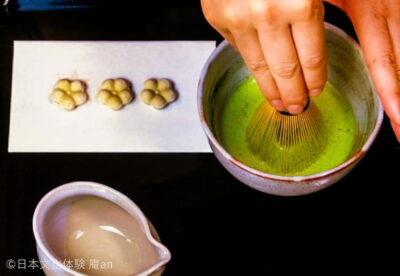
Japanese Traditional Sweets Making and Tea Ceremony
Read our review →
Samurai Show, Tea Ceremony, Japanese Traditional Activities
Read our review →
Osaka; Japanese Tea ceremony experience, Macha and Sencha
Read our review →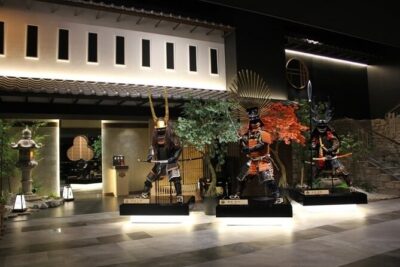
Samurai dress-up and shows, plus Tea Ceremony & Calligraphy
Read our review →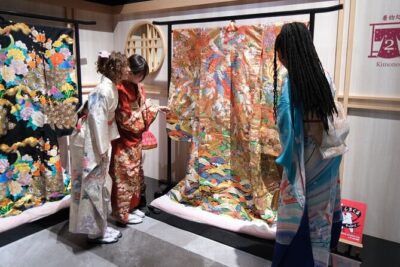
Premium Kimono Dressing, Tea Ceremony, Calligraphy, Samurai show
Read our review →Browse the lists this tour appears in