
Review · KYOTO
KYOTO Tea Ceremony with kimono near by Imamiya Jinjya Shrine
Slow down for a cup of tea. This 90-minute Kyoto experience combines kimono dressing, hairstyling, photographs, and a formal tea ceremony near Daitokuji and Imamiya Shrine. I like the chance to choose your own kimono and the time spent learning from a tea master with 30 years of experience. The main consideration is that dressing, hair styling, and group coordination take part of the short session, so this is more of a cultural introduction than a full tea-school lesson.
The setting is not in central Gion, which is a plus if you want a quieter Kyoto neighborhood. The room has been used by three generations, and the small group size, capped at 12 people, keeps the experience personal. At $99.49 per person, it is not a cheap photo stop, but the price covers clothing, hair, instruction, tea, sweets, photographs, and a hands-on turn at making tea.
Key points at a glance
- Three-generation tea room: Learn in a traditional setting near Daitokuji, an area closely tied to Kyoto’s tea culture.
- Kimono and hair styling included: Choose a color and pattern, then receive help with the layered dressing process and a simple hair set.
- A real tea master leads the ceremony: Watch a professional prepare tea, then learn the meaning behind the movements and manners.
- You make your own cup: After the demonstration, you get a chance to prepare tea for someone else in the group.
- Small group format: The experience accepts no more than 12 people, though arriving early helps avoid a crowded start.
- Useful for families and solo visitors: Men, women, teenagers, couples, families, and solo participants can all take part.
Choosing a Kimono in Nishijin
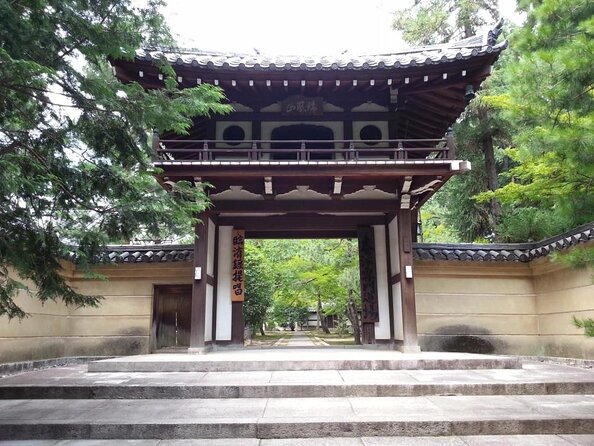
The experience begins at Tea Ceremony Caren, at 74-4 Murasakino Daitokujicho in Kyoto’s Kita Ward. The address places you near Daitokuji, in the northern part of the city rather than among the busiest sights around Kyoto Station or Gion.
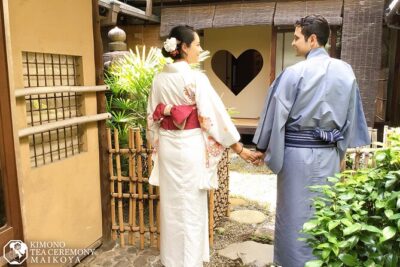
You choose a kimono from a collection associated with Nishijin, Kyoto’s famous textile district. The selection includes different colors and patterns, so it helps to have a general idea of what you like before you arrive. Staff move efficiently, especially when several people arrive together. That efficiency is useful, but it can also make the first few minutes feel brisk.
I would arrive a little early. You will need to choose your clothing, and the dressing process is not simply putting on one robe and tying a belt. A kimono uses several layers and careful adjustments. Staff help with each stage, giving you a better sense of the work behind this formal clothing.
That process is one of the strongest parts of the experience. A quick rental photo session often treats a kimono as a costume. Here, the time spent fastening and arranging the layers shows you that wearing one properly is a skilled task. The clothing feels less like a prop and more like part of the ceremony.
Men and women can dress in kimono, and the experience works well for families. Teenagers have enjoyed it, and it can give children and older relatives a shared activity that does not depend on walking long distances or mastering Japanese customs beforehand.
More Kimono and Tea Ceremonies in Kyoto
- Kimono Tea Ceremony at Kyoto Maikoya, NISHIKI
★ 5.0 · 911 reviews - Kyoto: Kimono Tea Ceremony at Orizuruya Gion
★ 4.9 · 618 reviews - Kyoto: Kimono and Tea Ceremony Experience at Cultural Asset
★ 4.3 · 306 reviews
Hair Styling and Photographs Before Tea
Women receive a simple hair set before the kimono is put on. The styling is practical rather than a long salon appointment, but it completes the formal look and makes the photographs more satisfying.
Once everyone is dressed, staff take photographs. This is not just a quick snapshot at the door. The staff help with poses and make sure you have time to enjoy the clothing before the tea lesson begins. An interpreter named Akira has been praised for explaining the ceremony, helping with poses, and taking memorable pictures.
You should still keep your expectations reasonable. The experience includes a simple photo session, not a dedicated professional portrait package with a long list of edited images. Its value comes from combining photographs with cultural instruction, rather than selling photography alone.
The photos are useful because a kimono is difficult to appreciate fully while you are rushing through a busy temple visit. Here, you can pause, adjust your sleeves, and see how the layers and accessories work together. The staff also encourage you to feel comfortable, which matters when you are wearing unfamiliar clothing.
Meeting the Tea Master Near Daitokuji
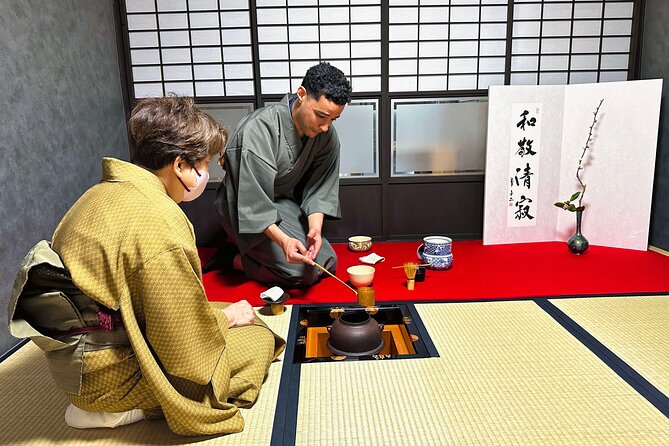
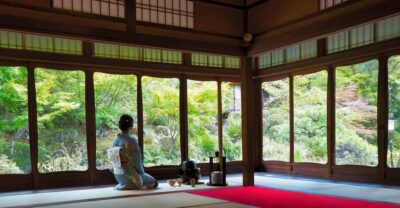
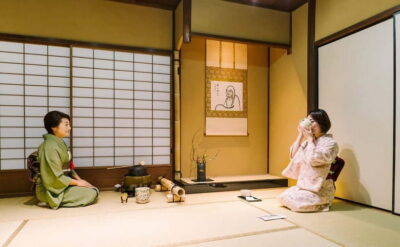
After dressing and photographs, you move to the tea room for the main lesson. The room has been used for three generations, and its age is part of the appeal. It may feel old rather than polished and modern, but that fits the subject better than a sleek event space would.
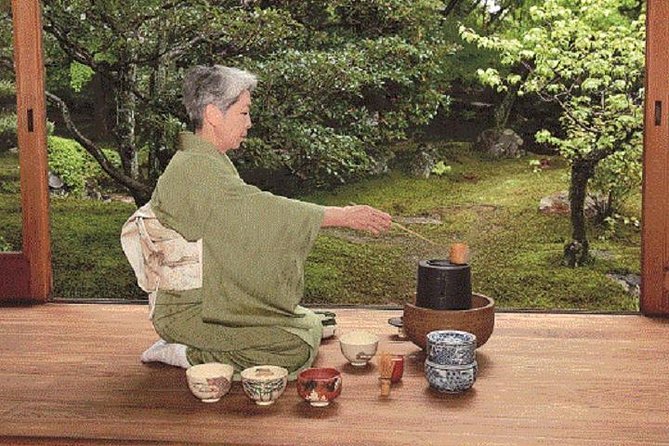
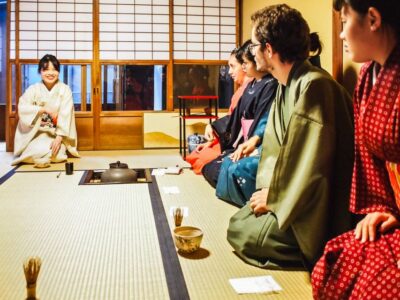
A tea master with 30 years of study demonstrates the ceremony. You watch how the tea is prepared, how the utensils are handled, and how guests receive the bowl. The instructor also explains the background of tea ceremony and the meaning of the actions.
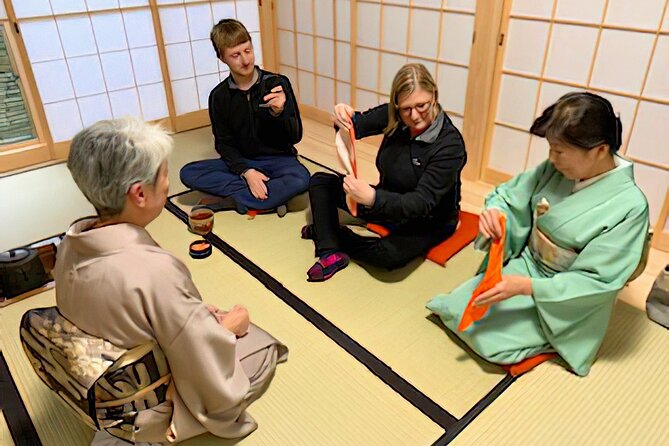
The lesson is conducted in Japanese with interpretation and commentary in English. This arrangement gives the ceremony a more natural feel than a performance delivered entirely for an international audience. Akira has helped explain customs and even added details about the history of the tea ceremony fan.
The ceremony itself is deliberately measured. That slower pace may be a welcome break after a busy day in Kyoto, but it may feel formal if you expect constant activity. Tea ceremony is built around attention, courtesy, and small movements. The point is not to rush toward the next attraction.
You learn why manners matter, how to behave as a guest, and how the host prepares the tea. The explanations make the movements easier to understand. Without that context, the ceremony could look like a sequence of precise gestures. With it, you begin to see the care given to the host, the guest, the utensils, and the season.
Matcha, Seasonal Sweets, and Your Turn to Prepare Tea
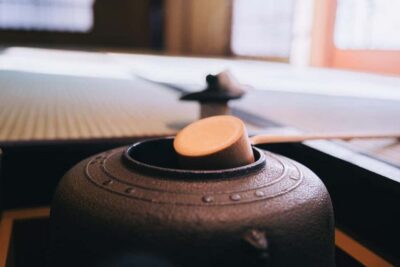
The tea master first prepares a cup for you. You receive tea with a seasonal sweet, which balances the bitter taste of matcha and gives the lesson a simple rhythm.
After watching the demonstration, you get a chance to prepare tea yourself. You may make a cup for another participant, and the staff guide you through the movements. You do not need prior experience. The point is to try the process and understand how much concentration goes into even a basic serving.
Do not worry about getting every motion perfect. The experience is designed to teach beginners, and staff are encouraging when you make an awkward movement. That hands-on portion is important because it changes your role from observer to participant.
For solo visitors, the format is especially helpful. You are not left watching couples or families take all the turns. One solo participant was included in the tea-making activity and received the same encouragement as everyone else.
The tea portion also gives you a better appreciation for the tea master’s skill. After trying to copy the movements, you can see that the polished demonstration is the result of years of practice, not a few attractive gestures arranged for tourists.
More Tea Ceremonies in Kyoto
- Kyoto: Tea Ceremony in a Traditional Tea House in Kiyomizu
★ 4.9 · 3,519 reviews - Kyoto: Tea Ceremony Ju-An at Jotokuji Temple
★ 4.9 · 3,207 reviews - Kyoto: 45-Minute Tea Ceremony Lesson Experience
★ 4.3 · 2,378 reviews - Kyoto: Table-Style Tea Ceremony at a Kyo-Machiya
★ 4.9 · 1,211 reviews
What the 90-Minute Schedule Feels Like
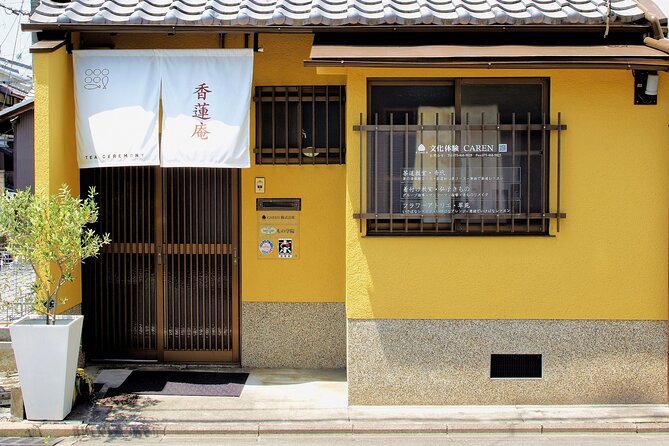
The stated duration is about one hour and 30 minutes. That is enough time for the main elements, but not enough for a long lecture on Japanese tea schools or a detailed study of kimono construction.
The session generally follows this order:
- Select a kimono and accessories.
- Receive help with hair styling and dressing.
- Take photographs in the completed outfit.
- Watch the tea master demonstrate the ceremony.
- Learn about history, etiquette, and tea customs.
- Drink tea with a seasonal sweet.
- Prepare your own tea under guidance.
- Return to the original meeting point at the end.
The transitions are well organized, but the beginning may feel hectic if everyone arrives at the same moment. Arriving early is the most useful practical tip I can give you.
The group limit is 12 people. That is small enough for instruction and photographs to feel manageable, though it is not a private ceremony. You will share the room and the teacher’s attention with other participants. If you want a completely private tea lesson, this is not the right format.
The activity ends where it begins, at Tea Ceremony Caren. Private transportation is not included, so you need to arrange your own way to the address. The meeting point is near public transportation, but the supplied information does not specify a particular station or route. Check your map carefully before leaving your hotel.
Why the Location Adds Value
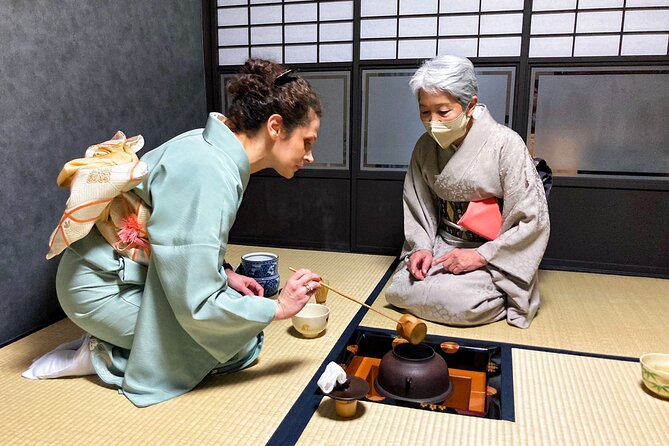
Daitokuji is closely connected with Kyoto’s tea culture, making this a fitting area for the lesson. The location feels more connected to traditional Kyoto than a generic hotel meeting room would.
The experience is also described as being near Imamiya Jinjya Shrine, a useful pairing if you are planning a day in northern Kyoto. The address itself is in Murasakino Daitokujicho, near Daitokuji, so check the exact meeting point rather than navigating only by the shrine name.
Some participants have included a temple walk as part of the occasion, but the confirmed meeting and ending point is Tea Ceremony Caren. Treat any nearby temple visit as something to plan separately unless the operator confirms it for your chosen departure.
This location has a practical downside. It is not the most central base for a short Kyoto visit. If your day already centers on Fushimi Inari, Kiyomizu-dera, or Arashiyama, you will need to account for the time needed to reach northern Kyoto. The cultural setting helps justify the journey, but you should not book it without checking the rest of your schedule.
Is $99.49 a Fair Price?
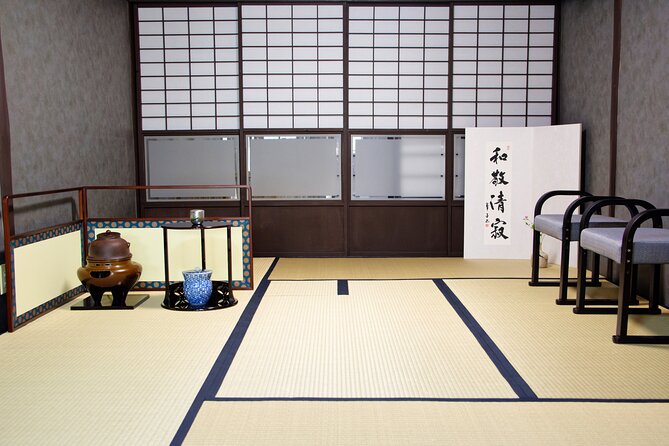
At $99.49 per person, the experience costs more than simply renting a kimono for a photograph and more than attending a brief matcha demonstration. You are paying for several linked services: kimono selection, dressing assistance, hair styling, photographs, a professional instructor, tea, sweets, historical explanation, and hands-on practice.
I consider that fair value if you want a full cultural activity rather than a quick photo opportunity. The three-generation tea room and the tea master’s long experience add substance. You also avoid having to arrange kimono rental, dressing, and a separate tea lesson on your own.
The value is weaker if your main goal is simply to wear a kimono for pictures. You spend a meaningful part of the session learning ceremony etiquette and watching a formal demonstration. Someone who dislikes quiet, structured activities may find the price high for an experience that moves at a calm pace.
The 99 percent recommendation rate and 5 out of 5 rating from 343 reviews suggest very strong satisfaction, but I would still match the tour to your interests. The high praise focuses on the staff’s kindness, the beautiful kimonos, the careful dressing process, the tea master, and the chance to make tea. Those are the reasons to book, not just the promise of a costume photograph.
Who Will Enjoy This Most
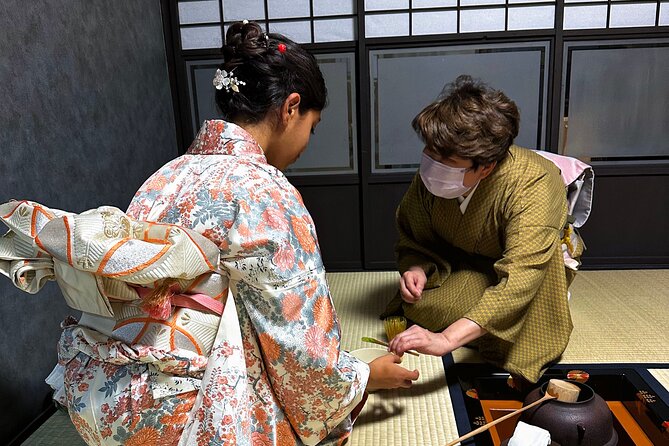
I would choose this experience if you want a respectful introduction to Japanese tea ceremony without committing to a full-day cultural course. It suits first-time visitors because the instructor explains the gestures and etiquette from the beginning.
It is also a good choice for:
- Couples wanting formal photographs together.
- Families with teenagers or older relatives.
- Solo visitors who want an activity with built-in social contact.
- Anyone curious about kimono construction and patterns.
- People who enjoy calm, ceremonial experiences.
- Visitors who want to understand tea customs rather than simply drink matcha.
I would hesitate if you have limited time in Kyoto and are staying far from northern Kyoto. I would also think twice if you dislike dressing up, sitting through a quiet demonstration, or sharing the lesson with a small group.
The staff’s welcoming manner is a major benefit. They help with clothing, answer questions, take photographs, and guide beginners through the tea-making exercise. That personal care is why the experience feels more meaningful than a standard dress-up attraction.
Booking, Weather, and Cancellation Details
Confirmation is provided when you book, and the experience uses a mobile ticket. It requires a minimum number of participants, so the operator may offer another date or a full refund if that minimum is not reached.
The activity also depends on good weather. If poor weather causes cancellation, you can choose another date or receive a full refund.
You can cancel for a full refund up to 24 hours before the start time. Cancellations or changes made within 24 hours are not accepted for a refund. The cutoff follows local Kyoto time, so check the time carefully if you are changing plans from another time zone.
Should You Book This Kyoto Tea Ceremony?
I would book it if you want your kimono experience to have a purpose beyond photographs. The combination of careful dressing, a three-generation tea room, a seasoned tea master, seasonal sweets, and your own turn preparing tea gives the 90 minutes a clear cultural focus.
Book early in your day and arrive ahead of time, especially if you want a relaxed choice of kimono. Give yourself enough time to reach Murasakino Daitokujicho, and confirm the address before setting out.
Skip it if you are looking for a private ceremony, a long formal study session, or an activity in central Kyoto. For most first-time visitors who want a gentle, memorable introduction to Japanese customs, though, this is a thoughtful choice and a fair use of half a morning or afternoon.
FAQ
How long does the tea ceremony experience last?
The experience lasts approximately one hour and 30 minutes.
Where does the activity begin and end?
It begins and ends at Tea Ceremony Caren, located at 74-4 Murasakino Daitokujicho, Kita Ward, Kyoto, 603-8231, Japan.
Is transportation included?
No. Private transportation is not included. The meeting point is near public transportation.
Is a kimono provided?
Yes. You can choose a kimono from the available collection, and staff assist you with putting it on.
Is hair styling included?
Yes. The program includes help with a simple hair set before the kimono is put on.
Do I get to make tea myself?
Yes. After watching the tea master’s demonstration and learning about the ceremony, you have an opportunity to prepare your own tea.
How many people can join the activity?
The activity accepts a maximum of 12 participants.
Can I cancel for a full refund?
Yes. You can cancel at least 24 hours before the start time for a full refund. Cancellations or changes within 24 hours are not refunded.
Just added around Kyoto
- Uji Walking Tour – Byodo-in temple and Tea Ceremony from Kyoto★ 3.5 · 3 reviews
- Tea ceremony at Kyoto’s Zen Temple Teahouse★ 5.0 · 2 reviews
- Kyoto: Authentic Tea Ceremony in a Small Group★ 5.0 · 7 reviews
- Tea Ceremony in 150 Years Old Townhouse with Tables and Chairs★ 5.0 · 22 reviews
- Silent Beauty of Kyoto Zen Walk and Tea Experience★ 5.0 · 2 reviews
- Tea Ceremony Experience in Traditional Kyoto Townhouse★ 5.0 · 19 reviews
- Traditional Tea Ceremony in Kyoto★ 4.5 · 3 reviews
- Kyoto Private Tea Ceremony at a Japanese Inns★ 5.0 · 12 reviews
Tea Ceremonies in Kyoto, compared.
Tea Ceremony in a Traditional Tea House in Kiyomizu
Read our review →
Tea Ceremony in 100-year-old Kyo-Machiya Townhouse
Read our review →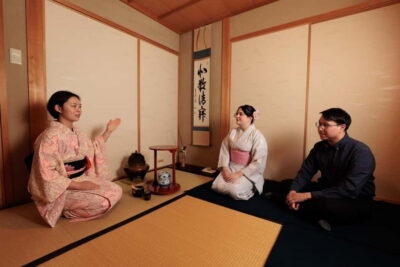
Browse the lists this tour appears in