
Review · HIROSHIMA
Cultural Activities :Kimono, tea ceremony, Calligraphy and Amulet
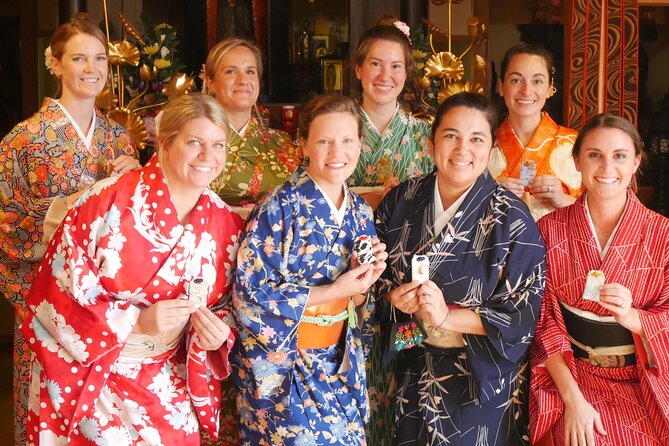
Tradition feels wonderfully hands-on here. At Okeiko Japan in Miyajima, you put on a kimono, learn to write your name in Japanese, prepare matcha, and make a small amulet inside a temple with centuries of local connections. I especially like the three-activity format, which gives you several cultural experiences in about two hours instead of using up separate half-days. The kimono and teacher-taken photos are another strong point, since you receive a lasting record by email.
The main consideration is time. Each activity gets roughly half an hour, so the lessons are introductory rather than detailed training. At $171.73 per person, this is not a cheap add-on, but the price covers clothing, instruction, materials, and three distinct activities in a small group of no more than 10 people.
Four details that make this Miyajima experience special
- A 300-year-old temple setting: The activities take place at Tokuju-ji Temple, a Soto Zen temple connected with the protective Kinseki Jizo.
- Three cultural lessons in two hours: You move from calligraphy to tea ceremony to amulet making without arranging separate bookings.
- A kimono for every activity: You wear the provided kimono and traditional apron while learning.
- Amulet making is unusual: This hands-on craft is not offered in many places in Japan.
- Photos are included: Teachers take pictures during the lessons and email them to you afterward.
- Small groups help: The maximum group size is 10, and some sessions may feel nearly private if bookings are light.
Starting at Tokuju-ji Temple in Miyajima
You meet at Okeiko Japan, at 741-1 Miyajimachō in Hatsukaichi, Hiroshima. The activity begins and ends at this same point, which makes it easy to fit into a day on Miyajima without arranging a second pickup location.
Tokuju-ji Temple gives the lesson a more meaningful setting than a modern classroom. The temple was founded about 300 years ago and belongs to the Soto school of Buddhism. Its principal Buddha is Kinseki Jizo, a figure associated with protection for children and pregnancy.
The temple also carries a local story about an older couple who prayed to Jizo for a child. Their wish was answered with a healthy boy, and their gratitude led them to build the temple. That story gives the amulet lesson a useful cultural context. You are not simply making a souvenir. You are learning about the purpose and feeling behind a traditional protective object.
Miyajima has a special religious mix. Many of its temples are closely connected with Itsukushima Shrine, and you may notice features that seem more familiar from Shinto settings than from a Buddhist temple. The staff can help explain these overlaps as you move through the activities.
The temple itself is listed with a 20-minute admission period, while the full experience lasts about two hours. In practical terms, you should think of the temple stop as the setting and introduction, not the whole length of the program.
More Tea and Calligraphy Workshops in Japan
- Kyoto: Tea Ceremony Meditation – Make Matcha with Tea Master
★ 4.8 · 406 reviews - Osaka: Tea Ceremony, Calligraphy, and Kimono Experience
★ 4.9 · 130 reviews - Tokyo: Practicing Zen with a Japanese Tea Ceremony
★ 4.7 · 105 reviews
Wearing a kimono before the lessons begin
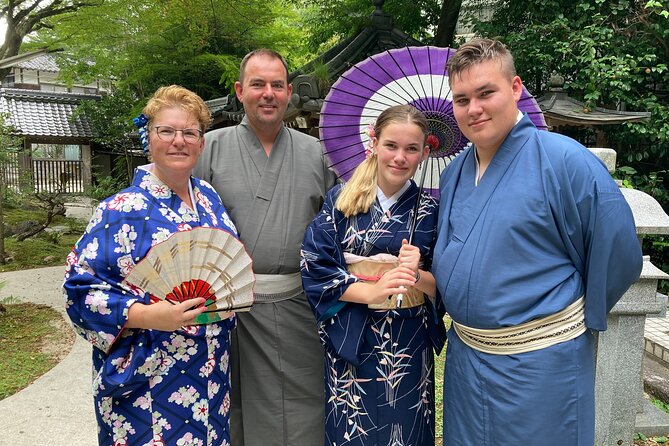
The clothing is more than a photo prop. You put on a provided kimono and traditional apron, then keep them on during the lessons. That changes the mood of the afternoon and helps connect each activity to the customs being taught.
One useful tip is to arrive a little early if you want extra time in the clothing before the lessons start. A past booking included time for kimono dressing and photographs in the garden before the formal activities began. Exact timing can vary, so do not count on a long photo session, but arriving early gives you a better chance to settle in without rushing.
The kimono may also affect how you move. Sitting for tea and calligraphy is not quite the same as sitting in ordinary sightseeing clothes. That is part of the experience, though it can feel less relaxed if you prefer fast-paced touring or have a tight schedule afterward.
The clothing works especially well for couples, families, and friends who want a shared activity. It also gives children a clear role, rather than asking them to sit quietly through a lecture. The minimum age is six, and children must be accompanied by an adult.
Calligraphy: writing your name in Japanese
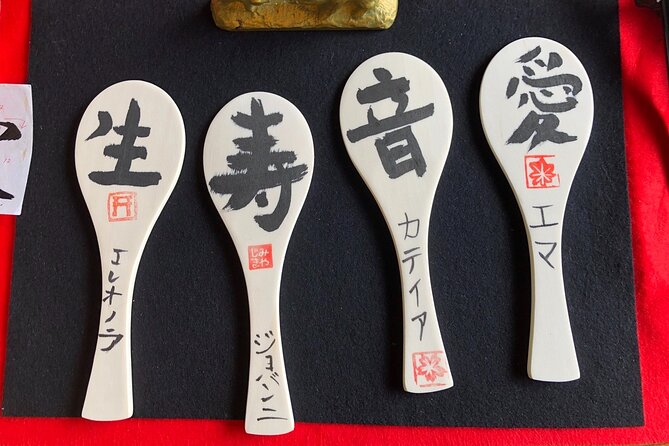
The calligraphy lesson is a practical first step into Japanese writing. Rather than copying a long poem or working through a difficult text, you learn how to write your name in Japanese. That keeps the task personal and gives you something you can remember after the class.
Expect about half an hour for this activity. You will not become a calligrapher in one session, but you can learn how the characters are formed and how brushwork differs from ordinary handwriting. The appeal is in slowing down and paying attention to each stroke.
I like this part because it creates a souvenir with personal meaning. A printed name card is easy to buy anywhere. Writing your own name, even with beginner-level skill, gives you a stronger connection to the activity.
The short lesson is also a good fit for mixed groups. Someone who has never touched a calligraphy brush can take part without feeling out of place, while a person already interested in Japanese writing can ask for more explanation. Just keep your expectations sensible: this is an introduction, not a formal calligraphy course.
Tea ceremony with matcha and careful movements
The tea ceremony follows a slower rhythm. You learn how to prepare matcha and perform the basic ceremony, with attention to the order of movements and the manners involved.
The value here is not only the drink. Tea ceremony asks you to notice small actions: how the tea is prepared, how it is presented, and how you take part as a guest. Even a short lesson can show why the ceremony is treated as a carefully shaped social practice rather than a quick cup of tea.
The kimono adds to the sense of occasion, while the garden and temple setting provide a calm backdrop. Several people who booked this experience especially appreciated how much they learned from the tea lesson, and the staff were praised for explaining the customs with patience and warmth.
Still, thirty minutes goes quickly. You will learn the basic flow, not every rule or historical detail. If you want a long, formal tea ceremony with an extended explanation, this may feel brief. If you want a friendly introduction that fits into a sightseeing day, the length is much more useful.
More Tea Ceremonies in Japan:
- Kyoto: Tea Ceremony in a Traditional Tea House in Kiyomizu
★ 4.9 · 3,519 reviews - Kyoto: Tea Ceremony Ju-An at Jotokuji Temple
★ 4.9 · 3,207 reviews - Kyoto: 45-Minute Tea Ceremony Lesson Experience
★ 4.3 · 2,378 reviews - Osaka: Tea Ceremony Experience
★ 4.9 · 1,426 reviews
Making an amulet with a real cultural purpose
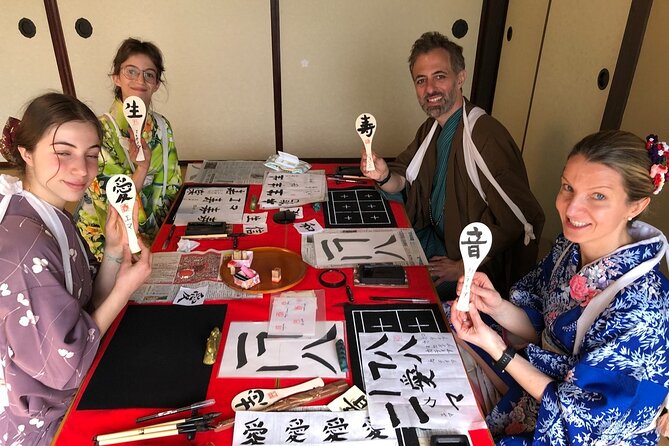
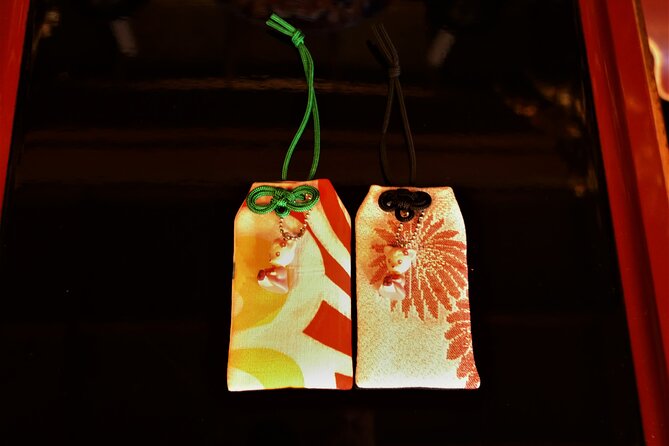
Amulet making is the most unusual part of the program. Many cultural classes offer calligraphy, tea, or kimono dressing, but hands-on amulet work is less common. You learn what goes into making an amulet and take part in the process yourself.
This activity connects directly with the temple’s religious setting and the story of Kinseki Jizo. The lesson can help you understand why amulets are treated as objects of protection and hope, rather than simple decorative charms.
The exact finished item and steps are not described in detail, so you should not expect a particular design unless the staff confirms it on the day. What is clear is that you make an amulet as one of the three main activities, not merely receive one at the door.
For many people, this will be the most memorable portion because it is less familiar. Calligraphy and tea ceremonies are available in many Japanese destinations. Amulet making gives this session a more distinctive Miyajima identity.
Photos, teachers, and the feel of the class
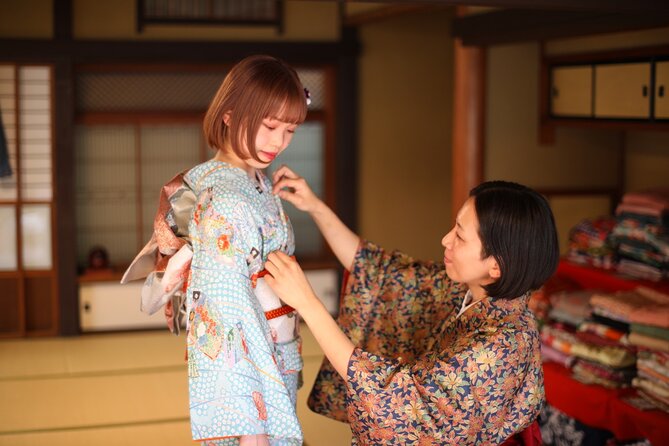
The teachers take photos during the activities and send them to you by email. This is a practical benefit, especially when you are dressed in a kimono and both hands are busy with tea tools or a brush. You do not have to rely on a stranger to take one quick picture.
The strongest praise for the experience focuses on the staff. The teachers are described as gracious, personable, and attentive during every stage. One mother and daughter ended up with a private session after arriving by cruise ship, and they found the staff particularly easy to interact with. A private class is not guaranteed, but the maximum group size of 10 keeps the standard format reasonably small.
The activity also works well for people who want cultural explanation without a long lecture. The teaching is built around doing: write, prepare, wear, make, and photograph. That balance helps the customs feel approachable.
The photos are sent by email, so make sure the provider has a correct address. You may also want to ask when they expect to send them if you need the images quickly during a short visit to Japan.
Is $171.73 a fair price?
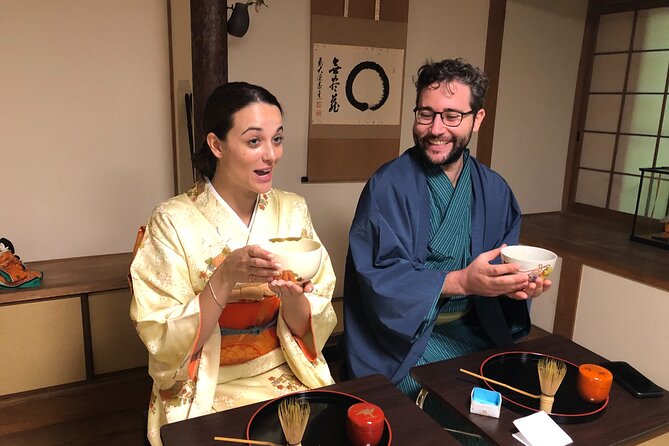
At $171.73 per person, the price is high for a two-hour activity. You are paying more than the cost of a casual kimono photo rental or a short tea demonstration.
The value improves when you count what is included: a kimono, a traditional apron, instruction in three activities, materials for calligraphy and amulet making, a temple setting, and photos taken by the teachers. You also avoid spending time arranging three separate bookings.
I would consider it a fair choice for someone who places a high value on guided cultural participation. It is less appealing if you mainly want a cheap souvenir photo or a quick look inside a temple. The experience earns its price through the combination of personal instruction and variety, not through duration.
Small group size matters here. With no more than 10 people, the teachers have a better chance to correct your brushwork, guide your tea movements, and help with the amulet. If the group is lightly booked, you might receive near-private attention without paying a separate private-tour rate, though that cannot be promised.
Fitting two hours into a Miyajima day
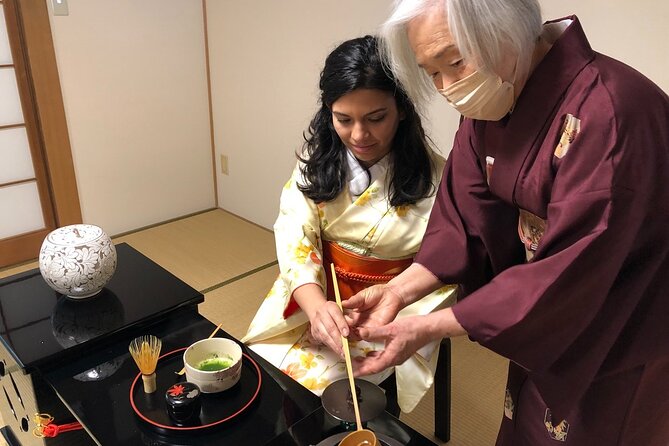
The meeting point is near public transportation, and the activity returns you to the same place. That makes it easier to plan around other Miyajima sightseeing, though you should allow enough time to find Okeiko Japan before the start.
Since the session lasts about two hours, it fits best as a planned block rather than a spontaneous stop between attractions. Arrive early if you want time for kimono dressing and photos. The activity is not a good choice if you need to catch immediate transportation afterward.
The program suits a wide range of ages. The minimum age is six, and children must stay with an adult. Most people can participate, but the experience involves wearing traditional clothing, sitting for lessons, holding writing tools, and following tea-making steps. If those activities sound uncomfortable, the price may not feel worthwhile.
A mobile ticket makes entry simple. Confirmation is provided at booking, and you should keep the ticket available on your phone when you arrive.
Who will enjoy this most?
I would recommend this experience to you if you want more than sightseeing photographs. It gives you a direct way to take part in several customs, and the teachers help keep each one approachable.
It is especially suitable for:
- Couples who want shared photos and a calm cultural activity
- Families with children aged six or older
- First-time visitors to Japan who want an introduction to several traditions
- People with only a few hours on Miyajima
- Anyone interested in unusual handmade souvenirs
- Cruise passengers who need a compact activity near public transportation
You may want to skip it if your main goal is a long, formal tea ceremony, advanced calligraphy, or a full-day temple study. The lessons are short by design. You get a taste of three traditions rather than mastery of one.
The program was also a highlight for one couple during five weeks in Japan, which says something about its variety. It can break up a long sightseeing schedule with a slower, more personal experience.
Booking, cancellation, and final advice
The activity is highly rated, with 100 percent recommendation shown in the supplied information and 44 ratings at the time described. The repeated praise centers on the beautiful setting, kind staff, useful explanations, kimono, and memorable photographs.
You can cancel for a full refund up to 24 hours before the start time. Cancellations or changes made less than 24 hours ahead are not accepted for a refund, and the cut-off follows local time. That matters if you are booking around a ferry, cruise departure, or changing weather plans.
Should you book this Miyajima cultural experience?
Book it if you want a compact, well-organized introduction to Japanese customs with real participation. The combination of kimono, tea, calligraphy, and amulet making gives you more variety than a single cultural class, and the temple setting makes the activities feel grounded in local tradition.
I would not book it simply for a cheap kimono photograph. At $171.73, the cost asks you to value the instruction and hands-on work. For the right person, especially a first-time visitor, family, couple, or cruise passenger with limited time, the three-part format can be one of the most rewarding two-hour activities on Miyajima.
FAQ
How long does the cultural experience last?
The full experience lasts approximately two hours. Each of the three main activities takes roughly half an hour, with time also used for kimono dressing, photos, and moving between lessons.
Where does the activity take place?
It takes place at Tokuju-ji Temple through Okeiko Japan, at 741-1 Miyajimachō, Hatsukaichi, Hiroshima 739-0588, Japan.
What activities are included?
You learn to write your name in Japanese, take part in a tea ceremony, and make an amulet. You also wear a provided kimono and traditional apron during the lessons.
Is the activity suitable for children?
The minimum age is six. Children must be accompanied by an adult, and most people can participate.
Are photographs included?
Yes. The teachers take photos during the lessons and send them to you by email.
Can I cancel for a full refund?
Yes. You can cancel up to 24 hours before the experience start time for a full refund. Cancellations or changes made less than 24 hours before the start time are not refunded or accepted.
More Kimono and Tea Ceremonies in Japan
- Kimono Tea Ceremony at Kyoto Maikoya, NISHIKI
★ 5.0 · 911 reviews - Kimono Tea Ceremony at Tokyo, Asakusa Maikoya
★ 5.0 · 638 reviews - Kyoto: Kimono Tea Ceremony at Orizuruya Gion
★ 4.9 · 618 reviews - KYOTO Tea Ceremony with kimono near by Imamiya Jinjya Shrine
★ 5.0 · 343 reviews
Just added around Japan
- Yokohama : Tea Ceremony with Sweets and Souvenir★ 5.0 · 5 reviews
- Walking Tour: Yanaka,Nezu& Sendagi: Tea Ceremony & Old Tokyo★ 5.0 · 3 reviews
- Visit local home for music and tea ceremony near Disney★ 4.9 · 13 reviews
- Trip to Kamakura & Enoshima: Shrines, Seaside, Temples &Tea★ 5.0 · 11 reviews
- Yokohama: Sushi & Gyoza Cooking with Matcha & GreenTea Experience★ 5.0 · 3 reviews
- Kyoto tea town for matcha lovers★ 5.0 · 16 reviews
- Uji: Private immersion into Kyoto’s tea and reglious culture★ 5.0 · 17 reviews
- Uji Tea Ceremony and UNESCO Heritage Walking Tour★ 5.0 · 20 reviews
Tea and Calligraphy Workshops in Japan, compared.
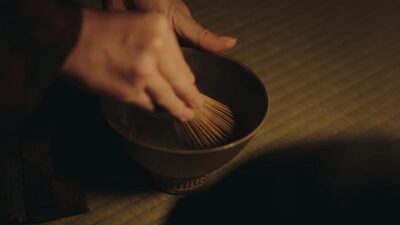
Tea Ceremony Meditation – Make Matcha with Tea Master
Read our review →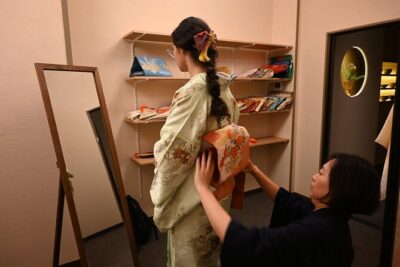
Tea Ceremony, Calligraphy, and Kimono Experience
Read our review →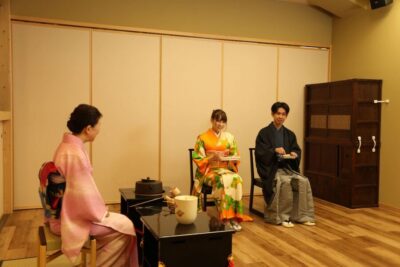
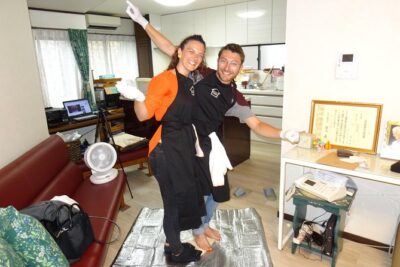
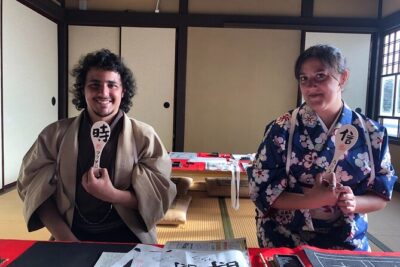
An Amazing set of Cultural experience: Kimono, Tea Ceremony and Calligraphy
Read our review →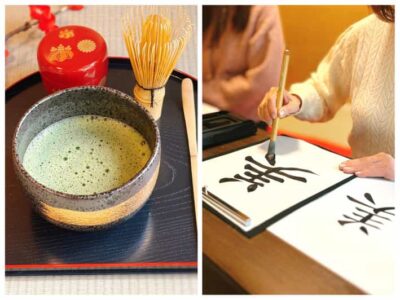
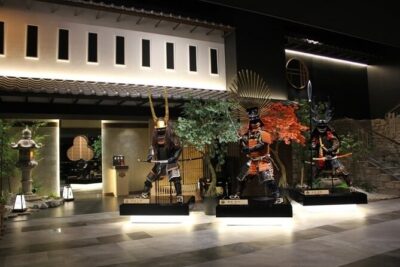
Samurai dress-up and shows, plus Tea Ceremony & Calligraphy
Read our review →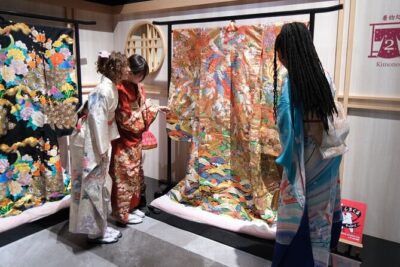
Premium Kimono Dressing, Tea Ceremony, Calligraphy, Samurai show
Read our review →Browse the lists this tour appears in