
Review · YOKOHAMA
Matcha tasting for all five senses at Hotel Yokohama
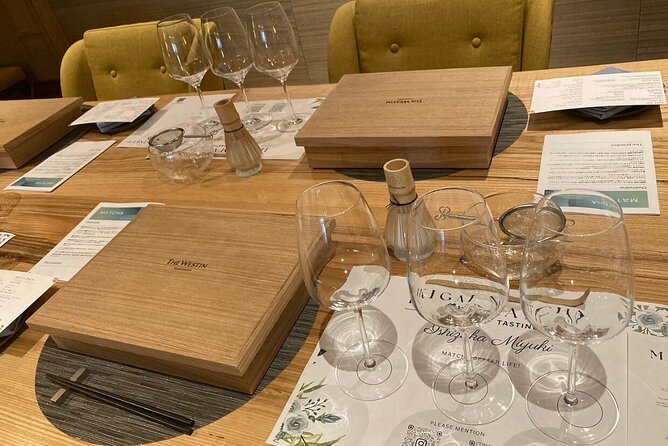
A quiet cup can say a lot. This two-hour matcha tasting in Yokohama combines several Japanese teas, traditional preparation, sweets, and a thoughtful look at ikigai, or purpose in life. The session is led by Misato, whose calm teaching style and care for the subject are central to the experience.
I like the chance to compare matcha from different Japanese tea regions, rather than treating all green tea as the same. I also like that you make the tea yourself with a bamboo whisk and bowl. The main consideration is the price: at $100 per person, this is not a quick tea break, and taxes are not included.
Five things to know before booking
- Several matcha varieties: You taste high-quality matcha with different aromas and flavors, which makes the session more than a single ceremonial cup.
- Hands-on preparation: You learn to use a chasen, the traditional bamboo whisk, and a chawan, the tea bowl.
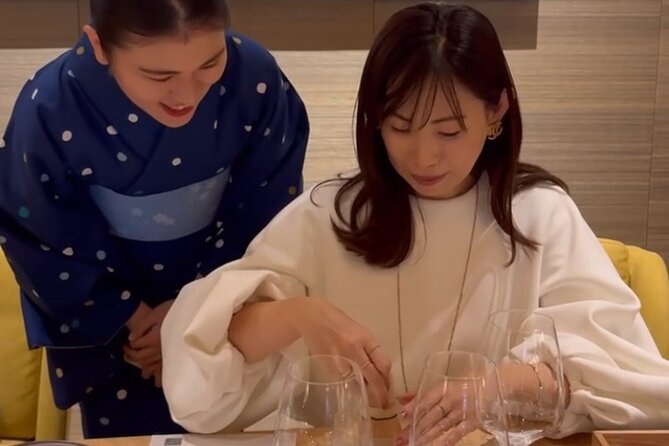
- Misato leads the session: Her teaching includes matcha production, Japanese tea culture, health effects, and ikigai.
- Sweets are part of the lesson: Traditional wagashi and other Japanese foods are paired with the tea.
- Private two-hour format: Only your group takes part, and the experience returns to its starting point in Minatomirai.
- A take-home reminder: You receive a small package of matcha and related tea products.
A calm introduction to matcha in Minatomirai
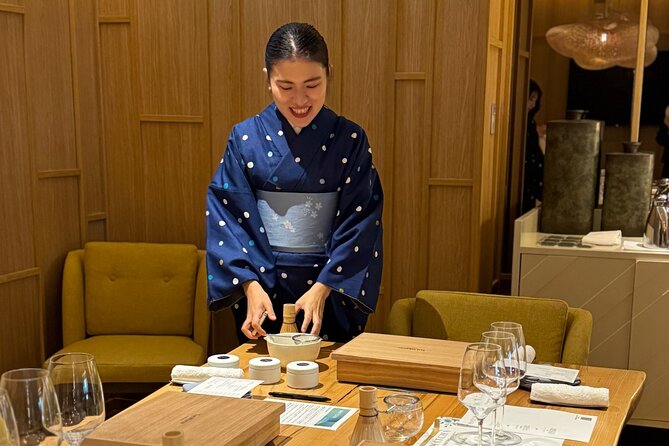
The experience begins at 3 p.m. at 4 Chome Minatomirai, in Yokohama’s Nishi Ward. It lasts about two hours and ends back at the same meeting point. That simple setup matters: you do not need to spend half the afternoon changing trains or finding a second location.
The setting is associated with a high-quality hotel environment, and the experience has a more polished feel than an informal café tasting. One Japanese participant described the space as elegant and different from everyday life. That is a useful clue for anyone seeking a quiet cultural activity rather than another fast-moving sightseeing stop.
This is a private activity, so only your own group takes part. That should make it easier to ask questions, take your time with the preparation, and discuss the more personal parts of the session. The trade-off is that a private experience usually costs more than a large group class.
The meeting point is near public transportation, though the supplied details do not name a particular station or give walking directions. I would check the exact meeting instructions after booking, especially if you are coming straight from another part of Yokohama.
More Matcha Experiences in Japan:
- World Heritage Kyoto & Nara Uji Authentic Matcha Experience
★ 5.0 · 1,573 reviews - Kyoto: Arashiyama Bamboo Forest, Monkeys, Matcha & Temple Tour
★ 5.0 · 759 reviews - Matcha Making Class in Tokyo with Authentic Japanese Sweets Set
★ 5.0 · 744 reviews
Tasting matcha from different Japanese regions
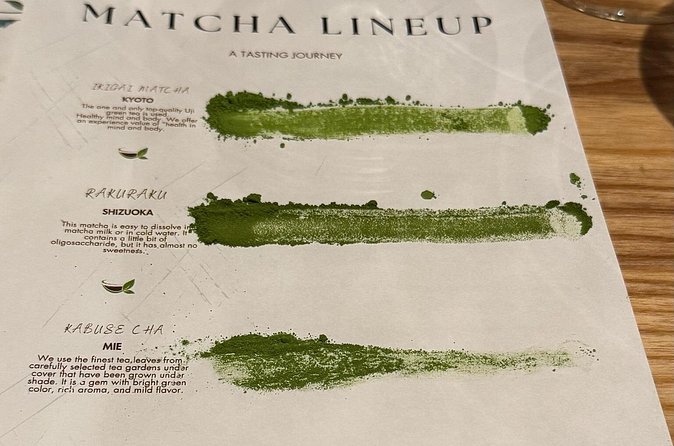
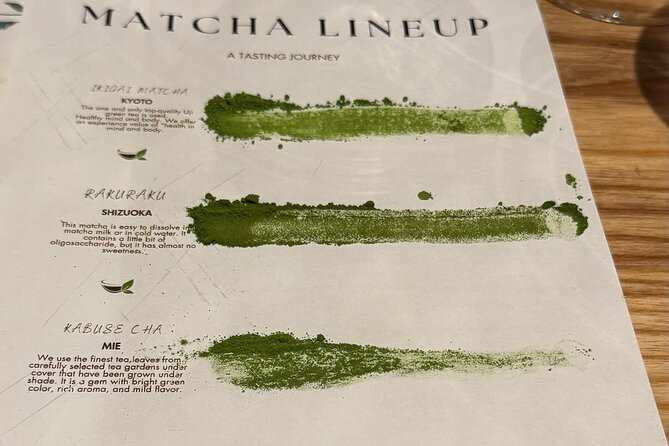
The heart of the session is the tasting. You sample several varieties of matcha, each selected for its own flavor and aroma. This is valuable because matcha is often presented as one uniform drink, when in fact the tea can differ greatly depending on where and how it is produced.
Your guide explains the basics of production and the qualities to notice. You might find yourself paying attention to sweetness, bitterness, scent, texture, and the way the flavor changes after swallowing. That is where the five-senses idea becomes useful. You are not simply drinking powdered tea. You are looking at its color, smelling the dry and prepared tea, hearing the whisk, feeling the bowl and foam, and tasting the final drink.
The session may suit you especially well if you are new to matcha but want more than a quick introduction. You do not need to arrive with a trained palate. The point is to notice differences with guidance, not to pass a tea examination.
The tour description calls the teas high quality and links them to Japan’s finest tea regions. It does not provide the names of each farm, cultivar, or region in advance, so anyone seeking a technical tea-industry lesson should keep expectations in check. This is an accessible cultural tasting, not a professional certification class.
Learning the tools: chasen and chawan
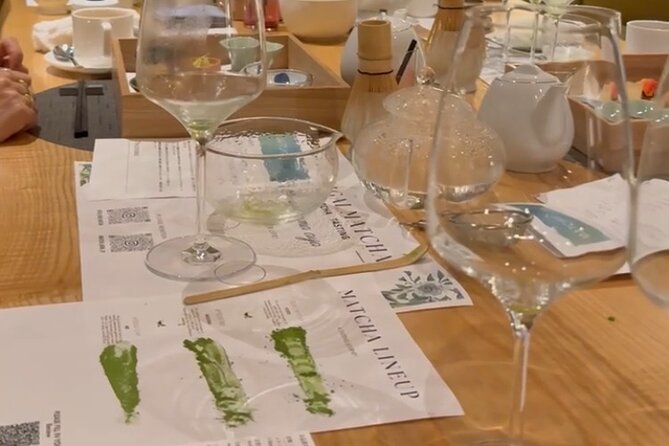
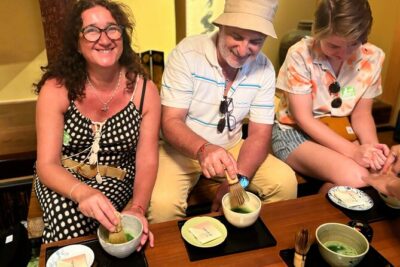
The hands-on section gives the experience its practical edge. You learn how to prepare matcha with a chasen, the fine bamboo whisk, and a chawan, the bowl used for the tea. This is much more memorable than watching an instructor make every cup while you sit back.
Whisking matcha looks simple until you try it. The movement, pressure, and speed affect the texture, and the bowl feels different from an ordinary cup. Your guide shows you the technique and helps you understand why these tools remain important in Japanese tea practice.
I like this part because it gives you something to repeat at home. Even if your first bowl is not perfectly foamy, you leave with a clearer sense of how the drink is made. The small package of matcha and related tea products adds to that value, allowing you to continue the experiment after returning home.
The experience is connected to Japanese tea ceremonies, but the supplied details do not promise a full formal ceremony with every traditional rule. Think of it as a guided tea preparation class with cultural context. That distinction is helpful. You get to participate without needing to know the etiquette beforehand.
Wagashi and other food pairings
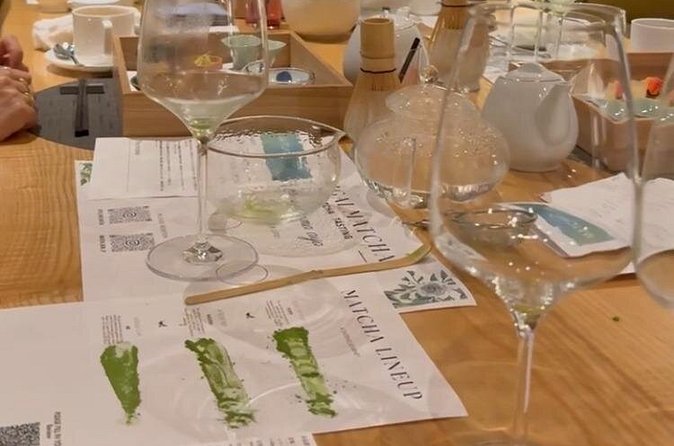
Matcha can taste sharp or bitter on its own. Traditional Japanese sweets, known as wagashi, help balance those flavors. The sweets are not just an extra snack. They show how Japanese food pairing considers contrast, texture, appearance, and timing.
The session includes carefully selected Japanese sweets, and the descriptions from participants also refer to canapés and onigiri. The exact menu may vary, so I would not book this expecting a full meal. You should view the food as part of the tasting lesson rather than lunch or dinner.
This pairing is especially useful if you are uncertain about matcha. A sweet bite can change your perception of the tea, making its more bitter or grassy notes easier to understand. You can also compare how the same matcha feels before and after eating.
Food is one of the ways this activity reaches beyond a standard drink tasting. You are learning how tea fits into Japanese hospitality and daily culture. Still, anyone with allergies or strict dietary needs should ask the provider before booking, since the available details do not list ingredients or dietary substitutions.
More Food and Drink Tours in Japan:
- Private Tea Ceremony and Sake Tasting in Kyoto Samurai House
★ 5.0 · 163 reviews - Experience all of Japanese culture and Japanese food experience classes “origami, udon, Japanese food, green tea, calligraphy” in 4 hours
★ 5.0 · 105 reviews - Tokyo Sushi Making Class : Sake Ceremony & Matcha Experience
★ 5.0 · 44 reviews - Matcha Experience with of Japanese Tea Tasting in Tokyo
★ 5.0 · 31 reviews
Misato’s approach to tea and ikigai
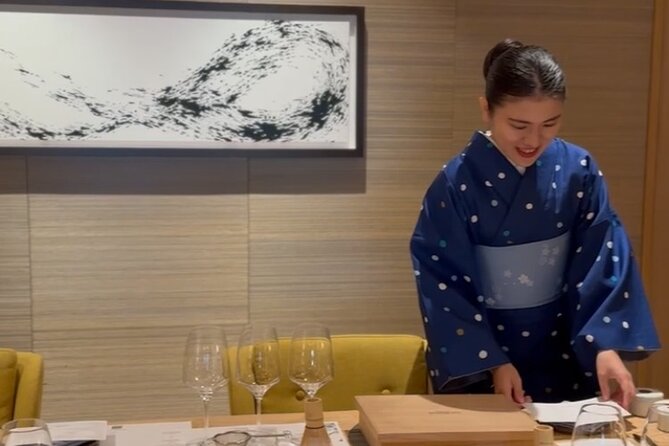
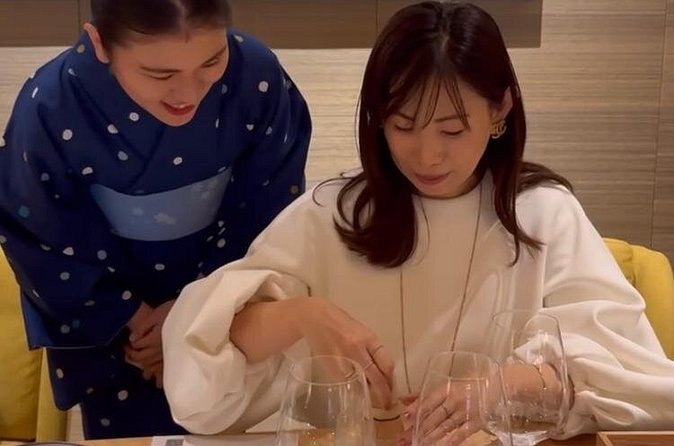
The guide, Misato, receives repeated praise for her calm and attentive teaching. She explains matcha’s history, production, cultural role, and effects on the body, then connects the session to ikigai, the idea of purpose or what gives life meaning.
That personal element is unusual for a tea class. You may be invited to think about what you value, what you want to pursue, or what gives your daily life direction. Several participants found this emotional and memorable, while one Japanese participant appreciated seeing familiar traditions from a new angle.
This part will appeal to you if you enjoy reflective activities and guided discussion. It may not suit you if you want a strictly practical lesson focused only on tea flavor and technique. The experience is not just about learning the correct whisking motion. It also asks you to slow down and consider the connection between a small ritual and a larger sense of purpose.
I would treat the ikigai section as an optional personal exercise rather than a formal counseling session. The supplied information presents it as a meaningful workshop element, but it does not describe a fixed worksheet, set curriculum, or specific promised outcome. You can take from it what feels useful and let the rest pass.
Why the two-hour schedule works
Two hours is enough time to taste, learn, prepare, eat, and talk without making the activity feel rushed. Starting at 3 p.m. also makes it easy to pair with a morning sightseeing plan or an evening meal in Yokohama.
The timing has one practical detail to remember: matcha contains caffeine. The experience details do not give a caffeine amount or advise on sensitivity, but you may want to consider that if you are especially affected by tea or coffee.
Because the activity ends where it begins, you can plan the rest of your day without arranging a separate pickup. There is no sightseeing route through multiple neighborhoods. The single stop is Minatomirai, and the focus stays on the indoor tea session.
That lack of movement is a benefit for some people and a limitation for others. If you want views, temples, markets, or a walking tour, this will not fill that role. If you have already spent the day on your feet, it offers a slower change of pace.
Is $100 per person good value?
At $100 per person, this is a premium cultural activity. The cost covers a private two-hour session, a licensed or certified in-person guide, several matcha tastings, hands-on preparation, Japanese sweets, and take-home tea products. Taxes and fees are not included, so check the final amount before payment.
I see the value in the combination rather than in the amount of tea alone. A café could serve you matcha for far less. What you are paying for here is instruction, access to several varieties, the private format, food pairing, cultural explanation, and the chance to prepare the drink yourself.
The value is strongest if you are curious about Japanese culture, want a personal activity in Yokohama, or plan to use matcha at home afterward. It is weaker if you only want to sample one cup, need a full meal, or prefer a busy sightseeing schedule.
Booking about 18 days ahead is the average pattern, so I would not leave this until the last day of a short Yokohama visit. The private format may have limited availability, and the 3 p.m. start fixes your afternoon.
Who should book this Yokohama experience?
I would recommend it to couples, friends, solo visitors, and families or small groups who enjoy food, culture, and quiet conversation. It is also a good choice for someone who has already seen Yokohama’s major sights and wants an activity with more personal participation.
You will likely appreciate it most if you enjoy:
- Learning by doing rather than watching
- Trying several versions of one Japanese food or drink
- Traditional tools and preparation methods
- Japanese sweets and light food pairings
- Personal reflection connected to cultural practice
- Bringing a small souvenir home
I would be more cautious if you want a formal tea ceremony with strict etiquette, a broad tour of Yokohama, or a detailed lesson on tea farming and chemistry. Those expectations go beyond the information provided for this experience.
The activity is listed as suitable for most participants, and service animals are allowed. It is near public transportation. Confirmation arrives when you book, and the experience is private for your group.
Cancellation and planning notes
Free cancellation is available if you cancel at least 24 hours before the 3 p.m. start time. Canceling within 24 hours, or making changes during that period, means no refund. The cutoff follows local time in Yokohama.
You should also remember that the meeting point is given as 4 Chome Minatomirai, Nishi Ward, Yokohama, Kanagawa 220-0012. The activity returns there after the session. Since exact station directions are not supplied, allow time to confirm the route and arrive ready for a 3 p.m. start.
Should you book the matcha tasting?
Book it if you want a polished, private introduction to matcha that includes tasting, whisking, sweets, and thoughtful discussion. The best parts are the comparison of several teas, the chance to use traditional tools, Misato’s personal teaching style, and the link between tea and ikigai.
Skip it if $100 feels too high for a two-hour indoor activity or if your priority is a formal ceremony, a full meal, or sightseeing on foot. For the right person, though, this is a meaningful way to spend an afternoon in Yokohama, with a practical souvenir and a new way to understand the tea in your bowl.
FAQ
Where does the matcha experience start?
It starts at 4 Chome Minatomirai, Nishi Ward, Yokohama, Kanagawa 220-0012, Japan.
What time does the experience begin?
The start time is 3 p.m.
How long does the matcha tasting last?
The experience lasts approximately two hours.
Does the activity end at the starting point?
Yes. The activity ends back at the meeting point.
Is this a private experience?
Yes. Only your group participates in the activity.
What will I learn during the session?
You will learn about different matcha types, their characteristics, preparation techniques, matcha production, its history, and the cultural role of tea in Japan.
Will I prepare matcha myself?
Yes. You will learn to prepare matcha with traditional tools including a bamboo whisk called a chasen and a tea bowl called a chawan.
Are sweets included?
Yes. Traditional Japanese sweets called wagashi are served with the matcha. The experience also includes coffee and/or tea, with matcha available.
Can I cancel for a full refund?
Yes. You can receive a full refund if you cancel at least 24 hours before the experience start time. Cancellations within 24 hours are not refunded.
Just added around Japan
- Yokohama : Tea Ceremony with Sweets and Souvenir★ 5.0 · 5 reviews
- Walking Tour: Yanaka,Nezu& Sendagi: Tea Ceremony & Old Tokyo★ 5.0 · 3 reviews
- Visit local home for music and tea ceremony near Disney★ 4.9 · 13 reviews
- Trip to Kamakura & Enoshima: Shrines, Seaside, Temples &Tea★ 5.0 · 11 reviews
- Yokohama: Sushi & Gyoza Cooking with Matcha & GreenTea Experience★ 5.0 · 3 reviews
- Kyoto tea town for matcha lovers★ 5.0 · 16 reviews
- Uji: Private immersion into Kyoto’s tea and reglious culture★ 5.0 · 17 reviews
- Uji Tea Ceremony and UNESCO Heritage Walking Tour★ 5.0 · 20 reviews
Matcha Experiences, compared.
World Heritage Kyoto & Nara Uji Authentic Matcha Experience
Read our review →
Arashiyama Bamboo Forest, Monkeys, Matcha & Temple Tour
Read our review →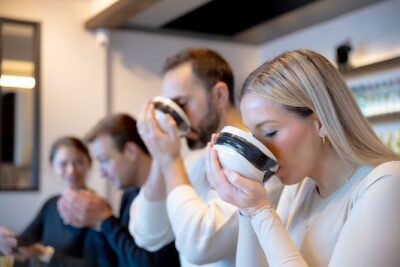
Matcha Making Class in Tokyo with Authentic Japanese Sweets Set
Read our review →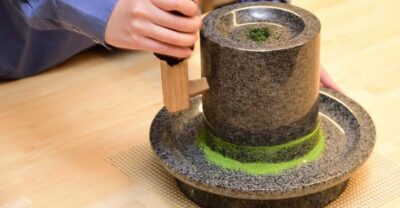
Tea Museum Tickets and Matcha Grinding Experience
Read our review →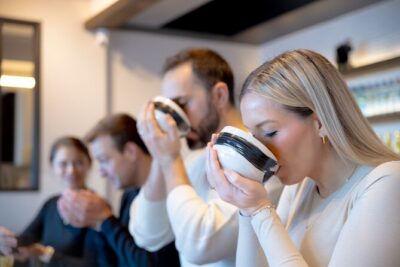
Matcha Making Class in Osaka with Authentic Japanese Sweets Set
Read our review →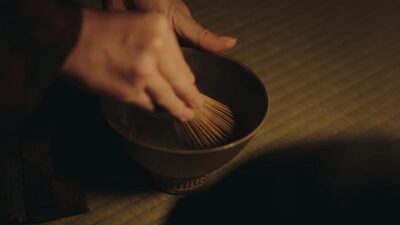
Tea Ceremony Meditation – Make Matcha with Tea Master
Read our review →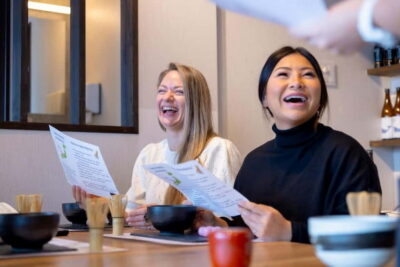
Matcha Making Experience with Mochi Sweets in Asakusa
Read our review →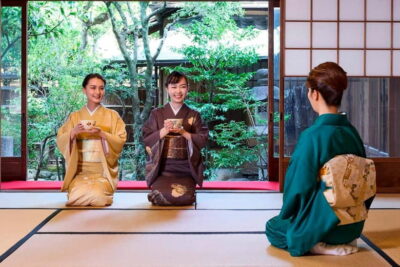
Browse the lists this tour appears in