
Review · OSAKA
Matcha Making Class in Osaka with Authentic Japanese Sweets Set
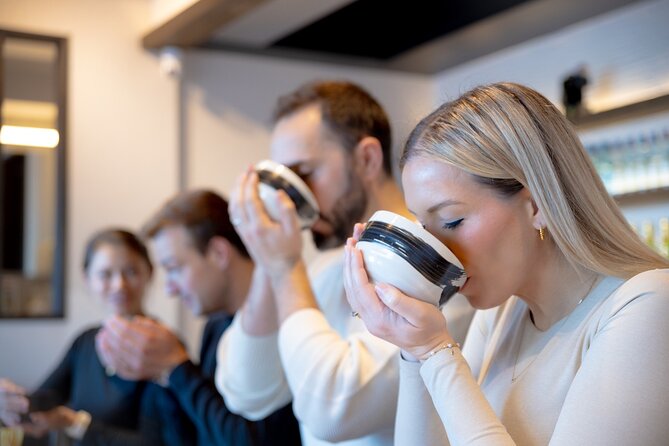
Matcha turns a short break into a ritual. This one-hour class in Osaka gives you a practical introduction to traditional matcha preparation, with an English-speaking instructor, Japanese sweets, and enough hands-on practice to repeat the process at home. I especially like the small group limit of six, which gives the teacher time to correct your technique, and the relaxed teaching style, which includes visuals and little quizzes rather than a long formal lecture.
I also like the choice of morning or afternoon sessions. That makes the class easy to fit around Osaka sightseeing, and the $21.89 price is fair for a guided activity with matcha, sweets, equipment, and instruction included. The main drawback is finding the exact building at 1-chōme-16-20 Higashishinsaibashi. A few people needed extra time to locate the entrance, so arrive early and check the provided directions or video before setting out.
Key points to know before booking
- A six-person maximum keeps the lesson personal: You get direct help instead of simply watching a demonstration.
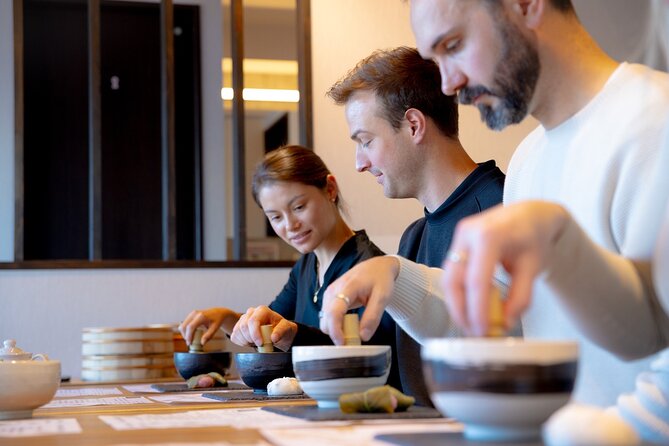
- You prepare your own bowl of matcha: The teacher guides each step and fixes mistakes as you work.
- Japanese sweets balance matcha’s strong taste: The treats are part of the experience, not just decoration.
- Morning and afternoon times offer useful flexibility: You can place the class before sightseeing or after lunch.
- Teachers use clear English and interactive teaching: Guides such as Momo, Fuko, Matty, and Yui have been praised for making the subject easy to follow.
- The location needs a little preparation: The class returns to the same meeting point, but the building can be easy to miss.
What happens during the one-hour Osaka class
This is a compact cultural activity rather than a long tea ceremony. You meet at Matcha Making Osaka, at 1-chōme-16-20 Higashishinsaibashi in Osaka’s Chuo Ward, and finish at the same location.
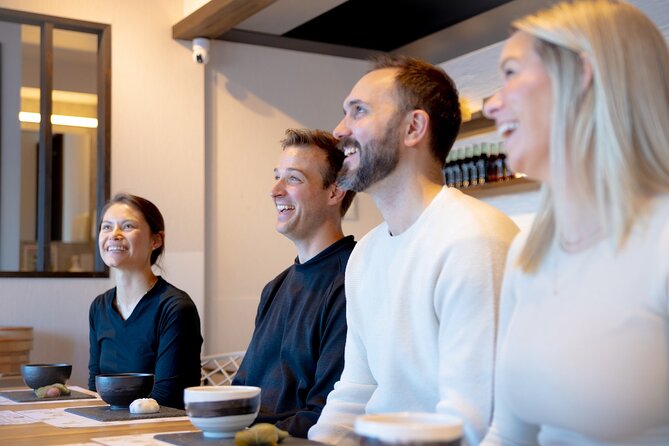
The short format works well if you want to learn one useful skill without giving up half a day. You will not spend hours sitting silently in a formal room. Instead, the class combines a short explanation, a demonstration, your own preparation, and time to drink the tea with Japanese sweets.
The equipment and ingredients are prepared for you. That matters because you can focus on the process rather than worrying about what to buy or how to arrange the tools. The teacher leads you through the steps and watches as you work.
The class is designed for beginners. You do not need to know anything about matcha, Japanese tea customs, or whisking technique before you arrive. If you already drink matcha, the useful part is learning how to make it properly at home instead of relying on a café preparation.
More Matcha Experiences in Osaka
- Osaka: Matcha Making Experience with Japanese Sweets
★ 5.0 · 146 reviews - Osaka Temple Cool Foot Bath & Matcha Experience〈45min〉
★ 4.9 · 82 reviews - Osaka Temple Head Spa &Matcha Facial – Refresh & Glow〈90min〉
★ 5.0 · 24 reviews
Learning where matcha fits in Japanese culture
The lesson begins with context about matcha and how it is made. This gives the activity more meaning than simply mixing green powder with water.
The teaching style appears deliberately light. Fuko, one of the guides, uses a quiz to help people remember the background information, while another class with a guide named Navjot included visual material and short questions. That approach is useful because the subject can become dry if it turns into a list of dates, names, and technical terms.
You should expect an introduction rather than a full academic history of tea. In one hour, the aim is to understand the basic story behind matcha, learn the correct preparation method, and take home a skill you can use.
I like this balance. You get enough cultural background to understand why the preparation matters, but the class keeps moving toward the part most people came for: making and drinking the tea.
Making your own matcha, one careful step at a time
The hands-on portion is the heart of the experience. Your teacher demonstrates the process, then you prepare your own matcha with guidance nearby.
This is where the small group size earns its keep. With a maximum of six people, the teacher can see how you are handling the tools and point out corrections. That is more useful than watching someone else whisk perfectly from across a crowded room.
Matcha preparation rewards a little patience. You need to follow the sequence, use the tools correctly, and whisk with enough energy to create the desired texture. If your first attempt is not perfect, that is part of the point. You are there to learn, not to pass a tea-making exam.
The class also gives you practical tips for making matcha at home. You will leave with a better idea of how the drink should look, how the preparation feels, and what mistakes to avoid. That home-use angle makes the activity more valuable than a ceremony that you simply watch and forget.
The lesson is casual enough for people who are curious but not devoted to tea. Even if you are unsure about matcha’s earthy flavor, you can still enjoy learning the method and trying it in a friendly setting.
Matcha and Japanese sweets belong together
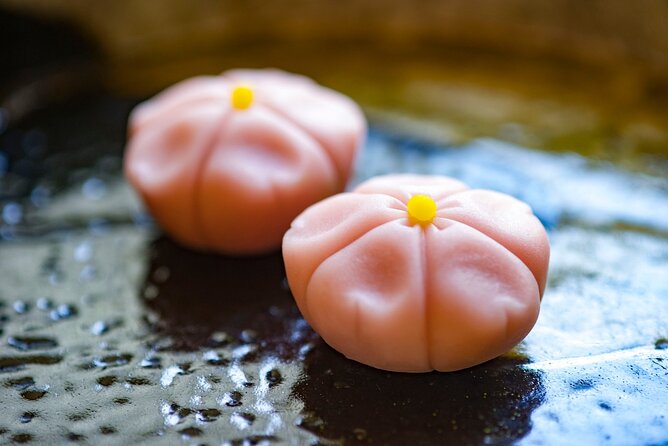
After preparing the tea, you drink it with Japanese sweets. This pairing is important because matcha has a strong, slightly bitter flavor, while the sweets provide a softer and sweeter counterpoint.
The treats are included in the price, and the class presents them as part of the full tea break. Several descriptions of the experience highlight both the tea and sweets as delicious, so you can expect this to be more than a token snack.
You may also find the pairing helps if you are new to matcha. The sweetness changes how the tea tastes and gives you a better sense of the traditional balance between bitter tea and delicate confectionery.
This is also the most relaxed part of the class. You can enjoy what you made, ask questions, and take photos. The activity is structured, but it does not sound stiff or overly ceremonial. That makes it a good choice if you want an authentic cultural moment without feeling that you must already understand every rule.
Same place, a different pot:
- Osaka: Tea Ceremony Experience
★ 4.9 · 1,426 reviews - Tea Ceremony Experience in Osaka Doutonbori
★ 5.0 · 754 reviews - Osaka: Tea Ceremony, Calligraphy, and Kimono Experience
★ 4.9 · 130 reviews - Osaka: Japanese Traditional Sweets Making and Tea Ceremony
★ 4.7 · 118 reviews
The teachers make the difference
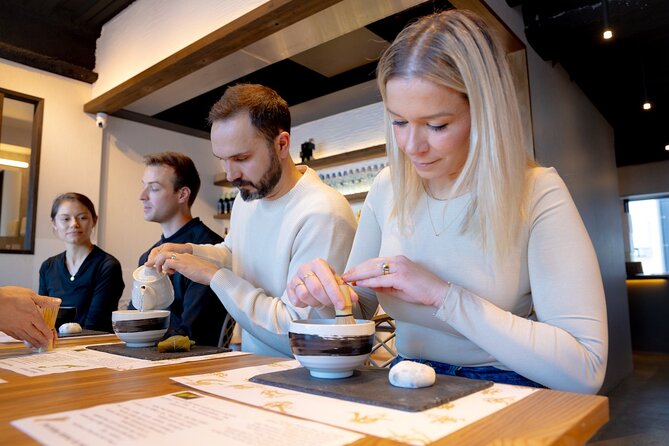
The strongest praise goes to the instructors. Momo is described as lovely and clear, Fuko as energetic and easy to understand, Matty as entertaining, and Yui as a very good host who explains the process simply.
Those details matter. Matcha preparation is not hard to watch, but a teacher can make it either engaging or tedious. Here, the use of quizzes, visuals, questions, and friendly correction gives the session some personality.
English-speaking instruction is included, so you can follow the explanation and ask questions without needing prior knowledge. The style appears to be conversational rather than formal. That should suit solo visitors, couples, families with older children, and groups of friends who want to learn together.
The activity has received a 5.0 rating from 509 ratings, with 100 percent recommendation shown in the supplied information. It has also received TripAdvisor’s Best of the Best award twice. Those figures do not guarantee that every class will feel identical, since teachers and group members vary, but they support the impression of a consistently well-liked experience.
Why the six-person limit matters
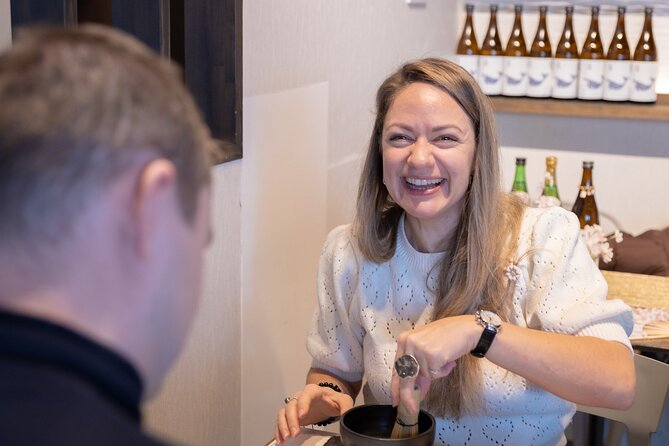
A small class changes the mood. You are not lost in a large demonstration where the teacher has to repeat every instruction for a crowd.
With up to six people, you have a better chance of receiving individual help while making your tea. If you hold the whisk incorrectly or miss a step, the instructor can notice. If you have a question about matcha at home, there is room to ask it.
The intimate setting also works well for solo visitors. You do not need to bring a group to make the experience worthwhile. The format gives you a chance to meet a few other people while still keeping the focus on the activity.
There is one trade-off. A six-person maximum does not mean every session will feel private. If the class is full, you will still be sharing the room and the teacher’s attention. For a truly private lesson, this may not be the right format, but for a small cultural activity, the limit is a strong feature.
Fitting the class into an Osaka day
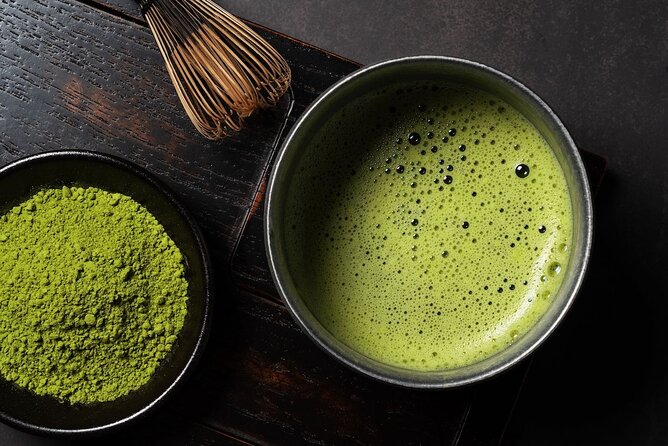
The morning and afternoon choices are useful. You can schedule the class before heading to another part of Osaka, or use it as a slower break after a busy morning.
The session lasts about one hour, and it begins and ends at the meeting point. There is no hotel pickup or drop-off, so you need to make your own way to Higashishinsaibashi.
Do not treat the listed address as the whole navigation plan. Some people found the location difficult to identify, and one recommendation is to watch the official YouTube short before arriving. The building entrance may not be obvious from the street.
I would allow extra time, especially if you are unfamiliar with Osaka or carrying luggage. Arriving early is better than rushing in just as the tea lesson begins. The class depends on a calm rhythm, and you will enjoy it more if you are not trying to find the door at the last minute.
The meeting point is near public transportation, but no specific station or route is supplied. Use your booking confirmation and map directions for the final approach.
Is $21.89 a good price?
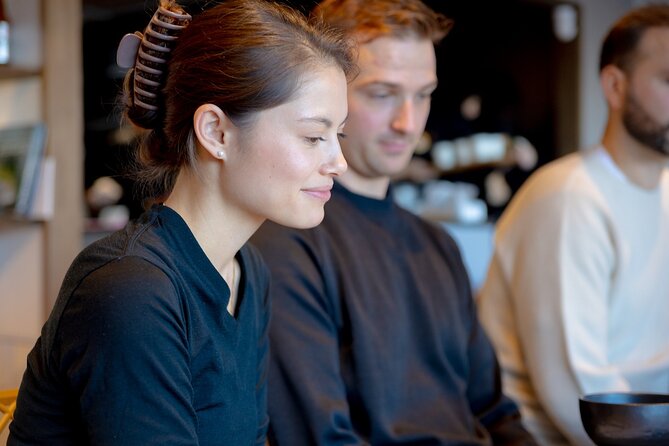
At $21.89 per person, this is a reasonable buy for a one-hour cultural activity in Osaka. You receive an English-speaking instructor, matcha, Japanese sweets, use of the prepared tools and ingredients, and direct practice.
The real value is the instruction. A bowl of matcha by itself might cost less, but it would not teach you how to prepare it or explain the setting around it. Here, you are paying for a guided skill, cultural context, and a quiet break from sightseeing.
The small group also helps justify the price. A large workshop could offer the same ingredients, but not necessarily the same amount of correction and personal attention.
Still, keep your expectations in proportion. This is not a meal, a full-day cultural course, or a formal tea ceremony lasting several hours. If you want a deep study of tea production or an elaborate traditional performance, you need a different kind of activity. If you want a friendly introduction that leaves you able to make matcha at home, the price makes sense.
Who will enjoy this most?
I would recommend the class to several types of visitors:
- First-time matcha drinkers who want an easy introduction without committing to a long ceremony.
- Matcha fans who have bought tea in Japan but never learned to prepare it properly.
- Solo visitors who appreciate a small group and an activity with a clear structure.
- Couples and friends looking for a relaxed cultural experience with photos and sweets.
- People with limited time who want to fit something local into a morning or afternoon.
- Visitors who enjoy food and drink experiences but do not want a formal cooking class.
It may be less suitable if you dislike the taste of green tea, since matcha is the central part of the session. You can still learn from the class, but the drinking and sweets pairing are important parts of the experience.
It may also disappoint people looking for a grand, silent tea ceremony in a historic setting. The description points to a casual, hands-on lesson with friendly hosts. That is a strength for beginners, but it is not the same as attending a highly formal ceremony.
Practical details worth knowing
Your booking confirmation is received at the time of booking, and the ticket is mobile, so you do not need a printed voucher. Service animals are allowed.
The experience has free cancellation if you cancel at least 24 hours before the start time. Cancellations or changes made less than 24 hours before the start time are not accepted for a refund, and the cut-off uses Osaka local time.
The stated experience provider is Sushi Making Tokyo Cooking Class in Japan, while the activity itself is Matcha Making Osaka. That name difference is worth checking on your confirmation so you have the correct contact and meeting details.
The class ends back at the starting point. Since there is no transportation included, plan your next stop from Higashishinsaibashi rather than expecting a transfer elsewhere.
Should you book the Osaka matcha class?
Book it if you want a short, affordable, hands-on introduction to matcha, especially if you care more about learning a useful skill than watching a formal performance. The English-speaking teachers, small class size, sweets, and morning or afternoon scheduling make it easy to add to an Osaka itinerary.
I would book with two small precautions: check the exact meeting point carefully, and give yourself extra time to find the building. If you do that, the $21.89 fee buys a pleasant cultural pause, a cup of tea you prepare yourself, and techniques you can use long after your Osaka visit.
FAQ
How long does the matcha class last?
The experience lasts approximately one hour.
Where does the class take place?
The meeting point is Matcha Making Osaka, 1-chōme-16-20 Higashishinsaibashi, Chuo Ward, Osaka, 542-0083, Japan.
Does the class include matcha and Japanese sweets?
Yes. Matcha and Japanese sweets are included.
Is an English-speaking instructor provided?
Yes. An English-speaking instructor leads the class.
How many people can attend?
The activity has a maximum of six participants.
Do I need previous matcha-making experience?
No. The class is beginner-friendly, and no prior experience is required.
Is hotel pickup included?
No. Hotel pickup and drop-off are not included. The activity begins and ends at the meeting point.
Can I cancel for a full refund?
Yes, if you cancel at least 24 hours before the experience start time. Cancellations or changes made less than 24 hours before the start time are not refunded or accepted.
More Tea and Sweets Making in Osaka
- Osaka: Japanese Traditional Sweets Making and Tea Ceremony
★ 4.7 · 118 reviews - Osaka : Exclusive Tea Ceremony & Wagashi Cooking
★ 5.0 · 2 reviews - Matcha Making Class in Tokyo with Authentic Japanese Sweets Set
★ 5.0 · 744 reviews - Tangier: Sunset, Tea, Sweets, Camel Ride, and Hercules Caves
★ 4.9 · 575 reviews
Just added around Osaka
- Osaka:Zen Tea Ceremony and Foot Bath Experience<45min>★ 5.0 · 7 reviews
- Osaka: Tea Ceremony, Calligraphy, and Kimono Experience★ 5.0 · 6 reviews
- Osaka Japanese Cooking And Matcha Class near Osaka Castle★ 5.0 · 22 reviews
- Nara Deer Park, Uji Matcha, & Hot Spring Full-Day Tour from Osaka★ 4.0 · 21 reviews
- Osaka: Nara, Todaiji, Uji Matcha, and Hot Spring Tour★ 4.0 · 7 reviews
- Craft Sushi and Matcha Ice Cream in Central Osaka (3-Course Meal)★ 5.0 · 2 reviews
- Tea and Calligraphy Session at a Table in Osaka★ 5.0 · 4 reviews
- ZEN therapy | Shiatsu-style massage, EnergyTherapy & Japanese Tea★ 5.0 · 5 reviews
Matcha Experiences in Osaka, compared.
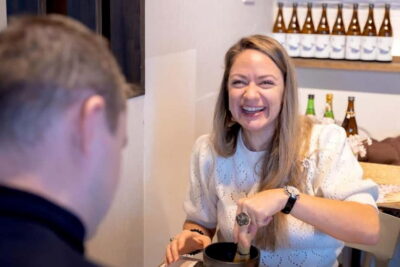
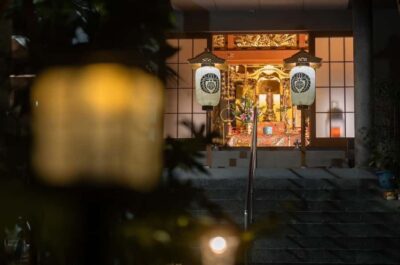
Osaka Temple Cool Foot Bath & Matcha Experience〈45min〉
Read our review →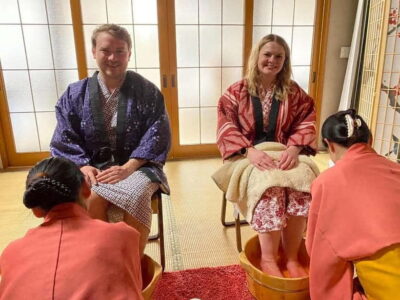
Osaka Temple Head Spa &Matcha Facial – Refresh & Glow〈90min〉
Read our review →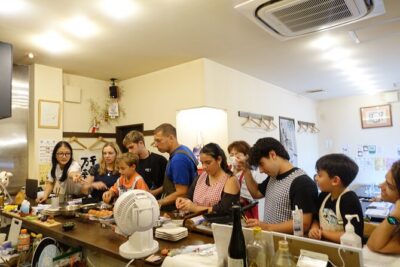
Osaka Japanese Cooking And Matcha Class near Osaka Castle
Read our review →
Nara Deer Park, Uji Matcha, & Hot Spring Full-Day Tour from Osaka
Read our review →
Learn Zen in a class of making Matcha tea near Osaka Castle
Read our review →

Browse the lists this tour appears in