
Review · KYOTO
Kyoto: Arashiyama Bamboo Forest, Monkeys, Matcha & Temple Tour
Arashiyama packs Kyoto’s best contrasts into one morning. This four-hour walking tour moves from the calm gardens of Tenryu-ji Temple to the famous bamboo paths, then across the river and uphill to wild macaques at Monkey Park Iwatayama. I like the smart mix of culture and nature, and I like that a Uji matcha drink breaks up the walking. The main catch is the climb to the monkeys, which can be tiring and slippery in poor weather.
The group size is capped at 15, small enough for a guide to keep people together without turning the outing into a private tour. Guides such as Tim, Amy, Nay, Gabriele, Sofia, and Shin have earned praise for clear explanations and friendly pacing, though one account describes a late start and a guide whose explanations felt limited. Arrive on time, wear proper shoes, and expect a full half-day on foot.
Key points at a glance
- Tenryu-ji comes first: Your entry includes the UNESCO-listed temple and its carefully designed Zen gardens.
- The bamboo visit is brief but well placed: You spend about 30 minutes on the famous path before the crowds and walking fatigue build.
- Monkey Park requires uphill effort: The macaques are wild, and the one-hour stop includes a climb that may not suit everyone.
- Matcha adds a local pause: One Uji matcha drink is included, giving you a short cultural break between major sights.
- Arashiyama’s classic views are covered: You cross Togetsukyo Bridge and visit Nonomiya Shrine as part of the route.
- Good value at $53.06: Temple and monkey park admission, a guide, and the matcha drink are included.
Why this Arashiyama route works
Arashiyama is easy to enjoy and easy to mishandle. The bamboo grove, temple, bridge, shrine, river, and monkey park are all close enough to fit into a day, but the area can feel scattered if you do not know how to link them. This tour gives you a clear route and a guide to explain what you are seeing.
You begin at Tully’s Coffee beside Randen Arashiyama Station, at 20-2 Sagatenryuji Tsukurimichicho. That meeting point is near public transportation and simple enough to locate, though you should allow time to find it before the scheduled start. The activity returns to the same meeting point, which makes the end of the tour easy to manage.
At roughly four to four and a half hours, this is not a quick photo stop. You get time at each main place, plus the walking between them. One especially useful feature is the rhythm of the day. The tour begins with temple gardens, shifts to bamboo and shrine scenery, pauses for matcha, and saves the most physical section, Monkey Park, for later.
That order gives the morning a natural flow. It also means the final climb comes after several hours on your feet, so fitness matters more than the simple duration suggests.
More Matcha Experiences in Kyoto
- Kyoto: Tea Ceremony Meditation – Make Matcha with Tea Master
★ 4.8 · 406 reviews - Kyoto: Kimono Tea Ceremony with Matcha and Sweet
★ 4.9 · 249 reviews - Kyoto: Arashiyama Bamboo, Temple, Matcha, Monkeys & secret spots
★ 5.0 · 219 reviews
Tenryu-ji and the quiet logic of its gardens
Tenryu-ji is the cultural anchor of the tour. The visit lasts about 30 minutes, and admission is included in the $53.06 price. As a UNESCO World Heritage Site and one of Kyoto’s best-known Zen temples, it gives the day a strong beginning.
The gardens are the real prize here. Their pond, trees, and seasonal colors create a composed view that changes throughout the year. You are not simply walking through a religious building. You are looking at a space designed for calm, balance, and careful attention.
I like starting here because the temple gives meaning to the rest of the route. The bamboo grove can feel like a beautiful natural corridor, but Tenryu-ji helps place that beauty within Kyoto’s wider Buddhist and garden traditions. Guides have been praised for explaining the history and garden design in a way that makes the visit more than a quick photograph.
Thirty minutes is enough for an introduction, not a full study. If you want long temple visits, extended quiet time, or detailed photography, the schedule may feel brisk. Still, the included entry fee makes this a useful part of the package, particularly if you would otherwise rush through the temple on your own.
Bamboo Grove: beautiful, famous, and short
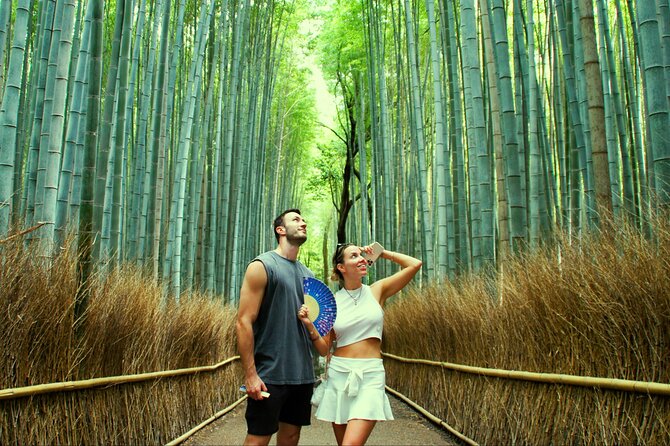
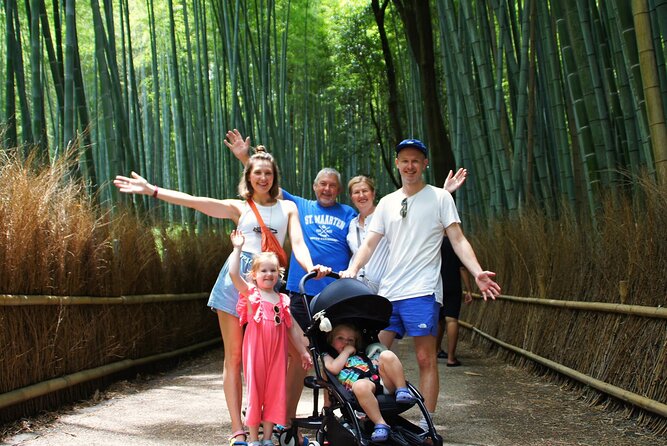
The Bamboo Forest receives about 30 minutes. That is enough to walk the main section and take photographs, but it is not enough to wander every nearby lane at leisure. The towering stalks create one of Kyoto’s most recognizable scenes, with green bamboo rising above the path and filtering the light.
The grove has a peaceful feel, though its fame means you should not expect complete solitude. The value of having a guide here is less about finding the path and more about keeping the group moving while explaining the place and its connection to local life. You can enjoy the setting without spending half the day figuring out where to go next.
I would treat this stop as a carefully timed introduction. If the bamboo is your main reason for visiting Arashiyama, you may want to return independently for a longer walk. On the tour, the short visit works because it leaves room for the temple, shrine, bridge, matcha, and monkeys.
Wear shoes that are comfortable for walking rather than shoes chosen only for photographs. The route continues well beyond the bamboo path, and the final climb is the part most likely to test your feet.
Nonomiya Shrine and a quieter side of Arashiyama
Nonomiya Shrine receives about 15 minutes. It is a small Shinto site linked with old purification practices and surrounded by mossy woodland. Compared with the bamboo grove and Monkey Park, this is a modest stop, but it adds an important change of pace.
The shrine helps you see that Arashiyama is not only a collection of famous photo locations. It also has smaller sacred spaces where local religious traditions continue in a quieter setting. A guide can explain why the shrine mattered in earlier times and how purification remains part of Japanese religious customs.
Fifteen minutes is short, yet it suits the scale of the shrine. You get time to look around, hear the main story, and take a few photographs without turning the visit into a long pause. The moss and shaded setting also make this one of the more atmospheric stops on the route.
Same place, a different pot:
- Kyoto: Tea Ceremony in a Traditional Tea House in Kiyomizu
★ 4.9 · 3,519 reviews - Kyoto: Tea Ceremony Ju-An at Jotokuji Temple
★ 4.9 · 3,207 reviews - Kyoto: 45-Minute Tea Ceremony Lesson Experience
★ 4.3 · 2,378 reviews - Kyoto: Table-Style Tea Ceremony at a Kyo-Machiya
★ 4.9 · 1,211 reviews
Matcha provides a welcome reset
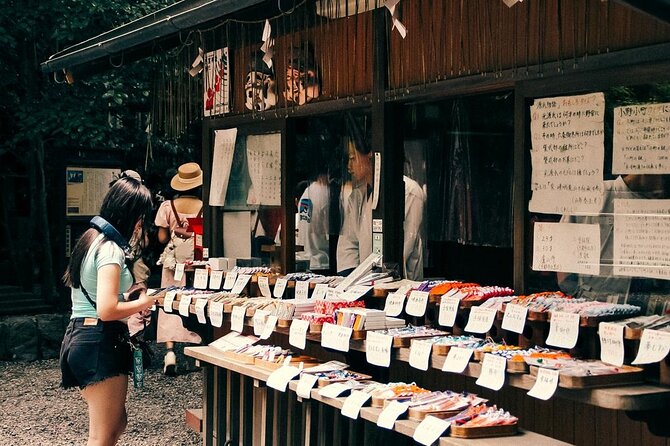
The tour includes one Uji matcha drink. This is a small detail, but it matters on a walking route. A short refreshment stop gives you a chance to rest, ask your guide questions, and prepare for the more demanding section at Monkey Park.
Matcha is also a useful cultural touch. It connects the tour to one of Japan’s best-known food and drink traditions without requiring a full tea ceremony. Do not expect an extended formal lesson based on the information provided. Think of it as a taste and a pause, not a dedicated tea workshop.
Some tour experiences refer to a matcha ice cream stop, while the stated inclusion is one Uji matcha drink. If the exact serving matters to you, confirm it at booking or with the operator. The safe assumption is the included drink, not a guaranteed dessert.
Togetsukyo Bridge and the river view
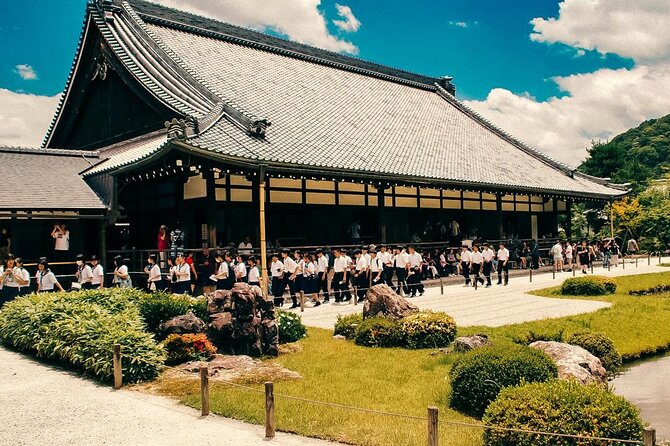
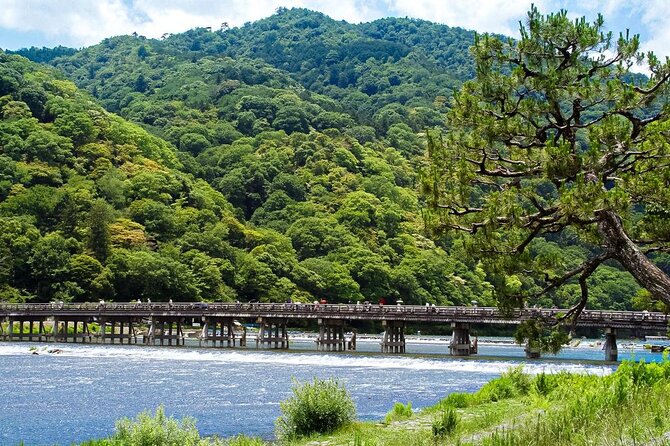
The stop at Togetsukyo Bridge lasts about 10 minutes. That may sound brief, but the bridge is mainly a scenic viewpoint and photo stop rather than a place requiring a long visit.
Its name means Moon Crossing Bridge, and its setting explains why it became an Arashiyama symbol. The river, surrounding mountains, and traditional-looking structure create one of the area’s most recognizable views. Your guide can add context while you cross and pause for photographs.
This is also a useful transition in the day. After the enclosed feel of bamboo and the formal lines of the temple garden, the bridge opens the view toward the river and hills. Ten minutes will not allow a relaxed riverside wander, but it gives you the essential sight without cutting deeply into time at the monkey park.
Monkey Park Iwatayama requires honest preparation
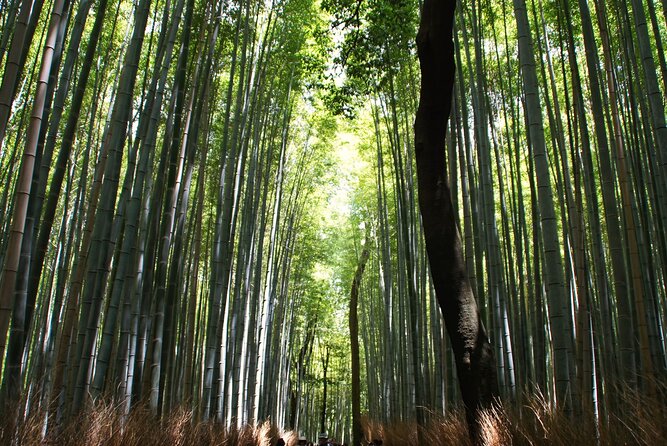
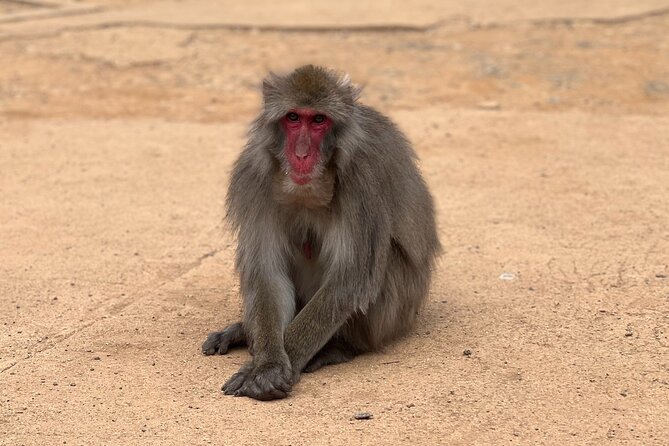
Monkey Park is the tour’s biggest draw for many people and its clearest physical challenge. The stop lasts about one hour, including a short uphill hike to see Japanese macaques and look across Kyoto from the mountaintop.
You should take the word hike seriously. Several tour experiences describe the climb as substantial, and one notes that people in poor health may struggle. Another points out that the path can become treacherous depending on weather. Good shoes are not optional here, particularly if the ground is wet.
The reward is unusual. You see macaques living in an open setting rather than behind a conventional zoo barrier, and their social behavior can be entertaining to watch. Babies may be present, and the city views from the top add a second reason to make the climb.
The monkeys are wild. You should follow the guide’s instructions and avoid treating them like tame pets. The supplied information notes that they generally do not approach unless you go to the feeding area, which makes this a wildlife observation stop rather than an animal-contact activity.
If you have limited mobility or recent health concerns, you can still join the tour, but you should think carefully about the climb. One couple chose not to go uphill while friends continued and shared photographs afterward. That option may not provide the complete experience, but it shows why you should assess your own stamina before booking.
Guide quality can shape the whole morning
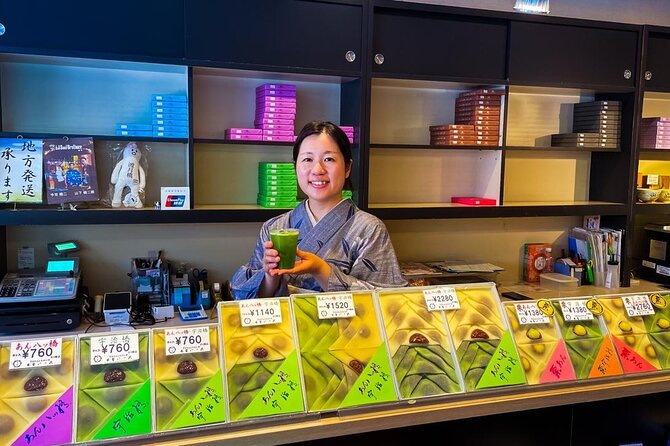
A walking tour rises or falls on its guide. The strongest reports praise guides for warmth, local information, flexibility, and good time management. Tim is described as entertaining and helpful with food and area suggestions. Nay received praise for enthusiasm and cultural explanations. Gabriele was noted for giving people time for photos and questions, while Amy, Sofia, Shin, and others were praised for keeping groups comfortable and engaged.
The maximum group size is 15. That is a sensible middle ground. You get the social energy of a small group, but the guide can still answer questions and monitor the pace. A group of 12 was handled well by one guide, including regular bathroom breaks and pauses.
There is one warning worth taking seriously. At least one account describes a late start caused by people arriving after the meeting time, along with explanations that felt scripted and disorganized. You cannot control the guide assigned to your departure, but you can protect your own morning by arriving early and staying close to the group.
The tour has a 4.9 rating from 759 reviews and is recommended by 99 percent of customers. Those numbers suggest strong consistency, though they should not make you ignore the basic tradeoff: the experience depends partly on guide quality and partly on how well the pace matches your group.
Is $53.06 a fair price?
At $53.06 per person, the cost is reasonable for a four-hour guided route with three paid inclusions: Tenryu-ji entry, Monkey Park entry, and one Uji matcha drink. You also receive an English-speaking guide and a planned route through several of Arashiyama’s main sights.
The value is strongest if you want context. You could visit the bamboo grove, bridge, and shrine independently, but you would need to organize the route and pay separately for the temple and monkey park. The guide also saves you from spending time deciding what comes next.
The price is less compelling if you want long, unhurried visits. Thirty minutes at Tenryu-ji and the bamboo grove, 15 minutes at Nonomiya Shrine, and 10 minutes at the bridge give you an overview rather than a slow exploration. Independent visitors can spend longer at the places they like best.
For a first visit to Arashiyama, I think the package offers good value. It gathers the area’s main contrasts into one manageable outing and adds a guide without reaching private-tour prices.
Who should book this walking tour?
I would recommend it to first-time Kyoto visitors who want a clear introduction to Arashiyama. It suits you especially well if you enjoy temples, gardens, local customs, scenic walking, and wildlife in equal measure.
Families and mixed-age groups may also find the route appealing, provided everyone can manage several hours on foot and the uphill section to Monkey Park. The guides have been praised for adjusting the pace and allowing breaks, but you should not mistake a four-hour tour for a gentle stroll.
This is not the best choice if you dislike hills, need a fully accessible route, or want to spend most of your time in the bamboo grove. It may also disappoint you if you expect a full tea ceremony, a long temple study, or guaranteed matcha ice cream. The stated inclusion is a matcha drink.
Free cancellation is available up to 24 hours before the start time for a full refund. Changes or cancellations made within 24 hours are not accepted for a refund.
Should you book it?
Book this tour if you want Arashiyama’s main sights explained and connected in one half-day. The temple gardens, bamboo, shrine, matcha, bridge, and macaques offer plenty of variety, and the $53.06 price covers the major entry fees.
Skip it if the Monkey Park climb would be a serious problem or if you prefer to set your own pace. For most reasonably fit visitors, though, this is a well-balanced introduction, with the best payoff arriving at the top of the hill: wild macaques nearby and Kyoto spread below.
FAQ
How long does the Arashiyama tour last?
The tour lasts approximately four to four and a half hours.
Where does the tour start?
It starts at Tully’s Coffee Randen Arashiyama Station Shop, located at 20-2 Sagatenryuji Tsukurimichicho, Ukyo Ward, Kyoto, 616-8384, Japan.
Where does the tour finish?
The activity ends back at the meeting point.
Is admission to Tenryu-ji Temple included?
Yes. The Tenryu-ji Temple entry fee is included in the tour price.
Is Monkey Park admission included?
Yes. Entrance to Monkey Park Iwatayama is included.
Is a matcha drink included?
Yes. One Uji matcha drink is included.
How large is the tour group?
The tour has a maximum of 15 participants.
Is the tour suitable for people who do not exercise regularly?
Most people can participate, but the Monkey Park section includes an uphill hike. People with limited fitness or health concerns may find this part difficult.
Can I cancel for a full refund?
Yes. You can cancel at least 24 hours before the experience start time for a full refund. Cancellations made less than 24 hours in advance are not refundable.
Just added around Kyoto
- Uji Walking Tour – Byodo-in temple and Tea Ceremony from Kyoto★ 3.5 · 3 reviews
- Kyoto: Authentic Tea Ceremony in a Small Group★ 5.0 · 7 reviews
- Tea ceremony at Kyoto’s Zen Temple Teahouse★ 5.0 · 2 reviews
- Tea Ceremony in 150 Years Old Townhouse with Tables and Chairs★ 5.0 · 22 reviews
- Silent Beauty of Kyoto Zen Walk and Tea Experience★ 5.0 · 2 reviews
- Tea Ceremony Experience in Traditional Kyoto Townhouse★ 5.0 · 19 reviews
- Traditional Tea Ceremony in Kyoto★ 4.5 · 3 reviews
- Kyoto Private Tea Ceremony at a Japanese Inns★ 5.0 · 12 reviews
Matcha Experiences in Kyoto, compared.

Tea Ceremony Meditation – Make Matcha with Tea Master
Read our review →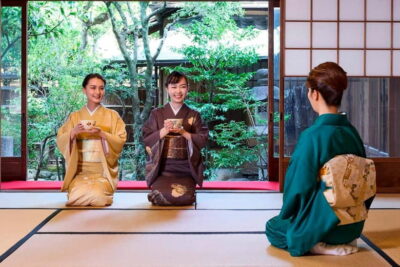
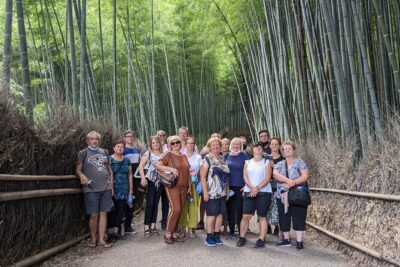
Arashiyama Bamboo, Temple, Matcha, Monkeys & secret spots
Read our review →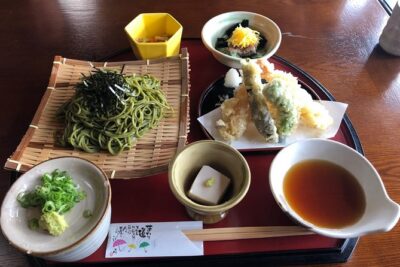
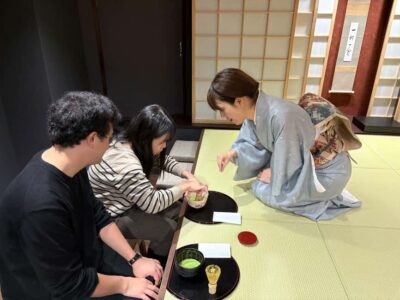
Traditional Tea Ceremony with Matcha & Sweets in Gion
Read our review →
Matcha Grinding Experience and Walking Tour in Uji Kyoto
Read our review →

Kyoto Local Gourmet Night Experience: Kaiseki & Izakaya & Matcha
Read our review →Browse the lists this tour appears in