
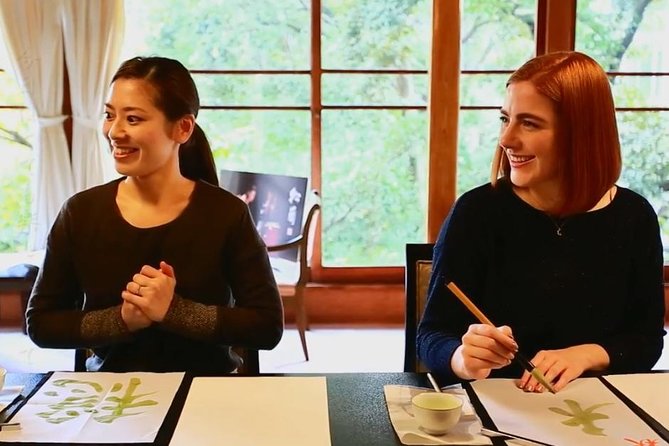
Review · SHIZUOKA
Experience mindfulness and tranquility with Matcha Calligraphy
Slow art rewards patient eyes. Matcha Calligraphy gives you about 90 minutes to create a hanging scroll, learn a Kanji version of your name, and see matcha change as it dries. I especially like the personal nature of the souvenir and the chance to work with Shoran, a calligraphy master with teaching experience in the United States. The main drawback is the price, $192.69 per person, which is high for a short activity, and the meeting details deserve careful checking before you go.
This is not a fast demonstration where you simply watch someone write a character. You make your own piece and receive guidance along the way. The setting is described as traditional and relaxing, with a location listed in Shizuoka and a reference to being just behind Sensoji Temple, so I would confirm the exact address before setting out.
Key points to know before booking
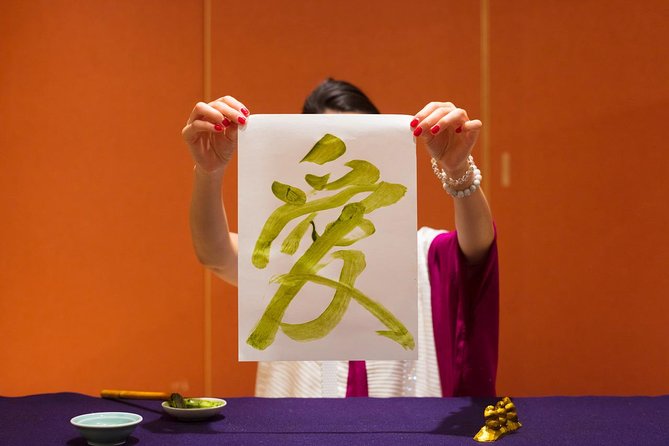
- Your main souvenir is a handmade hanging scroll: You create a piece you can keep, rather than buying a standard shop gift.
- Your name becomes a personal Kanji design: Shoran helps choose characters whose meanings suit your personality.
- The matcha changes as it dries: The work is meant to show gradual color and natural change, not remain fixed like ordinary ink.
- Shoran leads the lesson: She has teaching experience in the United States and brings a personal connection to calligraphy.
- Small groups keep the lesson calm: The maximum group size is 10 people, and the activity returns to its meeting point.
What happens during the 90-minute session
The experience begins at 2-chōme-2-5 Gofukuchō, Aoi Ward, Shizuoka, 420-0031, Japan. It ends at the same meeting point, making the activity easy to fit into a day in Shizuoka without arranging a separate return transfer.
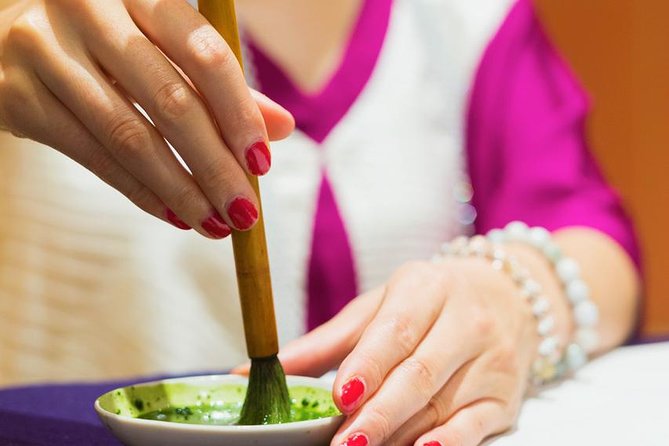
The exact order of every step is not provided, but the central flow is clear. You learn about the idea behind Matcha Calligraphy, work with the matcha medium, create a scroll, and receive help with your Kanji name. Because the session lasts about an hour and a half, you should expect a focused introduction rather than a full professional calligraphy course.
The short format is useful if you want one cultural activity without giving up an entire afternoon. It also means the lesson probably suits beginners best. You do not need to arrive with calligraphy experience to take part, and the activity is listed as suitable for most people.
More Tea and Calligraphy Workshops in Japan
- Kyoto: Tea Ceremony Meditation – Make Matcha with Tea Master
★ 4.8 · 406 reviews - Osaka: Tea Ceremony, Calligraphy, and Kimono Experience
★ 4.9 · 130 reviews - Experience all of Japanese culture and Japanese food experience classes “origami, udon, Japanese food, green tea, calligraphy” in 4 hours
★ 5.0 · 105 reviews
Why matcha makes this calligraphy different
Traditional calligraphy is often valued for the precision of the brushstroke and the meaning of the characters. Here, the material itself becomes part of the artwork. The matcha gradually changes color and decays over time, so the finished piece is not entirely static.
That change is the heart of the experience. You are not only making a mark on paper. You are watching the color shift as time passes, much like the changing seasons in Japan. The work may look different later than it did when you first made it.
I find that idea more interesting than a simple souvenir. A mass-produced charm stays the same from the day you buy it. A matcha scroll carries a sense of time. Its changing appearance is part of its meaning, although it also means you should not expect a permanent, unchanging image.
The activity is described as engaging several senses. You can see the changing matcha, notice its scent, and connect the work with the natural cycle of growth and decay. That gives the session a quiet, reflective quality rather than the feel of a standard craft class.
Creating a Kanji name with Shoran
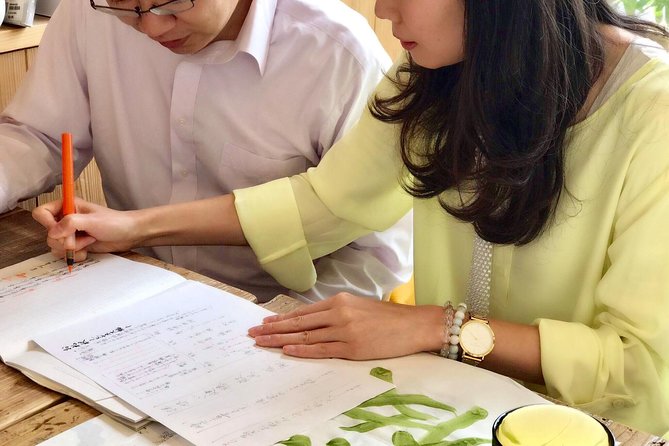
One of the strongest parts of the session is the personalized Kanji name. Kanji characters carry meanings, so your name is not treated as a simple sound conversion. You learn characters selected to suit your personality, giving the finished scroll a meaning specific to you.
This makes the activity especially appealing if you have already spent time in Japan and want a keepsake tied to your visit. It can also work well as a gift, though the personal element is strongest when you take part yourself and understand why those characters were chosen.
You should ask Shoran to explain the meaning of each character as you work. That turns the name from decorative writing into something you can remember and explain later. Since different Kanji can suggest different qualities and ideas, this part is likely to be more personal than simply having your name written in Japanese.
The scroll also gives you something connected to the lesson. You are not leaving with only a photograph or a brief demonstration. You have a piece made during the session, and the changing matcha helps preserve the memory in a less conventional way.
Learning from a calligraphy master
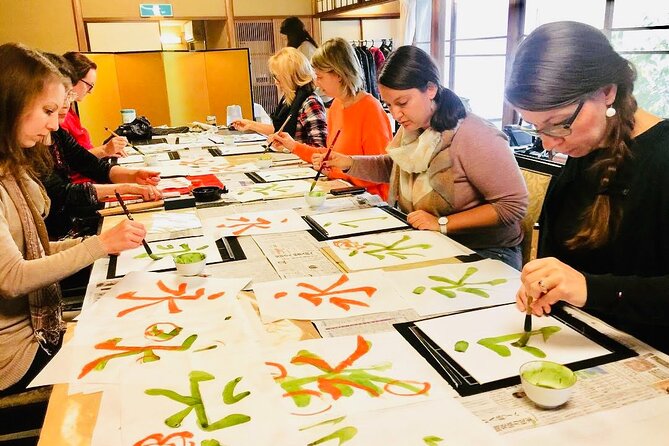
Shoran is the person who guides the session. Her teaching experience in the United States is useful for an international audience, since she has experience explaining Japanese calligraphy to people from outside Japan.
That matters in a beginner lesson. Calligraphy can look simple from a distance, but brush control, spacing, and character form can be difficult to understand without clear instruction. A teacher who has worked with international students may be better prepared to explain the meaning and process in accessible terms.
The personal story behind the art also gives the lesson more feeling. Shoran connects Matcha Calligraphy with her grandfather, a master calligrapher, and with the tea garden near his calligraphy room. She describes the practice as a way to remember that influence and feel safe, loved, and connected to nature.
You are not required to share that personal connection, of course. Still, it helps explain why the activity is presented as more than a craft project. The method has a family story behind it, and Shoran’s own relationship with calligraphy is part of what gives the session its reflective mood.
More Matcha Experiences in Japan:
- World Heritage Kyoto & Nara Uji Authentic Matcha Experience
★ 5.0 · 1,573 reviews - Kyoto: Arashiyama Bamboo Forest, Monkeys, Matcha & Temple Tour
★ 5.0 · 759 reviews - Matcha Making Class in Tokyo with Authentic Japanese Sweets Set
★ 5.0 · 744 reviews - Kyoto: Tea Museum Tickets and Matcha Grinding Experience
★ 4.9 · 739 reviews
A calm setting near a major temple reference
The experience is described as taking place in a traditional, relaxing atmosphere just behind Sensoji Temple. At the same time, the stated meeting address is in Gofukuchō, Aoi Ward, Shizuoka. Those details do not appear to match neatly, so I would confirm the exact meeting point with the provider after booking.
That is not a small matter. If you plan your day around a temple visit or a particular train route, a location mix-up could create unnecessary stress. The booking information says confirmation is sent within 48 hours, subject to availability, so use that confirmation to verify the address and arrival instructions.
Once you are at the correct location, the small maximum group of 10 should help keep the session personal. A group of that size is large enough to create a social atmosphere but small enough for individual help, especially during the name and scroll work.
The setting is intended to encourage quiet attention. Do not expect a loud, fast-paced attraction. This is a better choice for someone who enjoys sitting with an activity, observing gradual changes, and listening to the meaning behind the art.
The souvenir has real personal value
Many Japanese souvenirs are attractive but detached from the moment of purchase. This one is different because you create it during the experience. The hanging scroll records your own participation, and the Kanji name gives it a story you can explain when you take it home.
The changing matcha adds another layer. Its color may gradually shift and decay, so the artwork reflects the passage of time. If you like objects that show age and change, this will feel meaningful. If you want a crisp image that looks exactly the same for years, you may find the material less practical.
The handmade result is also likely to be more valuable to you than to someone who did not take part. That is worth keeping in mind if you are considering the session mainly as a gift. The activity is designed around personal meaning, so the best recipient is someone who appreciates the process as much as the finished scroll.
You should also handle the scroll with care. The information provided does not explain how to preserve it, so ask Shoran about storage before you leave. Since the matcha changes over time, basic care advice would be useful.
Is $192.69 a fair price?
At $192.69 per person, this is not a budget activity. The session lasts about 90 minutes, which puts the cost well above many ordinary craft classes or short cultural demonstrations.
The value comes from the personal instruction, the Kanji name, the handmade hanging scroll, and the unusual matcha medium. You are paying for a one-off lesson with a named calligraphy teacher, not simply for access to a room or a quick photo opportunity.
I would consider the price reasonable if you care about Japanese calligraphy, want a personal souvenir, or have a special interest in matcha beyond drinking tea. It is harder to justify if you are looking for a low-cost introduction to Japanese culture or a longer class with extensive technical practice.
The maximum group size of 10 helps support the price because the session is not designed for a very large audience. Still, the description does not specify every included material or whether refreshments are part of the experience. I would ask about those points before booking if they affect your budget.
Who will enjoy this experience most?
I would recommend Matcha Calligraphy to several kinds of visitors:
- People who prefer calm cultural activities to crowded sightseeing
- Beginners curious about Japanese calligraphy
- Visitors who want a handmade souvenir with personal meaning
- Couples or friends looking for a shared creative activity
- Anyone interested in the changing nature of matcha and traditional Japanese ideas
- Repeat visitors who have already seen major sights and want a quieter activity
Families may also find it appealing, but the supplied information does not give a specific minimum age or child policy. If you are booking with young children, confirm that the pace and format suit them.
This is less suitable if you want a broad lesson covering many styles of Japanese writing. It is also not ideal if you dislike activities where the final result can change over time. The point here is not perfect permanence. The point is to notice the work as it develops.
Practical details for your day
The experience uses a mobile ticket, so keep your booking accessible on your phone. Confirmation is sent within 48 hours, subject to availability. I would avoid making tight same-day plans until that confirmation arrives.
The activity begins and ends at the listed meeting point. It is near public transportation, which should make it manageable without a private car, although the provided information does not name a station or give walking directions.
Service animals are allowed, and most people can participate. The group maximum is 10. The activity also requires good weather, and poor weather may lead to a different date or a full refund. A minimum number of participants is required as well, so the provider may offer another date or experience if that number is not reached.
You can cancel for a full refund if you do so at least 24 hours before the start time. Changes or cancellations made inside that 24-hour window are not accepted for a refund, and the cut-off follows local time.
What the strongest praise focuses on
The most positive responses focus on two things: the unusual nature of the activity and the quality of Shoran’s work. One person especially valued keeping the paintings, which supports the idea that the final piece feels like a lasting personal souvenir even as the matcha itself changes.
Another praised the message behind Matcha Calligraphy and expressed interest in taking another lesson. That points to an important strength: the activity has an idea behind it. You are not only copying a symbol. You are considering nature, time, family influence, and the feeling of being present.
The praise is warm, but the sample is small, with only two published responses. I would treat it as encouraging rather than as proof that every visitor will have the same experience. Your enjoyment will depend on how much you like quiet instruction and reflective art.
Should you book Matcha Calligraphy?
Book it if you want a small, personal Japanese culture experience with a souvenir you make yourself. The Kanji name, Shoran’s family connection to calligraphy, and the changing matcha give the lesson more depth than a standard craft workshop.
Think twice if $192.69 feels high for 90 minutes, or if you want a practical calligraphy course with lots of technical repetition. Also confirm the meeting address, since the Shizuoka location and the reference to Sensoji Temple need clarification.
For the right person, this is a gentle pause from busy sightseeing. You leave with a scroll, a name in Kanji, and an artwork that changes as time passes. That is the real appeal.
FAQ
Where does Matcha Calligraphy begin?
The listed starting point is 2-chōme-2-5 Gofukuchō, Aoi Ward, Shizuoka, 420-0031, Japan.
Where does the activity end?
The activity ends back at the meeting point.
How long does the experience last?
It lasts approximately 1 hour and 30 minutes.
How much does Matcha Calligraphy cost?
The listed price is $192.69 per person.
How many people can join?
The activity has a maximum of 10 participants.
Is the activity accessible by public transportation?
Yes. The meeting point is listed as being near public transportation.
What happens if I need to cancel?
You can receive a full refund if you cancel at least 24 hours before the experience start time. Cancellations or changes made less than 24 hours before the start time are not accepted for a refund.
Just added around Japan
- Yokohama : Tea Ceremony with Sweets and Souvenir★ 5.0 · 5 reviews
- Walking Tour: Yanaka,Nezu& Sendagi: Tea Ceremony & Old Tokyo★ 5.0 · 3 reviews
- Visit local home for music and tea ceremony near Disney★ 4.9 · 13 reviews
- Trip to Kamakura & Enoshima: Shrines, Seaside, Temples &Tea★ 5.0 · 11 reviews
- Yokohama: Sushi & Gyoza Cooking with Matcha & GreenTea Experience★ 5.0 · 3 reviews
- Kyoto tea town for matcha lovers★ 5.0 · 16 reviews
- Uji: Private immersion into Kyoto’s tea and reglious culture★ 5.0 · 17 reviews
- Uji Tea Ceremony and UNESCO Heritage Walking Tour★ 5.0 · 20 reviews
Tea and Calligraphy Workshops in Japan, compared.
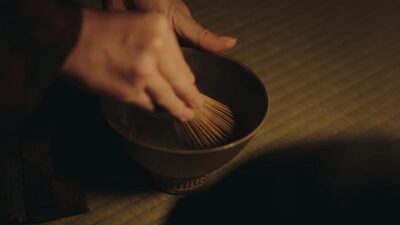
Tea Ceremony Meditation – Make Matcha with Tea Master
Read our review →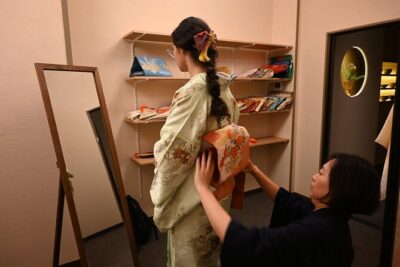
Tea Ceremony, Calligraphy, and Kimono Experience
Read our review →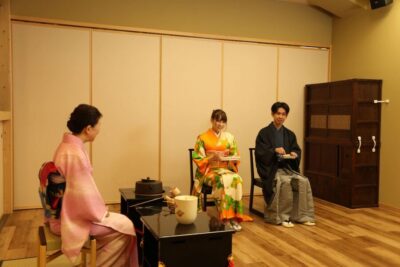
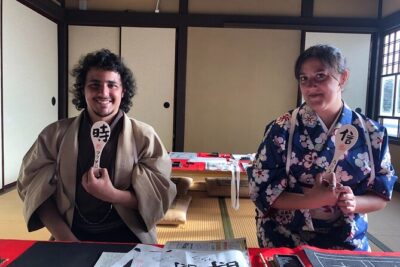
An Amazing set of Cultural experience: Kimono, Tea Ceremony and Calligraphy
Read our review →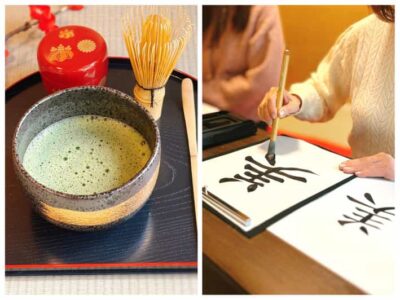
Cultural Activities :Kimono, tea ceremony, Calligraphy and Amulet
Read our review →
Samurai dress-up and shows, plus Tea Ceremony & Calligraphy
Read our review →Browse the lists this tour appears in