
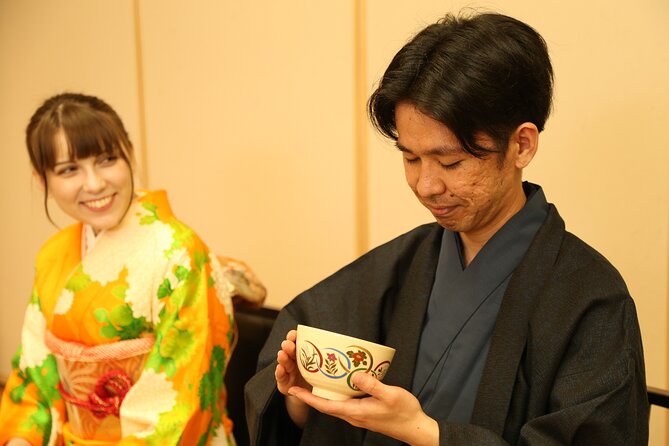
Review · TOKYO
Practicing Zen through Japanese Tea Ceremony
Quiet moments are rare in Tokyo. This tea ceremony offers one, with hands-on matcha preparation and a clear introduction to the ideas behind Japanese hospitality. I like the calm pace and the chance to make tea yourself, not simply watch a demonstration. You also taste wagashi, traditional sweets chosen to balance matcha’s bitter edge.
The main consideration is the setting. The ceremony takes place in a basement room inside an office building, so the atmosphere may feel less refined than a historic tea house. The session also gives more time to tea procedure than to Zen theory or meditation, though a short meditation is included.
Key details before you book
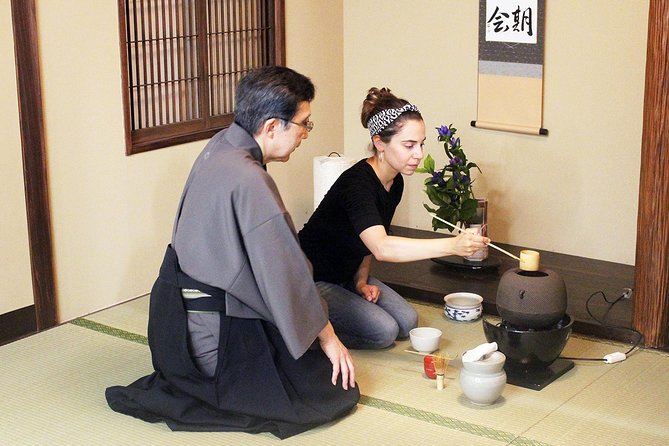
- You make your own matcha: After watching the tea master, you prepare a second bowl yourself with step-by-step instruction.
- A bilingual licensed tea master leads the session: The instructors include Miyuki and Yuuko, and the tea master has at least five years of experience.
- The setting is practical rather than historic: You meet at Kikai Shinkō Kaikan in Shibakōen, in a basement room within an office building.
- Wagashi is part of the lesson: Traditional Japanese confectionery is served to match the flavor of ceremonial green tea.
- The experience lasts about 75 minutes: It gives you a focused cultural activity without taking up half a day of sightseeing.
- The group can reach 28 people: It is not necessarily a private or small-group ceremony, so the feel may depend on the day’s attendance.
A calm pause near Shibakōen
Tokyo rewards energy, but constant motion can wear you down. This experience gives you a short reset near Shibakōen, where the focus shifts from trains, traffic, and sightseeing lists to a bowl of tea, a sweet, and a set of careful movements.
The meeting point is Kikai Shinkō Kaikan, at 3-chōme-5-8 Shibakōen in Minato City. The location is near public transportation, and the activity ends where it begins. Since no pickup or drop-off is included, you need to make your own way there and allow time to find the building.
The 75-minute length is well judged. You get enough time for explanation, demonstration, tasting, and practice, yet you can still fit the session between other Tokyo plans. I would place it on a day when you want something quieter, rather than squeezing it between two rushed sightseeing stops.
More Tea and Calligraphy Workshops in Japan
- Tokyo: Practicing Zen with a Japanese Tea Ceremony
★ 4.7 · 105 reviews - Experience all of Japanese culture and Japanese food experience classes “origami, udon, Japanese food, green tea, calligraphy” in 4 hours
★ 5.0 · 105 reviews - Tokyo Morning Japanese Tea and Meditation Experience in Japan
★ 5.0 · 2 reviews
What happens when the tea master begins
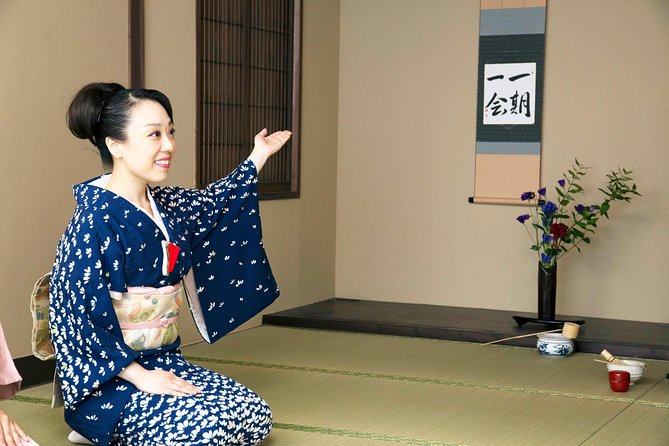
The session recreates the atmosphere and basic procedures of a traditional Japanese tea ceremony. Your tea master explains the meaning of the ritual, then prepares matcha and serves it with a traditional sweet.
This first preparation is the part to watch closely. The value is not just in drinking the tea. You learn how the ceremony uses movement, objects, space, and attention to create a sense of order. The tea utensils and the hanging scroll receive explanation in English, giving you useful context for details you might otherwise miss in a formal tea room.
The instructors are bilingual and licensed. Miyuki has received especially warm praise for making the session comfortable and welcoming, while Yuuko is noted for her friendly introduction and clear explanations. The tea master leading the ceremony has at least five years of experience.
You should expect teaching rather than a silent performance. Questions and explanations are part of the program, and the purpose is to help you understand what you are seeing. That makes this a good choice if you are curious about the customs behind the movements, not simply looking for a photogenic Japanese activity.
Matcha and wagashi: why the sweet comes first
The ceremony includes authentic matcha and traditional Japanese sweet confections called wagashi. The sweet is not an unrelated snack added to the schedule. It is selected to work with matcha’s strong, earthy bitterness.
You will likely notice the contrast more clearly after the explanation. The wagashi prepares your palate for the tea, while the matcha gives the sweet a cleaner, less sugary finish. This simple pairing shows how Japanese dining often pays attention to balance, sequence, and presentation.
The food portion is modest. Extra food and drinks are not included, so do not book this as a meal replacement. Think of the sweet as part of the tea lesson, not as a snack stop.
This is also one of the more useful parts for anyone who has tried matcha in a café but has never encountered it in a ceremonial setting. The session connects the flavor to the ritual around it, which gives the drink more meaning than a quick cup ordered at a counter.
Your turn to prepare the tea
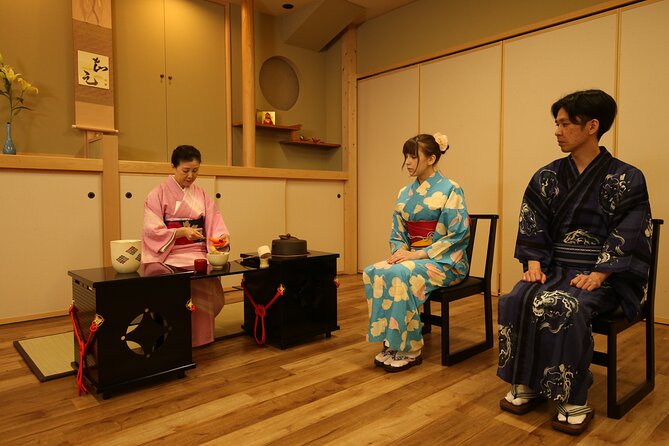
The most valuable part comes after the demonstration. You get to prepare a second tea yourself, following the tea ceremony process with instruction from the master.
This turns the session from a show into a lesson. You handle the process and begin to understand why the ceremony requires patience and care. Even if your first attempt feels awkward, that is part of the fun. You are not expected to arrive with tea-making skills.
I like this feature because it gives you something to remember beyond a few facts about Japanese culture. You leave with a practical sense of how matcha is prepared and how the ceremony’s movements fit together. It also makes the experience suitable for couples, families, and friends who want to share an activity rather than sit through a lecture.
A small point of etiquette matters here: follow the instructor’s pace. The ceremony is built around deliberate movement, so rushing through your turn works against the purpose. You do not need to perform perfectly. You only need to pay attention.
More Tea Ceremonies in Tokyo
- Kimono Tea Ceremony at Tokyo, Asakusa Maikoya
★ 5.0 · 638 reviews - Tokyo: Traditional Tea Ceremony with a Tea Master
★ 5.0 · 528 reviews - Tea Ceremony Workshop in Tokyo by the Experienced Instrucor
★ 5.0 · 189 reviews - Asakusa: Kimono Tea Ceremony with Matcha and Sweet
★ 4.9 · 153 reviews
The Zen connection, with realistic expectations
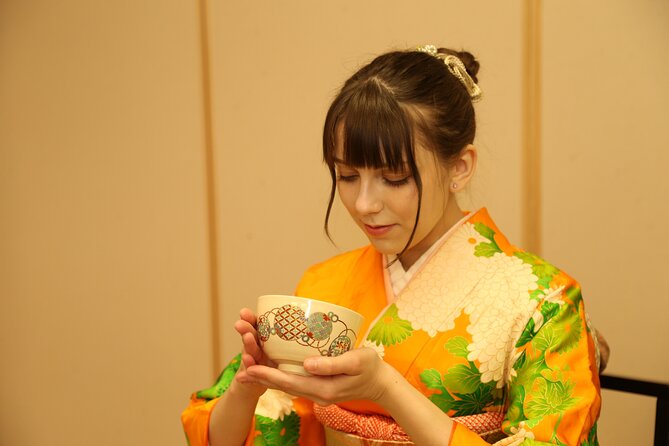
The program presents tea ceremony as connected to Zen practice. You learn about mindfulness, respect, the role of the tea room, hanging scrolls, and utensils. A short meditation is also included.
Still, I would set your expectations carefully. This is primarily a tea ceremony experience with Zen ideas woven into the explanation. It is not a full meditation class or an extended spiritual retreat. If you want practical Zen theory or a long period of silent meditation, this may feel light.
That balance is not necessarily a weakness. For many visitors, a compact introduction works better than a dense lesson. You can learn why attention, simplicity, and hospitality matter without giving up an entire morning. The experience gives you a cultural frame for the ceremony, then lets you take part.
The ceremony’s connection to architecture and aesthetics is another useful point. Even in a modern city building, the instructor can explain how the tea setting uses objects and arrangement to shape the mood. You gain a way to look at Japanese design that goes beyond museums and major landmarks.
A modern venue with a less traditional feel
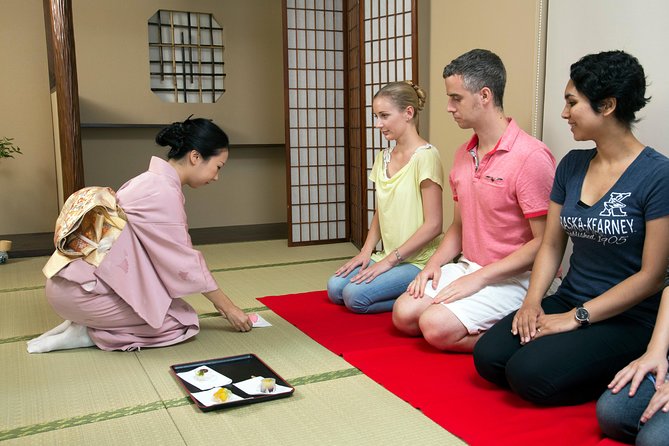
The room is in a basement inside an office building. That detail matters because the word tea ceremony can bring to mind an old wooden house, a garden path, or a historic tea room. You should not book this expecting that kind of setting.
The practical venue has an advantage: it is easy to use for a scheduled class and can accommodate a larger group. The tradeoff is atmosphere. The room may feel more like an organized cultural workshop than a centuries-old ceremony space.
If you care most about the instruction and the chance to prepare tea, this may not trouble you. If the surroundings are central to your experience, the modern basement setting could disappoint. I would think of the room as a classroom designed to recreate key parts of the ceremony, rather than as a preserved historical site.
A short meditation can help create a quieter mood despite the setting. Still, the physical surroundings remain simple. You are paying for the teaching, tea, sweets, and participation, not for an ornate building.
Group size, timing, and the overall pace
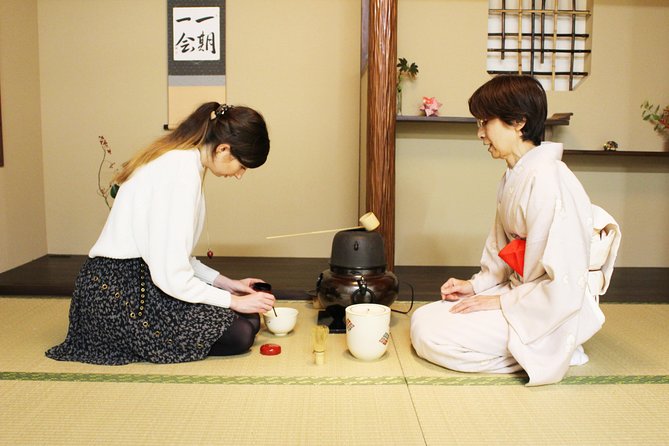
The maximum group size is 28 people. That is large enough that the experience may not feel intimate, particularly if the session is full. Your personal turn to make tea is included, but the time available for each person may be limited when many people attend.
On the other hand, a group setting can make the activity feel approachable. You can watch other people try the process, and you do not need to worry about carrying a conversation in a private lesson. The bilingual format also helps the instructor explain Japanese terms and customs to an international audience.
The average booking time is eight days ahead. That suggests you should avoid leaving it until the last moment if your Tokyo schedule is fixed. Confirmation is sent within 48 hours, subject to availability.
The activity is offered with a mobile ticket, which keeps your booking details easy to access while you are moving around the city. Free cancellation is available if you cancel at least 24 hours before the start time. Changes or cancellations inside that window are not refundable.
Is $64.50 a fair price?
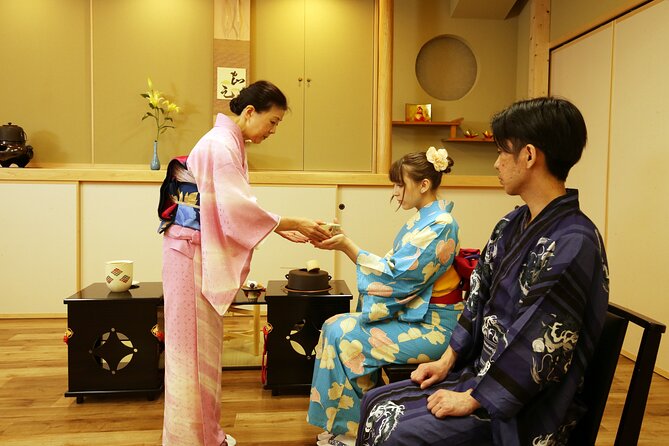
At $64.50 per person, this is not the cheapest cultural activity in Tokyo. The price makes more sense when you look at what is included: a bilingual licensed tea master, matcha, wagashi, a full demonstration, explanations of Zen practices and tea utensils, and your own guided tea preparation.
You are paying for instruction and participation, not just a cup of tea. That is the key value. A café visit would cost much less, but it would not explain the ritual or give you a structured chance to make matcha yourself.
The value is strongest for someone who wants cultural context in English and prefers a guided activity. It is also useful for a first visit to Japan, when customs can otherwise seem beautiful but difficult to interpret.
The price is less convincing if you only want a quiet drink in a traditional setting. The modern basement venue and possible group size mean that the cost is not buying exclusivity. You are buying access to a focused, English-language lesson with active participation.
Who will enjoy this tea ceremony most
I would recommend it to you if you want:
- A short cultural activity that fits into a busy Tokyo itinerary
- An English explanation of matcha, tea utensils, scrolls, and Zen ideas
- A chance to prepare tea rather than watch from the side
- A calm break from city sightseeing
- A family-friendly or couple-friendly activity with a clear structure
- A first introduction to Japanese tea ceremony customs
You may want to choose something else if you need a historic tea house, a very small group, or a serious meditation course. The experience offers a taste of Zen practice, but the main focus is the ceremony and the hands-on tea lesson.
It can also suit a solo visitor. The organized format gives you something to do without requiring you to arrange a private guide. If you are traveling with friends, the self-preparation portion adds a shared moment and usually gives the experience more energy.
Practical advice for a smoother visit
Arrive with enough time to locate Kikai Shinkō Kaikan. The activity begins and ends at the same address, and transportation is not provided. A mobile ticket is accepted, but you still need to navigate to the meeting point yourself.
Wear something that lets you sit and move comfortably. The supplied information does not specify a strict dress code, so you should not assume formal clothing is required. The most important preparation is mental: slow down and follow the instruction.
Keep your sightseeing plans flexible around the 75-minute session. The ceremony itself is approximately one hour and 15 minutes, but you also need time to reach the building and continue to your next stop. Since the group can include up to 28 people, the exact pace may vary.
Most of all, treat the activity as participation rather than a performance for your camera. The best part is noticing the small steps, tasting the matcha after the sweet, and trying the process yourself.
Should you book it?
Book this experience if you want an accessible introduction to Japanese tea ceremony with real hands-on practice. The matcha, wagashi, bilingual teaching, and chance to prepare your own tea make it more useful than a simple demonstration.
Skip it if you are seeking an old tea house, a private ceremony, or extensive Zen meditation. The basement office setting is functional, and the group may be sizeable. For the right visitor, though, $64.50 buys a calm, well-structured cultural lesson and a memorable pause in the middle of Tokyo’s noise.
FAQ
Where does the tea ceremony take place?
The meeting point is Kikai Shinkō Kaikan, 3-chōme-5-8 Shibakōen, Minato City, Tokyo 105-0011, Japan. The activity ends back at the same meeting point.
How long does the experience last?
The tea ceremony lasts approximately 1 hour and 15 minutes.
Is matcha included?
Yes. Authentic matcha green tea is included, along with traditional Japanese sweet confections.
Do I get to make tea myself?
Yes. After the tea master demonstrates the ceremony, you prepare a second tea yourself with instruction.
Is the ceremony taught in English?
Yes. The experience includes a bilingual licensed tea master and English explanations of the ceremony, Zen practices, hanging scrolls, and tea utensils.
How many people can join the activity?
The maximum group size is 28 people.
Can I cancel for a refund?
Yes. You can receive a full refund if you cancel at least 24 hours before the experience begins. Cancellations or changes made less than 24 hours before the start time are not refunded.
More Tea and Calligraphy Workshops in Tokyo
- Japan’s Customs of Ikebana Art, Tea Ceremony & Kimono Welcome
★ 5.0 · 2 reviews - Kyoto: Tea Ceremony Meditation – Make Matcha with Tea Master
★ 4.8 · 406 reviews - Osaka: Tea Ceremony, Calligraphy, and Kimono Experience
★ 4.9 · 130 reviews - An Amazing set of Cultural experience: Kimono, Tea Ceremony and Calligraphy
★ 5.0 · 69 reviews
Just added around Tokyo
- Yokohama : Tea Ceremony with Sweets and Souvenir★ 5.0 · 5 reviews
- Walking Tour: Yanaka,Nezu& Sendagi: Tea Ceremony & Old Tokyo★ 5.0 · 3 reviews
- Private Kimono and tea ceremony at local home near Tokyo Disney★ 5.0 · 6 reviews
- Private Mochi・Matcha sweets Making Class Near Shibuya Area★ 5.0 · 22 reviews
- Tokyo Sweets Tour: Hidden Gems & Matcha at an Old Tea House★ 5.0 · 6 reviews
- Kimono and Tea Ceremony in Asakusa Private Food Tour With Guide★ 5.0 · 4 reviews
- 2 Hours Mochi &Nerikiri Making & Matcha Class in Bunkyo★ 5.0 · 21 reviews
- Tokyo Tea Ceremony Class at a Traditional Tea Room★ 5.0 · 2 reviews
Tea Ceremonies in Tokyo, compared.
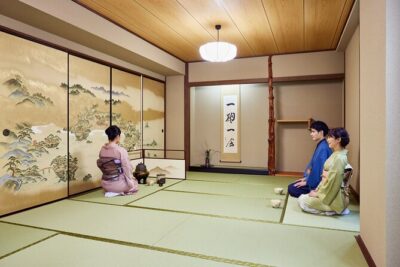
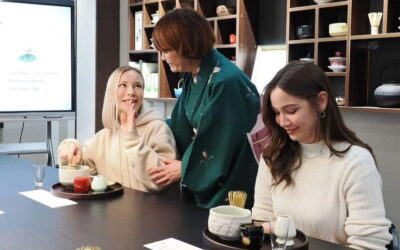
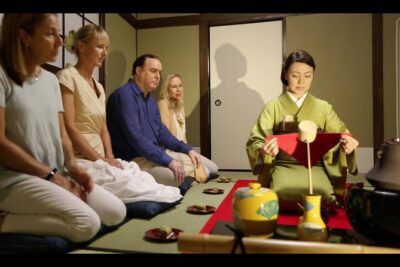
Tea Ceremony Workshop in Tokyo by the Experienced Instrucor
Read our review →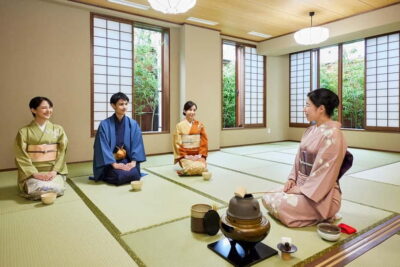
Asakusa: Kimono Tea Ceremony with Matcha and Sweet
Read our review →
Tea Ceremony Experience in a Private Tea Room in Shibuya
Read our review →
Tea ceremony experience in Japanese-style room 60min
Read our review →Browse the lists this tour appears in