
Review · JAPAN
Experience Japanese calligraphy & tea ceremony at a traditional house in Nagoya
Nagoya rewards patient visitors. This two-and-a-half-hour cultural experience takes you into a lived-in kominka house, where tatami, shoji screens, and a garden replace the usual tour setting. I like the quiet, personal scale, and I like that the activities connect to Nagoya’s samurai past rather than treating calligraphy and tea as isolated demonstrations. The main drawback is the price: at $179.63 per person, this is a serious splurge for a short activity.
The hosts, Yuzo Mori and his wife, lead you through the session in English. You receive a framed piece of your calligraphy, a bowl of matcha, and Japanese sweets. The group is limited to six people, which should give you time to ask questions and try the techniques yourself, but the non-refundable booking policy means you need to be sure of your plans.
Key points to know before booking
- A real kominka house: You practice inside a traditional home with tatami, shoji, and a Japanese garden, not in a standard visitor center.
- A useful 15-minute history lesson: An illustrated talk explains Nagoya and the Owari district during the Sengoku period.
- You make your own ink: You grind an ink stick on an inkstone before using the brush, adding a slow, tactile part to the calligraphy session.
- Your work becomes a souvenir: Your finished clean copy is framed for you to take home.
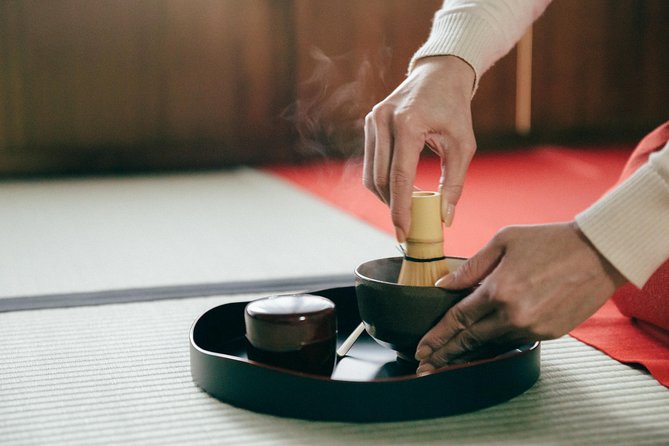
- You serve matcha yourself: After receiving tea from the host, you learn to prepare and serve a bowl on your own.
- Small groups matter: A maximum of six people keeps this from feeling like a rushed class, though the $179.63 price makes it best for visitors seeking a special cultural activity.
Why Nagoya is a fitting place for this experience
Nagoya is not simply a convenient stop between Tokyo and Kyoto. The city sits in the Owari district, an important center during Japan’s Sengoku period, the age of competing feudal lords and samurai power in the sixteenth century.
The area is linked with Oda Nobunaga, Toyotomi Hideyoshi, and Tokugawa Ieyasu, three of the most famous names in Japanese history. The experience begins with this setting, giving you a short explanation of how Nagoya fits into the story before you pick up a brush or enter the tea room.
That context is valuable because Japanese calligraphy and tea ceremony can otherwise feel like attractive but disconnected customs. Here, you first hear why the local history matters. Then you spend time in an old-style home, using objects and spaces that help the past feel less abstract.
You should not expect a full history lecture. The introduction lasts about 15 minutes and uses an easy-to-follow slide show. That is enough to give you a basic foundation without taking over the afternoon. If you already know Japan’s medieval history, you may find the talk familiar, but it still helps place Nagoya within the wider story.
More Tea and Calligraphy Workshops in Japan
- Kyoto: Tea Ceremony Meditation – Make Matcha with Tea Master
★ 4.8 · 406 reviews - Osaka: Tea Ceremony, Calligraphy, and Kimono Experience
★ 4.9 · 130 reviews - Experience all of Japanese culture and Japanese food experience classes “origami, udon, Japanese food, green tea, calligraphy” in 4 hours
★ 5.0 · 105 reviews
Entering the traditional house in Yamawakicho
The meeting point is at 4-chōme-32 Yamawakichō in Showa Ward, Nagoya. The experience begins and ends there, and the location is described as being near public transportation. You should allow time to find the address, since one review specifically called the location reasonably easy to find rather than effortless to reach.
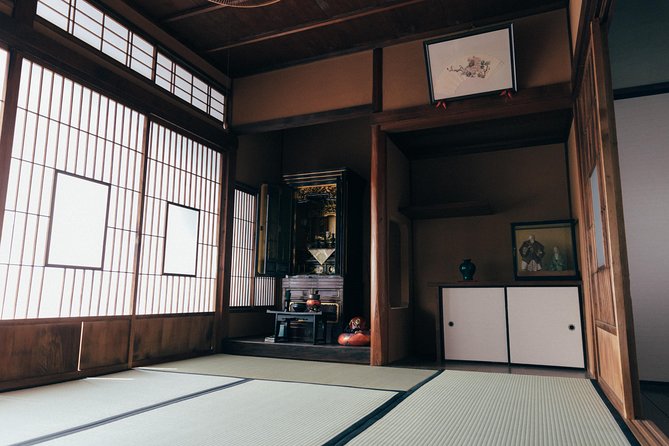
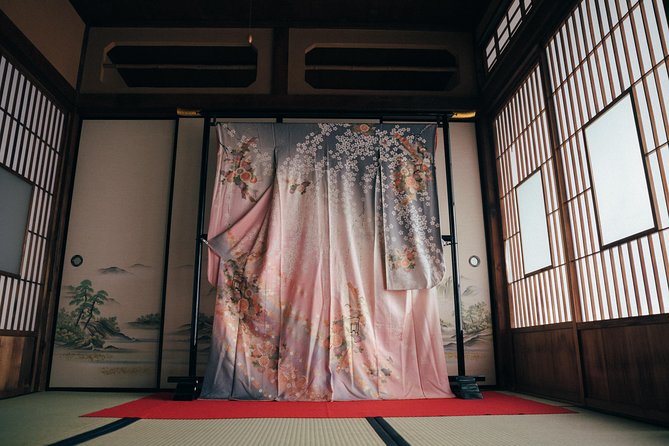
The setting is one of the strongest reasons to book. This is a traditional farmhouse-style home where people actually lived, not a purpose-built sightseeing facility. Inside, you can expect the visual features associated with an older Japanese house: tatami mats, shoji paper screens, and a traditional garden.
That difference changes the mood. A demonstration in a modern studio can show you the same basic actions, but an old home gives them a quieter frame. You remove yourself from the pace of city sightseeing and pay attention to small movements: the way the brush meets paper, the sound of an ink stick against a stone, and the careful handling of a tea bowl.
The house also gives the session a sense of place. You are not just buying a calligraphy lesson that could happen anywhere. You are visiting a Nagoya home connected to the kind of domestic setting in which these arts have long been practiced.
The 15-minute Sengoku introduction
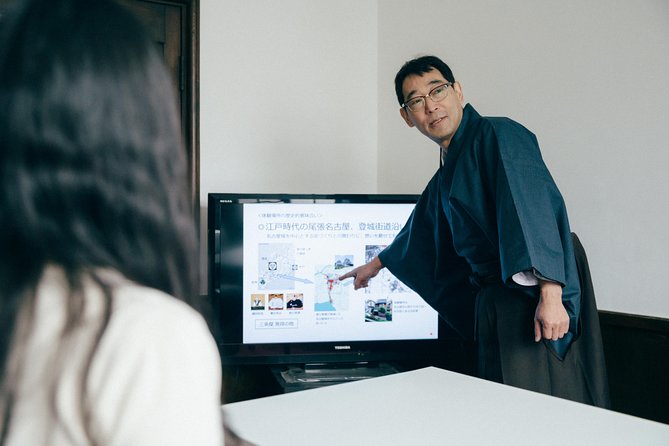
The first formal part is a short history commentary about the Sengoku period. An English explanation and slide show cover Nagoya and the surrounding Owari district during the era when samurai leaders shaped Japan’s political order.
I appreciate the decision to put this at the start. You receive just enough information to understand why the hosts describe Nagoya as a city of samurai culture. The talk also gives first-time visitors a way to connect the house and the activities to the city outside.
This portion is not meant to replace a museum visit or a detailed history class. It is a primer. If you enjoy background information, you will probably wish it lasted longer. Still, the 15-minute length protects the hands-on parts of the experience, which are the real focus.
Pay attention to the names and regional connections. Oda Nobunaga, Toyotomi Hideyoshi, and Tokugawa Ieyasu all came from the Owari area or are strongly connected with its history. That makes the introduction more than a generic account of samurai life.
Grinding ink before you write
The calligraphy lesson begins with an action many modern visitors rarely encounter: making the ink yourself. You place a little water on an inkstone and rub an ink stick slowly across it.
This step is easy to rush, but you should not. The slow grinding prepares you for the concentration that follows. You notice the distinctive smell of the ink and the change in its texture as water and pigment meet. It is a small task, yet it sets a calmer pace than simply opening a bottle of ready-made ink.
The host then explains the basics of holding and moving the brush. You do not need previous calligraphy experience. The purpose is not to produce museum-quality work. It is to understand the brush, the pressure, and the controlled movement that make Japanese characters look so different from ordinary handwriting.
You select symbols from sample designs based on meanings you like. The available information does not specify the full menu of characters, so you should expect to choose from examples rather than inventing a completely personal composition. That is helpful if you are new to the script and do not know which symbols would suit a keepsake.
The clean copy of your work is framed as a souvenir. This is a practical touch. You leave with something more lasting than a photograph of yourself holding a brush, though souvenirs are not otherwise included in the price.
More Tea Ceremonies in Japan:
- Kyoto: Tea Ceremony in a Traditional Tea House in Kiyomizu
★ 4.9 · 3,519 reviews - Kyoto: Tea Ceremony Ju-An at Jotokuji Temple
★ 4.9 · 3,207 reviews - Kyoto: 45-Minute Tea Ceremony Lesson Experience
★ 4.3 · 2,378 reviews - Osaka: Tea Ceremony Experience
★ 4.9 · 1,426 reviews
A framed souvenir with real personal value
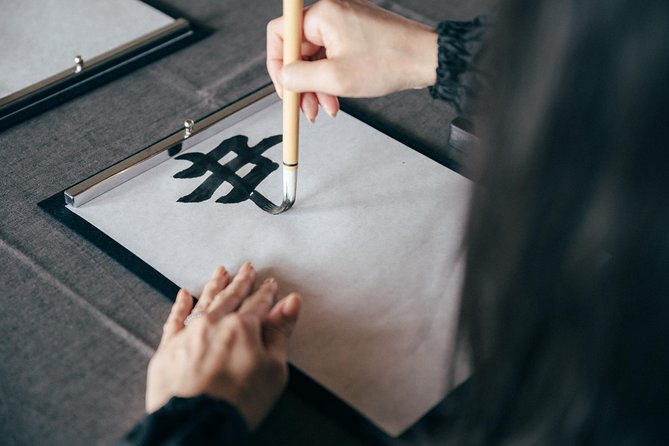
The calligraphy keepsake is one of the clearest benefits of the activity. You have taken part in the process from start to finish: preparing the ink, learning the brush technique, selecting a meaningful symbol, and writing the final version.
That sequence gives the framed piece more meaning than a purchased print. Your work will not be perfect, and that is part of its charm. The souvenir records your effort and the quiet setting in which you made it.
I would suggest treating the calligraphy portion as a lesson in focus rather than a test of artistic skill. If you worry about producing a beautiful character, you may miss the point. Listen closely to the instructions, move the brush slowly, and accept that the result will show your own hand.
The activity may suit families, couples, solo visitors, and anyone who wants a slower cultural experience. The small group limit of six should make it easier to receive personal guidance. It also means the session can feel more like time in a private home than a large class.
Moving into the tea room
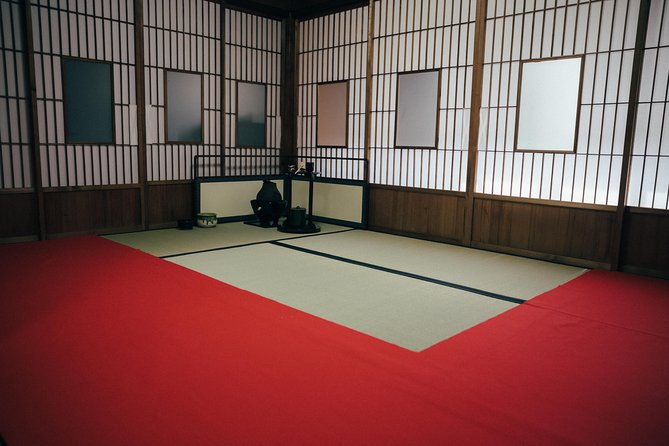
After calligraphy, you move to the tea room. The host explains the room’s arrangement and the tea utensils before serving you a bowl of matcha with Japanese sweets.
This part introduces the basic relationship between host and guest. At first, you receive the tea and observe the etiquette. The sequence lets you settle into the room before you are asked to handle the utensils yourself.
The tea is accompanied by Japanese sweets, which are included. You should tell the provider in advance about any allergies. The information supplied does not identify the type of sweets, so do not plan around a particular flavor or ingredient.
The tea itself is matcha, not ordinary brewed green tea. Its flavor can be strong and earthy, especially if you are more familiar with lighter teas. One published comment specifically praised the tea flavor, but taste remains personal. If you are new to matcha, approach it as part of the experience rather than ordering it based on a familiar café-style drink.
Learning to serve matcha yourself
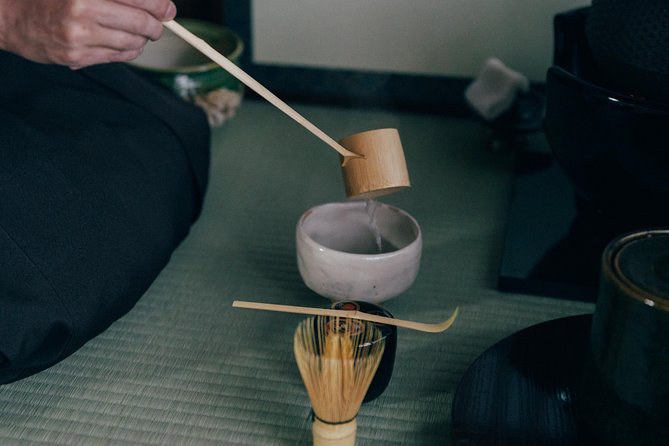
Once you have become comfortable with the setting, you get to prepare and serve tea yourself. This is an important feature. You are not simply watching a host perform a formal ritual from a distance.
The host explains how to work with the utensils and how the tea room is arranged. You then try the process, with the goal of calming your mind and understanding the spirit behind the ceremony.
Do not expect to master tea ceremony etiquette in one visit. The experience gives you an introduction, not professional training. Its value comes from participating respectfully and noticing the deliberate rhythm of each movement.
The tea ceremony may be especially appealing if you have spent several days moving between major sights. It asks you to slow down. The house, the quiet room, and the careful preparation create a pause in a busy Japan itinerary.
At the same time, visitors who prefer active sightseeing may find the pace too restrained. There are no multiple stops, major views, or long city walks. The appeal is concentration, not variety.
What the $179.63 price includes
At $179.63 per person, this is not a budget activity. The price needs to be judged against the kind of experience you are buying.
You receive approximately two and a half hours with a maximum of six participants, English instruction, the history introduction, all calligraphy tools, a bowl of matcha, Japanese sweets, and a framed copy of your calligraphy. You also spend that time in a traditional house rather than a standard classroom.
Those elements make the experience more than a basic craft lesson. Still, the cost will feel high if your main goal is simply to try writing a few characters or drink matcha once. Nagoya has other cultural attractions that may cost less and occupy more of your day.
I see the price as easier to justify for someone who values a personal setting, a small group, and a keepsake. It also makes more sense for a visitor who has already seen the city’s major sights and wants a quieter activity with local character.
The published rating is 5 out of 5 from 16 reviews, with 100 percent recommending it. That is a small sample, but it matches the strongest features of the experience: warm hosting, a memorable house, clear history commentary, and participation rather than passive watching.
Practical details that affect your decision
The activity lasts about two hours and 30 minutes. That is long enough for the history introduction, calligraphy, and tea ceremony without taking an entire day from your Nagoya plans.
You receive confirmation when booking unless you reserve within seven days of travel. In that case, confirmation should arrive within 48 hours, subject to availability. The experience is non-refundable and cannot be changed for any reason, so check your schedule carefully before paying.
A mobile ticket is available. The meeting point is the same as the return point, which keeps the end of the activity simple. Public transportation is nearby, and most people can participate according to the supplied information.
The group size is capped at six. This is worth noting because the quality of a brush or tea lesson depends heavily on how much attention the host can give. A six-person maximum is small enough for questions and individual attempts, though the actual group size on your date can vary.
The hosting is part of the appeal. Yuzo Mori and his wife are named as the hosts, and the available feedback describes them as warm and welcoming. One comment praised the history briefing, the writing experience, the tea flavor, the hosts, and the ease of finding the location. Those are exactly the details that can make or break a small home-based activity.
Who should book this Nagoya experience?
I would choose this for you if you want an intimate cultural activity and enjoy learning by doing. It suits first-time visitors who want a gentle introduction to calligraphy and tea ceremony, as well as repeat visitors looking for something beyond major attractions.
It is also a good match if you like souvenirs with a personal story. The framed calligraphy gives you a clear memento, and you created it yourself rather than buying it from a shop.
The experience may work well for couples or families with older children who can appreciate a quiet, careful activity. The supplied information says most people can participate, but it does not provide a specific minimum age or child policy, so families should confirm any age concerns before booking.
I would think twice if you dislike sitting quietly, have little interest in Japanese history or traditional arts, or want a tour packed with city sightseeing. The two-and-a-half-hour format stays in one house and focuses on a few activities rather than many sights.
Should you book it?
Book this experience if you want personal instruction in a real traditional home, a framed calligraphy souvenir, and a chance to serve matcha rather than only watch it. The warm hosts, six-person limit, and short Sengoku history talk give the afternoon a clear sense of place.
Skip it if $179.63 feels too high for a short cultural lesson or if you prefer independent sightseeing. For the right visitor, though, this is a memorable way to slow down in Nagoya and connect the city’s samurai past with everyday Japanese arts.
FAQ
Where does the experience begin?
It begins at 4-chōme-32 Yamawakichō, Showa Ward, Nagoya, Aichi 466-0063, Japan.
Where does the experience end?
The activity ends back at the meeting point.
How long does the experience last?
It lasts approximately two hours and 30 minutes.
How many people can join?
The maximum group size is six people.
Is the experience conducted in English?
Yes. The experience includes English commentary and instruction.
What is included in the price?
The price includes a bowl of matcha, Japanese sweets, and all Japanese calligraphy tools. The clean copy of your calligraphy is framed as a souvenir.
Is the history lesson part of the experience?
Yes. You receive about 15 minutes of commentary with an easy-to-understand slide show about Nagoya during the Sengoku period.
Are allergies accommodated?
Some sweets are provided, so you should tell the provider in advance about any allergies.
Can I cancel or change my booking?
No. The experience is non-refundable and cannot be changed for any reason.
Just added around Japan
- Yokohama : Tea Ceremony with Sweets and Souvenir★ 5.0 · 5 reviews
- Walking Tour: Yanaka,Nezu& Sendagi: Tea Ceremony & Old Tokyo★ 5.0 · 3 reviews
- Visit local home for music and tea ceremony near Disney★ 4.9 · 13 reviews
- Trip to Kamakura & Enoshima: Shrines, Seaside, Temples &Tea★ 5.0 · 11 reviews
- Yokohama: Sushi & Gyoza Cooking with Matcha & GreenTea Experience★ 5.0 · 3 reviews
- Kyoto tea town for matcha lovers★ 5.0 · 16 reviews
- Uji: Private immersion into Kyoto’s tea and reglious culture★ 5.0 · 17 reviews
- Uji Tea Ceremony and UNESCO Heritage Walking Tour★ 5.0 · 20 reviews
Tea and Calligraphy Workshops in Japan, compared.
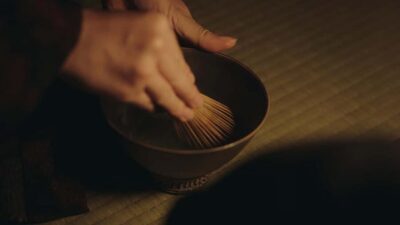
Tea Ceremony Meditation – Make Matcha with Tea Master
Read our review →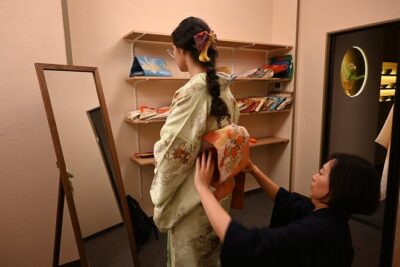
Tea Ceremony, Calligraphy, and Kimono Experience
Read our review →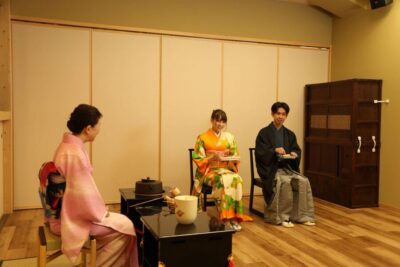
An Amazing set of Cultural experience: Kimono, Tea Ceremony and Calligraphy
Read our review →
Cultural Activities :Kimono, tea ceremony, Calligraphy and Amulet
Read our review →
Samurai dress-up and shows, plus Tea Ceremony & Calligraphy
Read our review →Browse the lists this tour appears in