
Review · KANAZAWA
Kanazawa: Samurai, Matcha, Gardens and Geisha Full-Day Tour
Kanazawa rewards slow looking. This full-day walk brings together samurai homes and geisha streets, then adds the calm pleasure of matcha at a historic tea house. I like the thoughtful route through several periods of Japanese history, and I like that guides such as Mike, Akari, Gareth, Lee, and Mohammed are praised for adjusting the pace and explaining local culture clearly. The main drawback is simple: this is a serious walking day, sometimes reaching 12 kilometers or more than 27,000 steps.
The $156 price is fair if you want one well-organized day covering Kanazawa’s major sights. Entry to Kenroku-en and Shima is included, as is the matcha experience, but lunch is not. You will need comfortable shoes, weather protection, and enough energy for long stretches outdoors.
The tour begins at Kanazawa Station at 9:00 AM, outside the Shinkansen gates near the information center and four large sumo figures. It ends back at the station after passing through the city on foot. Expect an English-speaking guide, free time at several stops, and a day that mixes famous places with quieter residential lanes.
Key points to know before booking
- A full day on foot: You may cover roughly 12 kilometers, with stairs, uneven ground, and outdoor walking in changing weather.
- Three sides of old Kanazawa: The route links the samurai quarter, Edo-period garden, and Higashi-chaya geisha district.
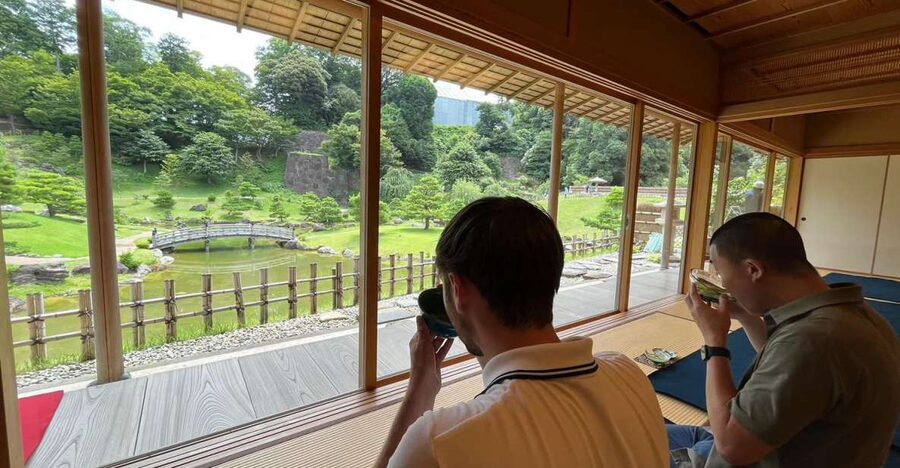
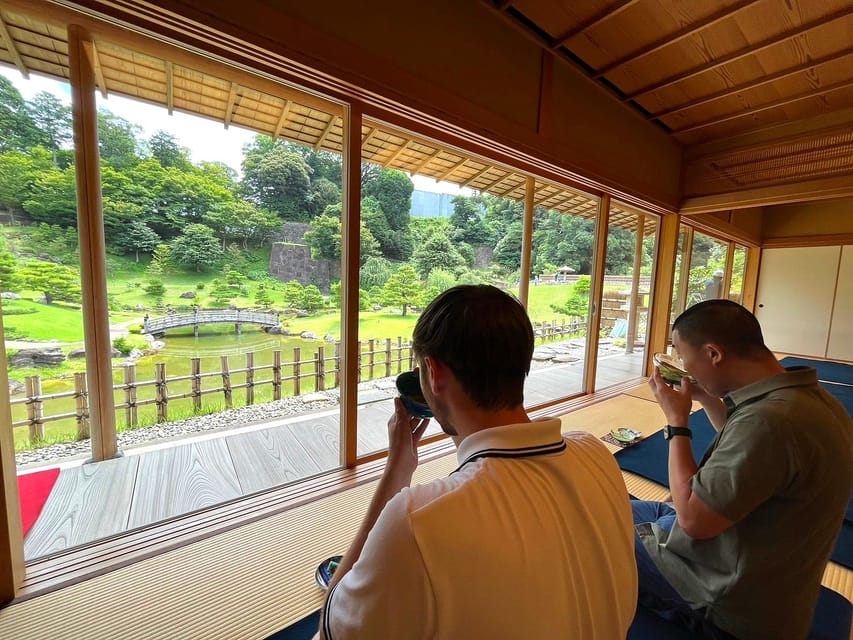
- Matcha in a historic setting: You enjoy tea and wagashi sweets at Gyokusen-an, usually with a garden and castle walls nearby.
- Shima gives context to geisha culture: This preserved tea house is more than a street view. You can see its rooms and traditional design from inside.
- Lunch is flexible: The guide can suggest places, and Omicho Market is a useful option for food during the day.
- A strong guide matters: Mike, Akari, Gareth, Lee, Daniel, and Mohammed have all been praised for history, humor, patience, and practical help.
Starting at Kanazawa Station with a clear landmark
Kanazawa Station is an easy meeting point, though the building is large enough that a precise landmark helps. Meet outside the Shinkansen ticket gates, in front of the information center. If you enter through the East Entrance, look for the four large sumo wrestlers. Your guide should be wearing a Snow Monkey Resorts tour tag.
Before the walking begins, you get a quick look at the Tsuzumi-mon gate. Its sweeping wooden form is a modern interpretation of traditional Japanese architecture and has become one of Kanazawa’s best-known symbols. It is a fitting starting point because the city combines old neighborhoods with modern public spaces without pretending to be a museum.
From the station, the route heads toward Nagamachi through side streets. This is one of the day’s better details. Instead of moving directly along a busy road, you pass local homes and occasional wooden temples, getting a first sense of how Kanazawa works as a living city.
More Kimono and Tea Ceremonies in Japan:
- Kimono Tea Ceremony at Kyoto Maikoya, NISHIKI
★ 5.0 · 911 reviews - Kimono Tea Ceremony at Tokyo, Asakusa Maikoya
★ 5.0 · 638 reviews - Kyoto: Kimono Tea Ceremony at Orizuruya Gion
★ 4.9 · 618 reviews
Nagamachi and the lives of lower-ranking samurai
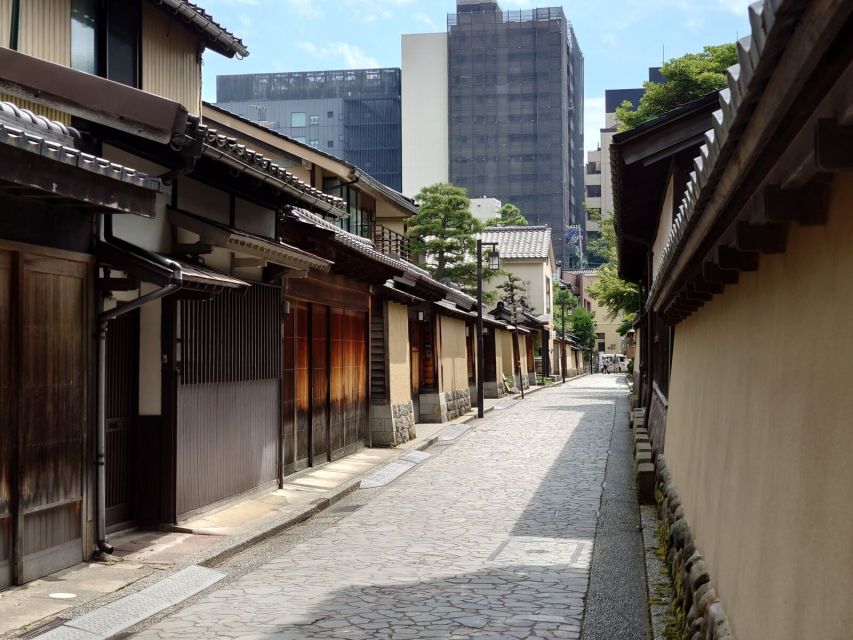
Nagamachi is often called Kanazawa’s samurai district, but the most useful part of the visit is learning that samurai life was not one uniform experience. The area included residences for warriors of different ranks, and some of the smaller homes show how modestly lower-ranking samurai lived.
You may enter preserved samurai houses and examine their compact rooms, gardens, walls, and traditional construction. A guide adds the context that signs alone rarely provide: social rank, household life, and the role of samurai in the old domain.
The main street through Nagamachi bends and narrows, which gives it a more intimate feel than a grand castle avenue. You also have free time to look at local crafts and wares. Keep your shopping expectations sensible. This is not a dedicated shopping tour, but the pause gives you room to browse instead of being marched from sight to sight.
This stop lasts about 110 minutes, making it one of the longest sections of the day. That is useful if samurai history interests you. If you prefer gardens or architecture, the amount of time may feel substantial, but the guide can usually shape the discussion around the group’s interests.
Oyama Shrine and its unusual stained glass
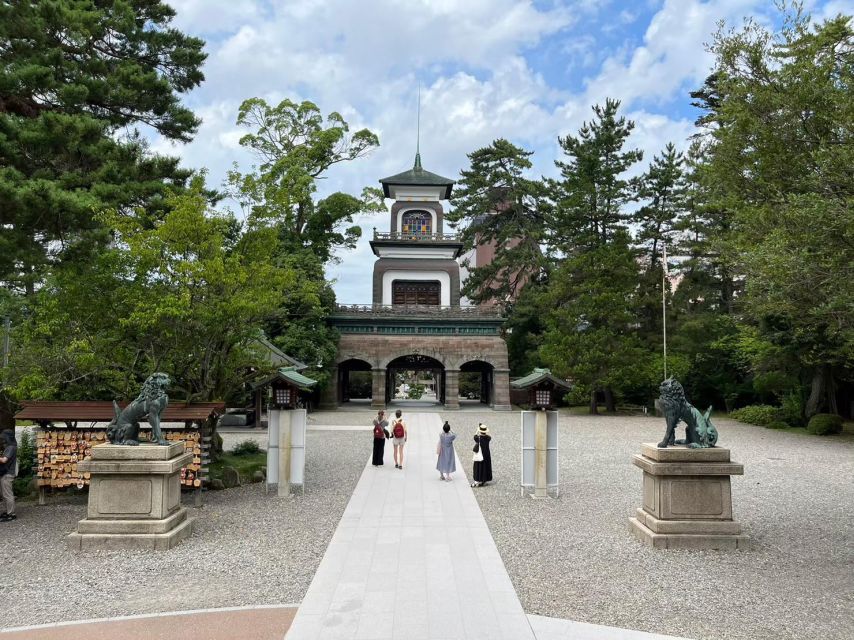
Oyama Shrine offers a striking change of mood. Its gate and architecture combine Japanese elements with Western design, including colorful stained glass. The result reflects the period when Japan was absorbing foreign influences in the 19th century.
The shrine visit itself is short, around 10 minutes, but the setting gives your guide a chance to explain how Japanese religious architecture changed during a period of political and cultural transition. The mix can look surprising at first, especially after the traditional homes of Nagamachi.
Be sure to look beyond the main shrine structure. Behind it is a koi pond, a small garden, and a path leading toward a large wooden bridge. You then cross the bridge and pass through a gate into the Kanazawa Castle grounds. This is a pleasant example of how the tour uses connecting paths rather than treating each sight as an isolated stop.
Matcha beside castle walls at Gyokusen-an
The matcha stop is one of the day’s most appealing breaks. At Gyokusen-an, you sit in a refined Japanese tea house with views toward a carefully maintained garden and the massive stone walls at the base of Kanazawa Castle.
Kimono-clad staff serve matcha and artistic wagashi sweets. Your guide explains how to drink the tea properly, so you are not left guessing which way to turn the bowl or how to approach the sweets. The experience is presented as a cultural lesson, not just a quick green tea sample.
I like this pause because it changes the pace. After walking through samurai streets and shrine grounds, you get time to sit, look closely at the interior, and notice details such as the simple materials and controlled design of a traditional tea room.
Gyokusen-an can sometimes be unavailable because of special events. If that happens, the matcha tasting moves to another location. The tea experience remains part of the tour, but the exact atmosphere may differ.
This is not a full tea ceremony conducted by a tea master. It is a guided matcha experience designed for visitors, with sweets and an explanation of basic etiquette. For most people, that is the right level for a busy sightseeing day.
More Matcha Experiences in Japan:
- World Heritage Kyoto & Nara Uji Authentic Matcha Experience
★ 5.0 · 1,573 reviews - Kyoto: Arashiyama Bamboo Forest, Monkeys, Matcha & Temple Tour
★ 5.0 · 759 reviews - Matcha Making Class in Tokyo with Authentic Japanese Sweets Set
★ 5.0 · 744 reviews - Kyoto: Tea Museum Tickets and Matcha Grinding Experience
★ 4.9 · 739 reviews
Kenroku-en, one of Japan’s great gardens
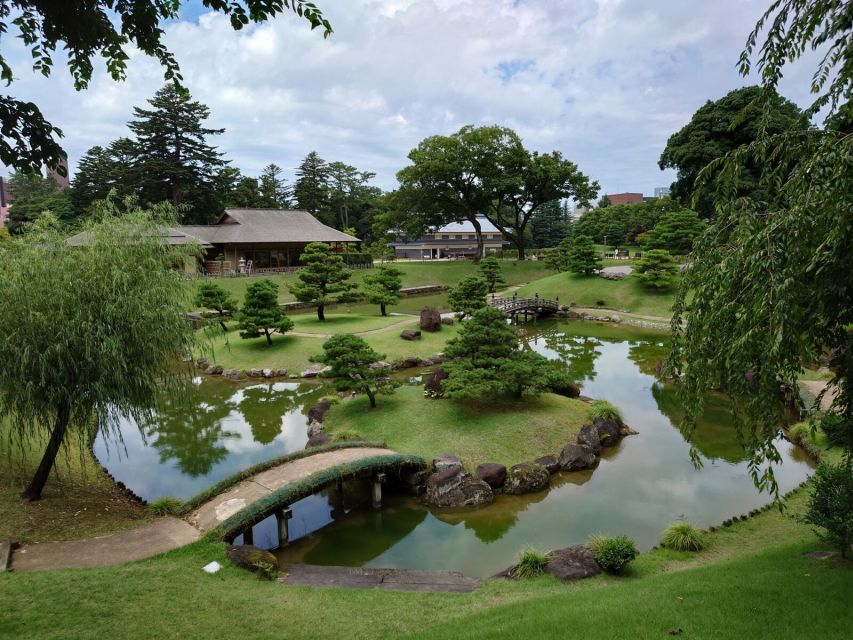
After the tea break, you continue through the castle grounds and enter Kenroku-en. The garden was developed over more than 200 years under the Lords of Kanazawa Castle. Its design brings together features traditionally valued in Japanese gardens, including water, trees, stones, paths, and carefully framed views.
A guide can help you understand that Kenroku-en is not simply a collection of attractive plants. The garden is designed for changing viewpoints. A bend in the path, a bridge, a pond, or a carefully placed tree alters what you see next.
The garden visit lasts about an hour and a half. That gives you enough time to enjoy the broad layout while also pausing for photographs and small details. In rain or mist, the garden can feel especially atmospheric, with wet stone, soft light, and castle walls fading into the background. In winter, it can be cold, and snow or ice may make paths slippery.
Kenroku-en is also where weather preparation matters most. Bring an umbrella or rain gear, and wear shoes with a secure sole. In winter, temperatures can fall below 10 degrees Celsius, with mornings and evenings near or below freezing.
The garden is a strong reason to choose this tour rather than a quick city highlights walk. Your guide explains how the garden was planned and maintained, giving you a framework for understanding what you see instead of leaving you with a collection of pretty photographs.
Lunch: useful freedom instead of a fixed meal
Lunch is not included, which some people will see as a disadvantage and others as a benefit. You are free to choose what suits your appetite and budget, and your guide can recommend nearby options.
Omicho Market is a practical choice if the route and timing allow it. It provides a chance to sample local food and take a break before the final major section of the tour. Do not expect a long restaurant meal built into the price. This is a sightseeing day, and the lunch stop is more flexible.
I would budget separately for lunch and avoid planning anything too ambitious. You still have Higashi-chaya and Shima ahead, along with the walk back toward the station.
Higashi-chaya and the streets of geisha culture
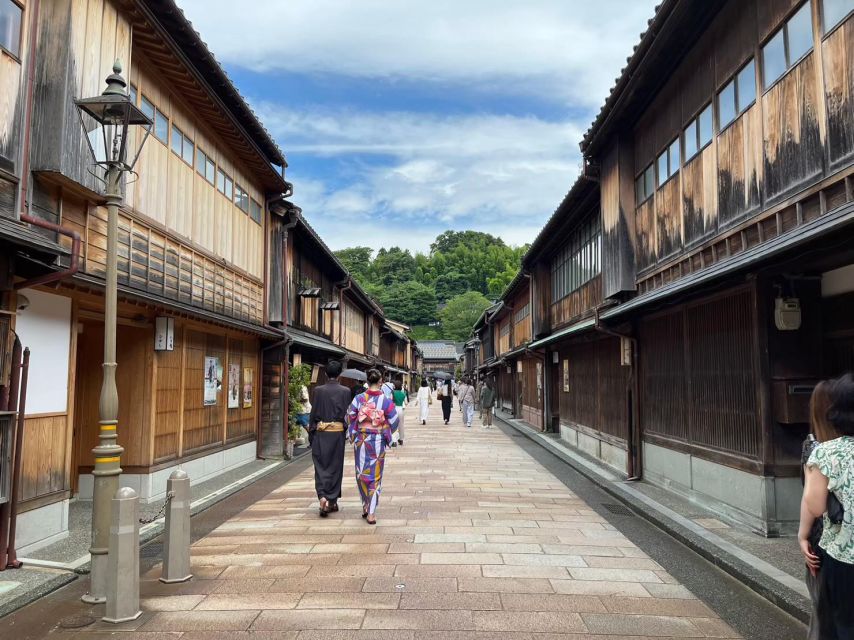
Higashi-chaya is perhaps Kanazawa’s most recognizable historic district. Its streets are lined with tall, two-story wooden tea houses. Some are painted red inside, a design feature associated particularly with Kanazawa.
The word tea house can mislead first-time visitors. These were places connected with entertainment, music, conversation, and geisha performance, not ordinary cafés. Your guide can explain the social role of the district and help separate historical practice from the simplified images often presented to visitors.
You get about 40 minutes for guided exploration, free time, shopping, and photographs. The district is attractive, but it can also be busy. The best approach is to look upward at the facades, notice the narrow proportions of the buildings, and listen for details about how the tea houses were used.
The route does not end here. You continue to Shima, a preserved geisha house that gives the district more substance.
Inside Shima, a preserved geisha tea house
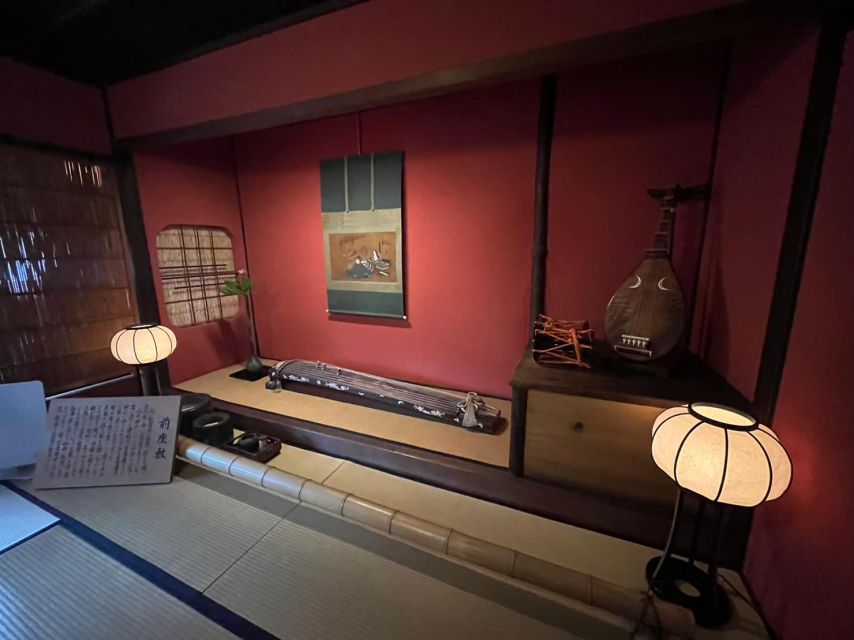
Shima is one of the most valuable inclusions in the tour because you go inside a traditional tea house rather than viewing only the exterior. The building’s classic architecture and preserved rooms help explain how these establishments were arranged and how entertainers worked within them.
A street lined with handsome wooden facades can only tell you so much. Inside Shima, you can see the proportions, rooms, and decorative choices that made a tea house different from an ordinary residence. The guide helps connect the physical building with the customs and social setting behind it.
This visit lasts about an hour, which gives you time to look carefully. It is particularly useful if you want more than a photo stop in Higashi-chaya. The attraction does involve traditional architecture, so expect floors, steps, and a need to remove shoes if required by the site. Bring socks, as the tour information specifically recommends them.
The return through Kazue-machi
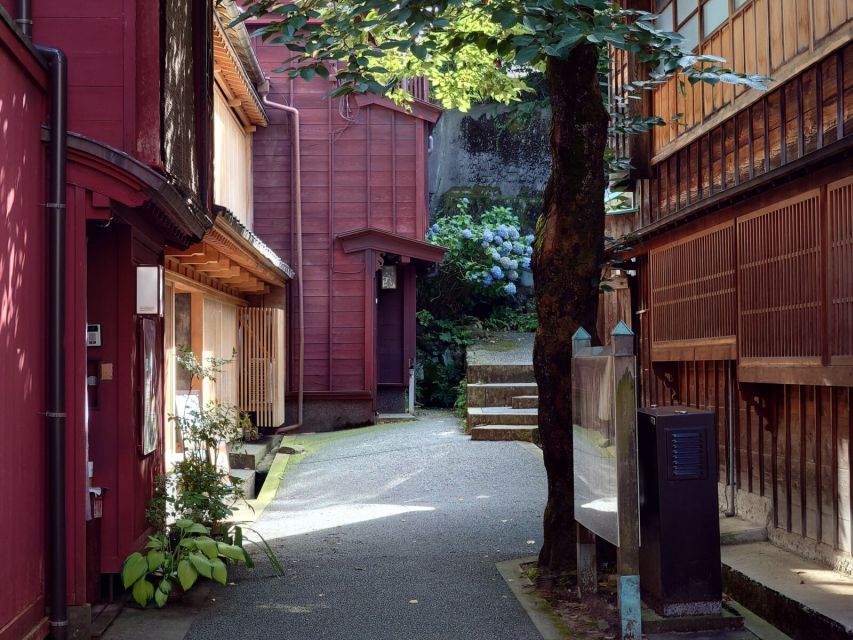
After Shima, the group begins the return toward Kanazawa Station. The route passes through Kazue-machi, a maze of narrow backstreets near the river.
This final section is a good reminder that Kanazawa’s appeal is not limited to its headline attractions. The smaller streets connect the major sights and show how the city’s older districts fit together. You may be tired by this point, but the walk also helps the day feel like a city tour rather than a sequence of bus transfers.
The activity ends back at the original meeting point near Kanazawa Station. That makes the tour convenient if you are catching a train afterward, though you should allow extra time if you have a fixed departure. Guides have sometimes helped with train tickets or later travel arrangements, but that should be treated as a kindness, not a guaranteed part of the service.
How much walking and effort should you expect?
The tour information describes several hours outdoors, and direct experiences of the route report about 12 kilometers or more than 27,000 steps. That is a lot, even though the day includes sitting at the tea house, stopping for lunch, and pausing at each attraction.
You should choose supportive shoes rather than fashionable but thin-soled footwear. In winter, use warm shoes with good grip because snow and ice may be present on streets and sidewalks. In wet weather, an umbrella or raincoat is essential.
The pace appears flexible. Guides such as Akari, Daniel, Mike, Lee, Gareth, and Mohammed are praised for allowing extra time, answering questions, and adapting stops for children or different interests. Still, flexibility does not remove the physical demand. If you have trouble walking long distances, ask before booking for current details about transport and group arrangements.
Guide quality and group atmosphere
The guide is central to the value of this experience. The sights are worthwhile on their own, but the social history, garden design, tea etiquette, and architecture become much easier to understand with a strong English-speaking guide.
Mike is repeatedly described as funny, patient, and generous with his time. Akari is praised for warmth and flexibility. Gareth is noted for linking history, architecture, and local culture without overloading the group with facts. Lee has been especially helpful to visitors who arrived late or needed practical advice. Daniel is described as patient with children and good at building information step by step.
Guides vary, so no particular person is guaranteed. The consistent pattern is a small-group feel, room for questions, and a willingness to adjust the pace when possible. That makes a real difference on a day that covers so much ground.
Is $156 good value?
At $156 per person, this is not the cheapest way to see Kanazawa. You could visit some attractions independently for less, especially if you are comfortable navigating by yourself and reading background information in advance.
The price makes more sense when you count what is bundled together: an English-speaking guide for a full day, entry to Kenroku-en, entry to Shima, and the matcha experience. You also get a carefully connected route through several historic districts, rather than spending time working out how to link them.
Lunch, shopping, and any extra transport are not included. The value is strongest for first-time visitors who have one full day in Kanazawa and want historical context without planning every turn. Independent visitors who enjoy researching architecture and Japanese history may prefer to save money and explore at their own pace.
Who should book this Kanazawa tour?
I would choose this tour if you want to see the city’s main historic areas in one day and learn why they matter. It suits first-time visitors, people traveling alone who want company, families with older children, and anyone who prefers a guide to explain cultural details.
It is also a good choice for visitors arriving by train because the day begins and ends at Kanazawa Station. The route gives you a clear introduction to the city, and you can return later for places that deserve more time.
I would hesitate if you dislike long walks, need frequent transport, or want a relaxed schedule with long meals. The tour covers a great deal, and rain, heat, cold, or snow can make the day harder. You should also bring socks, since traditional buildings may require shoes to be removed.
Free cancellation is available up to 24 hours before the start, and you can reserve now and pay later. Check the meeting time and current availability before booking, since starting times can vary.
Should you book it?
Book this tour if you want a well-planned introduction to Kanazawa’s samurai, castle, garden, tea, and geisha traditions, and you are ready to walk for most of the day. The matcha stop, Kenroku-en, and the visit inside Shima give the experience more depth than a simple photo tour.
Skip it if you prefer independent wandering or cannot comfortably manage a long outdoor route. For most active visitors with one day in Kanazawa, though, $156 is a reasonable price for the guide, admissions, cultural explanation, and practical route planning.
FAQ
Where does the tour begin?
Meet outside the Shinkansen ticket gates at Kanazawa Station, in front of the information center. The meeting point is near four large sumo wrestlers by the East Entrance.
Where does the tour end?
The tour ends back at the same meeting point at Kanazawa Station.
Is lunch included?
No. Lunch is not included, but you can ask the guide for recommendations during the day.
How much walking is involved?
The tour involves several hours of outdoor walking. Some direct experiences of the route reached about 12 kilometers or more than 27,000 steps.
What happens in winter?
Winter temperatures can fall below 10 degrees Celsius, with mornings and evenings close to or below freezing. Snow and ice may be present, so bring warm clothing and shoes with good grip.
Is the matcha experience always held at Gyokusen-an?
Gyokusen-an is the usual location, but special events may require the matcha experience to move elsewhere. The matcha tasting remains part of the tour.
More Full-Day Trips in Japan
- Mt. Fuji & Lake Kawaguchiko Ropeway Panorama Full-Day Tour
★ 4.6 · 236 reviews - Tokyo: Full-Day Tour w/Tea Experience,Buffet Lunch & Cruise
★ 4.9 · 151 reviews - Full-Day Tour from Kanazawa: Samurai, Matcha, Gardens and Geisha
★ 5.0 · 68 reviews - Nara Deer Park, Uji Matcha, & Hot Spring Full-Day Tour from Osaka
★ 4.0 · 21 reviews
Just added around Japan
- Yokohama : Tea Ceremony with Sweets and Souvenir★ 5.0 · 5 reviews
- Walking Tour: Yanaka,Nezu& Sendagi: Tea Ceremony & Old Tokyo★ 5.0 · 3 reviews
- Visit local home for music and tea ceremony near Disney★ 4.9 · 13 reviews
- Trip to Kamakura & Enoshima: Shrines, Seaside, Temples &Tea★ 5.0 · 11 reviews
- Yokohama: Sushi & Gyoza Cooking with Matcha & GreenTea Experience★ 5.0 · 3 reviews
- Kyoto tea town for matcha lovers★ 5.0 · 16 reviews
- Uji: Private immersion into Kyoto’s tea and reglious culture★ 5.0 · 17 reviews
- Uji Tea Ceremony and UNESCO Heritage Walking Tour★ 5.0 · 20 reviews
Matcha Experiences, compared.
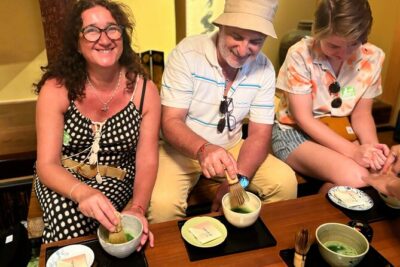
World Heritage Kyoto & Nara Uji Authentic Matcha Experience
Read our review →
Arashiyama Bamboo Forest, Monkeys, Matcha & Temple Tour
Read our review →
Matcha Making Class in Tokyo with Authentic Japanese Sweets Set
Read our review →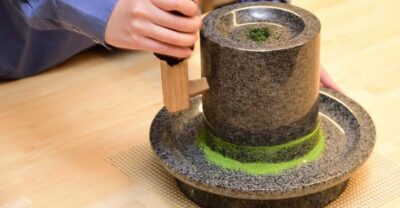
Tea Museum Tickets and Matcha Grinding Experience
Read our review →
Matcha Making Class in Osaka with Authentic Japanese Sweets Set
Read our review →
Tea Ceremony Meditation – Make Matcha with Tea Master
Read our review →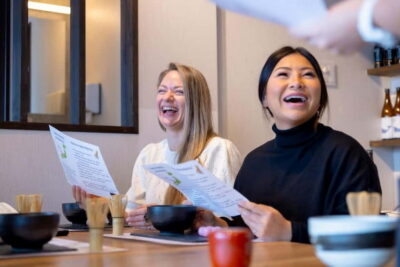
Matcha Making Experience with Mochi Sweets in Asakusa
Read our review →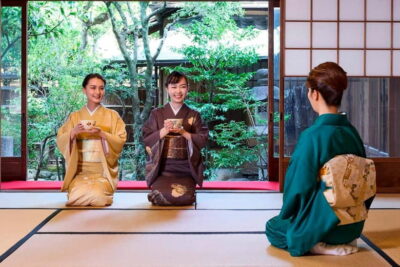
Browse the lists this tour appears in