Review · KYOTO
Kyoto: Traditional Tea Ceremony with Matcha & Sweets in Gion
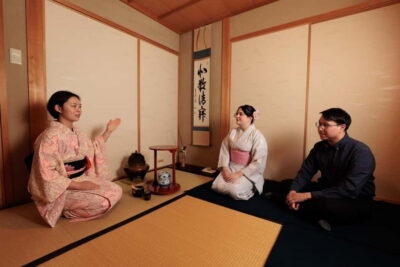
Tea can slow Kyoto down. In the middle of Gion, this one-hour to 150-minute experience offers a gentle introduction to Japanese tea culture, with a tea master, traditional sweets, and your own bowl of matcha to prepare. I especially like the chair seating, which keeps the ceremony comfortable for people who cannot sit on the floor, and the chance to watch authentic tea-making techniques before trying them yourself. The main point to consider is that this is an accessible introduction, not a long, highly formal tea-school lesson.
I also like the friendly, relaxed tone. You learn about Zen, tea, and Japanese customs without needing to know the rules in advance. At $22 per person, it is a strong value for a central Kyoto cultural activity, though the meeting point can vary by booking option and the kimono package adds extra timing to your day.
Key points to know before you book
- Chair seating replaces floor seating, making the ceremony easier for people with limited mobility or anyone who dislikes sitting on tatami.
- You watch a tea master first, then whisk your own matcha with guidance.
- Traditional Japanese sweets are included, selected by the tea master from long-established confectioners.
- The tea comes from a family-run farm, giving the practical tea lesson a local connection.
- An English-language question-and-answer session lets you ask about tea, Zen, and ceremony customs.
- A kimono option is available, but it has fixed ceremony times and requires returning the kimono by 5:30 p.m.
Entering Gion for a quieter side of Kyoto
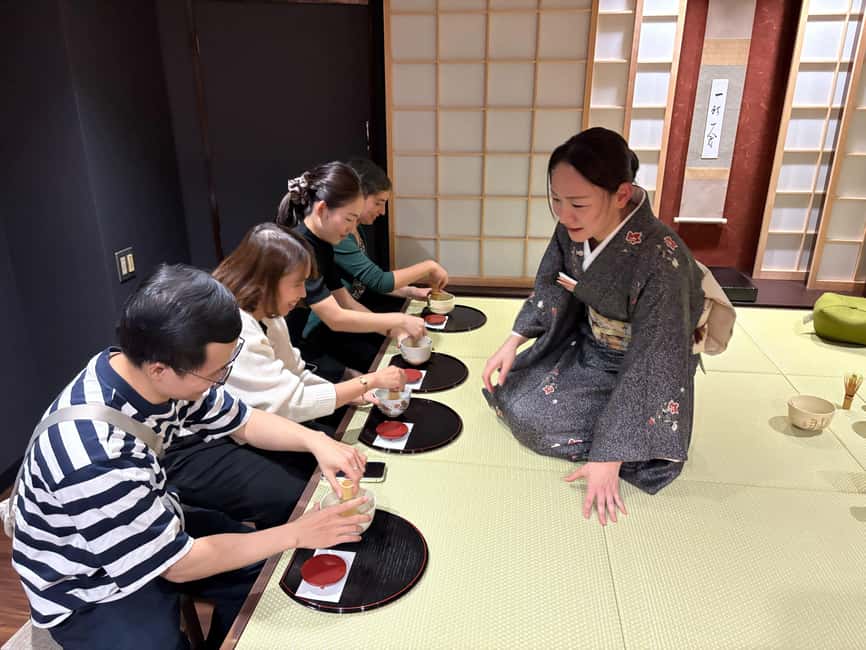
Gion is one of Kyoto’s best-known districts, with wooden buildings, narrow lanes, and a strong connection to traditional arts. It can also be busy, especially during the day. This tea ceremony gives you a reason to step away from simply walking past the district’s old streets and spend time with one of Japan’s most carefully developed customs.
The setting is described as calm and elegant rather than stiff. That distinction matters. A formal tea ceremony can feel intimidating if you do not know when to bow, where to place your cup, or how to follow the host’s movements. Here, the aim is to explain what you are seeing and why it matters.
You do not need previous knowledge of matcha or Japanese etiquette. The English-speaking instructor guides you through the main ideas and leaves room for questions. One host, Mai, has been praised for being warm, clear, and approachable. That fits the purpose of this activity: you are not expected to perform perfectly. You are there to understand the spirit behind the ritual.
More Matcha Experiences in Kyoto
- Kyoto: Arashiyama Bamboo Forest, Monkeys, Matcha & Temple Tour
★ 5.0 · 759 reviews - Kyoto: Tea Ceremony Meditation – Make Matcha with Tea Master
★ 4.8 · 406 reviews - Kyoto: Kimono Tea Ceremony with Matcha and Sweet
★ 4.9 · 249 reviews
Why chair seating makes a real difference
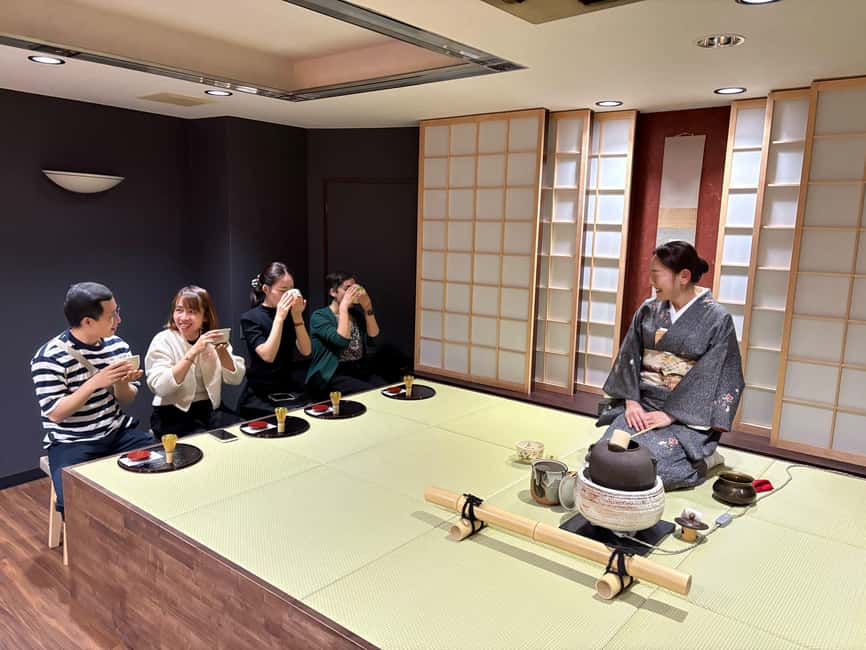
Traditional tea ceremonies often involve sitting on tatami or on your heels for a long period. That can be part of the experience, but it is not comfortable for everyone. This activity uses chairs, which makes it a practical choice for people with limited mobility, older visitors, and anyone who wants to focus on the ceremony instead of managing sore knees.
Chair seating also makes the session less demanding for families. Infants and toddlers are free, but they do not receive their own matcha portion to prepare. If a young child wants to try, the child must use a parent or guardian’s cup. Since matcha contains a fair amount of caffeine, it is not recommended for children under five.
The trade-off is simple: the chair format is less physically traditional than kneeling on tatami. If your main goal is to take part in a strict, formal tea-school ritual, this may feel more casual than expected. If your goal is to learn, taste, and participate comfortably, the format works well.
Watching the tea master before making your own bowl
The session begins with an explanation of tea and the ceremony’s background. You learn how tea developed in Japan and how Zen ideas shaped the ceremony’s focus on attention, restraint, and respect. This is not just filler before the hands-on portion. It gives meaning to the quiet movements you are about to watch.
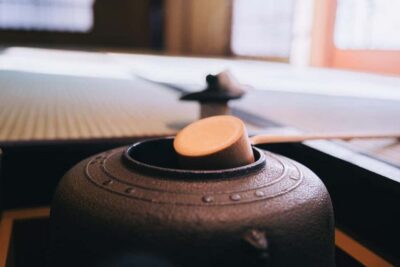
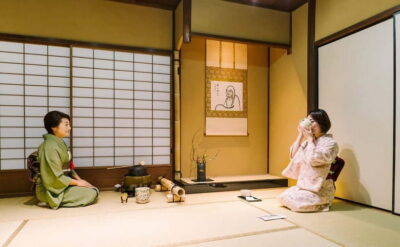
The tea master then demonstrates the ceremony up close. Pay attention to the small actions: the handling of the utensils, the measured pace, and the way the bowl is prepared. The appeal is in the control and care. Nothing needs to be rushed, and each movement has a purpose.
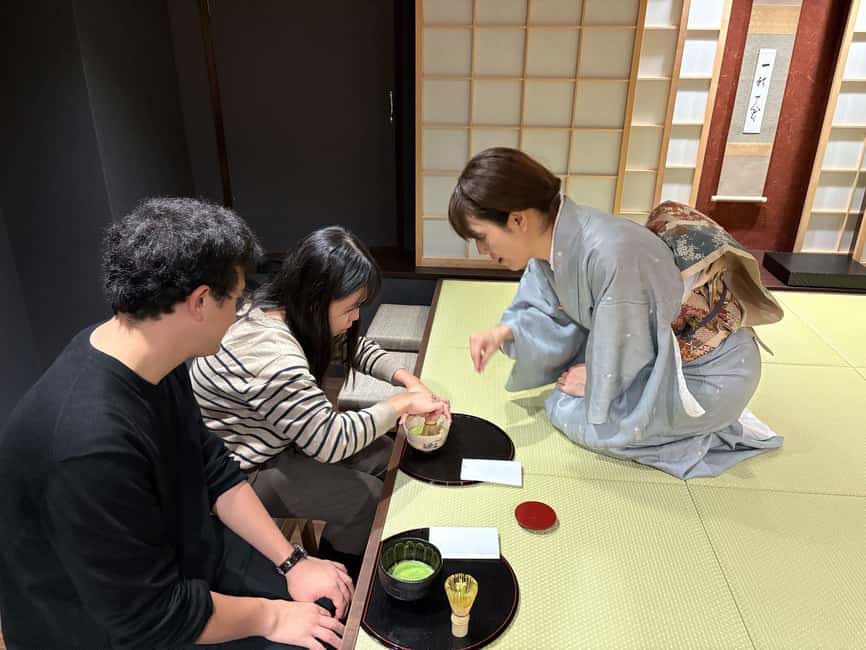
After watching, you make your own bowl of matcha. You receive guidance on how to mix the powder and create the familiar layer of bubbles. A recent account described the process as learning how to mix quality matcha properly into bubbles, which is useful because the drink can seem simple until you try to prepare it yourself.
This is the part that gives the activity lasting value. You are not just watching someone else perform a cultural practice. You learn a basic technique you can repeat at home, using the simple recipe provided at the end.
Tasting sweets chosen for the tea
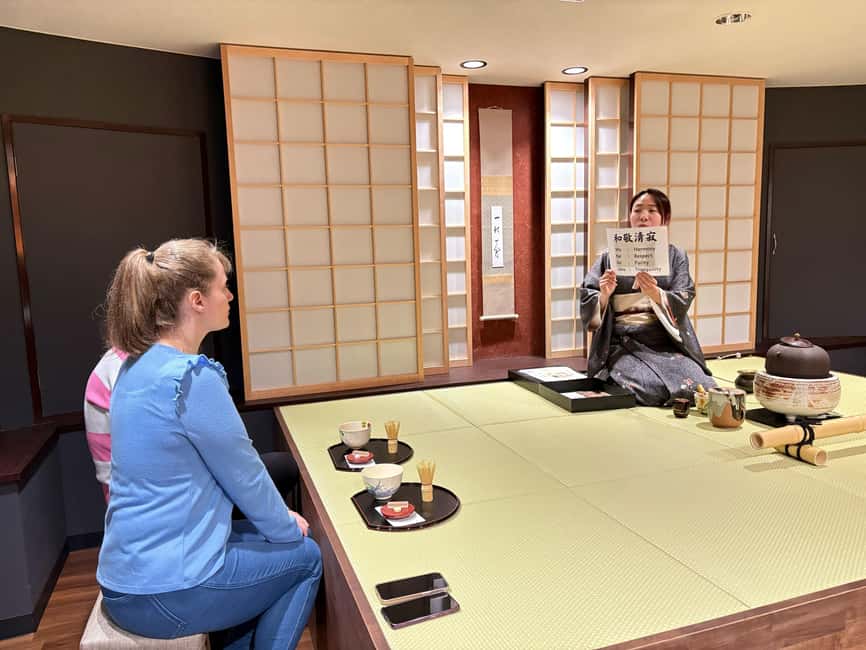
Matcha is traditionally served with something sweet, since the tea itself has a strong, grassy bitterness. The Japanese sweets included here are selected by the tea master and come from long-established confectioners. Their purpose is not merely to provide a snack. They prepare your palate for the tea and show how Japanese sweets fit into the ceremony.
The sweets are traditional rather than generic tourist treats. The exact selection may vary, so you should not expect a particular shape or flavor. That small uncertainty is part of the appeal, since the choice may reflect the season or the tea being served.
I like this pairing because it helps first-time matcha drinkers. If you sip the tea alone, its flavor can be sharp. Eating the sweet first changes the experience and makes the matcha easier to appreciate. You also begin to understand why tea ceremony food is often restrained in size, color, and sweetness.
More Tea and Sweets Making in Kyoto
- Kyoto: Japanese Traditional Sweets Making and Tea Ceremony
★ 4.4 · 314 reviews - 2 Types of Japanese Sweets making and Tea Ceremony
★ 4.6 · 17 reviews - Kyoto near Fushimiinari Wagashi making&Small Group Tea Ceremony
★ 5.0 · 14 reviews - Kyoto Fushimiinari:Wagashi Making & Small Group Tea Ceremony
★ 5.0 · 14 reviews
The value of tea from a family-run farm
The matcha used for your hands-on portion comes from a family-run tea farm. The activity does not present tea as an anonymous powder. It connects the drink to the people and places involved in producing it.
At $22, this detail improves the value. You receive the tea, sweets, instruction, cultural background, and a participatory activity in one short session. Many paid cultural activities charge more for a passive demonstration. Here, you at least take part in preparing the drink and leave with a recipe.
The price is particularly appealing if you have only a little time in Kyoto. One to two and a half hours is long enough to feel substantial, yet short enough to fit around a temple visit, Gion walk, or meal. The duration depends on the option and availability, so check the actual time before booking.
An informal ceremony with room for questions
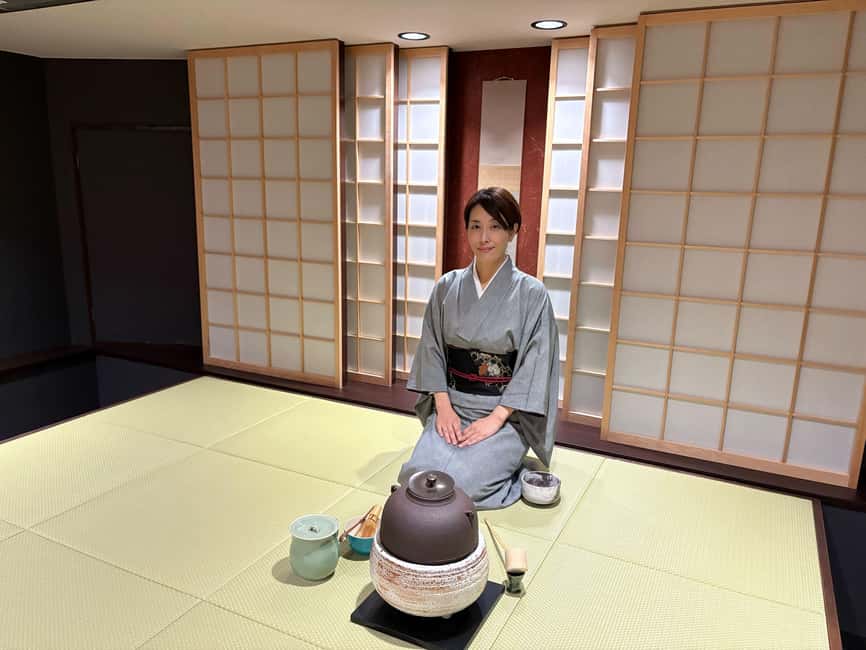
The activity does not demand strict silence or perfect etiquette. Its casual atmosphere makes it easier to ask basic questions, including ones you might hesitate to raise in a formal setting. You can ask about the tea, the utensils, the ceremony, or the Zen ideas behind it.
The final question-and-answer session is one of the best features for curious people. Demonstrations can pass quickly, but conversation helps you connect the practice to everyday life. You may leave with a better sense of why the ceremony values simplicity, attention, and the relationship between host and guest.
The English instruction is another practical advantage. The host explains the steps and background in English, so you do not need to rely only on watching others. The small-group option may make the session feel more personal, though group size depends on the option you select.
The kimono option requires careful timing
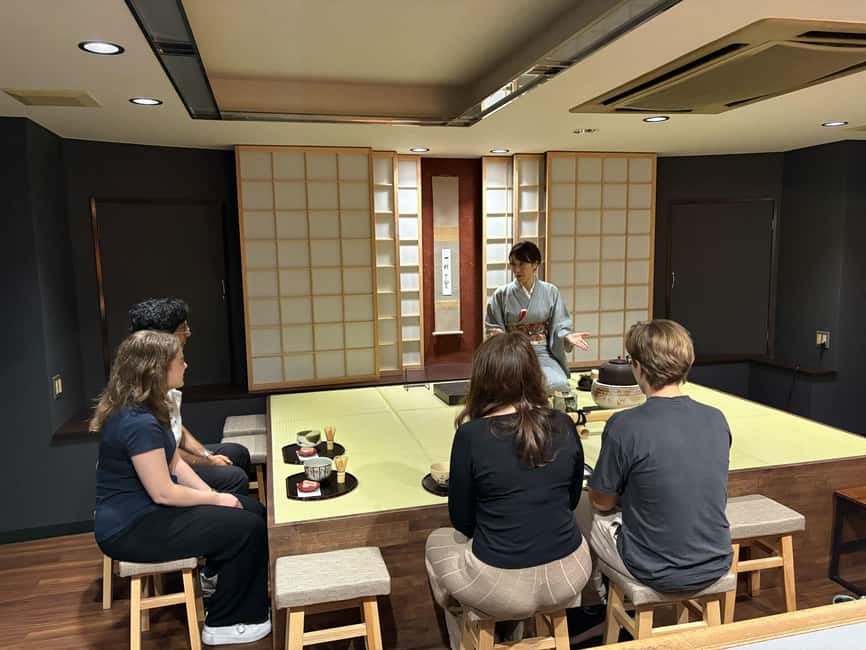
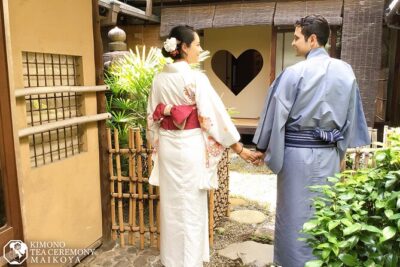
Some booking options include kimono rental. If you choose this version, you first go to the Kimono Rental Wargo Gion store on the fifth floor. After changing, you walk to the tea ceremony meeting point yourself and arrive at least 10 minutes before the ceremony begins.
The ceremony time is fixed according to your kimono start time:
- An 11:00 kimono start leads to the 12:30 ceremony.
- A 12:00 kimono start leads to the 14:00 ceremony.
- A 14:00 kimono start leads to the 15:30 ceremony.
The kimono store and ceremony location are only a few minutes apart, according to the provided directions, but leave enough time to change and walk without rushing. You must return the kimono by 5:30 p.m. This option can make photographs around Gion more special, but it also gives you less freedom to change your plans during the day.
If you want a simple tea lesson, choose the standard option. If dressing in traditional clothing is an important part of your Kyoto plans, the kimono version adds atmosphere, as long as you respect the fixed schedule.
Who will get the most from this experience
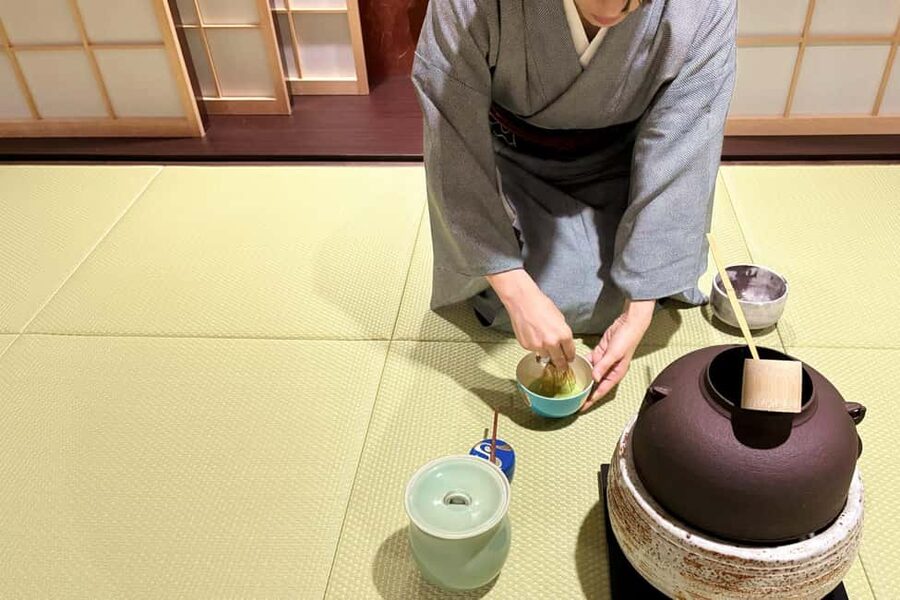
I would recommend this tea ceremony to first-time visitors who want a clear introduction to matcha without committing to a very formal ritual. It also suits couples, families with older children, solo visitors, and anyone who enjoys learning through a small, hands-on activity.
The chair seating makes it a better choice than many traditional ceremonies for people who cannot sit comfortably on the floor. The relaxed style also helps people who feel unsure about Japanese customs.
You may want something else if you are searching for a long, highly ceremonial event with strict dress and etiquette. This experience explains tradition while making it easy to join. That is its strength, but also its limit.
It is not primarily a food tour, either. The sweets are an important part of the session, but the focus stays on tea, preparation, history, and the meaning of the ceremony. You should not book it expecting a large tasting menu.
Planning the timing and meeting point
The activity is offered in English, with starting times based on availability. The exact meeting point may vary according to the option booked, so check your confirmation carefully rather than assuming every version begins in the same place.
Allow extra time to reach the Gion area. If you are combining the tea ceremony with other plans, leave a buffer before and after. A ceremony can last anywhere from one hour to 150 minutes, and the longer version may include more explanation and conversation.
The booking terms are flexible. You can cancel up to 24 hours in advance for a full refund, and the reserve-now, pay-later option lets you hold a place without paying immediately. Those terms are useful in Kyoto, where weather, temple plans, and crowded transport can alter a day’s schedule.
What I like most about the experience
The strongest feature is the balance between tradition and comfort. You get to see authentic techniques and learn about Zen, but you do not need to kneel or memorize a long list of rules. That makes the ceremony approachable without stripping away its cultural meaning.
I also like that the session gives you something to take home beyond a photograph. The simple matcha recipe means you can repeat the process after returning home. The tea itself may not taste exactly the same with another powder or whisk, but the basic method gives you a useful starting point.
The hosts also seem to be a major part of the appeal. Descriptions of Mai focus on her kindness, clear explanations, and ability to make the activity feel welcoming. Another account praised the host’s hospitality, passion, and strong grasp of the subject. For a cultural lesson, that human connection matters as much as the objects on the table.
Should you book this Kyoto tea ceremony?
Book it if you want an affordable, friendly introduction to matcha in Gion. At $22, the combination of tea, sweets, instruction, hands-on preparation, and questions offers good value, especially for a short activity that fits neatly into a sightseeing day.
Choose it with confidence if floor seating worries you, if you are new to Japanese tea, or if you want an activity that works for different ages. Pick the kimono option only if you are comfortable with fixed times and returning the outfit by 5:30 p.m.
Skip it if you want an austere, highly formal ceremony or a full meal. For most people, though, this is a smart first step into Kyoto’s tea culture: calm, practical, and welcoming without pretending that tradition has to be difficult.
FAQ
How long does the Kyoto tea ceremony last?
The experience lasts from one hour to 150 minutes, depending on the selected option and available schedule.
How much does the experience cost?
The listed price is $22 per person.
Is the tea ceremony conducted in English?
Yes. The instructor language is English.
Do participants sit on the floor?
No. The ceremony uses chairs rather than floor seating, making it more comfortable and accessible for people who do not want to sit on tatami.
What is included in the experience?
You receive matcha made with powder from a local family-run tea farm, guidance from a tea master, an explanation of tea history and ceremony customs, traditional Japanese sweets, and a simple matcha recipe.
Is matcha provided for young children?
Infants and toddlers are free, but they do not receive their own matcha to prepare. If they want to try, they must use a parent or guardian’s cup. Matcha is not recommended for children under five because it contains caffeine.
What happens if I choose the kimono option?
You go first to the Kimono Rental Wargo Gion store, change into the kimono, and then walk to the tea ceremony meeting point. You must arrive 10 minutes before the ceremony. The ceremony time is fixed according to your kimono start time, and the kimono must be returned by 5:30 p.m.
Can I cancel the booking?
Yes. You can cancel up to 24 hours before the activity for a full refund. A reserve-now, pay-later option is also available.
More Tea Ceremonies in Kyoto
- Kyoto: Tea Ceremony in a Traditional Tea House in Kiyomizu
★ 4.9 · 3,519 reviews - Kyoto: Tea Ceremony Ju-An at Jotokuji Temple
★ 4.9 · 3,207 reviews - Kyoto: 45-Minute Tea Ceremony Lesson Experience
★ 4.3 · 2,378 reviews - Kyoto: Table-Style Tea Ceremony at a Kyo-Machiya
★ 4.9 · 1,211 reviews
Just added around Kyoto
- Uji Walking Tour – Byodo-in temple and Tea Ceremony from Kyoto★ 3.5 · 3 reviews
- Tea ceremony at Kyoto’s Zen Temple Teahouse★ 5.0 · 2 reviews
- Kyoto: Authentic Tea Ceremony in a Small Group★ 5.0 · 7 reviews
- Tea Ceremony in 150 Years Old Townhouse with Tables and Chairs★ 5.0 · 22 reviews
- Silent Beauty of Kyoto Zen Walk and Tea Experience★ 5.0 · 2 reviews
- Tea Ceremony Experience in Traditional Kyoto Townhouse★ 5.0 · 19 reviews
- Traditional Tea Ceremony in Kyoto★ 4.5 · 3 reviews
- Kyoto Private Tea Ceremony at a Japanese Inns★ 5.0 · 12 reviews
Tea Ceremonies in Kyoto, compared.
Tea Ceremony in a Traditional Tea House in Kiyomizu
Read our review →
Tea Ceremony in 100-year-old Kyo-Machiya Townhouse
Read our review →