
Review · KYOTO
2 Types of Japanese Sweets making and Tea Ceremony
Sugar becomes scenery here. In 125 minutes near Kyoto’s Gojo Station, you make wasanbon ohigashi, two seasonal nerikiri sweets, and your own matcha. I especially like the use of white and red bean paste from long-established Kyoto shops, plus the strong value at $28 per person. The main caution is that the tea portion is casual and instructional, not a formal tea ceremony for everyone.
The workshop also earns points for its friendly instruction. Maiko has been praised for being attentive and informative, and English translation may be provided as much as possible. Still, your experience can depend on the room: a noisy group can make the class less peaceful, and some people may find the setting more like a classroom than an intimate cultural session.
Key points to know before booking
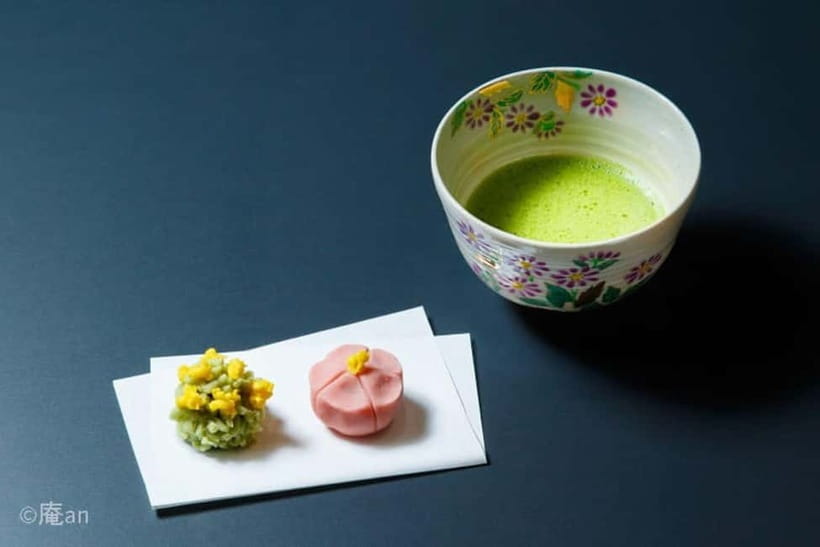
- Three hands-on activities: Make wasanbon ohigashi, two seasonal nerikiri sweets, and matcha.
- Kyoto bean paste: The white and red bean paste comes from long-established shops in Kyoto.
- Single-origin matcha: You grind matcha and prepare your own cup during the tea section.
- Easy access from Gojo: The meeting point is one minute from Exit 1 of Gojo Station on the Subway Karasuma Line.
- Casual tea experience: Expect an explanation, demonstration, and guided preparation rather than a fully formal ceremony.
- Good value at $28: The price covers three connected cultural activities, with small optional charges for extras.
Three Japanese sweets experiences in one sitting
This workshop is built around three parts that fit together well. You first work with wasanbon sugar, then shape bean-paste sweets, then prepare matcha to drink with them.
That order matters. Ohigashi gives you an introduction to the precision of Japanese confectionery. Nerikiri shows how bean paste can become seasonal art. Matcha then brings the sweets back to their traditional setting, where sweetness and bitterness balance each other.
You are not simply watching a demonstration. The appeal is in using your hands, following the instructor’s movements, and seeing how a few careful steps create something recognizable as Japanese wagashi. The activities are gentle and approachable, making this a useful choice if you want cultural context without committing to a full-day class.
The total time is 125 minutes, but the hands-on work is broken into short sections. That keeps the workshop from feeling like one long lesson. It also means you should arrive ready to focus, since late arrivals cannot be held for the group.
More Tea and Sweets Making in Kyoto
- Kyoto: Japanese Traditional Sweets Making and Tea Ceremony
★ 4.4 · 314 reviews - Kyoto: Traditional Tea Ceremony with Matcha & Sweets in Gion
★ 4.9 · 27 reviews - Kyoto near Fushimiinari Wagashi making&Small Group Tea Ceremony
★ 5.0 · 14 reviews
Starting with wasanbon ohigashi
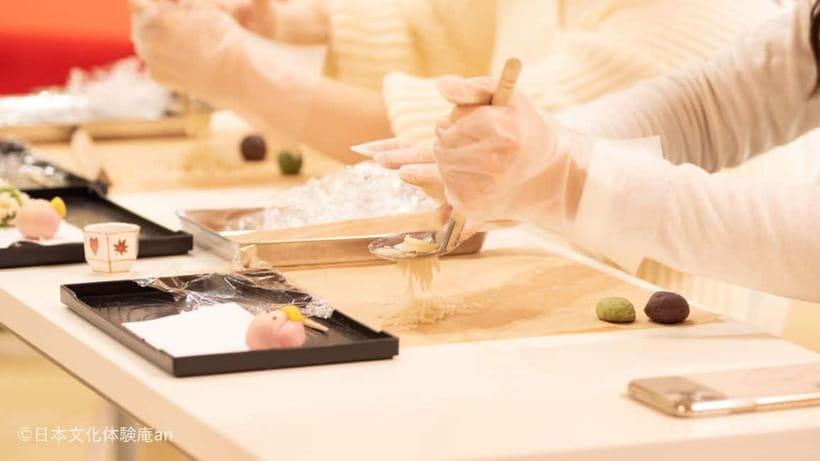
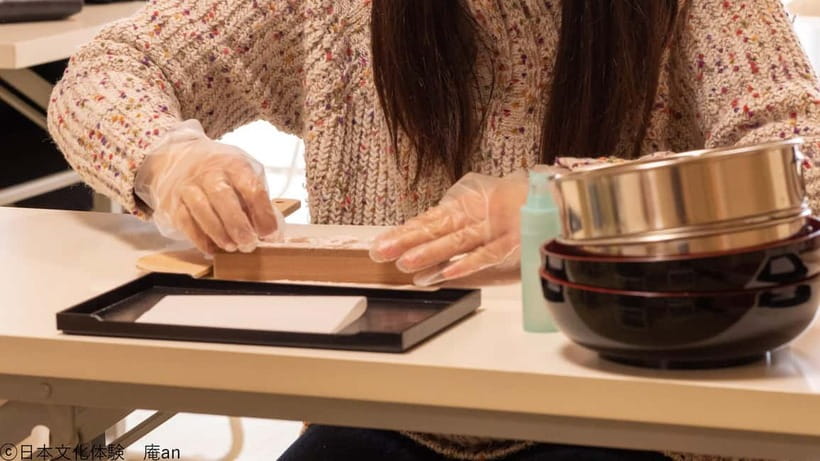
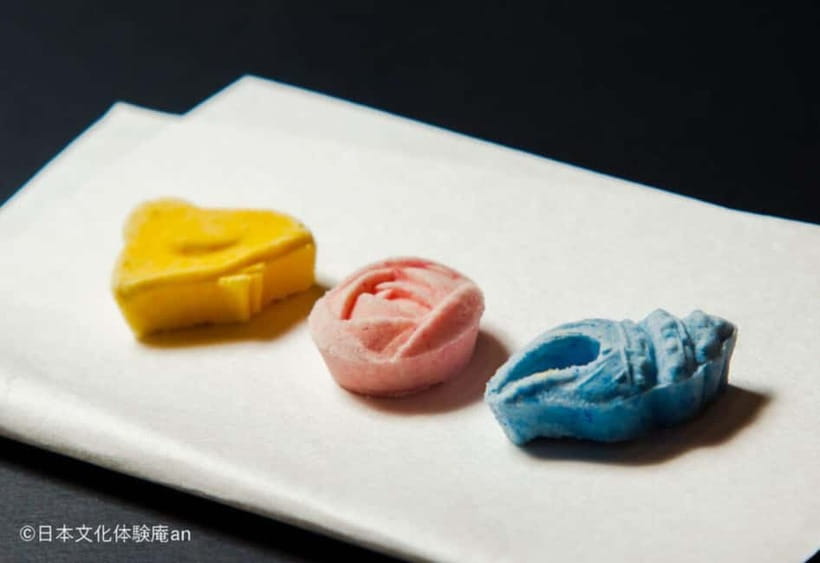
The first activity is ohigashi, a dry Japanese sweet made with wasanbon. Wasanbon is a traditional Japanese sugar known for its fine texture and delicate sweetness.
This is a different experience from making a soft bean-paste sweet. Ohigashi is shaped from dry sugar, so the work gives you a quick look at the mold-based and detail-focused side of Japanese confectionery. The session begins with an explanation of traditional sweets, followed by the ohigashi activity.
The schedule places a short break after about 20 minutes. That is useful because the first activity moves quickly, and you get a moment to reset before the more detailed nerikiri work.
I like this opening because it gives the class a clear starting point. You begin with a simple traditional ingredient, then move toward sweets with more color and form. The only limitation is that the supplied information does not specify exactly how many ohigashi pieces you make or which shapes are used. Expect a practical introduction, not a masterclass in professional confectionery.
Shaping two seasonal nerikiri sweets
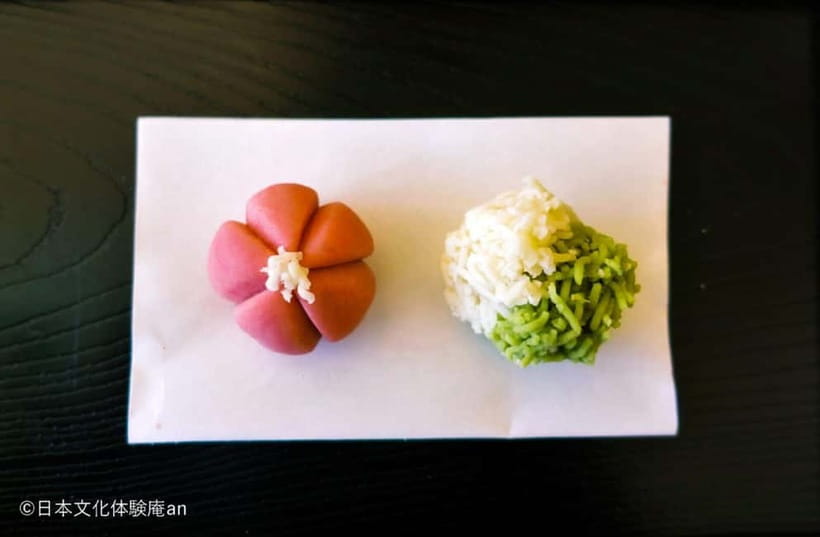
The central part of the workshop is making two seasonal nerikiri sweets. These are made from white or red bean paste, with the ingredients supplied by established Kyoto shops.
The first is a flower-shaped nerikiri. You work with the paste and shape it into a form linked to the season. After that comes a kinton nerikiri, a style known for its fine strands and textured appearance.
This is where the workshop becomes especially visual. Nerikiri is not just food. Its shapes and colors often suggest flowers, plants, or seasonal scenes, so the sweet carries a small piece of Japanese calendar culture. You get to make the objects yourself, then see how their appearance changes as you handle the paste.
The two sweets also give you a useful comparison. The flower shape calls for a more defined form, while the kinton style focuses on texture. If you enjoy craft activities, this is likely the most satisfying section.
Color can be added for an extra 200 yen. The fact that coloring costs extra is worth knowing before you arrive, especially if you expect every decorative element to be included in the base price. The core activity is included, but some finishing options are not.
A second short break follows the nerikiri work. By this point, you have made three different types of sweets in total, although the exact number of individual pieces is not stated. A take-out box costs an additional 100 yen, so bring that small extra amount if you want to carry your sweets away rather than eat them during or after the session.
Preparing matcha instead of watching from the sidelines
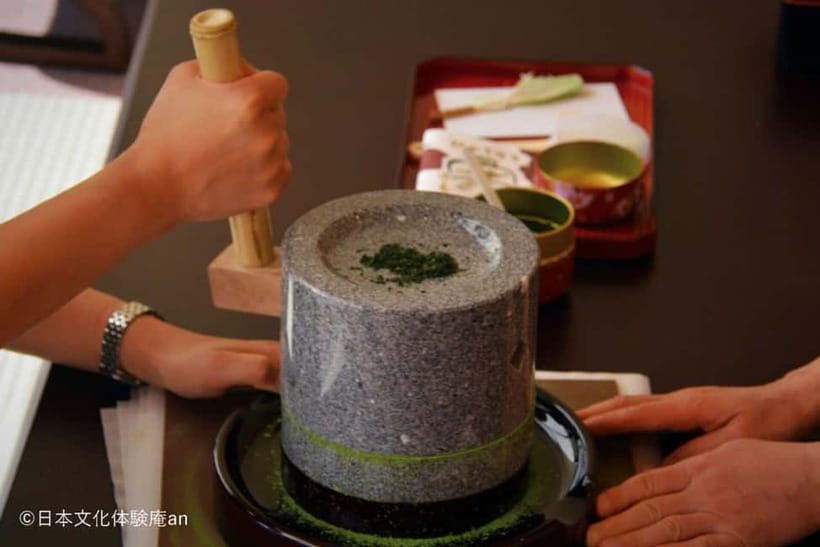
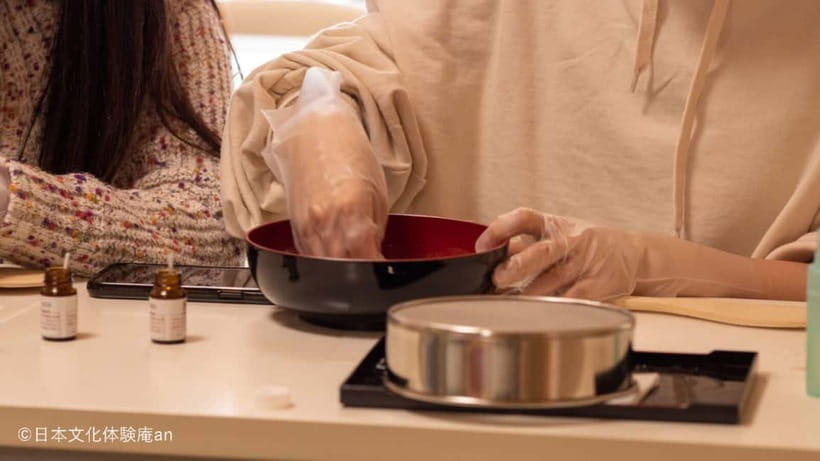
The tea section begins with an explanation of tea and a demonstration of grinding matcha. You then make your own cup using single-origin matcha.
That detail gives the final part more substance than a simple tea tasting. You are introduced to the powder itself, see how it is prepared, and take part in making the drink. The sweets you created earlier now have a clear purpose, since Japanese sweets are traditionally paired with tea to soften matcha’s bitter edge.
Set your expectations carefully. The program calls this a casual tea ceremony experience, but it does not promise the full formality, silence, or ritual structure of a traditional tea ceremony. One attendee felt the session was more informative than ceremonial. That is a fair way to picture it: you receive an explanation, see a matcha-grinding demonstration, prepare tea, and have time for pictures.
This is a good fit if you want to learn what matcha preparation involves without sitting through a highly formal performance. If your main goal is to observe a strict tea ceremony with elaborate etiquette, you may find this program too relaxed.
The schedule allows about ten minutes for the tea explanation and demonstration, followed by the tea experience and picture time. You then have an additional period for eating and drinking before leaving.
More Tea Ceremonies in Kyoto
- Kyoto: Tea Ceremony in a Traditional Tea House in Kiyomizu
★ 4.9 · 3,519 reviews - Kyoto: Tea Ceremony Ju-An at Jotokuji Temple
★ 4.9 · 3,207 reviews - Kyoto: 45-Minute Tea Ceremony Lesson Experience
★ 4.3 · 2,378 reviews - Kyoto: Table-Style Tea Ceremony at a Kyo-Machiya
★ 4.9 · 1,211 reviews
What the $28 price really covers
At $28 per person, the workshop offers solid value because it combines three activities in one booking. You are not paying only for a cup of matcha or a short confectionery demonstration. The base price includes ohigashi making, two types of nerikiri making, and matcha preparation.
That combination is the strongest financial point. Separate activities would usually require separate time slots, transport, and bookings. Here, the three sections take place as one continuous visit near a subway station.
There are a few small costs to keep in mind:
- Adding color costs 200 yen.
- A sweets take-out box costs 100 yen.
- A completion certificate costs 300 yen.
These are modest charges, but they can affect your final cost if you want the decorative option, packaging, or certificate. The main experience remains included at the advertised price.
The workshop is particularly good value for first-time visitors who want a compact introduction to Japanese sweets and tea. It is less compelling for someone who already has extensive wagashi-making experience or wants a private, highly personalized lesson.
The setting near Gojo Station
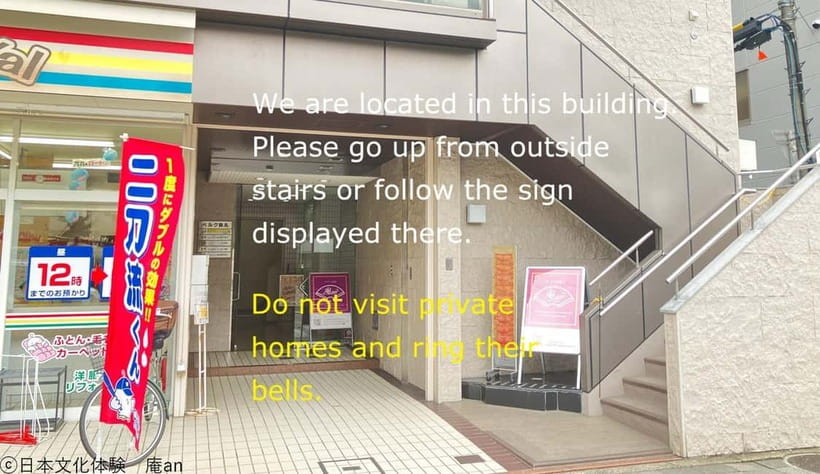
The meeting point is one minute from Exit 1 of Gojo Station on the Subway Karasuma Line. The entrance faces Gojo-dori, the main street, which should make the location fairly easy to identify once you are at street level.
This is a practical choice for a Kyoto day plan. You can reach the workshop by subway without building a long transfer into your schedule, and the 125-minute length leaves room for another activity before or after it.
Allow time to find the entrance and arrive early. The class will not be held for delayed arrivals, regardless of the reason. That policy matters in Kyoto, where subway transfers, crowded streets, and unfamiliar exits can quietly eat up your schedule.
There is no elevator in the building, and stairs are required to reach each venue. The activity is described as wheelchair accessible, but the stair information creates a possible conflict for some visitors. If you use a wheelchair or have difficulty with stairs, contact the operator before booking so you can confirm exactly how access is handled.
English help and the teaching style
The official language is Japanese, with English translation provided as much as possible. English support appears to vary by session, although Maiko has been praised for her attentive manner, clear information, and good English.
I would still contact the provider in advance if detailed English instruction is important to you. The sweets require visual guidance, so you can follow along even when every explanation is not translated perfectly. The tea etiquette and ingredient explanations may be harder to follow if you need full English throughout.
The teaching style is hands-on and structured. You get an explanation, make the item, take a break, and move on to the next stage. Some people will appreciate that order. Others may find the room a little clinical, especially if the group is large or noisy.
This is not presented as a private home visit or a quiet meeting with a tea master. It is a workshop with a schedule. That makes it efficient, but it can reduce the sense of intimacy that some people want from a traditional cultural activity.
Noise, atmosphere, and the question of authenticity
The atmosphere can depend heavily on the group in your session. A considerate class allows you to concentrate on the sweets and tea. A loud group may make the explanations harder to hear and take some calm out of the tea portion.
You should also separate authenticity from formality. The ingredients and techniques are connected to Japanese confectionery, and the use of Kyoto-produced bean paste gives the class a meaningful local link. At the same time, the format is designed for visitors and is easy to follow, not a private glimpse into a working confectionery shop.
I see that as a reasonable trade-off for the price and time. You get genuine ingredients, seasonal forms, and basic tea preparation in a convenient class. You do not get the same atmosphere as a quiet tea room or a long traditional ceremony.
The strongest point is the chance to make the sweets yourself. Watching a demonstration can be pleasant, but shaping a flower nerikiri and preparing kinton gives you a better sense of the skill involved. You leave with a memory tied to an action, not just a photograph.
Who should book this Kyoto workshop?
I would recommend it for:
- First-time visitors curious about wagashi and matcha.
- Families and couples who enjoy practical cultural activities.
- Anyone looking for a short indoor experience near central Kyoto.
- Visitors who want seasonal Japanese sweets but do not need advanced instruction.
- People who prefer making and tasting over simply watching a ceremony.
It may not suit you if you want a formal tea ceremony, a quiet private setting, or detailed English instruction guaranteed throughout. It is also worth reconsidering if stairs are a concern until access is confirmed directly.
Children under two who sit on a parent’s lap are free. Everyone else who takes part needs to be included in the booking, and people who do not participate cannot enter the experience.
Timing, cancellations, and useful planning details
The operating hours are 10:00 to 17:00. Reservations received after 17:00 are processed the next day, so do not expect an evening message to receive an immediate response.
Free cancellation is available up to 24 hours in advance for a full refund. After that point, a cancellation fee applies, and changing the date or time after the fee has been incurred can bring another specified charge. The operator does not cover travel expenses if you cancel or miss the experience.
The schedule is tightly organized, so plan your transport with care. Arrive early rather than trying to reach the entrance at the exact starting minute. A late arrival can mean missing the opening explanation and the first ohigashi activity.
If you want to take your sweets home, ask about the 100-yen box when you arrive. If you want a certificate, budget the extra 300 yen. These are small details, but knowing them ahead of time keeps the payment side simple.
Final call: Is it worth booking?
I would book this workshop if you want good value, hands-on sweets making, and a relaxed introduction to matcha in a convenient Kyoto location. The three-part format gives you more to do than a basic tea tasting, and the seasonal nerikiri section is the most distinctive part.
I would not book it expecting a formal tea ceremony or a hushed, intimate setting. Think of it as a practical Japanese culture class with tea ceremony elements. At $28, that is a fair exchange, especially when the class is taught clearly and the room stays orderly.
For the best fit, contact the provider ahead of time about English support and stair access, arrive early, and carry a little extra cash for coloring or a take-out box. If those details work for you, this is an enjoyable way to spend two hours making something beautiful, eating it, and learning why Japanese sweets belong beside a bowl of matcha.
FAQ
Where is the experience located?
It is a one-minute walk from Exit 1 of Gojo Station on the Subway Karasuma Line in Honshu, Japan. The entrance faces Gojo-dori.
How long does the experience last?
The full experience lasts 125 minutes, including the sweets activities, breaks, tea explanation, matcha preparation, picture time, and eating and drinking time.
What will I make?
You will make wasanbon ohigashi, a flower-shaped nerikiri, and a kinton nerikiri. You will also prepare your own matcha.
Is the tea ceremony formal?
It is described as a casual tea ceremony experience. The program includes an explanation of tea, a matcha-grinding demonstration, and making your own matcha. It may feel more instructional than a fully formal tea ceremony.
Is English instruction available?
The instructor language is Japanese, and English translation will be provided as much as possible. Contact the provider in advance if you need additional English support.
Are extra charges required?
The main experience is included in the price. Adding color costs 200 yen, a sweets take-out box costs 100 yen, and an experience completion certificate costs 300 yen.
Is the building wheelchair accessible?
The activity is described as wheelchair accessible, but the building has no elevator and stairs are required to reach each venue. Contact the provider before booking to confirm how your access needs can be accommodated.
Just added around Kyoto
- Uji Walking Tour – Byodo-in temple and Tea Ceremony from Kyoto★ 3.5 · 3 reviews
- Tea ceremony at Kyoto’s Zen Temple Teahouse★ 5.0 · 2 reviews
- Kyoto: Authentic Tea Ceremony in a Small Group★ 5.0 · 7 reviews
- Tea Ceremony in 150 Years Old Townhouse with Tables and Chairs★ 5.0 · 22 reviews
- Silent Beauty of Kyoto Zen Walk and Tea Experience★ 5.0 · 2 reviews
- Tea Ceremony Experience in Traditional Kyoto Townhouse★ 5.0 · 19 reviews
- Traditional Tea Ceremony in Kyoto★ 4.5 · 3 reviews
- Sencha-do the Japanese Tea Ceremony Workshop in Kyoto★ 5.0 · 21 reviews
Tea Ceremonies in Kyoto, compared.
Tea Ceremony in a Traditional Tea House in Kiyomizu
Read our review →
Tea Ceremony in 100-year-old Kyo-Machiya Townhouse
Read our review →
Browse the lists this tour appears in