
Review · KYOTO
Kyoto: Tea Ceremony Experience
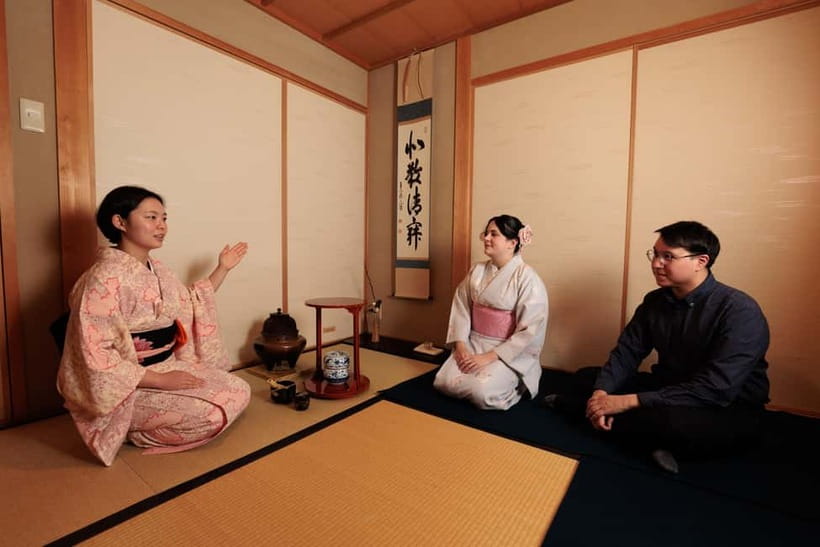
Slow down with a bowl of matcha. This 45-minute experience offers a clear, friendly introduction to Kyoto’s tea culture inside a traditional machiya in Higashiyama. I like the calm demonstration and the chance to whisk your own tea, and I like that the host explains the utensils, room arrangement, and customs without turning the session into a lecture. At $32 per person, it gives you a meaningful cultural activity at a reasonable price.
The main consideration is comfort. Much of the session takes place on the floor, and sitting that way for around 40 minutes can be hard on your knees or lower back. Chairs and tables are available if needed, but the tearooms are upstairs, so visitors with mobility concerns should request the wheelchair-accessible Garden Teahouse when booking.
What makes this tea ceremony worth your time
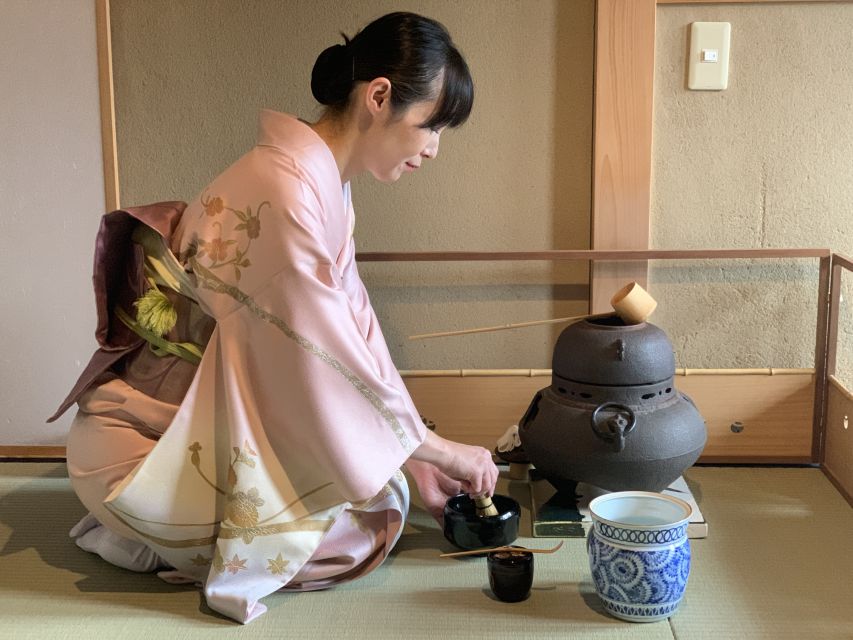
- A hands-on matcha lesson: You watch the host prepare tea, then whisk your own bowl with personal guidance.
- A genuine Higashiyama setting: The teahouse sits down a narrow alley near Ninenzaka, close to Kiyomizu-dera and Gion.
- Seasonal sweets with Kyoto matcha: A traditional sweet balances the tea’s strong, slightly bitter flavor.
- Useful cultural context: You learn about tea utensils, room decoration, ceremony movements, and the three tea schools.
- A short, focused format: Forty-five minutes is enough to learn the basics without taking over your sightseeing day.
- Flexible arrangements: Private and small-group sessions are available, with English instruction and free cancellation up to 24 hours before the start time.
Finding the teahouse near Ninenzaka
The meeting point is in Kyoto’s Higashiyama district, in one of the city’s most visited areas. It is down an alley branching from the main Ninenzaka thoroughfare, opposite the Park Hyatt hotel and just to the left of a Studio Ghibli store.
That sounds simple, but narrow Higashiyama lanes can be confusing, especially when the streets are crowded. Clear directions are important here. Once you reach the alley, look for the sign and follow the staff member who comes to the door. Allow a few extra minutes rather than arriving at the last second.
The location is a major advantage. You can combine the tea ceremony with Kiyomizu-dera, Kodai-ji, Yasaka-jinja, Maruyama Park, Chion-in, or the streets of Gion. Kiyomizu-dera and its surrounding shopping lanes are about a 15-minute walk away, according to the timing provided by one visitor. The walk is uphill in places, so plan your route with comfortable shoes.
Buses run along Higashi Oji, about 10 minutes from the teahouse. If you enjoy walking, central Kyoto is roughly 25 minutes away through Gion. This makes the activity easy to place between sightseeing stops rather than treating it as a separate half-day outing.
More Tea Ceremonies in Kyoto
- Kyoto: Tea Ceremony in a Traditional Tea House in Kiyomizu
★ 4.9 · 3,519 reviews - Kyoto: Tea Ceremony Ju-An at Jotokuji Temple
★ 4.9 · 3,207 reviews - Kyoto: 45-Minute Tea Ceremony Lesson Experience
★ 4.3 · 2,378 reviews
The machiya setting and first explanation
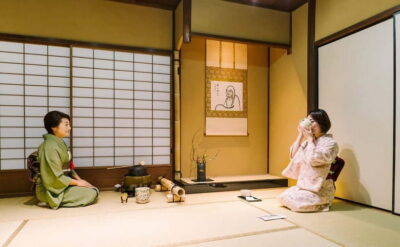
The experience begins inside a traditional Kyoto machiya. These narrow townhouses are closely tied to the old urban character of Kyoto, and the setting gives the session more atmosphere than a modern classroom would.
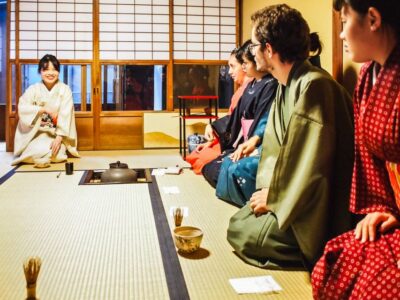
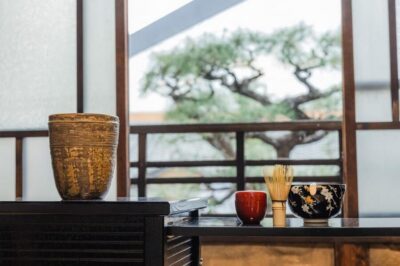
Your English-speaking host introduces matcha and explains how the ceremony works. You learn about the tools, the order of the movements, and the reason the room’s decorations matter. The arrangement is not random. The utensils, flowers, scrolls, and other details help create the mood for the gathering.
This introductory talk is one of the strongest parts of the activity because it gives you a way to read what follows. Without an explanation, a tea ceremony can look like a series of precise movements. With context, you begin to notice the care given to every gesture and object.
The host can also answer questions about Japanese culture and the three major schools of tea ceremony. The experience does not attempt to train you as a tea master in 45 minutes, but it gives you a useful starting point. That balance works well for first-time visitors.
Several hosts have received especially warm praise for clear English and patient instruction. Ikuko is singled out for explaining the ceremony carefully and helping a first-time matcha drinker create a good foam. Other sessions have been led by friendly hosts who kept the pace light and approachable.
Watching the ceremony in quiet detail
After the introduction, the host demonstrates the ceremony. The formal demonstration lasts about 10 minutes, according to one detailed account, although the total activity takes around 45 minutes.
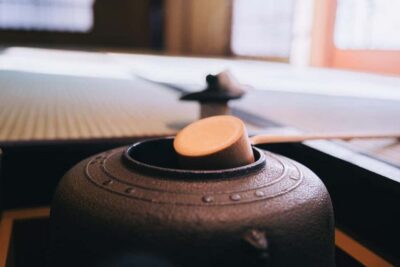
This is the quiet center of the experience. The movements are deliberate and exact, from handling the tea scoop to whisking the matcha. The pace may feel slow at first, especially if you are used to sightseeing activities that rush from one point to the next. That is also the point. The ceremony asks you to pay attention.
You receive a seasonal Japanese sweet to eat with the tea. The sweetness helps balance matcha’s grassy, powerful bitterness. If this is your first taste of matcha, do not expect a mild green tea. It has a distinctive flavor, and the contrast with the sweet is part of the tradition.
The ceremony also gives you a glimpse into Japanese ideas of hospitality, order, and presence. The emphasis is not only on drinking tea. It is on preparing something carefully for another person and treating the moment as worthy of attention.
Still, keep your expectations realistic. This is an introduction rather than a complete formal ceremony lasting several hours. You do not learn every movement required to conduct the entire ritual yourself. One visitor specifically noted that the activity teaches the background and matcha preparation, but not the full ceremony. For most visitors, that is a sensible tradeoff at this length and price.
Making your own bowl of matcha
The hands-on portion follows the demonstration. Your host gives you the utensils and guides you through whisking your own bowl of frothy matcha.
This is where the activity becomes more than a performance. You can try the process yourself, feel how the whisk moves, and see how much technique goes into producing the fine foam. Do not worry about getting it perfect. The host is there to help, and the emphasis is on understanding the process rather than passing an examination.
For first-time matcha drinkers, this part is particularly useful. You learn how the tea is prepared rather than simply receiving a finished bowl. Several people have enjoyed the fact that they could make the tea themselves, with the host stepping in to help create a smooth foam.
The flavor is strong and somewhat bitter. That is normal, not a sign that something has gone wrong. The seasonal sweet makes the taste easier to appreciate, and the experience gives you a better sense of why matcha is handled with such care.
If you like tea, this hands-on step is likely to be the main reason to book. You may also be able to purchase a matcha-making set as a memento at the gift shop. That option is not included in the $32 price, but it can help you continue the experience at home.
Same place, a different pot:
- Kyoto: Table-Style Tea Ceremony at a Kyo-Machiya
★ 4.9 · 1,211 reviews - Kimono Tea Ceremony at Kyoto Maikoya, NISHIKI
★ 5.0 · 911 reviews - Kyoto: Arashiyama Bamboo Forest, Monkeys, Matcha & Temple Tour
★ 5.0 · 759 reviews - Kyoto: Kimono Tea Ceremony at Orizuruya Gion
★ 4.9 · 618 reviews
What the 45-minute format gets right
Forty-five minutes is a smart length for this activity. It is long enough for an explanation, a demonstration, a sweet, and your own attempt at matcha, but short enough to fit into a busy Kyoto day.
I would schedule it before or after a visit to the nearby temples rather than making it the only activity in Higashiyama. The area deserves several hours, and the tea ceremony works nicely as a quiet pause between crowded streets and major sights.
The pace also suits families and first-time visitors who may not want a long, highly formal ceremony. One family of four found the format efficient and easy to follow. The hosts aim to explain enough to make the ritual meaningful without overwhelming you with technical detail.
Private sessions are available if you want more time for questions or a more personal setting. A private booking is also required if you plan to bring an interpreter, since an interpreter in a shared session could interrupt the experience for others.
Floor seating, photography, and other practical details
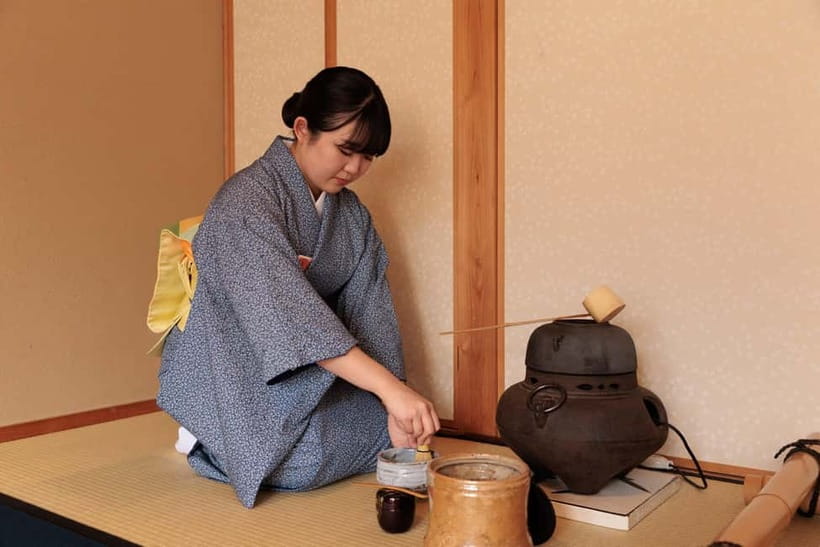
Traditional tea rooms often involve sitting on the floor, and this one is no exception. You do not have to kneel formally throughout the session. The hosts encourage you to make yourself comfortable, and chairs and tables are available for people who find floor seating difficult.
Even so, ask for the seating arrangement when booking if your knees, hips, or back are a concern. The tearooms are upstairs, while the Garden Teahouse is wheelchair accessible. Babies and infants under three should be booked into a private ceremony at the Garden Teahouse.
Still photography without flash is permitted. Video recording is not allowed, so put the phone away during the ceremony and enjoy the quiet. You can take photos during approved moments, but avoid letting photography distract you from the demonstration.
Restrooms are available. An accompanying guide may wait in the waiting room, where Wi-Fi and refreshments are provided. These details matter if you are traveling with a professional interpreter, a guide, or someone who prefers not to join the floor-based session.
Kimono rental and adding a little ceremony
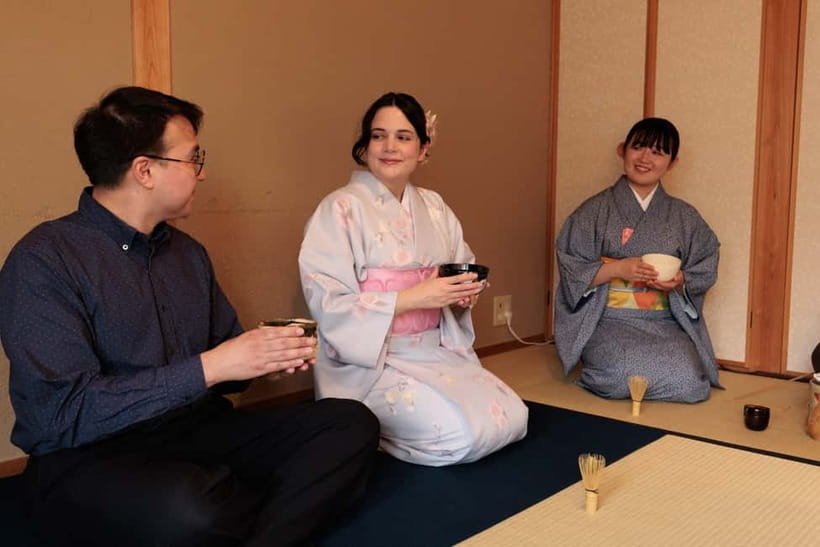
A kimono is not included, and you do not need one to take part. The tea ceremony is fully worthwhile in ordinary travel clothing.
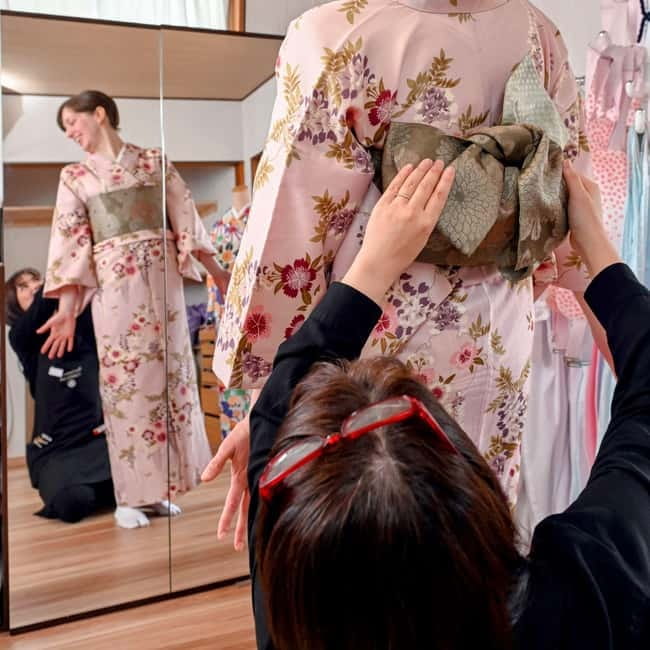
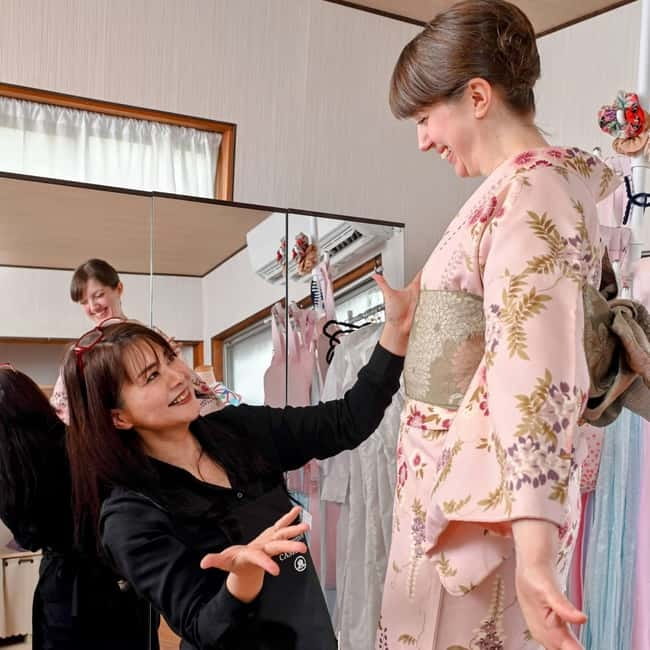
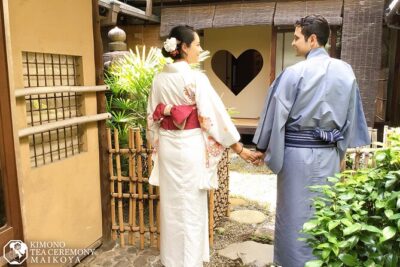
Still, several people found that wearing a kimono made the occasion feel more special. A kimono rental shop is nearby, but you should arrange it before the tea session rather than assuming you can handle it afterward. One useful detail is that the shop is around the corner, not necessarily obvious when you first arrive.
If you are traveling alone and want photographs, the nearby staff may be able to help. Nel, a member of the kimono staff, was praised for offering to take photos for a solo visitor. That sort of small assistance can make the experience easier when you are dressed up without a companion to hold the camera.
Keep in mind that a kimono can make floor sitting less flexible. If comfort matters more than appearance, skip the rental or request a chair. The tea ceremony is about attention and hospitality, not dressing up for a photograph.
Is $32 a fair price?
At $32 per person, this is a good-value cultural activity in central Kyoto. The fee includes matcha, a seasonal sweet, tea utensils, an English-speaking instructor, and the opportunity to prepare your own bowl.
You are not paying only for a cup of tea. You are paying for the setting, the explanation of the objects and customs, the demonstration, and guidance during your own attempt. A temple visit may show you architecture and ritual from the outside. This experience lets you ask questions and participate in a small but meaningful way.
The price is especially fair if you are already planning to visit Higashiyama. There is no hotel pickup, so you need to reach the meeting point yourself, but the central location makes transportation simple. You can also combine the activity with several major sights without paying for a separate transfer.
The value is lower for anyone seeking a full formal tea ceremony or a long lesson in tea-school technique. This is a compact introduction. If you want a detailed study of every movement, this session will feel brief. If you want an accessible first look at matcha and Japanese hospitality, the price makes sense.
Who will enjoy this experience most?
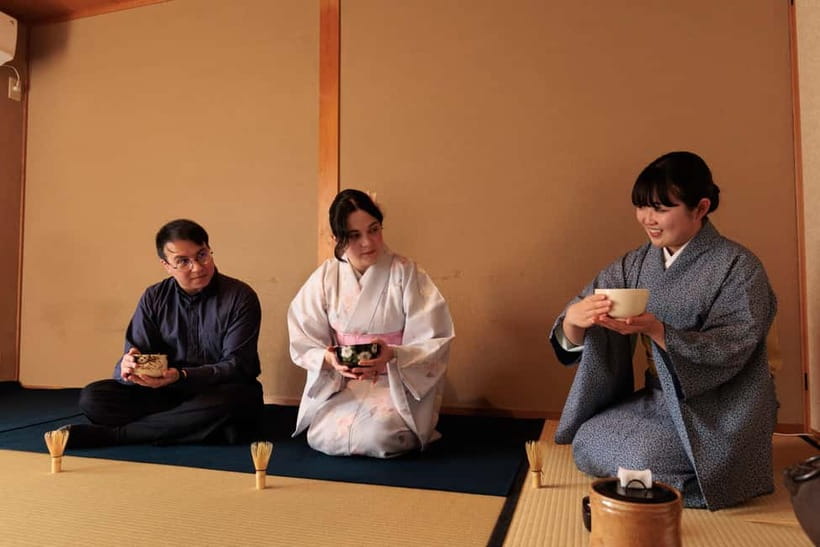
I would recommend it to first-time visitors to Japan, tea lovers, couples, families with older children, and anyone who wants a calm break from temple hopping.
It also suits people who enjoy asking questions. The hosts explain the ceremony in English and invite discussion about Japanese culture, matcha, and the three tea schools. The private option makes the activity a better fit for interpreters, small family groups, or anyone who wants more direct conversation.
You may want to reconsider it if you dislike strong tea, cannot sit comfortably on the floor, or want a fully formal ceremony rather than a demonstration and hands-on lesson. The staff do offer chairs, but the upstairs rooms can still present a challenge for some visitors.
The atmosphere is peaceful rather than theatrical. That makes it a good counterpoint to Kyoto’s crowded sightseeing districts. You will not leave with mastery of the tea ceremony, but you should leave understanding more about why the ritual matters.
Final verdict: should you book the Kyoto tea ceremony?
Book it if you want an affordable, well-organized introduction to matcha in a traditional Kyoto setting. The strongest parts are the calm demonstration, the clear English explanations, the seasonal sweet, and the chance to whisk your own tea.
Plan carefully around the seating and access details. Request the Garden Teahouse if wheelchair access is important, choose a private session if you need an interpreter or are bringing an infant under three, and arrange a kimono beforehand if you want one.
For $32 and 45 minutes, this is an easy activity to add near Kiyomizu-dera, Gion, or Ninenzaka. It offers enough cultural context to feel worthwhile without taking over your day. I would book it as a focused introduction, not as a complete education in Japanese tea ceremony.
FAQ
How long does the Kyoto tea ceremony experience last?
The experience lasts 45 minutes. It includes an introduction, a tea ceremony demonstration, a seasonal sweet, and the chance to prepare your own bowl of matcha.
How much does the experience cost?
The listed price is $32 per person.
Is the tea ceremony conducted in English?
Yes. The instructor and host provide English instruction.
What is included in the price?
The price includes matcha, traditional seasonal sweets, tea-making utensils, and a personal instructor or host.
Can I make my own matcha?
Yes. After watching the demonstration, you can whisk your own bowl of matcha with help from the host.
Where does the experience take place?
It begins at a traditional machiya in Kyoto’s Higashiyama district, down an alley branching from Ninenzaka. The alley is just to the left of the Studio Ghibli store opposite the Park Hyatt hotel.
Can I wear a kimono?
Kimono rental is not included. A rental shop is located nearby, and you should arrange the kimono before the ceremony if you want to wear one.
Is photography allowed?
Non-flash still photography is permitted. Video recording is not allowed.
Is the tearoom wheelchair accessible?
The tearooms are upstairs, but the Garden Teahouse is wheelchair accessible. Request that location when booking if you have mobility needs.
Just added around Kyoto
- Uji Walking Tour – Byodo-in temple and Tea Ceremony from Kyoto★ 3.5 · 3 reviews
- Tea ceremony at Kyoto’s Zen Temple Teahouse★ 5.0 · 2 reviews
- Kyoto: Authentic Tea Ceremony in a Small Group★ 5.0 · 7 reviews
- Tea Ceremony in 150 Years Old Townhouse with Tables and Chairs★ 5.0 · 22 reviews
- Traditional Tea Ceremony in Kyoto★ 4.5 · 3 reviews
- Silent Beauty of Kyoto Zen Walk and Tea Experience★ 5.0 · 2 reviews
- Tea Ceremony Experience in Traditional Kyoto Townhouse★ 5.0 · 19 reviews
- Kyoto Private Tea Ceremony at a Japanese Inns★ 5.0 · 12 reviews
Tea Ceremonies in Kyoto, compared.
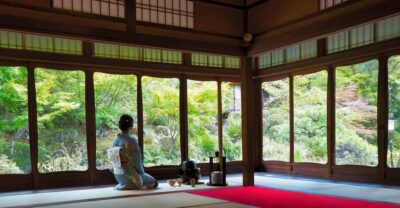
Tea Ceremony in a Traditional Tea House in Kiyomizu
Read our review →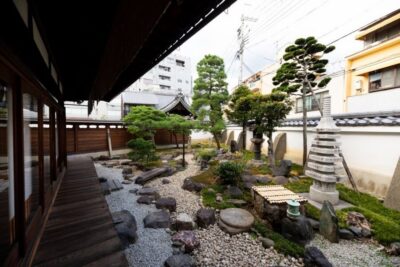
Tea Ceremony in 100-year-old Kyo-Machiya Townhouse
Read our review →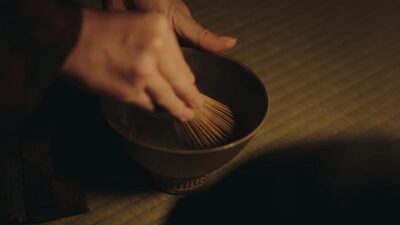
Tea Ceremony Meditation – Make Matcha with Tea Master
Read our review →Browse the lists this tour appears in