
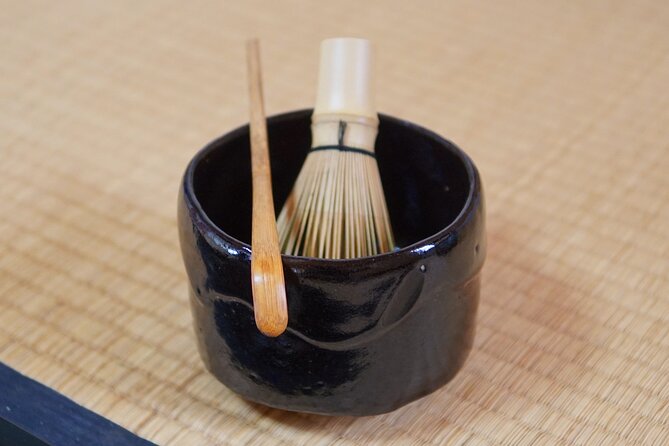
Review · TOKYO
Tokyo Tea Ceremony Class at a Traditional Tea Room
Slow down with a bowl of matcha. This small-group experience takes you from Kugayama Station to a traditional wooden tea room, where an English-speaking tea practitioner explains the customs, demonstrates temae, and lets you prepare matcha yourself. It feels more personal than a large city-center cultural show.
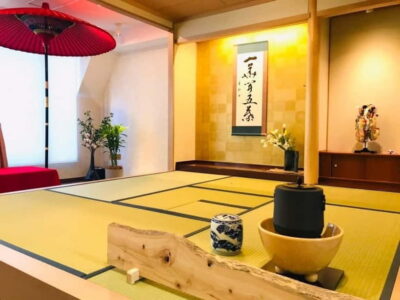
I especially like the chance to try both thin tea and thick tea, called koicha. Thick tea is normally reserved for formal ceremonies, so it gives this two-hour class unusual depth. I also like the room itself, built with traditional methods and materials for the tea ceremony. The main drawback is the location: Kugayama is outside Tokyo’s best-known sightseeing areas, and transport to the meeting point is not included.
The class is led by Ms. Haruki, a tea practitioner from Oita who began studying tea ceremony in high school. She has presented tea culture in the United States and New Zealand and works as a National Government Licensed Guide Interpreter. With a maximum of four people, you should expect plenty of explanation and a calm pace, but the non-refundable booking policy means you need to be sure before paying.
Key points at a glance
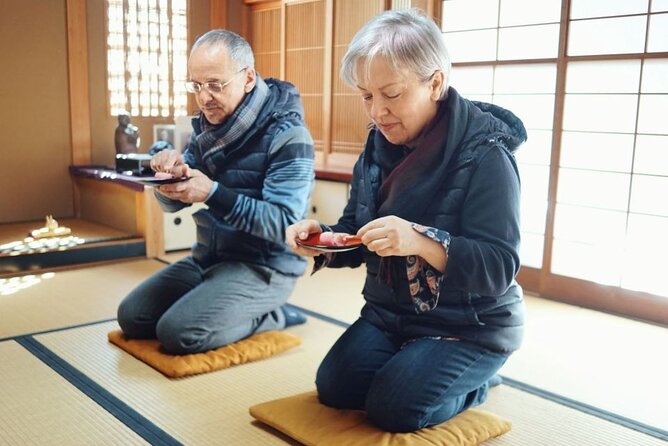
- A real tea room in Kugayama: The setting uses traditional wooden construction rather than a staged hotel or tourist attraction.
- Both thin and thick matcha: You learn to drink usucha and koicha, with the latter usually associated with formal ceremonies.
- Hands-on tea making: You do not only watch the temae demonstration. You also prepare some matcha yourself.
- English guidance with cultural context: Ms. Haruki explains the customs, utensils, and background in English.
- Very small group size: The class accepts a maximum of four people, which allows time for questions and individual instruction.
- A useful Japanese souvenir: Traditional washi items are included, along with matcha and sweets.
Reaching the traditional tea room from Kugayama Station
The experience begins at Kugayama Station in Suginami City, in western Tokyo. The exact meeting point is in the Kugayama 4-chome area, and the activity returns you to the same meeting point when it finishes.
That arrangement is simple, but it matters in Tokyo. You are not being dropped at a famous landmark or collected from a central hotel. You need to make your own way there, and transport is not part of the price. Check your route carefully before the day of the class, especially if you are staying around Asakusa, Shinjuku, Ginza, or Tokyo Station.
The upside is the change of pace. Kugayama gives you a quieter setting for a traditional practice that can feel out of place in a crowded commercial district. You are going to a neighborhood tea room, not a stage set in the middle of a shopping street.
The class generally lasts about two hours, though one session took around two and a half hours because the teachers spent extra time explaining customs and background. I would keep part of your schedule open afterward. Tea ceremony is careful and deliberate, and rushing off to the next appointment would work against the whole point.
More Tea Ceremonies in Tokyo
- Kimono Tea Ceremony at Tokyo, Asakusa Maikoya
★ 5.0 · 638 reviews - Tokyo: Traditional Tea Ceremony with a Tea Master
★ 5.0 · 528 reviews - Tea Ceremony Workshop in Tokyo by the Experienced Instrucor
★ 5.0 · 189 reviews
Why the wooden room matters
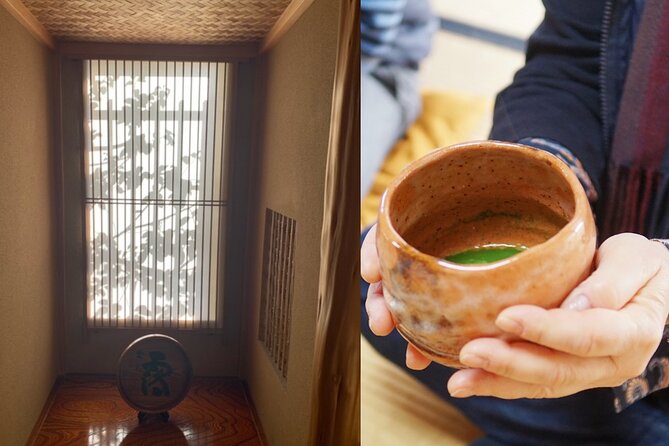
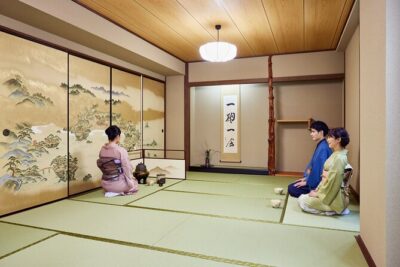
The room is one of the strongest reasons to choose this experience. It was built with traditional construction methods and wooden materials selected for this particular tea room. That is different from simply sitting in a Japanese-style room with a few tea utensils arranged on a table.
The surroundings help you understand why tea ceremony pays so much attention to space, movement, and objects. The room is not just a container for the activity. Its design supports quiet concentration and gives the utensils, tea, and gestures room to speak for themselves.
You will have a chance to look closely at the tea ceremony tools. That detail is easy to miss in a large demonstration, where you may only see a bowl lifted and lowered from a distance. Here, the small group lets the instructor point out what you are looking at and explain how each object fits into the ceremony.
The setting also makes this a good choice for anyone who wants more than a quick cultural photo opportunity. The atmosphere is calm, and the class gives you time to notice how much meaning is placed on preparation and presentation.
The opening lesson on tea ceremony
The session begins with an explanation of the history and traditions of tea ceremony. This is important because the gestures can seem mysterious if you only watch the movements. Once you understand that the process has rules, purpose, and a long cultural background, the ceremony becomes easier to follow.
Ms. Haruki brings useful experience to the presentation. She has practiced since high school, studied international tea ceremony in Tokyo, and presented Japanese tea culture overseas. Her work as a licensed guide interpreter also means she is accustomed to explaining Japanese customs to people from outside Japan.
The teaching is in English, which makes a major difference. You can ask about the meaning of an action instead of simply copying it. The class is not only about drinking matcha. It is also about learning how tea ceremony communicates respect, attention, and hospitality through small actions.
Expect the instructors to spend time on background. One session included three tea teachers, and the pace was described as generous rather than hurried. That will suit you if you enjoy cultural explanation. If you want only a fast demonstration and a cup of tea, two hours may feel long.
Watching temae, the formal preparation
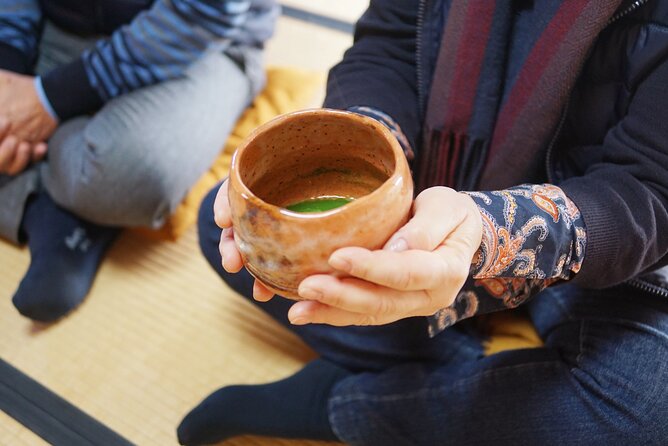
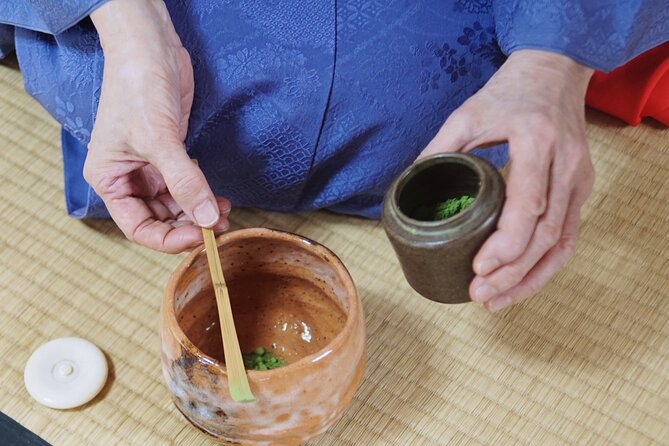
The central demonstration is the tea-making procedure called temae. The practitioner prepares the tea in a set sequence, handling the bowl, whisk, scoop, and other utensils with care.
This is the part where patience pays off. The ceremony can look slow, but the measured pace allows you to see how each movement connects to the next. Rather than treating the preparation as a kitchen task, the instructor presents it as a formal exchange between the person making the tea and the person receiving it.
You will also learn how to observe the utensils. Their shape, use, and placement are part of the experience. A small group is especially helpful here because you should be close enough to see the procedure without depending on a screen or distant stage.
The teachers are described as kind, friendly, and dignified. That combination matters. A formal tradition can feel stiff if the presentation is too severe, but it can also lose its character if treated as a novelty. The strongest part of this class appears to be its balance: the teachers keep the ceremony intact while explaining it in a welcoming way.
Same place, a different pot:
- Matcha Making Class in Tokyo with Authentic Japanese Sweets Set
★ 5.0 · 744 reviews - Tokyo: Matcha Making Experience with Mochi Sweets in Asakusa
★ 4.9 · 388 reviews - Asakusa Cultural Walk & Matcha Making Tour
★ 5.0 · 245 reviews - Mt. Fuji & Lake Kawaguchiko Ropeway Panorama Full-Day Tour
★ 4.6 · 236 reviews
Thin tea, thick tea, and the taste of matcha
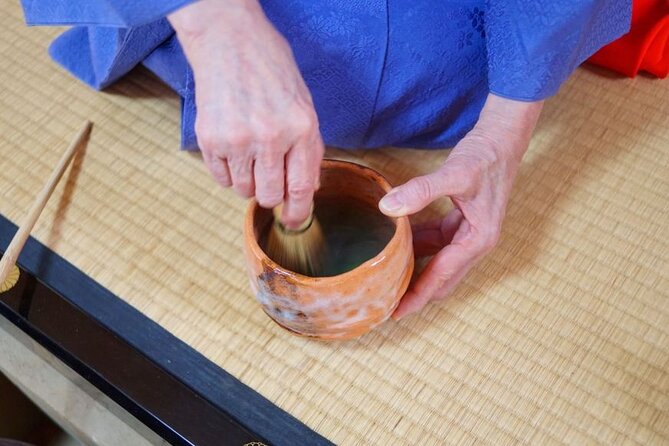
You learn how to drink both thin tea and thick tea. Thin tea is the more familiar matcha preparation, with a lighter texture and a frothy surface. Thick tea, or koicha, is denser and is usually served during a formal tea ceremony.
The chance to try koicha is a major feature. The experience provider specifically notes that this kind of thick tea is available here in Kugayama as a rare opportunity. It gives you a better sense of the difference between an everyday matcha tasting and a more formal tea tradition.
The taste will not suit everyone. Thick matcha has a stronger, more concentrated character than the sweetened green tea drinks found in cafés. The class pairs the tea with sweets, which helps balance the bitterness and gives you a more complete introduction to the custom.
You are taught how to drink the tea properly, not simply handed a bowl. That instruction removes the worry of making a mistake. Japanese etiquette can seem intimidating from the outside, but the class is designed to guide you through it step by step.
Making your own bowl of matcha
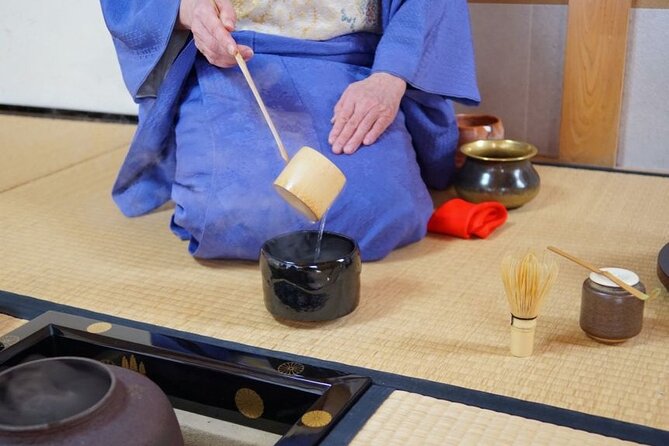
After watching the practitioner, you get a chance to make matcha yourself. This hands-on part turns the class from a demonstration into a practical lesson.
You will use the tools and follow the method shown earlier. The activity is not about producing a perfect bowl on your first try. It gives you a better feel for the whisk, the texture, and the care required to prepare the drink.
I like this part because it makes the ceremony easier to remember. Watching someone skilled at temae can be beautiful, but doing even a small portion yourself shows how much control and practice the process demands.
The small group size helps here. With no more than four participants, you should have room to receive personal instruction instead of taking turns in a large crowd. The experience is best suited to people who are willing to listen, copy the movements, and enjoy the process rather than rush toward a photo.
The teachers and the tone of the class
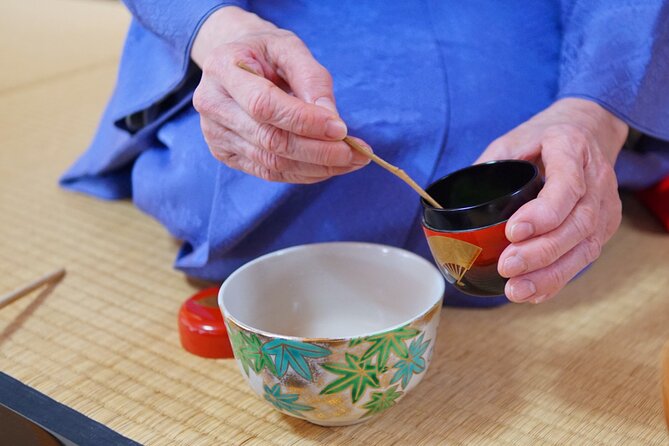
The strongest praise for this experience centers on the tea teachers. The instruction is described as friendly, careful, and respectful of the tradition. Three teachers took extensive time to explain customs and background during one session, making the class feel more like a cultural exchange than a quick activity.
Ms. Haruki is the named tea practitioner connected with the experience. Her international presentation work is useful for you because she understands the questions that people unfamiliar with Japanese tea ceremony are likely to ask.
The tone should appeal to first-time visitors. You do not need a previous understanding of tea ceremony. You are shown how to drink the tea, how to view the utensils, and how to make matcha. At the same time, the formal elements are not watered down simply to make the class easier.
That balance is the reason I would choose this over a generic matcha tasting. You get the drink, but you also get the setting, the etiquette, the story, and the physical actions that give the drink its meaning.
What the $117.87 price includes
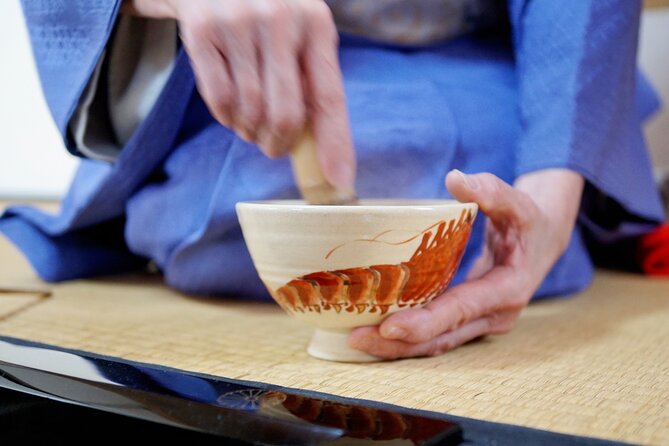
At $117.87 per person, this is not a budget cup of matcha. The price makes more sense when you consider what is included: the tea ceremony performance, English instruction, matcha, sweets, the chance to prepare tea, access to the traditional tea room, and a Japanese washi souvenir.
The maximum group size of four also affects the value. You are paying for a personal cultural session rather than a large presentation. If the class runs closer to two and a half hours, as one session did, the time spent with the teachers is substantial.
Still, the value depends on your interests. If you mainly want to taste matcha, a café will cost far less. If you want to understand the practice and take part in it inside a purpose-built traditional room, the price is more reasonable.
The souvenir is a pleasant extra rather than the reason to book. Traditional Japanese items made from washi are included, giving you something small to take home that relates to local craft. The important value is the instruction and access to a setting that is not easy to find in central Tokyo.
Timing, group size, and practical planning
The stated duration is about two hours, but you should allow a little extra time because the teaching can run longer. The class is near public transportation, and it both starts and ends at the Kugayama meeting point.
Confirmation is sent within 48 hours of booking, subject to availability. The activity is often booked about 29 days ahead, so I would not leave it until the last moment if the date matters to you.
The mobile ticket is convenient, but it does not remove the need to plan the route. Save the meeting details on your phone and allow enough time to reach Kugayama without arriving flustered. A calm arrival fits the experience better than a sprint from the station.
The non-refundable policy deserves careful attention. You cannot change or cancel the booking for a refund, so only reserve once your date and schedule are firm. This is especially important in Tokyo, where weather, train delays, and changing plans can affect a tightly arranged holiday.
Who will enjoy this tea ceremony most
I would recommend this class to you if you want a quiet, personal introduction to Japanese culture. It suits first-time visitors who want clear English explanations, as well as people who have already tried matcha but want to understand the ceremony behind it.
It is also a good fit for anyone interested in traditional architecture, handmade objects, etiquette, or Japanese craft. The wooden room and washi souvenir add texture beyond the tea itself.
Families and couples may appreciate the small group, though the supplied information does not specify a minimum age or particular child arrangements. If you are booking for children, confirm those details before paying.
This is less suitable if you dislike formal customs, have no interest in explanation, or need a tightly timed activity. The teachers take their time, and that is part of the appeal. The same quality can feel slow if you prefer quick sightseeing stops.
Should you book the Kugayama tea ceremony?
Book it if you want more than a matcha sample. The traditional room, small group, English instruction, hands-on preparation, and rare chance to try koicha make this a thoughtful cultural experience rather than a simple refreshment stop.
I would especially choose it for a day when you can travel slowly and give the ceremony your full attention. The main compromises are the trip to Kugayama, the $117.87 price, and the strict non-refundable booking rule.
If those points work for your schedule, this is a strong choice for an intimate Tokyo experience. You leave with a better understanding of tea ceremony, a few practical memories of making matcha, and a washi souvenir that feels connected to the tradition.
FAQ
Where does the tea ceremony take place?
The experience begins and ends at a meeting point near Kugayama Station in Suginami City, Tokyo. The tea room is in the Kugayama area.
How long does the activity last?
The listed duration is approximately two hours. One session lasted about two and a half hours because the teachers spent additional time explaining customs and background.
Is the tea ceremony conducted in English?
Yes. The experience includes English instruction from a tea practitioner with international presentation experience. Ms. Haruki is also a National Government Licensed Guide Interpreter.
How many people can join?
The activity has a maximum of four participants.
What kinds of tea will I try?
You will learn about and drink thin tea and thick tea, known as koicha. Matcha green tea and sweets are included.
Can I make matcha myself?
Yes. Participants have the opportunity to prepare some matcha themselves after watching the tea-making demonstration.
What else is included in the price?
The price includes the tea ceremony performance, instruction from a tea practitioner, matcha, sweets, the chance to make tea, and a traditional Japanese washi souvenir.
Is transportation included?
No. Transport to the meeting point is not included. You are responsible for reaching the Kugayama Station meeting area.
Can I cancel or change my booking?
No. The experience is non-refundable and cannot be changed for any reason. Confirmation is sent within 48 hours of booking, subject to availability.
More Afternoon Tea in Tokyo
- Tea Ceremony Experience in a Private Tea Room in Shibuya
★ 4.9 · 125 reviews - Tokyo: Tea Ceremony Experience in a small tea room
★ 4.9 · 53 reviews - London: Afternoon Tea Cruise on the River Thames
★ 4.4 · 3,274 reviews - Afternoon Tea Bus Tour in Dublin
★ 5.0 · 2,791 reviews
Just added around Tokyo
- Yokohama : Tea Ceremony with Sweets and Souvenir★ 5.0 · 5 reviews
- Walking Tour: Yanaka,Nezu& Sendagi: Tea Ceremony & Old Tokyo★ 5.0 · 3 reviews
- Private Kimono and tea ceremony at local home near Tokyo Disney★ 5.0 · 6 reviews
- Private Mochi・Matcha sweets Making Class Near Shibuya Area★ 5.0 · 22 reviews
- Tokyo Sweets Tour: Hidden Gems & Matcha at an Old Tea House★ 5.0 · 6 reviews
- Kimono and Tea Ceremony in Asakusa Private Food Tour With Guide★ 5.0 · 4 reviews
- 2 Hours Mochi &Nerikiri Making & Matcha Class in Bunkyo★ 5.0 · 21 reviews
- Tokyo: Tea Ceremony & Japanese Sweets Making★ 5.0 · 10 reviews
Tea Ceremonies in Tokyo, compared.
Tea Ceremony Workshop in Tokyo by the Experienced Instrucor
Read our review →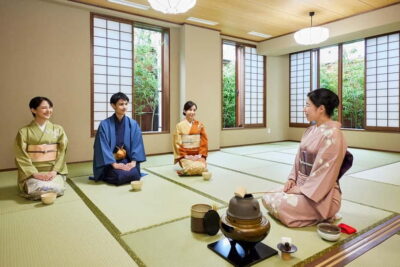
Asakusa: Kimono Tea Ceremony with Matcha and Sweet
Read our review →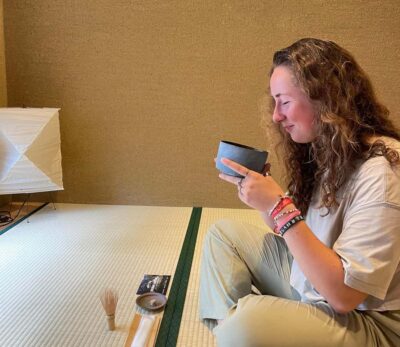
Tea Ceremony Experience in a Private Tea Room in Shibuya
Read our review →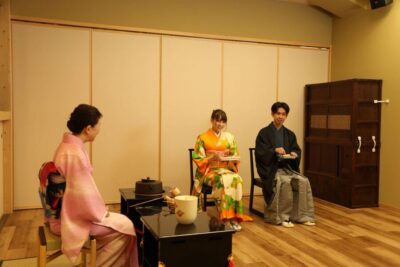
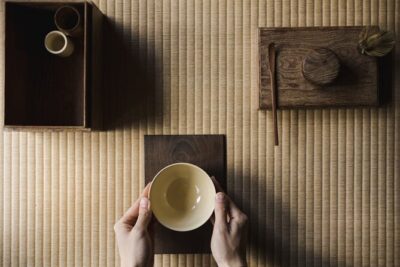
Tea ceremony experience in Japanese-style room 60min
Read our review →Browse the lists this tour appears in