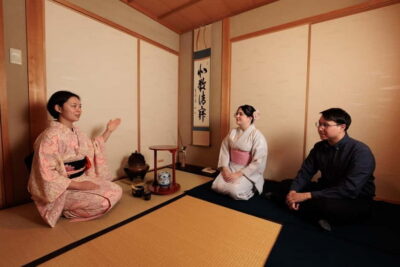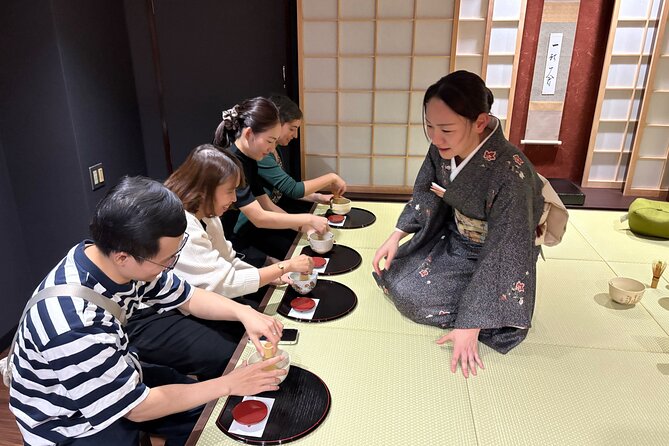
Review · KYOTO
Traditional Tea Ceremony with Matcha and Sweets in Kyoto
Tea slows Kyoto down. This one-hour experience brings chanoyu, the Japanese tea ceremony, into an approachable setting in Gion, where you can watch a tea master, learn why each movement matters, and prepare your own bowl of matcha. I especially like the chair seating and the clear focus on history, Zen, and hospitality. The main limitation is its short length, so you get a thoughtful introduction rather than a full study of tea culture.
I also like that the session does not leave you watching from the sidelines. You taste traditional sweets from established artisans, whisk premium matcha from a family-run farm, and finish with questions for the instructor. At $22.86 per person, that hands-on element makes the price appealing, though anyone seeking a long, highly formal ceremony may find the concise format too brief.
Key points about this Kyoto tea ceremony
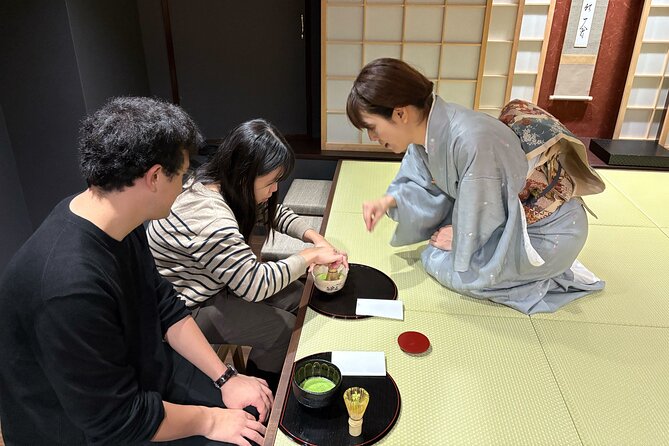
- One-hour introduction in Gion: The session takes place near Kyoto’s historic Gion district and returns to the same meeting point.
- Chair seating instead of floor seating: You can take part comfortably without sitting on the floor, which helps anyone unfamiliar with traditional seating or with limited mobility.
- A tea master demonstrates first: You watch authentic preparation techniques up close before making your own matcha.
- Traditional sweets are part of the lesson: Carefully selected sweets from long-established artisans help explain how food fits with tea.
- Small maximum group of 13: The size should allow a more personal setting and time for questions.
- A practical price: At $22.86, you receive instruction, a demonstration, sweets, matcha preparation, and a cultural explanation in about an hour.
Arriving in Gion at Yamatocho
Your meeting point is Japan, 605-0802 Kyoto, Higashiyama Ward, Yamatochō, 1, inside the Gion Tanakaya Building. The address places you in one of Kyoto’s best-known traditional districts, close to public transportation and surrounded by the atmosphere that makes Gion such a fitting home for a tea lesson.
This is not a tour that sends you across several parts of Kyoto. You arrive at one location, settle in, and stay there for the full session. That simplicity matters if you are building a busy day around temples, shopping, or an evening meal. The activity ends back at the meeting point, so you do not have to work out a new location afterward.
Because the experience lasts about an hour, I would treat it as a focused cultural stop rather than a half-day event. You can place it between other plans in Higashiyama, though the exact pace of your day will depend on your booking time and transport connections.
More Matcha Experiences in Kyoto
- Kyoto: Arashiyama Bamboo Forest, Monkeys, Matcha & Temple Tour
★ 5.0 · 759 reviews - Kyoto: Tea Ceremony Meditation – Make Matcha with Tea Master
★ 4.8 · 406 reviews - Kyoto: Kimono Tea Ceremony with Matcha and Sweet
★ 4.9 · 249 reviews
Why the chair seating makes a difference
Traditional tea ceremonies are often associated with kneeling or sitting on tatami mats. That can be a lovely part of the setting, but it is not comfortable for everyone. Here, you sit on chairs, allowing you to concentrate on the ceremony instead of worrying about stiff knees, unfamiliar posture, or getting up from the floor.
This choice also makes the experience less intimidating for a first visit. You do not need prior knowledge of tea etiquette to participate. The setting is designed to explain the ceremony in a welcoming way, while still showing the formal movements and care that give chanoyu its character.
The trade-off is that chair seating may feel less traditional than a full tatami-room ceremony. If your goal is strict formality, you may prefer a longer experience built around floor seating and more elaborate etiquette. If your goal is to understand the art and try it yourself, the relaxed format is a sensible choice.
Meeting the tea master before making matcha
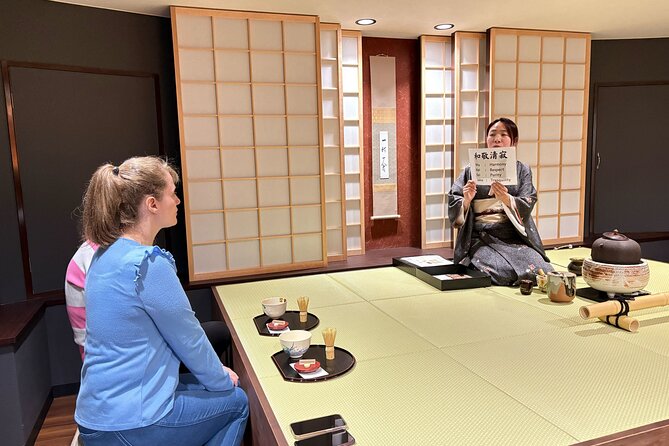
The first part centers on explanation and demonstration. A tea master introduces the history of tea in Japan, explains how Zen philosophy shaped the ceremony, and shows the techniques used to prepare matcha.
The value here is context. Without an explanation, the measured gestures of tea preparation can look slow or mysterious. With the background, you can notice the care in the movements and the spirit of hospitality known as omotenashi. The ceremony becomes more than a method for making a drink. It becomes a way of giving full attention to the moment and to the people sharing it.
The instructors are a major part of the experience. Mitsune received especially warm praise for creating a friendly and informative session. Yuki was also singled out for her understanding of the ceremony and her strong connection to its philosophy. If you are hoping for a talk that feels personal rather than mechanical, these details matter.
The demonstration also gives you a chance to watch before you try. That is useful because matcha preparation involves several careful steps, and seeing the process first removes some of the guesswork. You are not simply handed a bowl and told to copy a routine with no explanation.
Learning the meaning behind chanoyu
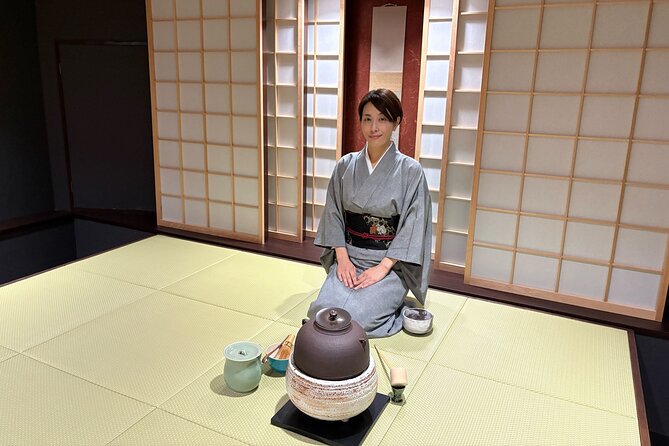
The history section gives the ceremony a wider frame. You learn how tea became part of Japanese culture and how Zen ideas influenced the spirit of the practice. The session also explains hospitality, a central idea in the way tea is offered and received.
I like this balance between action and meaning. You are not only learning how to whisk tea. You are learning why the ceremony values calm attention, clean movement, respect, and careful presentation. That makes the experience useful for someone who wants more than a quick photo opportunity.
The presentation is also described as a shorter version of a traditional ceremony. That keeps the experience practical for a sightseeing schedule, but it means the instructor must choose what to include. You will gain a strong introduction rather than a complete account of every school, rule, utensil, or historical period connected with Japanese tea.
For many people, that is the right level. You can understand the basic spirit of chanoyu without spending several hours in a formal lesson. If tea culture is already a serious interest, you may want to use this as an entry point and seek a longer study afterward.
More Tea and Sweets Making in Kyoto
- Kyoto: Japanese Traditional Sweets Making and Tea Ceremony
★ 4.4 · 314 reviews - Kyoto: Traditional Tea Ceremony with Matcha & Sweets in Gion
★ 4.9 · 27 reviews - 2 Types of Japanese Sweets making and Tea Ceremony
★ 4.6 · 17 reviews - Kyoto near Fushimiinari Wagashi making&Small Group Tea Ceremony
★ 5.0 · 14 reviews
Tasting Kyoto sweets with your tea
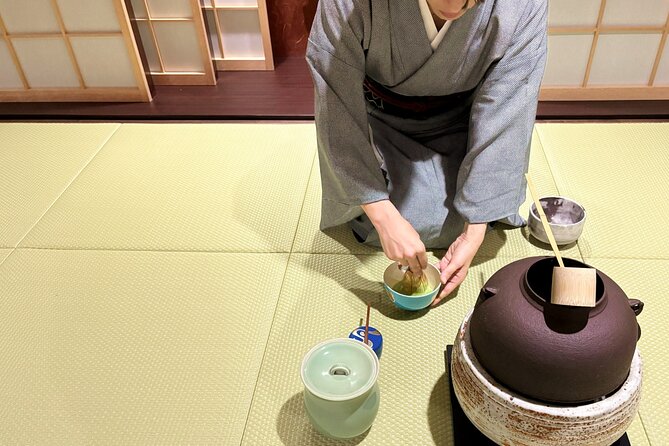
In the second half, you receive traditional sweets selected from long-established artisans. These sweets are not just a snack added to the booking. They help show how Japanese tea service balances flavors, texture, and presentation.
Matcha has a distinct taste that can be unfamiliar if you usually drink regular green tea. A sweet served alongside it can make the experience easier to appreciate and helps explain the pairing. The sweets also give you a chance to notice an important feature of Japanese food culture: presentation and seasonality often matter as much as the basic ingredients.
The exact sweets are not specified, so you should not expect a particular type or flavor. The important point is that they are chosen as part of the tea experience and come from established artisan producers. If you have dietary restrictions, the available details do not confirm substitutions, so it is wise to ask the provider before booking.
Whisking your own bowl of matcha
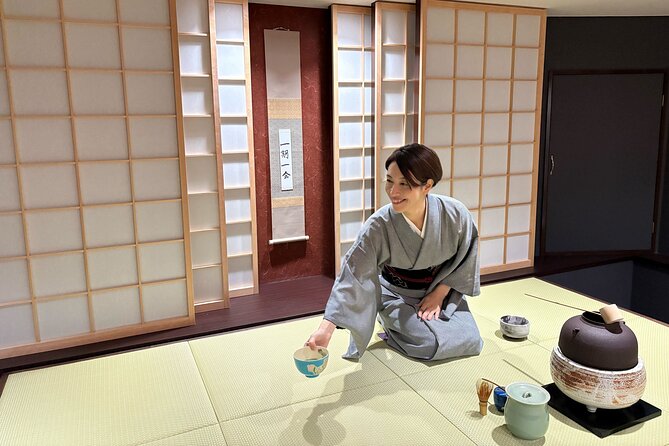
This is the most hands-on part of the session. After watching the tea master, you prepare your own bowl of matcha using premium tea sourced from a family-run farm.
That step gives you a better feel for the craft. You can see how the powder changes as it is mixed and understand why the preparation is treated with such care. Even if your whisking is not perfect, the point is participation, not passing an exam.
The use of tea from a family-run farm adds a useful connection between the ceremony and the people who produce the tea. You are not only learning an old ritual in the abstract. You are also tasting a specific agricultural product chosen for the session.
The matcha itself was praised as delicious, but taste is personal. Matcha can be earthy, bitter, or grassy, and the sweetness served with it affects how you experience the drink. If you already enjoy matcha, you will likely appreciate the chance to prepare it under guidance. If you are unsure about it, this is a low-cost way to try it in a setting where the flavor has cultural context.
Finishing with questions and conversation
The experience closes with a Q&A session. This is a small but valuable feature because the most useful questions often appear after you have seen the ceremony and prepared tea yourself.
You might ask about the meaning of a gesture, the role of Zen, the tea-making process, or the customs surrounding chanoyu. The information provided does not promise a private session, so your question time may depend on the group size and the number of people who want to participate.
The maximum group size is 13. That is not a private lesson, but it is still limited enough to feel more manageable than a large class. With a tea master and a compact group, you have a better chance of seeing the demonstration clearly and following the hands-on portion.
The session’s strong ratings, including a 4.9 score from 13 reviews and 100 percent recommendation, fit the experience’s main strengths: warm instruction, clear cultural explanation, and a pleasant matcha tasting. The sample feedback repeatedly praises the instructors’ friendliness and passion, not just the setting.
What the $22.86 price gets you
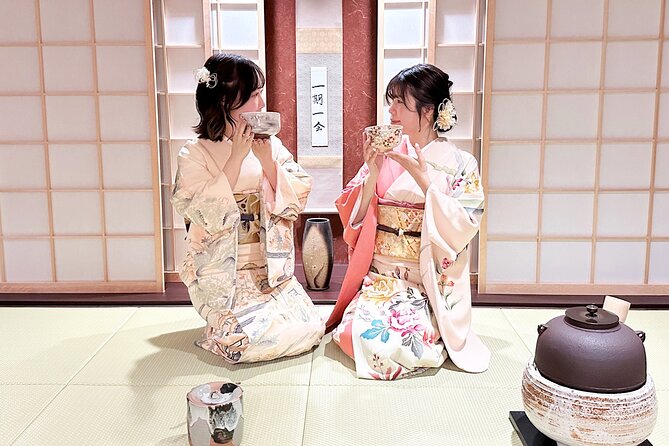
At $22.86 per person, this is priced as an accessible cultural activity rather than a luxury ceremony. You receive about an hour of instruction, a tea master’s demonstration, an explanation of Japanese tea culture, traditional sweets, your own matcha preparation, and time for questions.
That is good value if you want an active introduction during a Kyoto sightseeing day. Many cultural activities cost more when they include a specialist guide and a hands-on element. Here, the chair seating and short duration also make it easier to fit into your schedule.
Still, value depends on what you want. You are not paying for a long private ceremony, a full meal, or an extensive tour of Gion. The setting is in Gion, but the experience itself remains indoors at one meeting point. You should choose it for the lesson and participation, not because it covers the district.
I would also remember that the listed price is per person. If you are booking for a family or group, calculate the total before adding it to a full day of paid attractions. For a single cultural activity, though, the price is modest.
Who will enjoy this experience most
I would recommend it to first-time visitors who want a clear introduction to Japanese tea without committing to a long or solemn ceremony. It also suits returning visitors who missed tea culture on an earlier trip and want a simple way to add it to their Kyoto plans.
The chair seating makes it a good option for anyone who finds floor seating difficult. It also helps families and mixed-age groups take part together, although the supplied information does not specify age rules or child pricing.
You will likely enjoy it if you prefer experiences with explanation and participation. The instructors discuss history, philosophy, and hospitality, then let you prepare matcha yourself. That combination gives you something to remember beyond a photograph.
You may want another format if you are seeking a highly formal ceremony with extended silence, elaborate etiquette, or a long study of tea schools. This is a welcoming short version, and that is both its strength and its limit.
Practical details before you book
Confirmation is provided when you book, and a mobile ticket is available. The meeting point is near public transportation, but the details provided do not specify a particular station or walking time, so check the exact route before setting out.
Plan to arrive with enough time to find the Gion Tanakaya Building at Yamatochō. Since the activity lasts only about an hour, arriving late could reduce the time you have for the demonstration or your own preparation.
The activity has free cancellation if you cancel at least 24 hours before the start time. Cancellations or changes made less than 24 hours beforehand are not accepted for a refund, and the cut-off follows Kyoto local time.
Should you book this Kyoto tea ceremony?
Book it if you want a friendly, practical introduction to chanoyu in Gion, especially if you value chair seating, clear cultural background, and the chance to whisk your own matcha. The combination of artisan sweets, family-farm tea, and a closing Q&A gives the hour real substance.
Skip it if you want a full-length formal ceremony or an experience built around traditional floor seating. For everyone else, the $22.86 price, small maximum group, strong instructor feedback, and hands-on format make this an easy cultural addition to a Kyoto day.
FAQ
Where does the tea ceremony take place?
It takes place at Japan, 605-0802 Kyoto, Higashiyama Ward, Yamatochō, 1, Gion Tanakaya Building, in Kyoto’s Gion district.
How long does the experience last?
The experience lasts approximately one hour.
Does the activity use floor seating?
No. Participants sit on chairs, making the ceremony easier for people who are unfamiliar with floor seating or have limited mobility.
Will I prepare my own matcha?
Yes. After watching the tea master, you make your own bowl of matcha using tea sourced from a family-run farm.
Are sweets included?
Yes. The experience includes traditional sweets selected from long-established artisans.
How many people can join?
The activity has a maximum group size of 13 people.
Does the experience include a tea master demonstration?
Yes. A tea master demonstrates tea ceremony techniques and explains the history, Zen influence, and spirit of hospitality connected with the practice.
Can I cancel for a full refund?
Yes. You can receive a full refund if you cancel at least 24 hours before the experience starts. Changes or cancellations made less than 24 hours before the start time are not accepted for a refund.
More Tea Ceremonies in Kyoto
- Kyoto: Tea Ceremony in a Traditional Tea House in Kiyomizu
★ 4.9 · 3,519 reviews - Kyoto: Tea Ceremony Ju-An at Jotokuji Temple
★ 4.9 · 3,207 reviews - Kyoto: 45-Minute Tea Ceremony Lesson Experience
★ 4.3 · 2,378 reviews - Kyoto: Table-Style Tea Ceremony at a Kyo-Machiya
★ 4.9 · 1,211 reviews
Just added around Kyoto
- Uji Walking Tour – Byodo-in temple and Tea Ceremony from Kyoto★ 3.5 · 3 reviews
- Tea ceremony at Kyoto’s Zen Temple Teahouse★ 5.0 · 2 reviews
- Kyoto: Authentic Tea Ceremony in a Small Group★ 5.0 · 7 reviews
- Tea Ceremony in 150 Years Old Townhouse with Tables and Chairs★ 5.0 · 22 reviews
- Traditional Tea Ceremony in Kyoto★ 4.5 · 3 reviews
- Silent Beauty of Kyoto Zen Walk and Tea Experience★ 5.0 · 2 reviews
- Tea Ceremony Experience in Traditional Kyoto Townhouse★ 5.0 · 19 reviews
- Kyoto Private Tea Ceremony at a Japanese Inns★ 5.0 · 12 reviews
Tea Ceremonies in Kyoto, compared.
Tea Ceremony in a Traditional Tea House in Kiyomizu
Read our review →
Tea Ceremony in 100-year-old Kyo-Machiya Townhouse
Read our review →