Review · KYOTO
Whisk Your Own Matcha: A Zen Matcha Experience at Temple
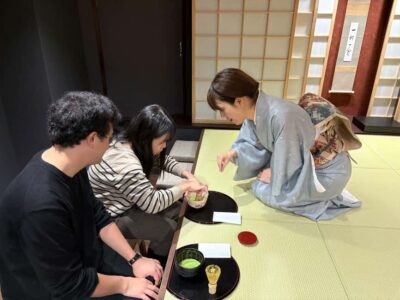
Slow down with a bowl of green tea. This 45-minute activity gives you a hands-on introduction to matcha, with an English-speaking host explaining the tea ceremony and guiding you through each movement. I like the chance to whisk your own tea with traditional tools, and I also like the quiet setting and Kyoto sweet served alongside it. The main drawback is practical: directions appear inconsistent, and some bookings have had serious meeting-point problems.
At $32 per person, this is a fairly priced introduction to Japanese tea culture, especially if you want more than a quick cup at a café. The experience is best for adults and children aged 10 or older who can sit comfortably and follow a calm, careful ritual. I would confirm the exact meeting location before setting out.
Key points to know before booking
- You make the matcha yourself: The host shows you how to use traditional tea tools, then gives you the chance to prepare your own bowl.
- The session lasts 45 minutes: It fits neatly into a Kyoto sightseeing day without taking up half your afternoon.
- Sakura receives the strongest praise: Her warm manner, clear explanations, and willingness to answer questions helped create a relaxed private ceremony for several bookings.
- A Kyoto sweet is included: Expect tea served with a traditional sweet, including mochi according to one description of the experience.
- Directions need careful checking: The official meeting information names Shokoji Temple near Karasuma Street, while several booking accounts point to Grapevine Cafe near Ichinen-Zaka and Ninen Zaka Path.
- It is not designed for everyone: Children under 10, people with back problems, party groups, and anyone arriving under the influence of alcohol or drugs should not book.
What this matcha session is really about
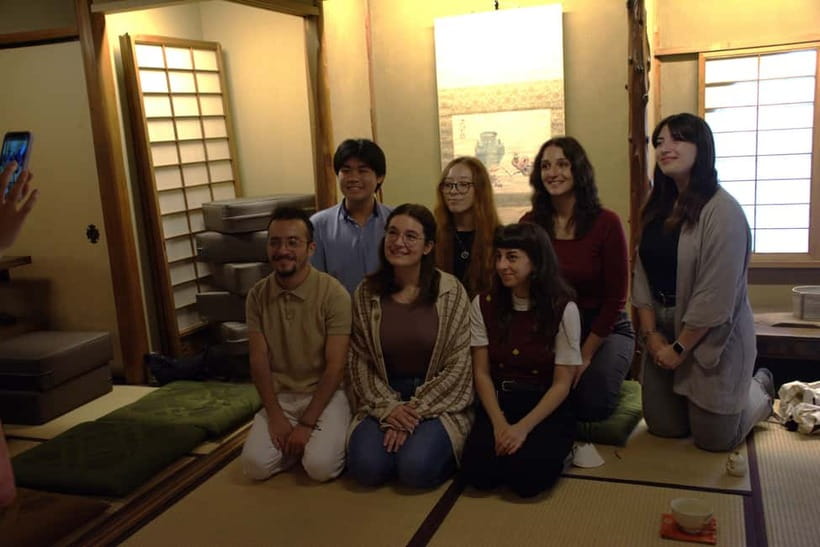
This is not a full-length formal tea ceremony with an elaborate meal or a long series of silent procedures. It is a short, hands-on lesson built around one bowl of matcha.
That makes it a good fit for you if Japanese customs are new and you want a clear introduction without committing to several hours. The host explains the background of the tea ceremony, describes the meaning behind the gestures, and then lets you take part.
The focus is on learning by doing. You are not simply watching someone prepare tea behind a counter. You use the whisk, practice the motion, and taste the result. That small act gives you a better sense of the care involved in preparing matcha.
The experience also connects matcha with Zen practice. You learn why the ritual values calm attention, careful movement, and respect for the person sharing the tea. The setting inside a Japanese temple adds a sense of place that a modern café cannot quite provide.
More Matcha Experiences in Kyoto
- Kyoto: Arashiyama Bamboo Forest, Monkeys, Matcha & Temple Tour
★ 5.0 · 759 reviews - Kyoto: Tea Ceremony Meditation – Make Matcha with Tea Master
★ 4.8 · 406 reviews - Kyoto: Kimono Tea Ceremony with Matcha and Sweet
★ 4.9 · 249 reviews
The opening history lesson and tea ceremony context
The session begins with an explanation of how tea ceremony developed and why matcha has held an important place in Japanese culture for centuries. The supplied details do not promise a long lecture, so expect a concise introduction rather than an academic course.
That is probably the right balance for a 45-minute activity. You get enough context to understand why the host handles the tools and bowl with care, then move quickly into the practical part.
I especially like that the host explains the meaning behind individual gestures. Without that explanation, tea ceremony can look like a string of mysterious movements. With it, you can follow the ceremony as a series of deliberate actions rather than simply copying hand positions.
English is the teaching language. Several bookings describe Sakura as warm, clear, and well informed about tea ceremony customs. She also gave participants plenty of opportunities to ask questions and offered advice about buying matcha later. That is useful if you want to continue exploring Japanese tea after the session.
Whisking your own bowl of matcha
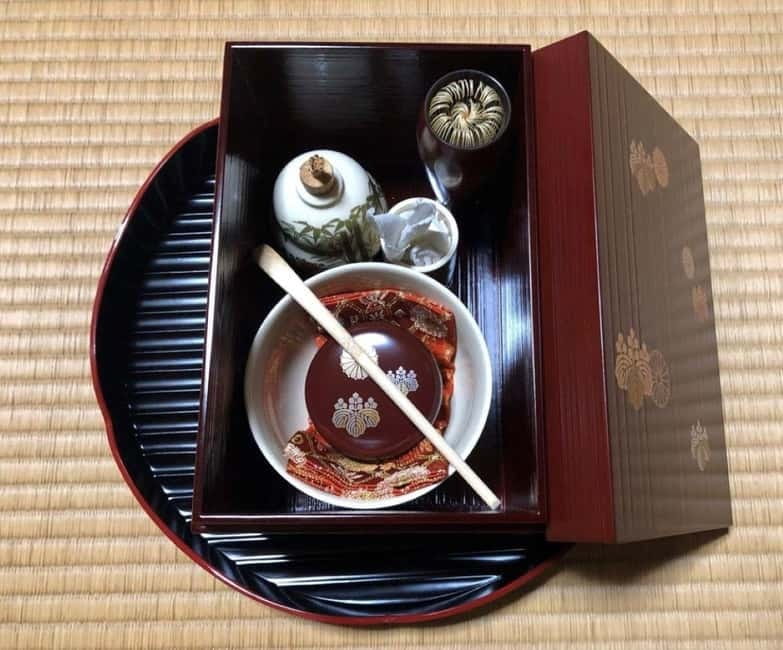
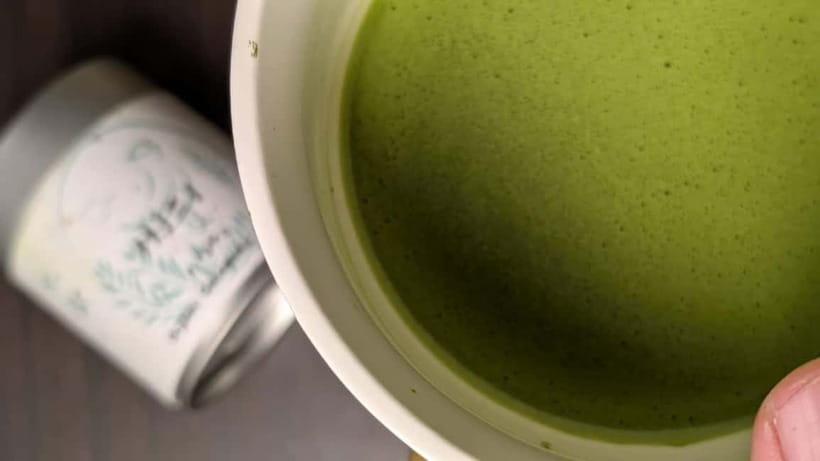
The central activity is preparing your own bowl. You are introduced to the traditional tea tools, shown how to use them, and guided through whisking the powder with hot water.
The appeal is simple: you become part of the ritual. Even if your first bowl is not perfectly frothy, you have learned what the process feels like. You can pay attention to the sound of the whisk, the movement of your hand, and the changing texture of the tea.
Do not expect a casual cooking class with lots of room for improvisation. The pleasure comes from following a set method. The host’s guidance matters because the movements are unfamiliar, and the ceremony is meant to be performed with focus.
The private format described in one booking is another advantage. That account says the ceremony was held just for the participants rather than as part of a large group. The information does not guarantee a private session every time, so you should not assume you will have the room entirely to yourself. Still, the small-scale feel appears to be part of the experience when availability allows.
For many people, the most valuable part will be the chance to ask questions while preparing the tea. You can ask about the tools, the tea itself, the ceremony, or how to choose matcha for later use. The setting seems friendly rather than stiff, with one account specifically praising the host’s warmth and sense of humor.
Kyoto sweets and the taste of the ceremony
Tea is served with a traditional Kyoto sweet. The experience information lists a traditional sweet, and one account specifically mentions mochi alongside the matcha.
This pairing matters. Matcha has a strong, grassy taste with a bitter edge, and the sweetness gives your palate a useful contrast. The sweet is not just an extra snack. It is part of the way Japanese tea is commonly enjoyed.
The portion and exact sweet are not specified, so do not book this expecting a large dessert or a full meal. Think of it as a small traditional accompaniment that completes the tea service.
I like this detail because it gives the session a stronger connection to Kyoto food culture. You taste something local while learning the custom behind the tea, rather than treating matcha as just another flavored drink.
More Tea and Calligraphy Workshops in Japan
- Kyoto Hidden Riverside Zen Mediation and Uji Matcha Experience
★ 5.0 · 9 reviews - Kyoto: Nighttime Zen Meditation and Matcha Tea Experience
★ 5.0 · 7 reviews - Kyoto: Make Zen Garden and Taste Matcha in Pottery Shop
★ 5.0 · 5 reviews - Kyoto Tea ceremony with Japanese Flower Arrangement Ikebana
★ 5.0 · 3 reviews
A temple setting with one major location warning
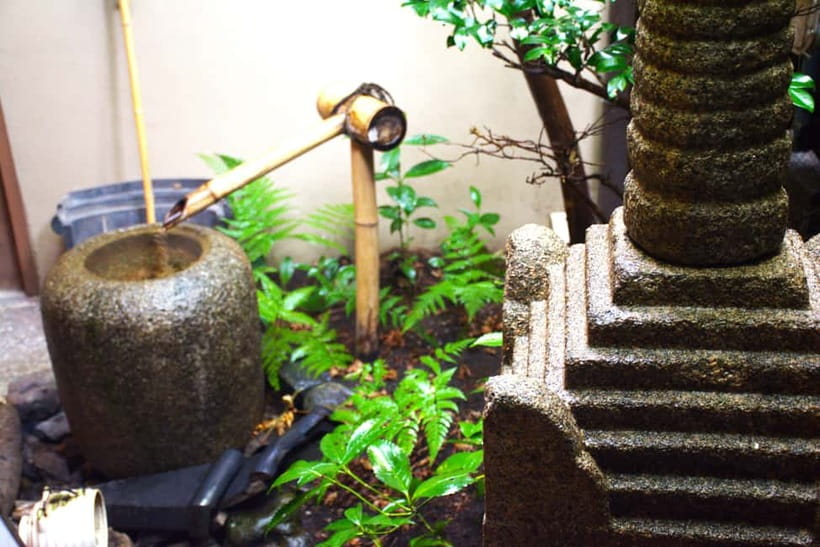
The description places the activity at Shokoji Temple in Kyoto. The stated route begins at Kyoto Station’s north central exit. From there, you walk north along Karasuma Street for about 10 minutes, with the temple described as being on the right after several intersections.
That sounds straightforward on paper, but you need to pay close attention. The temple is described as small and distinctive, and the instructions advise looking for a sign at the entrance. One booking had great difficulty finding the tea ceremony because there was no obvious sign, even after asking local people nearby.
Several other accounts give a different landmark. They describe finding Grapevine Cafe at the corner of Ichinen-Zaka Street and Ninen Zaka Path, identifying vines above the entrance, and sometimes knocking to enter. Another account says the entrance was recognizable from outside by grapevines.
This is not a minor detail. Shokoji Temple near Kyoto Station and Grapevine Cafe near the Ichinen-Zaka and Ninen Zaka area are not interchangeable descriptions. Before booking, I would contact the provider and ask for the exact address, a current exterior photo, and the correct entrance for your date.
The phone number supplied for help is 080-5259-3796, and email contact is also available. Keep those details handy, and allow extra time. One booking reported that the guide did not appear and that the owner of the location said the guide was out of the country and no longer offered the service. That is a serious warning, even though other bookings describe excellent sessions.
What the host adds to the experience
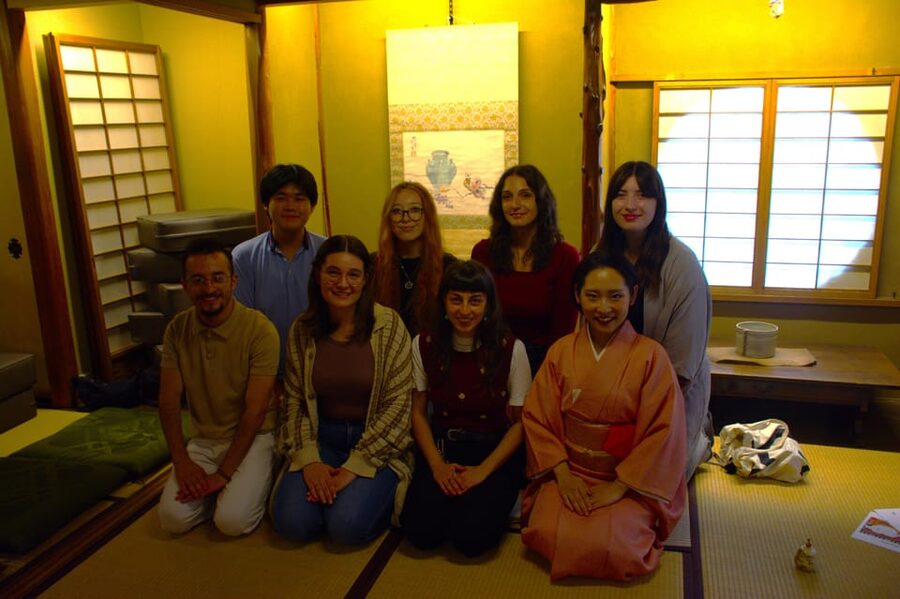
The host can make or break a short cultural activity. In this case, Sakura receives particularly strong praise from several bookings.
Her best qualities appear to be clear explanation, friendliness, and patience with questions. One account describes a pleasant private ceremony, while another says she made the lesson enjoyable with warmth and laughter. Another booking says she explained each point in detail and suggested places to buy matcha afterward.
That combination is important. A tea ceremony can feel formal or intimidating if you are not familiar with the rules. A relaxed teacher helps you enjoy the ritual without worrying about making a mistake.
The experience is conducted in English, which makes the explanations accessible to English-speaking visitors. The material does not list other teaching languages, so you should not assume a bilingual or multilingual lesson.
The included photo shoot is another small benefit. The details do not say how many photos you receive, how long the shoot lasts, or whether images are delivered afterward. Treat it as a chance to capture the moment rather than a professional photography package.
Is $32 a fair price?
At $32 per person, the value depends on what you want from a tea experience.
If you only want to drink matcha, you can probably spend less at a café. This activity earns its price through the instruction, use of traditional tools, cultural explanation, sweet, and guided preparation. You are paying for participation, not just refreshment.
The 45-minute length also works in its favor. It is long enough to learn the basics but short enough to fit before or after sightseeing. You can place it into a Kyoto day without sacrificing a major temple visit or meal.
The value is strongest when the session is small and the host has time for questions. It is weaker if you expect a grand ceremonial production, a large selection of sweets, or a full historical lecture. The experience is an accessible first step, not an advanced study of tea ceremony.
The price also needs to be considered alongside the uncertainty about the meeting point and service status. Most of the available accounts describe a successful and enjoyable session, but one reports a missing guide and another reports being unable to locate the venue. Confirming the appointment and location is essential before you count on this activity.
Who should book this experience?
I would recommend it to first-time visitors who want a gentle introduction to Japanese tea culture. You do not need previous knowledge of matcha, and the hands-on format gives you something to remember beyond taking a photograph of a tea bowl.
It also suits tea enthusiasts who want to ask practical questions about preparation and buying matcha. The advice about future purchases could be useful if you plan to take tea home.
The activity may appeal to couples, solo visitors, and small groups looking for a quieter break from Kyoto’s busy sightseeing streets. Its English instruction and short duration make it easy to fit into a larger itinerary.
It is not suitable for children under 10. People with back problems should also avoid it, since the activity may involve sitting or maintaining a formal posture, although the exact seating arrangement is not specified.
Party groups are not allowed, and alcohol and drugs are prohibited. This is a calm cultural lesson, not a social drinking activity.
Wheelchair access is listed as available. If you need specific details about the entrance, seating, or bathroom access, contact the provider before booking, since those features are not explained in the available information.
Timing, cancellation, and practical planning
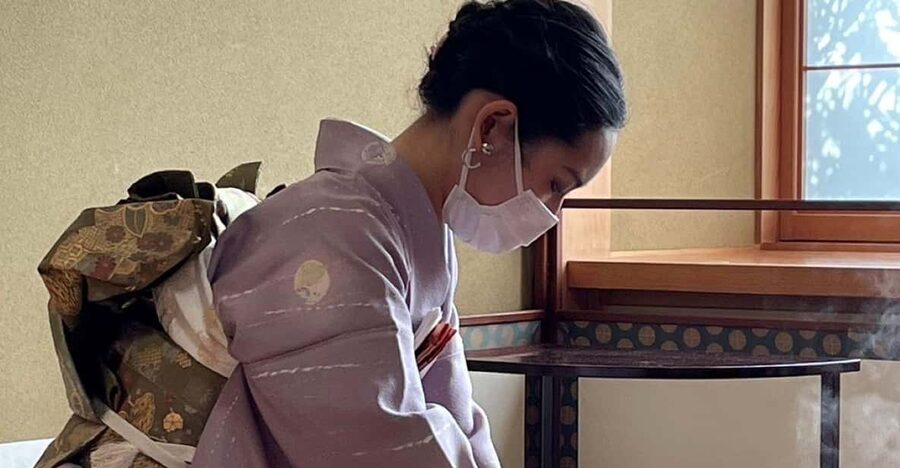
The activity lasts 45 minutes, with starting times dependent on availability. That gives you some flexibility, but you should not cut it close with a train departure or another timed attraction.
Transportation is not included. From Kyoto Station, the stated walking route takes about 10 minutes, although the conflicting location information means you should verify the route before leaving the station.
Cancellation is free up to 24 hours in advance for a full refund. You can also reserve now and pay later, which helps if your Kyoto schedule is still changing. These policies are useful, but they do not remove the need to confirm the provider and meeting point.
I would arrive early, save the phone number, and keep the confirmation message open on your phone. If the venue is difficult to identify, contact the provider rather than wandering around a residential or temple area hoping to spot a sign.
Should you book Whisk Your Own Matcha?
Book it if you want a short, friendly, hands-on lesson with tea, a Kyoto sweet, and a chance to prepare matcha yourself. The strongest accounts point to an enjoyable private-style experience led by Sakura, with clear explanations and plenty of time for questions.
I would hesitate only if you need a completely reliable, clearly marked meeting point or a highly formal tea ceremony. The conflicting directions and one serious no-show account deserve attention.
My advice is to reserve only after confirming the exact venue for your date. If that check is successful, this can be a pleasant and reasonably priced way to connect with Japanese tea customs without giving up a full day of sightseeing.
FAQ
How long does the matcha experience last?
The experience lasts 45 minutes.
How much does it cost?
The listed price is $32 per person.
What is included?
Tea, a traditional Kyoto sweet, and a photo shoot are included.
Is transportation included?
No. Transportation costs to the location are not included.
Is the activity taught in English?
Yes. The instructor language is English.
Where is the meeting point?
The supplied directions identify Shokoji Temple, about a 10-minute walk north from Kyoto Station along Karasuma Street. Several booking accounts instead identify Grapevine Cafe near the corner of Ichinen-Zaka Street and Ninen Zaka Path, so confirm the exact meeting point before attending.
Can children join the experience?
Children under 10 are not suitable for this activity.
Is the activity wheelchair accessible?
Yes. The activity is listed as wheelchair accessible.
Can I cancel for a refund?
Yes. You can cancel up to 24 hours in advance for a full refund.
More Tea and Calligraphy Workshops in Kyoto
- Tea ceremony at Kyoto’s Zen Temple Teahouse
★ 5.0 · 2 reviews - Silent Beauty of Kyoto Zen Walk and Tea Experience
★ 5.0 · 2 reviews - Zen Garden Making and Matcha Tasting in Handmade Pottery Shop
★ 3.5 · 2 reviews
Just added around Kyoto
- Uji Walking Tour – Byodo-in temple and Tea Ceremony from Kyoto★ 3.5 · 3 reviews
- Tea ceremony at Kyoto’s Zen Temple Teahouse★ 5.0 · 2 reviews
- Kyoto: Authentic Tea Ceremony in a Small Group★ 5.0 · 7 reviews
- Tea Ceremony in 150 Years Old Townhouse with Tables and Chairs★ 5.0 · 22 reviews
- Silent Beauty of Kyoto Zen Walk and Tea Experience★ 5.0 · 2 reviews
- Tea Ceremony Experience in Traditional Kyoto Townhouse★ 5.0 · 19 reviews
- Traditional Tea Ceremony in Kyoto★ 4.5 · 3 reviews
- Sencha-do the Japanese Tea Ceremony Workshop in Kyoto★ 5.0 · 21 reviews
Matcha Experiences in Kyoto, compared.
Arashiyama Bamboo Forest, Monkeys, Matcha & Temple Tour
Read our review →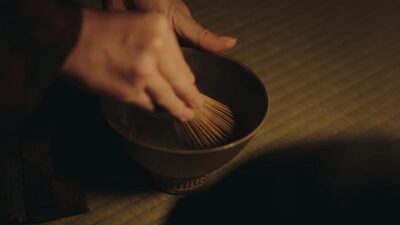
Tea Ceremony Meditation – Make Matcha with Tea Master
Read our review →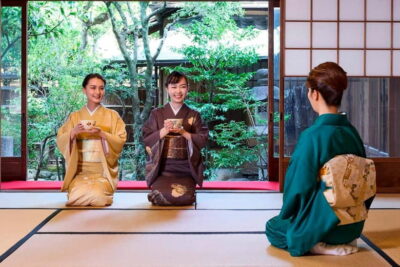
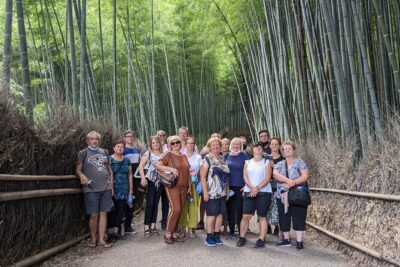
Arashiyama Bamboo, Temple, Matcha, Monkeys & secret spots
Read our review →
Traditional Tea Ceremony with Matcha & Sweets in Gion
Read our review →
Matcha Grinding Experience and Walking Tour in Uji Kyoto
Read our review →