Review · KYOTO
Kyoto: Make Zen Garden and Taste Matcha in Pottery Shop
Small ritual, lasting memory. This 30-minute Kyoto experience lets you design a karesansui Zen garden rather than simply look at one, then enjoy Ippodo matcha and a seasonal Japanese sweet beside your work. I like the creative freedom and the chance to experience several Kyoto traditions in one small setting.
I also like the location inside a renovated 100-year-old machiya, close to the Kyoto Imperial Palace Park and Ippodo. The main drawback is that the activity is lightly instructed, so a group that makes quick decisions could finish the garden part very fast.
Key points at a glance
- You rake and arrange your own Zen garden: This is a hands-on version of an art form usually made for quiet viewing.
- Matcha comes from Ippodo: You drink tea from one of Kyoto’s best-known tea companies with a seasonal wagashi sweet.
- The setting is a renovated machiya: The old townhouse gives the short activity a clear Kyoto sense of place.
- The group is limited to eight: The small size should make the garden work more manageable than a large workshop.
- Pottery is practical, not just decorative: Handmade pieces are dishwasher-safe and microwave-safe, useful for taking home.
- The price is modest: At $12 per person, the activity offers a low-cost cultural stop in central Kyoto.
A compact Kyoto experience with a clear idea
This activity brings together four things that can otherwise take a full day to find: a traditional townhouse, a dry garden, matcha, and Kyoto pottery. You do not spend hours moving between temples or shops. Instead, you stay in one place and take part in a short sequence that connects making, tasting, and browsing.
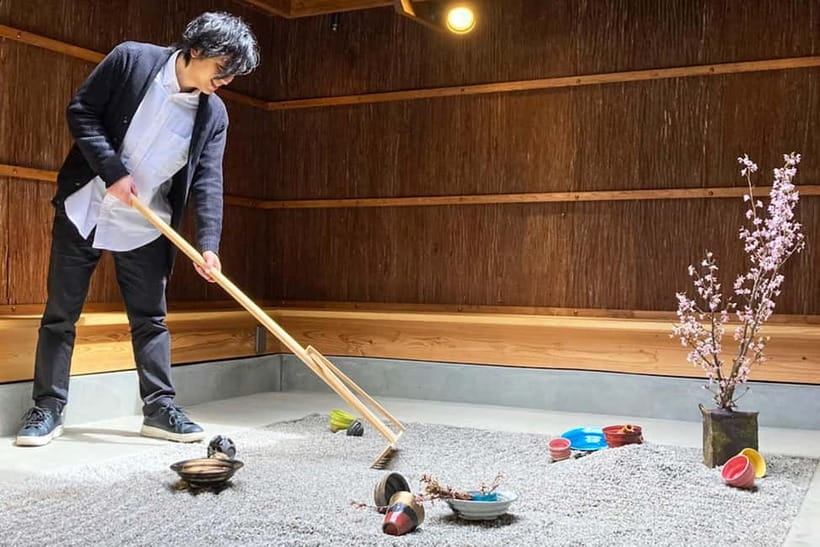
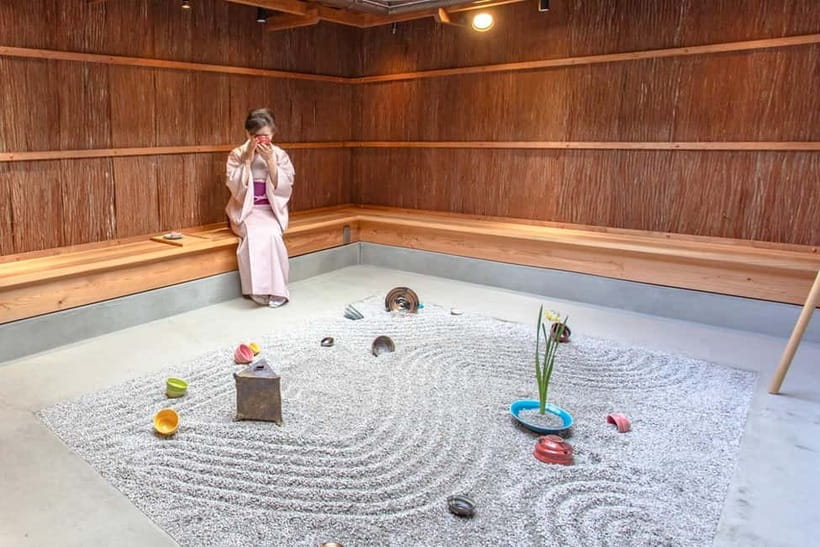
The heart of the experience is karesansui, the Japanese dry garden style often called a Zen garden. Sand or gravel suggests water, while stones and carefully drawn lines create a scene without plants or ponds. In a temple, you usually stand back and study the finished arrangement. Here, you get to rake the sand and place decorative elements yourself.
That change matters. You are not only seeing a Kyoto tradition from the outside. You are making a small version with your own choices. The result may be simple, uneven, or surprisingly neat, but it belongs to you for the length of the visit.
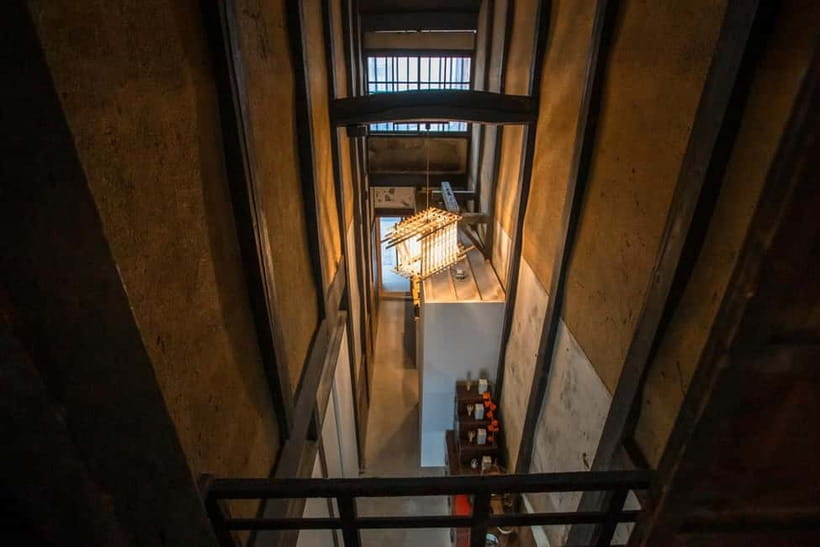
The activity takes place in Ninshu’s pottery shop, a renovated 100-year-old Kyoto townhouse. A machiya is more than an old building type. It gives the shop a narrow, intimate feel and connects the experience to the kind of traditional streetscape that still appears in parts of central Kyoto.
The group limit is eight people. That is a useful size for a small shop and a back garden. It also keeps the activity from feeling like a large class, though the supplied information does not promise one-to-one teaching.
More Matcha Experiences in Kyoto
- Kyoto: Arashiyama Bamboo Forest, Monkeys, Matcha & Temple Tour
★ 5.0 · 759 reviews - Kyoto: Tea Ceremony Meditation – Make Matcha with Tea Master
★ 4.8 · 406 reviews - Kyoto: Kimono Tea Ceremony with Matcha and Sweet
★ 4.9 · 249 reviews
Making your own karesansui garden
The garden session is the most unusual part. You rake the sand and decorate the small garden in the back of the pottery shop. The work is free form, so you have room to make your own design instead of following a fixed model.
If you enjoy visual decisions, this can be a pleasant change from sightseeing on a schedule. You can think about the pattern, the placement of stones, and the overall shape. If you are visiting with friends or family, the creative task gives you something to do together rather than another display to photograph.
At the same time, do not expect a long formal workshop. The instructions are limited, and the activity can be completed quickly if everyone is decisive. That is not necessarily a flaw. Some people will appreciate a relaxed task without a lecture. Others may want more background on Zen gardens, symbolism, or the correct way to rake.
I would approach the garden as a short creative exercise, not as a full lesson in Japanese garden design. You can take photographs of yourself eating matcha and sweets in front of the garden you made, which adds a personal record to the visit.
The small scale is part of the appeal. You are not building a temple garden. You are creating a compact scene that helps you notice how much effect can come from a few lines in sand and a handful of carefully placed objects.
Matcha and wagashi beside your finished garden
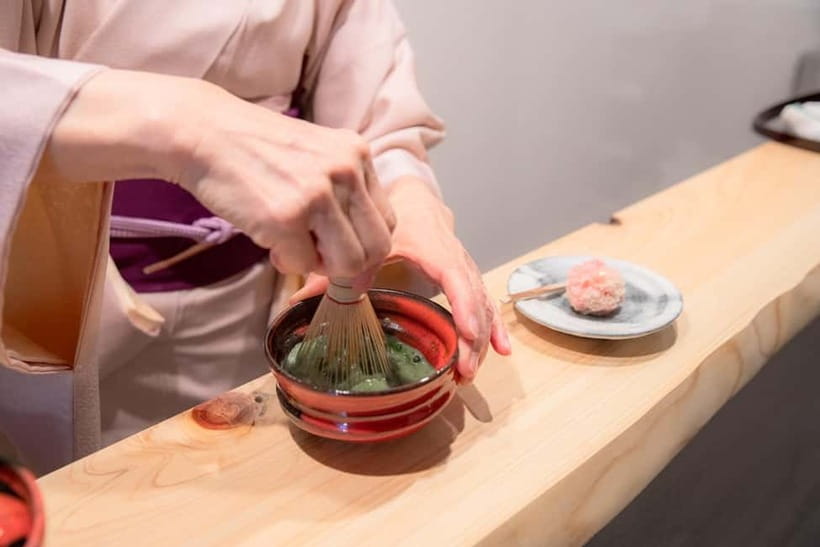
After making the garden, you enjoy matcha in front of it. The tea is supplied by Ippodo, the famous Kyoto tea company, and the experience includes a seasonal wagashi sweet from Senbon Tamajushuken.
The pairing gives the second half of the activity a calm pause. You have just been making choices with your hands, and now you sit with tea and a sweet while looking at the result. The connection between the garden and the food makes the tasting feel more purposeful than a quick cup of tea in a café.
You can choose hot or iced matcha. That small option is useful in Kyoto, where the weather can shift from cool to warm across the year. The sweet served with the tea has been described as a mochi cookie, though the experience information also refers to seasonal wagashi, so the exact item may vary.
I like that the tea is not treated as a separate add-on. It is placed directly into the garden experience. You make a quiet scene, then use it as the backdrop for your drink and sweet.
The matcha is also a good reason to book if your Kyoto schedule does not include a tea ceremony. This is not presented as a formal tea ceremony, and you should not expect the elaborate movements or long explanation associated with one. It is a shorter, more casual way to taste a local tea and sit in a traditional setting.
Why the machiya setting matters
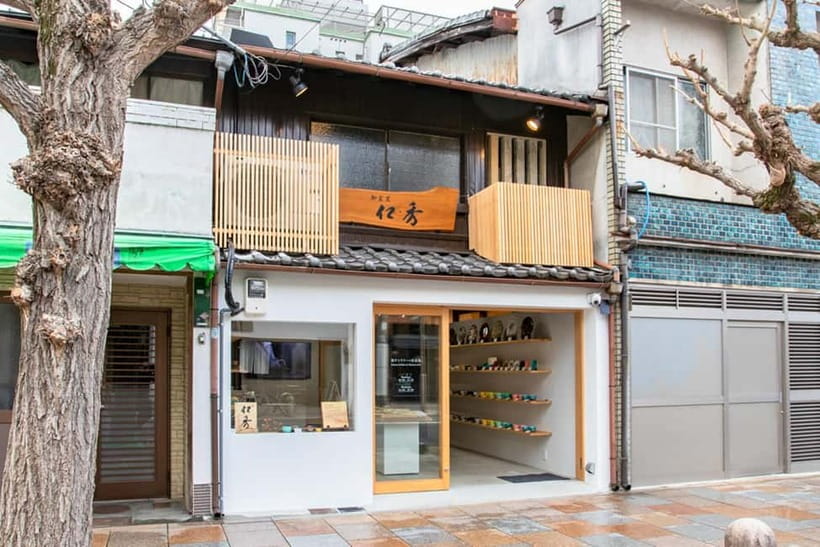
The activity would be less distinctive in a plain modern room. The renovated 100-year-old Kyoto townhouse gives it a physical link to the city’s older domestic architecture.
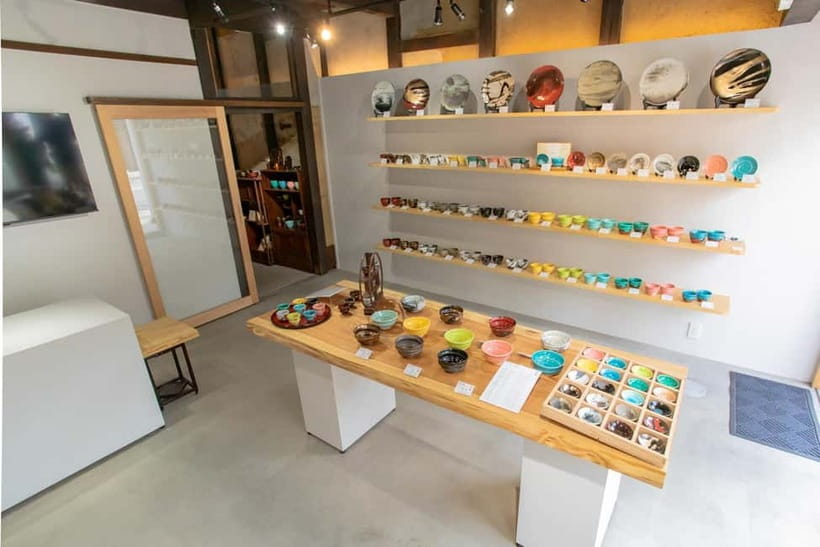
You are inside a pottery shop rather than a purpose-built attraction. That makes the experience feel connected to daily craft and household life. The shop setting also lets you move naturally from making a garden to looking at objects made for use.
The nearby streets add to the appeal. The shop is two minutes north of Ippodo and 100 meters south of Kyoto Imperial Palace Park along Teramachi Dori. Teramachi is a useful street for combining this stop with other traditional shops and antiques.
One particularly practical point is that the area includes antique and traditional houseware shops. If you like browsing after an activity, you can continue looking at Japanese objects instead of heading straight back to a major sightseeing route.
The location is not directly beside a subway station, but it is walkable. Kyoto Shiyakusho-mae Station on the Subway Tozai Line is about 11 minutes away. Jingu-marutamachi Station on the Keihan Main Line is about nine minutes away. The meeting point coordinates are 35.0157879, 135.7673992.
I would save the address and coordinates before setting out. A small shop on a traditional street can be harder to spot than a large attraction, and the instructions point you toward nearby landmarks rather than a famous entrance.
More Tea and Calligraphy Workshops in Japan
- Kyoto Hidden Riverside Zen Mediation and Uji Matcha Experience
★ 5.0 · 9 reviews - Kyoto: Nighttime Zen Meditation and Matcha Tea Experience
★ 5.0 · 7 reviews - Whisk Your Own Matcha: A Zen Matcha Experience at Temple
★ 3.6 · 7 reviews - Kyoto Tea ceremony with Japanese Flower Arrangement Ikebana
★ 5.0 · 3 reviews
Pottery you can actually use at home
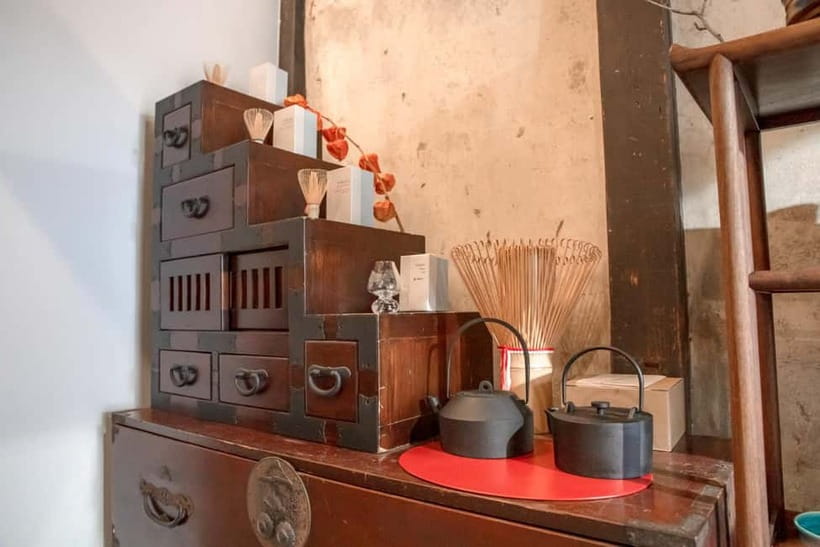
The pottery shop adds value beyond the 30-minute activity. Handmade Kyoto pottery can be a meaningful souvenir, but delicate decorative pieces are not always practical once you return home.
Here, the available pottery is dishwasher-safe and microwave-safe. That makes a real difference. You can buy a piece for regular use rather than placing it on a shelf and worrying about handling it.
The information provided does not specify the exact shapes, prices, or range of designs. I would treat the shop visit as a chance to browse and choose something that suits you, not as a guaranteed shopping package with a particular item included.
The pottery also gives context to the garden activity. Both involve attention to texture, shape, and restraint. One uses sand and stones. The other turns clay into something for a table or kitchen. You get a brief look at Kyoto as a place where traditional forms remain part of ordinary life.
If you are packing light, remember that any pottery purchase will need careful handling on the journey home. Its dishwasher and microwave safety help with daily use, but they do not make it unbreakable in luggage.
Is $12 good value for 30 minutes?
At $12 per person, this is an inexpensive cultural stop in central Kyoto. The price includes the garden activity, matcha, the Japanese sweet, and reservation and system fees. You are not paying separately for the tea or the tasting portion.
The value depends on what you want from the visit. If you expect a long class with detailed instruction, the short duration and free-form format may feel limited. If you want a compact activity between larger sights, the price is easy to justify.
I see it as especially good value for people who want a personal memory rather than another hour of looking. You create something, taste a local specialty, and take photographs with your garden. That is a lot of variety for half an hour.
The low price also reduces the risk of trying something different. You do not need to give up a large portion of your day or commit to an expensive craft course. Book it as a small addition to a Kyoto itinerary, not as the main event of your day.
Who will enjoy this most?
I would recommend this experience to couples, families, solo visitors, and small groups who like hands-on cultural activities. It suits people who want to make a creative choice without needing advanced artistic skill.
It is also a good fit for anyone interested in Kyoto pottery, matcha, or traditional architecture but short on time. The combination gives you a quick introduction to several local elements.
The activity may work well for children who enjoy arranging objects and drawing patterns in sand, though the provided information does not specify age requirements or child-specific instruction. I would keep expectations simple and let them treat it as a calm creative task.
Photography-minded visitors should enjoy the setup. You can take pictures while eating matcha and Japanese sweets in front of the garden you made. The setting gives you a personal image instead of the usual temple photograph that thousands of other people have taken.
You may want to choose another activity if you need a highly structured class, extensive historical explanation, or a long tea ceremony. The free-form approach is part of the charm, but it will not satisfy everyone.
Timing and planning your visit
The activity lasts 30 minutes, with starting times based on availability. That makes it simple to place before or after a visit to the Kyoto Imperial Palace Park, a walk on Teramachi Dori, or a stop at Ippodo.
I would avoid scheduling it so tightly that you must leave the moment the tea arrives. The activity itself is short, but finding a small shop and moving between nearby sights can take longer than expected.
The small group limit is eight participants. A smaller group should help the garden portion feel less crowded, though the available details do not promise a private booking.
The cancellation policy is useful for a changing Kyoto schedule. You can cancel up to 24 hours before the activity for a full refund. You can also reserve now and pay later, so you do not need to pay at the time of booking.
The activity information does not provide a detailed accessibility description. If you need specific arrangements, confirm them before reserving rather than assuming the old townhouse setting will suit every need.
What the strongest praise tells you
The most consistent praise centers on the atmosphere, the tea, and the friendliness of the hosts. One visitor described it as a creative activity in a pleasant space and found the matcha and sweet delicious. Another summed up the mood as very zen, which is brief but fitting.
The area also received praise for its nearby antiques and traditional houseware shops. That supports the idea of building the experience into a wider walk rather than treating it as an isolated appointment.
The one useful caution is about instruction. The activity is fun, but it is not heavily guided. You will have freedom, though you may need to make your own decisions quickly. If you want help shaping a perfect garden, ask questions at the start.
That balance is important. The strongest part is the chance to do something personal in a small Kyoto setting. The weakest part is the limited time and teaching. Go for the setting and the simple ritual, not for an intensive course.
Should you book the Ninshu pottery shop experience?
Book it if you want an affordable, short activity that combines making, tasting, and browsing. The $12 price covers the garden, Ippodo matcha, a seasonal sweet, and the basic fees. Its central location makes it easy to pair with the Imperial Palace Park, Teramachi Dori, or nearby shops.
I would be more cautious if you want detailed instruction or a formal tea ceremony. The garden work is free form and may finish quickly, but that same flexibility makes it friendly for people who simply want to try something new.
For most short Kyoto itineraries, I think it earns its place as a small cultural stop. You leave with photographs, a taste of Kyoto tea culture, and the option to buy useful handmade pottery. That is a fair return for half an hour and a modest price.
FAQ
How long does the Kyoto Zen garden and matcha experience last?
The experience lasts 30 minutes.
How much does the experience cost?
The price is $12 per person.
What is included in the price?
The price includes the experience, matcha, Japanese sweets, and reservation and system fees.
How many people can join the group?
The activity is limited to eight participants.
Can I choose hot or iced matcha?
Yes. The matcha is available hot or iced.
What kind of sweet is served with the matcha?
A seasonal wagashi Japanese sweet is served. One description identifies it as a mochi cookie.
Where does the experience take place?
It takes place at Ninshu’s pottery shop, a renovated 100-year-old Kyoto townhouse.
How far is the shop from nearby transport?
The shop is about 11 minutes on foot from Kyoto Shiyakusho-mae Station and about nine minutes on foot from Jingu-marutamachi Station.
Can I cancel and receive a refund?
Yes. You can cancel up to 24 hours in advance for a full refund.
More Tea and Calligraphy Workshops in Kyoto
- Tea ceremony at Kyoto’s Zen Temple Teahouse
★ 5.0 · 2 reviews - Silent Beauty of Kyoto Zen Walk and Tea Experience
★ 5.0 · 2 reviews - Zen Garden Making and Matcha Tasting in Handmade Pottery Shop
★ 3.5 · 2 reviews
Just added around Kyoto
- Uji Walking Tour – Byodo-in temple and Tea Ceremony from Kyoto★ 3.5 · 3 reviews
- Tea ceremony at Kyoto’s Zen Temple Teahouse★ 5.0 · 2 reviews
- Kyoto: Authentic Tea Ceremony in a Small Group★ 5.0 · 7 reviews
- Tea Ceremony in 150 Years Old Townhouse with Tables and Chairs★ 5.0 · 22 reviews
- Silent Beauty of Kyoto Zen Walk and Tea Experience★ 5.0 · 2 reviews
- Tea Ceremony Experience in Traditional Kyoto Townhouse★ 5.0 · 19 reviews
- Traditional Tea Ceremony in Kyoto★ 4.5 · 3 reviews
- Sencha-do the Japanese Tea Ceremony Workshop in Kyoto★ 5.0 · 21 reviews
Matcha Experiences in Kyoto, compared.

Arashiyama Bamboo Forest, Monkeys, Matcha & Temple Tour
Read our review →
Tea Ceremony Meditation – Make Matcha with Tea Master
Read our review →
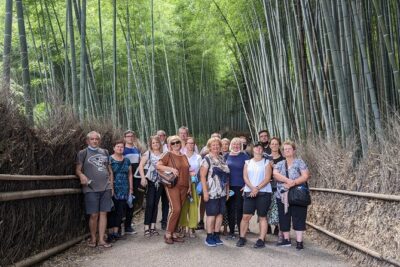
Arashiyama Bamboo, Temple, Matcha, Monkeys & secret spots
Read our review →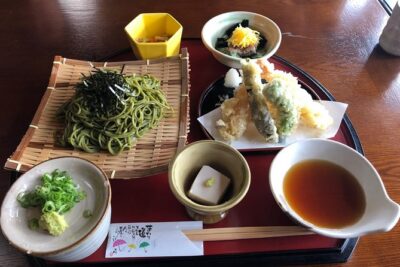
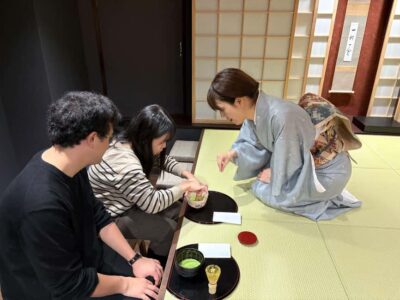
Traditional Tea Ceremony with Matcha & Sweets in Gion
Read our review →
Matcha Grinding Experience and Walking Tour in Uji Kyoto
Read our review →