
Review · KYOTO
Kyoto: Arashiyama Bamboo, Temple, Matcha, Monkeys & secret spots
Arashiyama is much more than bamboo. This five-hour walking tour links the famous grove with Okochi Sanso Garden, Tenryu-ji Temple, Togetsukyo Bridge, the shopping street, and Arashiyama Monkey Park. I like that it gives you both Kyoto’s famous sights and quieter corners, and I like that the small group is limited to 12 people, so you can ask questions without shouting over a busload of strangers.
The tour also includes entrance fees to three major sites, plus a bowl of matcha in a former tea house. The main caution is the walking: the day covers a lot of ground, and the final climb to the monkey park takes 15 to 20 minutes on a steep path. In summer heat, that short climb can feel like a serious workout.
- A fuller Arashiyama day: Bamboo, a private garden, Tenryu-ji, shopping, the bridge, and monkeys all fit into one outing.
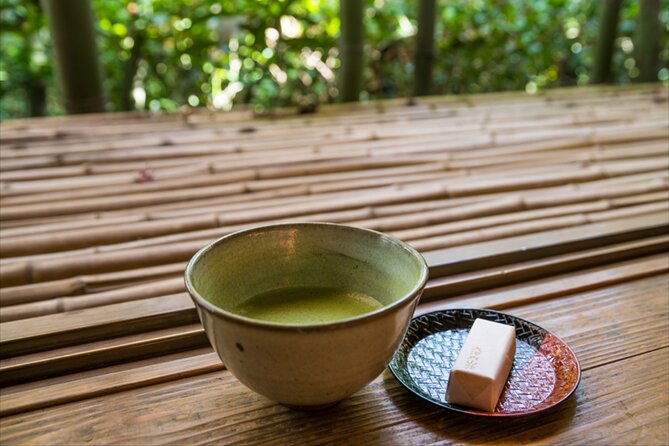
- Matcha with a view: Okochi Sanso includes time to sit quietly with a warming bowl of matcha.
- A useful small-group size: The maximum of 12 allows for questions and a more personal pace.
- Three admissions included: Your price covers Okochi Sanso, Tenryu-ji, and Monkey Park Iwatayama.
- Strong guide element: Guides such as Toru, Karim, Francis, Tom, Diana, and Augustin are praised for clear explanations, humor, local tips, and patient pacing.
- A real walking tour: Comfortable shoes, sun protection, water, and reasonable fitness matter more here than fancy transport.
Why this tour makes sense in Arashiyama
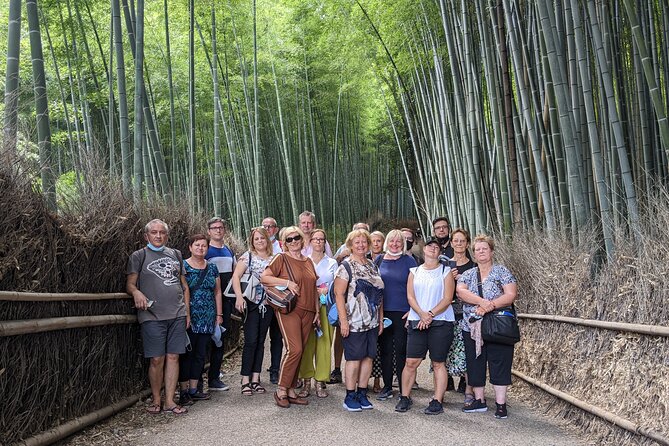
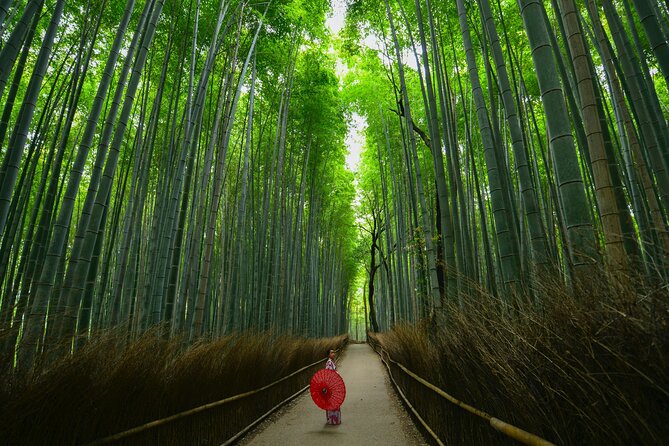
Arashiyama is easy to reduce to one photograph: tall bamboo, a stone path, and a crowd trying to frame it. That famous grove is worth seeing, but it is only one piece of the district. This tour works because it puts the bamboo into a larger half-day route.
You move from forest to garden, from temple to shopping street, then across the river and up to the monkey park. That variety keeps the day from feeling like a single photo stop repeated for hours. It also helps you understand why Arashiyama has remained such a popular escape from central Kyoto.
At $89.54 per person, this is not the cheapest way to walk around the area. But the price includes a guide, Okochi Sanso, Tenryu-ji, and Monkey Park Iwatayama. Buying those admissions separately and arranging the route yourself would cost less in guiding fees, but you would need to manage the timing, navigation, and explanations on your own.
The value is strongest if you want context and structure. It is less compelling if you prefer to wander slowly, spend an entire afternoon in one garden, or stop for a long lunch. Lunch and shopping are not included, so plan for food before or after the tour rather than expecting a meal break as part of the schedule.
Start with bamboo and Arashiyama Park
The opening section takes you into the bamboo grove and toward the Kameyama area of Arashiyama Park. The planned time is about an hour, and admission to the park is free.
The bamboo is the obvious draw, but the guide adds value by explaining how bamboo grows and what is done with it afterward. Francis, for example, was praised for discussing both the plants and the shrines along the route. Those small explanations turn a familiar photo stop into something you can actually understand.
Your guide may also help you reach the grove before the busiest flow of people, depending on the meeting time and conditions. That can make a major difference. Even a short period of calmer walking makes it easier to notice the sound of the stalks, the filtered light, and the way the path changes as it rises.
The route then reaches the top of the park area. This is one of the first clues that the outing is not a flat stroll. You do not need to be an athlete, but you should expect slopes, uneven sections, and steady walking from the start.
More Matcha Experiences in Kyoto
- Kyoto: Arashiyama Bamboo Forest, Monkeys, Matcha & Temple Tour
★ 5.0 · 759 reviews - Kyoto: Tea Ceremony Meditation – Make Matcha with Tea Master
★ 4.8 · 406 reviews - Kyoto: Kimono Tea Ceremony with Matcha and Sweet
★ 4.9 · 249 reviews
Okochi Sanso Garden brings a quiet pause
Okochi Sanso is one of the tour’s most appealing stops. This private garden was once the home of actor Denjiro Okochi, and the visit gives you a break from the steady movement of the bamboo route.
You have about 45 minutes here. The admission is included, and you can sit in a former tea house turned rest area with a bowl of matcha. That pause matters. Kyoto sightseeing can become a blur of gates, ponds, and photographs, so having time to sit and breathe gives the garden room to work its charm.
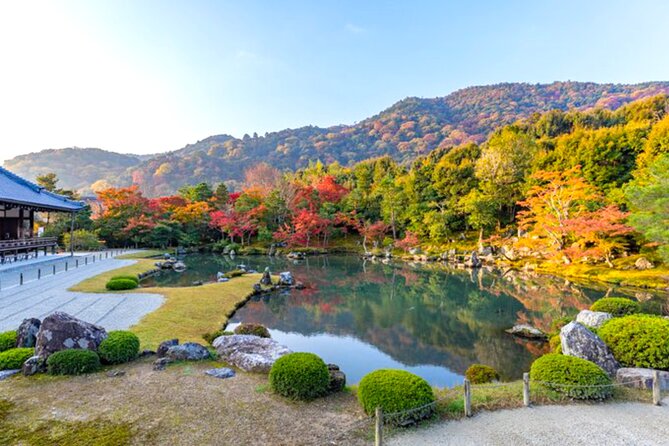
The garden is also a strong counterpoint to the bamboo grove. Instead of moving through a narrow corridor of stalks, you get carefully arranged paths, viewpoints, and quiet spaces. Fall foliage can make the visit especially striking, although the tour is not limited to one season.
I would resist rushing this stop. It is not simply another item to check off. Use the time to look closely, enjoy the drink, and let your guide explain what you are seeing. The tour does cover many places, but Okochi Sanso is where a slower pace feels most worthwhile.
Tenryu-ji adds temple history and garden beauty
Next comes Tenryu-ji, one of Kyoto’s best-known temples. The tour allows about 45 minutes, with admission included.
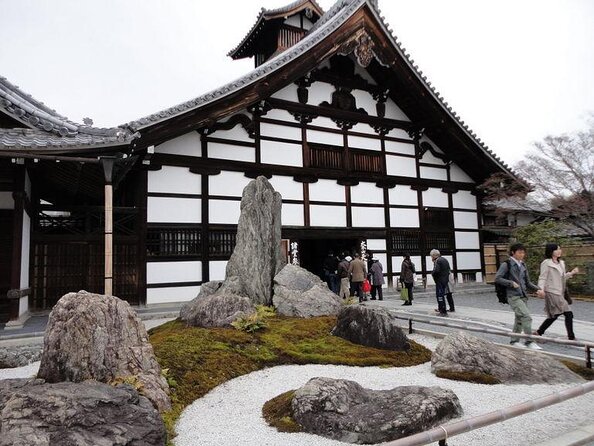
You explore both indoor and outdoor areas and see the temple pond with its koi. The combination of architecture, water, and garden design gives this stop a different feel from Okochi Sanso. Your guide can explain the religious and cultural setting instead of leaving you to guess what each building or garden feature means.
The garden is one of the reasons this temple fits so well into the route. After the vertical rhythm of the bamboo grove, Tenryu-ji opens into a more composed setting. Guides also share practical details and stories that help the place feel less like a museum display.
Past guides have been especially praised for making this section lively. Toru is described as mixing historical explanation with funny personal stories, while Tom has been singled out for his knowledge of Japanese history and culture. Those details matter because a temple visit can feel quiet but opaque without some help.
Allow yourself a little flexibility here. Forty-five minutes is enough for a solid introduction, but not enough for every corner of a large temple complex. If you already know Tenryu-ji well, you may wish the group spent longer at the garden. If this is your first visit, the guided overview should give you a useful starting point.
Arashiyama shopping street keeps the route practical
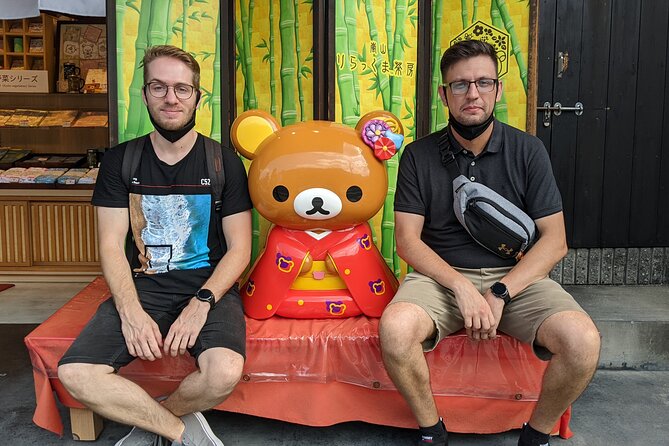
The shopping street brings a more everyday side of the district. You have roughly an hour to browse, and the guide can help with translation or questions.
This is a helpful feature if you want to buy snacks, small gifts, or local goods but feel unsure about the language. One guide also helped a visitor find specific items elsewhere in Japan, which shows how the local advice can extend beyond the formal route.
You are not required to shop. That is important because an hour can pass quickly when a group stops at several stores. If you are interested in food, one guide helped visitors find a custard-filled fish-shaped treat, a small but memorable taste of the area.
The drawback is that shopping time can feel loose compared with the temple and garden visits. Some people will enjoy choosing their own stops. Others may prefer more historical commentary or a longer rest. Tell your guide what interests you, since shopping and translation assistance are included, but purchases are not.
Same place, a different pot:
- Kyoto: Tea Ceremony in a Traditional Tea House in Kiyomizu
★ 4.9 · 3,519 reviews - Kyoto: Tea Ceremony Ju-An at Jotokuji Temple
★ 4.9 · 3,207 reviews - Kyoto: 45-Minute Tea Ceremony Lesson Experience
★ 4.3 · 2,378 reviews - Kyoto: Table-Style Tea Ceremony at a Kyo-Machiya
★ 4.9 · 1,211 reviews
Togetsukyo Bridge provides the classic river view
The stop at Togetsukyo Bridge is brief, about 15 minutes, but it gives you one of Arashiyama’s signature views.
The bridge crosses the Katsura River and provides a broad scene after the enclosed bamboo paths and temple gardens. It is a natural place for group photographs, and your guide may take pictures during the tour. One guide, Toru, was noted for photographing the group and providing a way to download the images later.
Do not expect a long riverside break. Fifteen minutes is enough for photos and a quick look, not an extended walk along the water. Still, the short stop works well in the overall sequence. You get an open view just before the final monkey park section.
The monkey park is the grand finale, with a catch
The tour officially ends at Arashiyama Monkey Park Iwatayama. Your guide gives you the ticket and directions, then leaves you to make the climb and explore at your own pace.
That arrangement is worth understanding before you book. The monkey park admission is included, but the guide does not necessarily accompany you to the top. You follow a steep path for about 15 to 20 minutes, then spend time watching the monkeys and taking in one of the best elevated views of Kyoto.
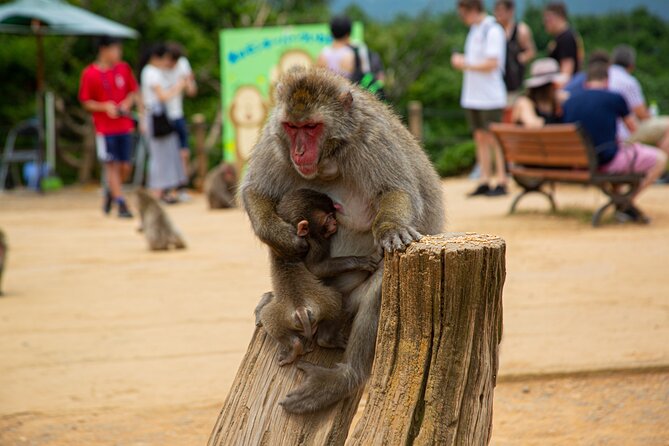
The park is especially appealing for families and children. It offers something very different from temples and gardens, and the monkeys can be fun to watch. Guides have also shared useful details about which food the animals prefer, including apples over peanuts at certain times.
The climb is the main physical challenge of the day. In hot weather, it can feel long, especially after several hours of walking. Bring water, wear comfortable shoes, and take the path at your own pace. The view from the top is the payoff, and even people who found the climb tiring considered it worthwhile.
The monkeys may not be the highlight for everyone. Their behavior can vary, and the experience may feel less impressive if you have already visited a larger or more active monkey area elsewhere. Still, the combination of wildlife and Kyoto views gives this ending a memorable change of pace.
The guides are the tour’s biggest strength
The route is good, but the guide can determine whether it feels rushed or rewarding. The strongest feedback centers on guides who explain clearly, keep the mood light, notice when someone needs help, and share useful local advice.
Karim is praised for historical detail, patience, and attention to older members of the group. Toru is often described as funny, friendly, and full of stories. Tom has helped make the route engaging for children, while Francis is noted for his patience and explanations of bamboo and shrines.
Diana also received praise for restaurant recommendations, including one that led to an especially good meal. Augustin shared suggestions about Japanese food, and other guides have helped with transport or shopping questions after the formal tour ended.
The experience is not private. Groups can reach 12 people, and the pace has to suit everyone. That said, the group size is small enough for questions and personal interaction. The guides have also been praised for respecting local residents and keeping the group from getting in the way.
Languages other than English and Japanese are not guaranteed. Some guides speak French, German, or Spanish, but you should contact the operator before booking if a specific language is important to you.
How demanding is the five-hour route?
Treat this as an active half-day, not a gentle tea outing. The scheduled stops add up to a full block of walking, and the final monkey park climb comes after the main guided route.
The published duration is approximately five hours and can vary by about 30 minutes. The stop descriptions also allow time for the monkey park, although the guide officially finishes before your climb. Expect the day to shift slightly depending on group pace, weather, and time spent at the shops.
Good shoes are essential. Summer can be very hot, and one visitor completed the route in roughly 33-degree weather while finding the monkey climb worthwhile but difficult. Use sunscreen, carry water, and consider an umbrella for sun or rain.
You must arrive 15 minutes before departure. Late arrivals cannot join and will not receive a refund, so build in time to find the starting point at 18-12 Sagatenryuji Kurumamichicho in Ukyo Ward. The area is near public transport, but you should still confirm the exact route before leaving.
The operator uses WhatsApp for last-minute contact, so downloading it before the tour is sensible. The outing requires good weather. If poor weather cancels it, you are offered another date or a full refund. Standard cancellation is free up to 24 hours before the start time.
Who will get the most from this tour?
I would choose this tour if you are visiting Arashiyama for the first time and want a clear route through the area. It is particularly useful if you want temple context, garden access, food suggestions, and help with small practical questions rather than just a walk through the bamboo.
Families may appreciate the monkeys and the guides’ efforts to point out wildlife and interesting details. Couples and older visitors can enjoy the relaxed pace, but anyone with mobility limits should think carefully about the slopes and the monkey park climb.
Independent walkers can follow much of this route alone. The reason to pay for the tour is the combination of admissions, explanations, translation help, and efficient sequencing. You are paying less for transport and more for a well-organized human guide.
The tour is not ideal if you want a long lunch, extensive shopping, a private experience, or complete control over how long you stay at each stop. It is also a poor match if steep walking in heat is a serious concern.
Should you book the Arashiyama tour?
I think this is a strong choice for a first Arashiyama visit. At $89.54, the cost is reasonable when you count the three included admissions and the amount of guiding packed into a half-day. The 4.9 rating from 219 reviews and 99 percent recommendation figure also fit the consistent praise for the guides, pacing, and range of sights.
Book it if you want to see more than the bamboo grove without spending hours planning the route yourself. Just arrive early, wear proper shoes, carry water, and understand that the monkey park ends the guided portion rather than continuing as a fully escorted visit.
Skip it if you prefer slow solo wandering or if the steep climb sounds unpleasant. For most active visitors, though, the mix of bamboo, matcha, temple gardens, shopping, river views, and monkeys makes this one of the more complete ways to meet Arashiyama in a single day.
FAQ
How long does the Arashiyama tour last?
The experience lasts approximately five hours, though the total time can vary by about 30 minutes before or after the estimate.
Is this a private tour?
No. It is a shared walking tour with a maximum of 12 participants.
What is included in the price?
The price includes the guide, admission to Okochi Sanso Garden, admission to Tenryu-ji Temple, admission to Monkey Park Iwatayama, and shopping or translation assistance.
Is lunch included?
No. Lunch, shopping, and souvenirs are not included.
Do I need to be fit for the tour?
You should be comfortable with several hours of walking. The monkey park requires a 15 to 20-minute climb on a steep path, so comfortable shoes and reasonable physical condition are important.
Does the guide go to the top of the monkey park?
The tour officially ends at Monkey Park Iwatayama. Your guide gives you the ticket and directions, then you make the short climb and leave the park whenever you choose.
Can I cancel for a refund?
You can cancel at least 24 hours before the start time for a full refund. Cancellations or changes made less than 24 hours before the tour are not refunded. If poor weather or an insufficient number of bookings cancels the experience, you are offered another date or a full refund.
Just added around Kyoto
- Uji Walking Tour – Byodo-in temple and Tea Ceremony from Kyoto★ 3.5 · 3 reviews
- Tea ceremony at Kyoto’s Zen Temple Teahouse★ 5.0 · 2 reviews
- Kyoto: Authentic Tea Ceremony in a Small Group★ 5.0 · 7 reviews
- Tea Ceremony in 150 Years Old Townhouse with Tables and Chairs★ 5.0 · 22 reviews
- Tea Ceremony Experience in Traditional Kyoto Townhouse★ 5.0 · 19 reviews
- Traditional Tea Ceremony in Kyoto★ 4.5 · 3 reviews
- Silent Beauty of Kyoto Zen Walk and Tea Experience★ 5.0 · 2 reviews
- Kyoto Private Tea Ceremony at a Japanese Inns★ 5.0 · 12 reviews
Matcha Experiences in Kyoto, compared.
Arashiyama Bamboo Forest, Monkeys, Matcha & Temple Tour
Read our review →
Tea Ceremony Meditation – Make Matcha with Tea Master
Read our review →
Traditional Tea Ceremony with Matcha & Sweets in Gion
Read our review →
Matcha Grinding Experience and Walking Tour in Uji Kyoto
Read our review →
Kyoto Local Gourmet Night Experience: Kaiseki & Izakaya & Matcha
Read our review →Browse the lists this tour appears in