
Review · TOKYO
Tokyo: Tea Ceremony Experience
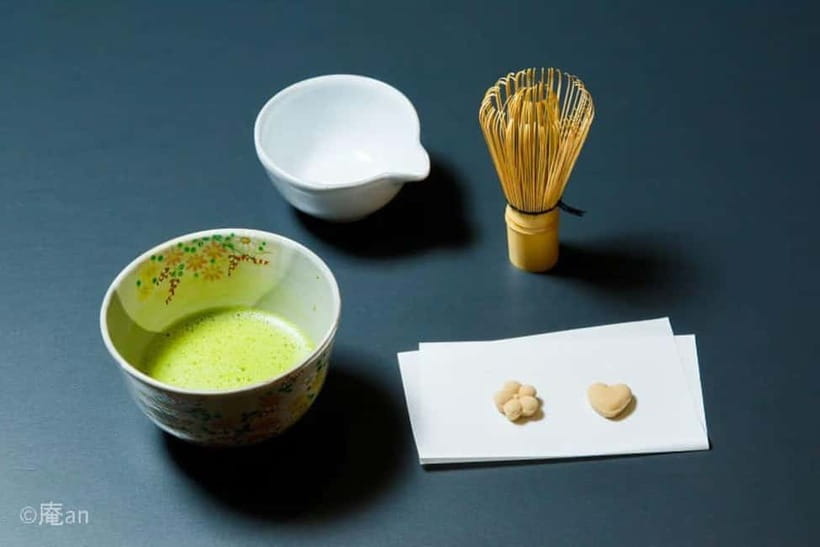
Tea can reset a Tokyo day. This short experience gives you a friendly introduction to Japanese tea culture without demanding half a day, and you get to make your own matcha after a brief explanation. I especially like the use of single-origin matcha and the small serving of traditional ohigashi sweets, both of which make the session feel more thoughtful than a simple drink stop.
The $7 price is excellent for a 30-minute cultural activity, especially for a solo visitor or a family fitting several sights into one day. The main consideration is language: the instructor is Japanese, and English translation is provided as much as possible, so visitors wanting a long, detailed explanation may find the teaching fairly brisk.
Quick takeaways for this Tokyo tea experience
- You make your own matcha: This is not only a demonstration. After the short lesson, you prepare and drink your own tea.
- Single-origin matcha is served: The tea has been selected as a special single-origin matcha rather than presented as an anonymous green powder.
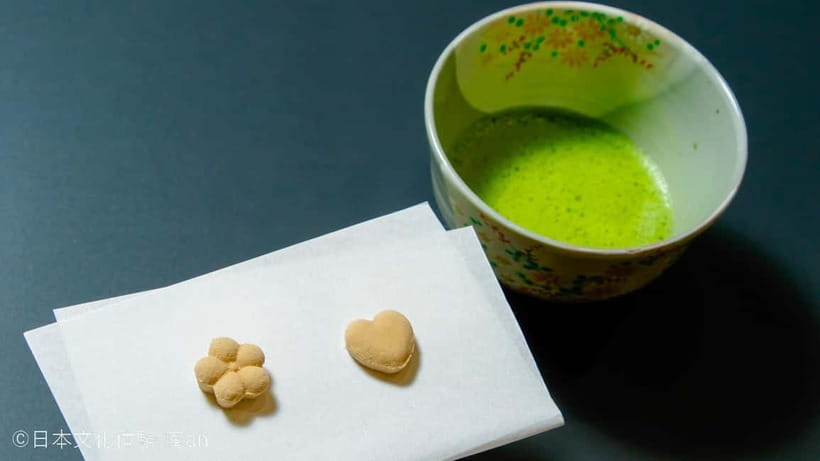
- Ohigashi comes with the tea: These Japanese sweets add the traditional sweet note that helps balance matcha’s bitter edge.
- The full visit takes 30 minutes: The program includes an explanation, a matcha-grinding demonstration, the tea ceremony experience, picture time, and final eating and drinking time.
- It works for one person or a group: You do not need a large party to take part.
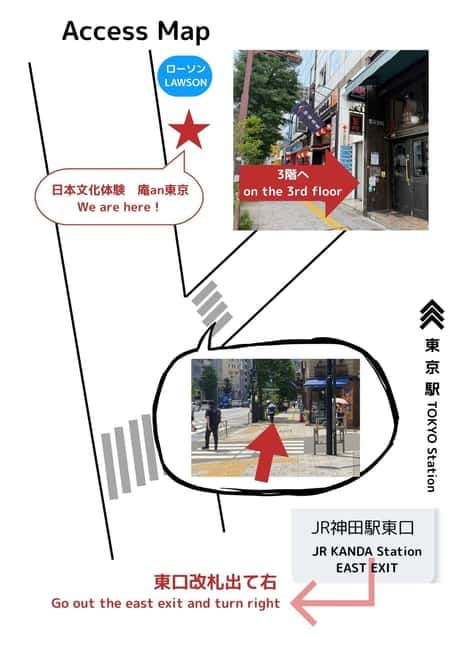
- The location is central for a sightseeing break: The meeting point is AN TOKYO Japanese Culture Experience at 35.6916541, 139.7715022.
Why this 30-minute format works in Tokyo
Tokyo sightseeing can turn into a race between train platforms, observation decks, shrines, department stores, and restaurants. A short tea experience gives you a pause without asking you to reorganize the whole day. At $7 per person, it is also inexpensive enough to add on rather than treat as the main event.
I see this as a cultural sampler. You will not spend hours studying tea etiquette or learn every detail of the tea ceremony tradition. Instead, you receive a short introduction, see how matcha is handled, prepare your own cup, and sit down with a Japanese sweet. That is a sensible format if you are curious but not ready to commit to a longer formal ceremony.
The length also suits families and mixed-interest groups. One person can enjoy the cultural side while others get a quick break from sightseeing. Children under two who sit on a parent’s lap are free, which may help families keep the cost down.
There is one practical warning. The experience does not hold the event for late arrivals, even when the delay comes from transportation trouble. A kind guide may try to help, but you should plan to arrive early. One participant who had transport problems still found the guide very accommodating, but that should be treated as good fortune, not as the normal arrangement.
More Tea Ceremonies in Tokyo
- Kimono Tea Ceremony at Tokyo, Asakusa Maikoya
★ 5.0 · 638 reviews - Tokyo: Traditional Tea Ceremony with a Tea Master
★ 5.0 · 528 reviews - Tea Ceremony Workshop in Tokyo by the Experienced Instrucor
★ 5.0 · 189 reviews
At AN TOKYO Japanese Culture Experience
Your meeting point is AN TOKYO Japanese Culture Experience, located at 35.6916541, 139.7715022. The supplied details identify the venue and coordinates, but do not provide a fuller street address or station directions, so check the map carefully before setting out.
The operating hours are 10:00 to 17:00. Reservations received after 17:00 are processed the next day, so late evening booking requests may not receive an immediate response. The activity has set starting times, and you should confirm the available slot before planning nearby attractions.
Do not assume you can enter simply to watch. Only people taking part in the experience are allowed inside. That matters for a family or group where one person may be tempted to sit out while the others participate.
The experience provider is 日本文化体験 庵an東京, also shown as AN TOKYO. The instructor is Japanese. English help is offered as much as possible if you request it, but the listed language is Japanese. I would contact the provider ahead of time if clear English instruction is important to you.
The opening explanation sets the scene
The session begins with an explanation about tea. The information does not promise a long lecture, and the schedule allows only a compact introduction, so expect the essential ideas rather than a history class.
That short start is useful because matcha is not just ordinary green tea served in a different cup. The powder is prepared into a drink, and the process gives you something active to do. A basic explanation helps you understand the purpose of the steps before you pick up the equipment.
This is also the point where language may affect the experience most. Simple demonstrations can cross language barriers fairly well, but small cultural details are easier to miss when translation is limited. If you want English assistance, ask in advance rather than hoping it will appear automatically during the session.
The format is designed to keep things relaxed. You are not being tested on etiquette, and the description specifically presents the matcha as something you can enjoy casually. That makes this a good first encounter for someone who might feel nervous about making a mistake.
Watching the matcha grinding demonstration
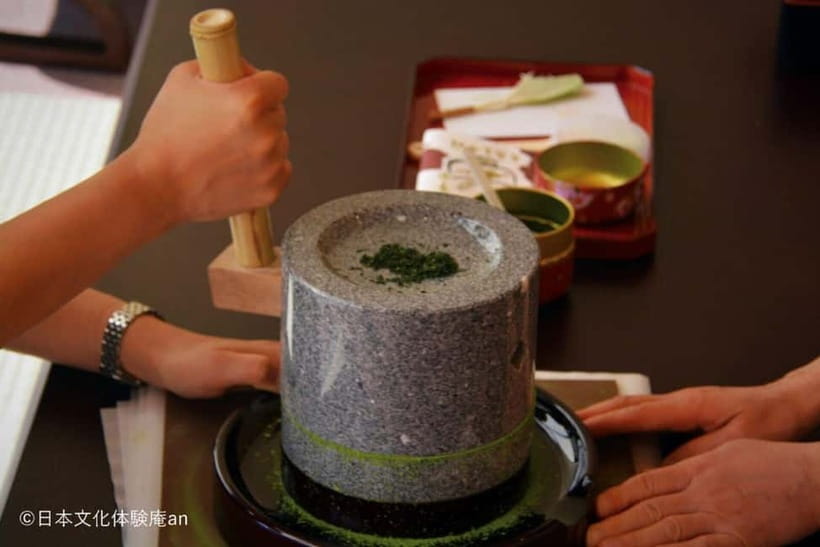
Next comes a demonstration of matcha grinding. This is one of the more distinctive parts of the program because it shows that the tea begins with preparation, not simply a packet opened behind the counter.
The details do not say that each participant grinds a full serving personally, so you should expect to watch the demonstration rather than assume you will operate the grinder yourself. Its value is in giving context to the powdered tea you are about to prepare.
The matcha is described as special single-origin matcha. That wording suggests the tea has a defined source rather than being a generic blend, although no growing region or producer is provided. You will not be able to compare different origins during this short visit, but the single-origin choice adds a useful point of focus to the tasting.
For a tea enthusiast, this may be the most interesting technical moment. For a casual visitor, it gives the activity a clear Japanese character and prevents the session from feeling like a standard café order.
Same place, a different pot:
- Matcha Making Class in Tokyo with Authentic Japanese Sweets Set
★ 5.0 · 744 reviews - Tokyo: Matcha Making Experience with Mochi Sweets in Asakusa
★ 4.9 · 388 reviews - Asakusa Cultural Walk & Matcha Making Tour
★ 5.0 · 245 reviews - Mt. Fuji & Lake Kawaguchiko Ropeway Panorama Full-Day Tour
★ 4.6 · 236 reviews
Making your own matcha
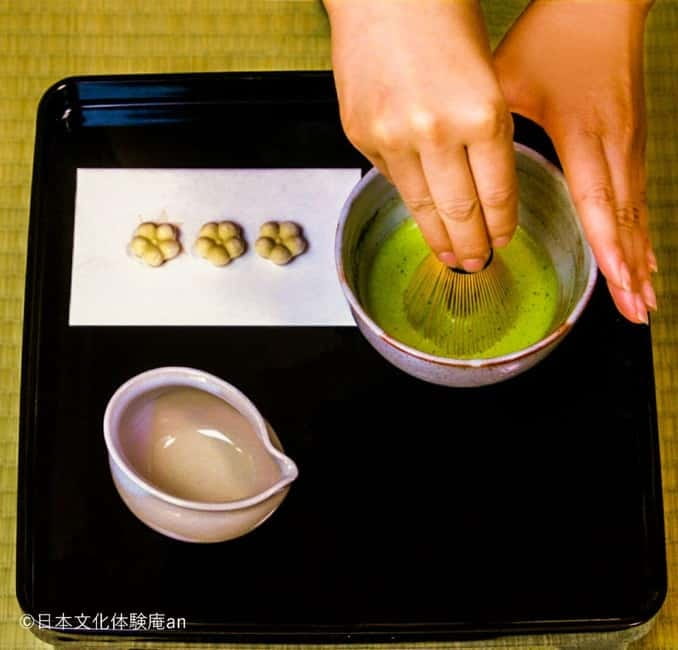
After the explanation and demonstration, you take part in the tea ceremony experience and make your own matcha. This hands-on step is the heart of the program.
The supplied details do not list the exact tools or give a full sequence of movements, so I would not book this expecting a complete formal school of tea ceremony. Think of it as an introductory ote-mae, the Japanese tea-making experience included with the activity.
That distinction matters. A short activity can teach you the basic idea and let you enjoy the finished drink, but it cannot cover every rule, gesture, and tradition associated with a longer ceremony. The benefit is that you get participation rather than sitting silently through a performance.
I like this approach for first-time visitors. You remember a process better when your hands are involved. Even if the instructions move quickly, you leave with a practical sense of how matcha is prepared and why the drink is different from brewed leaf tea.
The activity is suitable for one person or a group. No minimum group size is stated, so a solo visitor does not need to worry about forming a party. Group members can share the moment, while each participant still has the chance to make and drink matcha.
Ohigashi gives the matcha a sweet partner
The tea comes with ohigashi, Japanese dry sweets. This is a small detail, but it matters. Matcha can have a strong, earthy bitterness, and a sweet bite gives your palate a contrast before or after the tea.
The information does not specify the flavor, shape, or number of sweets, so you should not expect a particular type. Still, their inclusion makes the experience feel more connected to Japanese tea service than a plain cup of powdered tea.
This pairing also gives you a simple lesson in balance. You are not only drinking matcha for refreshment. The sweet and tea are meant to be enjoyed together, and the combination can make the flavor easier for newcomers.
If you already like matcha, the sweet will be a pleasant extra. If you are unsure about it, do not judge the tea from the first sip alone. Try the ohigashi and then taste the matcha again.
Picture time and the final ten minutes
The schedule includes picture time before the final eating and drinking period. That gives you a chance to record the experience without rushing away immediately after making the tea.
The stated schedule reaches the end of the main experience at around 20 minutes, followed by eating and drinking time until the 30-minute departure. In practice, I would reserve the full half hour rather than plan to leave early. The final minutes are part of the experience, not wasted time.
This structure is helpful for visitors who want a photo but do not want photography to interrupt the teaching. It also lets you focus on the tea first, then take a picture once the activity has reached a natural pause.
Do not expect a long sit-down session. Thirty minutes passes quickly, particularly if you are part of a group. If your day is built around tight train connections, leave a buffer after the scheduled finish.
What $7 really buys you
At $7 per person, this is a strong value. The price includes the Japanese tea ceremony experience, the matcha-making activity, the single-origin tea, the ohigashi sweet, the demonstration, and picture time. Even with a short duration, there is a clear exchange: you receive an activity, not just a beverage.
The value is highest for someone who wants a low-cost cultural stop between major attractions. You get a taste of a Japanese tradition without paying for a longer private lesson or formal ceremony.
The price is less compelling if you are already booking an extensive tea workshop elsewhere. In that case, this may repeat the same basic preparation rather than add much. It is also not the right choice if you want a detailed English lecture, a full historical discussion, or a long ceremonial performance.
A completion certificate is available for an additional 300 JPY. If you want a nominative certificate, you need to provide the names in advance. Otherwise, the name space will be left blank. I would only add this if you collect activity certificates or want a small keepsake, since it is not part of the $7 package.
Who should book it
I would recommend this experience to:
- First-time visitors who want a simple introduction to matcha
- Solo visitors looking for a short cultural activity
- Families needing a brief break during sightseeing
- Couples and friends who enjoy hands-on activities
- Tea drinkers interested in single-origin matcha
- Budget-conscious visitors who want more than a café stop
I would be more cautious if you need detailed English instruction. Japanese is the listed language, and English translation is offered as much as possible rather than guaranteed in full. Contact the provider before booking if language support is central to your decision.
I would also avoid scheduling it immediately before a train, timed ticket, or important reservation. The provider will not hold the event for delays, and changing the booking after a cancellation fee has been incurred can result in a specified charge.
Cancellation is free up to 24 hours in advance for a full refund. After that point, charges can apply, so check the exact policy before changing plans. The venue does not compensate you for travel costs if you cancel or miss the experience.
Should you book this Tokyo tea ceremony?
Book it if you want an affordable, hands-on introduction to matcha that fits neatly into a busy Tokyo day. The combination of making your own tea, seeing the grinding demonstration, tasting single-origin matcha, and eating ohigashi gives the 30 minutes real purpose.
Skip it if you want a long, formal ceremony or detailed English commentary. This is a compact cultural activity, not a full tea-school lesson. For most curious visitors, though, the low price and active format make it an easy choice, provided you arrive early and confirm language needs ahead of time.
FAQ
Where does the tea ceremony experience take place?
It takes place at AN TOKYO Japanese Culture Experience in Tokyo, at coordinates 35.6916541, 139.7715022.
How long does the experience last?
The full visit lasts 30 minutes. The schedule includes the main activity, picture time, and final eating and drinking time.
How much does the experience cost?
The listed price is $7 per person.
Is matcha included?
Yes. The experience includes special single-origin matcha, which you prepare and enjoy during the session.
Are Japanese sweets included?
Yes. The matcha comes with ohigashi, a type of Japanese sweet.
Is the experience available in English?
The instructor is Japanese, and English translation is provided as much as possible. You can contact the provider if you would like English assistance added.
Can one person attend alone?
Yes. The activity is designed for one person or a group, so you do not need to join with other participants.
Is the completion certificate included?
No. A completion certificate costs an additional 300 JPY. For a certificate with names, you need to provide the names in advance.
Just added around Tokyo
- Yokohama : Tea Ceremony with Sweets and Souvenir★ 5.0 · 5 reviews
- Walking Tour: Yanaka,Nezu& Sendagi: Tea Ceremony & Old Tokyo★ 5.0 · 3 reviews
- Private Kimono and tea ceremony at local home near Tokyo Disney★ 5.0 · 6 reviews
- Private Mochi・Matcha sweets Making Class Near Shibuya Area★ 5.0 · 22 reviews
- Tokyo Sweets Tour: Hidden Gems & Matcha at an Old Tea House★ 5.0 · 6 reviews
- Kimono and Tea Ceremony in Asakusa Private Food Tour With Guide★ 5.0 · 4 reviews
- 2 Hours Mochi &Nerikiri Making & Matcha Class in Bunkyo★ 5.0 · 21 reviews
- Tokyo: Tea Ceremony & Japanese Sweets Making★ 5.0 · 10 reviews
Tea Ceremonies in Tokyo, compared.
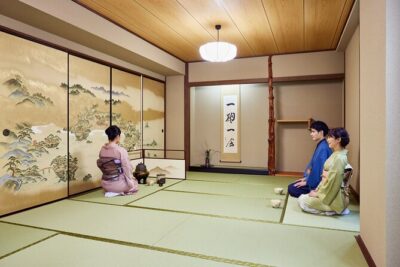
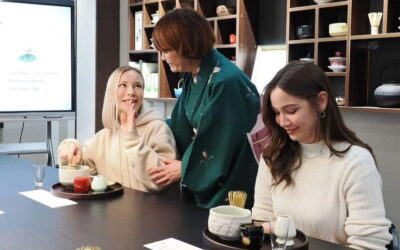
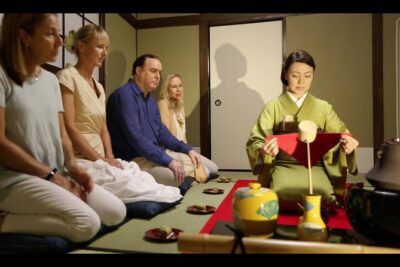
Tea Ceremony Workshop in Tokyo by the Experienced Instrucor
Read our review →
Asakusa: Kimono Tea Ceremony with Matcha and Sweet
Read our review →
Tea Ceremony Experience in a Private Tea Room in Shibuya
Read our review →
Tea ceremony experience in Japanese-style room 60min
Read our review →Browse the lists this tour appears in