
Review · OSAKA
Tea ceremony experience in Osaka with a small group
Slow down with a bowl of matcha. This small-group tea ceremony gives you a clear, friendly introduction to Japanese tea culture in a tatami room, with a tea master explaining each step rather than leaving you to guess. I like the private group of up to four people, and I like that you make your own matcha instead of only watching a demonstration. The one drawback is the location: you must walk 10 to 15 minutes from Ibaraki-shi Station, so it takes extra planning.
The session lasts about 60 to 90 minutes and costs $67.11 per person. That is not the cheapest cultural activity in Osaka, but it includes instruction, matcha, Japanese sweets, and the tools used during the lesson. For anyone curious about Japanese customs but unsure about formal tea etiquette, the relaxed teaching style looks like the main strength here.
Key Details Before You Book
- A private group of up to four: You share the room only with your own party, which gives the tea master time to answer questions and correct your technique.
- A real tatami-room setting: You learn how to enter a traditional Japanese-style room before the ceremony begins.
- Demonstration plus hands-on practice: The tea master first prepares matcha, then shows you the Ryurei table-style method and lets you make tea yourself.
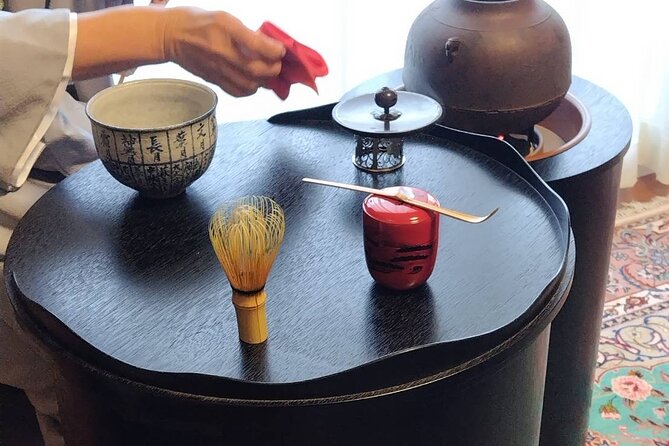
- Matcha and sweets included: Your booking covers Japanese traditional sweets, matcha green tea, and the tools and materials required.
- Convenient Osaka to Kyoto position: The activity takes place in Ibaraki, between the two cities, so it can fit into a wider day of sightseeing.
- A short, focused visit: The 60 to 90 minute schedule works well when you want a cultural activity without giving up half a day.
Why This Osaka Tea Ceremony Feels Personal
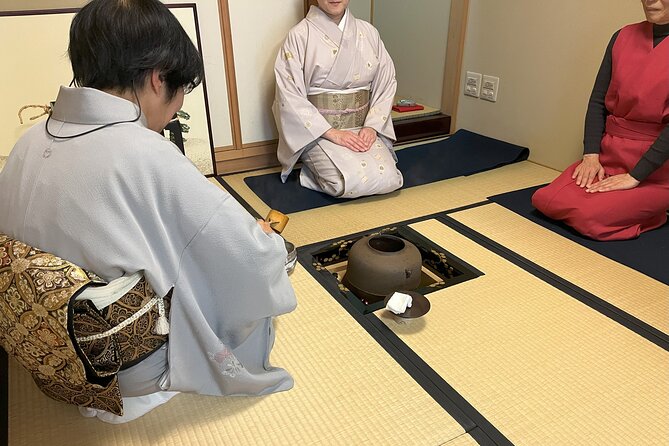
Many cultural activities are built for a large audience. This one is limited to four people, which changes the mood. You are not trying to see over a crowd or copy movements from the back of a room. You can listen closely, ask questions, and take your time with the unfamiliar parts.
The tea master and an assistant guide the session. The available feedback praises their attentive teaching and the calm, informative tone of the experience. That matters with tea ceremony, where the small gestures can feel mysterious at first. A good instructor explains not only what to do, but also how to move through the room respectfully.
You do not need prior knowledge of Japanese culture. The lesson is designed for first-timers, including people who simply want tea and sweets in a traditional setting. I would especially recommend it if you have seen matcha preparation before but have never understood the customs around it.
The experience is also private rather than exclusive in a flashy way. You still learn the basic structure of a Japanese tea ceremony, but the small setting should make it easier to relax. You can make mistakes without feeling as if an audience is watching. That is a useful advantage for families, couples, or a group of friends.
More Tea Ceremonies in Osaka
- Osaka: Tea Ceremony Experience
★ 4.9 · 1,426 reviews - Tea Ceremony Experience in Osaka Doutonbori
★ 5.0 · 754 reviews - Osaka: Tea Ceremony, Calligraphy, and Kimono Experience
★ 4.9 · 130 reviews
Finding the Meeting Point in Ibaraki
The meeting point is Repark Ibaraki Oike 1-Chome, at 1-chome-14-46 Oike, Ibaraki, Osaka 567-0826. The closest station is Ibaraki-shi Station on the Hankyu Kyoto Line, followed by a walk of about 10 to 15 minutes.
This is not a door-to-door activity from central Osaka. You will need to allow time for the train journey, the walk, and finding the exact meeting place. The address and phone number are sent after your reservation as confirmation, so keep those details available on the day.
When you arrive, you call the provided phone number. The host comes to meet you there. If you are late or lose your way, the instructions ask you to call rather than wander around searching. That is practical advice, since a meeting point at a parking area may not feel as obvious as a hotel lobby or station entrance.
Arrive on time. A tea ceremony has a set rhythm, and walking in late can interrupt the opening instructions. I would save the confirmation message, check the route before leaving, and give yourself more than the minimum walking time.
Entering the Tatami Room
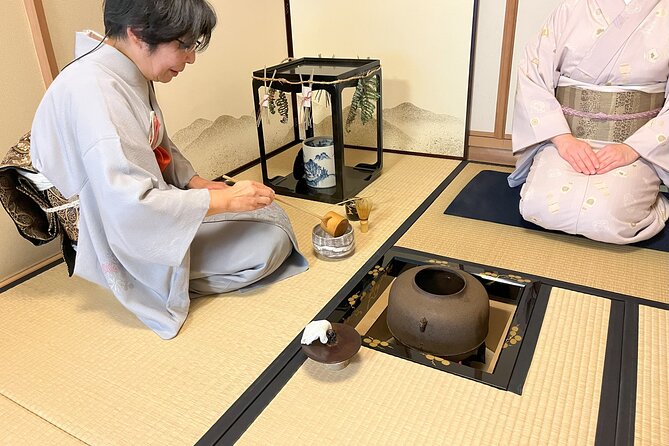
The session begins with an introduction to entering the tatami room. This is an important part of the experience, not filler while the tea is being prepared. Japanese rooms have their own customs, and learning the correct way to enter helps you understand that the ceremony is about conduct as well as refreshments.
You will receive an explanation before attempting anything. That should make the room feel less intimidating, particularly if sitting or moving on tatami is new to you. The lesson is meant to be detailed but easy to follow, so you can focus on the experience instead of worrying about getting every gesture perfect.
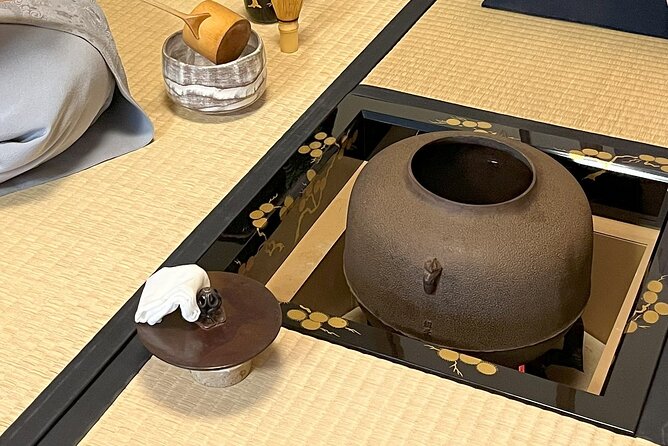
The tatami setting also gives the activity a stronger sense of place than a standard cooking class or café tasting. You are not simply drinking matcha. You are learning how tea fits into a formal Japanese room and how guests take part in the ritual.
The supplied information does not specify whether chairs are available in the traditional portion, so you should be prepared for some interaction with a tatami room. If that could be difficult for you, contact the provider before booking. The activity is run by Shuminavi Inc., and the confirmation provides a phone number for questions and day-of assistance.
Watching the Matcha Demonstration
After the room introduction, the tea master demonstrates the ceremony using matcha and Japanese traditional sweets. Watch closely here. The demonstration gives you a model for the movements you will later try yourself.
The value is in the explanation. Matcha preparation can look simple when reduced to a few quick motions, but the lesson places those motions in their proper order. You learn how the ceremony proceeds, how the tea is handled, and how the sweets fit into the visit.
The sweets are included, so you do not need to buy anything extra during the session. Their role is not just to add a snack. Traditional sweets are served alongside matcha for a reason, since their sweetness balances the tea’s strong, grassy taste. The information provided does not name the specific sweet, so do not book expecting one particular confection.
This part of the session is a good reason to avoid rushing. The ceremony takes place in a small group, and you should have room to observe the details. I would put your phone away during the demonstration. The activity is short enough that you can give it your full attention.
Same place, a different pot:
- Matcha Making Class in Osaka with Authentic Japanese Sweets Set
★ 5.0 · 509 reviews - Osaka: Matcha Making Experience with Japanese Sweets
★ 5.0 · 146 reviews - Osaka: Japanese Traditional Sweets Making and Tea Ceremony
★ 4.7 · 118 reviews - Osaka Temple Cool Foot Bath & Matcha Experience〈45min〉
★ 4.9 · 82 reviews
Making Matcha Yourself With the Ryurei Style
The hands-on portion introduces Ryurei, the table-style form of tea ceremony. This is a useful feature for beginners because you get to practice making matcha without only copying a formal floor-based ceremony.
You learn how to prepare the tea yourself, then drink the matcha you make with a Japanese traditional sweet. That personal step gives the activity more value than a simple presentation. You leave with a better feel for the tools, the preparation, and the care involved in producing one bowl.
The instructor’s job is especially important here. The published praise focuses on attentive guidance and on teaching participants how to perform the ceremony themselves. That suggests the lesson is not a rushed turn at a whisk followed by a quick photograph. You should have direct instruction as you work.
Still, keep your expectations sensible. This is a 60 to 90 minute introduction, not professional tea-training. You will learn the basic process and etiquette, but not every school, regional style, or historical detail of Japanese tea ceremony. For most visitors, that is the right balance. You get enough context to appreciate what you are doing without sitting through a long lecture.
What the $67.11 Price Includes
At $67.11 per person, this activity sits in the midrange for a short cultural lesson. You are paying for a private setting, a tea master, an assistant, the room, the equipment, matcha, and sweets. There are no separate charges for the materials needed during the session.
The private format is the biggest factor in the value. If your party has two to four people, you receive a more focused lesson than you would in a large public demonstration. That can justify the price for people who want personal help with etiquette or preparation.
The price does not include transportation. You pay for the train and any other travel to Ibaraki separately. Group discounts are available, though the exact discount is not provided, so check the booking details for the current rate before assuming a lower price.
I would consider the activity good value if you want participation, not just a taste of matcha. If you only want to drink green tea in a traditional room, you can likely find less expensive options. If you want to understand the customs and prepare the tea yourself in a private group, the added instruction makes the cost easier to defend.
Fitting Ibaraki Into an Osaka or Kyoto Day
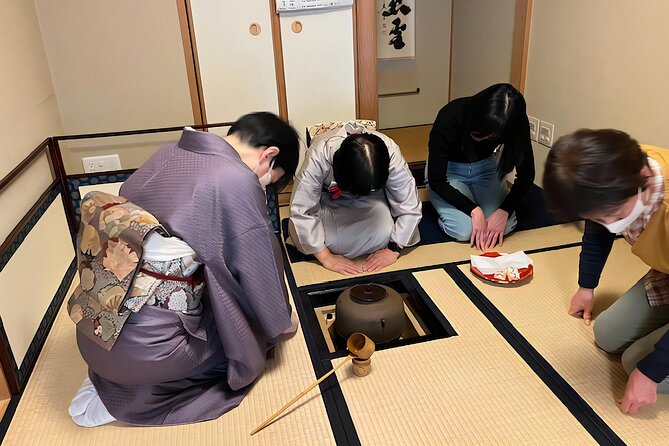
The location between Osaka and Kyoto can work in your favor. You can visit the tea ceremony while moving between the two cities, rather than treating it as a full-day excursion. The session itself is short enough to leave time for other plans.
Do not treat the 60 to 90 minutes as the full travel commitment. Add the train ride, the 10 to 15 minute walk from Ibaraki-shi Station, and some buffer for the meeting point. The activity is easy to underestimate because the tea session is compact.
I would place it in a day with a flexible schedule. A late train, a missed connection, or difficulty finding the parking area could make a tightly timed plan stressful. The provider asks you to call if you are delayed or lost, but punctuality remains the safest approach.
Mobile tickets make the booking simple, and confirmation is sent within 48 hours, subject to availability. You receive the detailed address and phone number after booking. Keep an eye on those messages rather than relying only on the general meeting-point information.
Who Will Enjoy This Most
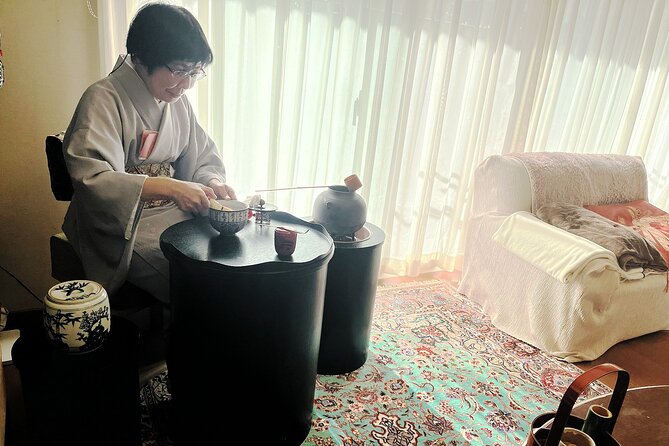
This tea ceremony is a strong choice for first-time visitors to Japan who want a gentle introduction to a custom that can otherwise seem formal or hard to approach. The teaching is designed for people with little knowledge of Japanese culture, so you do not need to study tea ceremony before arriving.
It also suits couples, families, or friends who prefer a quiet activity to a crowded attraction. With a maximum of four participants, your group controls the pace more than it would in a large class.
I would recommend it to anyone who enjoys learning by doing. You see the ceremony, receive an explanation, prepare your own matcha, and drink it with sweets. That sequence gives the visit a clear shape and a satisfying finish.
It may be less suitable if you want a central Osaka location, a very quick drop-in activity, or a broad survey of Japanese food and culture. This is narrowly focused on tea ceremony. That focus is its strength, but it will not suit someone looking for several different activities in one booking.
Practical Tips for a Better Visit
Book ahead if your dates are fixed. The activity is often reserved well in advance, with an average booking time of 37 days, and availability is subject to confirmation.
Wear something that allows you to move comfortably in a traditional Japanese room. The supplied details do not give specific clothing rules, so there is no need to invent a strict dress code. Still, practical clothing will make the tatami-room portion easier.
Save the meeting address and phone number before you leave. Call when you reach Repark Ibaraki Oike 1-Chome so the host can come to meet you. If you are lost, call promptly rather than arriving late after a long search.
The cancellation policy is generous if you keep track of the deadline. You can cancel for a full refund up to 24 hours before the start time. Cancellations or changes made less than 24 hours before the activity are not accepted for a refund, and the cut-off uses local time.
Should You Book This Osaka Tea Ceremony?
Book it if you want a small, patient, hands-on lesson rather than a quick matcha tasting. The private group size, tatami-room instruction, traditional sweets, and chance to prepare your own tea make this a thoughtful cultural stop.
Think twice if getting to Ibaraki is inconvenient or if you want an activity in central Osaka. Transportation is not included, and the final walk from Ibaraki-shi Station takes 10 to 15 minutes.
For the right schedule, this is a well-focused introduction to Japanese tea ceremony. You get enough explanation to understand the customs, enough practice to remember the process, and enough time afterward to continue exploring Osaka or Kyoto.
FAQ
How long does the tea ceremony experience last?
The session takes about 60 to 90 minutes.
How many people can join the private activity?
The private group can include up to four people.
Where does the activity begin?
It begins at Repark Ibaraki Oike 1-Chome, 1-chome-14-46 Oike, Ibaraki, Osaka 567-0826, Japan.
How do I reach the meeting point?
The nearest station is Ibaraki-shi Station on the Hankyu Kyoto Line. From the station, the meeting point takes about 10 to 15 minutes to reach on foot.
What is included in the price?
The price includes the tools and materials needed for the activity, Japanese traditional sweets, and matcha green tea.
Do I need previous knowledge of Japanese tea ceremony?
No. The activity is designed for people who do not know much about Japanese culture, and the tea master provides an easy-to-understand explanation.
Can I cancel for a full refund?
Yes. You can cancel at least 24 hours before the local start time for a full refund. Cancellations or changes made less than 24 hours before the start time are not accepted for a refund.
Just added around Osaka
- Osaka:Zen Tea Ceremony and Foot Bath Experience<45min>★ 5.0 · 7 reviews
- Osaka Japanese Cooking And Matcha Class near Osaka Castle★ 5.0 · 22 reviews
- Osaka: Tea Ceremony, Calligraphy, and Kimono Experience★ 5.0 · 6 reviews
- Osaka: Nara, Todaiji, Uji Matcha, and Hot Spring Tour★ 4.0 · 7 reviews
- Nara Deer Park, Uji Matcha, & Hot Spring Full-Day Tour from Osaka★ 4.0 · 21 reviews
- Craft Sushi and Matcha Ice Cream in Central Osaka (3-Course Meal)★ 5.0 · 2 reviews
- Tea and Calligraphy Session at a Table in Osaka★ 5.0 · 4 reviews
- ZEN therapy | Shiatsu-style massage, EnergyTherapy & Japanese Tea★ 5.0 · 5 reviews
Tea Ceremonies in Osaka, compared.
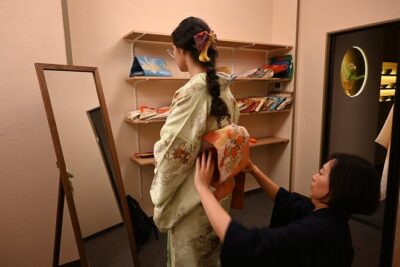
Tea Ceremony, Calligraphy, and Kimono Experience
Read our review →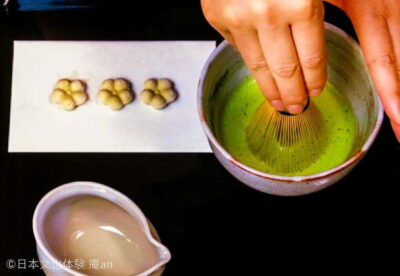
Japanese Traditional Sweets Making and Tea Ceremony
Read our review →
Samurai Show, Tea Ceremony, Japanese Traditional Activities
Read our review →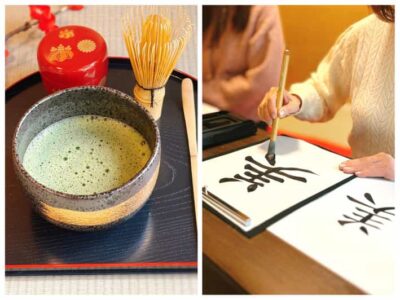
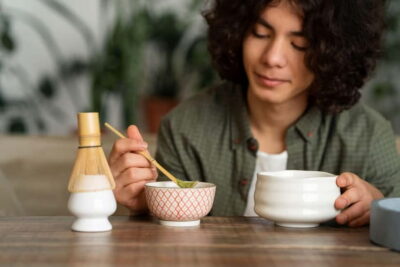
Osaka; Japanese Tea ceremony experience, Macha and Sencha
Read our review →
Samurai dress-up and shows, plus Tea Ceremony & Calligraphy
Read our review →Browse the lists this tour appears in