Review · TOKYO
Asakusa: Kimono Tea Ceremony with Matcha and Sweet
Tradition looks good on you. This 90-minute Asakusa experience combines seasonal kimono dressing with a calm, hands-on tea ceremony, giving you more than a quick photo stop. You choose your kimono, receive professional dressing and hair styling, learn the meaning behind Japanese tea customs, then whisk matcha and eat a seasonal wagashi sweet.
I especially like the care put into the outfit, from the kimono and obi to the hair accessory. I also like that you do not just watch the ceremony: you prepare your own bowl of matcha. The main consideration is comfort. You sit on tatami mats without shoes, and the ceremony is quiet and formal. Ask for a bamboo chair ahead of time if floor seating will be difficult.
The $66 price is fair for Tokyo. It includes the kimono, dressing, long-hair styling for women, tea instruction, matcha, sweets, and English guidance. Group size can reach about 12 to 14 people, though some sessions feel much smaller. Staff members such as Mia, Wakana, Yoko, and Kyoko have been praised for being warm, patient, and clear.
Key points to know before booking
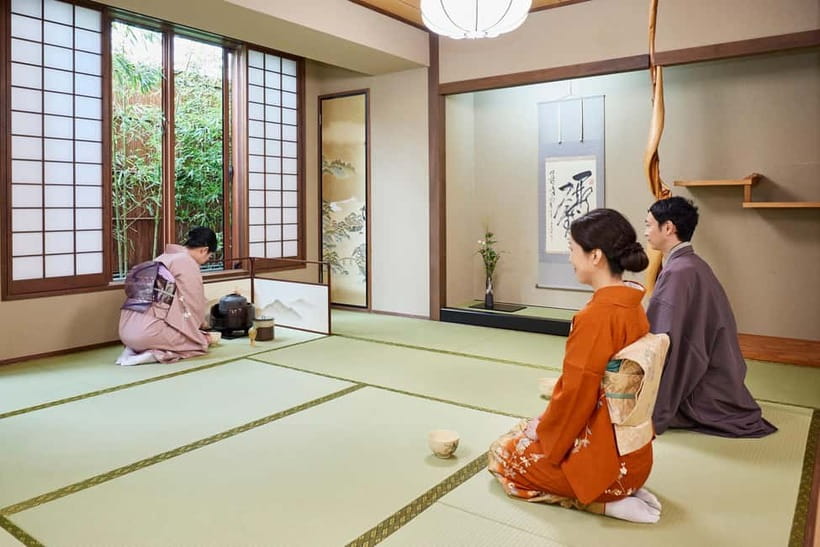
- You choose from many kimono colors and patterns, then match the outfit with an obi and hair accessory.
- The tea lesson is hands-on, so you whisk and prepare your own matcha rather than only watching a demonstration.
- The four ideas of tea ceremony are explained, including harmony, respect, purity, and tranquility.
- Photo time is part of the appeal, with a small garden and indoor setups for portraits and couple pictures.
- You may be able to wear the kimono outside afterward, making the $66 package more useful than a short dressing session.
- Tatami seating and a quiet room shape the experience, so children under seven are not admitted and bamboo chairs must be requested in advance.
What the $66 experience includes
For a cultural activity in central Tokyo, this package gives you several connected experiences rather than one narrow lesson. You are paying for the outfit, the staff time needed to dress you, the tea ceremony, the matcha preparation, the sweet, and English explanations.
That combination matters. Kimono rental alone can be a substantial part of a Tokyo cultural outing, while a tea demonstration can feel brief if you only sit and watch. Here, the clothing creates the visual side of the experience, and the tea ceremony gives it substance.
You also receive hair styling if you are a woman with long hair. This is a useful touch for photographs because the hair arrangement and ornament help the kimono look complete. If you have short hair, the included styling does not apply, so keep that limitation in mind when comparing the price with other dressing packages.
The activity does not include transportation to the venue or a meal. The wagashi is a traditional sweet, not a substitute for lunch. Plan to eat before or after, especially if you are scheduling this around a full day in Asakusa.
More Kimono and Tea Ceremonies in Tokyo
- Kimono Tea Ceremony at Tokyo, Asakusa Maikoya
★ 5.0 · 638 reviews - Tokyo: Matcha and Kimono Experience
★ 4.7 · 219 reviews - Tokyo: Asakusa Kimono Dressing and Matcha Experience
★ 4.9 · 173 reviews
Choosing a seasonal kimono in Asakusa
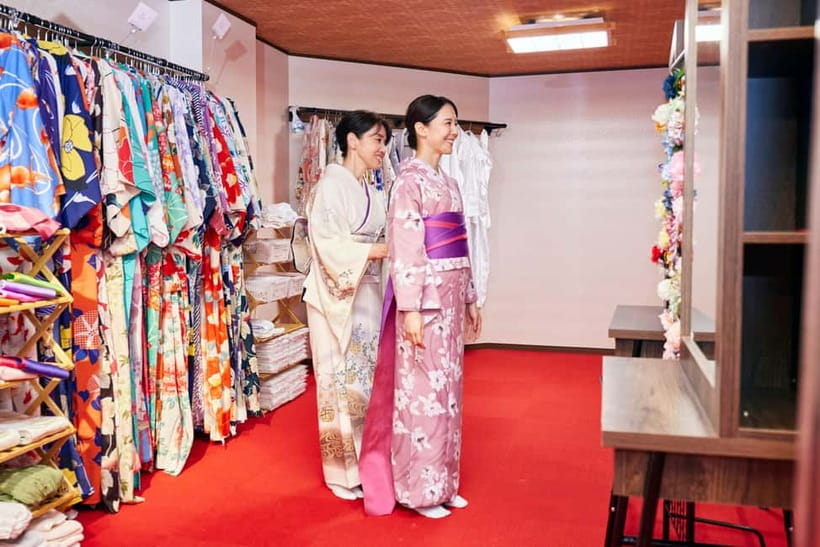
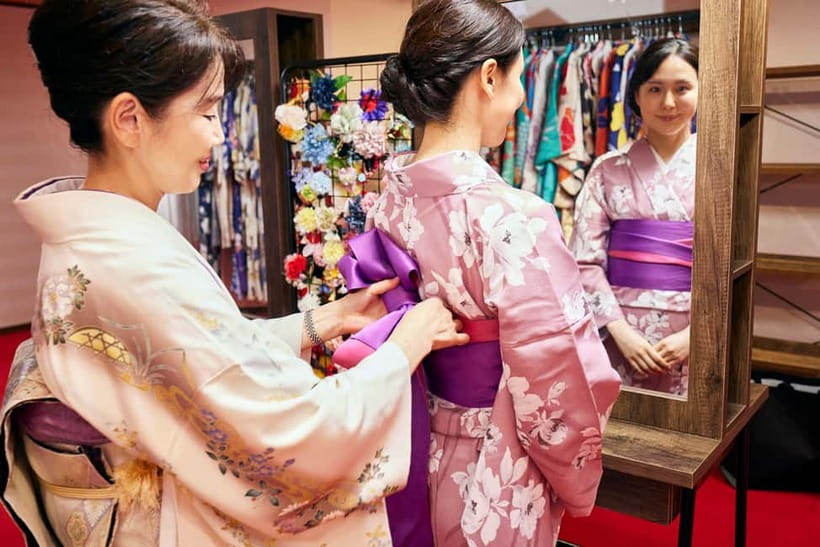
The first part is the dressing experience. You select a kimono from a range of colors and prints, with staff helping you coordinate the obi and hairpiece. This is not a hurried costume handoff. Dressing a kimono involves several layers and careful wrapping, which helps you understand why the final outfit feels so structured.
Give yourself a moment to decide on color. If you already know which shades suit you, selection will be easier. If not, staff can help you compare the kimono with the obi and accessories. The strongest outfits are usually balanced rather than overloaded with matching color.
For couples, the reveal can be a memorable part of the session. You do not simply put on an outfit for a single posed photograph. You see your companion dressed as well, then continue into the tea room together.
Women with long hair receive styling to match the kimono. This has been one of the most warmly praised elements of the experience, especially for solo visitors who want a finished look without arranging a separate salon appointment. Staff can also help with photographs later, which is particularly useful if you are traveling alone.
Inside the quiet tea room
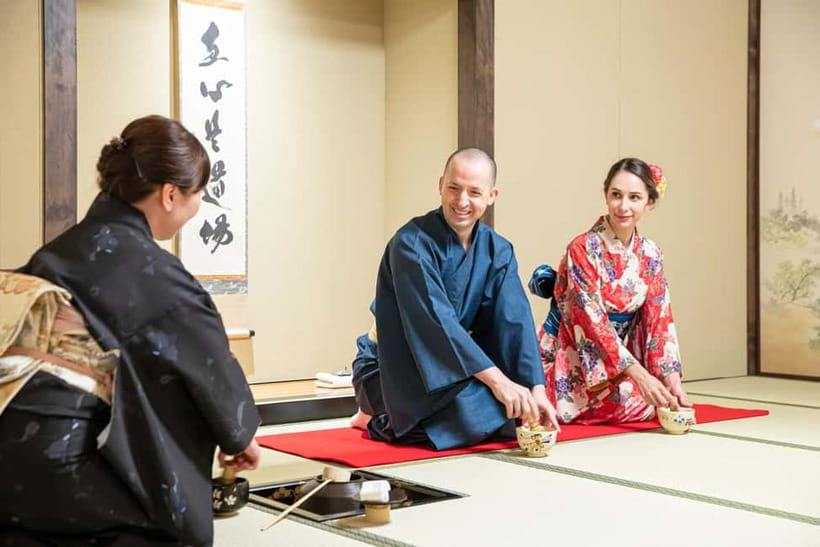
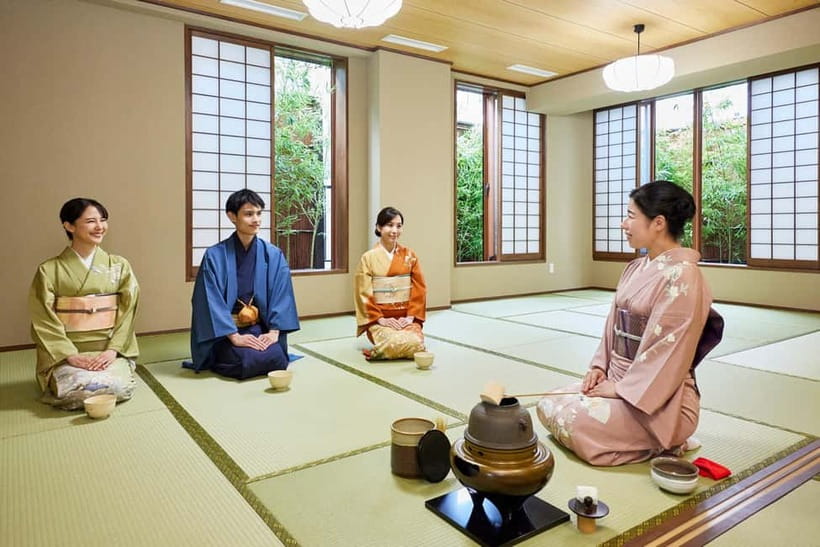
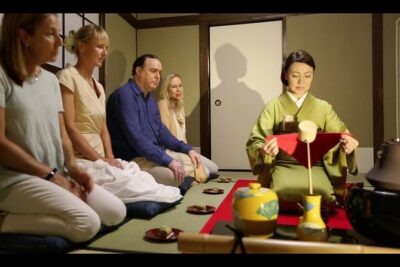
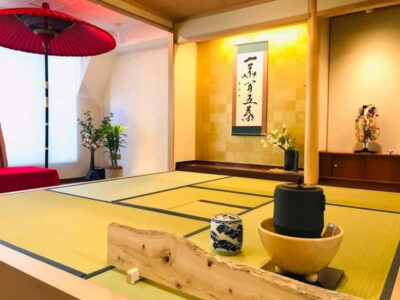
Once dressed, you enter a serene tea room and remove your shoes. The atmosphere is calm and deliberate, so this is not a loud entertainment show. You are expected to listen, watch the movements, and follow the instructions.
The tea host explains four principles connected with the ceremony:
- Wa, or harmony
- Kei, or respect
- Sei, or purity
- Jaku, or tranquility
These ideas give context to the gestures. You begin to see that the ceremony is not only about making green tea. The careful handling of utensils, the order of movements, and the attention given to the guest all help create a peaceful shared moment.
The host demonstrates how the tools are handled and how matcha is prepared. Some utensils are cherished objects, so the demonstration also shows the care placed on materials and presentation. English guidance is provided throughout, and the instructor language is English.
The quality of the explanation depends partly on the host leading your session. Mia has been praised for clear and respectful explanations, while Wakana has been described as friendly and well informed. Yoko and Kyoko have also received praise for making the lesson lively and easy to follow. Staff may adjust their explanations to the people in the room, and at least one session included some Japanese when the participants understood it.
Whisking your own matcha
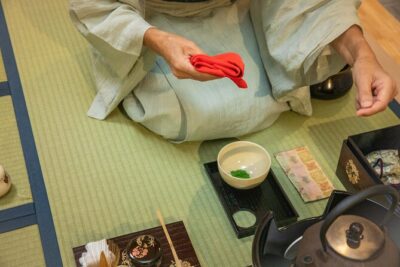
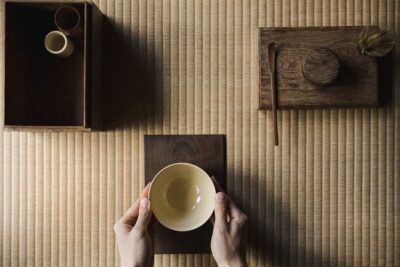
The best part for many people is making the tea yourself. After watching the host, you receive the chance to whisk your own bowl of matcha. This turns a formal ritual into something you can understand through your hands.
You will notice that the process is more exact than stirring an ordinary drink. The whisk, bowl, and movements each have a place in the preparation. The finished tea has a distinct flavor that can be unfamiliar if you usually drink sweetened beverages.
The activity keeps this portion approachable. You do not need prior tea knowledge, and the host guides you through each step. If you are nervous about making a mistake, that is part of the fun. The point is to pay attention and take part, not to perform like a tea master.
The pace is also important. You are not rushed through a quick sip before moving to the next attraction. The quiet setting lets you notice the sound and motion of whisking, then appreciate the tea once it is ready.
More Matcha Experiences in Tokyo
- Matcha Making Class in Tokyo with Authentic Japanese Sweets Set
★ 5.0 · 744 reviews - Tokyo: Matcha Making Experience with Mochi Sweets in Asakusa
★ 4.9 · 388 reviews - Asakusa Cultural Walk & Matcha Making Tour
★ 5.0 · 245 reviews - Make Traditional Nerikiri Sweets & Matcha experience in Shibuya
★ 5.0 · 130 reviews
Wagashi and the meaning of seasonal sweets
Your matcha is served with wagashi, a traditional Japanese sweet selected to reflect the season. Wagashi are often valued for their shape, color, and presentation as well as their taste, so they provide a small lesson in Japanese attention to detail.
The sweet balances the stronger taste of matcha. Some people find unsweetened matcha bitter at first, and the wagashi makes the pairing easier. One useful point for plant-based diners is that the sweets have been suitable for vegan participants in at least some sessions, but the activity does not provide a broader meal.
This is a small serving, not a dessert course. Think of it as part of the ceremony and not as a food-focused stop.
Photo time, garden settings, and wearing the kimono afterward
The experience includes time for photographs after the ceremony. There is a small garden and several indoor setups, giving you more variety than a single plain backdrop. Staff may help take pictures, including couple portraits and photos for solo participants.
This assistance makes a real difference. You can enjoy the moment without relying entirely on a phone timer or asking strangers to frame the shot. The outfit, styled hair, tea room, and garden create a useful set of memories from one short activity.
You may also be allowed to continue wearing the kimono for a while after the ceremony and go sightseeing nearby. This is one of the package’s strongest practical advantages, but confirm the exact return arrangement when you arrive. The option works best if you plan to remain close to the venue rather than travel across Tokyo.
Remember that kimono clothing is fitted and restrictive compared with ordinary sightseeing clothes. Walking around nearby can be enjoyable, but a long day of trains, stairs, and fast walking may be tiring. In cold weather, you may prefer to stay indoors after the photos. One winter participant chose not to go outside because of the cold.
Group size, timing, and comfort
The activity lasts about 90 minutes. That is long enough for dressing, the tea lesson, matcha preparation, sweets, and photos, but it is not an all-day cultural course.
The advertised group can include about 12 to 14 people because several booking sources may be combined. That means the room may not always feel private. Some sessions can be much smaller, with only two couples, but you should not book expecting a guaranteed private ceremony.
A larger group may mean more waiting during dressing or fewer uninterrupted photographs. On the other hand, it can make the experience less intimidating if you are new to Japanese customs. The staff are used to helping people who have never worn a kimono or prepared matcha.
Tatami seating is part of the traditional setting. You sit on the floor without shoes, and shoes are not allowed in the activity area. Request a bamboo chair in advance if you need raised seating. Do not wait until arrival, since chairs are available by prior request.
Children under seven are not permitted. Older children may still need to enjoy quiet listening and careful participation, so consider your child’s patience before booking.
Who will enjoy this most
I would recommend this experience to first-time visitors who want a gentle introduction to Japanese culture without committing to a full-day class. It also suits couples looking for photographs with more meaning than a costume rental alone.
Solo visitors are well served because staff can help take photos. The hair styling, kimono selection, and guided ceremony also give a solo participant a clear structure rather than leaving you to manage every detail alone.
It is a strong choice for people interested in Japanese etiquette, design, seasonal customs, and traditional food presentation. You do not need previous knowledge, and the English instruction keeps the ceremony accessible.
I would be more cautious if you dislike quiet activities, floor seating, formal rituals, or fitted clothing. The session is not designed as a loud group show. It rewards patience and attention.
Is the experience good value in Tokyo?
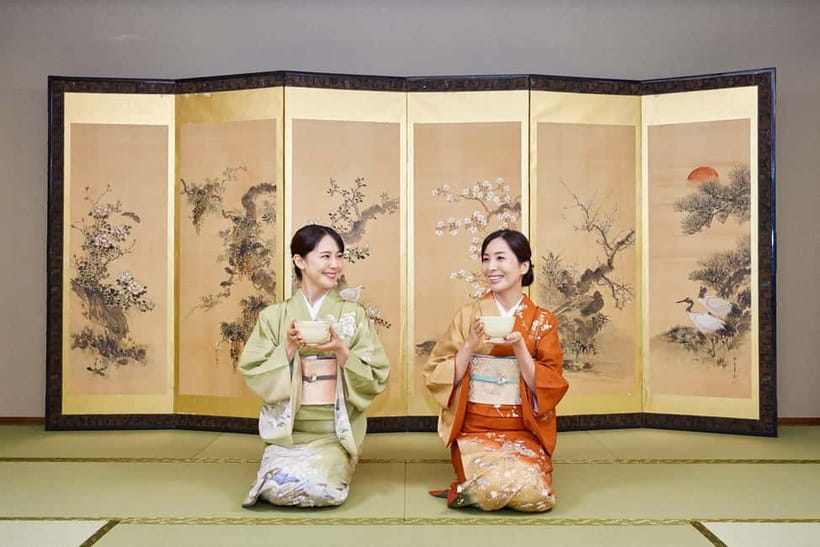
At $66 per person, the package offers good value if you want both the visual pleasure of a kimono and an actual cultural lesson. The professional dressing and hair styling alone make the price more reasonable, while the tea ceremony gives you something to learn and practice.
The value improves if you can wear the kimono for nearby sightseeing afterward. You get more than 90 minutes of use from the rental, along with photographs that staff help create. Still, do not assume the kimono is suitable for a full day across Tokyo. The practical benefit depends on how long you can comfortably wear it and how far you plan to walk.
The value is less strong if you only want a quick picture or if you are mainly seeking a filling meal. This is an experience built around ceremony, clothing, and atmosphere, with one traditional sweet rather than a full menu.
Free cancellation up to 24 hours before the activity and a reserve-now, pay-later option also make it easier to fit into a changing Tokyo schedule. Check the available start times before committing your day.
Should you book the Asakusa kimono tea ceremony?
Book it if you want a polished first taste of Japanese tea culture, enjoy photographs, and appreciate staff who guide you through every step. The combination of kimono selection, hair styling, English instruction, hands-on matcha preparation, wagashi, and photo time is unusually complete for a 90-minute activity.
I would book ahead and request a bamboo chair at the same time if needed. Choose a day when you can keep the rest of your schedule relaxed, and leave room for nearby photos or a short stroll in the kimono.
Skip it if you want a private ceremony, a substantial meal, or a casual activity where you can come and go. For most visitors who want a memorable cultural experience at a sensible Tokyo price, this is a thoughtful choice.
FAQ
How long does the kimono tea ceremony last?
The full activity lasts approximately 90 minutes.
How much does the experience cost?
The listed price is $66 per person.
Is English guidance provided?
Yes. The instructor provides English guidance, and bilingual staff assist throughout the experience.
Does the price include kimono rental?
Yes. The package includes traditional kimono rental and professional dressing.
Is hair styling included?
Hair styling is included for women with long hair.
Can I make my own matcha?
Yes. After watching the demonstration, you can whisk and prepare your own bowl of matcha.
Is food included?
The experience includes seasonal Japanese wagashi sweets. It does not include a full meal or other food.
Do I sit on the floor?
Yes. Seating is on tatami mats, and shoes are not allowed. Bamboo chairs are available if requested in advance.
Can children join the activity?
Children under seven years old are not permitted to participate.
More Tea Ceremonies in Tokyo
- Tokyo: Traditional Tea Ceremony with a Tea Master
★ 5.0 · 528 reviews - Tea Ceremony Workshop in Tokyo by the Experienced Instrucor
★ 5.0 · 189 reviews - Tea Ceremony Experience in a Private Tea Room in Shibuya
★ 4.9 · 125 reviews - Tokyo: Practicing Zen with a Japanese Tea Ceremony
★ 4.7 · 105 reviews
Just added around Tokyo
- Yokohama : Tea Ceremony with Sweets and Souvenir★ 5.0 · 5 reviews
- Walking Tour: Yanaka,Nezu& Sendagi: Tea Ceremony & Old Tokyo★ 5.0 · 3 reviews
- Private Mochi・Matcha sweets Making Class Near Shibuya Area★ 5.0 · 22 reviews
- Private Kimono and tea ceremony at local home near Tokyo Disney★ 5.0 · 6 reviews
- Tokyo Sweets Tour: Hidden Gems & Matcha at an Old Tea House★ 5.0 · 6 reviews
- Kimono and Tea Ceremony in Asakusa Private Food Tour With Guide★ 5.0 · 4 reviews
- 2 Hours Mochi &Nerikiri Making & Matcha Class in Bunkyo★ 5.0 · 21 reviews
- Tokyo Tea Ceremony Class at a Traditional Tea Room★ 5.0 · 2 reviews
Tea Ceremonies in Tokyo, compared.
Tea Ceremony Workshop in Tokyo by the Experienced Instrucor
Read our review →
Tea Ceremony Experience in a Private Tea Room in Shibuya
Read our review →
Tea ceremony experience in Japanese-style room 60min
Read our review →