
Review · OSAKA
Osaka: Traditional Tea Ceremony Experience
Thirty minutes can change your Osaka afternoon. This small tea ceremony gives you a simple way to learn the basics of matcha without committing to a long formal session. I like the use of single-origin matcha, and I like that you prepare the tea yourself rather than only watching an instructor.
The price is another strong point. At about $7 per person, this is an easy cultural stop between sightseeing plans, with Japanese sweets called ohigashi included. The main consideration is communication: the instructor is Japanese, and English help is provided as much as possible rather than guaranteed throughout.
For a short visit, this is a friendly introduction to tea ceremony rather than a full traditional performance. Feedback highlights a patient, humorous instructor and small classes, with one English-speaking experience described as lasting about 30 minutes. You will need to climb stairs because the building has no elevator.
Key points to know before booking
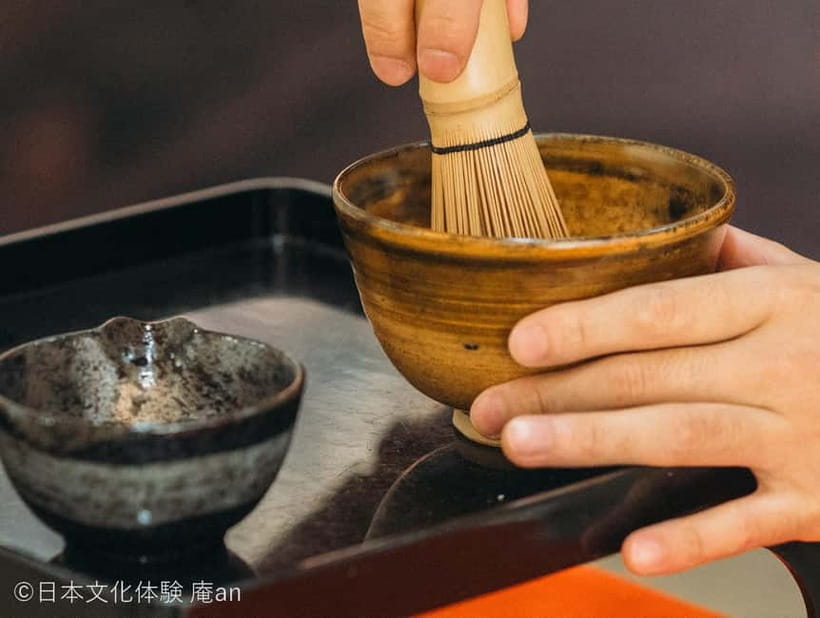
- A hands-on matcha lesson: You prepare your own bowl after a short explanation and grinding demonstration.
- Single-origin tea: The matcha is presented as a special single-origin tea, giving the tasting a clear focus.
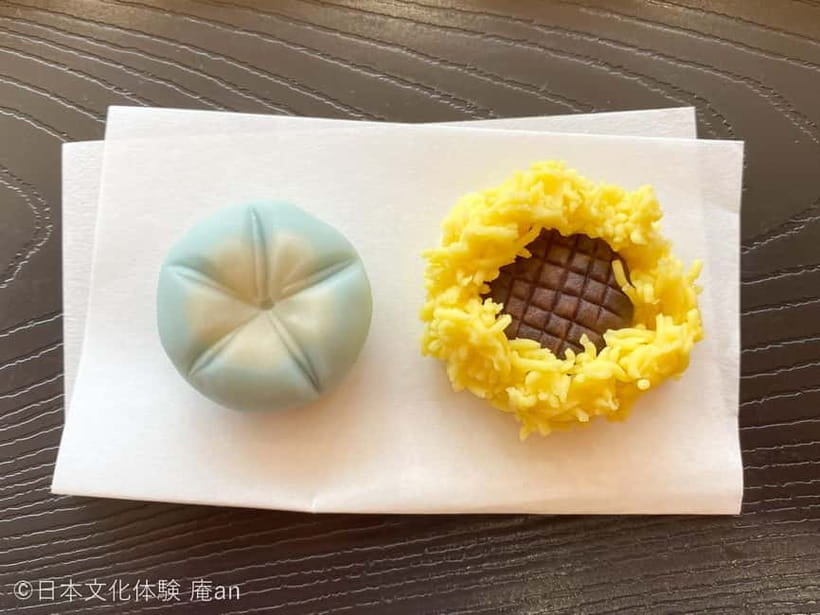
- Ohigashi included: Japanese dry sweets accompany the tea and help balance its bitter flavor.
- A compact Osaka activity: The full visit takes about 30 minutes, making it useful between major sights.
- Central meeting point: The venue is one minute from Exit 10 of Higobashi Station.
- English support varies: The instructor teaches in Japanese, with English translation provided as much as possible.
A short tea ceremony with a hands-on finish
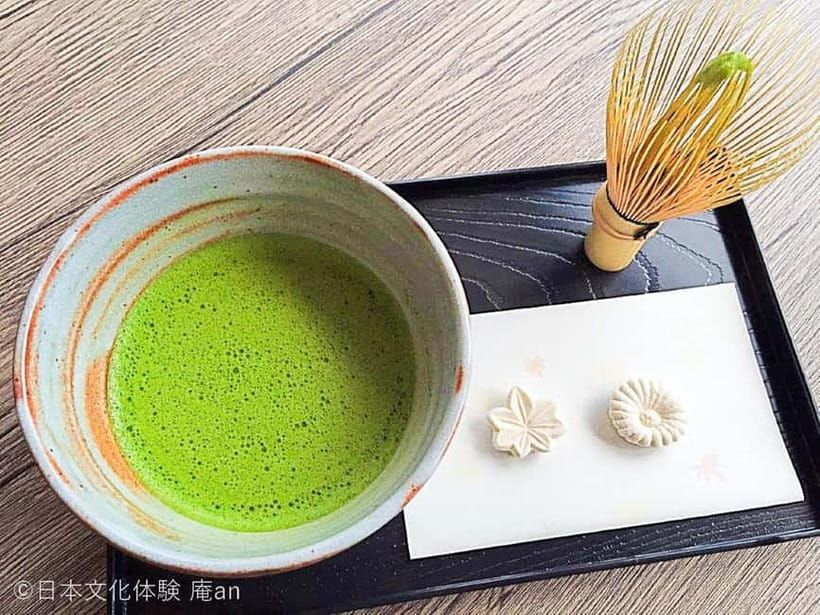
The appeal here is simple. You do not need to set aside half a day, wear special clothing, or commit to a highly formal ritual. You arrive, receive a short introduction, see how matcha is made, prepare your own cup, and have time to drink it with ohigashi.
The planned flow is clear:
- Start with an explanation of tea.
- Watch a matcha grinding demonstration.
- Take part in the tea ceremony.
- Allow time for photographs.
- Finish with eating and drinking time.
- Leave after roughly 30 minutes.
The first 20 minutes cover the main experience. The remaining 10 minutes are for enjoying the tea and sweets. That division matters because it keeps the activity moving, but it also means you should not expect a slow, meditative ceremony lasting an hour or more.
I see this as a good choice for someone who wants a taste of Japanese tea culture without making it the central event of the day. You get enough explanation to understand what you are doing, then enough practical time to take part yourself.
More Tea Ceremonies in Osaka
- Osaka: Tea Ceremony Experience
★ 4.9 · 1,426 reviews - Tea Ceremony Experience in Osaka Doutonbori
★ 5.0 · 754 reviews - Osaka: Tea Ceremony, Calligraphy, and Kimono Experience
★ 4.9 · 130 reviews
Why the single-origin matcha matters
Matcha is not simply green tea served in a bowl. The tea is ground into a fine powder, then whisked with water. That gives it a stronger texture and flavor than ordinary steeped tea. The powder remains in the drink, so the preparation and tasting are closely linked.
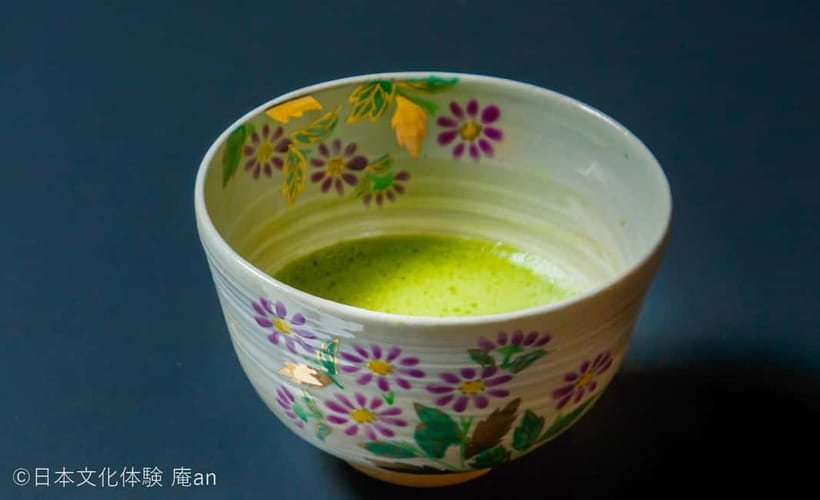
This experience uses a special single-origin matcha. The supplied details do not name the growing region or producer, so you should not expect a detailed lesson in tea farming. Still, the single-origin approach gives the tasting a point of focus. You are not just drinking an unnamed powder. You are trying one particular tea and learning how preparation affects the final cup.
The grinding demonstration adds useful context. You can watch how the tea becomes the fine powder used for matcha, then move into the preparation. That small visual step helps explain why matcha has a distinct taste and why the ceremony pays attention to process.
The included ohigashi, a Japanese dry sweet, is an important part of the tasting. Its sweetness helps balance matcha’s bitter and grassy notes. If you usually find green tea too sharp, eat the sweet as directed during the session and then taste the tea again. The contrast is part of the experience.
What happens during the 30 minutes
The opening explanation introduces the basic ideas behind Japanese tea. Since the instructor is Japanese, the presentation may be mainly in Japanese. English translation is available as much as possible, and one strong account describes the preparation and drinking instructions being explained in English.
That wording is worth taking seriously. You can ask the operator about English support before arrival if clear instructions are important to you. The activity is hands-on, so some steps can be followed by watching and copying, but detailed cultural explanations may depend on the language support available that day.
Next comes the matcha grinding demonstration. This is not listed as a separate long workshop, but it gives you a look at the tea before it reaches your bowl. The demonstration also breaks up the talk and helps younger participants stay interested.
Then you prepare your own matcha. This is the strongest part of the experience for me because it changes the activity from a short lecture into something you actually do. You are not simply handed a cup and told how tea ceremony works. You take part in the process.
A picture period follows the ceremony. It gives you a chance to record the visit without trying to take photos during every instruction. After that, the final 10 minutes are set aside for eating and drinking.
The schedule is compact, so arrive ready to begin. The operator will not hold the event for late arrivals. A missed start could be costly because the experience is short and there is no promise that delayed participants can be added later.
The setting near Higobashi Station
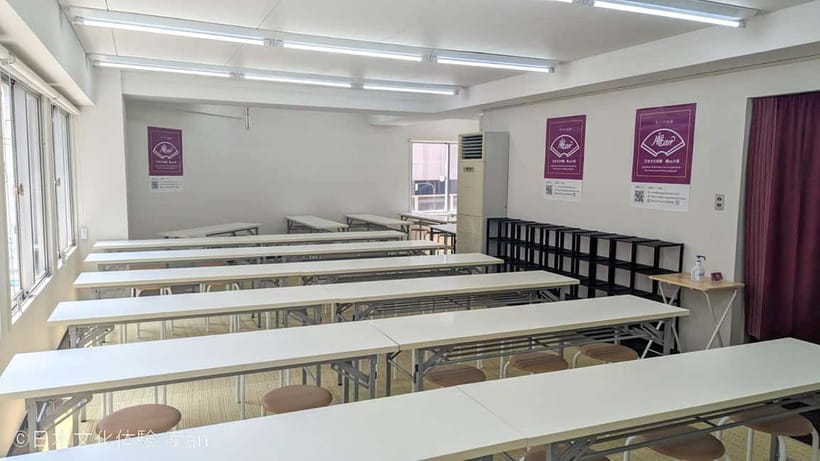
The location is practical for an Osaka sightseeing day. Higobashi Station on the Osaka Metro Yotsubashi Line is the easiest arrival point, with the venue one minute from Exit 10. That makes this a useful stop if you are moving through the business and central Osaka area.
You can also reach it from several nearby stations:
- Watanabebashi Station on the Keihan Nakanoshima Line is about five minutes away from Exit 7.
- Yodoyabashi Station is about seven minutes away from Exit 10.
- Kitashinchi Station on the JR Tozai Line is about 10 minutes away from Exit 11-5.
- Osaka Station is about 15 minutes away from the South Central Gate.
Those walking times make the activity easy to connect with other plans. You might schedule it before lunch, after a visit near Nakanoshima, or during a break from central Osaka shopping and sightseeing.
The building has no elevator, so you must use stairs to reach the venue. This is a practical concern for anyone with mobility limitations, a stroller, or heavy luggage. The operator also asks people who are not taking part not to enter, so everyone in your party should be included in the reservation if they plan to attend.
If you drive, use nearby coin-operated parking. Parking is not included, and the supplied information does not promise a dedicated space.
Same place, a different pot:
- Matcha Making Class in Osaka with Authentic Japanese Sweets Set
★ 5.0 · 509 reviews - Osaka: Matcha Making Experience with Japanese Sweets
★ 5.0 · 146 reviews - Osaka: Japanese Traditional Sweets Making and Tea Ceremony
★ 4.7 · 118 reviews - Osaka Temple Cool Foot Bath & Matcha Experience〈45min〉
★ 4.9 · 82 reviews
How much value do you get for $7?
At around $7 per person, this is one of the easier Osaka activities to fit into a tight budget. The cost includes the tea ceremony experience, your matcha preparation, and the ohigashi sweet. You are paying for instruction and participation, not just a drink at a café.
The short duration helps the value. You can add it to a day of sightseeing without giving up a large part of your schedule. If you are already near Higobashi, the low price makes the decision especially easy.
The tradeoff is depth. A 30-minute session cannot cover every part of tea ceremony, tea history, etiquette, utensils, and regional traditions. If you want a serious study of Japanese tea, you will probably find this too brief. If you want an approachable first taste, the format makes sense.
An experience completion certificate is available for an extra 300 JPY. It is not included, so treat it as an optional souvenir rather than part of the core value. I would only add it if you collect activity certificates or want a small paper reminder of the visit.
The reserve-now-and-pay-later option can also help if your Osaka schedule is still changing. You can secure a place without paying immediately, subject to the booking terms shown at the time of reservation.
The instructor and language question
The instructor is listed as Japanese, and language is the one area where you should set modest expectations. English translation will be provided as much as possible, but it is not presented as a guaranteed fully English session.
That said, the available feedback gives useful encouragement. One English-speaking participant described the teacher as patient and able to explain both how to prepare and how to drink matcha. Another account, from an Austrian participant, praised the presenter’s effort and humor even though the session was in Japanese.
For you, the practical lesson is this: do not cancel the idea simply because the main language is Japanese. The activity includes visual demonstrations and repeated physical steps. Still, contact the operator before booking if you need full English interpretation for every explanation.
The overall rating is 4.2 from eight reviews, which suggests a generally positive experience but not a perfect fit for everyone. The strongest praise centers on the instructor’s attitude, the small class feel, and the clear matcha preparation. Those details matter more here than grand claims about ceremony.
Who will enjoy this most
I would recommend this for first-time visitors who want a manageable introduction to Japanese culture. It also suits solo participants because the activity is designed for one person or a group. You do not need to bring a large party to make the session worthwhile.
Families may find the short timing helpful. Children under two who sit on a parent’s lap are free, while older children need the appropriate booking arrangement. The tea preparation itself may hold attention better than a long seated explanation, though the stairs and language issue are worth considering.
This also works well for anyone who has already planned a full Osaka day. You can place it between attractions instead of building an entire morning around it. The central location near several rail lines makes that especially convenient.
I would be more cautious if you want a highly formal ceremony, a long quiet session, or detailed English instruction. The experience is casual by design. That is its strength for many people, but it is also its limit.
Timing, cancellation, and practical planning
Operating hours are from 10:00 to 17:00. Reservations received after 17:00 are processed the next day, so do not expect a late-night booking request to receive immediate handling.
You can cancel up to 24 hours in advance for a full refund. The reserve-and-pay-later option keeps your plans flexible, but you should still check the exact booking conditions before confirming.
Plan your route carefully because late arrivals are not accommodated. The operator also does not compensate for transportation costs if the activity is canceled, so avoid buying nonrefundable travel arrangements solely to reach this appointment.
I would allow extra time before the start, especially if you are using Osaka Station and walking the full 15 minutes. Higobashi Exit 10 is the simplest route, but train station exits can take longer to find than the map suggests.
Should you book this Osaka tea ceremony?
Book it if you want an inexpensive, short, hands-on introduction to matcha near central Osaka. The single-origin tea, included ohigashi, practical preparation, and praised instructor make this more useful than simply ordering a green tea in a café.
Skip it if you want a long, formal tea ceremony or guaranteed full English instruction. The 30-minute format is an introduction, not an advanced cultural lesson.
For most visitors, the low price makes the risk small. Choose a time when you can arrive early, confirm your language needs, and be ready to climb stairs. If those points work for you, this is a pleasant way to add a little Japanese tea culture to an already busy Osaka day.
FAQ
How long does the tea ceremony experience last?
The full experience takes about 30 minutes. The main ceremony and demonstrations take around 20 minutes, followed by about 10 minutes for eating and drinking.
What is included in the experience?
The booking includes the OTE-MAE Japanese tea ceremony experience, matcha preparation, and Japanese ohigashi sweets.
Is the experience offered in English?
The instructor is Japanese, and English translation is provided as much as possible. Contact the operator before booking if you need detailed English support.
Where is the meeting point?
The venue is one minute on foot from Exit 10 of Higobashi Station on the Osaka Metro Yotsubashi Line. It is also within walking distance of Watanabebashi, Yodoyabashi, Kitashinchi, and Osaka stations.
Is there an elevator in the building?
No. There is no elevator, and you must use stairs to reach the venue.
Can I cancel for a refund?
Yes. You can cancel up to 24 hours before the experience for a full refund. Late arrivals are not accommodated, and transportation costs are not compensated if the activity is canceled.
Just added around Osaka
- Osaka:Zen Tea Ceremony and Foot Bath Experience<45min>★ 5.0 · 7 reviews
- Osaka Japanese Cooking And Matcha Class near Osaka Castle★ 5.0 · 22 reviews
- Osaka: Tea Ceremony, Calligraphy, and Kimono Experience★ 5.0 · 6 reviews
- Nara Deer Park, Uji Matcha, & Hot Spring Full-Day Tour from Osaka★ 4.0 · 21 reviews
- Osaka: Nara, Todaiji, Uji Matcha, and Hot Spring Tour★ 4.0 · 7 reviews
- Craft Sushi and Matcha Ice Cream in Central Osaka (3-Course Meal)★ 5.0 · 2 reviews
- Tea and Calligraphy Session at a Table in Osaka★ 5.0 · 4 reviews
- ZEN therapy | Shiatsu-style massage, EnergyTherapy & Japanese Tea★ 5.0 · 5 reviews
Tea Ceremonies in Osaka, compared.
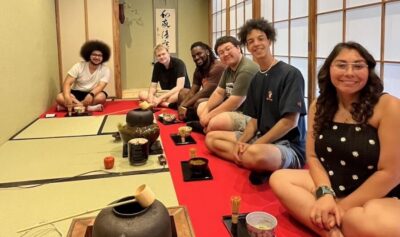
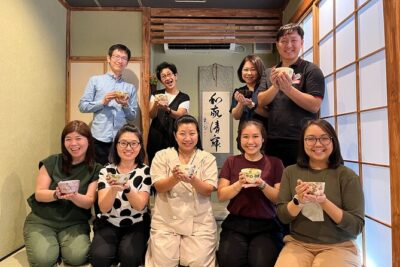
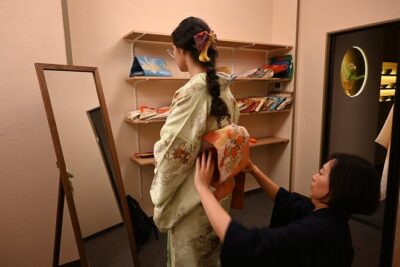
Tea Ceremony, Calligraphy, and Kimono Experience
Read our review →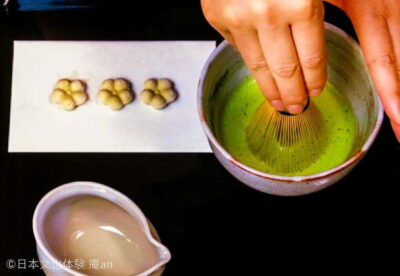
Japanese Traditional Sweets Making and Tea Ceremony
Read our review →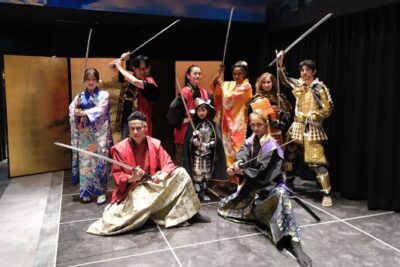
Samurai Show, Tea Ceremony, Japanese Traditional Activities
Read our review →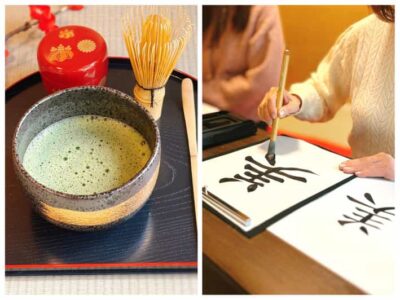
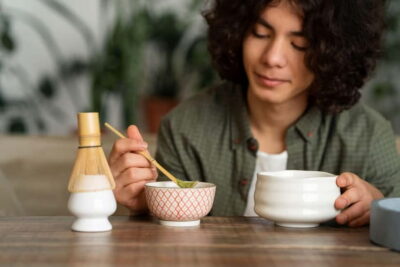
Osaka; Japanese Tea ceremony experience, Macha and Sencha
Read our review →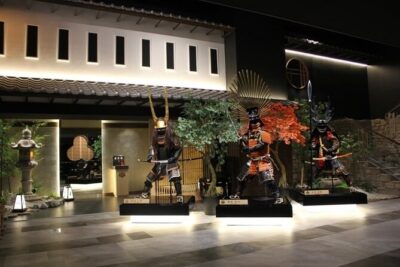
Samurai dress-up and shows, plus Tea Ceremony & Calligraphy
Read our review →Browse the lists this tour appears in