
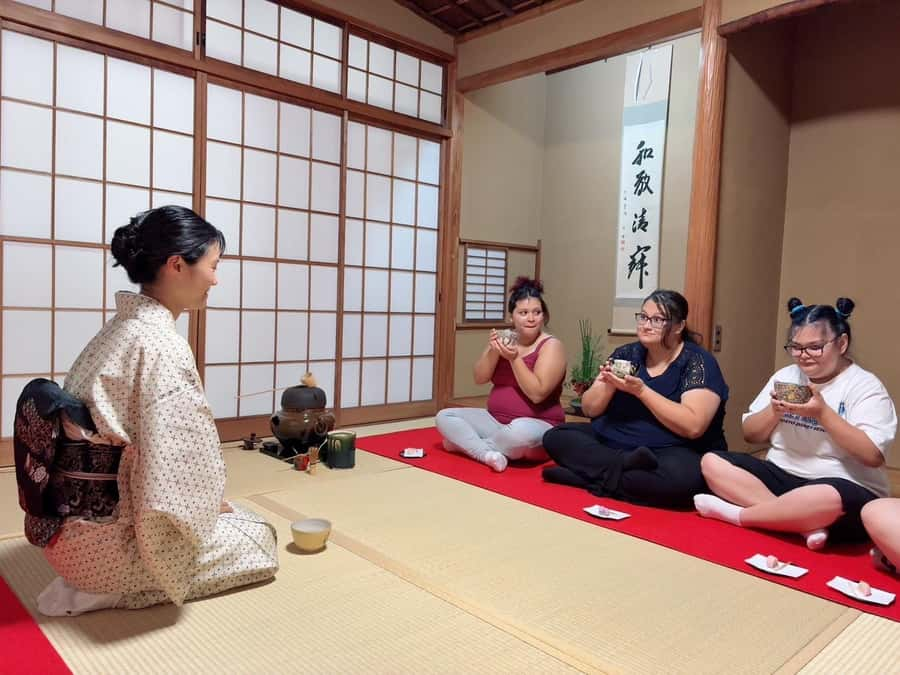
Review · TOKYO
【NEW】Shibuya Tea Ceremony Tokyo-Chaan
Slow down with a bowl of matcha. This Shibuya tea ceremony offers a calm introduction to Japanese tea culture, with English-speaking instructors, a traditional tatami room, and a hands-on chance to prepare your own tea. I especially like the clear English guidance and the fact that you do more than watch: you handle the tea tools and whisk matcha yourself. The seasonal sweets are another fine touch, since they balance matcha’s strong, slightly bitter taste.
The main consideration is that this is a focused cultural activity, not a long sightseeing tour. You will not see several Tokyo landmarks or move around the city. You will spend your time in one room learning the basic steps of tea preparation, which is ideal if you want a quiet break in Shibuya but less suitable if you need constant action.
Key Points At A Glance
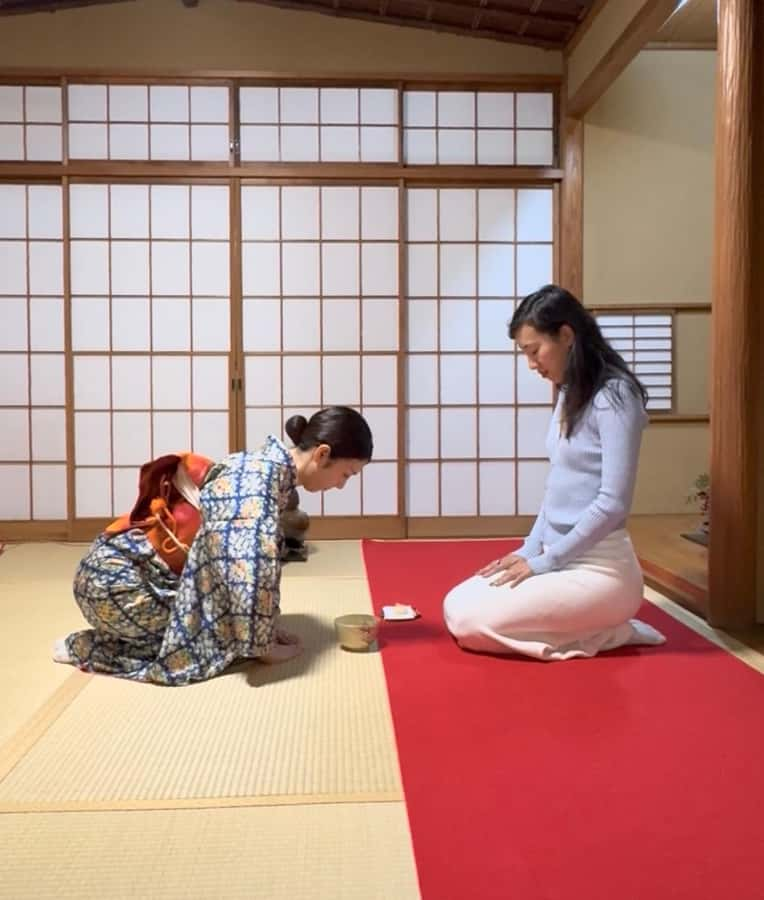
- Hands-on matcha preparation: You make your own bowl of matcha with traditional utensils after watching the demonstration.
- English-speaking instructors: Japanese hosts explain the ceremony, tools, history, and manners in clear English.
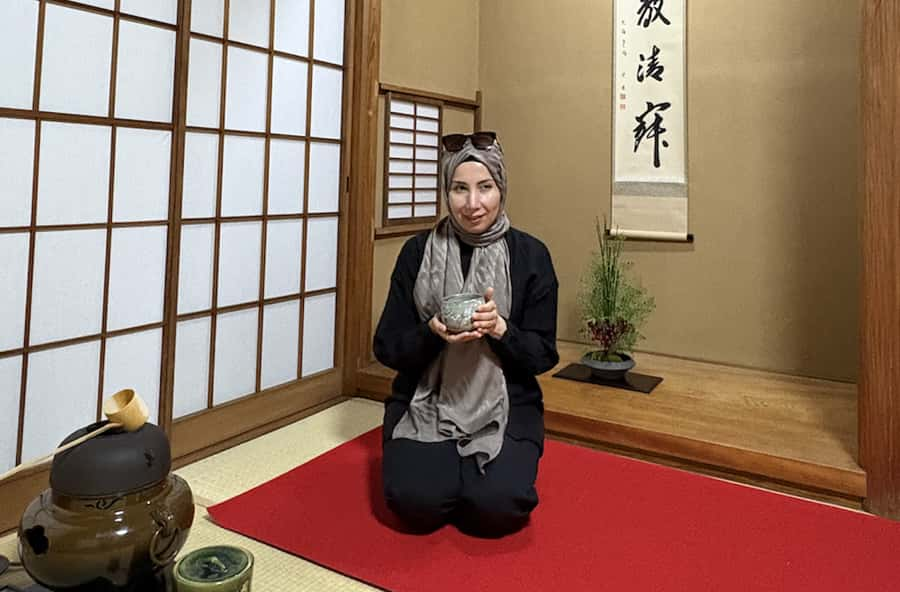
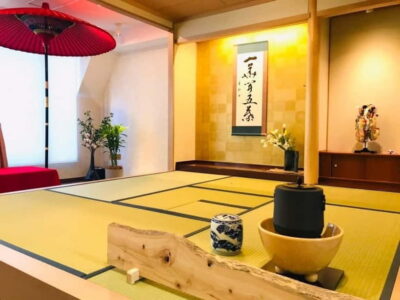
- Traditional tatami setting: The activity takes place in a peaceful Japanese-style room rather than a busy public attraction.
- Experienced tea hosts: The instructors each have more than 10 years of experience with tea ceremony.
- Seasonal sweets included: Japanese confections are served with the matcha and help soften its bold flavor.
- Good value at $18: The price includes entrance, matcha, and confections, with no payment required at booking.
Why This Shibuya Tea Ceremony Works So Well
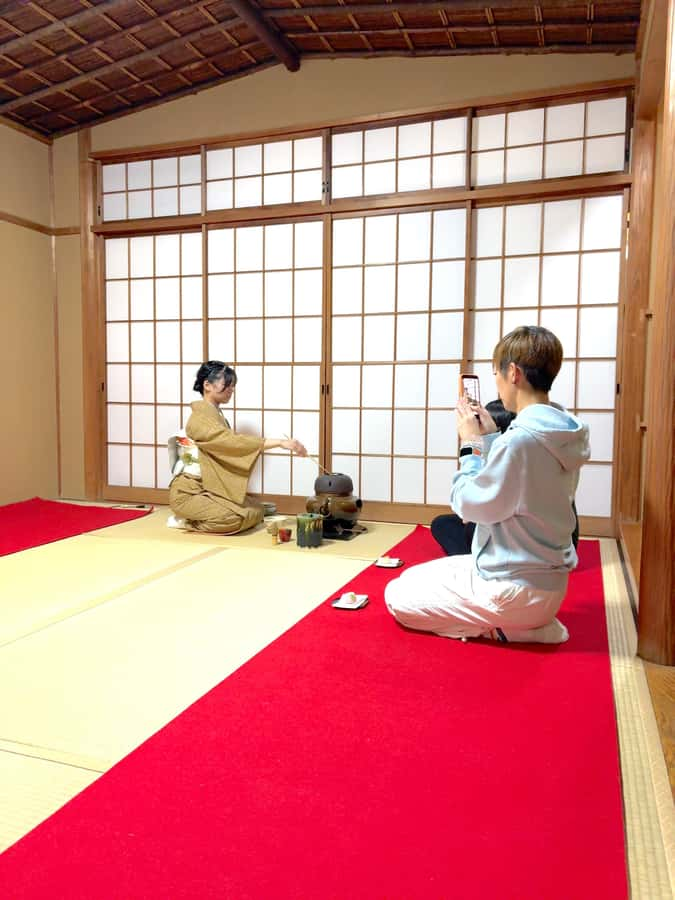
Shibuya is known for bright signs, crowded crossings, shopping, and late-night energy. A tea ceremony gives you a different side of the district. You step into a traditional room, sit on tatami, and pay attention to small movements that are easy to miss in a faster Tokyo visit.
I like this experience because it does not assume you already understand Japanese customs. The instructor explains the meaning and history of the ceremony before asking you to copy any actions. That matters. Without an explanation, tea preparation can look like a series of formal gestures. With context, the tools and movements begin to make sense.
The class is also approachable for first-time visitors. The instructors wear kimono and speak English fluently, so you can ask questions and follow the demonstration without needing prior knowledge. The stated experience level of more than 10 years gives the presentation a solid foundation, though the focus remains friendly and introductory rather than highly technical.
A 5 out of 5 rating from nine reviews supports the strongest points of the activity: the warm teaching, the clear explanations, the tea, and the sweets. Paola specifically praised the instructor’s explanations, while Billie-jean highlighted the history, matcha, and confections. Laura described a session with Sakura sensei and Kini as a favorite part of a Japan trip. Those details suggest that the human side of the class is just as important as the tea itself.
More Tea Ceremonies in Tokyo
- Kimono Tea Ceremony at Tokyo, Asakusa Maikoya
★ 5.0 · 638 reviews - Tokyo: Traditional Tea Ceremony with a Tea Master
★ 5.0 · 528 reviews - Tea Ceremony Workshop in Tokyo by the Experienced Instrucor
★ 5.0 · 189 reviews
Finding The Meeting Point On Dogenzaka
The meeting point is on the second floor of the Manji Building at 1-15-9 Dogenzaka, Shibuya-ku, Tokyo 150-0043. The Japanese address is:
〒150-0043 東京都渋谷区道玄坂1-15-9 万字ビル 2F
You should allow enough time to find the building and reach the second floor, especially if you are unfamiliar with Shibuya’s streets. The activity begins and ends at this same location, so you do not need to arrange a separate return transfer or figure out where the experience finishes.
The fixed meeting point is useful if you are planning this between other Shibuya activities. You can treat it as a compact cultural stop rather than a full-day outing. Since no duration is provided, check the confirmed booking details before arranging a tight schedule afterward.
Welcome And Introduction In The Tatami Room
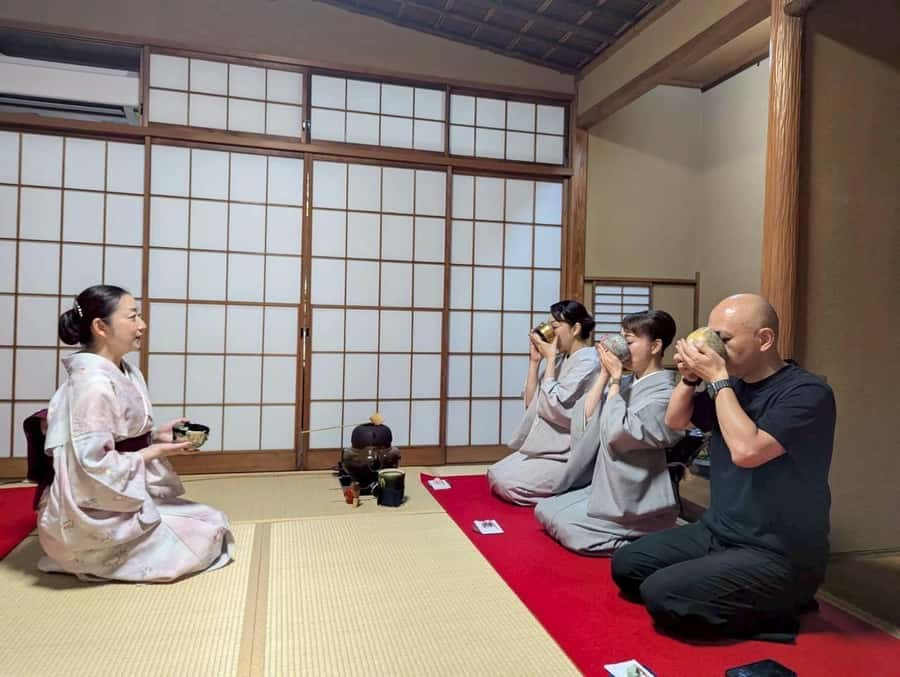
The opening is designed to settle you into the setting. You are welcomed in a traditional Japanese room, where the instructor explains the meaning and history of tea ceremony. This first talk gives you a frame for what follows.
The tatami room is part of the experience, not just a backdrop. Sitting in a traditional space helps you notice the contrast between Shibuya outside and the quiet, deliberate rhythm inside. You will want to approach this part with patience. The value comes from listening, watching, and letting the ceremony unfold at its own pace.
The introduction should also help with etiquette. Japanese tea ceremony has its own manners around serving, receiving, and drinking tea. You are not expected to arrive already knowing them. The instructor explains the basic points so you can take part without worrying about making a mistake.
This makes the activity a good choice for families with older children, couples, solo visitors, and anyone who wants a gentle cultural experience. Children under four cannot participate, and every child aged four or older needs a ticket. If you are traveling with a child under four, contact the provider before booking, since entry may be refused.
Watching The Otemae Demonstration
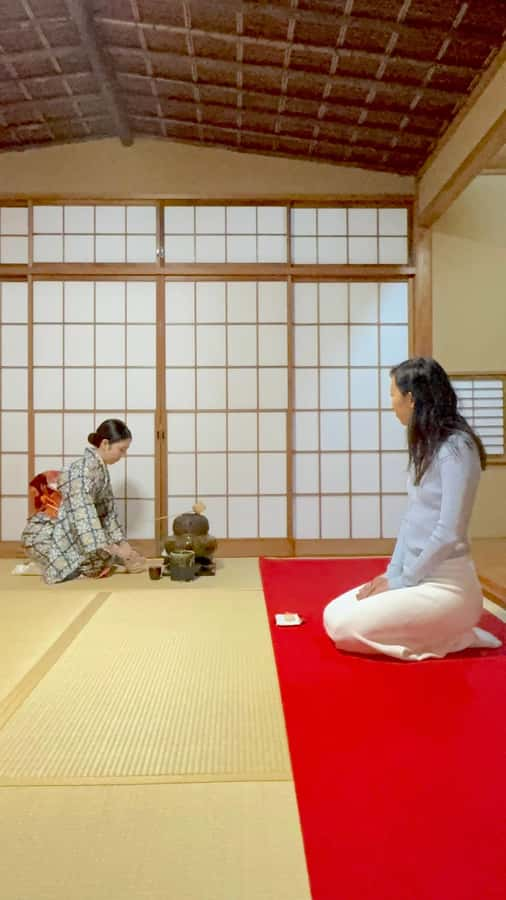
The next stage is the live tea ceremony demonstration, known as Otemae. The instructor shows how the tea tools are used and explains the basic manners connected with serving tea. Watching first is important because it lets you see the full rhythm before you try it yourself.
Look for the care given to each tool and movement. The ceremony is not simply a way to prepare a drink. It places value on attention, hospitality, order, and respect for the person sharing the tea. Even a short demonstration can show why the process has such a strong place in Japanese culture.
The instructors’ long experience should be especially useful here. Beginners may not notice why a particular utensil is handled in a certain way or why the order matters. An experienced teacher can point out those details in plain English instead of leaving you to guess.
I would pay close attention during this section, even if your main interest is making the matcha yourself. The demonstration gives you a better chance of using the tools comfortably when your turn arrives. It also helps you appreciate the ceremony as a cultural practice, rather than treating it as a quick lesson in whisking green tea.
Same place, a different pot:
- Matcha Making Class in Tokyo with Authentic Japanese Sweets Set
★ 5.0 · 744 reviews - Tokyo: Matcha Making Experience with Mochi Sweets in Asakusa
★ 4.9 · 388 reviews - Asakusa Cultural Walk & Matcha Making Tour
★ 5.0 · 245 reviews - Mt. Fuji & Lake Kawaguchiko Ropeway Panorama Full-Day Tour
★ 4.6 · 236 reviews
Making Your Own Matcha With Traditional Tools
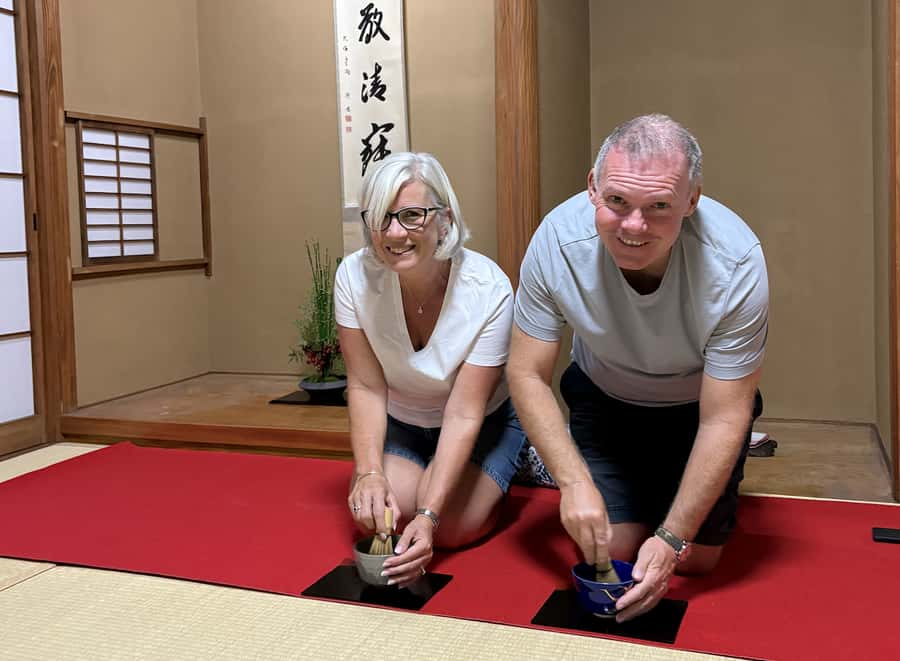
After the demonstration, you prepare your own bowl of matcha. You use traditional utensils and freshly ground powdered tea, following the instructor’s guidance. This is the part that turns the experience from a performance into a class.
Making matcha requires care. You will handle the utensils, combine the powder with water, and work toward the smooth drink associated with Japanese tea ceremony. The supplied details do not specify the exact length of this hands-on portion or the size of the group, so you should expect instruction rather than a private masterclass.
The advantage of doing the work yourself is simple: you remember the process. A demonstration can be beautiful, but it can also remain at a distance. Once you hold the tools and prepare the tea, you understand more clearly how much control and attention go into the final bowl.
Do not worry about producing a perfect result on your first attempt. The instructors are there to guide you, and this is presented as an introduction. Focus on following the steps and noticing how the tea changes as you prepare it.
Matcha And Seasonal Sweets
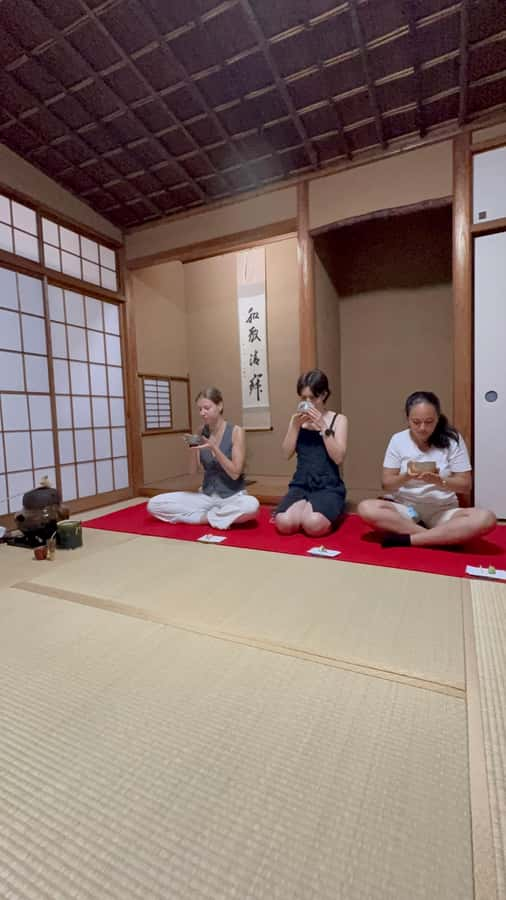
Once your tea is ready, you drink it with a seasonal Japanese sweet. The confections are included in the $18 price, along with the matcha and entrance fee. That makes the cost easy to understand, with the main elements of the visit covered upfront.
Matcha has a strong flavor that can surprise people who are used to ordinary green tea. It can taste earthy, grassy, and slightly bitter. The sweet served alongside it is not an extra decoration. It helps balance the tea and gives you a more traditional tasting experience.
This pairing was one of the most praised parts of the class. Billie-jean described both the tea and sweets as delicious, while Paola found the entire lesson interesting and well explained. I like that the tasting comes after the preparation, since you have a better sense of what went into the bowl.
The seasonal element also gives the experience a connection to the time of year. The exact confection is not specified, so you should not book expecting a particular sweet. Instead, treat the changing selection as part of the appeal.
Is $18 Good Value In Tokyo?
At $18 per person, this is an inexpensive way to add a traditional cultural activity to a Tokyo itinerary. The price includes the entrance fee, matcha, and confections. You also receive instruction from English-speaking Japanese tea hosts with more than 10 years of experience.
The value is strongest if you want participation rather than a museum-style introduction. You are not only observing a ceremony. You receive an explanation, watch a full demonstration, use authentic tea tools, prepare matcha, and taste it with a seasonal sweet.
The price may feel less compelling if you are looking for a long experience with extensive sightseeing or a private lesson. No sightseeing stops, transport, or additional meals are included. This is a compact activity built around one cultural tradition.
The option to reserve and pay later is useful if your Tokyo plans are still shifting. You can hold a place without paying anything today. Cancellation is allowed up to 24 hours in advance for a full refund, which gives you some protection if your schedule changes.
Who Should Book This Experience?
I would recommend this tea ceremony to first-time visitors who want an easy way into Japanese culture. You do not need to know tea etiquette in advance, and the English instruction removes much of the uncertainty that can make a formal activity feel intimidating.
It also suits anyone who needs a quieter part of a Shibuya day. After time among shops, signs, and crowds, a tatami room and a slow bowl of tea can provide a welcome change of pace. The activity is also a good match for solo visitors because the teaching gives the visit a clear structure.
Families can consider it for children aged four and above, provided every child has a ticket. The setting is calm and the activity is hands-on, but younger children may find the formal pace difficult. Children under four are not permitted.
Couples may appreciate the shared ritual and seasonal sweets, while food and culture enthusiasts will enjoy learning how matcha is prepared rather than simply ordering it at a café. If you already have advanced tea ceremony training, this class may feel basic. It is meant to introduce the art, not provide specialist instruction.
Practical Details Before You Go
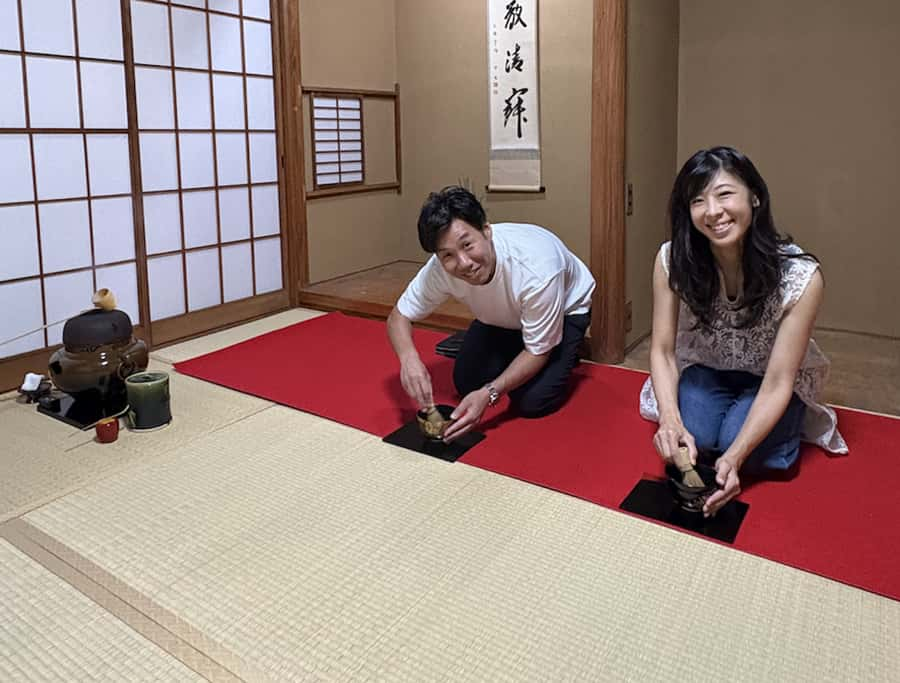
The experience is conducted in English. The Japanese instructors wear kimono and explain the ceremony, tools, manners, and preparation steps in fluent English. The activity begins and ends at the second-floor meeting point in the Manji Building on Dogenzaka.
The provider is The Osaka&Tokyo. The experience is listed at $18 per person. Entrance, matcha, and confections are included.
No duration or group size is provided, so I would avoid booking another time-sensitive activity immediately afterward. The safest plan is to leave some breathing room around the tea ceremony, particularly if you are still learning your way around Shibuya.
Remember the age rule before you reserve. Children under four cannot enter. Children aged four and older need their own tickets, even when accompanying a ticketed adult.
Should You Book Tokyo-Chaan?
Book this if you want a low-cost, clearly guided introduction to Japanese tea ceremony in a traditional setting. The strongest reasons are the English-speaking instructors, the chance to make matcha yourself, the seasonal sweets, and the calm tatami room.
Skip it if you need a packed sightseeing program, a long tour, or an advanced lesson. This is a focused cultural activity, and that is its strength. At $18, it offers a genuine taste of Japanese hospitality without taking over your day. For many first visits to Tokyo, that is exactly the right size.
FAQ
Where does the tea ceremony take place?
It takes place on the second floor of the Manji Building at 1-15-9 Dogenzaka, Shibuya-ku, Tokyo 150-0043, Japan.
Where does the activity end?
The experience ends back at the meeting point.
What language is used during the experience?
The activity is conducted in English.
Who leads the tea ceremony?
Japanese instructors lead the ceremony. They wear traditional kimono, speak English fluently, and each have more than 10 years of tea ceremony experience.
What happens during the tea ceremony?
You receive an introduction to the meaning and history of tea ceremony, watch an Otemae demonstration, learn about tea tools and manners, then prepare and taste your own matcha.
Is matcha included?
Yes. Matcha is included in the entrance price.
Are Japanese sweets included?
Yes. Seasonal Japanese confections are included and are served with the matcha.
Can children participate?
Children under four cannot participate. Children aged four and older can participate, but each child must have their own ticket.
Can I cancel for a full refund?
Yes. You can cancel up to 24 hours in advance for a full refund.
Just added around Tokyo
- Yokohama : Tea Ceremony with Sweets and Souvenir★ 5.0 · 5 reviews
- Walking Tour: Yanaka,Nezu& Sendagi: Tea Ceremony & Old Tokyo★ 5.0 · 3 reviews
- Private Kimono and tea ceremony at local home near Tokyo Disney★ 5.0 · 6 reviews
- Private Mochi・Matcha sweets Making Class Near Shibuya Area★ 5.0 · 22 reviews
- Tokyo Sweets Tour: Hidden Gems & Matcha at an Old Tea House★ 5.0 · 6 reviews
- Kimono and Tea Ceremony in Asakusa Private Food Tour With Guide★ 5.0 · 4 reviews
- 2 Hours Mochi &Nerikiri Making & Matcha Class in Bunkyo★ 5.0 · 21 reviews
- Tokyo Tea Ceremony Class at a Traditional Tea Room★ 5.0 · 2 reviews
Tea Ceremonies in Tokyo, compared.
Tea Ceremony Workshop in Tokyo by the Experienced Instrucor
Read our review →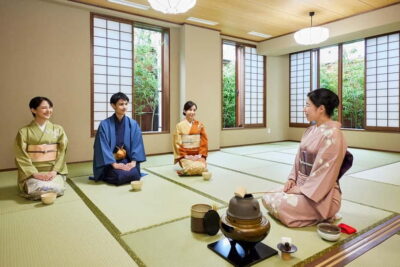
Asakusa: Kimono Tea Ceremony with Matcha and Sweet
Read our review →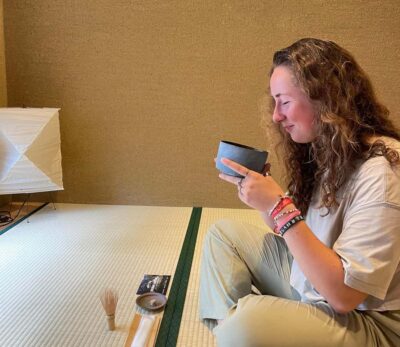
Tea Ceremony Experience in a Private Tea Room in Shibuya
Read our review →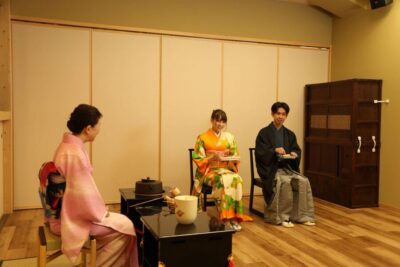
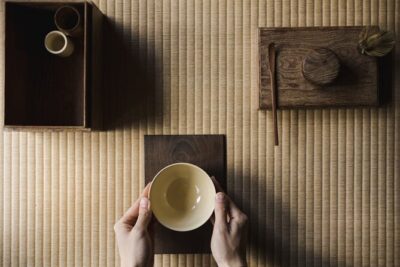
Tea ceremony experience in Japanese-style room 60min
Read our review →Browse the lists this tour appears in