
Review · KYOTO
Kyoto Gion Tea ceremony & Wabi-sabi Walking Tour
Tea makes Kyoto feel different. This 3.5-hour walk links Gion’s old streets, Zen temples, pottery, art, and matcha into one small-group experience. I like the thoughtful route and the way the tea ceremony comes after the walking, so the ideas have time to sink in. I also like that the group is limited to seven people.
The main caution is timing. The tour starts promptly, and one booking issue left a participant with the wrong start time and only 90 minutes of the experience. Check your meeting time carefully, then arrive early. The walking also includes places that are not suitable for wheelchairs or strollers.
Key points to know before booking
- The tea ceremony is the destination, but the walk gives it meaning. You first encounter temples, tea tools, pottery, paintings, and Zen gardens before sitting down for matcha.
- Kenninji is a major early stop. You visit Kyoto’s oldest Zen temple and hear how Zen thought shaped Japanese tea culture.
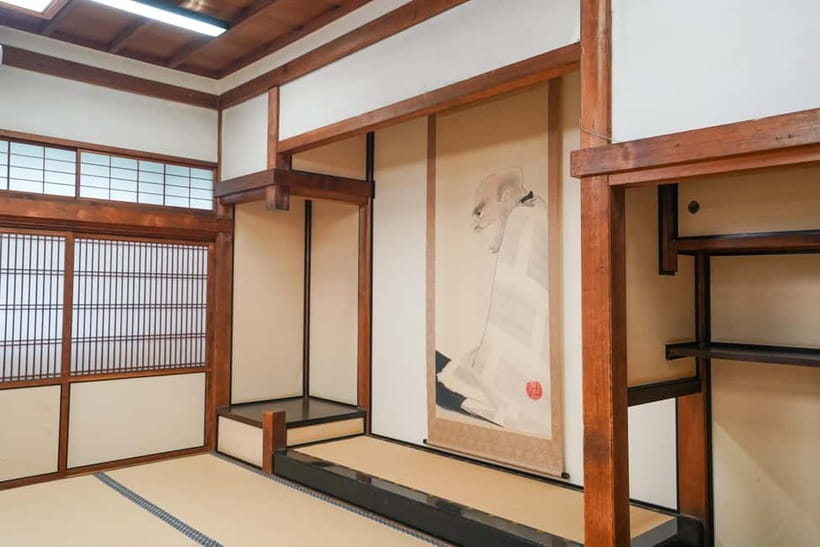
- Wabi-sabi is taught through objects and places. Tea bowls, Japanese paintings, a dry garden, and quiet temple spaces make the idea easier to grasp than a classroom explanation.
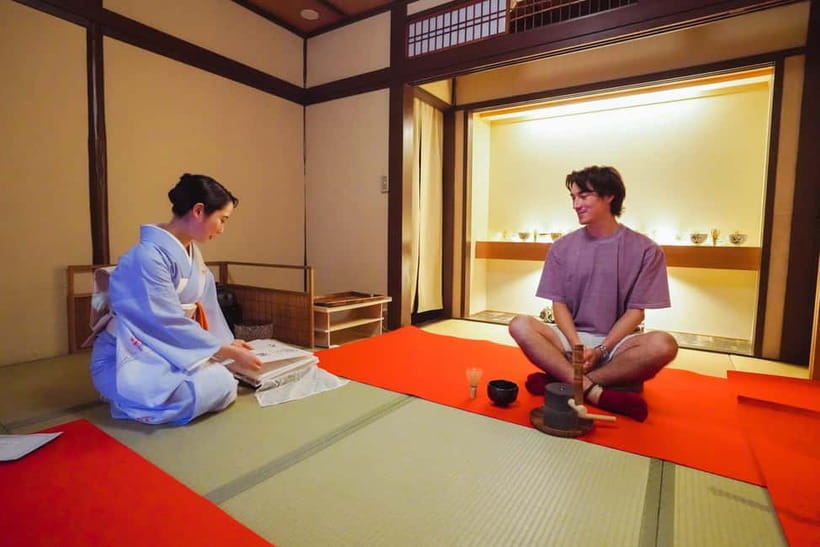
- You choose a seasonal tea bowl. At the final ceremony, the bowl is selected according to the season and your taste, followed by matcha and a small Japanese sweet.
- Masa has made a strong impression as a guide. His explanations, friendly manner, and help with temple and shrine stamp books have been singled out as highlights.
- The price is reasonable for a small-group cultural tour. At $92 per person, it includes two temple admissions, the ceremony, snack, English guide, and tour photos.
Why this Gion walk works better than a stand-alone tea ceremony
A tea ceremony can be lovely on its own, but without context, you may focus only on the whisking, the bowl, and the taste of matcha. This tour takes a slower route to the same moment. You walk through central Kyoto first, looking at the objects and spaces that give the ceremony its ideas.
The central concept is wabi-sabi. In simple terms, it points toward beauty found in simplicity, age, restraint, imperfection, and the natural character of an object. The tour presents this idea through Japanese art and architecture rather than asking you to memorize a definition.
That approach is useful because tea culture is not just about drinking green tea. The bowl, the room, the seasonal sweet, the movements of the host, and the way you pay attention all matter. Your guide explains these elements as you go, then the final ceremony gives you a chance to notice them for yourself.
The format also suits people who want more than a quick photo opportunity. You are not simply handed a cup of matcha and sent on your way. You get a guided walk, temple visits, art, a pottery stop, and time with a tea master.
More Tea Ceremonies in Kyoto
- Kyoto: Tea Ceremony in a Traditional Tea House in Kiyomizu
★ 4.9 · 3,519 reviews - Kyoto: Tea Ceremony Ju-An at Jotokuji Temple
★ 4.9 · 3,207 reviews - Kyoto: 45-Minute Tea Ceremony Lesson Experience
★ 4.3 · 2,378 reviews
Starting at Gion-Shijo Station and finding the meeting point
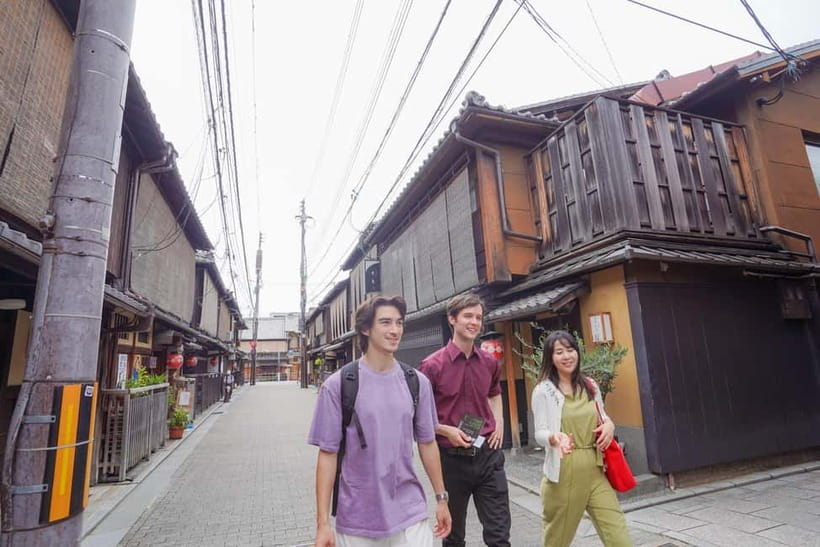
The tour begins outside Exit 5 of Gion-Shijo Station on the Keihan Line. Look for the Izumo no Okuni statue and a guide holding an orange Magical Trip signboard. This is a useful meeting point in a busy part of Kyoto, but you should still allow extra time to find the correct exit.
Gion has plenty to distract you, especially if this is your first visit. That is part of its charm, but it is also why arriving early matters. The tour does not wait for late arrivals, and a missed start means no joining later, refund, or rescheduling under the stated conditions.
The first roughly 30 minutes are spent in Gion. Your guide introduces the historic district and begins connecting the area to tea culture. The exact route can vary, so think of this as an orientation walk rather than a fixed sightseeing checklist.
The small group helps here. With no more than seven participants, you can hear explanations more easily and ask questions without holding up a large crowd. The trade-off is that availability may be limited, particularly during busy periods.
Kenninji: Kyoto’s oldest Zen temple
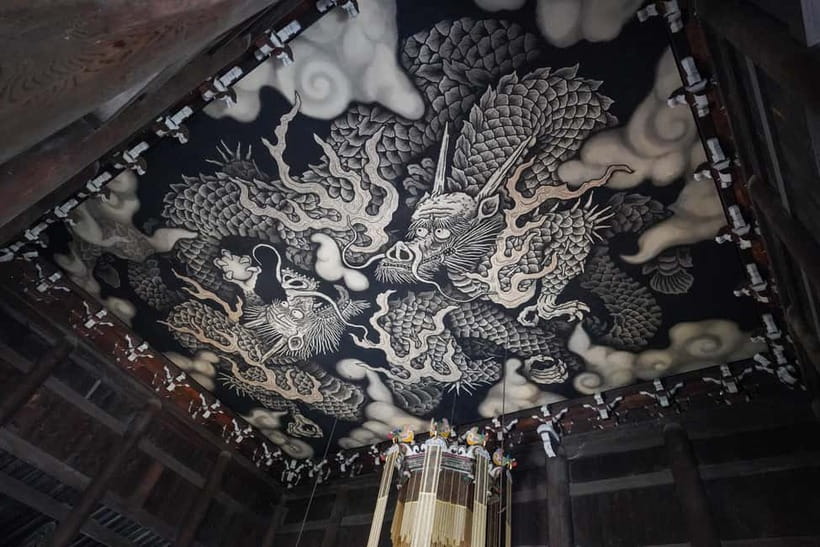
Kenninji is one of the tour’s most important stops. It is described as Kyoto’s oldest Zen temple, and it gives the tea ceremony a strong historical setting. You spend about 30 minutes visiting the temple with your guide.
This is where the tour begins to move beyond surface-level sightseeing. Your guide explains the connection between Zen practice and the tea ceremony, helping you see why calm attention, simplicity, and careful movement matter so much in tea culture.
Kenninji also gives you a chance to consider how Japanese religious and artistic traditions meet. You may see temple art and spaces that make the idea of quiet beauty easier to understand. The point is not to rush through a famous building, but to observe how the surroundings prepare you for the ceremony later.
The visit is brief enough to fit into a half-day plan, though art and temple lovers may wish for more time. If you like lingering over every painting or garden view, the 30-minute stop may feel short.
Small Higashiyama stops with a clear purpose
After Kenninji, the route continues through Higashiyama Ward. Several stops last around 10 minutes each, and they are best understood as short lessons rather than major sightseeing attractions.
One stop introduces a famous matcha shop. This places the tea you will later drink within Kyoto’s wider tea culture. You can expect an explanation of matcha and its place in Japanese life, rather than a long shopping session.
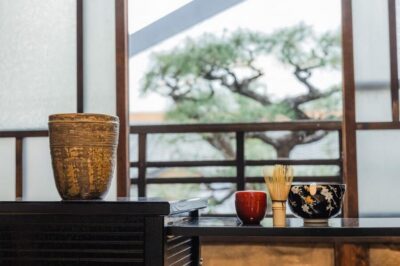
Another stop focuses on tea ceremony tools and pottery. You will see wabi-sabi tea bowls at a traditional pottery shop, where the character of each object becomes part of the discussion. A bowl may have an uneven shape, a restrained glaze, or visible signs of the maker’s hand. Those details are not flaws to hide. They are part of what you are being asked to notice.
There is also time for Japanese paintings and other works of art. These short visits break up the walking and give your guide several ways to explain wabi-sabi. Some people will appreciate this variety. Others may find the short stops a little fragmented, especially if they prefer a single long museum visit.
The program is described as having a variable element, so the precise order or emphasis may change. That flexibility can be helpful when conditions or local access require adjustments, but you should not expect a rigid checklist of every stop.
Same place, a different pot:
- Kyoto: Table-Style Tea Ceremony at a Kyo-Machiya
★ 4.9 · 1,211 reviews - Kimono Tea Ceremony at Kyoto Maikoya, NISHIKI
★ 5.0 · 911 reviews - Kyoto: Arashiyama Bamboo Forest, Monkeys, Matcha & Temple Tour
★ 5.0 · 759 reviews - Kyoto: Kimono Tea Ceremony at Orizuruya Gion
★ 4.9 · 618 reviews
Entoku-in and the beauty of a dry garden
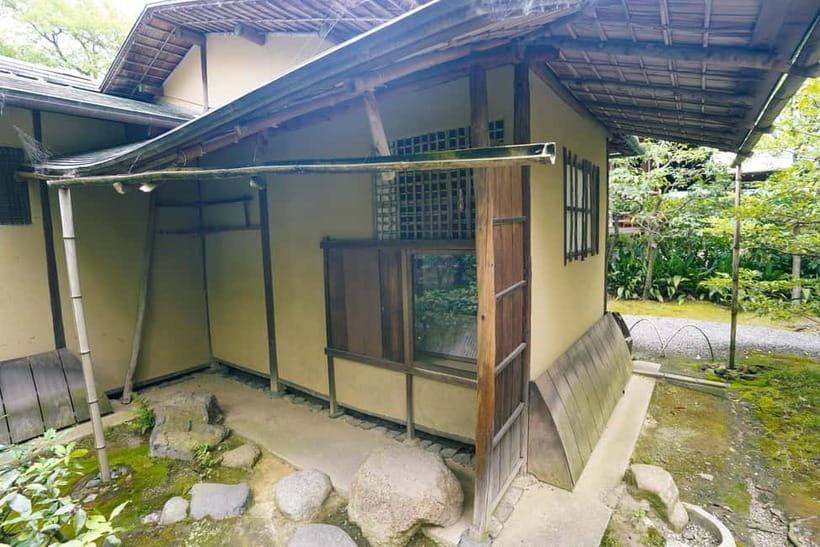
Entoku-in receives about 30 minutes of guided time. The temple is especially useful for the wabi-sabi theme because you view Japanese paintings and a karesansui, or dry Zen garden.
A dry garden does not rely on flowering plants or grand decoration. Its stones, gravel, and carefully controlled empty space encourage you to look slowly. This is the kind of place where the tour’s central idea can become more than a spoken explanation.
Your guide helps you connect the garden to the tea ceremony. Both ask you to value restraint and attention. A small detail can matter: the texture of a bowl, the empty space around a stone, or the seasonal quality of a sweet.
The stop should appeal to anyone who enjoys gardens, design, photography, or quiet temple spaces. It is less suited to someone who wants a fast list of famous sights. The tour asks you to pause, look, and think, which is precisely the point but not everyone’s preferred pace.
The final tea ceremony in Higashiyama
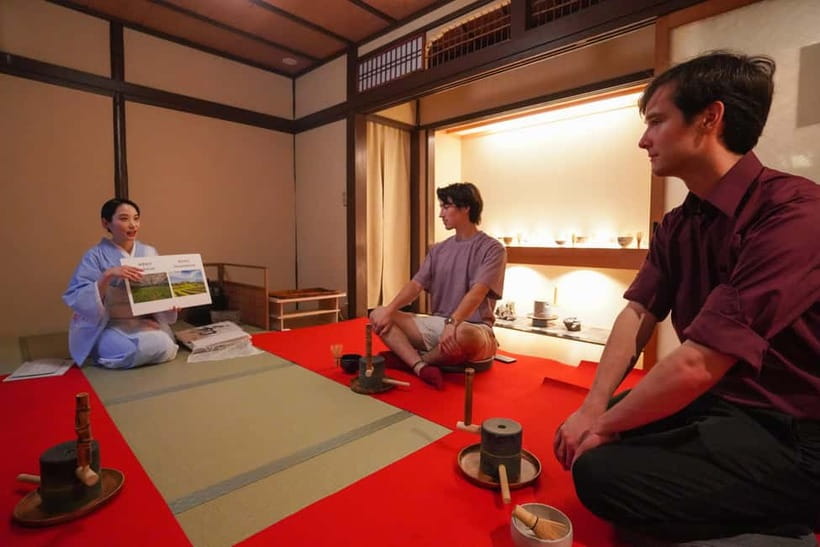
The last 45 minutes are devoted to the tea ceremony. By this point, you have already discussed tea culture, Zen, pottery, art, and wabi-sabi. That sequence gives the ceremony more weight than a short demonstration at the beginning of a sightseeing day.
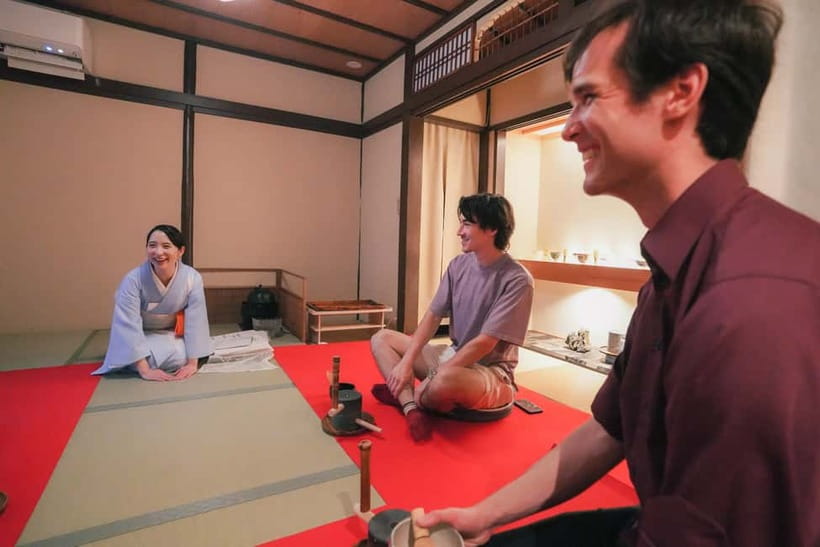
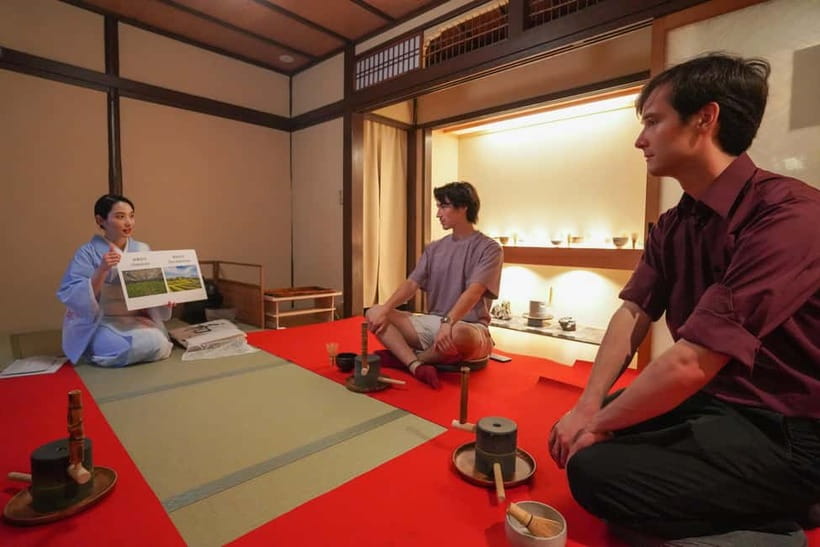
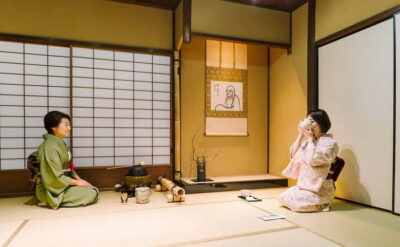
A tea master leads the experience. You choose a tea bowl based on the season and your taste, then receive matcha with a small seasonal Japanese snack. The bowl is not merely a cup. Its form, surface, and seasonal connection are part of the experience you have been learning to notice.
The ceremony is intended to be authentic, and the strongest praise has focused on that quality. You should expect a cultural activity with rules and meaning, not a casual café stop. The pace is calm, and the formal setting requires attention and respect.
Children must be at least 6 years old to take part in the tea ceremony. Younger children can come on the tour, but one adult must remain outside the facility with them during that portion. This makes the experience workable for some families, but not for a group hoping to participate together with very young children.
The ceremony is also where the tour’s philosophy becomes personal. You may not leave with a perfect definition of wabi-sabi, but you will have handled a tea bowl, tasted matcha, observed the room, and seen how small details shape the moment.
What the $92 price includes
At $92 per person, this is not the cheapest way to taste matcha in Kyoto. A simple tea experience can cost much less. The value here comes from combining several elements in one guided program.
Your fee covers:
- The tea ceremony
- Matcha and a small seasonal snack
- Entrance to two temples
- An English-speaking guide
- Photos taken during the tour
The small group size also matters. With a maximum of seven participants, the guide can explain objects and temple details without relying on a microphone or a long speech delivered to a crowd.
I consider the price fair for someone who wants cultural interpretation as well as the activity itself. You are paying for a half-day route through Gion and Higashiyama, two temple admissions, local explanation, and the final ceremony.
The value is weaker if you only want to drink matcha. In that case, a shorter tea experience may suit you better. It is also less appealing if you plan to spend a full day visiting temples at your own pace, since the tour’s schedule gives you limited time at each stop.
The guide makes the difference
The quality of this experience depends heavily on the guide. Masa has received especially warm praise for his friendly manner, detailed explanations, and helpful attitude. One participant also appreciated his help with adding stamps to a personal temple and shrine stamp book.
That detail says something useful about the style of the tour. It is not only a lecture about tea. The guide can also help you connect the walk to the small travel rituals that make a Kyoto day memorable.
The best part of the guiding is the link between places and ideas. You are not simply told that wabi-sabi exists. You see it in a tea bowl, a garden, a painting, and the ceremony itself. Strong guide commentary is essential because several of the stops are short and could otherwise feel like disconnected visits.
The published score is 4.5 out of 5 from seven ratings. Most of the praise centers on the guide, the authentic ceremony, the detailed explanations of temples and tea, and the calming mood at the end.
One clear problem involved incorrect timing information. A participant arrived with a different start time and could stay for only 90 minutes, missing the ceremony. This is a practical warning, not a minor footnote. Confirm the correct time after booking and arrive before the meeting time.
Walking conditions, weather, and family fit
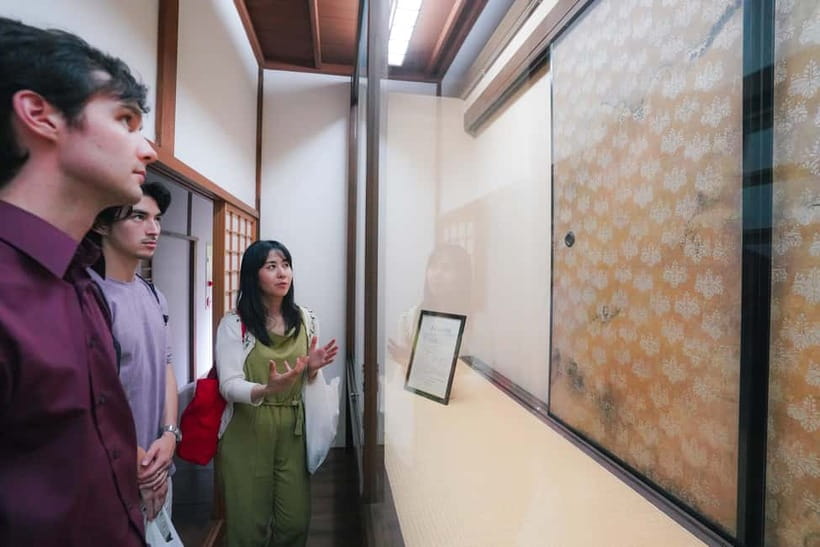
The tour lasts 210 minutes, or 3.5 hours. It combines city walking, temple visits, shopping, and seated tea time. Wear comfortable shoes and prepare for outdoor conditions.
Kyoto can be very hot in summer, with stated highs reaching 40°C, or 110°F. Winter temperatures can fall to -5°C, or 20°F. Bring suitable clothing, water, and sun or cold-weather protection according to the season.
The tour is not suitable for wheelchair users. Some locations are also difficult or impossible to access with a stroller. Families should pay close attention to the 6-year minimum for participation in the ceremony, since younger children cannot join that portion.
The weather can also affect the program. It may be cancelled for safety reasons in unsuitable conditions. Free cancellation or rescheduling is available up to 24 hours before the start time, and you can reserve now and pay later, which gives you some flexibility while arranging your Kyoto plans.
Who should book this experience
I would recommend this tour to you if you want a cultural introduction that joins several parts of Kyoto life:
- Matcha and tea ceremony
- Zen temples
- Japanese gardens
- Traditional pottery
- Japanese paintings
- Wabi-sabi explained in plain terms
- A small English-speaking group
It is especially good for a first visit to Kyoto, when you want a guide to help you understand what you are seeing. It also suits repeat visitors who have seen Gion before but want a more focused look at tea culture.
You may want to skip it if you dislike scheduled walking tours, need full wheelchair access, or prefer spending an hour or more at each temple. It is not a shopping tour, and the short pottery and matcha-shop visits are mainly for context.
Should you book the Gion tea ceremony tour?
Book it if the meaning behind the tea matters as much to you as the taste. The route gives you a useful progression from Gion streets to Kenninji, pottery, Japanese art, Entoku-in, and finally a tea master and bowl chosen for the season.
At $92, the tour offers fair value for a small group and includes temple admissions, matcha, a seasonal snack, an English guide, and photos. Confirm your start time, arrive early, and prepare for walking in Kyoto’s heat or cold.
My call: book this if you want an authentic, guided introduction to Japanese tea culture and wabi-sabi, not simply a cup of green tea with a quick explanation.
FAQ
How long does the Kyoto Gion tea ceremony tour last?
The experience lasts 210 minutes, or 3.5 hours.
Where does the tour meet?
Meet in front of the Izumo no Okuni statue, directly outside Exit 5 of Gion-Shijo Station on the Keihan Line. The guide holds an orange signboard marked Magical Trip Tour.
What language is the tour conducted in?
The tour has an English-speaking live guide.
How many people can join the group?
The group is limited to seven participants, though other participants may join your scheduled departure.
What is included in the price?
The price includes the tea ceremony, matcha, a small seasonal snack, entrance fees for two temples, an English-speaking guide, and photos taken during the tour.
Can children join the tea ceremony?
Children must be 6 years old or older to take part. Younger children may join the walking portion, but one adult must stay outside the facility with them during the ceremony.
Is the tour wheelchair accessible?
No. The tour is not suitable for wheelchair users, and some locations are also not accessible with a stroller.
What happens if I need to cancel?
You can cancel or reschedule for free up to 24 hours before the tour begins. The tour may be cancelled if weather conditions are unsafe.
More Walking Tours in Kyoto
- Kyoto Tea Ceremony & Kiyomizu-dera Temple Walking Tour
★ 5.0 · 115 reviews - The Way of Tea: Kyoto Crafts, Hidden Temples & Wabi-Sabi Walk
★ 5.0 · 41 reviews - Matcha Grinding Experience and Walking Tour in Uji Kyoto
★ 5.0 · 26 reviews - Kyoto Tea Ceremony & Kiyomizu-dera Temple Walking Tour
★ 4.5 · 4 reviews
Just added around Kyoto
- Uji Walking Tour – Byodo-in temple and Tea Ceremony from Kyoto★ 3.5 · 3 reviews
- Tea ceremony at Kyoto’s Zen Temple Teahouse★ 5.0 · 2 reviews
- Kyoto: Authentic Tea Ceremony in a Small Group★ 5.0 · 7 reviews
- Tea Ceremony in 150 Years Old Townhouse with Tables and Chairs★ 5.0 · 22 reviews
- Silent Beauty of Kyoto Zen Walk and Tea Experience★ 5.0 · 2 reviews
- Tea Ceremony Experience in Traditional Kyoto Townhouse★ 5.0 · 19 reviews
- Traditional Tea Ceremony in Kyoto★ 4.5 · 3 reviews
- Kyoto Private Tea Ceremony at a Japanese Inns★ 5.0 · 12 reviews
Tea Ceremonies in Kyoto, compared.
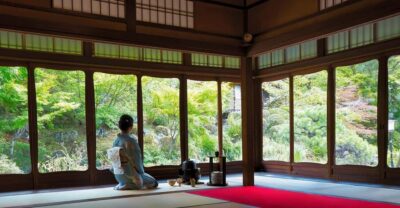
Tea Ceremony in a Traditional Tea House in Kiyomizu
Read our review →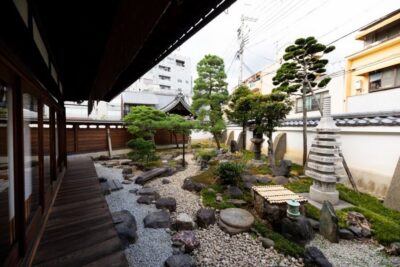
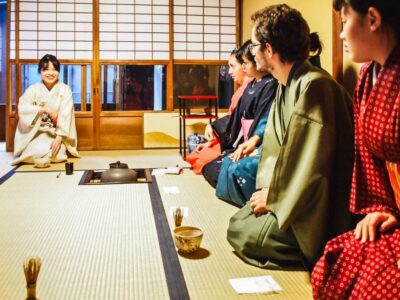
Tea Ceremony in 100-year-old Kyo-Machiya Townhouse
Read our review →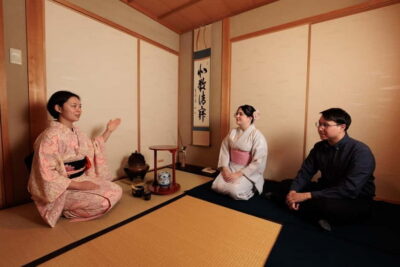
Browse the lists this tour appears in