
Review · KYOTO
The Way of Tea: Kyoto Crafts, Hidden Temples & Wabi-Sabi Walk
Tea and temples make a fine Kyoto pairing. This 3.5-hour walk links Gion, Kennin-ji Temple, craft shops, a quiet temple garden, and a tea ceremony in a traditional Japanese house. I like the small maximum group of seven, and I like that temple admissions, matcha, a guide, and tour photos are included.
The price is $94.45 per person, which is fair if you want one organized outing rather than arranging several visits yourself. The main caution is that the walk depends on clear communication. One low-rated review described a guide who spoke too softly and was difficult to understand, so I would stay close to the guide and ask questions early.
Key points to know before booking
- The meeting point is easy to find: Look for the orange MagicalTrip sign by the Statue of Izumo-no-Okuni outside Exit 5 of Gion Shijo Station.
- The group is capped at seven: That gives you a better chance to ask questions during the walk and tea lesson.
- Kennin-ji is part of a wider Kyoto story: The temple visit is paired with Gion, ceramics, wabi-sabi ideas, and tea rather than treated as an isolated stop.
- The tea ceremony is the main finish: You prepare and drink matcha in a traditional Japanese house with instruction from a tea master.
- You visit working craft spaces: The route includes a matcha shop, craft shops, and a tea bowl shop featuring raku cups.
- Plan for weather and timing: Kyoto can reach 40°C in summer and fall to -5°C in winter, and late arrivals cannot join or receive a refund.
Starting in Gion beside the Kamo River
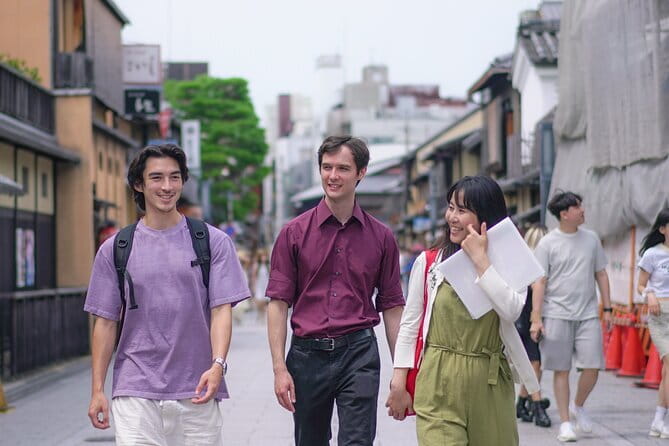
Your meeting point is in front of the Statue of Izumo-no-Okuni, right outside Exit 5 of Gion Shijo Station on the Keihan Line. The guide carries an orange sign marked Magical Trip Tour. This is a useful meeting arrangement in a city where a small station exit can lead to several busy streets.
I would arrive early. The tour starts on time, and the policy is strict: if you miss the group, you cannot join later, reschedule, or receive a refund. That matters more here than on a bus tour because the route is a continuous walk through central Kyoto.
The starting area, Gion, gives the experience the right opening. It is one of Kyoto’s best-known traditional districts, and the guide uses the walk to introduce the history of Japanese tea and explain how matcha is made. You also visit a famous matcha shop. The stop lasts about 30 minutes and has no separate admission charge.
This is not simply a shopping pause. It gives you a basic frame for the rest of the outing. When you later handle a tea bowl and take part in the ceremony, you already have some context for the drink itself. If you have never learned how matcha is produced or why it matters in Japanese culture, this first stop helps the later lesson make more sense.
More Walking Tours in Kyoto:
- Kyoto Tea Ceremony & Kiyomizu-dera Temple Walking Tour
★ 5.0 · 115 reviews - Matcha Grinding Experience and Walking Tour in Uji Kyoto
★ 5.0 · 26 reviews - Kyoto Gion Tea ceremony & Wabi-sabi Walking Tour
★ 4.5 · 7 reviews
Kennin-ji and the value of a guided temple visit
The next stop is Kennin-ji Temple, where you spend about 30 minutes. Admission to two temples is included in the tour price, although only Kennin-ji is named specifically in the supplied details. The temple has stood for centuries, and the guide provides background while you look around.
Thirty minutes is enough for an introduction, but not enough for a slow, detailed examination of every building, garden, and artwork. I see that as both a benefit and a limitation. You get a clear place in the route without losing the rest of the afternoon, but visitors who want a long temple visit may wish for more time.
A guide is particularly useful at a major Kyoto temple because the setting can be easy to admire without understanding. Here, the temple is part of a larger discussion about Japanese aesthetics and tea. You are not only checking off a famous site. You are being encouraged to notice restraint, age, materials, and the relation between a building and its garden.
The small group should help. With no more than seven people, you can ask why a feature matters instead of simply following along. I would use this moment to ask about the connection between the temple visit and the wabi-sabi theme, since that idea returns during the tea ceremony.
Craft shops and the character of a raku tea bowl
The route then moves into Kyoto’s craft culture. One 30-minute stop includes craft shops, followed by a visit to a tea bowl shop where the raku teacup takes center stage. The guide explains that each cup has its own character, history, and meaning.
This may be the most distinctive part of the outing for anyone who likes handmade objects. A mass-produced souvenir can be attractive, but a tea bowl is meant to be handled, seen from different angles, and understood as part of the ceremony. The irregularity of a raku cup is not treated as a defect. It is part of its appeal.
The tour’s wabi-sabi theme gives you a helpful way to look at these objects. The idea is connected here with simplicity, imperfection, age, and the beauty of things that are not perfectly uniform. You do not need a background in Japanese art to follow the point. The guide uses the walk and the objects to build toward the final tea experience.
Keep your expectations realistic. The supplied information does not promise a purchase, a hands-on pottery lesson, or a private meeting with a potter. You visit shops and learn about ceramics. If you want to buy something, any purchase would be an extra cost, and additional food and drinks are not included.
A quiet temple and garden between city stops
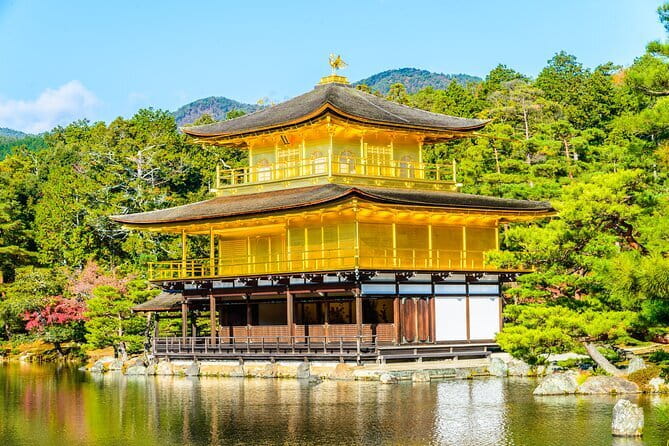
Another 30-minute section takes you to a hidden temple and garden in Kyoto Prefecture. The exact name is not provided, so you should not book this expecting a specifically named landmark. The appeal is the change of pace: after Gion, a major temple, and craft shops, the route includes a less obvious religious site.
This stop appears to support the tour’s main idea rather than compete with Kennin-ji. You have time to notice the setting, the garden, and the quieter side of Kyoto. The phrase hidden temple should not be read as a promise of total solitude. Other participants may be on the tour, and the group can include up to seven people.
Still, this part may be especially valuable if you have already seen Kyoto’s most famous sites. A short guided visit can show you how a smaller temple fits into the city’s visual and spiritual character. I would pay attention to the garden as well as the buildings, since the tour’s wabi-sabi discussion depends on the relationship between natural forms, crafted spaces, and controlled simplicity.
The timing is brisk throughout. Gion takes about 30 minutes, Kennin-ji about 30 minutes, the craft section about 30 minutes, and the hidden temple and garden about 30 minutes. That leaves the largest block, one hour, for the tea ceremony.
A few more tea experiences around Kyoto worth a look
- Kyoto: Tea Ceremony in a Traditional Tea House in Kiyomizu
★ 4.9 · 3,519 reviews - Kyoto: Tea Ceremony Ju-An at Jotokuji Temple
★ 4.9 · 3,207 reviews - Kyoto: 45-Minute Tea Ceremony Lesson Experience
★ 4.3 · 2,378 reviews - Kyoto: Table-Style Tea Ceremony at a Kyo-Machiya
★ 4.9 · 1,211 reviews
Ending with matcha in a traditional Japanese house
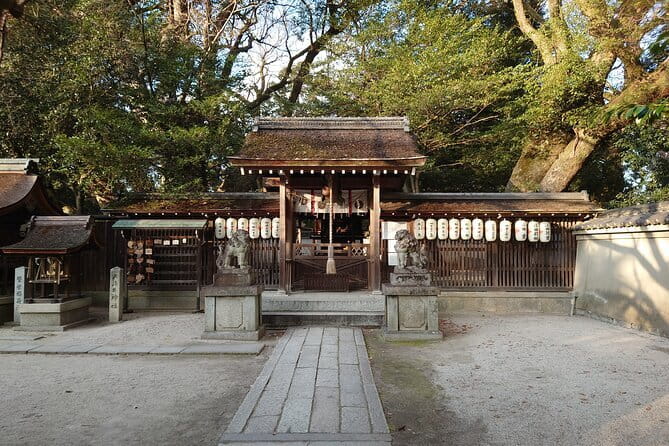
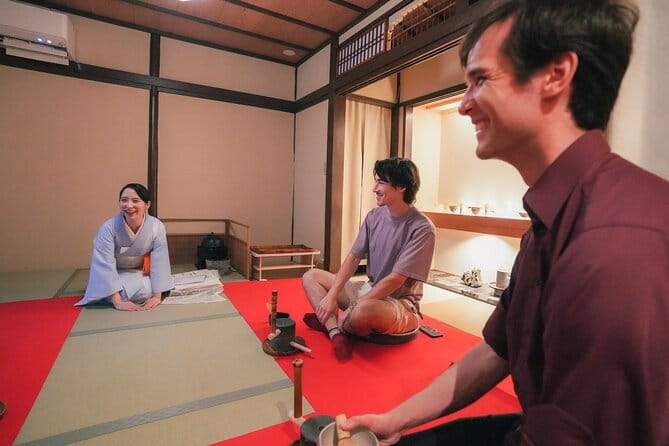
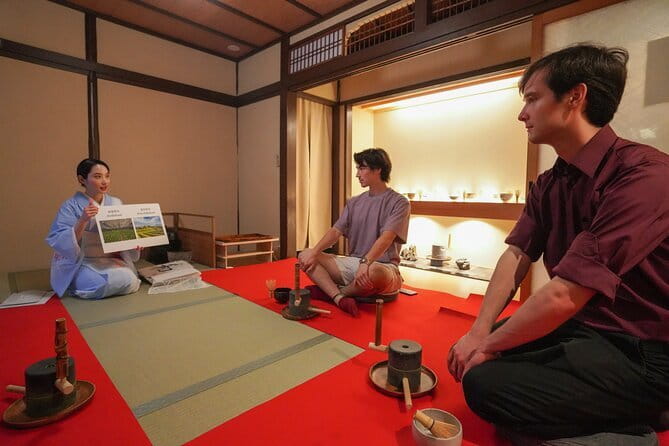
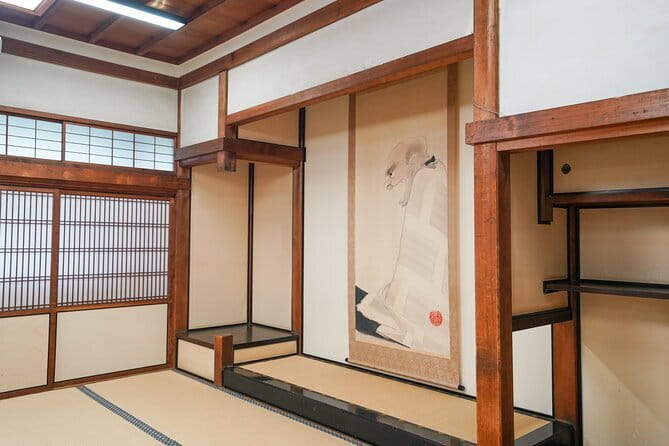
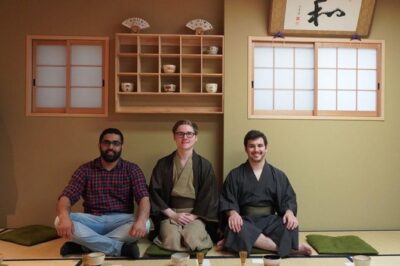
The final stop is the reason many people will choose this experience. At Chayu, you take part in a tea ceremony in a traditional Japanese house. A tea master gives instruction, and you make and drink matcha.
The hour-long format is important. A brief demonstration can leave you admiring the gestures without understanding them. Here, the longer session gives you time to watch, listen, prepare the tea, and connect the ceremony to the earlier walk.
You already encountered matcha in Gion and learned about tea bowls and wabi-sabi along the route. The ceremony then gives those ideas a practical setting. The bowl is no longer only an object in a shop. The tea is no longer only a drink. You begin to see how the room, the cup, the preparation, and the act of serving work together.
The information does not promise a private ceremony, so other participants may share the tea house. That is worth knowing if you imagine a completely solitary or formal experience. For most people, the small group should make the instruction easier to follow, and the guide’s photos provide a useful record of the outing.
Children younger than six may join the broader tour, but one adult must remain outside the tea ceremony facility with them. Children six and older can take part in the tea experience. That rule may affect how families plan the afternoon.
What the $94.45 price covers
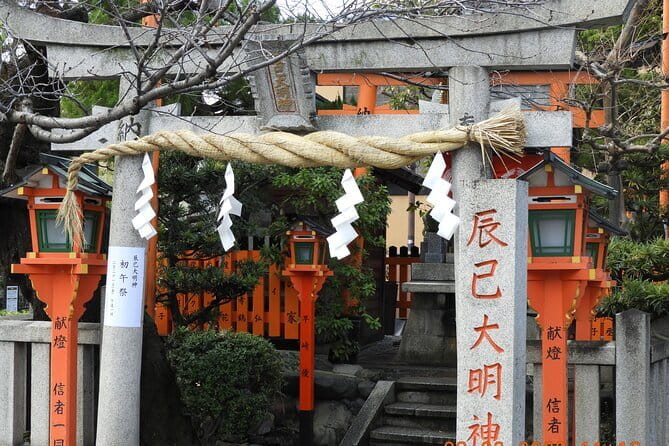
At $94.45 per person, this is not the cheapest way to see a temple or drink matcha in Kyoto. The value comes from combining several separate pieces into one guided route.
Your fee includes:
- An English-speaking local guide for about three hours
- Admission to two temples
- A matcha tea ceremony in a traditional Japanese house
- Matcha to drink
- Photos taken during the tour
- A group capped at seven people
If you were already planning to visit Kennin-ji, explore Gion, and book a tea ceremony, the package can save planning time. You also avoid working out the route between the stops. That convenience matters in Kyoto, where a short distance on a map can take longer than expected on foot or by public transport.
The value is weaker if you prefer to linger. Each sightseeing section lasts about 30 minutes, and the experience follows a fixed route. Independent visitors can spend an hour at Kennin-ji, skip the craft shops, or choose a longer tea ceremony. This tour trades that freedom for structure and explanation.
I also like that temple admission is included instead of being added at each gate. You do not need to budget separately for the two temple visits. Food and extra drinks are not included, so plan to eat before or after the tour rather than expecting a meal along the way.
Timing, weather, and practical comfort
The total duration is approximately 3 hours 30 minutes. The listed guide time is about three hours, with the tea ceremony adding one hour, so exact timing may vary slightly. The tour ends at the tea experience location, at 4-chōme-172-7 Kiyomizu in Higashiyama Ward, rather than returning you to Gion Shijo Station.
That ending point is useful if you plan to continue around Kiyomizu afterward, but it is not the same as the starting point. Plan your next move from the tea house. The route is near public transportation, although the supplied information does not specify a return transfer or vehicle service.
Kyoto weather deserves serious attention. Summer highs can reach 40°C, while winter lows can fall to -5°C. Wear shoes suitable for walking, bring water for hot weather, and dress in layers during colder months. The tour may be cancelled for unsafe weather, but you should still prepare for ordinary heat, cold, or rain.
Most people can participate, according to the supplied tour information. No special accessibility details are given, so if you need specific arrangements, ask the operator before booking. The experience includes walking through city streets, temples, gardens, and shops, followed by time on the floor or in a traditional tea setting if that is part of the house arrangement. Since that last detail is not confirmed, ask directly if sitting requirements matter to you.
Guide quality and the small-group advantage
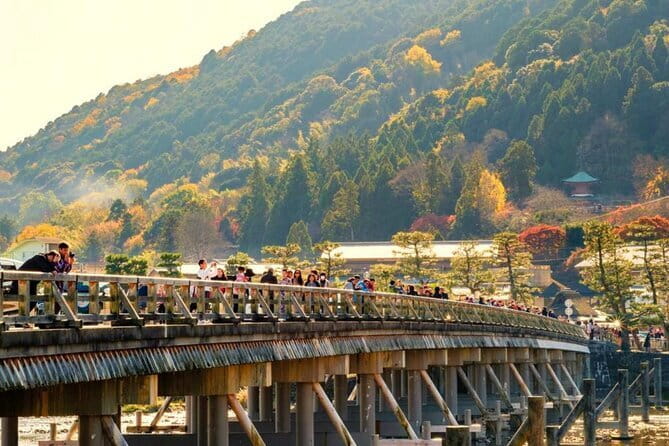
The tour is operated by MagicalTrip Inc. and uses an English-speaking guide. A group of no more than seven is one of the strongest practical features. You can hear explanations more easily than in a large group, and there is a better chance to ask about tea, temples, and ceramics.
There is one communication warning to take seriously. One critical rating described a guide who spoke very softly, whose English was difficult to understand, and who seemed uncertain about some of the places visited. The same account noted that the guide tried to help, but the communication problem made the experience frustrating.
That appears to be an individual guide issue rather than proof that every tour has the same problem, especially since the overall rating is 4.9 from 41 ratings and 98 percent recommend it. Still, I would not ignore it. Stay near the guide, ask for clarification when needed, and speak up if you cannot hear. A small group makes that easier.
The guide’s role is central because the experience is built around interpretation, not just admission. If the explanations are clear, the route becomes a coherent lesson about tea, design, temples, and wabi-sabi. If you cannot hear, you lose much of what you paid for.
Who should book this Kyoto experience?
I would recommend this tour to you if you want a compact introduction to several Kyoto traditions in one afternoon. It suits first-time visitors who want help with directions, travelers who enjoy small craft shops, and anyone who would rather learn matcha preparation than simply order a cup at a café.
It is also a good choice if you like a clear progression. Gion introduces tea, Kennin-ji provides a major temple setting, the craft stops explain tea bowls and wabi-sabi, and the traditional house brings the subject to life. That structure is more thoughtful than a loose list of attractions.
Families should check the age rule before booking. Children under six can join the walking portion only if an adult stays outside during the tea ceremony. People with limited time should note the one-way finish in Kiyomizu and the strict late-arrival policy.
I would skip it if you want a full day at each temple, a private tea ceremony, or a pottery-making class. I would also think twice if you dislike fixed schedules or if a short stop feels rushed. This is a guided introduction, not an exhaustive study of Kyoto’s tea culture.
Should you book it?
Book this experience if you want a well-packed half-day that connects Kyoto’s streets, temples, crafts, and tea. The combination of a seven-person limit, included admissions, a traditional tea ceremony, and an English-speaking guide makes $94.45 reasonable for many visitors.
Go in knowing the pace is steady, the tour ends away from its starting point, and guide communication can vary. Arrive early at Gion Shijo Station, prepare for the weather, and ask questions if you cannot hear. With those precautions, this is a practical way to see a more thoughtful side of Kyoto without spending your day solving the route yourself.
FAQ
Where does the tour begin?
It begins at the Statue of Izumo-no-Okuni, outside Exit 5 of Gion Shijo Station on the Keihan Line, in Kawabatacho, Higashiyama Ward, Kyoto.
How do I identify the guide?
The guide will hold an orange signboard marked MagicalTrip Tour.
How long does the experience last?
The approximate duration is 3 hours 30 minutes.
What is included in the price?
The price includes an English-speaking local guide, admission to two temples, a matcha tea ceremony in a traditional Japanese house, matcha to drink, and photos taken during the tour.
Is Kennin-ji Temple included?
Yes. Kennin-ji Temple is one of the named stops, and admission to two temples is included.
Does the tour include a tea ceremony?
Yes. The tour ends with a tea-making experience at Chayu, where a tea master provides instruction.
Where does the tour end?
It ends at the tea experience location at 4-chōme-172-7 Kiyomizu, Higashiyama Ward, Kyoto.
What is the maximum group size?
The tour has a maximum of seven travelers.
Can children under six join the tea ceremony?
No. Children under six may join the wider tour, but one adult must accompany them outside the tea ceremony facility.
What is the cancellation policy?
You can cancel for a full refund up to 24 hours before the experience starts. Changes or cancellations made less than 24 hours before the start time are not accepted or refunded.
Just added around Kyoto
- Uji Walking Tour – Byodo-in temple and Tea Ceremony from Kyoto★ 3.5 · 3 reviews
- Tea ceremony at Kyoto’s Zen Temple Teahouse★ 5.0 · 2 reviews
- Kyoto: Authentic Tea Ceremony in a Small Group★ 5.0 · 7 reviews
- Tea Ceremony in 150 Years Old Townhouse with Tables and Chairs★ 5.0 · 22 reviews
- Silent Beauty of Kyoto Zen Walk and Tea Experience★ 5.0 · 2 reviews
- Tea Ceremony Experience in Traditional Kyoto Townhouse★ 5.0 · 19 reviews
- Traditional Tea Ceremony in Kyoto★ 4.5 · 3 reviews
- Kyoto Private Tea Ceremony at a Japanese Inns★ 5.0 · 12 reviews
Walking Tours, compared.

Great Ocean Road Tour Plus Koalas, Forest Walk and Morning Tea
Read our review →

Great Ocean Road 12 Apostles & Rainforest Walk with Morning Tea
Read our review →

Kyoto Tea Ceremony & Kiyomizu-dera Temple Walking Tour
Read our review →
Antalya: Old Town Walking Tour with Turkish Tea and Baklava
Read our review →Browse the lists this tour appears in