
Review · TOKYO
Matcha table tea ceremony experience in Tokyo
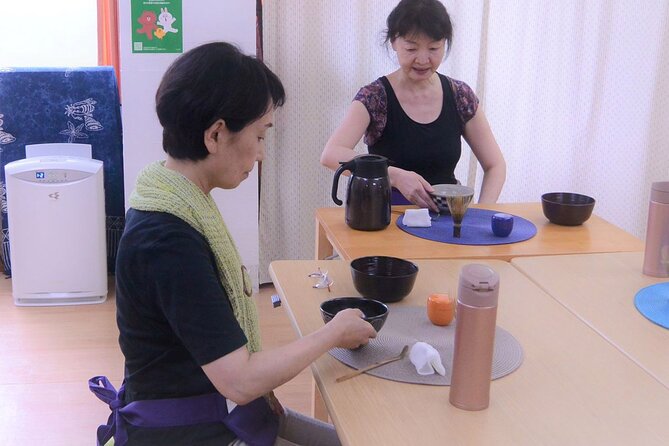
Matcha tastes better when you make it. This two-hour Tokyo experience brings you face-to-face with master instructor Masumi Matsumoto, who explains the history, manners, and spirit of tea before preparing a cup for you. I especially like the chair-and-table format and the small maximum of five people. The main consideration is price: at $65.04 per person, this is not a quick sample, but a focused cultural lesson.
You will first watch an expert prepare matcha and enjoy it with a seasonal Japanese sweet. Then you take the whisk yourself, prepare your own tea, and practice serving it. The relaxed tone works well for families and first-timers, though anyone seeking a large, formal ceremony may find this more personal and instructional than grand.
Key points at a glance
- A chair-based tea ceremony: Enjoy Japanese tea culture at a table instead of sitting on the floor.
- Masumi Matsumoto teaches the session: The instructor is a Master Instructor of the Japan Table Tea Ceremony Association.
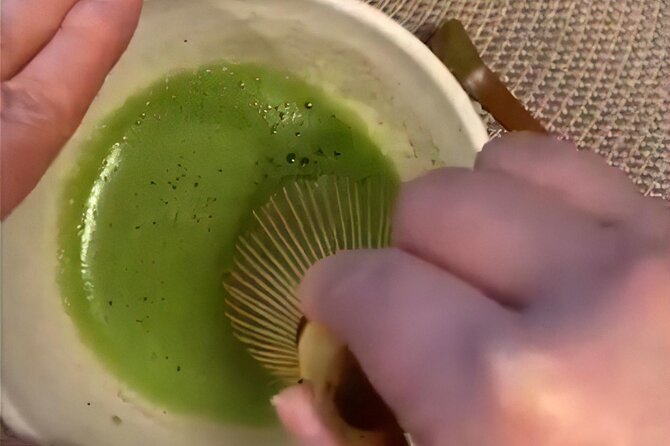
- You make your own matcha: The second half includes hands-on practice with a traditional tea whisk.
- A very small group: The experience accepts no more than five people, which leaves room for questions and individual guidance.
- Seasonal wagashi included: Your prepared matcha comes with a Japanese sweet that changes throughout the year.
- Easy Meguro access: The meeting point is about a two-minute walk from Toritsudaigaku Station.
Why this small Tokyo tea ceremony works so well
Many visitors picture a tea ceremony as a long period of formal kneeling, careful gestures, and rules that are easy to get wrong. This experience removes one of the biggest physical barriers. You sit on a chair at a table, so you can pay attention to the tea instead of worrying about your knees.
I like that this is not only a demonstration. You do not simply watch an instructor whisk matcha, take a sip, and leave. The session is built in two parts, with instruction first and practice second. That gives you a chance to understand what is happening before you try it yourself.
The group limit of five matters here. Tea preparation involves small details, from handling the whisk to observing manners and serving the bowl. In a crowded class, those details can disappear. With a small group, you have a better chance to ask a question and receive direct correction without feeling hurried.
The experience also has a useful afterlife. Once you return home, you can try making matcha again. You will not just have a photograph from Tokyo. You will have learned a simple tea preparation skill and gained a clearer sense of why the ceremony values attention, hospitality, and calm.
More Matcha Experiences in Tokyo
- Matcha Making Class in Tokyo with Authentic Japanese Sweets Set
★ 5.0 · 744 reviews - Tokyo: Matcha Making Experience with Mochi Sweets in Asakusa
★ 4.9 · 388 reviews - Asakusa Cultural Walk & Matcha Making Tour
★ 5.0 · 245 reviews
Meeting Masumi Matsumoto in Meguro
The session is led by Masumi Matsumoto, a Master Instructor of the Japan Table Tea Ceremony Association. That qualification gives the lesson a proper connection to Japanese tea culture, while the teaching style described in the experience is friendly and accessible.
English is available for the explanations. That is especially useful because tea ceremony includes more than instructions for making a drink. You will hear about the history, spirit, and manners connected with the practice. Several family accounts also point to the instructor’s ability to explain the subject with humor and patience, including for children.
That family-friendly quality is important. Children can find formal cultural activities intimidating, especially when they involve unfamiliar rules. Here, the instructor explains each step carefully and lets them take part. The session still has manners and structure, but it does not appear designed to make beginners feel nervous.
The casual tone does not make the experience careless. It simply gives you room to concentrate. I would choose this format if you want a clear introduction rather than a ceremony where you are expected to know how to behave before you arrive.
The first half: watching, tasting, and learning
The opening portion begins with an explanation of how to enjoy matcha. This sets the stage for the tea itself. You learn what to notice, how to approach the bowl, and why manners are part of the experience.
The instructor then prepares matcha for the group. This is one of the strongest parts of the session because you can watch the process before handling the equipment yourself. Seeing the whisk used correctly makes the later practice easier and gives you a model to follow.
Your tea is served with seasonal wagashi, a traditional Japanese sweet. The sweet changes with the season, so the exact item is not fixed. That small change is part of the appeal. You receive a taste of the time of year rather than a standard snack selected for every date.
The sweet also serves a practical purpose. Japanese tea can have a strong, grassy bitterness, and wagashi balances it with sweetness. The pairing helps you understand how the two are meant to be enjoyed together.
You should not expect a full meal. This is a tea and sweets experience, not a food tour. If you arrive hungry, plan around it. The value comes from the teaching, the setting, and the chance to practice, not from the quantity of food.
The second half: pick up the whisk yourself
After watching the instructor, you prepare your own tea. This is where the session becomes more memorable. The whisk is not a decorative object to pose with for a picture. You learn how to use it as part of the actual preparation.
The hands-on section lets you connect the earlier explanation with physical movement. You have already tasted matcha made by an expert, so you can compare the process and result with your own effort. Do not worry about producing a perfect bowl on the first attempt. The point is to learn the method and understand the care behind it.
You also practice serving tea. That adds another layer beyond whisking. Tea ceremony is concerned with the relationship between the person preparing the tea and the person receiving it. Serving is part of the hospitality, not just the final step in making a beverage.
I like this structure because it avoids a common problem with short cultural activities. A demonstration alone can feel passive, while an immediate hands-on task can feel confusing. Here, the instructor explains first, shows you how it works, and then gives you a turn.
The skill is also realistic to recreate at home. You will not need a special room or floor arrangement to remember the basic preparation. The experience gives you an approachable starting point for buying matcha and using a whisk later.
More Tea Ceremonies in Tokyo
- Kimono Tea Ceremony at Tokyo, Asakusa Maikoya
★ 5.0 · 638 reviews - Tokyo: Traditional Tea Ceremony with a Tea Master
★ 5.0 · 528 reviews - Tea Ceremony Workshop in Tokyo by the Experienced Instrucor
★ 5.0 · 189 reviews - Asakusa: Kimono Tea Ceremony with Matcha and Sweet
★ 4.9 · 153 reviews
Why the table format is a smart choice
Traditional tea ceremonies are often associated with sitting on the floor. That can be beautiful, but it is not comfortable for everyone. The table ceremony format uses chairs, making the activity suitable for people who are not good at sitting on the floor.
This is more than a comfort feature. When you are physically comfortable, you can listen closely and notice the small movements involved in the preparation. You are less likely to spend the whole session shifting position or wondering when you can stand up.
The table arrangement also makes the activity feel less intimidating. The supplied descriptions repeatedly stress the casual atmosphere. That tone suits people who are curious about tea ceremony but worry that they might make a mistake.
You should still treat the session with respect. Casual does not mean anything goes. You will learn manners and the spirit of the ceremony, and those lessons are central to the experience. The chair simply makes the format easier to approach.
Getting to Toritsudaigaku Station in Meguro
The meeting point is at 1-chōme-9-1 Nakane, Meguro City, Tokyo 152-0031. It is about a two-minute walk from Toritsudaigaku Station, and the area is served by public transportation.
That short walk is helpful in Tokyo, where a cultural activity can become tiring if it requires several transfers and a long search for the entrance. You should still allow enough time to reach the station area and find the exact meeting point. The activity begins and ends at the same location, so you do not need to arrange a separate return point.
Meguro-ku gives you options before or after the tea session. The Meguro River, Nakameguro Park, and the sweets theme park in Jiyugaoka are listed nearby as area attractions. They are not included stops on this experience, so plan them separately if you want to build a wider outing around the tea lesson.
The location works particularly well as a quieter cultural break from Tokyo’s larger sightseeing districts. You can spend two hours focused on one tradition, then continue exploring Meguro at your own pace.
The value of $65.04 per person
At $65.04 per person, this is a mid-priced cultural activity. It costs more than simply ordering matcha at a café, but the comparison is not quite fair. You are paying for about two hours of instruction, a prepared cup of tea, a seasonal sweet, a guided history lesson, and the chance to make and serve tea yourself.
The small group size improves the value. A maximum of five people means this is not a large class where you watch from the back. Personal attention is one of the main reasons to choose this experience over a cheaper, less detailed demonstration.
It is also a practical purchase for a first visit to Japan. You do not need prior tea ceremony knowledge, and the skills can be repeated at home. If you value context and participation, the price is reasonable.
I would be less enthusiastic about the cost if you only want to taste matcha or take a quick cultural photograph. For that purpose, a tea shop may suit you better. This experience earns its price through instruction and participation.
Group discounts are available, which may improve the cost for families or small parties. The activity is booked an average of 98 days in advance, so leaving it until the last few days of a Tokyo trip may be risky. Confirmation is sent within 48 hours of booking, subject to availability.
Who should book this experience
I would recommend it to first-time visitors who want a focused introduction to Japanese culture. You do not need to know tea etiquette before arriving, and the explanations are designed to make beginners comfortable.
Families are also a good match. Children can take part rather than sitting silently through a long performance, and the English instruction makes the cultural details easier to follow. The small group setting should help the lesson feel personal instead of overwhelming.
It is a particularly good choice if you have concerns about floor seating. The chair-based format removes that issue without removing the tea ceremony’s manners, preparation, or sense of hospitality.
Couples and solo visitors who prefer calm, guided activities should also consider it. The experience gives you a clear two-hour plan and leaves plenty of time to explore Meguro afterward.
I would not choose it if you want a large-scale, highly formal ceremony, a full meal, or a broad tour of Tokyo. This is a close-up lesson about matcha, not a general sightseeing activity.
Booking and cancellation details
The activity accepts mobile tickets and offers free cancellation if you cancel at least 24 hours before the local start time. Cancellations made less than 24 hours ahead are not refunded, and changes inside that window are not accepted.
The experience has a maximum of five participants. Since it is often reserved well in advance, check availability before building your day around it. Group discounts may be available, which is worth checking if you are booking for family or friends.
Should you book the Meguro matcha experience?
Book it if you want to understand tea ceremony by taking part in it. The strongest reasons are the small group, the chair-based setup, the seasonal wagashi, and Masumi Matsumoto’s warm English instruction. You leave with more than a cup of matcha: you learn the basic preparation and the manners behind it.
Skip it if you only want a fast taste or a grand traditional performance. At $65.04, the price makes sense when you value teaching and hands-on practice. For a relaxed, accessible cultural activity in Meguro, this is a thoughtful choice, especially for families and first-time visitors.
FAQ
How long does the matcha table tea ceremony last?
The experience lasts approximately two hours.
Where does the tea ceremony take place?
It takes place in Meguro-ku, Tokyo, at 1-chōme-9-1 Nakane, Meguro City, Tokyo 152-0031, Japan.
How far is the meeting point from public transportation?
The meeting point is about a two-minute walk from Toritsudaigaku Station.
How many people can join the experience?
The activity has a maximum of five participants.
Is the tea ceremony conducted on the floor?
No. The table tea ceremony uses chairs and a table, so you do not need to sit on the floor.
Who teaches the tea ceremony?
Masumi Matsumoto leads the session. Masumi is a Master Instructor of the Japan Table Tea Ceremony Association.
Will I make my own matcha?
Yes. In the second half, you learn to make and serve tea using a tea whisk.
Is a Japanese sweet included?
Yes. The instructor serves matcha with a seasonal Japanese sweet called wagashi. The type of sweet changes with the season.
Can I cancel for a full refund?
Yes, if you cancel at least 24 hours before the experience start time. Cancellations made less than 24 hours ahead are not refunded.
Just added around Tokyo
- Yokohama : Tea Ceremony with Sweets and Souvenir★ 5.0 · 5 reviews
- Walking Tour: Yanaka,Nezu& Sendagi: Tea Ceremony & Old Tokyo★ 5.0 · 3 reviews
- Private Kimono and tea ceremony at local home near Tokyo Disney★ 5.0 · 6 reviews
- Private Mochi・Matcha sweets Making Class Near Shibuya Area★ 5.0 · 22 reviews
- Tokyo Sweets Tour: Hidden Gems & Matcha at an Old Tea House★ 5.0 · 6 reviews
- Kimono and Tea Ceremony in Asakusa Private Food Tour With Guide★ 5.0 · 4 reviews
- 2 Hours Mochi &Nerikiri Making & Matcha Class in Bunkyo★ 5.0 · 21 reviews
- Tokyo Tea Ceremony Class at a Traditional Tea Room★ 5.0 · 2 reviews
Tea Ceremonies in Tokyo, compared.
Tea Ceremony Workshop in Tokyo by the Experienced Instrucor
Read our review →
Asakusa: Kimono Tea Ceremony with Matcha and Sweet
Read our review →
Tea Ceremony Experience in a Private Tea Room in Shibuya
Read our review →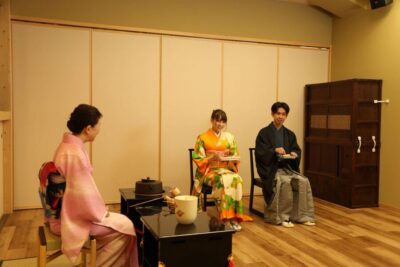
Tea ceremony experience in Japanese-style room 60min
Read our review →Browse the lists this tour appears in