
Review · KYOTO
Stunning Private Tea Ceremony: Camellia Garden Teahouse
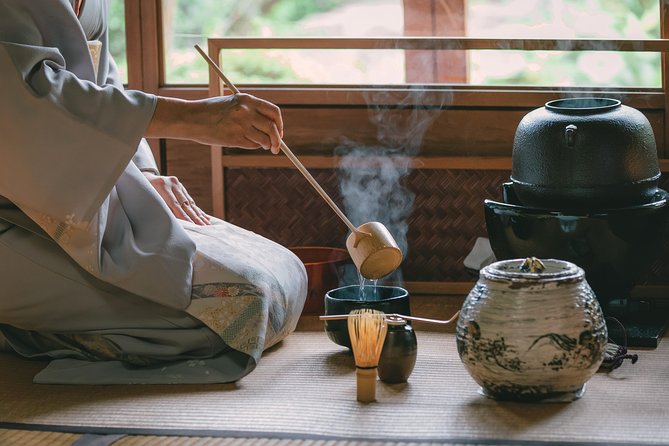
Tea, gardens, and one hour of calm. Camellia Garden Teahouse gives you a private introduction to Japanese tea ceremony in a 100-year-old house across from Ryoan-ji. I like the peaceful garden setting and the fact that your party has the room to itself. I also like that you do not just watch: you learn to use the scoop, whisk, and bowl to prepare your own matcha.
The main drawback is the price, $118.60 per person for about an hour. That is a serious spend for a short activity, though the private setting, seasonal sweets, instruction, and personal attention make it more appealing than a crowded group demonstration. Book ahead, especially since the experience has been booked frequently.
Key points at a glance
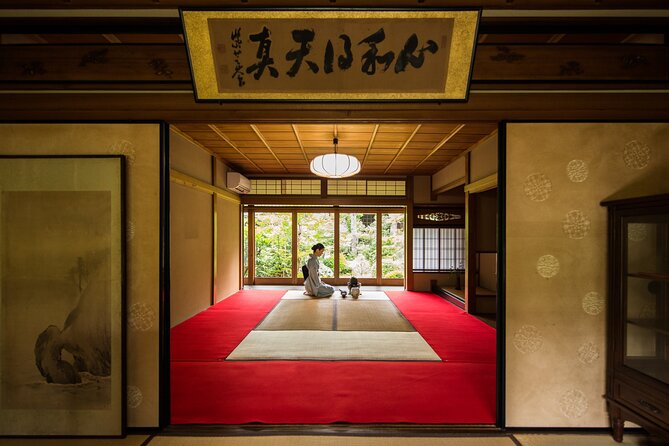
- A private ceremony across from Ryoan-ji: Your party participates alone, with no strangers sharing the session.
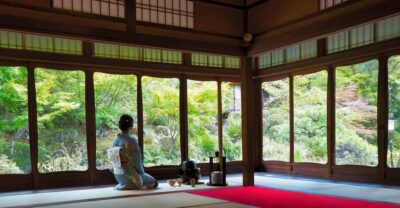
- Two traditional gardens: The tea house overlooks a front garden and a main garden used as the backdrop for the ceremony.
- Hands-on matcha making: You learn how to handle the tea scoop, whisk, and bowl, then prepare your own tea.
- Seasonal Kyoto sweets included: The session begins with sweets from one of Kyoto’s well-known confectioners.
- Chairs are available: You do not have to sit on the floor if that is uncomfortable.
- About 60 minutes: The compact format works well between temple visits, but it leaves little room for a slow, extended ceremony.
Why Camellia Garden feels different
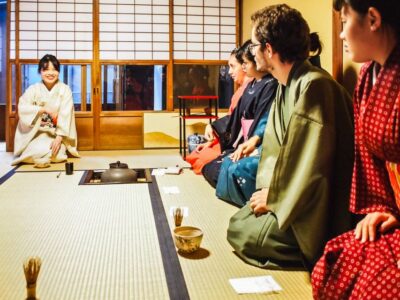
Many tea demonstrations are designed for large groups. You sit with strangers, watch a host perform the ritual, and perhaps get one brief chance to whisk tea. Camellia Garden takes a quieter approach. Only your own party participates, which changes the mood from presentation to conversation.
The teahouse sits across the road from Ryoan-ji, one of Kyoto’s best-known Zen temples. Its connection to the temple gives the setting a useful sense of place, but you are not paying simply for a temple view. You are entering a traditional property with two gardens and a dedicated tea room.
I especially like the balance between formality and friendliness. The ceremony follows recognizable Japanese tea traditions, yet the instructor explains what is happening and invites questions. That makes the experience suitable even if you know little about matcha or Japanese customs.
The small scale also helps if you are traveling with family or friends. You can ask questions without worrying about interrupting a large group. A private booking is a good choice if you want photographs, need a little more explanation, or prefer not to perform in front of strangers.
More Private Tea Experiences in Japan
- Private Tea Ceremony and Sake Tasting in Kyoto Samurai House
★ 5.0 · 163 reviews - Kyoto: Private Tea Ceremony with a Garden View
★ 4.9 · 61 reviews - Kyoto Private Tea Ceremony with Tea Master at Home
★ 5.0 · 58 reviews
The sofa room begins with sweets and context
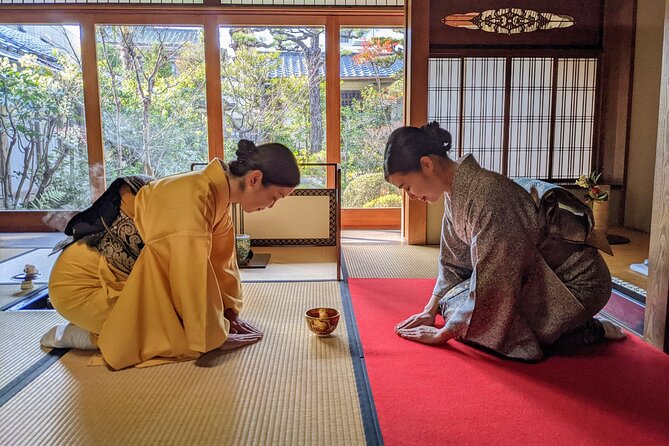
Your session starts in a sofa room overlooking the front garden. This first room matters because it gives you time to settle in before the more formal ceremony begins.
The instructor introduces the history and culture of tea in Japan, with attention to matcha and the rituals surrounding its preparation. You also receive seasonal sweets from one of Kyoto’s renowned confectioners. The sweet is not just a snack. In a tea ceremony, it helps balance the bitter taste of matcha and prepares your palate for the tea.
This opening section is likely the easiest part of the activity for first-time visitors. You can sit normally, look out toward the garden, and ask questions before moving into the tearoom. If you have a particular interest in tea customs, this is the time to ask about the utensils, etiquette, or meaning behind the movements.
The setting also gives you a gentle introduction to Japanese hospitality. The mood is quiet and deliberate, but the teaching is not presented as a test. Several comments about the experience praise the hosts for being warm, polite, and clear in English. Yumiko is singled out for answering many questions with patience and friendliness.
Watching the ceremony beside the main garden
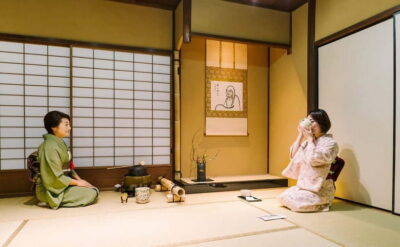
After the introduction, your host takes you into the tearoom. Here, the main garden becomes the backdrop for the ceremony.
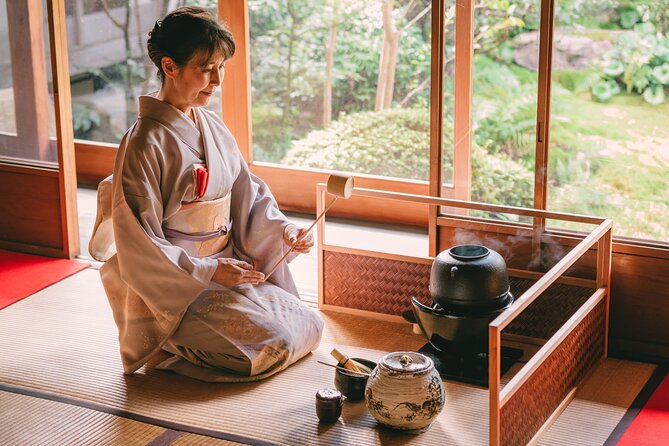
You first watch the host perform the tea rituals. This is an important step. The movements involved in matcha preparation can look simple, but the order, handling of the utensils, and careful pace all carry meaning. Seeing the full sequence before trying it yourself helps you understand that the ceremony is about more than making a drink.
The garden view gives the demonstration a visual focus. Instead of staring at a busy room or a video screen, you watch the host work with the garden beyond. The result is a calm setting that encourages you to pay attention to small actions.
Do not expect a grand theatrical show. The appeal is restraint. The ceremony is quiet, measured, and built around concentration. If you want a fast cultural activity with constant commentary, this may feel slow. If you want a moment away from Kyoto’s busy temple paths, that slower pace is the point.
You are served matcha during the ceremony, along with the sweet from the earlier part of the visit. The combination is one of the most praised elements of the experience. If you already enjoy matcha, you will appreciate the setting and preparation. If you find matcha bitter, the sweet helps soften the first taste.
Making your own bowl of matcha
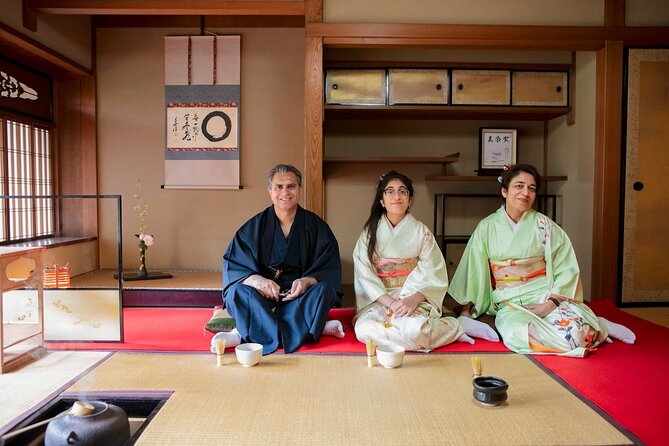
The hands-on part is where the experience earns much of its value. After watching the host, you get to make your own bowl of matcha.
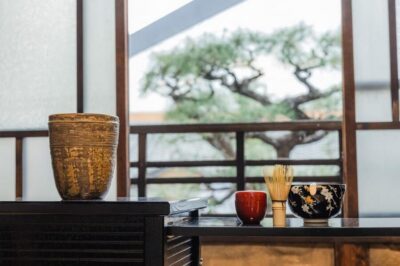
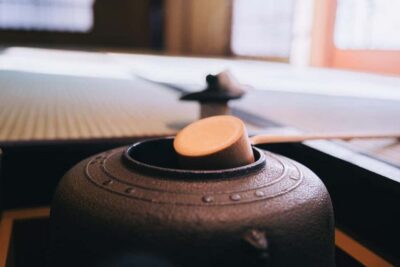
The required tools are provided: a tea bowl, tea scoop, and tea whisk. Your instructor shows you how to use them, then gives you the chance to prepare the tea yourself. You do not need to arrive with any prior experience.
This is a small activity, but it makes the ceremony easier to remember. You feel the whisk in your hand, see the powder mix with water, and learn why the tools are handled with care. You also gain a better sense of the skill involved in producing a smooth bowl of matcha.
Do not worry about making a perfect bowl. The purpose is to learn the technique and take part in the ritual, not to pass an examination. The private format helps here. You can work at your own speed and ask for clarification without a large audience watching.
You also have time for questions and photographs after the demonstration. That is useful because the hour includes several parts: the introduction, sweets, the formal ceremony, your own preparation, and time to talk. The schedule is compact, but it is not simply a quick cup of tea and a goodbye.
More Tea Ceremonies in Kyoto
- Kyoto: Tea Ceremony in a Traditional Tea House in Kiyomizu
★ 4.9 · 3,519 reviews - Kyoto: Tea Ceremony Ju-An at Jotokuji Temple
★ 4.9 · 3,207 reviews - Kyoto: 45-Minute Tea Ceremony Lesson Experience
★ 4.3 · 2,378 reviews - Kyoto: Table-Style Tea Ceremony at a Kyo-Machiya
★ 4.9 · 1,211 reviews
A 100-year-old property with a practical setup
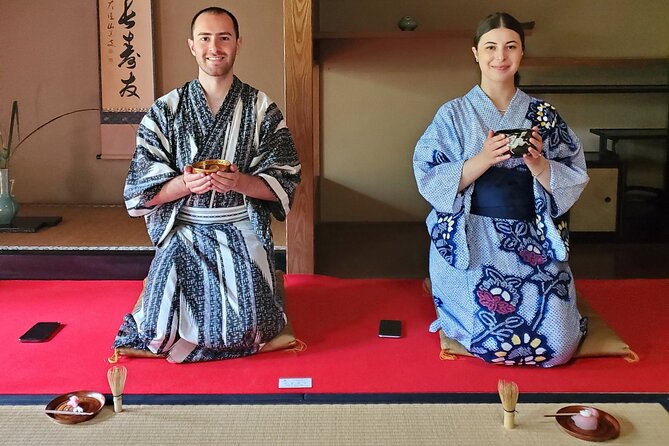
The property is described as 100 years old and surrounded by two traditional Japanese gardens. Those details give the activity a stronger sense of place than a modern hotel room or a generic cultural classroom.
The front garden appears during the opening conversation, while the main garden frames the ceremony itself. This division creates a natural progression from relaxed introduction to formal tea room. It also means you see more than one part of the property during a short visit.
Privacy is another major benefit. The house has long been connected with Ryoan-ji, yet the experience is designed as an escape from the temple crowds outside. You can enjoy the garden and ceremony without sharing the room with an unrelated group.
That privacy comes with a trade-off. The experience is priced at $118.60 per person, so the value depends on what you want from a cultural activity. If you are searching for the cheapest way to taste matcha, this is not it. If you want personal instruction, a traditional setting, and a private hour for your own group, the price is easier to justify.
Group discounts may be available, which could improve the value for a larger party. Check the final booking total rather than assuming the per-person figure tells the whole story.
Sitting on the floor is not required
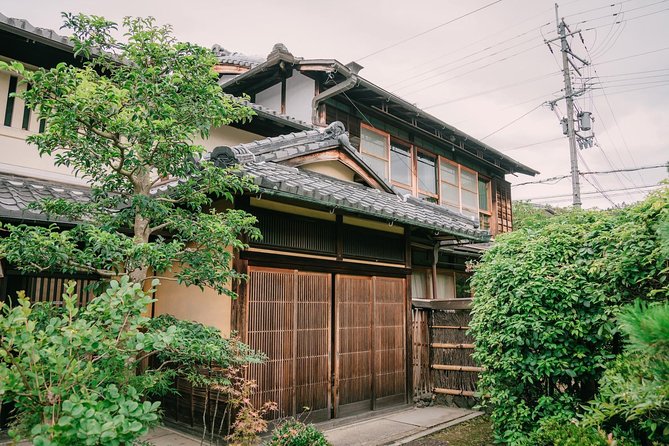
Traditional tea rooms often involve sitting on the floor. That can be part of the atmosphere, but it is not comfortable for everyone.
Camellia Garden has chairs available for anyone who would prefer not to sit on the floor. This is a practical detail worth noting if you have knee, hip, or back concerns, or if you simply want to enjoy the ceremony without worrying about getting up afterward.
The available information also says service animals are allowed and that the property is near public transportation. The meeting point is Tea Ceremony Camellia GARDEN at 18 Ryōanji Ikenoshitachō, Ukyo Ward, Kyoto, postal code 616-8003. The activity ends back at the same location.
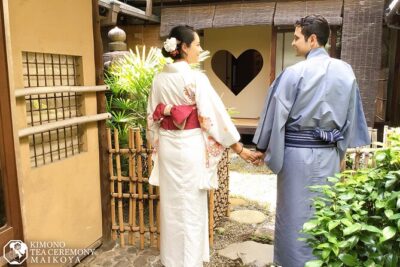
Kimono rental is not available at this location. Although the house has a dedicated kimono dresser, you should not book this experience expecting to borrow a kimono on site. If dressing formally is important to you, arrange that separately and confirm the timing before booking.
Who will get the most from this hour
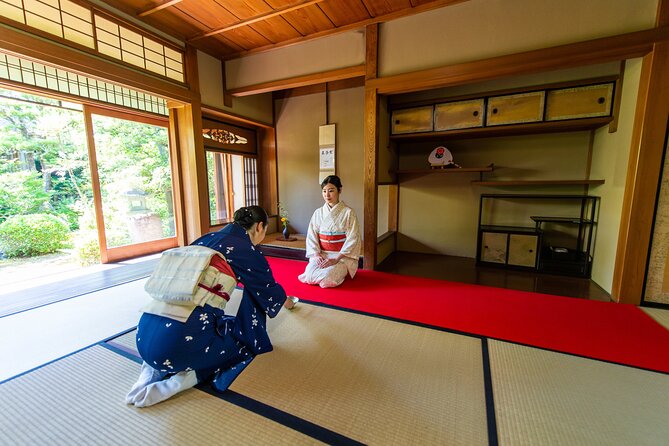
I would recommend this activity to several kinds of visitors.
First-time matcha drinkers get a clear introduction without needing to study Japanese etiquette beforehand. You see the ritual, hear why it matters, and then try the basic preparation yourself.
Couples and small groups benefit from the private format. The hour becomes a shared experience rather than a performance watched alongside strangers. You can ask personal questions and take photos without feeling rushed by a large crowd.
Culture-focused visitors will appreciate the attention to tea history, utensils, and ritual. The setting across from Ryoan-ji also makes it easy to connect the activity with a day of temple visits.
Families and older visitors may like the chairs and the short duration. A full tea school lesson could feel demanding, while this session offers a manageable introduction.
I would be more cautious if you dislike matcha, have no interest in ceremony, or want a longer workshop. The activity centers on tea culture, not on a broad range of Japanese crafts. The one-hour format is tidy, but it does not provide time for an extended lesson in several techniques.
Fitting it into a Kyoto day
The location across from Ryoan-ji makes this easiest to combine with sightseeing in northwest Kyoto. You can plan the ceremony around a visit to the temple, though you should allow enough time to reach the meeting point without cutting it close.
The activity is not a walking tour and does not end at another attraction. You return to the same tea house after the ceremony. That makes the schedule simple, but you will need to plan your next stop separately.
The start time matters. One person missed the ceremony after arriving too late, though the host was considerate when changing the time for the rest of the party. I would not rely on that flexibility. The stated cancellation terms allow a full refund if you cancel at least 24 hours before the start time, while late changes and cancellations are not accepted.
The experience also requires good weather. If poor weather causes a cancellation, you are offered another date or a full refund. This is worth keeping in mind when arranging a tightly packed Kyoto itinerary.
Is $118.60 good value?
At first glance, $118.60 per person for one hour looks expensive. That reaction is fair. You are not getting a full-day cultural course, a meal, or transportation around Kyoto.
The value comes from the combination of details. You receive a private session, a traditional property, two garden settings, seasonal sweets, a performed ceremony, served matcha, personal instruction, and your own chance to make tea. The private format is especially important because it removes the crowd factor that can make cultural demonstrations feel generic.
I would see the price as reasonable for a special occasion, a honeymoon or anniversary activity, or a small group that wants a calm cultural break. For a budget-conscious solo visitor, it is harder to recommend unless tea ceremony is a top priority.
The perfect score and complete recommendation record support the quality of the experience, but you should still match the activity to your interests. A high rating does not make matcha lovers out of people who dislike tea.
Should you book Camellia Garden?
Yes, if you want a private, peaceful introduction to Japanese tea ceremony in a traditional setting. The strongest reasons to book are the garden views, the personal instruction, the seasonal sweet, and the chance to prepare your own matcha.
I would choose it over a large group ceremony when privacy and questions matter. I would also choose it for a quieter Kyoto afternoon near Ryoan-ji, especially if sitting on the floor is a concern because chairs are available.
Skip it if you are seeking the lowest-cost tea tasting or a long technical workshop. At $118.60 per person, this is a carefully framed cultural experience, not a casual drink stop. For the right visitor, that calm private hour is exactly what makes it worth booking.
FAQ
How long does the Camellia Garden tea ceremony last?
The experience lasts approximately one hour.
Is this a private tea ceremony?
Yes. Only your own party participates, so you do not share the activity with strangers.
Where does the tea ceremony take place?
It takes place at Tea Ceremony Camellia GARDEN, 18 Ryōanji Ikenoshitachō, Ukyo Ward, Kyoto, 616-8003, Japan.
Is matcha-making included?
Yes. Tea bowls, tea scoops, and tea whisks are provided so you can make your own bowl of matcha.
Are sweets included?
Yes. The experience includes seasonal sweets from one of Kyoto’s renowned confectioners.
Do I have to sit on the floor?
No. Chairs are available for anyone who prefers not to sit on the floor.
Is kimono rental available?
No. Kimono rental is not available at this location.
What happens if I need to cancel?
You can receive a full refund if you cancel at least 24 hours before the experience start time. Cancellations or changes made less than 24 hours in advance are not accepted. If poor weather causes the experience to be canceled, you are offered another date or a full refund.
More Private Tea Experiences in Kyoto
- KYOTO: Private Tea Ceremony in Hidden Townhouse (Kid-Friendly)
★ 5.0 · 20 reviews - Kyoto Private Tea Ceremony at a Japanese Inns
★ 5.0 · 12 reviews - Kyoto Private Tea Ceremony at a Japanese Inns
★ 5.0 · 3 reviews - Kyoto Newly Opened Private Tea Ceremony – Sanjo Chasuian
★ 5.0 · 2 reviews
Just added around Kyoto
- Uji Walking Tour – Byodo-in temple and Tea Ceremony from Kyoto★ 3.5 · 3 reviews
- Tea ceremony at Kyoto’s Zen Temple Teahouse★ 5.0 · 2 reviews
- Kyoto: Authentic Tea Ceremony in a Small Group★ 5.0 · 7 reviews
- Tea Ceremony in 150 Years Old Townhouse with Tables and Chairs★ 5.0 · 22 reviews
- Tea Ceremony Experience in Traditional Kyoto Townhouse★ 5.0 · 19 reviews
- Traditional Tea Ceremony in Kyoto★ 4.5 · 3 reviews
- Silent Beauty of Kyoto Zen Walk and Tea Experience★ 5.0 · 2 reviews
- Kyoto Private Tea Ceremony at a Japanese Inns★ 5.0 · 12 reviews
Tea Ceremonies in Kyoto, compared.
Tea Ceremony in a Traditional Tea House in Kiyomizu
Read our review →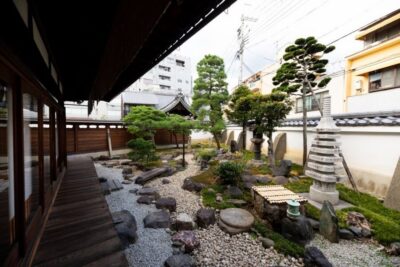
Tea Ceremony in 100-year-old Kyo-Machiya Townhouse
Read our review →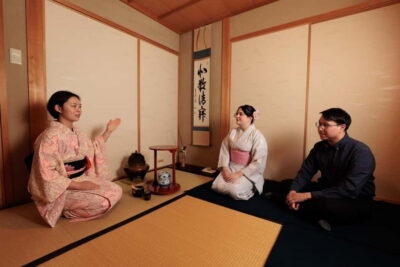
Browse the lists this tour appears in