
Review · KYOTO
Kyoto Newly Opened Private Tea Ceremony – Sanjo Chasuian
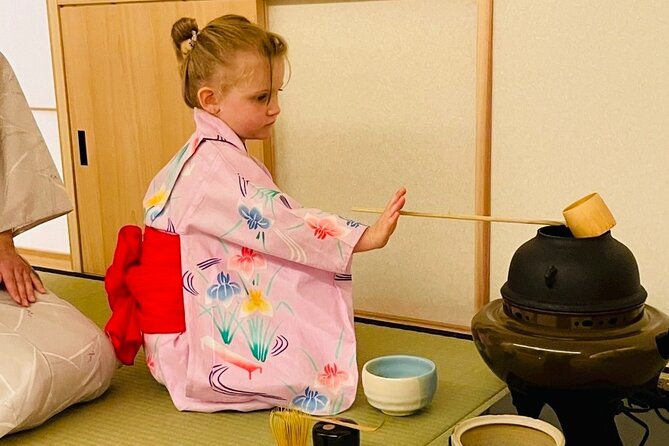
Tea ceremony, minus the crowd. At Sanjo Chasuian, you get a private, English-guided introduction to matcha in central Kyoto, just five minutes from Karasuma Oike Station. I like the quiet one-group setting, and I like that you do more than watch: you choose a tea bowl and whisk your own matcha.
The experience also includes two bowls of Kyoto matcha and a seasonal Japanese confection from a sweet shop with more than a century of history. The main catch is strict timing. Arrive late, even by one minute, and you cannot enter or receive a refund.
For families, couples, and first-time visitors, this is a gentle way to meet one of Japan’s most careful traditions without committing to a long cultural program. Just remember to wear or bring socks, and book the private plan if you have children under five or need an interpreter.
Key points at a glance
- Five minutes from Karasuma Oike Station: The central location makes this easy to fit between sightseeing stops in Kyoto.
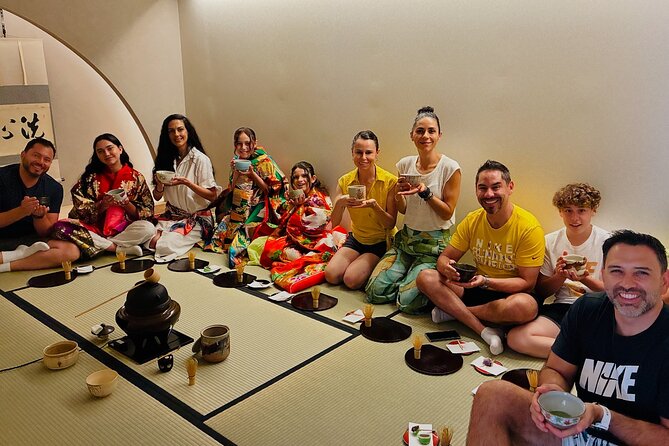
- Private room for your group: No other participants share the session, so families and small parties can proceed at their own pace.
- Two bowls of matcha: The host prepares one, then you whisk the second yourself or with a companion.
- A real nijiriguchi entrance: The low crawl-in doorway gives the tea room a traditional point of entry and a clear change of mood.
- Seasonal Kyoto confection included: You receive a beautifully made sweet from a Kyoto shop with over 100 years of history.
- English guidance throughout: You can follow the movements, utensils, and customs without needing a separate interpreter.
A quiet introduction in central Kyoto
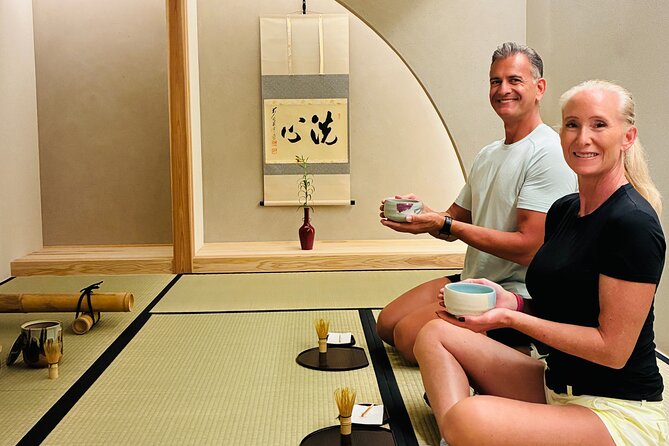
Sanjo Chasuian sits at 324-2 Sanjōchō in Nakagyo Ward, a short walk from Subway Karasuma Oike Station. That location matters. You do not need a taxi ride across Kyoto or a full morning set aside for the activity. At about one hour, the session fits neatly into a day that may already include Nishiki Market, the Kyoto Imperial Palace area, or the downtown shopping streets.
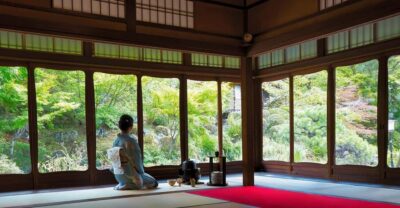
This is a newly opened facility offering tea ceremony experiences and sake tasting. The tea ceremony takes place in a serene, quiet setting, so the mood is quite different from the noise of central Kyoto just outside the door.
I like that contrast. You can be walking through a busy part of the city, then step into a room where small movements and silence receive most of the attention. The setting is not presented as a stage show. Instead, you are given a simple role in the ceremony and asked to pay attention to what you are doing.
The activity ends back at the same meeting point. There is no hotel pickup or private transportation, so you will need to make your own way there and back.
More Private Tea Experiences in Japan
- Private Tea Ceremony and Sake Tasting in Kyoto Samurai House
★ 5.0 · 163 reviews - Kyoto: Private Tea Ceremony with a Garden View
★ 4.9 · 61 reviews - Kyoto Private Tea Ceremony with Tea Master at Home
★ 5.0 · 58 reviews
Entering through the nijiriguchi
One of the most distinctive details is the nijiriguchi, a low crawl-in entrance traditionally associated with the tea room. You do not simply walk through a standard doorway and take a seat. The low entrance asks you to lower yourself physically before the ceremony begins.
That small action helps explain the spirit of the tea room. Once inside, the outside world is meant to be left behind. The entrance is not only an architectural feature, but also a clear signal that the next hour will follow a different pace.
You should wear clothing that lets you move comfortably. The supplied details do not specify a required dress code, but socks are requested, so bring them if you are wearing open footwear. Since you may need to use the low entrance, very restrictive clothing would be a poor choice.
The tea room is designed for a quiet experience. You should expect explanations and demonstrations rather than a lively, constantly changing program. That is a strength if you want calm and concentration. It may feel too restrained if you prefer a fast-moving cultural show.
Watching the host prepare the first bowl
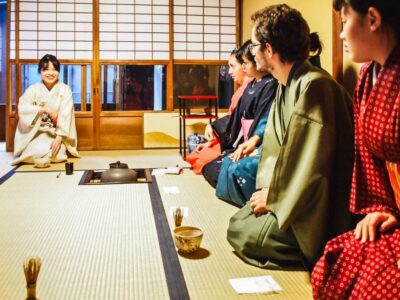
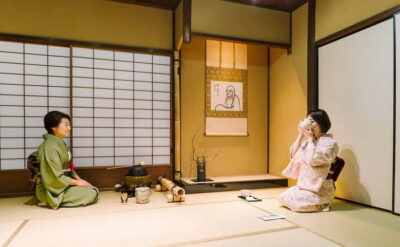
The ceremony begins with the host preparing a bowl of matcha. This first serving gives you a chance to observe before trying the process yourself.
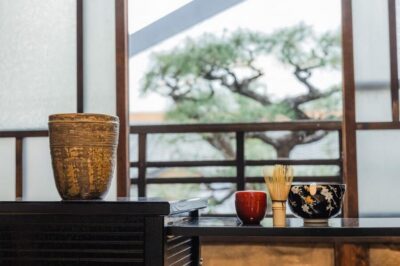
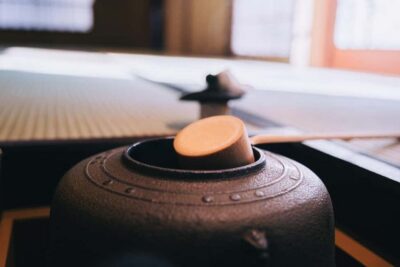
Tea ceremony is built around small details. The bowl, whisk, tea powder, movements, and order of actions all have meaning. English explanations help connect those details to the wider practice of serving matcha with care, respect, and attention to the present moment.
I find this observation-first structure useful for beginners. If you started by whisking immediately, you might focus so hard on making the drink that you missed the gestures around it. Watching the host first gives you a pattern to follow.
You receive one bowl prepared by the host. This is the easier half of the experience because you can focus on the taste, the setting, and the ceremony itself. You may also notice how different the moment feels from ordering matcha at a café. The emphasis here is not speed or customization. It is the act of receiving something prepared carefully for you.
The explanations are offered in English, which is especially valuable because tea ceremony can be difficult to understand through observation alone. Without context, a bow or utensil movement may seem decorative. With guidance, you can begin to see why the actions are done in a particular order.
Choosing a bowl and whisking your own matcha
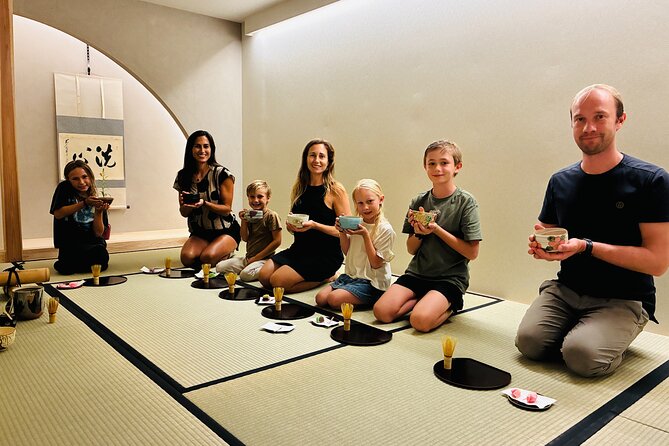
After watching the host, you choose a tea bowl and prepare the second serving yourself or with a companion. This is the most hands-on part of the session, and it gives the ceremony a practical edge.
You are not simply told about matcha. You handle the bowl and whisk, then try to copy the host’s movements. The aim is not to produce a perfect bowl on the first attempt. The point is to learn by doing and notice how much care goes into a task that can look simple from across the room.
For families, this part may be the easiest way to keep children involved, although children under five must be booked on a private plan. A private room also means your group does not need to worry about disturbing other participants while learning.
You can make the second bowl yourself or prepare it with a companion. That makes the activity work for different kinds of groups. A solo participant can focus on the technique, while a couple or family can share the task.
The private format is particularly useful here. You can ask for clarification, take time to observe a movement again, and work at a comfortable pace. The session is still only about one hour, but the absence of other groups should make the lesson feel less rushed.
More Tea Ceremonies in Kyoto
- Kyoto: Tea Ceremony in a Traditional Tea House in Kiyomizu
★ 4.9 · 3,519 reviews - Kyoto: Tea Ceremony Ju-An at Jotokuji Temple
★ 4.9 · 3,207 reviews - Kyoto: 45-Minute Tea Ceremony Lesson Experience
★ 4.3 · 2,378 reviews - Kyoto: Table-Style Tea Ceremony at a Kyo-Machiya
★ 4.9 · 1,211 reviews
Kyoto sweets add a seasonal finish
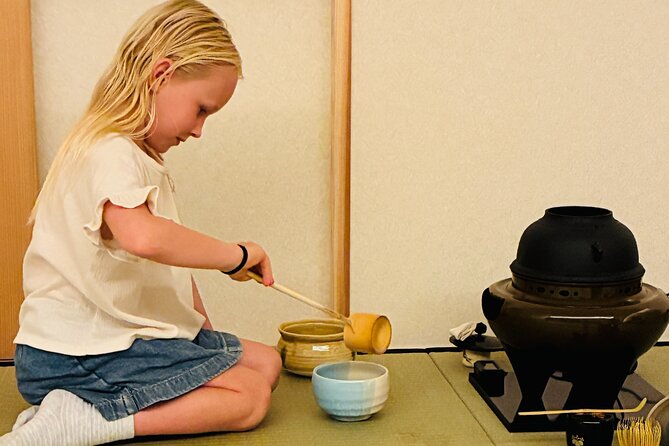
Along with the matcha, you receive a traditional seasonal Japanese confection from a Kyoto sweet shop with more than 100 years of history. The sweet is part of the experience, not an extra purchase.
Seasonal Japanese confectionery is often made to reflect the time of year through shape, color, and presentation. Specific flavors and designs are not provided, so you should not expect a particular sweet. The important point is that the confection is selected as a traditional companion to the matcha.
The pairing also helps you understand the balance of the ceremony. The sweet is served before or alongside the bitter tea so your palate can appreciate the matcha differently. You are not just tasting two unrelated items. The food and drink are meant to work together.
This detail adds value to the ¥137.44 per-person price. You are paying for a private, guided session with two servings of matcha, a traditional sweet, and the use of a dedicated tea room. It is not the cheapest way to drink matcha in Kyoto, but it offers more instruction and privacy than a simple café visit.
The value is strongest for someone who wants cultural context. If you only want to sample matcha quickly, the price may feel high for one hour. If you want to understand the ceremony and try it yourself, the private format makes the cost easier to justify, especially for a small group using a group discount if available.
What the private plan changes
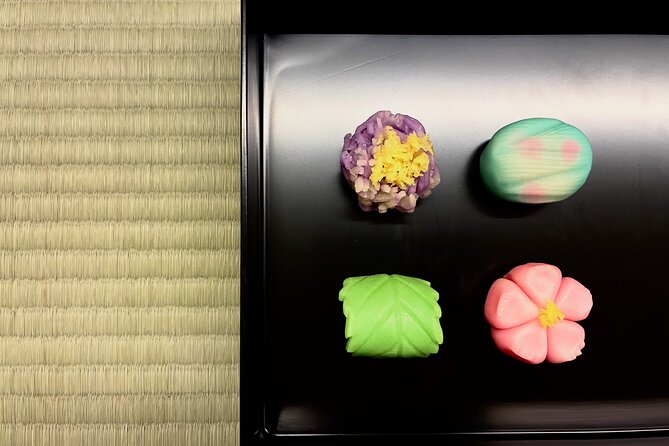
The private plan reserves the session for your group alone. No other participants join you, which gives the activity a more personal feel and removes the pressure of learning in front of strangers.
This is a strong choice for families. You can enjoy the ceremony at your own pace, and children have a more forgiving setting for a formal cultural activity. The private plan is also required if your group includes a child under five or someone who needs an interpreter.
That rule is important. If you book a shared plan when a private plan is required, participation and refunds are not available. Check the booking type before paying, especially if you are traveling with a young child.
The private format also suits couples and small groups who want a quiet cultural break. It may be less appealing to solo visitors who enjoy meeting other people during group activities, although the English guidance and hands-on structure still make it suitable for an individual booking if the price works for you.
The atmosphere remains formal and quiet. Do not expect a casual social gathering or a large demonstration. Sanjo Chasuian is better for concentration than conversation.
The optional uchikake coat experience
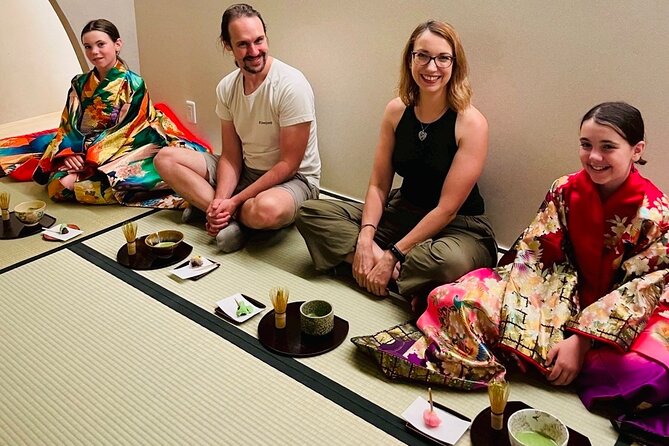
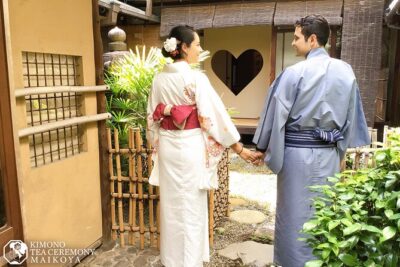
An optional uchikake coat-like kimono experience is available for ¥1,500, tax included. You can ask the staff about it on the day.
The information provided does not say how long the coat portion takes or whether it includes photography, so I would treat it as an add-on rather than a central part of the tea ceremony. It may appeal if you want a more visual, traditional presentation for your visit.
Because the tea ceremony itself lasts about one hour, ask about the timing before adding the coat experience. The ceremony begins at a fixed time, and the venue has strict entry rules. The safest approach is to arrive early, settle in, and ask about the coat once you are there.
Timing rules you should take seriously
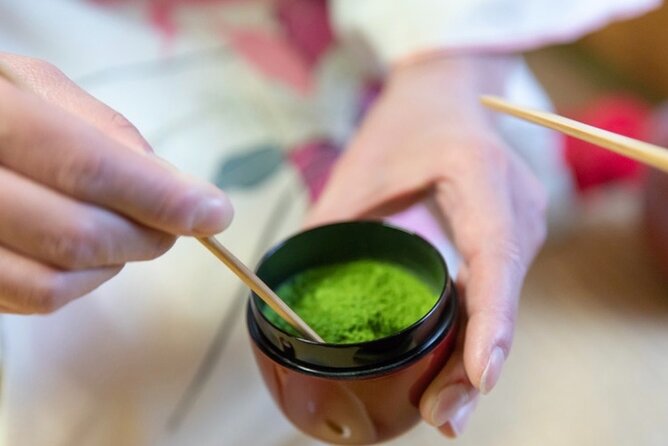
Entry is allowed from five minutes before the scheduled start. Once the session begins, the door is locked. Even one minute late means you cannot join, and no refund is given.
This is stricter than many sightseeing activities, but it fits the quiet nature of the ceremony. Opening the door for late arrivals would interrupt the room and break the concentration of the group.
Give yourself extra time to find the address. The venue is close to Karasuma Oike Station, but Kyoto streets can still cause confusion, especially if you are moving between subway exits or using a map app. Arriving only at the scheduled start is taking a needless risk.
The booking is non-refundable and cannot be changed for any reason. Confirmation is issued within 48 hours, subject to availability, so check that confirmation before building the rest of your day around the session.
The facility offers a grand opening discount until September 15. Since promotional pricing can change, check the current total when you book rather than assuming the discount will still apply.
Who will get the most from this ceremony?
I would recommend Sanjo Chasuian to you if you want a short, focused introduction to Japanese tea culture. The English explanations, private room, and chance to whisk your own bowl make it more useful than simply watching a demonstration.
It is also a good fit for families, particularly those who prefer a calm, private setting. The private plan is required for children under five, and the one-hour length is manageable for many family schedules.
Couples may appreciate the quiet atmosphere and shared preparation of the second bowl. Small groups can use the private setting to ask questions and take part without feeling self-conscious.
You may want to skip it if you dislike formal, quiet activities or if you are only looking for a quick drink. The strict arrival policy also makes it a poor choice for a day packed with unpredictable connections.
With just two published ratings, the clearest praise concerns the educational quality and the family-friendly sense of calm. That matches the design of the experience: it is not trying to entertain you with a long sequence of sights. It is teaching you to notice one carefully ordered ritual.
Should you book Sanjo Chasuian?
Book it if you value privacy, English instruction, and participation over a low-cost tasting. The combination of two matcha servings, a seasonal Kyoto sweet, a nijiriguchi entrance, and hands-on whisking gives you a proper introduction in about an hour.
Before booking, confirm that the private plan suits your group, especially if you have a child under five or need an interpreter. Wear socks, arrive at least five minutes early, and allow extra time to find the venue.
For a first tea ceremony in Kyoto, this is a practical and thoughtfully paced choice. The price is not budget level, but the private room and personal instruction give it a clear reason to cost more than a café visit.
FAQ
Where is the tea ceremony held?
It is held at Tea Ceremony & Sake Tasting Kyoto, Sanjo Chasuian, at 324-2 Sanjōchō, Nakagyo Ward, Kyoto, 604-8205, Japan.
How far is the venue from public transportation?
The venue is about a five-minute walk from Karasuma Oike Subway Station.
How long does the experience last?
The tea ceremony lasts approximately one hour.
Is the experience private?
Yes. The private plan is reserved exclusively for your group, with no other participants present.
Is English guidance available?
Yes. All guidance and explanations are offered in English.
How much matcha is included?
Two servings of Kyoto matcha are included. The host prepares one, and you whisk the second yourself or with a companion.
Is a Japanese sweet included?
Yes. A traditional seasonal Japanese confection from a Kyoto sweet shop with more than 100 years of history is included.
Can families with young children attend?
Families are welcome, but groups with children under five must book the private plan. If the wrong plan is booked, participation and refunds are not available.
Do I need to wear socks?
You should bring or wear socks during the experience.
What happens if I arrive late?
Entry is allowed from five minutes before the start. Once the session begins, the door is locked. Even one minute late means you cannot join, and no refund is provided.
Is the uchikake coat experience included?
No. The optional coat-like kimono experience costs ¥1,500, including tax, and you can ask the staff about it on the day.
Can I cancel or change my booking?
No. The experience is non-refundable and cannot be changed for any reason.
More Private Tea Experiences in Kyoto
- Stunning Private Tea Ceremony: Camellia Garden Teahouse
★ 5.0 · 28 reviews - KYOTO: Private Tea Ceremony in Hidden Townhouse (Kid-Friendly)
★ 5.0 · 20 reviews - Kyoto Private Tea Ceremony at a Japanese Inns
★ 5.0 · 12 reviews - Kyoto Private Tea Ceremony at a Japanese Inns
★ 5.0 · 3 reviews
Just added around Kyoto
- Uji Walking Tour – Byodo-in temple and Tea Ceremony from Kyoto★ 3.5 · 3 reviews
- Tea ceremony at Kyoto’s Zen Temple Teahouse★ 5.0 · 2 reviews
- Kyoto: Authentic Tea Ceremony in a Small Group★ 5.0 · 7 reviews
- Tea Ceremony in 150 Years Old Townhouse with Tables and Chairs★ 5.0 · 22 reviews
- Silent Beauty of Kyoto Zen Walk and Tea Experience★ 5.0 · 2 reviews
- Tea Ceremony Experience in Traditional Kyoto Townhouse★ 5.0 · 19 reviews
- Traditional Tea Ceremony in Kyoto★ 4.5 · 3 reviews
- Kyoto Private Tea Ceremony at a Japanese Inns★ 5.0 · 12 reviews
Tea Ceremonies in Kyoto, compared.
Tea Ceremony in a Traditional Tea House in Kiyomizu
Read our review →
Tea Ceremony in 100-year-old Kyo-Machiya Townhouse
Read our review →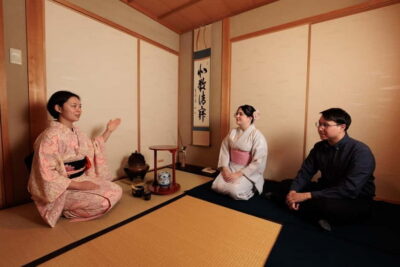
Browse the lists this tour appears in