
Review · KYOTO
Kyoto: Private Tea Ceremony with a Garden View
Quiet Kyoto begins with tea. At Camellia Garden, you enter a private 100-year-old house across from Ryoan-ji and spend an hour learning the manners, meaning, and motions behind matcha. I especially like the peaceful garden setting and the chance to prepare your own bowl of tea, rather than simply watching a demonstration. The main tradeoff is price: at $116 per person, this costs more than a basic group tea class.
The setting does much of the work here. You have the house to yourself, seasonal sweets from one of Kyoto’s respected confectioners, and an English-speaking instructor who explains the ceremony in clear cultural context. I also like that chairs and tables are available, since sitting on the floor can turn a graceful ritual into a test of endurance.
Key points at a glance
- A private house across from Ryoan-ji: You can pair the ceremony with Kyoto’s famous Zen temple, Ninna-ji, and Kinkaku-ji.
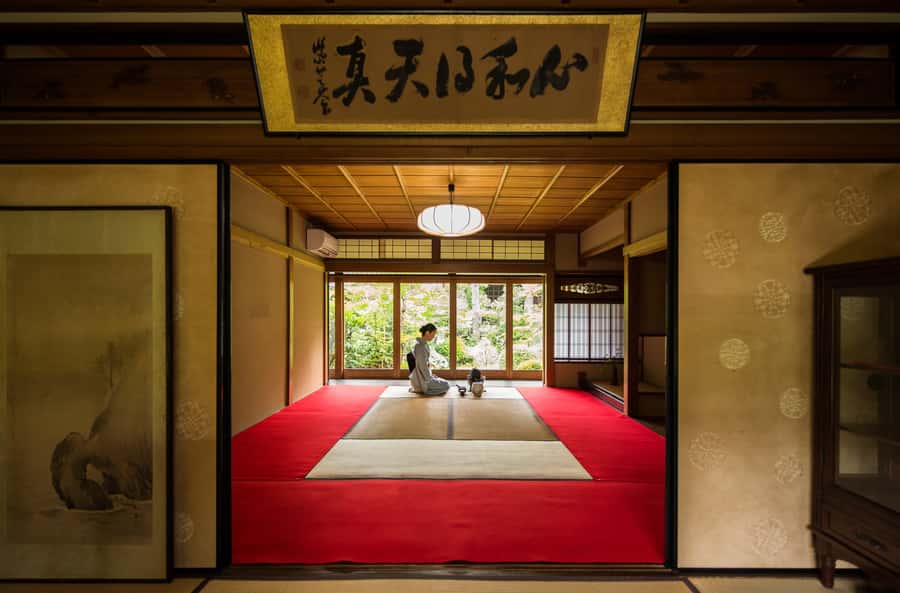
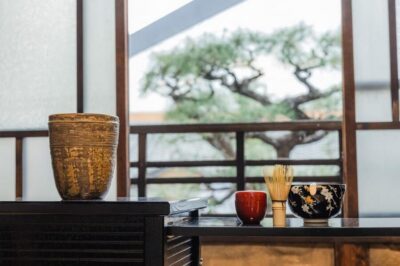
- Two traditional Japanese gardens: The opening explanation looks toward the front garden, while the ceremony takes place with the main garden behind it.
- A hands-on matcha lesson: After watching the host, you make your own bowl of tea with the provided tools.
- Seasonal sweets for many diets: The sweets are gluten-free, nut-free, and vegan.
- Comfort without losing tradition: Chairs and tables are available, and the teahouse is wheelchair accessible.
- A genuinely private hour: There is no shared group crowd, and you can ask questions and take photos without rushing.
Entering a 100-year-old house beside Ryoan-ji
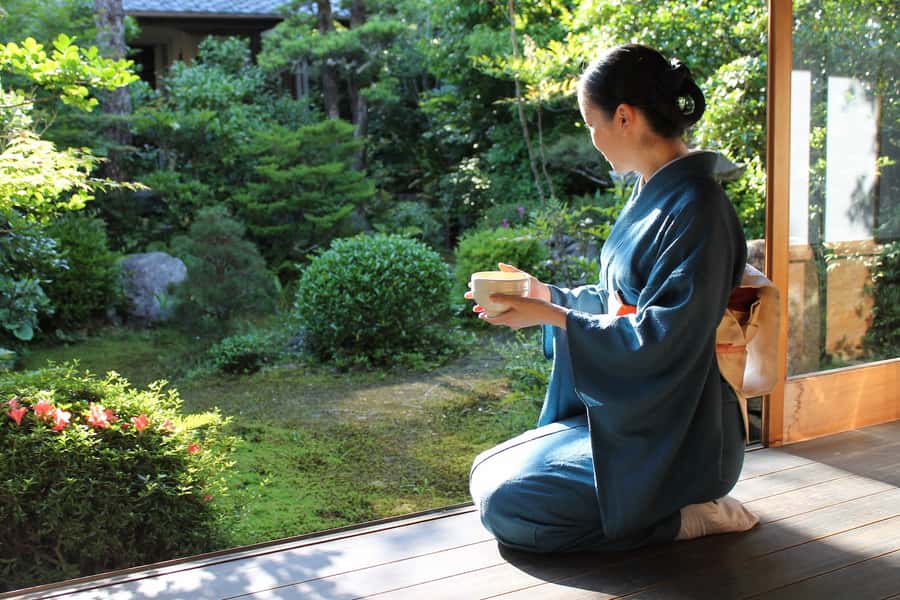
The first pleasure is finding the place. Camellia Garden sits across the road from Ryoan-ji, one of Kyoto’s best-known Zen temples. From the Ryoan-ji Mae bus stop, a small path leads slightly downhill to a residential street. The house is the first one on your right, behind a high wall.
That location gives the experience a useful sense of place. You are not being taken to a generic activity room in the middle of a commercial district. You are entering a traditional home with a long connection to the nearby temple, and the quiet residential setting helps mark a clear break from Kyoto’s busy sightseeing routes.
The house is also close to several major sights. Ryoan-ji, Ninna-ji, and Kinkaku-ji, the Golden Pavilion, can all be reached on foot from the teahouse. Myoshin-ji, Kyoto’s largest Zen complex, is nearby as well. That makes the ceremony easy to fit into a day in northwest Kyoto, especially if you plan your temple visits before or after the tea.
The nearest tram stop is Ryōanji-eki on the Keifuku Randen line, less than a 10-minute walk away. The tram also links with Hakubaicho, near Kitano Tenmangu Shrine, Arashiyama, and Shijo Omiya, close to the western side of central Kyoto. Public transport toward the city center is within a short walk.
You need to arrange your own transportation. There is one parking space for the duration of the ceremony, and a taxi can be arranged if you ask upon arrival.
More Private Tea Experiences in Japan
- Private Tea Ceremony and Sake Tasting in Kyoto Samurai House
★ 5.0 · 163 reviews - Kyoto Private Tea Ceremony with Tea Master at Home
★ 5.0 · 58 reviews - Stunning Private Tea Ceremony: Camellia Garden Teahouse
★ 5.0 · 28 reviews
The front garden and the first taste of matcha culture
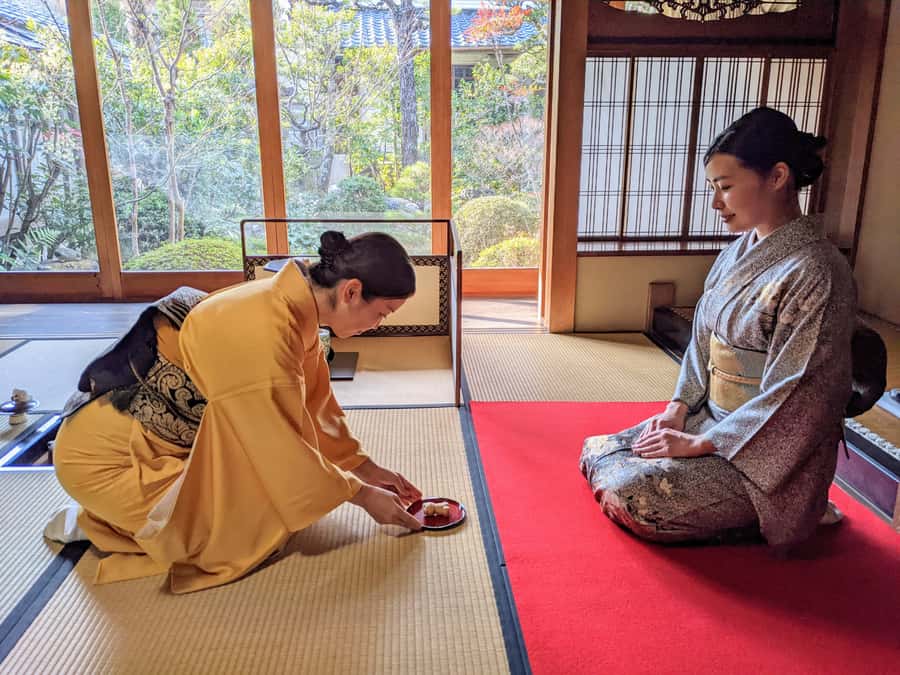
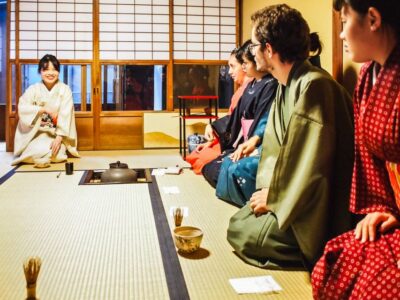
The experience begins in a sofa room looking toward the front garden. This is a smart way to start. You get a comfortable introduction before moving into the more formal tearoom, and the garden view gives you something peaceful to look at while the instructor explains the setting.
The opening talk covers the history and culture surrounding tea. The best part of this introduction is not memorizing Japanese terms. It is learning why the ceremony is arranged so carefully, why each movement has purpose, and how matcha fits into Japanese hospitality.
You also receive seasonal sweets from one of Kyoto’s renowned confectioners. These are not just a small snack placed beside the tea. They prepare your palate for the bitter matcha that follows, and their seasonal character connects the experience to the Japanese habit of noticing the time of year through food.
Dietary details are unusually clear here. The sweets are gluten-free, nut-free, and vegan. That does not mean you should skip mentioning other food needs when you book, but it removes several common worries.
The instructor teaches in English, and the strongest praise for this activity centers on the warm welcome and careful cultural explanation. You should expect an educational session, not a silent performance. If you are curious about the tools, the gestures, or the relationship between the tea room and the garden, you will have time to ask.
Watching the ceremony with the main garden behind it
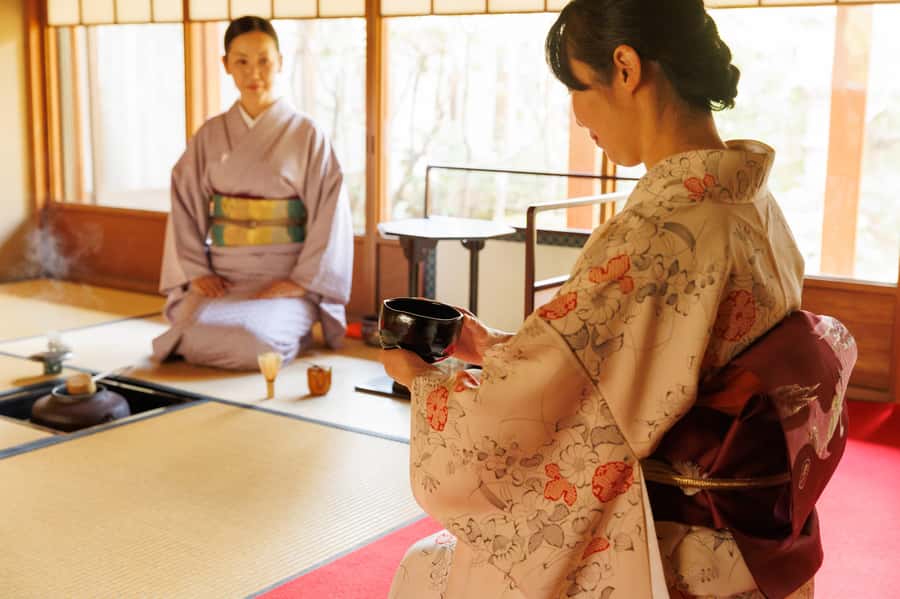
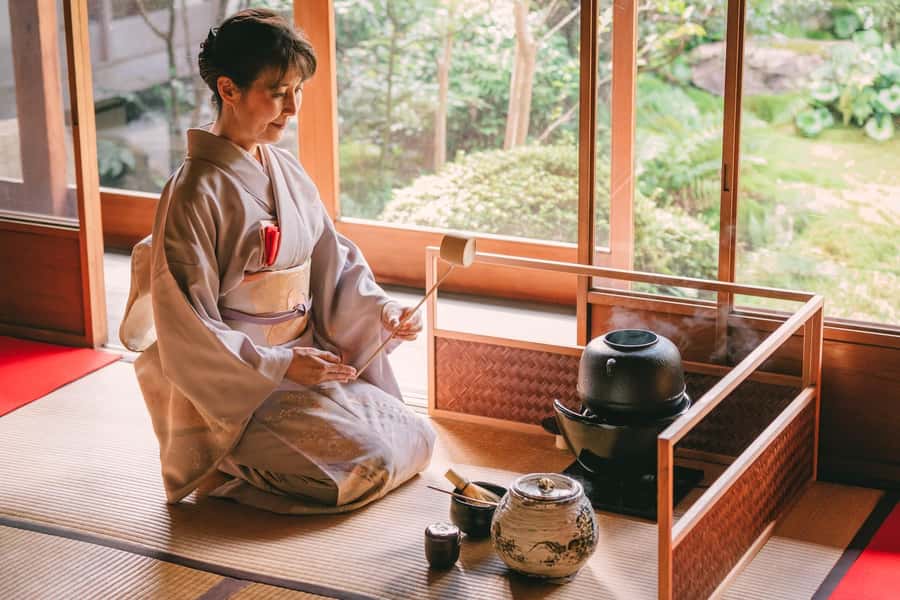
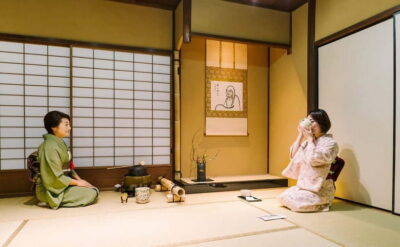
After the introduction, the host moves you into the tearoom. This is the most formal portion of the hour, with the main garden as the backdrop.
You watch an authentic tea ceremony before making tea yourself. That order matters. A demonstration gives you a model for the movements and helps you see details that are easy to miss if you start handling the whisk immediately.
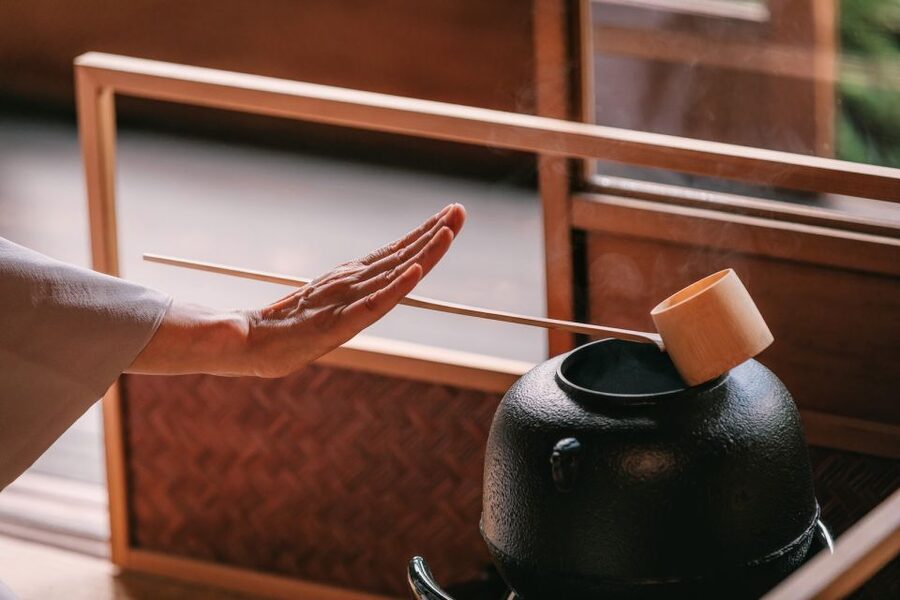
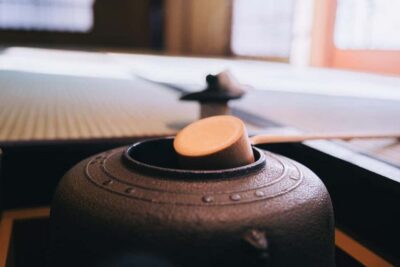
The ritual may look simple from the outside, but its power comes from the deliberate pace. The host prepares and serves the tea with care, and you are given time to notice the tools, the arrangement of the room, and the relationship between the ceremony and the garden beyond it.
The private format makes a real difference here. There is no shared group waiting for the next step, no unfamiliar audience crowding the room, and no need to compete for the instructor’s attention. During the hour, the property is entirely yours.
That privacy is the main reason this experience costs more than a quick public tea demonstration. You are paying for the house, the personal instruction, the quiet, and the chance to ask questions at your own pace. If you want a low-cost introduction to matcha, the price may feel high. If you value a personal setting near several major temples, the cost is easier to justify.
Photography is allowed throughout the experience, but flash must be turned off. Video recording is not allowed. A camera or phone can capture the garden and your tea-making session, but try not to let photography take over the hour.
Making your own bowl of matcha
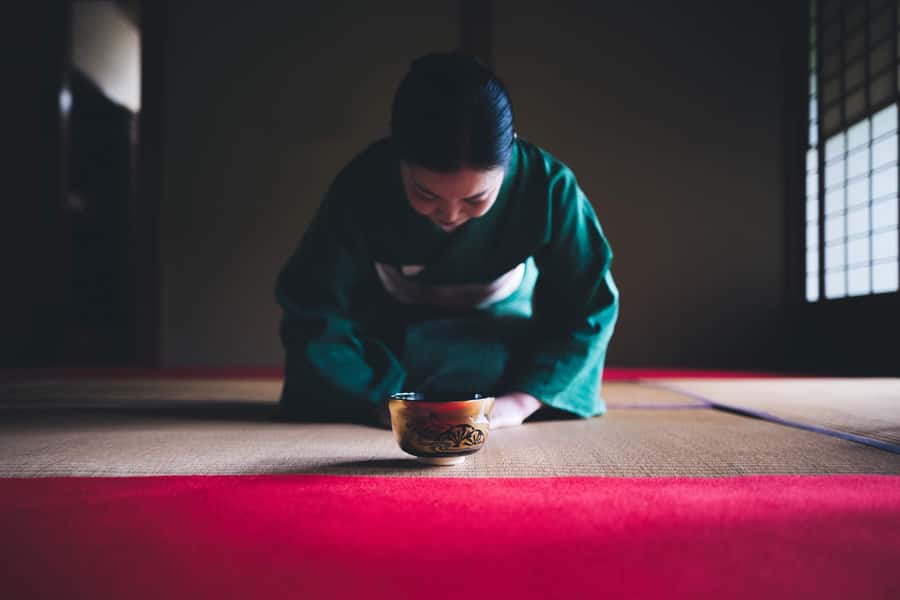
The hands-on section is where the experience becomes more than a demonstration. After you are served tea, you get the chance to prepare your own bowl of matcha using the supplied tools.
You do not need prior experience. The instructor provides everything needed to make the tea and guides you through the process. Expect the activity to be about learning the basic method, not producing a perfect bowl on the first attempt.
That small amount of participation gives you a better feel for matcha. You notice the texture, the whisking motion, and the care required to bring the tea together. It also gives you a practical memory to take home. After a ceremony that might otherwise feel like something you simply watched, you have done part of it yourself.
Several strong responses to this experience highlight the chance to make tea at the end. I can see why. The demonstration provides the cultural frame, while the hands-on portion gives you a personal connection to the ritual without turning the session into a rushed craft class.
You also have plenty of time for questions and photographs. That is useful if this is your first tea ceremony and you want clarification about etiquette. The setting is formal, but you are not expected to arrive already knowing how everything works.
More Tea Ceremonies in Kyoto
- Kyoto: Tea Ceremony in a Traditional Tea House in Kiyomizu
★ 4.9 · 3,519 reviews - Kyoto: Tea Ceremony Ju-An at Jotokuji Temple
★ 4.9 · 3,207 reviews - Kyoto: 45-Minute Tea Ceremony Lesson Experience
★ 4.3 · 2,378 reviews - Kyoto: Table-Style Tea Ceremony at a Kyo-Machiya
★ 4.9 · 1,211 reviews
Sitting on the floor is optional
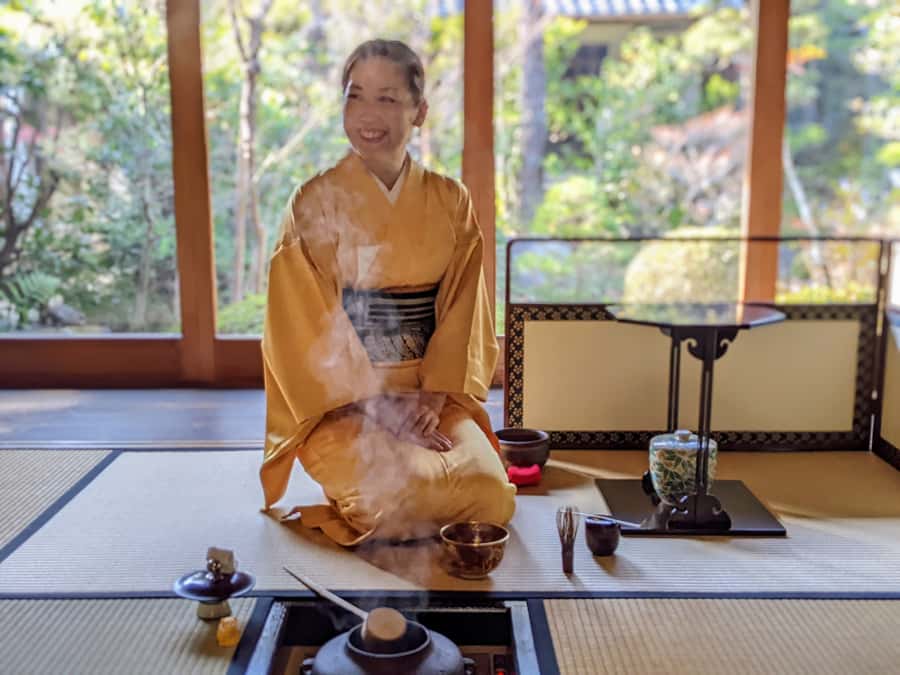
Traditional tea rooms often involve sitting on tatami flooring, which can be uncomfortable for people with limited mobility, knee problems, or simply a low tolerance for folded legs.
Here, chairs and tables are available. You can still take part in the ceremony without forcing yourself into a position that makes the hour unpleasant. This is one of the most practical details of the experience, and you should request the arrangement you need.
The teahouse is wheelchair accessible, and there is a toilet available. Guides and translators can join as an additional person free of charge. If you have special requirements, contact the provider in advance rather than leaving the matter to chance.
The activity is listed for private groups, so the format suits couples, families, and small parties who want the instructor’s full attention. It may also work well for someone who wants a calm cultural activity but does not want to perform in front of strangers.
What the $116 price really buys
At $116 per person for one hour, this is not a bargain tea tasting. The value comes from the combination of setting and privacy.
Your fee covers matcha, seasonal sweets, all tea-making equipment, and a personal English-speaking instructor. It also gives you exclusive use of the house during the experience. In a crowded city where many cultural activities are built around large groups, that private hour is the central purchase.
The house itself is part of the experience. You are not just consuming a drink. You are seeing how tea fits into a traditional Japanese property, with two gardens and a direct connection to the Ryoan-ji area.
I would consider the price worthwhile if you are already planning to visit the northwest temple district and want a slower activity between major sights. I would think twice if your main goal is simply to taste matcha or learn the basic whisking motion. A less expensive class could cover that narrower aim.
The one-hour duration also helps with planning. It is long enough to include an introduction, seasonal sweets, a formal ceremony, your own tea preparation, questions, and photos. It is short enough to fit around temple visits without taking over the day.
Flexible booking adds some practical value. You can reserve now and pay later, and cancellation is free up to 24 hours in advance. Starting times vary, so check availability before building your temple route around the ceremony.
How to fit the ceremony into a northwest Kyoto day
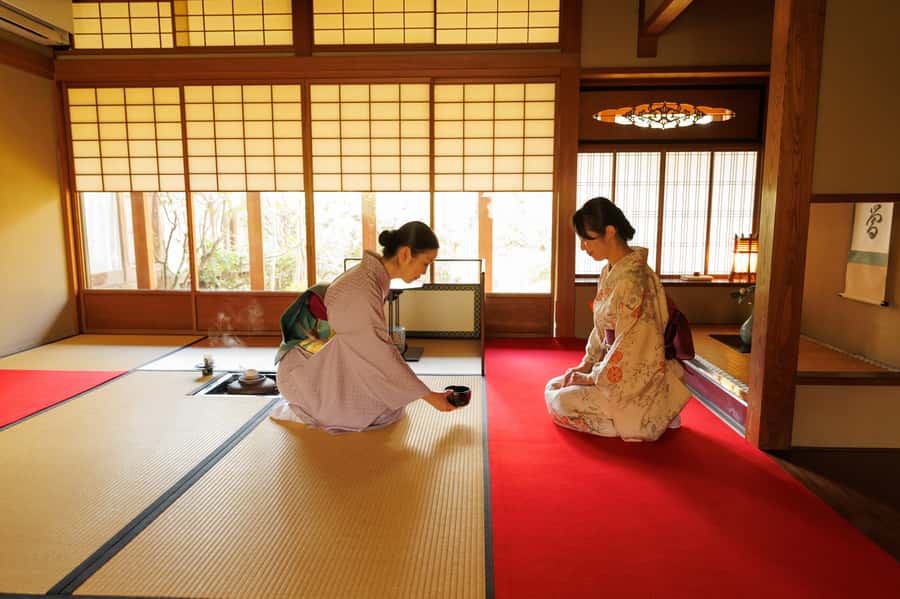
The location works best as part of a temple-focused day. Ryoan-ji is directly across the road, so you can visit it before the tea or return afterward. Ninna-ji and Kinkaku-ji are also accessible on foot, although you should allow enough time for each site rather than treating them as quick stops.
A sensible plan is to begin with one temple, attend the tea ceremony, then continue to another nearby sight. The tea hour provides a quiet pause between larger cultural attractions. It also keeps you in the same part of Kyoto instead of sending you back and forth across the city.
The Randen tram adds another useful option. You can connect toward Arashiyama or Shijo Omiya, or head toward Hakubaicho and Kitano Tenmangu Shrine. Check your timing carefully, since the ceremony itself is fixed to the available start times.
Arrive with enough time to find the house. The meeting point is on a residential street, and the high wall can make the property less obvious than a large temple entrance. Look for the first house on the right after the small path from the Ryoan-ji Mae bus stop.
Who will appreciate this tea ceremony most
I would recommend this experience to you if you want:
- A private cultural activity rather than a large group demonstration
- A peaceful setting near Ryoan-ji and other important temples
- Clear English explanations of tea culture and ceremony etiquette
- A chance to prepare matcha yourself
- Seasonal sweets with gluten-free, nut-free, and vegan ingredients
- A comfortable option with chairs, tables, and wheelchair access
- A gentle, one-hour activity that fits into a busy sightseeing day
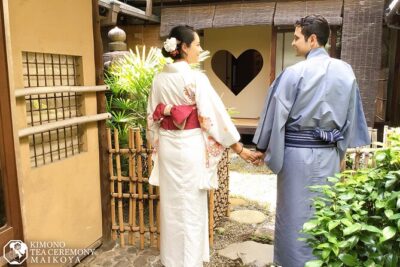
It is less suitable if you want a kimono experience, since kimono rental or dressing is not included. It is also not a full meal, and transportation to the house is your responsibility.
The ceremony is best for people who enjoy small details and quiet attention. If you prefer fast-moving attractions, elaborate costumes, or a long cooking workshop, this may feel too restrained. If you want to understand a Japanese tradition in its proper setting, the pace is a strength.
Should you book Camellia Garden?
Book it if privacy, setting, and personal instruction matter more to you than finding the cheapest matcha activity. The 100-year-old house, two gardens, seasonal sweets, and location across from Ryoan-ji create a thoughtful hour that feels connected to Kyoto rather than added on top of it.
The strongest reasons to choose it are the calm atmosphere, kind English-speaking instruction, and hands-on tea preparation. The main caution is the $116 price for 60 minutes. You are paying for an exclusive cultural setting, not a large number of activities.
For a first tea ceremony, a couple seeking a quiet experience, or anyone planning to visit Kyoto’s northwest temples, I think the price can make sense. For a quick introduction to matcha on a strict budget, choose something simpler.
FAQ
Where is the tea ceremony held?
Camellia Garden is across the road from Ryoan-ji temple in Kyoto. From the Ryoan-ji Mae Bus Stop, follow the small path slightly downhill to a residential street. The house is the first one on the right, surrounded by a high wall.
How long does the experience last?
The tea ceremony lasts one hour.
Is the experience private?
Yes. It is offered as a private group experience, and you have the house entirely to yourself during the ceremony.
Is the instruction available in English?
Yes. The instructor speaks English.
What is included in the price?
The experience includes matcha, traditional seasonal sweets, all the equipment needed to make tea, and your own personal instructor.
Can I sit on a chair instead of the floor?
Yes. Chairs and tables are available for anyone who finds sitting on the floor difficult.
Is the teahouse wheelchair accessible?
Yes. The teahouse is wheelchair accessible, and you can contact the provider in advance about special requirements.
Can I take photographs or record video?
You can take photographs during the experience, but flash must be turned off. Video recording is not allowed.
More Private Tea Experiences in Kyoto
- KYOTO: Private Tea Ceremony in Hidden Townhouse (Kid-Friendly)
★ 5.0 · 20 reviews - Kyoto Private Tea Ceremony at a Japanese Inns
★ 5.0 · 12 reviews - Kyoto Private Tea Ceremony at a Japanese Inns
★ 5.0 · 3 reviews - Kyoto Newly Opened Private Tea Ceremony – Sanjo Chasuian
★ 5.0 · 2 reviews
Just added around Kyoto
- Uji Walking Tour – Byodo-in temple and Tea Ceremony from Kyoto★ 3.5 · 3 reviews
- Tea ceremony at Kyoto’s Zen Temple Teahouse★ 5.0 · 2 reviews
- Kyoto: Authentic Tea Ceremony in a Small Group★ 5.0 · 7 reviews
- Tea Ceremony in 150 Years Old Townhouse with Tables and Chairs★ 5.0 · 22 reviews
- Silent Beauty of Kyoto Zen Walk and Tea Experience★ 5.0 · 2 reviews
- Tea Ceremony Experience in Traditional Kyoto Townhouse★ 5.0 · 19 reviews
- Traditional Tea Ceremony in Kyoto★ 4.5 · 3 reviews
- Kyoto Private Tea Ceremony at a Japanese Inns★ 5.0 · 12 reviews
Tea Ceremonies in Kyoto, compared.
Tea Ceremony in a Traditional Tea House in Kiyomizu
Read our review →
Tea Ceremony in 100-year-old Kyo-Machiya Townhouse
Read our review →
Browse the lists this tour appears in