Review · KYOTO
Kyoto Tea ceremony with Japanese Flower Arrangement Ikebana
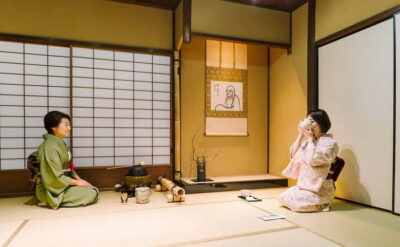
Quiet Kyoto has its own lessons. This 90-minute Ikebana and tea ceremony experience takes place in a roughly 100-year-old traditional townhouse near Kinkaku-ji and Daitoku-ji. You choose seasonal flowers, arrange them with guidance, then display your work in the alcove of a Japanese room before learning the manners and movements of tea ceremony.
I like the small maximum of six people, which keeps the class personal, and I like that beginners are welcome without making the art feel watered down. The family-like setting has earned praise for being warm and peaceful, especially for solo visitors. The main consideration is timing: at $61, this is good value for two traditional arts, but the session is short, and you should not expect a long formal tea gathering or a full sightseeing tour.
Key points at a glance
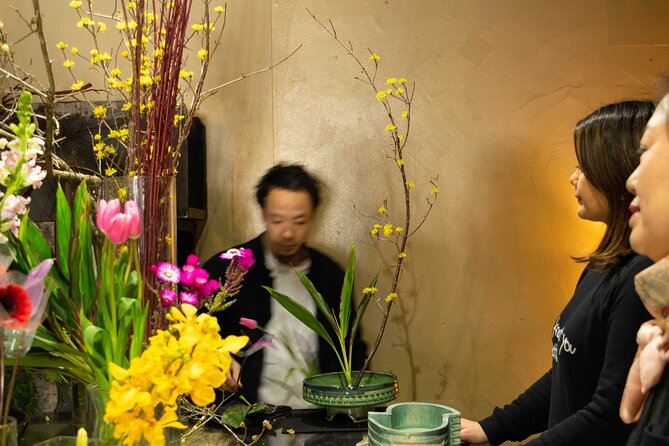
- Choose your own seasonal flowers: The experience begins in a flower shop, where you select the blooms for your arrangement.
- Work in a 100-year-old townhouse: The setting gives the class a sense of place rather than putting it in a generic studio.
- Learn two Japanese arts in one session: You first create Ikebana, then move into tea ceremony.
- Display your work in a tokonoma: Your arrangement becomes part of the tea room before the ceremony begins.
- Small groups of up to six: The size allows for individual help and suits solo participants.
- Take your arrangement with you: You may bring your flowers back to your hotel after the class.
Starting with flowers near Kinkaku-ji
The meeting point is 44-4 Murasakino Kamimonzenchō in Kyoto’s Kita Ward, near the Kinkaku-ji Temple and Daitoku-ji Temple areas. The class takes place in a flower shop set inside a renovated traditional townhouse, about a century old.
That setting matters. You are not simply sitting in a modern classroom while someone gives a quick demonstration. The shop and townhouse connect the flowers to an older form of daily Japanese life. Even before the workshop starts, you are surrounded by the materials that make the lesson possible: seasonal flowers chosen for their natural form and beauty.
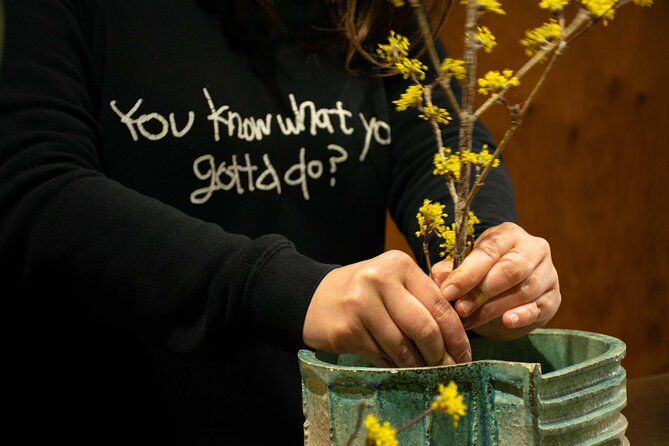
The first step is selecting your flowers. This gives you a small but meaningful choice. You are not handed an identical kit and told to copy a finished model. The flowers you choose help shape the final arrangement, so your work will have its own character.
You should expect seasonal variation. The exact flowers are not specified, and the point is to work with what is available at the time of your visit. That is part of Ikebana’s appeal. The arrangement reflects the season rather than trying to erase it.
More Tea and Calligraphy Workshops in Japan
- Kyoto: Tea Ceremony Meditation – Make Matcha with Tea Master
★ 4.8 · 406 reviews - Kyoto Hidden Riverside Zen Mediation and Uji Matcha Experience
★ 5.0 · 9 reviews - Kyoto: Nighttime Zen Meditation and Matcha Tea Experience
★ 5.0 · 7 reviews
What Ikebana teaches in a short workshop
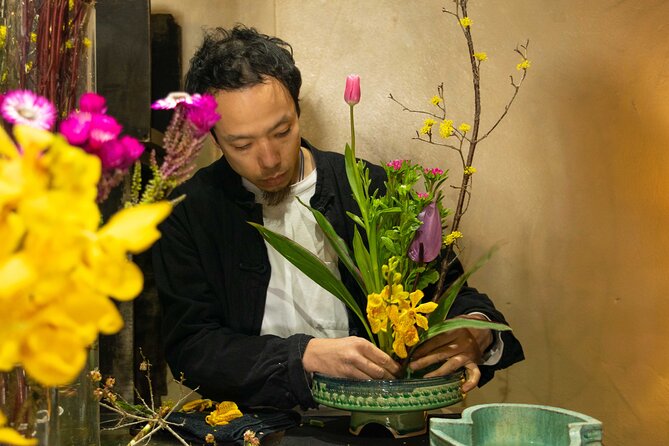
Ikebana is often described simply as Japanese flower arranging, but this class presents it as something more thoughtful. The focus is on respecting the natural shape of the plants and bringing out their beauty, rather than forcing every stem into a rigid pattern.
The instructor’s approach moves slightly away from strict classic forms. It has a simple, almost primitive quality, with an appreciation for wabi-sabi, the Japanese idea of finding beauty in natural irregularity, age, simplicity, and imperfection.
That makes this a friendly starting point for beginners. You do not need to arrive knowing the names of formal Ikebana schools or the rules of every traditional arrangement. You receive guidance as you work, and the emphasis is on seeing the flowers clearly and responding to their shapes.
I especially like the idea that your arrangement can become a form of self-dialogue. You are working with a few natural materials, making decisions about space and balance, and noticing how your choices change the feeling of the whole arrangement. That is a quieter activity than many Kyoto excursions, and it gives you time to slow down.
The workshop is also described as a meditative experience. That does not mean you will spend the whole class in silence. It means the process asks you to pay attention. You look at the line of a stem, the direction of a branch, and the spaces between blooms. The final piece is said to express something of your past and present, which may sound grand, but the practical point is simple: there is room for personal taste.
Displaying your arrangement in the tokonoma
After you create your Ikebana piece, it is placed in the tokonoma, the decorative alcove found in a traditional Japanese room. This is an important part of the experience because the arrangement is not treated as a craft project that ends when the last stem is cut.
The tokonoma gives the flowers a proper setting. In a Japanese room, the alcove is a place for a carefully chosen display, often one that changes with the season. Seeing your arrangement there helps you understand how Ikebana functions as part of a room, not just as an object in a vase.
This also creates a natural transition from flower arranging to tea ceremony. Your work becomes part of the room where the tea demonstration takes place. You can see how the flowers, the room, and the ceremony relate to one another.
You may also take your floral creation to your hotel afterward. That is useful if you want a physical reminder of the class, though the information does not specify how the arrangement is packaged or how long it will remain fresh. If you plan to carry it around Kyoto for hours, ask about transport before leaving.
Moving into the tea ceremony room
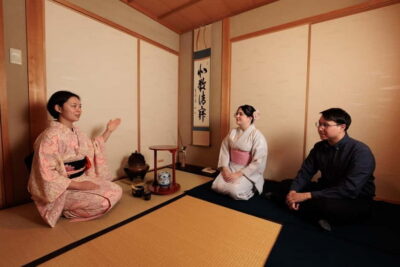
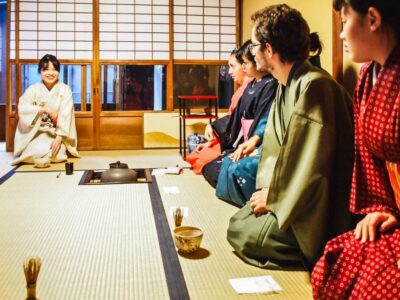
Once the Ikebana portion is finished, you move into the traditional Japanese room for tea ceremony. The class shows you how a tea ceremony master conducts the ritual, including the deliberate movements and respect built into the process.
The tea ceremony is not presented as a theatrical show detached from the flower workshop. Your own arrangement is in the alcove, so you can see how the setting has been prepared. That link makes the second half more personal than a stand-alone demonstration.
You may also take a role as the tea master. The details of that participation are not specified, so you should think of it as a chance to try the movements and understand the sequence, not as professional training. Still, it is a useful feature for anyone who wants more than simply watching.
Tea ceremony can seem mysterious if you only see it from the outside. A guided session helps explain why the host’s actions are careful and ordered. The value is not only in drinking tea. It is in learning how attention, hospitality, objects, and space work together.
The tea ceremony portion also gives the class a calm finish. After making decisions during the flower workshop, you settle into a more structured ritual. The change in pace is one reason the combined experience works well.
More Tea and Calligraphy Workshops in Kyoto
- Whisk Your Own Matcha: A Zen Matcha Experience at Temple
★ 3.6 · 7 reviews - Kyoto: Make Zen Garden and Taste Matcha in Pottery Shop
★ 5.0 · 5 reviews - Tea ceremony at Kyoto’s Zen Temple Teahouse
★ 5.0 · 2 reviews - Silent Beauty of Kyoto Zen Walk and Tea Experience
★ 5.0 · 2 reviews
Why the six-person limit matters
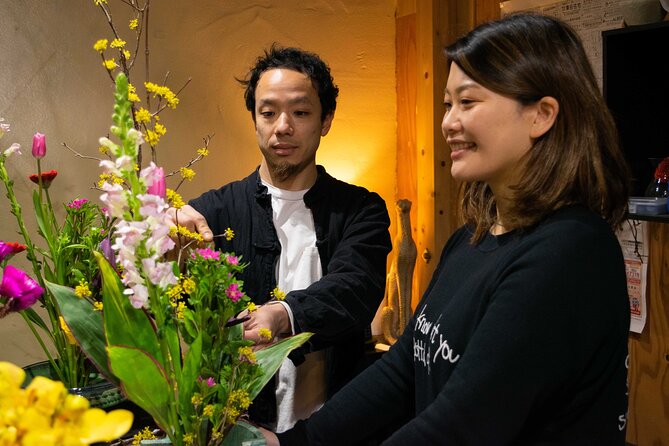
The maximum group size is six people. That is a strong advantage for a hands-on activity. Ikebana requires individual advice because every person may choose different flowers and arrange them in a different way.
A large class could turn the workshop into a demonstration with limited personal help. Here, the small size should make it easier to ask questions, show your arrangement, and receive suggestions as you work. It also fits the warm, family-like atmosphere praised in the available feedback.
This format suits solo visitors particularly well. You do not need to bring a companion to feel included, and the class gives you a shared activity without the pressure of a large group. Couples and small groups of friends can also work together while still having space for their own arrangements.
The small size does not guarantee a private class, since the maximum is six rather than one group only. If your priority is complete privacy, confirm the arrangement before booking. For most people, though, six is a comfortable limit.
The $61 price and what you receive
At $61, the cost covers two connected cultural activities in a small setting: a guided Ikebana workshop and a tea ceremony. You also receive the chance to choose flowers, display your arrangement in the tea room, and possibly take it with you afterward.
I see the value in the combination. A stand-alone flower class might teach you how to arrange stems, while a stand-alone tea experience might give you a demonstration. Here, each activity adds context to the other. The flowers help explain the room, and the room gives your arrangement a proper purpose.
The experience lasts about one hour and 30 minutes. That is enough time for a focused introduction, but not enough for an advanced course. You will probably leave with a basic understanding of Ikebana principles and tea ceremony etiquette rather than mastery of either art.
The price makes the most sense if you want a meaningful cultural activity close to the Kinkaku-ji and Daitoku-ji areas. It is less suitable if you are looking for a full-day program or a lengthy formal tea ceremony. You are paying for attention, setting, instruction, and the chance to participate, not for a long list of attractions.
Who will enjoy this Kyoto experience
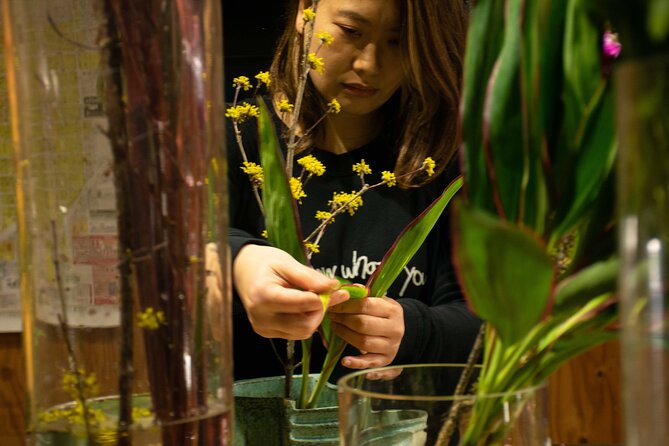
This class is a good fit for you if you want to see a quieter side of Kyoto. It offers a break from temple-hopping and gives you a way to engage with Japanese culture through your hands, not only through photographs.
Beginners are welcome, so you do not need prior experience with flower arranging or tea ceremony. It also suits people who enjoy creative activities but do not want a competitive or highly technical class.
I would recommend it especially for:
- Solo visitors seeking a friendly, small-group activity
- Couples who want a calm cultural experience
- First-time learners interested in Ikebana
- Visitors already planning time near Kinkaku-ji or Daitoku-ji
- Anyone drawn to meditation, seasonal flowers, and simple design
You may want to choose something else if you need a highly formal, lengthy tea ceremony or an advanced Ikebana lesson. The course is designed as an introduction and a personal cultural experience.
Practical details before you book
The meeting point is at 44-4 Murasakino Kamimonzenchō, Kita Ward, Kyoto, postal code 603-8217. The activity returns to this same location, so you do not need to arrange a separate end point.
The site is near public transportation, but exact route instructions are not provided. Give yourself enough time to find the townhouse and flower shop, especially if you are coming directly from a temple visit. Have the mobile ticket ready on your phone.
Confirmation is sent within 48 hours of booking, subject to availability. Since the class has a maximum of six people, booking ahead is sensible. Most people can participate, and service animals are allowed.
Free cancellation is available if you cancel at least 24 hours before the local start time. Cancellations within 24 hours are not refunded, and changes made inside that period are not accepted. Keep the cutoff in mind if your Kyoto plans may change.
A peaceful alternative to another temple visit
Kyoto offers no shortage of temples, but another temple visit is not always the best use of your afternoon. This class gives you a way to understand Japanese aesthetics through direct participation.
The strongest part is the connection between the two arts. You choose flowers, arrange them with guidance, place them in the tokonoma, and then see them as part of the tea ceremony. The experience is small, personal, and rooted in a real traditional setting.
The main limitation is its brief length. You will receive an introduction, not a complete education in Ikebana or tea ceremony. Still, the modest time commitment makes it easy to fit into a day around Kinkaku-ji or Daitoku-ji.
Should you book the Ikebana and tea ceremony?
Book this experience if you want a calm, hands-on introduction to Japanese culture and like the idea of creating something you can display or take back to your hotel. The small group, welcoming instructors, and family-like atmosphere are its biggest strengths.
Skip it if your priority is a long formal tea ritual, advanced flower-arranging instruction, or a sightseeing tour with many stops. For everyone else, $61 is a fair price for a focused 90-minute class that joins seasonal flowers, a traditional townhouse, and tea ceremony in one thoughtful session.
FAQ
Where does the Ikebana and tea ceremony take place?
It takes place at 44-4 Murasakino Kamimonzenchō, Kita Ward, Kyoto, 603-8217, Japan.
How long is the experience?
The experience lasts approximately one hour and 30 minutes.
What activities are included?
You choose flowers, create an Ikebana arrangement with instructor guidance, display it in a tokonoma, and then take part in a tea ceremony experience.
Is the class suitable for beginners?
Yes. Beginners are welcome to participate.
How many people can join?
The activity has a maximum of six participants.
Can I take my flower arrangement with me?
Yes. Participants who wish to do so may take their floral creation back to their hotel.
Does the activity end at the meeting point?
Yes. The activity ends back at the starting location.
Is the location near public transportation?
Yes. The meeting point is near public transportation.
Are service animals allowed?
Yes. Service animals are allowed.
What is the cancellation policy?
You can cancel at least 24 hours before the local start time for a full refund. Cancellations or changes made less than 24 hours before the start time are not accepted, and the amount paid is not refunded.
More Tea Ceremonies in Kyoto
- Kyoto: Tea Ceremony in a Traditional Tea House in Kiyomizu
★ 4.9 · 3,519 reviews - Kyoto: Tea Ceremony Ju-An at Jotokuji Temple
★ 4.9 · 3,207 reviews - Kyoto: 45-Minute Tea Ceremony Lesson Experience
★ 4.3 · 2,378 reviews - Kyoto: Table-Style Tea Ceremony at a Kyo-Machiya
★ 4.9 · 1,211 reviews
Just added around Kyoto
- Uji Walking Tour – Byodo-in temple and Tea Ceremony from Kyoto★ 3.5 · 3 reviews
- Tea ceremony at Kyoto’s Zen Temple Teahouse★ 5.0 · 2 reviews
- Kyoto: Authentic Tea Ceremony in a Small Group★ 5.0 · 7 reviews
- Tea Ceremony in 150 Years Old Townhouse with Tables and Chairs★ 5.0 · 22 reviews
- Silent Beauty of Kyoto Zen Walk and Tea Experience★ 5.0 · 2 reviews
- Tea Ceremony Experience in Traditional Kyoto Townhouse★ 5.0 · 19 reviews
- Traditional Tea Ceremony in Kyoto★ 4.5 · 3 reviews
- Sencha-do the Japanese Tea Ceremony Workshop in Kyoto★ 5.0 · 21 reviews
Tea Ceremonies in Kyoto, compared.
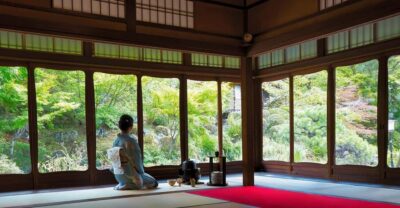
Tea Ceremony in a Traditional Tea House in Kiyomizu
Read our review →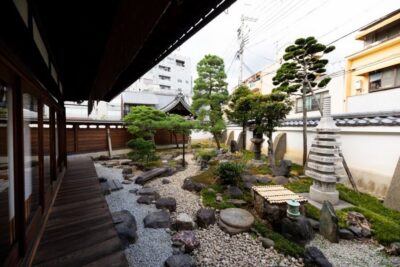
Tea Ceremony in 100-year-old Kyo-Machiya Townhouse
Read our review →