
Review · KYOTO
Kyoto Private Tea Ceremony with Tea Master at Home
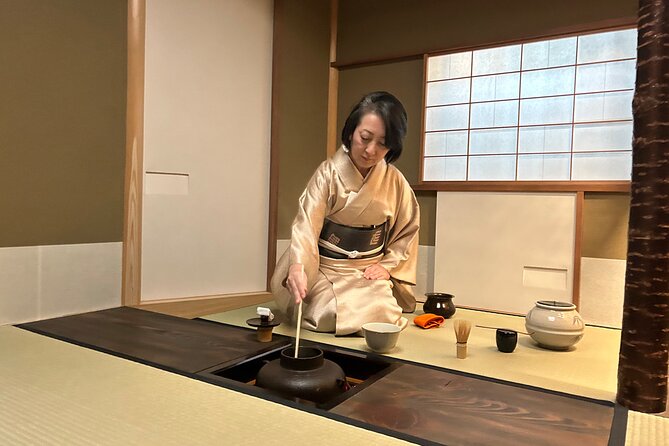
Quiet rituals, lasting memories. This private Kyoto tea ceremony brings you into a local home near Nijo Castle, where Aya-sensei explains the customs, prepares matcha, and guides you through the process. I like the small private setting and the chance to handle the bamboo whisk yourself. I also like the three seasonal wagashi sweets, made by a long-established Kyoto confectioner and suitable for vegan and gluten-free diets.
The main consideration is the short one-hour format. You will learn a great deal, but this is an introduction rather than a full study of tea ceremony. You must also arrive on time, wear socks, and dress modestly, since bare feet, shorts, mini skirts, and sleeveless tops are not permitted.
This suits adults and older teenagers who enjoy calm cultural experiences more than flashy entertainment. Children aged 13 and under cannot attend, and kimono rental is no longer part of the program.
Key points to know before booking
- Tea in a real Kyoto home: Enter a private tea room near Nijo Castle rather than a large commercial venue.
- Aya-sensei leads the session: Her clear English, patient teaching, and warm manner make the ceremony approachable.
- You prepare your own matcha: The demonstration includes hands-on whisking with a bamboo chasen.
- Two bowls of Uji matcha: You receive tea prepared with an original blend sourced from historic Uji tea gardens.
- Three seasonal wagashi sweets: The handmade treats are vegan and gluten-free, with flavors and shapes that change by season.
- Small details matter: Wear socks, skip perfume, arrive on time, and choose long pants or a long skirt with sleeves.
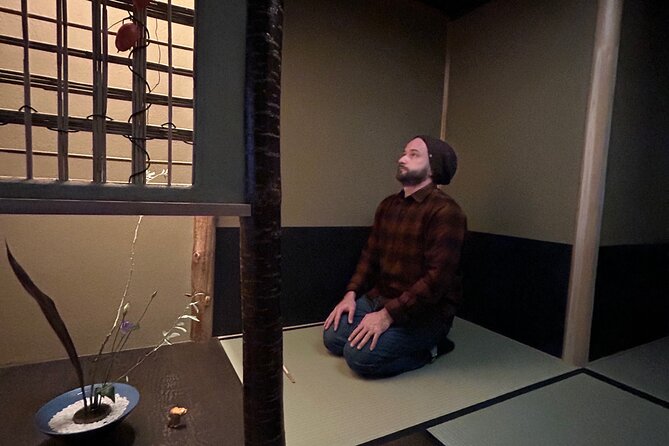
A private tea room near Nijo Castle
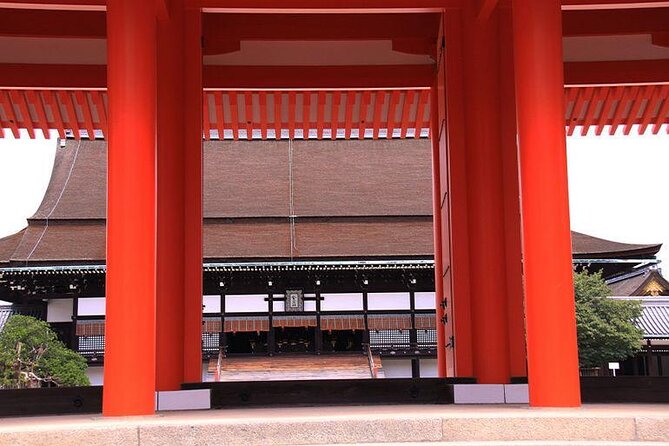
The experience takes place at Sakura Experience Japanese Culture Nijo Home, at 660 Izumicho in Kyoto’s Nakagyo Ward. It is close to Nijo Castle and near public transportation, making it easy to pair with a visit to the castle or the surrounding central Kyoto sights.
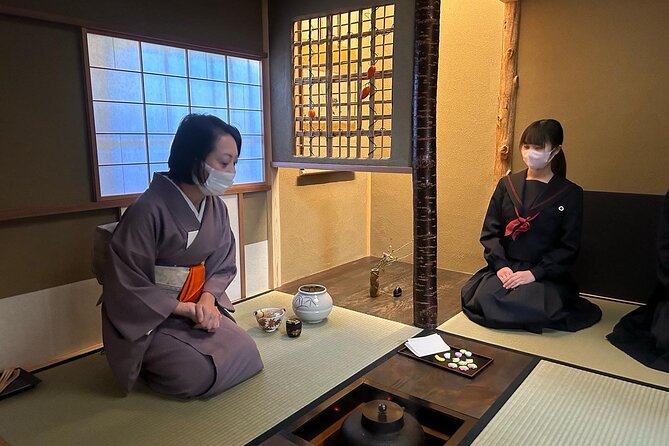
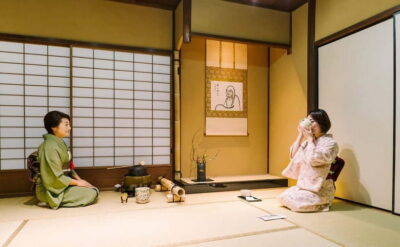
The address is a private residence, not a shopfront designed for crowds. That changes the mood from the moment you arrive. You enter a working home with traditional tea rooms called Koma and Hiroma, where the setting is intended for quiet attention rather than quick photographs.
This distinction matters. Large tea demonstrations can show you the broad outline of the ritual, but a private session gives you room to ask questions and watch small movements. Aya can explain why a bowl is placed in a certain position, how guests receive tea, and how the host prepares each part of the meeting.
The home has welcomed cultural figures, museum professionals, and dignitaries, but the tone remains friendly and personal. You are not expected to know the rules before you arrive. The point is to learn them in a respectful setting.
More Private Tea Experiences in Japan
- Private Tea Ceremony and Sake Tasting in Kyoto Samurai House
★ 5.0 · 163 reviews - Kyoto: Private Tea Ceremony with a Garden View
★ 4.9 · 61 reviews - Stunning Private Tea Ceremony: Camellia Garden Teahouse
★ 5.0 · 28 reviews
The first minutes: entering with care
Tea ceremony begins before the tea is served. Your arrival, clothing, and manner all affect the room.
Wear socks because guests sit on tatami and bare feet are not allowed. If you forget, socks can be purchased on site. Long pants or a long skirt and a top with sleeves are required. Avoid shorts, mini skirts, and sleeveless clothing.
Leave perfume at home, including strong musk-based scents. Fragrance can interfere with the smell of the tea, sweets, incense, flowers, and wood. In a compact tea room, even a small amount can dominate the air.
You should also arrive on time. More than 15 minutes late means you may not be admitted, with no refund. That rule is strict but understandable. A tea ceremony is built around sequence and concentration, and entering after the demonstration has begun would disrupt the group.
Small chairs are available if sitting on the floor is difficult. Tell the provider in advance so the room can be prepared.
Aya-sensei’s teaching style
Aya Ito, known as Aya-sensei during the ceremony, is the central strength of this experience. Her English is described as excellent, and she explains the history and etiquette in a calm, accessible way.
The best part of her approach is that she does not treat the ceremony as a test. You learn what to do, then try it yourself. If you make a mistake, the atmosphere remains relaxed. That is important because tea ceremony includes many small gestures, and a nervous visitor can easily become more focused on avoiding errors than enjoying the moment.
Her teaching also connects the motions to the wider spirit of tea. You learn that the ritual is not simply about making powdered green tea. Attention is given to the guest, the season, the utensils, the sweets, the room, and the host’s movements.
Past comments consistently praise her warmth, patience, and ability to make international visitors feel comfortable. Some people describe the session as one of the most memorable parts of their time in Japan. One family particularly appreciated that the experience worked well for a teenage daughter, although the formal age rule means children 13 and under cannot attend.
Watching the traditional preparation
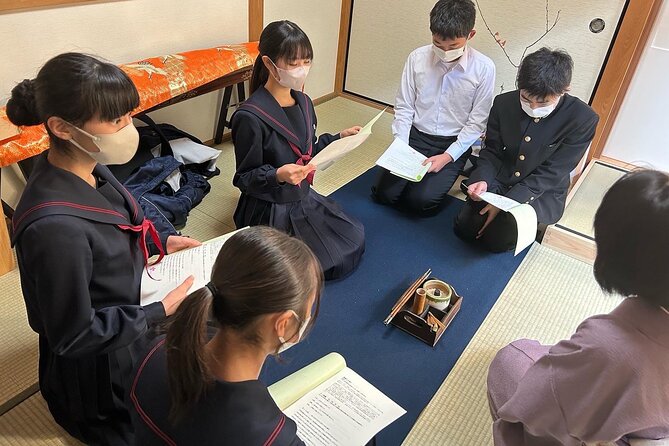
The ceremony includes a demonstration of matcha preparation. You see the tea master measure the powder, add water, and use a bamboo whisk to create the familiar fine foam.
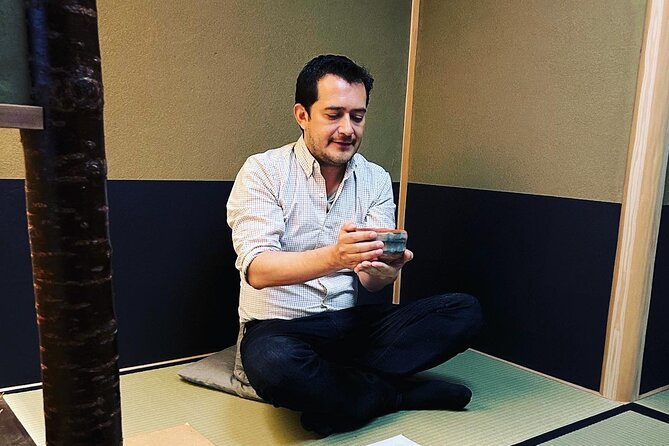
A bamboo whisk, or chasen, looks simple, but using it well requires a particular wrist movement. Aya first demonstrates the technique, then guides you as you make tea yourself. This hands-on part gives the hour a practical focus. You are not only watching a cultural performance. You are learning one small skill that you can repeat at home.
Two bowls of matcha are included. The tea uses an original blended matcha from Uji, the Kyoto-area tea-growing region known for its long association with high-quality green tea.
Matcha can taste grassy, bitter, or unexpectedly intense if you are not used to it. The sweets are served as a counterpoint, not as a sugary snack after the fact. Eating the wagashi before drinking the tea helps prepare your palate for the matcha.
The hands-on portion also helps explain why the ceremony requires patience. The whisking, placement, turning of the bowl, and manner of drinking are all small acts, but together they create a measured rhythm.
More Tea Ceremonies in Kyoto
- Kyoto: Tea Ceremony in a Traditional Tea House in Kiyomizu
★ 4.9 · 3,519 reviews - Kyoto: Tea Ceremony Ju-An at Jotokuji Temple
★ 4.9 · 3,207 reviews - Kyoto: 45-Minute Tea Ceremony Lesson Experience
★ 4.3 · 2,378 reviews - Kyoto: Table-Style Tea Ceremony at a Kyo-Machiya
★ 4.9 · 1,211 reviews
Three seasonal wagashi from a Kyoto confectioner
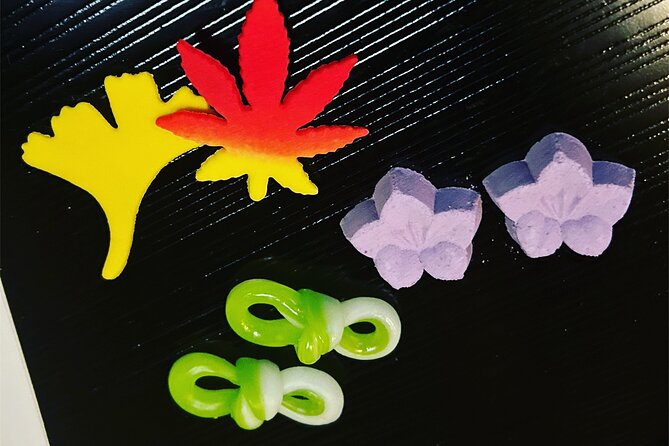
The sweets are one of the strongest practical features for food-conscious visitors. You receive three types of seasonal handcrafted wagashi from a long-established Kyoto confectioner.
Their shapes and flavors change with the season, so the sweets are linked to the time of year rather than treated as generic refreshments. Wagashi can reflect flowers, leaves, weather, or seasonal colors, giving you another way to read the ceremony.
The sweets are gluten-free and vegan, which makes this activity easier to book for many diets. You should still share any serious allergies or dietary concerns in advance, since the supplied information confirms suitability for vegan and gluten-free diets but does not promise protection from every allergen.
The pairing also gives the tea ceremony a more complete structure. You first notice the appearance and texture of the sweet, then taste the matcha afterward. The bitterness of the tea becomes more rounded, and the sweetness feels restrained rather than heavy.
Bowls, tea gardens, and the art of attention
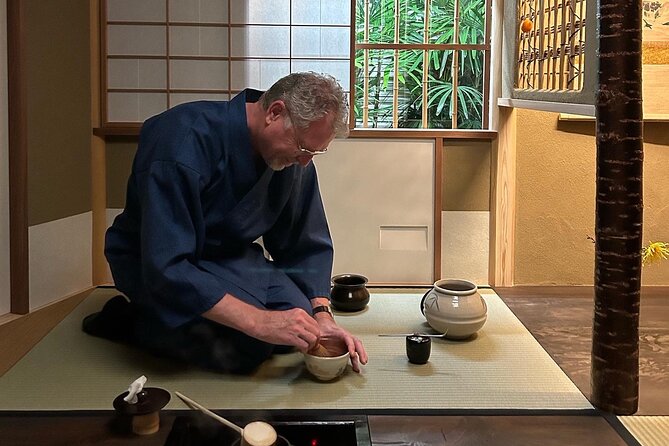
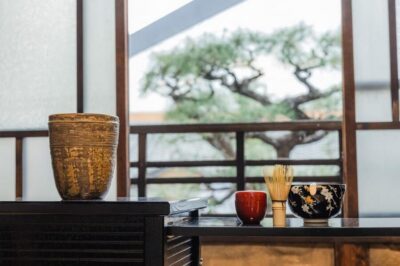
The provider uses custom-made tea bowls commissioned from Kiyomizu and Raku potters. These are not disposable props. The bowl is part of the experience, and Aya can draw your attention to its shape, glaze, weight, and handling.
You might find that the bowl is designed to be appreciated from several angles. In tea ceremony, the object is not separated from its use. It is held, turned, admired, and passed with care.
The matcha comes from historic tea gardens in Uji, tying the session to the Kyoto region rather than presenting tea as an abstract Japanese symbol. That regional connection adds value for anyone who wants context with the ritual.
The booklet you take home is useful after the session. It gives you a concise guide to the spirit and etiquette of tea ceremony, helping you remember the order of events and the meaning behind the gestures.
What the one-hour schedule can and cannot do
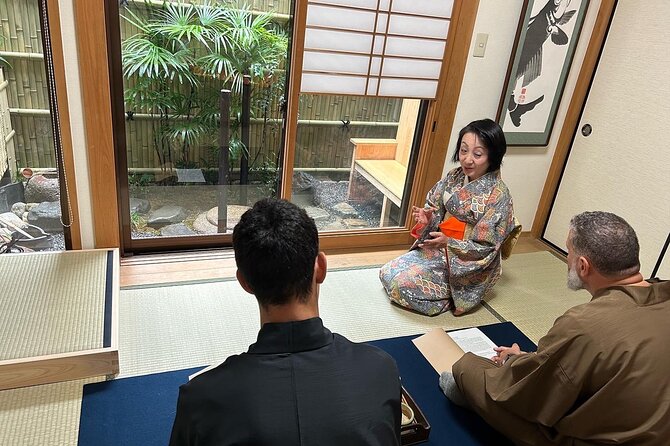
One hour is a good length for a first encounter. It fits neatly into a day of sightseeing and does not demand half a day of sitting in formal posture. You can schedule it before or after Nijo Castle, and the activity ends back at the meeting point.
The tradeoff is depth. Tea ceremony is a serious art with years of training behind even a simple presentation. In an hour, you will learn the basic background, observe a demonstration, taste seasonal sweets, drink two bowls of matcha, and prepare tea yourself. You will not cover every school, historical period, utensil, or regional variation.
That is not a flaw if you treat the event as an introduction. It becomes a problem only if you expect professional-level instruction or a long meditative ceremony.
The pace also depends on your questions. A private group can ask about etiquette, tea, bowls, sweets, and Japanese culture as the session develops. If you want the fullest value, arrive with a few questions rather than rushing straight to photographs.
The value of the $99.08 price
At $99.08 per person, this is not the cheapest matcha tasting in Kyoto. You are paying for more than a cup of tea. The price includes a private home setting, instruction from a certified tea master, hands-on preparation, two bowls of Uji matcha, three handmade sweets, and a take-home booklet.
The private format is the biggest value difference. A large class can reduce the cost per person, but it also limits personal attention. Here, your group is the only group attending, so the instructor can adjust her explanations and respond to your questions.
The activity may be especially good value for couples, families with older teenagers, or small groups that want a shared cultural memory without committing to a full-day class. Group discounts are available, which may reduce the per-person cost for larger private bookings.
Photographs may also be taken during some sessions. One past arrangement included Aya’s husband taking pictures and sending them to the participants while they were still there. This is not listed as a guaranteed inclusion, so treat it as a possible courtesy rather than a promised service.
Who should book this experience
I would choose this tea ceremony if you want:
- A quiet setting instead of a crowded cultural show
- Clear English explanations
- A private activity for your own group
- A gentle introduction to Japanese etiquette
- A chance to make matcha with a bamboo whisk
- Vegan and gluten-free seasonal sweets
- An activity that fits into a busy Kyoto sightseeing day
It is also a good match if you have already visited temples and shrines and want to understand a more domestic side of Japanese culture. The experience takes place in a home, so the setting feels personal rather than institutional.
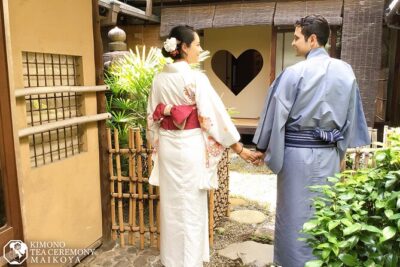
You may want to skip it if you dislike sitting on tatami, prefer fast-moving activities, or want to wear a kimono. Kimono rental is not included, and the provider no longer offers it as part of this program. The emphasis is on the tea ceremony itself, not dressing up for photographs.
Practical advice for a smooth visit
Book ahead if your Kyoto dates are fixed. This activity is often reserved well in advance, with bookings averaging about 48 days ahead.
Use the map carefully because the meeting point is a private home. The official name is Sakura Experience Japanese Culture Nijo Home, and the location is near Nijo Castle. Confirmation arrives when you book, and mobile tickets are accepted.
Wear comfortable but respectful clothing. Socks are essential. Avoid large accessories or anything that could interfere with handling the bowl, although no specific jewelry rule is provided.
If you need a chair, request one before arrival. If you have dietary concerns beyond vegan or gluten-free eating, ask about them ahead of time. The provider’s communication through WhatsApp has been helpful for some participants, but you should rely on the booking confirmation for the official contact details.
Free cancellation is available up to 24 hours before the start time. Inside that window, refunds are not provided and changes are not accepted.
Should you book the Kyoto private tea ceremony?
Book it if you want a personal, well-explained introduction to Kyoto tea culture, especially if you value calm surroundings and direct contact with a skilled host. Aya’s warmth, strong English, careful instruction, and attention to small details make the experience approachable without making it feel watered down.
The one-hour length is both its strength and its limit. You get a clear taste of the ritual, two bowls of matcha, seasonal sweets, and a chance to whisk tea yourself. You do not receive a complete education in every branch of tea ceremony.
For the right visitor, the $99.08 price is fair because the session combines private access, instruction, food, tea, and a meaningful home setting. Wear the right clothes, arrive early, leave the perfume behind, and come ready to slow down. This is one of Kyoto’s better choices for learning how hospitality can be expressed through a bowl of tea.
FAQ
Where does the tea ceremony take place?
It takes place at Sakura Experience Japanese Culture Nijo Home, located at 660 Izumicho in Nakagyo Ward, Kyoto, near Nijo Castle.
How long does the experience last?
The tea ceremony lasts approximately one hour.
Is the activity private?
Yes. Only your group participates in the activity.
What is included in the price?
The experience includes three seasonal types of wagashi, a tea ceremony booklet, a demonstration, hands-on matcha preparation, and two bowls of matcha made with an original Uji blend.
Are the Japanese sweets suitable for vegan and gluten-free diets?
Yes. The supplied information states that the snacks are vegan and gluten-free.
Can children attend?
Children aged 13 and under are not permitted to join the class. Participants must be older than 13.
What should I wear?
Wear socks, long pants or a long skirt, and a top with sleeves. Shorts, mini skirts, sleeveless tops, and bare feet are not permitted.
Can I cancel for a refund?
You can cancel for a full refund up to 24 hours before the experience starts. Cancellations or changes made less than 24 hours before the start time are not accepted for a refund.
More Private Tea Experiences in Kyoto
- KYOTO: Private Tea Ceremony in Hidden Townhouse (Kid-Friendly)
★ 5.0 · 20 reviews - Kyoto Private Tea Ceremony at a Japanese Inns
★ 5.0 · 12 reviews - Kyoto Private Tea Ceremony at a Japanese Inns
★ 5.0 · 3 reviews - Kyoto Newly Opened Private Tea Ceremony – Sanjo Chasuian
★ 5.0 · 2 reviews
Just added around Kyoto
- Uji Walking Tour – Byodo-in temple and Tea Ceremony from Kyoto★ 3.5 · 3 reviews
- Tea ceremony at Kyoto’s Zen Temple Teahouse★ 5.0 · 2 reviews
- Kyoto: Authentic Tea Ceremony in a Small Group★ 5.0 · 7 reviews
- Tea Ceremony in 150 Years Old Townhouse with Tables and Chairs★ 5.0 · 22 reviews
- Silent Beauty of Kyoto Zen Walk and Tea Experience★ 5.0 · 2 reviews
- Tea Ceremony Experience in Traditional Kyoto Townhouse★ 5.0 · 19 reviews
- Traditional Tea Ceremony in Kyoto★ 4.5 · 3 reviews
- Kyoto Private Tea Ceremony at a Japanese Inns★ 5.0 · 12 reviews
Tea Ceremonies in Kyoto, compared.
Tea Ceremony in a Traditional Tea House in Kiyomizu
Read our review →
Tea Ceremony in 100-year-old Kyo-Machiya Townhouse
Read our review →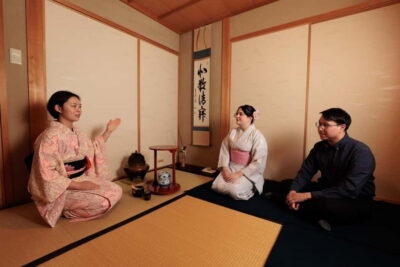
Browse the lists this tour appears in