
Review · JAPAN
Japanese Tea Ceremony Private Experience
Slow down for a cup of culture. This one-hour experience brings you into a traditional tea room in Kurashiki, where a qualified tea master prepares matcha, explains the ceremony, and serves seasonal Japanese sweets. I like the private setting, since only your group takes part, and I like the relaxed approach for first-timers. The main consideration is that the ceremony is fairly short, so you should book it for cultural insight rather than a long workshop.
I also appreciate that you do not need special clothing or equipment. The tea salon prepares what you need and explains the etiquette carefully, including how to handle the utensils and how to take part without feeling lost. At $50, the price is reasonable for a private cultural activity, though families should check how the total cost changes with group discounts and party size.
Key points at a glance
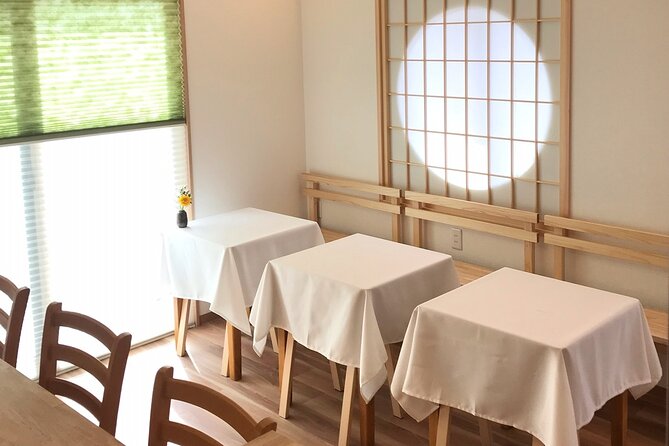
- A private tea room in Kurashiki: Your group participates on its own, with no unrelated people joining the activity.
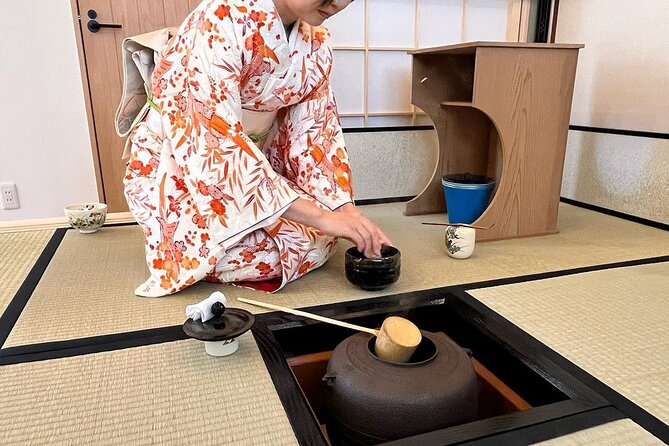
- A qualified tea master prepares the matcha: You watch the tea being made in front of you rather than simply receiving a drink.
- Seasonal Japanese sweets are included: The sweets add a changing seasonal touch and balance the strong, grassy flavor of matcha.
- Designed for first-timers: Etiquette, utensil use, and the meaning behind the movements are explained in a careful, approachable way.
- A short one-hour experience: It fits neatly into a day of sightseeing in Kurashiki, but it does not provide time for a long lesson.
- Easy meeting point: The activity starts and ends at 月と花 Japanese Tea ceremony salon, near public transportation.
Why a tea ceremony belongs in a Kurashiki day
Kurashiki is known for its attractive old townscape, and this experience gives you a way to engage with Japanese culture beyond walking and taking photographs. Instead of only looking at traditional buildings, you sit inside a traditional tea room and take part in a ritual that places value on attention, courtesy, and careful movement.
The appeal is not simply the taste of matcha. A tea ceremony connects the drink, the bowl, the sweets, the room, and the gestures into one short encounter. You are given context for what you are doing, which makes the experience more meaningful than ordering matcha at a café.
I especially like the way this activity appears to balance formality with comfort. It is described as a full-fledged ceremony, yet it is also casual enough for people who have never taken part before. That matters because tea ceremony etiquette can look intimidating from the outside. Clear instruction helps you enjoy the experience rather than worry about making a mistake.
The setting also keeps the focus where it belongs. You are not being moved through several attractions or asked to fit a large group schedule. You spend the hour in one tea room, watching and listening as the ceremony unfolds.
More Private Tea Experiences in Japan
- Private Tea Ceremony and Sake Tasting in Kyoto Samurai House
★ 5.0 · 163 reviews - Tea Ceremony Experience in a Private Tea Room in Shibuya
★ 4.9 · 125 reviews - Kyoto: Private Tea Ceremony with a Garden View
★ 4.9 · 61 reviews
Arriving at 月と花 Japanese Tea ceremony salon
The meeting point is 月と花 Japanese Tea ceremony salon at 2-chōme-16-11 Achi, Kurashiki, Okayama 710-0055, Japan. The location is near public transportation, which makes it practical to include before or after time in Kurashiki.
You should allow enough time to find the salon without rushing. A tea ceremony is built around calm attention, and arriving breathless or at the last minute would work against the mood. Your mobile ticket can help at check-in, and the activity returns to the same meeting point when it ends.
The return to the starting location is useful if you are planning the rest of your day. You do not have to arrange a separate pickup or figure out where the experience finishes. You can continue sightseeing in Kurashiki once the ceremony is over.
Because the activity is private, your group has a more personal setting than you would get at a public demonstration. That does not necessarily mean the tea master can change every part of the ceremony to suit your preferences, but it does mean your group is the only group participating.
What happens inside the traditional tea room
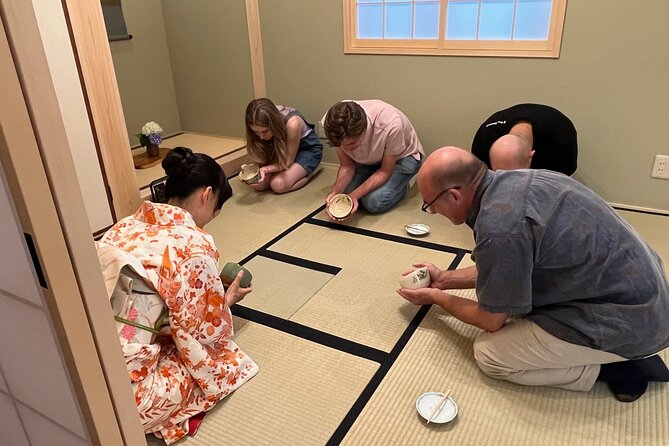
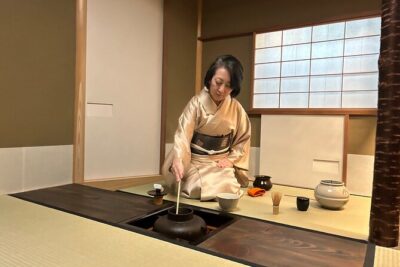
The experience begins with an introduction to tea ceremony etiquette. You are shown how to behave in the room and how to use the utensils. The explanations are an important part of the activity because the ceremony includes actions that may not be obvious to someone seeing them for the first time.
Rather than treating etiquette as a list of strict rules, the session explains the meaning behind it. That gives you a better sense of why certain movements are made carefully and why the objects used in the ceremony are handled with respect.
You may also be guided on how to sit and take part comfortably. The information specifically notes that care is taken not to hurt your feet as much as possible. This is a useful detail for anyone who worries about spending an hour in a formal seated position, although the exact seating arrangement is not specified.
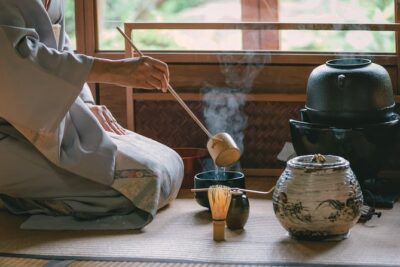
The tea master then prepares matcha in front of you. Watching the preparation is central to the experience. You see the drink made as part of the ceremony, rather than receiving a prepared cup with no explanation.
The format gives you time to notice the utensils and the order of the movements. You do not need prior knowledge. The explanations are intended for beginners, and the private format allows the activity to remain focused on your group.
Matcha and seasonal Japanese sweets
The matcha is served with beautiful Japanese sweets, including seasonal selections. This pairing is more than a decorative extra. Japanese sweets are often chosen to complement the bitterness of matcha, giving you a contrast between sweetness and the tea’s stronger flavor.
The word seasonal matters here. The exact sweets can change, so you should not book expecting a particular shape, color, or flavor. Instead, the food offers a small connection to the time of year and adds variety to the ceremony.
A family review gives the clearest practical clue about the food: children aged 14 and 11 both enjoyed the tea and treats. That suggests the experience can work well for older children and teenagers, especially those who enjoy trying unfamiliar foods and learning through participation.
Still, matcha is not sweet green tea. Its flavor can be intense, and not everyone enjoys it on a first taste. The sweets help, but you should frame the activity as a cultural experience rather than a beverage tasting designed to please every palate.
More Tea Ceremonies in Japan:
- Kyoto: Tea Ceremony in a Traditional Tea House in Kiyomizu
★ 4.9 · 3,519 reviews - Kyoto: Tea Ceremony Ju-An at Jotokuji Temple
★ 4.9 · 3,207 reviews - Kyoto: 45-Minute Tea Ceremony Lesson Experience
★ 4.3 · 2,378 reviews - Osaka: Tea Ceremony Experience
★ 4.9 · 1,426 reviews
Why the private format matters
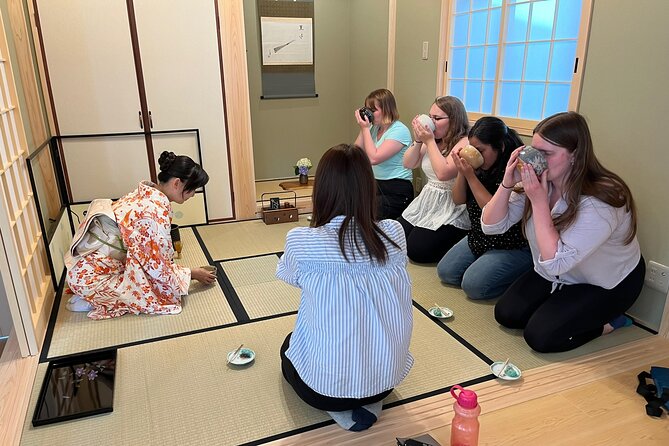
A private activity can be a good choice when you want to ask questions without feeling self-conscious. Your group is not competing for the tea master’s attention with strangers, and the ceremony can feel more personal.
This format is particularly useful for families. Children can receive direct explanations, and adults can ask about the utensils or etiquette as the ceremony progresses. The positive family experience from children aged 14 and 11 suggests that the activity is not limited to adults who already have an interest in Japanese arts.
It can also suit couples, friends, and small groups who want a quiet cultural hour. Since the activity lasts about one hour, it does not demand a full morning or afternoon. You can place it between other plans in Kurashiki without giving up too much sightseeing time.
The trade-off is that a private experience may offer less of the social energy found in a larger class. If you want to meet other people or compare your experience with a wider group, this is not the right format. The benefit is concentration and privacy, not a lively group atmosphere.
Is $50 a fair price?
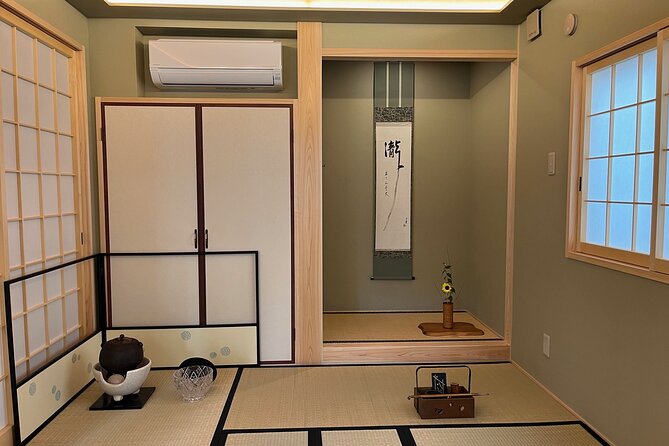
At $50, the experience offers good value if you want a guided cultural activity in a traditional room. The fee covers more than a serving of matcha. You are paying for the tea master’s preparation, explanations of etiquette, instruction in utensil use, seasonal sweets, and the private use of the experience for your group.
The value improves for people who would otherwise struggle to understand the ceremony on their own. Watching a tea demonstration without context can leave you with attractive images but little idea what the gestures mean. Here, the explanations help turn the performance into a lesson.
The price deserves a little more thought for solo visitors or very small parties. Since this is a private activity, the cost may feel higher than joining a public tea service, depending on how the booking price is applied. Group discounts are available, so larger parties may find the per-person cost more appealing.
I would compare the price with what you want from the hour. If your goal is simply to drink matcha, a café will likely be cheaper. If your goal is to understand the ceremony in a traditional setting with a qualified tea master, $50 is easier to justify.
Who will enjoy this most
I would recommend this experience to first-time visitors who want a clear introduction to Japanese tea ceremony without committing to a long class. The explanations, prepared utensils, and beginner-friendly format remove much of the uncertainty.
Families with older children are also a good match. The experience already worked well for children aged 14 and 11, and the short duration should help keep the activity manageable. Younger children may find the formal pace harder, but the available information does not set a minimum age, so you should confirm any age concerns when booking.
This is also a good choice for people who prefer private activities. You can focus on the tea master’s demonstration and ask questions within your own group. The setting should appeal to anyone who values traditional arts, quiet observation, and small cultural details.
You may want to skip it if you dislike matcha, formal etiquette, or seated cultural demonstrations. The activity is not a hands-on cooking class, a full-day workshop, or a general tour of Kurashiki. Its strength is a focused introduction to one Japanese tradition.
Practical planning for your Kurashiki visit
The activity begins and ends at the same address, so it is easy to connect with other plans. Since it lasts about an hour, you can schedule it as a compact cultural stop rather than building your entire day around it.
Try not to arrive with the expectation that you need a special outfit. The information provided says there is no need to worry about clothes or belongings, and the salon prepares what you need. That makes the experience easier to fit into a sightseeing day.
The ceremony includes guidance on foot comfort, but you should still pay attention to how your body feels. If sitting formally is difficult for you, ask about the arrangement when making your booking. The provided details do not specify the exact seating style or accessibility provisions.
Booking confirmation is normally received at the time of booking. If you book within two days of the travel date, confirmation can take up to 48 hours and depends on availability. I would avoid leaving this activity until the last moment if it is an important part of your Kurashiki plans.
Free cancellation is available when you cancel at least 24 hours before the start time. Cancellations made less than 24 hours in advance are not refunded, and late changes are not accepted. The cut-off uses local time in Japan, so check your schedule before the deadline.
Final call: should you book it?
I would book this tea ceremony if you want a short, private, beginner-friendly introduction to Japanese culture in Kurashiki. The strongest reasons are the traditional tea room, the qualified tea master, the explanations of etiquette, and the chance to watch matcha prepared in front of you.
It is especially worthwhile for families with older children, couples, and small groups who prefer a calm activity with direct instruction. The $50 price is fair when you value the teaching and private setting, not just the tea itself.
I would pass if you are looking for a long workshop, a broad city tour, or a casual café stop. For everyone else, this is a thoughtful way to add meaning to a visit to Kurashiki, with seasonal sweets and a clear introduction that does not assume you already know the rules.
FAQ
Where does the Japanese tea ceremony take place?
It takes place at 月と花 Japanese Tea ceremony salon, 2-chōme-16-11 Achi, Kurashiki, Okayama 710-0055, Japan.
Where does the activity end?
The activity ends back at the meeting point, 月と花 Japanese Tea ceremony salon.
How long does the tea ceremony last?
The experience lasts approximately one hour.
Is this a private activity?
Yes. Only your group participates in the activity.
Is the experience suitable for first-timers?
Yes. The ceremony is designed so first-time participants can enjoy it, with explanations of etiquette and utensil use.
Who prepares the matcha?
A qualified tea master prepares the matcha in front of you.
Are Japanese sweets included?
Yes. The experience includes Japanese sweets, with seasonal selections.
Do I need special clothing or equipment?
No special clothing or belongings are required. Everything needed for the experience is prepared at the tea salon.
Is the meeting point near public transportation?
Yes. The meeting point is near public transportation.
What is the cancellation policy?
You can receive a full refund if you cancel at least 24 hours before the experience start time. Cancellations or changes made less than 24 hours in advance are not accepted for a refund.
Just added around Japan
- Yokohama : Tea Ceremony with Sweets and Souvenir★ 5.0 · 5 reviews
- Walking Tour: Yanaka,Nezu& Sendagi: Tea Ceremony & Old Tokyo★ 5.0 · 3 reviews
- Visit local home for music and tea ceremony near Disney★ 4.9 · 13 reviews
- Trip to Kamakura & Enoshima: Shrines, Seaside, Temples &Tea★ 5.0 · 11 reviews
- Yokohama: Sushi & Gyoza Cooking with Matcha & GreenTea Experience★ 5.0 · 3 reviews
- Kyoto tea town for matcha lovers★ 5.0 · 16 reviews
- Uji: Private immersion into Kyoto’s tea and reglious culture★ 5.0 · 17 reviews
- Uji Tea Ceremony and UNESCO Heritage Walking Tour★ 5.0 · 20 reviews
Private Tea Experiences in Japan, compared.
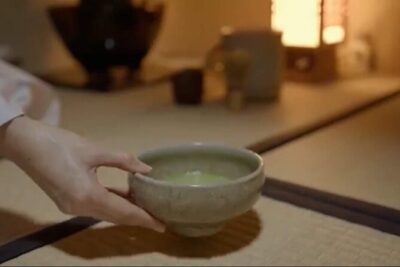
Private Tea Ceremony and Sake Tasting in Kyoto Samurai House
Read our review →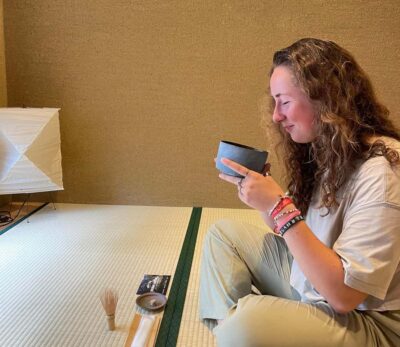
Tea Ceremony Experience in a Private Tea Room in Shibuya
Read our review →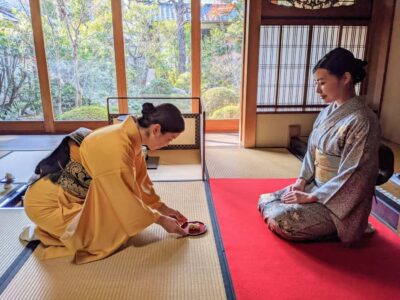
Kyoto Private Tea Ceremony with Tea Master at Home
Read our review →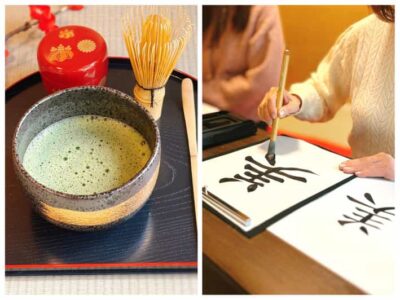
Stunning Private Tea Ceremony: Camellia Garden Teahouse
Read our review →
Private Tea Ceremony in Hidden Townhouse (Kid-Friendly)
Read our review →
Tea Tasting&Private Tea Ceremony -Master Matcha Making-
Read our review →Browse the lists this tour appears in