
Review · HIROSHIMA
Private Tea Ceremony Experience in Hiroshima
Tea begins with attention. This private Hiroshima experience gives you more than a cup of matcha: you learn the movements, meaning, and care behind the Japanese tea ceremony in an active tea room used by local students. I like the hands-on preparation, and I like that a working tea master teaches the class in English or Japanese. The main drawback is practical: the room is upstairs, and finding the entrance may take extra time.
At $71.54 per person, this is not a quick sample at a sightseeing counter. It is a focused 45-minute lesson with a traditional sweet, a formal demonstration, and your own bowl of tea to prepare. You should arrive early, since the entrance can be easy to miss at street level.
Key points to know before booking
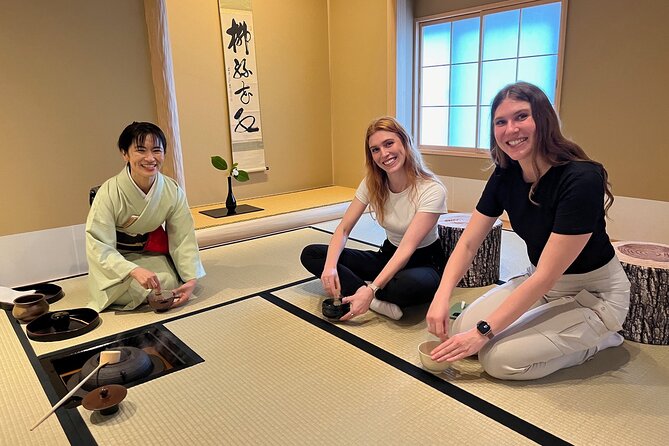
- You make your own bowl of matcha: This is a lesson, not just a demonstration.
- A tea master leads the session: The instructor gives more than 1,000 lessons a year to local learners.
- The setting is a working tea room: Local students use the space for daily practice.
- The visit stays private: Only your own group takes part in the activity.
- The price includes tea and a Japanese sweet: A bowl of matcha and traditional snack are included.
- The experience lasts about 45 minutes: It fits neatly into a Hiroshima sightseeing day, but the schedule is fairly compact.
Entering a real Hiroshima tea room
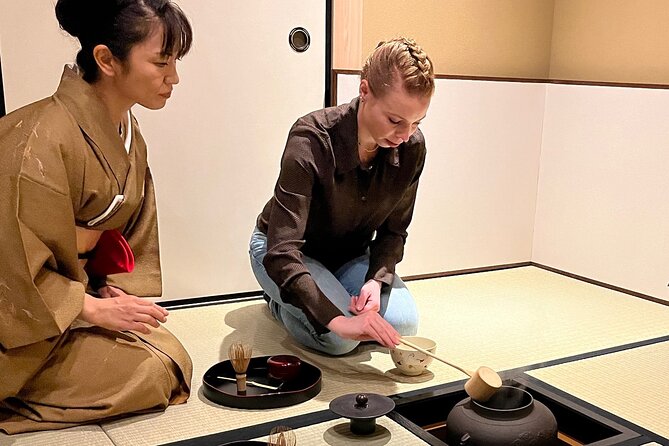
The experience begins at 201, 1-chōme-11-12 Minamimachi, in Hiroshima’s Minami Ward. The meeting point is near public transportation, but the room itself is on the second floor. That detail matters more than it sounds.
Give yourself plenty of time to locate the building and go upstairs. The entrance can be hard to spot from ground level, with no obvious sign to guide you quickly. One useful lesson from the practical side of this experience is simple: arriving early is better than cutting it close.
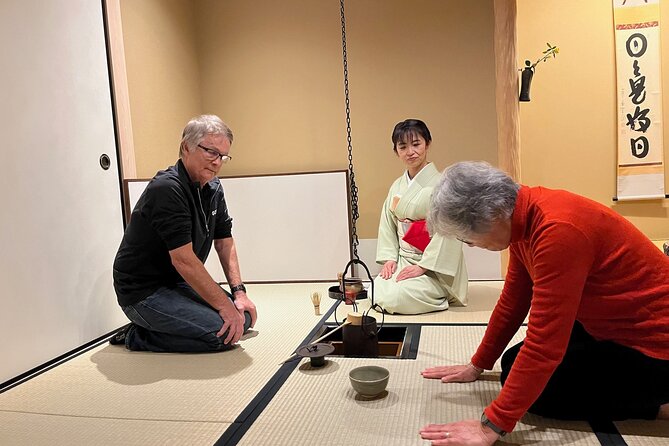
Once inside, you enter a traditional space where local students practice. That gives the session a more genuine feel than a staged performance arranged only for visitors. You are seeing a place where tea is taught and repeated, not a room dressed up for a single photo opportunity.
The setting also helps explain the structure of the activity. Japanese tea ceremony, or chado, is built around careful preparation, respectful conduct, and attention to seasonal details. The room, the utensils, the sweet, and the tea all have a role. Even in a short session, you get a clear sense that the ceremony is a way of organizing time and behavior, not simply a method for making a drink.
More Private Tea Experiences in Japan
- Private Tea Ceremony and Sake Tasting in Kyoto Samurai House
★ 5.0 · 163 reviews - Tea Ceremony Experience in a Private Tea Room in Shibuya
★ 4.9 · 125 reviews - Kyoto: Private Tea Ceremony with a Garden View
★ 4.9 · 61 reviews
The opening lesson on chado and hospitality
The tea master first gives you background on the history and spirit of the ceremony. This is an important part of the visit because the movements make more sense once you understand the values behind them.
You hear about Japanese hospitality and the care given to each guest. The ceremony is often associated with Zen-like calm, but you do not need prior knowledge of Zen, Japanese customs, or tea etiquette to take part. Instructions are explained, and etiquette can be covered upon request.
The guide is licensed or certified, which adds useful structure to the lesson. This is not a casual chat with a host who happens to own a whisk. The instructor gives more than 1,000 lessons each year to local learners, so you can expect a practiced presentation and clear guidance.
The session is offered in English or Japanese. If you speak only basic Japanese, you should be comfortable taking part in English. One of the strongest practical features is that minimal Japanese is not a barrier to enjoying the ceremony.
I like the balance here. You get enough context to understand what you are doing, but the visit is short enough that the explanation does not take over the whole experience.
Watching the formal demonstration with sweets and matcha
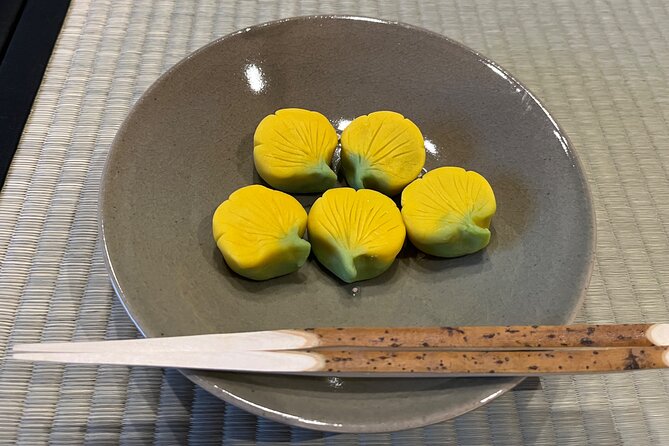
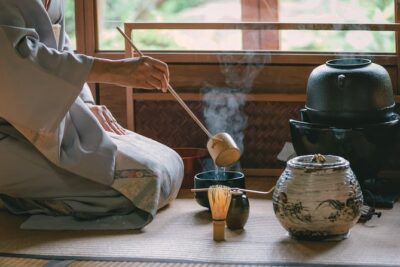
Next, you watch the tea master prepare and serve matcha in a formal demonstration. A Japanese traditional sweet accompanies the tea, and the matcha used in the presentation is described as premium.
This part gives you a chance to watch before trying the process yourself. Pay attention to the order of the movements, the handling of the utensils, and the quiet rhythm of the preparation. The appeal is in the small actions, not in a dramatic show.
The seasonal element is also important. The beauty of chado includes seasonal flowers, traditional crafts, and carefully presented sweets. The exact flower or sweet can vary, so you should not expect the same visual details at every visit. Still, the idea is central: tea ceremony connects the food, objects, and room to the time of year.
The sweet is included in the price. If you have dietary restrictions, vegetarian and vegan needs can be accommodated when you provide the information during booking. It is still wise to state your requirements clearly ahead of time rather than waiting until you arrive.
This demonstration is also where you begin to see the difference between simply drinking matcha and taking part in a tea ceremony. The drink is only one piece. The preparation and presentation give the moment its meaning.
Making your own bowl of matcha
The most useful part of the activity comes when you prepare your own tea. You take part in the full tea-making process rather than sitting back while someone else handles everything.
Under professional guidance, you learn how to use the bamboo whisk and prepare a bowl of matcha. The tea master explains the techniques that help produce a good result, so you leave with skills you can try at home.
That hands-on element gives the $71.54 price more weight. A simple cup of matcha would cost far less elsewhere, but you are paying for instruction, a private setting, cultural explanation, and direct practice. If you are curious about Japanese tea, this is more useful than a quick tasting.
Do not worry about producing a perfect bowl. The point is to learn the basic movements and understand how the ingredients and tools work together. Your first attempt may not have the same finish as the tea master’s. That is part of the fun, and the instructor is there to correct your technique.
The class also gives you a better appreciation for the bamboo whisk. It is not just a souvenir or decorative tool. Its shape and use affect how the matcha is prepared. A bamboo whisk is available for purchase on site if you want to continue the practice at home.
Tea used at the 2023 G7 summit is also available for purchase. That gives you a distinctive souvenir connected to Hiroshima’s recent international role, rather than another generic item from a gift shop. Purchases are optional and are not included in the activity price.
More Tea Ceremonies in Japan:
- Kyoto: Tea Ceremony in a Traditional Tea House in Kiyomizu
★ 4.9 · 3,519 reviews - Kyoto: Tea Ceremony Ju-An at Jotokuji Temple
★ 4.9 · 3,207 reviews - Kyoto: 45-Minute Tea Ceremony Lesson Experience
★ 4.3 · 2,378 reviews - Osaka: Tea Ceremony Experience
★ 4.9 · 1,426 reviews
Why the private format matters
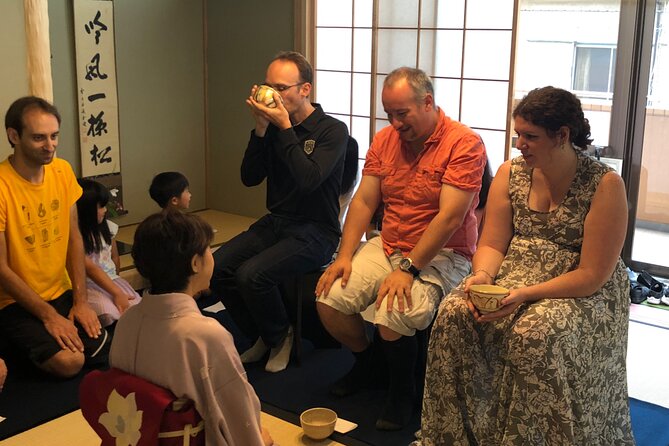
This is a private activity, so only your own group takes part. That can make a real difference in a quiet cultural lesson.
You do not have to compete for the instructor’s attention or feel awkward asking for an explanation. If a movement is unclear, you can request help. If your group wants more information about etiquette, the format gives you room to ask.
The private arrangement also suits families, couples, and friends with different levels of interest. One person may be fascinated by traditional arts, while another may simply want to try whisking matcha. The experience can work for both, since the demonstration provides context and the practical part keeps the session active.
Group discounts are available, although the exact savings depend on the booking method and group size. Prices can also vary by platform, so check the final amount before paying.
Because the activity is only about 45 minutes, the private format does not mean you receive a long, leisurely tea gathering. It means the available time is focused on your group. If you want a lengthy formal ceremony with many stages, this may feel brief. If you want a clear introduction that fits around other Hiroshima plans, the compact length is useful.
What the tea room teaches you about Japanese culture
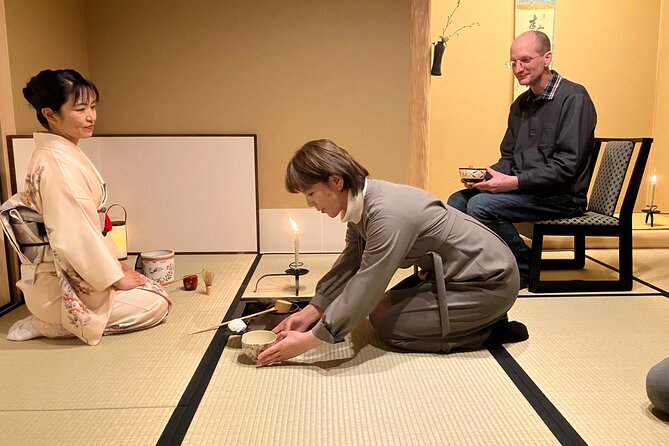
A good cultural activity helps you understand something beyond the activity itself. Here, the lesson is the value placed on preparation, restraint, and hospitality.
The tea master’s movements are deliberate. The sweet is presented as part of the experience rather than as an unrelated snack. The utensils are handled with care. These details show how Japanese traditional arts can turn an ordinary act, drinking tea, into a shared expression of respect.
You also learn why observation matters. Before you make your own matcha, you watch the formal presentation. This mirrors a basic pattern in many traditional arts: look carefully, follow the form, then practice.
The experience can appeal to people interested in aesthetics, crafts, food, or mindfulness. You do not need to label yourself a tea enthusiast. A first-time visitor can enjoy the visual details, while someone already familiar with matcha can focus on technique and etiquette.
There is also a nice connection between the room and the wider community. Since local students use the space for regular practice, you see tea ceremony as a living tradition rather than a museum display. That does not make the activity less polished. It gives the polished movements a reason to exist.
Timing, access, and comfort
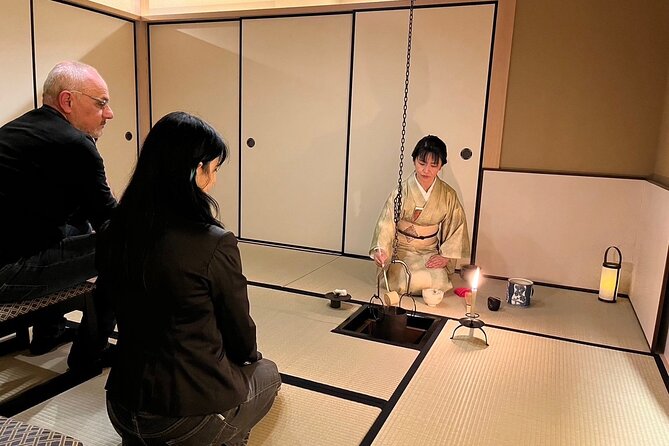
The activity lasts approximately 45 minutes and ends back at the meeting point. It does not include transportation between sites, because the tea room is both the start and end location.
The address is near public transportation, but you should build in a little extra time for finding the correct entrance. The second-floor location is the main access point to remember. A late arrival could cut into an already short lesson.
The experience does not include kimono rental or kimono dressing. That keeps the price and schedule under control, but it also means you should not book this expecting a full costume activity. If wearing kimono is essential to your plans, you will need to arrange that separately.
The session is conducted in English or Japanese. Etiquette is explained when requested, which is helpful if you are concerned about making a mistake. You are not expected to arrive knowing how to sit, bow, handle the bowl, or use the whisk.
Dietary restrictions can be accommodated, including vegetarian and vegan needs. Include those details when booking so the traditional sweet can be planned appropriately.
Confirmation is sent within 48 hours, subject to availability. The activity offers free cancellation up to 24 hours before the start time. A cancellation made less than 24 hours before the scheduled start is not refundable, and late changes are not accepted.
Is $71.54 a fair price?
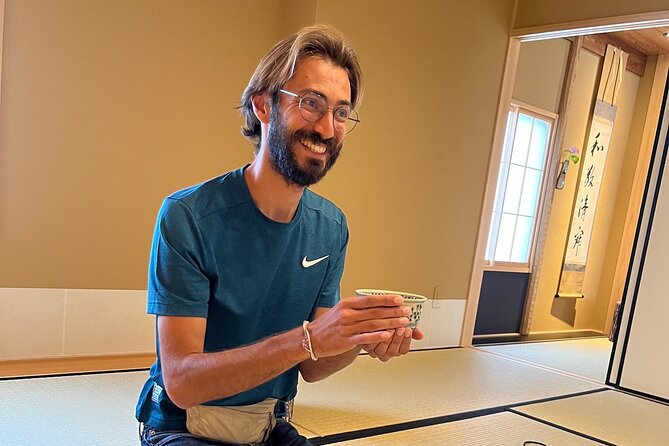
The price is fair if you want an actual lesson and a private setting. You receive a bowl of matcha, a Japanese sweet, a formal demonstration, cultural background, and guided practice making your own tea.
The value is less obvious if you only want to taste matcha. Hiroshima offers many ways to eat and drink without paying for instruction, and this experience is not designed as a bargain beverage stop.
I would also consider the size of your group. A private session can make the price worthwhile for a couple or family that wants personal attention. Group discounts may improve the value, but you should confirm the final rate because pricing can vary depending on the booking platform and method.
The chance to buy the G7 summit tea and a bamboo whisk adds an optional benefit, especially if you want to keep practicing after returning home. These purchases are extras, not reasons by themselves to book the class.
Who should book this experience?
I would recommend it to you if you want a short, well-organized introduction to Japanese culture with real participation. It is especially suitable if you enjoy crafts, food traditions, quiet activities, or learning a skill you can repeat at home.
It is also a good choice for a Hiroshima itinerary that already includes major historical sights and needs a calmer change of pace. The lesson gives you a different view of the city, one based on hospitality and daily practice rather than large public landmarks.
Families and first-time visitors should find the clear instruction helpful. English-speaking participants can take part without strong Japanese skills, and the private format allows questions.
I would hesitate only if you want a long ceremony, kimono dressing, or a broad tour of Hiroshima. This is a single-room activity lasting about 45 minutes. Its strength is focus, not variety.
Should you book the Hiroshima tea ceremony?
Book it if you want to do more than drink matcha. You will watch a formal presentation, enjoy a traditional sweet, learn why the ceremony is structured as it is, and prepare your own bowl with guidance from an experienced tea master.
The two things I value most are the active local practice setting and the chance to learn a technique you can use at home. Just arrive early, allow time to find the second-floor room, and remember that kimono is not included.
For a compact, private cultural lesson with a clear practical payoff, this is a strong Hiroshima choice. If you want a grand, extended ceremony, look for a longer format instead.
FAQ
How long does the private tea ceremony last?
The experience lasts approximately 45 minutes.
Where does the tea ceremony begin and end?
It begins at 201, 1-chōme-11-12 Minamimachi, Minami Ward, Hiroshima, 734-0007, Japan, and ends back at the same meeting point.
Is the tea ceremony private?
Yes. Only your own group participates in the activity.
Is the experience offered in English?
Yes. The session is conducted in English or Japanese.
What is included in the price?
The price includes a bowl of matcha, a Japanese traditional sweet, the experience of making your own bowl of tea, and guidance from a licensed or certified guide.
Is kimono included?
No. Wearing kimono is not included.
Can dietary restrictions be accommodated?
Yes. Vegetarian and vegan dietary requirements can be accommodated if you provide the information when booking.
Just added around Japan
- Yokohama : Tea Ceremony with Sweets and Souvenir★ 5.0 · 5 reviews
- Walking Tour: Yanaka,Nezu& Sendagi: Tea Ceremony & Old Tokyo★ 5.0 · 3 reviews
- Visit local home for music and tea ceremony near Disney★ 4.9 · 13 reviews
- Trip to Kamakura & Enoshima: Shrines, Seaside, Temples &Tea★ 5.0 · 11 reviews
- Yokohama: Sushi & Gyoza Cooking with Matcha & GreenTea Experience★ 5.0 · 3 reviews
- Kyoto tea town for matcha lovers★ 5.0 · 16 reviews
- Uji: Private immersion into Kyoto’s tea and reglious culture★ 5.0 · 17 reviews
- Uji Tea Ceremony and UNESCO Heritage Walking Tour★ 5.0 · 20 reviews
Private Tea Experiences in Japan, compared.
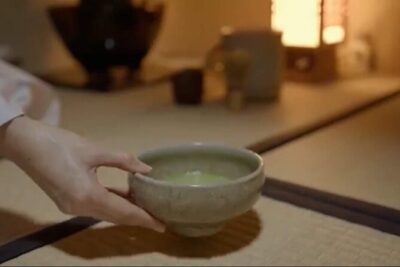
Private Tea Ceremony and Sake Tasting in Kyoto Samurai House
Read our review →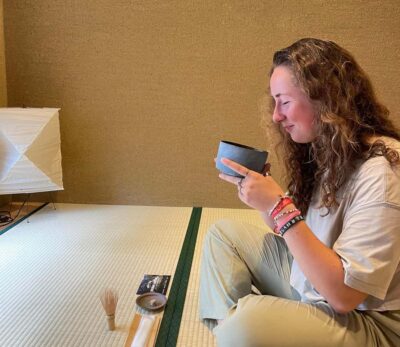
Tea Ceremony Experience in a Private Tea Room in Shibuya
Read our review →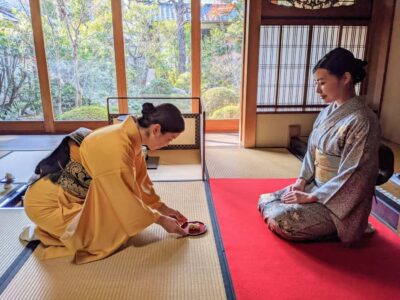
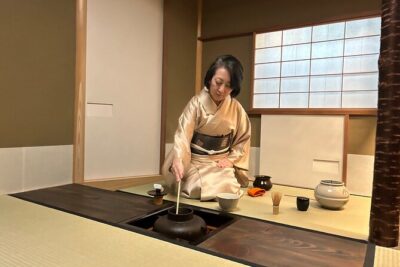
Kyoto Private Tea Ceremony with Tea Master at Home
Read our review →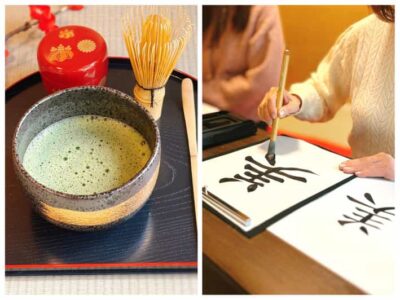
Stunning Private Tea Ceremony: Camellia Garden Teahouse
Read our review →
Private Tea Ceremony in Hidden Townhouse (Kid-Friendly)
Read our review →
Tea Tasting&Private Tea Ceremony -Master Matcha Making-
Read our review →Browse the lists this tour appears in