
Review · JAPAN
Tea ceremony experience with simple kimono in Okinawa
Small doors lead to a memorable Okinawan ritual. This 75-minute experience in Onna-son combines a simple kimono with a genuine tea room, and I like the careful introduction to tea tools and the chance to make your own matcha. The price is $85.39 per person, so it is not a cheap photo stop, but the small-group setting and cultural instruction give it solid value.
I also like that the ceremony includes Okinawan sweets, Japanese sweets, a hanging scroll, flowers, and a gold folding screen for photos. The main consideration is that the ceremony follows Japanese manners closely, so you should expect a calm lesson rather than a fast, casual activity.
Key points to know before booking
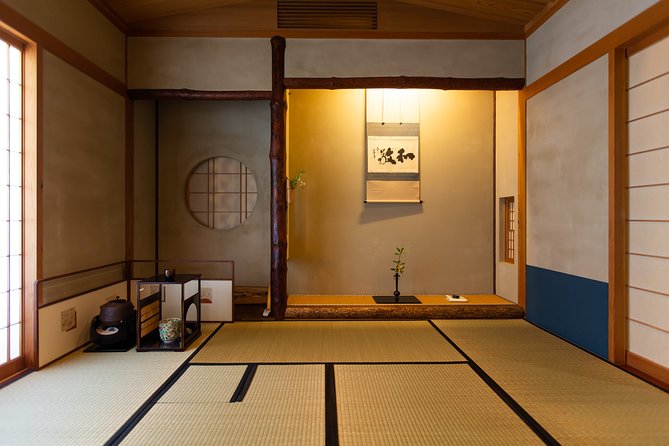
- A real tea-room entrance: You learn how to enter through the small doorway and why the room is treated with care.
- Simple kimono included: You change into traditional clothing before the ceremony and change back at the end.
- You make your own matcha: The instructor explains the tools, cloth, tea powder, and hot water before you prepare your bowl.
- Okinawan sweets are part of the lesson: The tasting comes before the bitter green tea, giving you a useful introduction to the ceremony’s flavor balance.
- Small and personal: The experience requires at least two people, with capacity information listing a maximum of six in the additional details and up to eight elsewhere.
- Good for mixed ages: Children over four can participate, and anyone who cannot sit up can also take part.
Why this tea ceremony feels different in Okinawa
Okinawa is known for beaches, island food, and its own distinctive culture. This activity gives you a different side of the region: a formal Japanese tea ceremony held in a traditional tea room at the Japanese Cultural Experience Facility Sasagirian, in Onna-son.
That setting matters. You are not simply handed a bowl of matcha and asked to pose for a picture. You learn how to enter the room, notice its objects, handle the utensils, and prepare tea according to established manners.
The experience is also unusual because it pairs the ceremony with Okinawan sweets. That small detail connects the Japanese ritual to the place where you are visiting. You still receive the familiar tea-room structure, but the food gives the session a local touch.
The atmosphere is quiet and deliberate. If you like activities that ask you to slow down, look carefully, and listen, this should suit you well. If you prefer a lively demonstration with constant movement, the measured pace may feel too formal.
More Tea Ceremonies in Japan:
- Kyoto: Tea Ceremony in a Traditional Tea House in Kiyomizu
★ 4.9 · 3,519 reviews - Kyoto: Tea Ceremony Ju-An at Jotokuji Temple
★ 4.9 · 3,207 reviews - Kyoto: 45-Minute Tea Ceremony Lesson Experience
★ 4.3 · 2,378 reviews
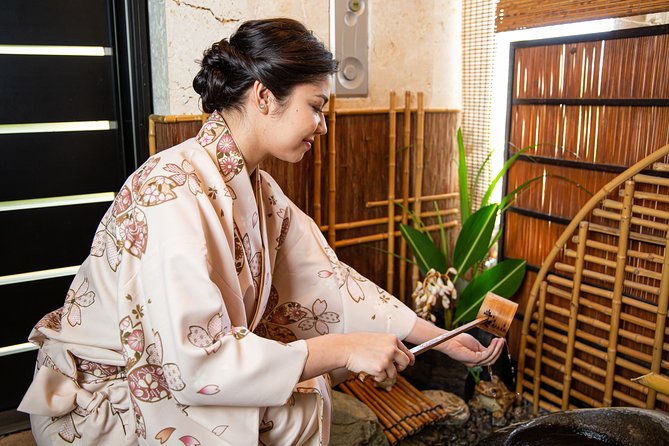
Changing into a simple kimono
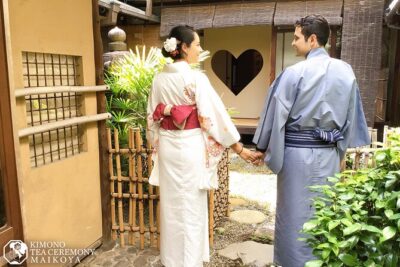
The first step is changing into a simple kimono. This is not presented as a full formal dressing service, and the description calls it simple, so you should think of it as suitable clothing for the activity rather than a complete costume transformation.
Still, it changes the feeling of the session. Wearing traditional clothing gives the ceremony more weight, and it makes the final photographs feel connected to what you have learned. Several parts of the experience take place in this clothing, including the tea-room visit, the tasting, and the preparation of your tea.
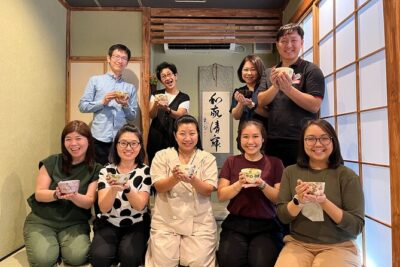
The clothing also gives families and couples a shared activity before the formal instruction begins. A mother and daughter-in-law enjoyed the chance to wear kimono and spend time in a real tea room, while one family brought children ranging from 11-year-old twins to an adult in their fifties. That age range suggests the activity can work well for a family group, not just for serious students of Japanese culture.
You change back after the photo session. Since the full activity lasts about 1 hour and 15 minutes, the clothing change is part of a compact program rather than an all-day dressing appointment.
Entering through the small tea-room doorway
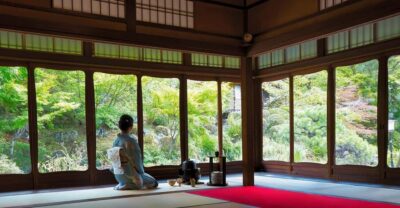
One of the most memorable details is the entrance. The instructor teaches you how to enter through the small doorway of the tea room, a feature that can surprise first-time participants.
This doorway is not just a quirky architectural detail. It helps establish the mood of the ceremony. You leave ordinary movement behind and enter a space where the tools, flowers, scroll, and movements deserve attention.
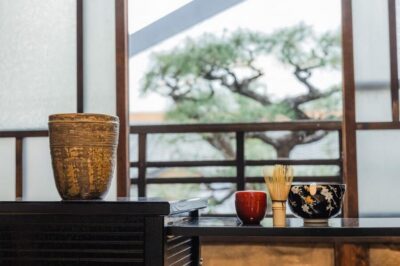
Inside, you learn how to appreciate the hanging scroll, the flower arrangement, and the utensils. The ceremony encourages you to notice small details instead of rushing toward the tea itself.
I like this part because it gives context to what follows. Without it, making matcha can feel like a simple craft lesson. Here, you first learn that the room has its own order and that each object contributes to the occasion.
The ceremony uses a traditional tea room first, then moves to a separate room with a Ryurei-style setup. That second area uses tables and chairs, which makes the experience more accessible for people who cannot sit up or who may find floor-based customs difficult.
Sweets first, bitter tea afterward
At the Ryurei-style table, you taste Japanese and Okinawan sweets before drinking the tea. This order is important because the sweets prepare your palate for matcha’s sharp, bitter flavor.
For many people, the sweet tasting will be the easiest part of the activity. You get a chance to settle in, enjoy local flavors, and understand why a tea ceremony treats food and drink as a sequence rather than as separate items.
The Okinawan sweets add the most place-specific touch. The available information does not name each sweet, so you should not expect a fixed menu description in advance. What you can expect is a combination of Okinawan and Japanese treats served as part of the ceremony.
The sweets are also useful for children. Younger participants may be more interested in the tasting than in the details of the silk cloth or utensil handling, and the food gives them an approachable entry into the activity.
More Kimono and Tea Ceremonies in Japan:
- Kimono Tea Ceremony at Kyoto Maikoya, NISHIKI
★ 5.0 · 911 reviews - Kimono Tea Ceremony at Tokyo, Asakusa Maikoya
★ 5.0 · 638 reviews - Kyoto: Kimono Tea Ceremony at Orizuruya Gion
★ 4.9 · 618 reviews - KYOTO Tea Ceremony with kimono near by Imamiya Jinjya Shrine
★ 5.0 · 343 reviews
Learning the cloth and tea tools
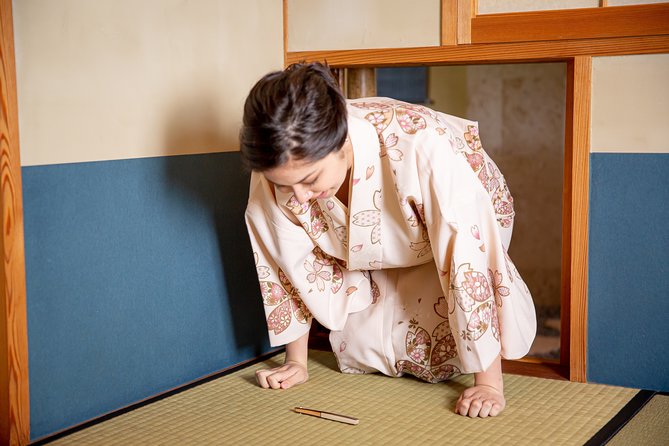
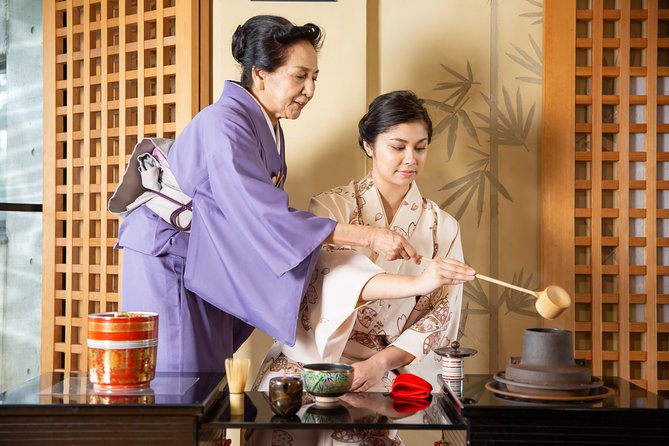
After the sweets, the instructor explains how to handle the silk cloth and cleanse the tea tools. This is where the experience becomes a lesson rather than a staged serving.
You learn that tea preparation includes a series of small actions. The tools are not treated as ordinary kitchen items, and cleaning them is part of the ceremony’s structure.
The instructor introduces each utensil and shows you how it is used. You then learn how to treat the tools before preparing your own tea. The pace allows you to follow along without already knowing Japanese tea manners.
A translator is part of the experience. The tea master leads the ceremony, while the translator explains what you may not understand. This arrangement received strong praise for making the ceremony easy to follow and for helping participants appreciate the cultural meaning behind the actions.
You should still expect some instruction to come through demonstration. Tea ceremony is physical and visual, so watching the hand movements is as important as hearing the explanation.
Making your own matcha
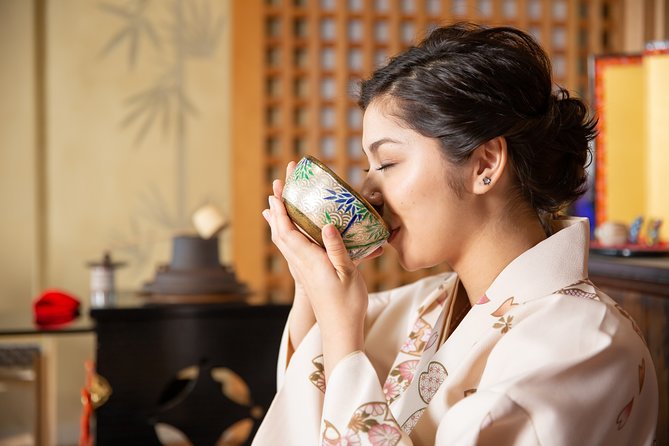
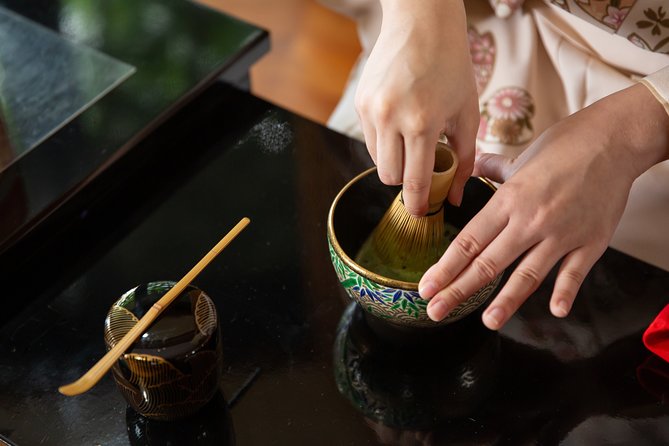
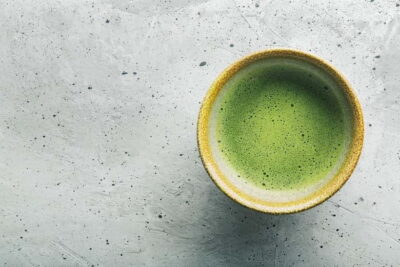
The practical high point comes when you add matcha green tea and hot water to the tea bowl and prepare your own drink. You are not only watching the tea master. You get to handle the ingredients and tools yourself.
That hands-on part gives the $85.39 price more value. A shorter demonstration would teach you something, but preparing your own bowl gives you a personal result to taste and remember.
The tea is described as bitter, which is useful to know before booking. The sweets come first for a reason. If you are new to matcha, do not expect a sweet café drink.
You also do not need to worry about preparing a perfect bowl on your first try. The point is to learn the process, handle the tools respectfully, and experience the taste after following the ceremony’s method.
For families, this is the part most likely to hold attention. Children over four can participate, and the hands-on steps give the session a clear beginning, middle, and end. Children under three cannot join, so families with toddlers will need another plan for that age group.
Photos at the gold folding screen
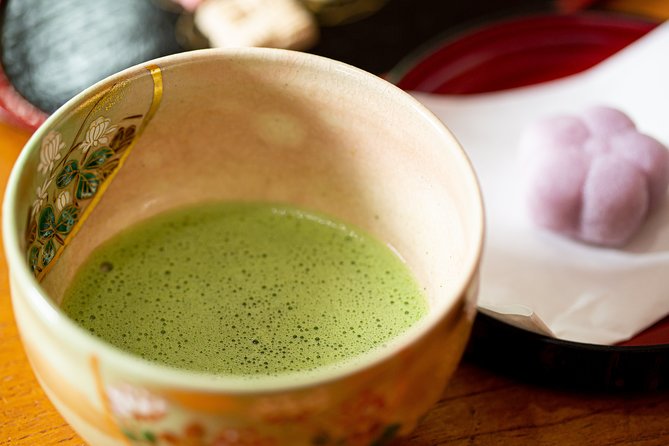
The session ends its ceremonial portion with photographs in front of a gold folding screen. This creates a clear photo moment without reducing the entire experience to a costume shoot.
The screen gives the kimono a formal backdrop, while the tea-room setting supplies the cultural context. You can take home a picture that records both what you wore and what you learned.
Photography comes after the tea preparation, so it does not interrupt the teaching. That order is sensible. You first learn the manners, taste the sweets, prepare the matcha, and then pause for photographs.
The available details do not specify how many photos are taken or who operates the camera, so bring your own phone if you want a particular image. The activity includes a mobile ticket, but that refers to entry and booking access, not a professional photography package.
The Ryurei-style tables make the activity easier
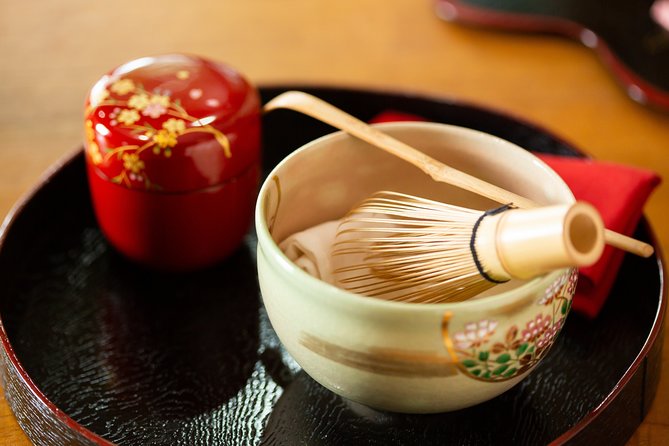
The use of Ryurei-style tables and chairs is one of the most practical features. Traditional tea ceremonies can involve sitting on the floor, which is not comfortable for everyone. Here, part of the experience takes place at a raised table.
The provider specifically confirms that you can participate even if you cannot sit up. That makes this a stronger choice for people who need a seated arrangement, though the experience still includes entering the tea room and changing clothing.
The table setting also works well for international visitors who are curious about tea ceremony but unsure about formal floor customs. You receive the cultural lesson without the entire session depending on kneeling or sitting low.
This does not make the activity informal. The tools, manners, sweets, and preparation remain part of the ceremony. It simply gives you a more manageable way to take part.
Price, timing, and group size
At $85.39 per person, this is a premium one-hour activity. I would not book it if you only want a quick kimono photograph or a cup of tea. You are paying for instruction, the tea-room setting, clothing, sweets, translator support, and the chance to prepare matcha yourself.
The value improves if you care about cultural context. You receive a guided introduction to the objects and manners, not just a presentation. The experience also has a clear beginning and ending, which makes it easy to fit into a day around Onna-son.
The session lasts about 75 minutes. That is long enough for the clothing change, tea-room introduction, sweets, tool lesson, matcha preparation, photos, and changing back, but short enough for families or visitors with a full Okinawa schedule.
At least two people are required. The published capacity details are not completely consistent: one part gives a maximum of eight, while the additional information gives a maximum of six. In either case, the group is intended to be small, and you should expect a personal format rather than a large public demonstration.
The activity is often reserved about 22 days ahead. You do not have to book that far in advance, but this pattern suggests that planning ahead is sensible, especially if you have fixed dates in Onna-son. Reservations must be made at least three days before the experience.
Who will enjoy this most
I would recommend this to couples, families, and first-time visitors who want a calm cultural activity between sightseeing days. It is especially good for anyone who wants to understand why tea ceremony movements matter, rather than simply watch an attractive performance.
It also suits relatives visiting Okinawa together. One family used it as an introduction to Japanese culture for visiting relatives, and the combination of translator support, sweets, clothing, and hands-on preparation gives a mixed group plenty to share.
Older children can take part, and the age guidance allows participants over four. The experience is not aimed only at adults, though very young children under three cannot join.
You should think twice if you dislike formal manners, bitter tea, or activities with a quiet teaching pace. You may also find the price high if your main aim is a souvenir photo.
Practical details before you go
The meeting point is the Japanese Cultural Experience Facility Sasagirian, at 1765-8 Nakama, Onna, Kunigami District, Okinawa 904-0401, Japan. The activity finishes at the same location, and it is described as being near public transportation.
Your booking confirmation is provided at the time of reservation, and the ticket is mobile. You should reserve at least three days before the scheduled start and allow time to reach the facility in Onna-son.
Free cancellation is available up to 24 hours before the local start time for a full refund. Changes or cancellations made less than 24 hours before the start are not accepted for a refund. Poor weather can also affect the activity, in which case you are offered another date or a full refund.
Should you book this tea ceremony?
Book it if you want a thoughtful, small-group introduction to Japanese tea culture with an Okinawan touch. The strongest reasons are the traditional tea room, the simple kimono, the translator support, the local sweets, and the chance to make your own matcha.
I would choose it over a basic costume rental if you want to learn something lasting. I would skip it if you want a fast, inexpensive photo session or if the quiet, formal pace sounds uncomfortable.
For most couples and families with room in the budget, this is a memorable use of 75 minutes in Onna-son. The gold-screen photo is a nice finish, but the real value is entering the tea room, noticing its details, and taking part in the ritual yourself.
FAQ
Where does the tea ceremony take place?
It takes place at the Japanese Cultural Experience Facility Sasagirian, at 1765-8 Nakama, Onna, Kunigami District, Okinawa 904-0401, Japan.
How long does the experience last?
The experience lasts approximately 1 hour and 15 minutes.
What is included in the experience?
You change into a simple kimono, enter the tea room, learn about the tea utensils and manners, taste Japanese and Okinawan sweets, prepare your own matcha, taste it, take photos by a gold folding screen, and change back.
Do I make my own green tea?
Yes. You add matcha green tea and hot water to the tea bowl and prepare your own tea after learning how to handle the tools.
Are sweets included?
Yes. The experience includes Japanese and Okinawan sweets before the tea.
Can children participate?
Children over four can participate. Children under three cannot participate.
Can I participate if I cannot sit up?
Yes. The activity information confirms that people who cannot sit up can participate.
How many people can join?
At least two people are required. The additional information lists a maximum of six travelers, while another description lists a maximum of eight.
How far in advance must I book?
A reservation is required at least three days before the experience. The activity is booked, on average, 22 days ahead.
Can I cancel for a refund?
Yes. You can cancel at least 24 hours before the local start time for a full refund. Cancellations or changes made less than 24 hours before the start are not refunded or accepted.
Just added around Japan
- Yokohama : Tea Ceremony with Sweets and Souvenir★ 5.0 · 5 reviews
- Walking Tour: Yanaka,Nezu& Sendagi: Tea Ceremony & Old Tokyo★ 5.0 · 3 reviews
- Visit local home for music and tea ceremony near Disney★ 4.9 · 13 reviews
- Trip to Kamakura & Enoshima: Shrines, Seaside, Temples &Tea★ 5.0 · 11 reviews
- Yokohama: Sushi & Gyoza Cooking with Matcha & GreenTea Experience★ 5.0 · 3 reviews
- Kyoto tea town for matcha lovers★ 5.0 · 16 reviews
- Uji: Private immersion into Kyoto’s tea and reglious culture★ 5.0 · 17 reviews
- Uji Tea Ceremony and UNESCO Heritage Walking Tour★ 5.0 · 20 reviews
Tea Ceremony Experiences, compared.
Tea Ceremony in a Traditional Tea House in Kiyomizu
Read our review →
Browse the lists this tour appears in