
Review · NARA
Nara Takayama Tea Whisk Craft and Tea Culture Experience
Watch bamboo become art. In Takayama, Nara, you can see master artisan Tango Tanimura make a traditional chasen tea whisk, then choose your own hands-on activity. I like the direct contact with a living craft tradition, and I like that you can shape the visit around your interests, from carving a tea scoop to taking part in a tea ceremony.
The main drawback is access. Tanimura Tango’s workshop is in a village setting, and getting there by public bus may be awkward. One guest was collected from the train station by guide Yoshi, who made the journey much easier, but you should confirm transportation arrangements before booking. At $141 per person, this is not a casual bargain activity, although the price makes more sense if you choose the Premium Plan.
The details that make this visit special
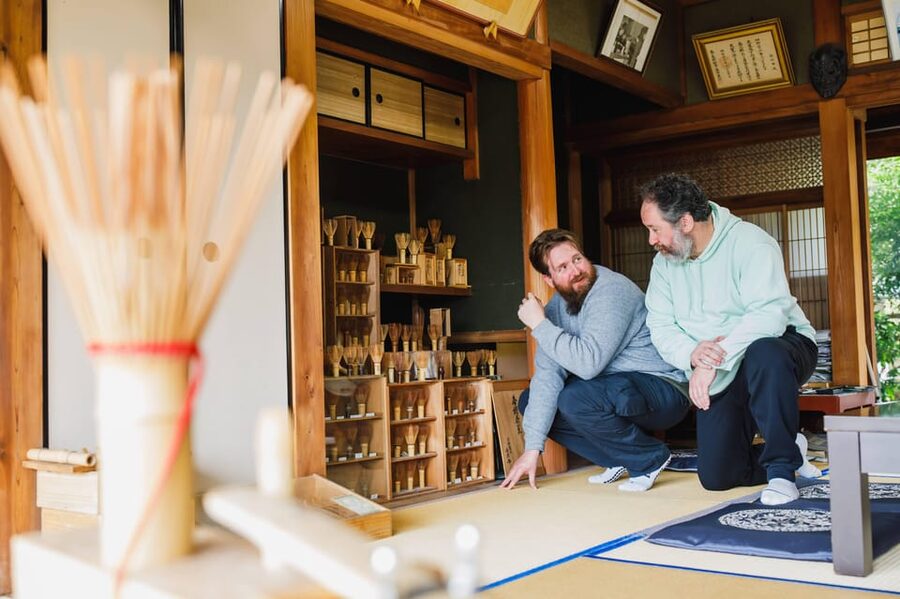
- A 20th-generation craft master: Tango Tanimura demonstrates techniques passed through his family for centuries.
- The birthplace of the chasen: Takayama is known for producing Japanese tea whisks for about 500 years.
- Four ways to participate: Choose tea scoop carving, tea whisk making, a tea ceremony, or the all-inclusive Premium Plan.
- A genuine workshop setting: The visit takes place at the Tanimura family home and workshop, not a staged craft center.
- A useful handmade souvenir: If you make a chasen or chashaku, you take home something tied directly to the craft.
- A strong guide service: English and Japanese guiding is available, with private and small-group formats.
Why Takayama is the right place for tea whisk making
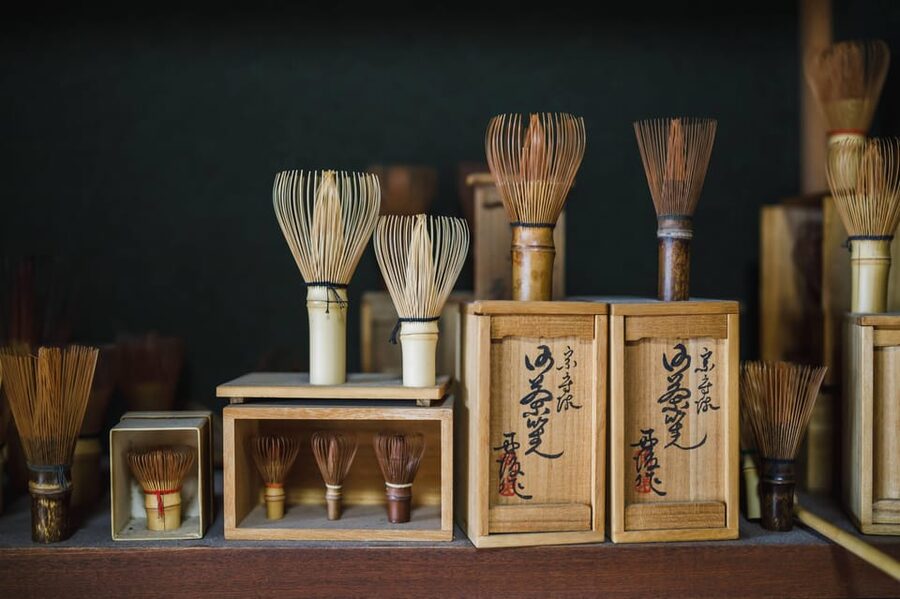
Takayama, in Nara Prefecture, is widely regarded as the birthplace of Japan’s traditional tea whisk. The craft began in this bamboo-growing village roughly 500 years ago, and local artisans still make many whisks by hand.
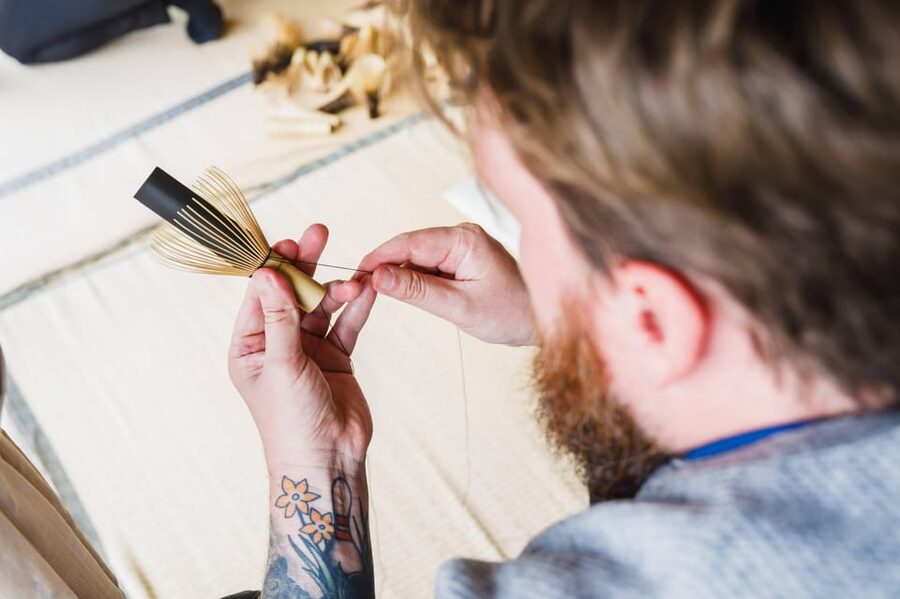
That setting matters. A tea whisk can look simple at first glance: a short piece of bamboo split into fine strands and shaped into a delicate tool. In practice, its form requires careful control. The bamboo has to be prepared, split, shaped, and finished so the whisk is both attractive and useful for preparing matcha.
You are not simply learning how a souvenir is assembled. You are seeing a tool that has a working role in tea culture. A good chasen must help create the smooth, frothy texture expected in matcha preparation. The link between craft and daily use gives the visit more weight than a basic make-and-take class.
The Tanimura family is one of only 18 tea whisk-making families in Japan. That small number helps explain the price and the limited feel of the appointment. This is a specialist tradition, carried on by a very small group of artisans rather than a common workshop format available in every tourist town.
A few more tea experiences around Japan worth a look
- Kyoto: Tea Ceremony in a Traditional Tea House in Kiyomizu
★ 4.9 · 3,519 reviews - Kyoto: Tea Ceremony Ju-An at Jotokuji Temple
★ 4.9 · 3,207 reviews - Kyoto: 45-Minute Tea Ceremony Lesson Experience
★ 4.3 · 2,378 reviews
Inside the Tanimura Tango home and workshop
You meet in front of Tango Tanimura’s house, where your guide holds a DeepExperience sign. The same location serves as the start and end point, so you do not need to change venues during the activity.
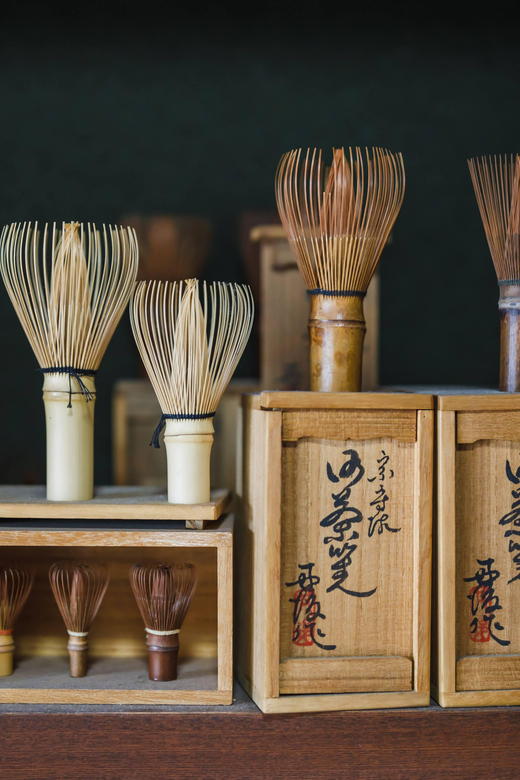
Inside, you can expect a quiet workshop filled with finished whisks and traditional tea tools. The setting is part of the appeal. You are visiting a working family craft space, and the atmosphere should feel more personal than a large cultural attraction.
Photography is allowed, but you should respect the artisan’s privacy. You are specifically asked not to record the demonstration. That rule is reasonable here. The technique is a family tradition, and the point of the visit is to watch closely in the room, not to turn the demonstration into a video archive.
The guide helps explain what you are seeing in English or Japanese. Small groups and private bookings are available, which should make it easier to ask questions and follow the demonstration. If you choose a private visit, you will likely get more room to set the pace around your own interests, though the supplied details do not state a separate private-tour price.
Watching Tango Tanimura shape a chasen
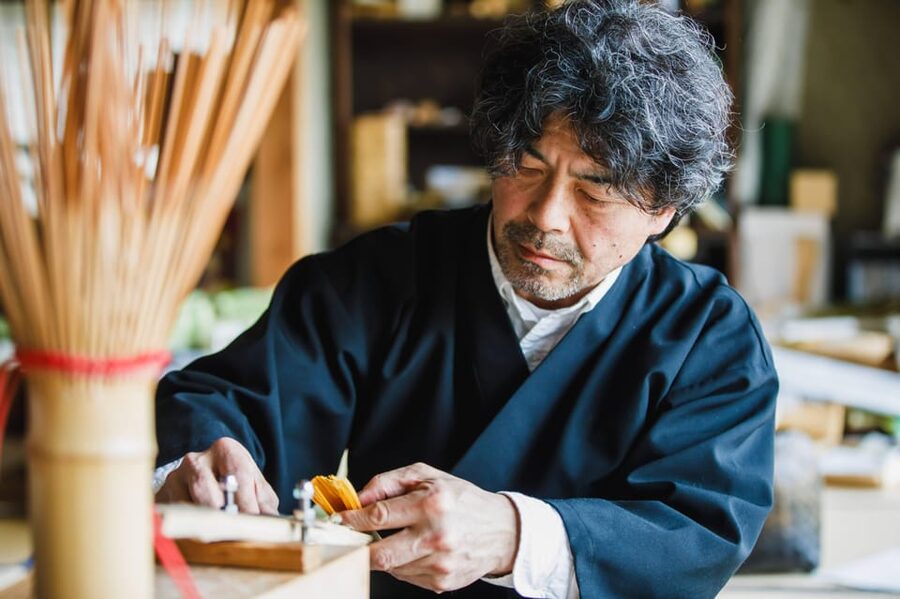
The central moment is Tango Tanimura’s demonstration. As the 20th-generation head of the family, he represents a long line of makers who have refined this work across centuries.
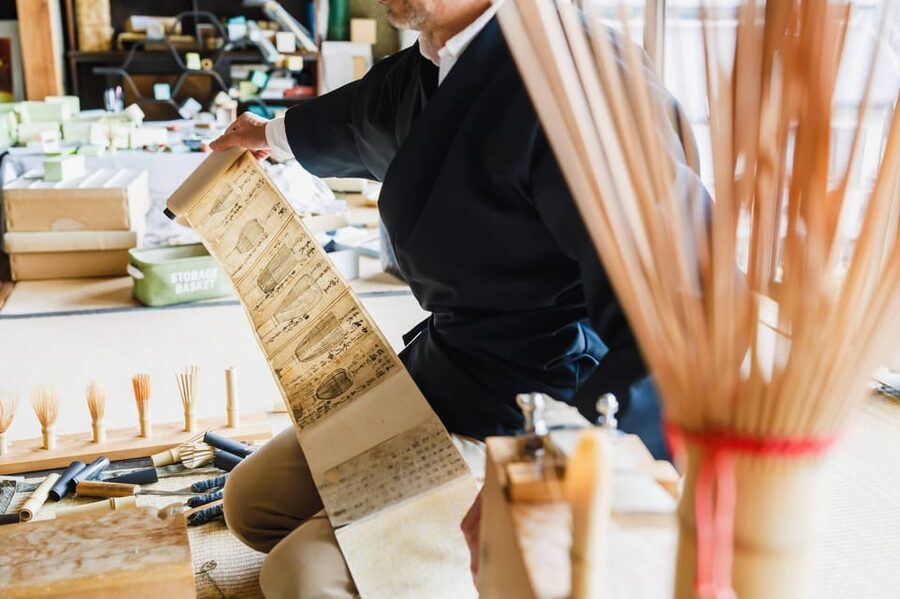
You watch him transform one piece of bamboo into a tea whisk. The process is delicate and exact. His hands must control the material at a level that is difficult to appreciate when you only see the finished object in a shop. The demonstration shows why these whisks are handmade, and why the craft cannot be reduced to a quick factory process.
This is also the part of the visit where patience pays off. The work may look slow compared with most modern activities, but that slow pace is the lesson. The value is in seeing how much care goes into a tool that may be used for only a few minutes during a tea preparation.
One visitor described meeting Tanimura and seeing the inherited technique as a humbling and beautiful part of the day. That reaction makes sense. The appeal is not only visual. You are watching a person protect a specialized skill that could easily disappear if younger makers do not continue it.
The demonstration is included with every option, so even the shortest package still contains the most important cultural element.
Choose a tea scoop, a tea whisk, or a ceremony
After the demonstration, you choose one main activity unless you select the Premium Plan. Each option gives you a different way to understand tea culture.
Same place, a different pot:
- World Heritage Kyoto & Nara Uji Authentic Matcha Experience
★ 5.0 · 1,573 reviews - Osaka: Tea Ceremony Experience
★ 4.9 · 1,426 reviews - Kyoto: Table-Style Tea Ceremony at a Kyo-Machiya
★ 4.9 · 1,211 reviews - Kanazawa: Kenrokuen Tea Ceremony Experience
★ 4.8 · 1,139 reviews
Carve your own chashaku
The chashaku is the slim bamboo scoop used to measure matcha. Carving one gives you a more manageable introduction to the material than making a full whisk.
This option suits you if you enjoy handwork but do not want to commit to the longer, more demanding process of whisk making. You work under the master’s guidance and leave with a tool connected to the ceremony.
A chashaku is also a practical choice for a suitcase. It is small, light, and less delicate than a finished tea whisk. The activity may appeal to you if you want a personal object without spending the full Premium Plan price.
Make your own chasen
The chasen workshop is the more ambitious choice. You get to work with the same type of traditional object that you just saw Tanimura create.
Do not expect a quick craft project. A tea whisk has a fine structure, and the finished item must be handled carefully. The satisfaction comes from understanding the effort behind the object, not from producing a perfect professional-grade whisk in one sitting.
You take your handmade chasen home, giving you a souvenir with a clear story. It is not just something purchased in a shop. You saw the master demonstrate the method, tried the process yourself, and carried the result away from the village where this tradition developed.
Take part in a tea ceremony
The tea ceremony option shifts attention from making tools to using them. You learn how the utensils, manners, preparation, and hospitality work together.
This choice is best if you are more interested in Japanese customs than in manual craft. It also gives context to the whisk and scoop. Instead of treating each object as decoration, you see how the tools serve a clear role in preparing and offering matcha.
The ceremony takes place in an authentic setting at Tanimura Tango. That setting adds meaning, although the supplied details do not specify the exact room style, sweets, or length of the ceremony. If those details matter to you, ask when you reserve.
The Premium Plan: a longer visit with more value
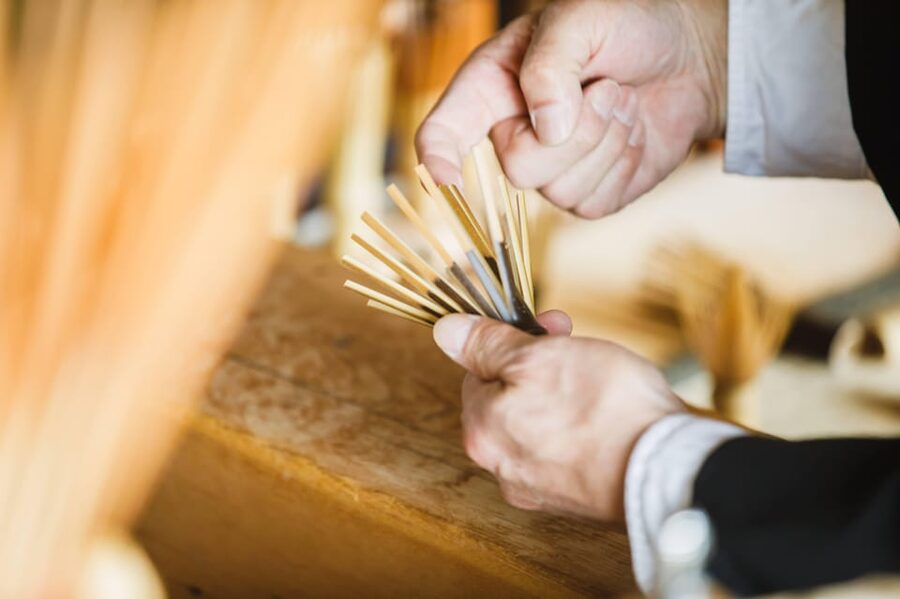
The Premium Plan includes the tea ceremony, lunch, chasen workshop, chashaku carving, and matcha whisking. It is the most complete choice and the one that best matches the $141 price.
The timing ranges from 150 to 330 minutes depending on the option. The Premium Plan will use the longer end of that range because it combines several activities. You should allow most of an afternoon rather than trying to squeeze it between tightly scheduled sightseeing stops.
The seasonal boxed lunch adds a welcome break and gives the visit a fuller rhythm. You are not only watching and making tools. You are also eating, learning the customs around tea, and preparing matcha yourself.
The matcha whisking portion is especially useful. After watching Tanimura use the tools, you get to try preparing tea with utensils connected to the workshop. That helps close the gap between craft and culture.
For me, the Premium Plan offers the clearest value if you already have a strong interest in matcha, Japanese craft, or traditional arts. If you want only a short introduction, paying for every element may be unnecessary. The single-activity choices let you spend less time and focus your visit.
Getting there is the practical concern
The workshop is not presented as a hotel pickup activity, and transportation to and from Tanimura Tango is not included. You need to arrange your own way there unless your selected guide service has agreed to help with a pickup.
This point deserves attention before you pay. One visitor said guide Yoshi picked them up from the train station because reaching the village by bus was not easy. Yoshi was praised for his English and for sharing recommendations about other local places. Another visitor had guide Benoit, who was described as professional and helpful.
Those details show how much the guide can affect the day. Confirm the meeting instructions and ask about the easiest route from your accommodation or station. The official meeting point is in front of Tango Tanimura’s house, where the guide holds a DeepExperience sign.
There are two listed starting-location choices, but both refer to Tanimura Tango. That does not mean you have two different attractions to compare. It appears to be a booking choice for the same workshop address, so read the confirmation carefully.
How long should you allow?
The shortest versions take about 150 minutes. Longer versions can reach 330 minutes, especially when lunch, both carving activities, tea ceremony, and matcha whisking are included.
For the chashaku, chasen, or tea ceremony options, plan on roughly two to three hours once you include the demonstration and guided teaching. The Premium Plan can occupy most of your afternoon.
The timing works best for someone who enjoys a slower cultural visit. This is not a quick photo stop followed by a rushed craft. You need time to watch, listen, work with your hands, and let the demonstration unfold.
Wear comfortable clothing suitable for crafting. The activity is hands-on, and you should choose clothes that allow you to sit and work without worry. No special equipment is listed as necessary.
Is $141 per person a fair price?
At first glance, $141 may seem high for a craft class. The price becomes easier to defend when you consider what is included: a demonstration by a 20th-generation artisan, a guide, a selected hands-on activity, and, with the Premium Plan, lunch, tea ceremony, chashaku carving, chasen making, and matcha whisking.
The value is strongest for the Premium Plan and for private or small-group visits. You are paying for access to a highly specialized family workshop, not simply for raw materials and a short lesson.
The value is weaker if you only want a basic souvenir or a quick matcha tasting. In that case, choose the option that matches your main interest rather than automatically paying for every activity.
The handmade item also affects the calculation. A chasen or chashaku made under Tanimura’s direction has more personal meaning than a mass-produced souvenir. It may not be perfect, but that is part of its value. You can explain how it was made and where you made it.
Who will enjoy this most?
I would recommend this activity to you if you have an interest in:
- Matcha and Japanese tea ceremony
- Traditional bamboo work
- Family-run craft traditions
- Small-group cultural activities
- Handmade souvenirs with a personal story
- Slow-paced visits outside the main sightseeing route
It is also a good choice for repeat visitors to Japan who want something more focused than another major temple or city attraction.
You may want to skip it if your schedule is extremely tight, you dislike hands-on work, or you are unwilling to arrange transport to a rural workshop. The demonstration alone is worthwhile, but the full value comes from giving the visit time and attention.
The activity is suitable for English or Japanese speakers because live guiding is available in both languages. Private and small-group formats also make it a better fit for people who want to ask detailed questions without a large crowd.
Small details that improve the visit
Book ahead. This workshop operates by reservation, and the craft is performed by a very small number of specialists.
Ask about the meeting point and transport before the day of the visit. The workshop address is clear, but getting to Takayama may require more planning than reaching a central Nara attraction.
Choose your main activity based on your real interest. Pick the chashaku if you want a simpler object to carve, the chasen workshop if you want the most direct connection with the master’s craft, and the tea ceremony if you care most about etiquette and hospitality.
If you want everything, select the Premium Plan and protect enough time for it. A 330-minute visit is not something to place between two fixed appointments.
Bring curiosity, not the expectation of instant mastery. The craft has been passed through 20 generations, so a first attempt will naturally be modest. That is exactly why the demonstration matters.
Should you book the Takayama tea whisk experience?
Yes, if you want a rare look at Japanese tea culture from inside a working family workshop. The strongest reasons to book are Tango Tanimura’s demonstration, the chance to make a real tea tool, and the setting in Takayama, where tea whisk production has continued for about 500 years.
I would choose the Premium Plan if you have the time and the budget. It combines the craft, the ceremony, lunch, and matcha preparation into one well-rounded visit.
If $141 feels too steep, choose one focused option rather than abandoning the activity altogether. The demonstration is included in every package, and the chashaku or tea ceremony choices offer a shorter introduction.
The one point you should settle before booking is transportation. Once you have the route organized, this is the kind of small-scale cultural visit that can give your Nara trip a more personal center.
FAQ
Where does the tea whisk experience take place?
All activities take place at Tanimura Tango, the home and workshop of artisan Tango Tanimura in Takayama, Nara.
How do I find the meeting point?
Meet your guide in front of Tango Tanimura’s house. The guide will hold a sign with the DeepExperience logo.
Is transportation to the workshop included?
No. Transportation to and from Tanimura Tango is not included. You should arrange your own transport and confirm the easiest route before your visit.
How long does the activity last?
The available durations range from 150 to 330 minutes, depending on the option you choose. The Premium Plan uses the longer format because it includes several activities.
What activities can I choose from?
You can choose chashaku carving, a chasen-making workshop, or a tea ceremony. The Premium Plan includes all of these, along with lunch and matcha whisking.
Is the tea whisk demonstration included?
Yes. A chasen crafting demonstration is included with every option.
Can I join in English?
Yes. Live guiding is available in English and Japanese.
Can I take photographs or record the demonstration?
Photography is allowed, but you should respect the artisan’s privacy. Recording the artisan’s demonstration is not permitted.
Just added around Japan
- Yokohama : Tea Ceremony with Sweets and Souvenir★ 5.0 · 5 reviews
- Walking Tour: Yanaka,Nezu& Sendagi: Tea Ceremony & Old Tokyo★ 5.0 · 3 reviews
- Visit local home for music and tea ceremony near Disney★ 4.9 · 13 reviews
- Trip to Kamakura & Enoshima: Shrines, Seaside, Temples &Tea★ 5.0 · 11 reviews
- Yokohama: Sushi & Gyoza Cooking with Matcha & GreenTea Experience★ 5.0 · 3 reviews
- Kyoto tea town for matcha lovers★ 5.0 · 16 reviews
- Uji: Private immersion into Kyoto’s tea and reglious culture★ 5.0 · 17 reviews
- Uji Tea Ceremony and UNESCO Heritage Walking Tour★ 5.0 · 20 reviews
Nara Tea Tours, compared.
World Heritage Kyoto & Nara Uji Authentic Matcha Experience
Read our review →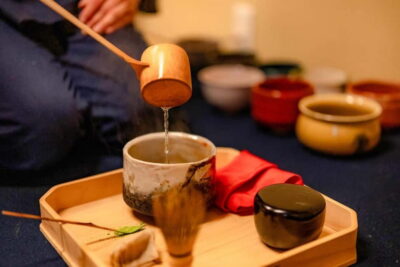
Nara:Authentic Tea Ceremony(Max 5 ppl) -Master Matcha Making
Read our review →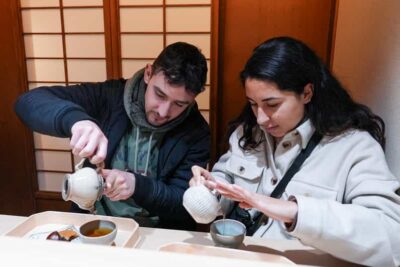

Tea Tasting&Private Tea Ceremony -Master Matcha Making-
Read our review →
Full Day Nara Deer, Temple, Shrine, Activities & Tea Ceremony
Read our review →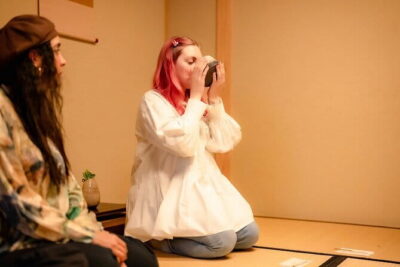
Nara:Private Tea Ceremony(Max 5 ppl) -Master Matcha Making-
Read our review →Browse the lists this tour appears in