
Review · NARA
Full Day Nara Deer, Temple, Shrine, Activities & Tea Ceremony
Nara rewards curious walkers. This seven-hour tour links the city’s famous deer and temples with hands-on Japanese culture. I especially like the mix of Todaiji Temple and Kasuga Taisha Shrine, plus the chance to visit Kikuichi, a respected knife maker. The small group, capped at 12 people, should also make the day easier to manage.
The price is $110.55 per person, which is fair given the temple admissions, guide, cultural activities, deer cookies, and tea ceremony. The main drawback is simple: this is a full-day walking tour with many stops, so it may feel tiring if you prefer a slow visit or dislike fixed schedules.
Key reasons to consider this Nara tour
- Feed Nara’s deer with included deer cookies, while your guide helps you handle the famously eager animals.
- Enter Todaiji Temple, home to Japan’s largest bronze Buddha statue.
- Visit Kikuichi’s original shop, where you can learn about Japanese knives from a former katana maker.
- Create origami and practice calligraphy, with a chance to write your name in Katakana or Kanji.
- Hear the unsettling demon story at Gangoji Temple, one of Nara’s seven great temples.
- Finish with matcha and handmade Wagashi, served during a tea ceremony led by a certified tea master.
A full Nara day with more than deer
Nara is easy to reduce to one image: tame deer wandering through a park. The animals are fun, but they are only the opening act. This tour gives you a fuller look at the city, moving from grand Buddhist architecture to Shinto worship, traditional crafts, old legends, and tea.
The schedule begins at 9:00 am near Higashimuki Shopping Street and ends back at the same meeting point. That is useful if you are staying near Nara Station or want an easy place to continue shopping and eating afterward. You are on foot for most of the day, so comfortable shoes matter more than stylish ones.
A bilingual local guide leads the group. Past tours have been conducted in more than one language, including German and French, and guides such as Harry and Rémi have been praised for their friendly manner and clear explanations. The small-group limit of 12 is a useful middle ground: more social than a private outing, but less unwieldy than a large bus group.
More Tea Ceremonies in Japan:
- Kyoto: Tea Ceremony in a Traditional Tea House in Kiyomizu
★ 4.9 · 3,519 reviews - Kyoto: Tea Ceremony Ju-An at Jotokuji Temple
★ 4.9 · 3,207 reviews - Kyoto: 45-Minute Tea Ceremony Lesson Experience
★ 4.3 · 2,378 reviews
Todaiji’s Great South Gate and giant Buddha
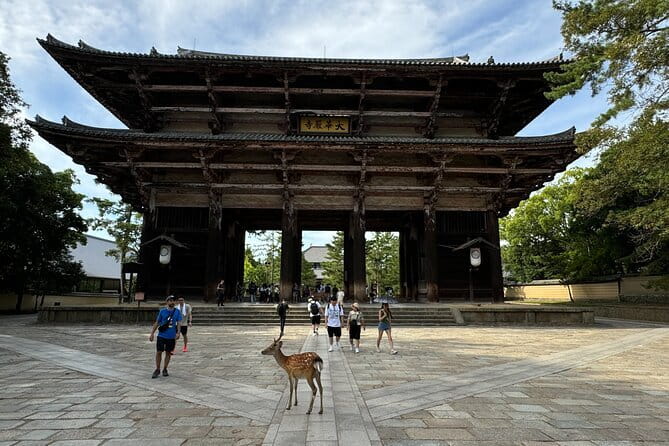
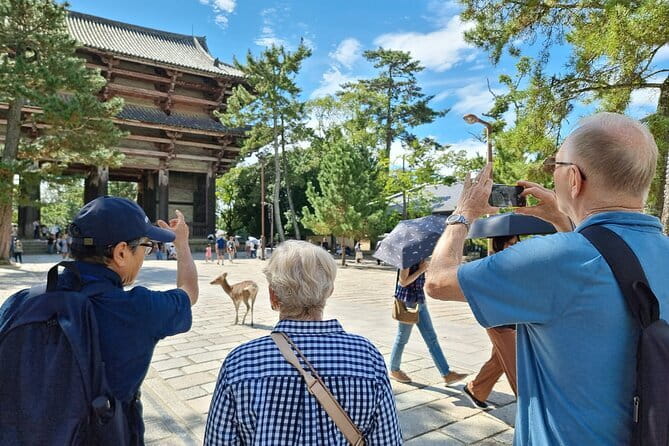
The first stop is Todaiji’s Great South Gate, or Namdaimon. Give yourself time to look up. The gate is more than a passage into the temple grounds. Its large wooden structure and fierce guardian statues establish the scale and power of Todaiji before you even reach the main hall.
Your guide can explain the gate and its guardians, but you will also have time to take in the details at your own pace. This is a good early stop because it sets the scene without rushing straight into the main attraction.
Next comes Todaiji Temple itself, with about 50 minutes inside. Admission is included, and you receive free time for a more personal visit. The main draw is the enormous bronze Buddha, one of Japan’s best-known religious images and the largest bronze Buddha statue in the country.
That free time matters. Some guided temple visits keep everyone moving in a tight line. Here, you can listen to the historical explanation, then pause for your own photographs and quiet observation. Still, 50 minutes is not an unlimited visit. If you like to read every sign or study every architectural feature, you may want to return later on your own.
Deer in Nara Park, with a little caution
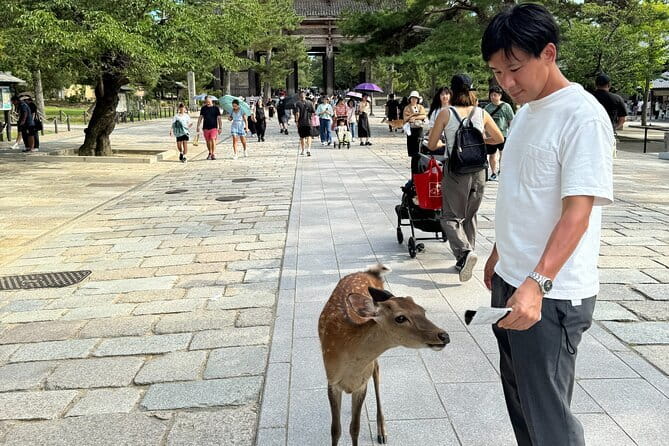
The walk through Nara Park connects the major sights and gives you the classic Nara experience. Deer move freely through the park, and the tour includes cookies to share with them.
The word share is important. These are wild animals accustomed to people, not tame pets. Some may bow or approach politely, while others may be more persistent once they notice food. Follow your guide’s instructions, keep the cookies under control, and finish feeding before putting your hands near an interested deer.
I like that the deer encounter is part of a wider route rather than the whole purpose of the day. You get the memorable photographs and close contact, but then move on to the cultural places that give Nara its character.
The park walk also provides a natural break between temple visits. Expect walking rather than a ride through the grounds. The route is chosen by the guide, which should help you see the main sights without wasting time finding the next entrance.
Kikuichi and the craft of Japanese knives
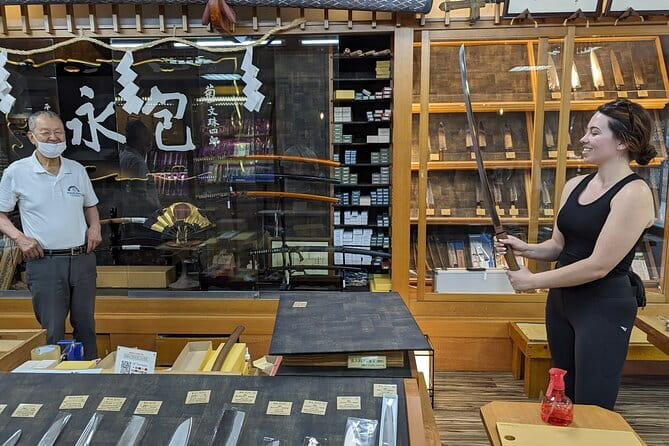
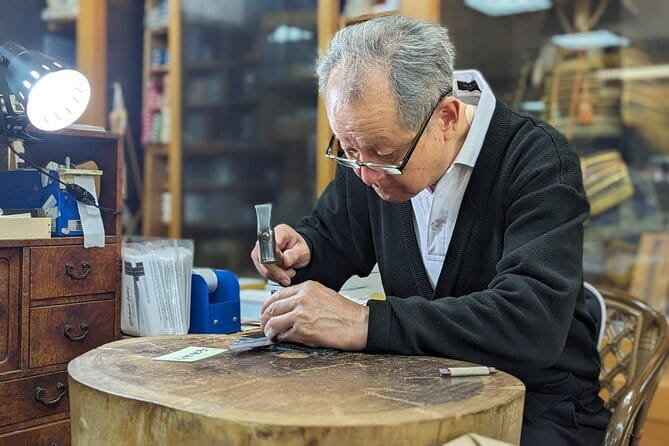
Kikuichi’s main store offers one of the more unusual stops on the route. The company is described as a prestigious knife maker with roots as a katana maker, and the visit includes an introduction to Japanese cutlery.
This is useful even if you are not planning to buy a knife. You can learn why Japanese blades are so respected and ask for advice about choosing one. If you do want a kitchen knife, this is a better setting than grabbing a random souvenir from a crowded shopping arcade.
The visit lasts about 35 minutes. That is enough for an introduction and questions, but not a long workshop. Keep the shopping part optional in your mind. The tour includes the history and explanation, but knives and other purchases are not included in the price.
More Full-Day Trips in Japan:
- Mt. Fuji & Lake Kawaguchiko Ropeway Panorama Full-Day Tour
★ 4.6 · 236 reviews - Tokyo: Full-Day Tour w/Tea Experience,Buffet Lunch & Cruise
★ 4.9 · 151 reviews - Kanazawa: Samurai, Matcha, Gardens and Geisha Full-Day Tour
★ 4.9 · 75 reviews - Full-Day Tour from Kanazawa: Samurai, Matcha, Gardens and Geisha
★ 5.0 · 68 reviews
Kasuga Taisha and the spirit of Shinto
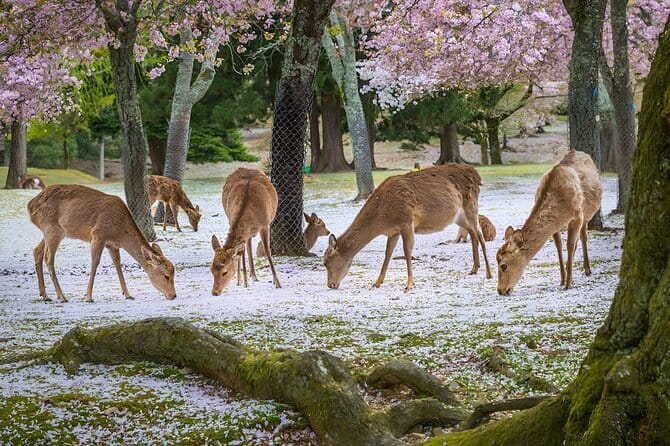
Kasuga Taisha brings a different religious tradition into the day. Todaiji is a Buddhist temple, while Kasuga is a major Shinto shrine associated with the spirit of Kasuga, described here through nature and the natural world.
The approach is especially attractive, with a lantern-lined path leading through the shrine grounds. Your guide introduces basic Shinto ideas and explains how the shrine fits into Nara’s spiritual life. That context helps you see the place as more than a scenic route with old buildings.
You have about 40 minutes at Kasuga Taisha. That is enough to appreciate the approach, hear the explanation, and take photographs. As with Todaiji, the time is structured. If your ideal shrine visit involves sitting quietly for a long stretch, this tour will give you less freedom than exploring alone.
Lunch near Higashimuki Shopping Street
After the morning sights, the group returns toward the west side of Nara Park for 45 minutes of free time. Lunch is not included, so you choose and pay for your own meal around Higashimuki Shopping Street.
This arrangement gives you some control. You can look for a quick meal, browse local food shops, or keep lunch simple if you want more time for the afternoon activities. Forty-five minutes is practical but not generous, particularly if a restaurant is crowded.
The group meets again at a preset location. Listen carefully to the guide’s instructions before separating, and keep an eye on the time. This is one point where the tour’s fixed schedule may feel less relaxed than an independent day.
Origami, calligraphy, and possible costumes
The afternoon moves indoors at Nara Visitor Center & Inn for about an hour of cultural activities. You learn basic origami and create a deer, then practice calligraphy by writing your name in Katakana or Kanji.
These activities give you something to take home besides photographs. They are also well suited to families and to anyone who wants a short introduction rather than a formal, technical lesson. The aim is participation: fold paper, hold the brush, and try the characters yourself.
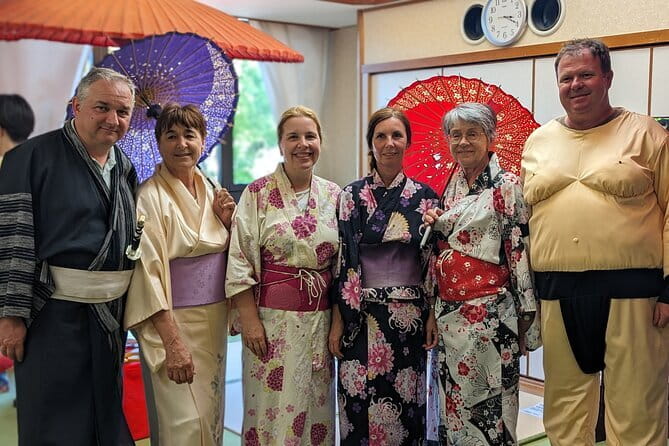
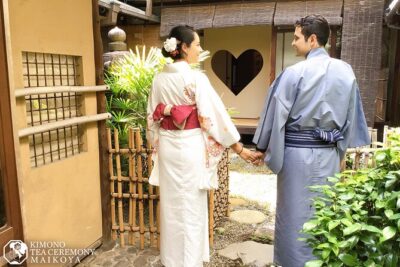
If time allows, you may also wear a Kimono or another costume for a photo session. This is not guaranteed, since it depends on the day’s schedule. Treat it as a possible extra, not a central reason to book.
The crafts help break up the monuments. After several hours of looking at buildings, you get to make something with your hands. That change of pace is one of the tour’s strongest ideas.
Gangoji Temple and the demon of Gangoji
Gangoji Temple offers a quieter and more unusual historical stop. It is one of Nara’s five World Heritage sites and one of the city’s seven great temples. It is also described as technically the oldest temple in Japan still standing.
The visit lasts about 45 minutes, with admission included. Your guide explains the temple’s past and tells the scary origin story of the Gangoji demon. This adds a touch of folklore to a day that could otherwise become a sequence of dates, architectural terms, and religious explanations.
I like the contrast with Todaiji. Todaiji is famous for scale and spectacle. Gangoji offers a more intimate look at Nara’s old temple tradition, along with a story that is easier to remember than a list of construction periods.
The demon tale may appeal especially to older children and anyone who enjoys local legends. If you prefer only formal historical facts, it may feel like a side path, but it gives the stop personality.
A proper matcha ceremony at Shofukutei
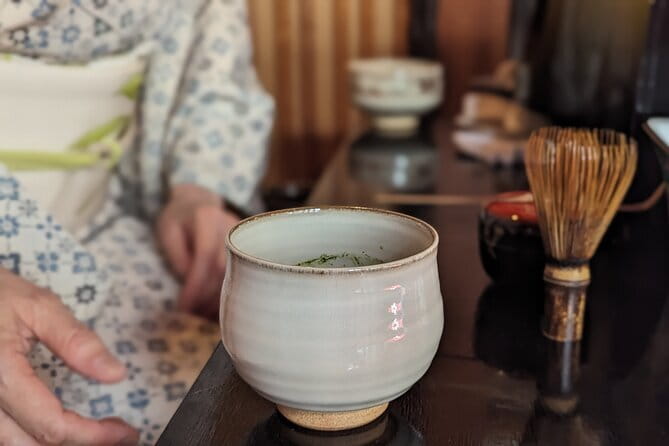
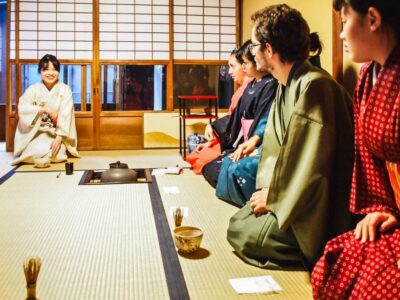
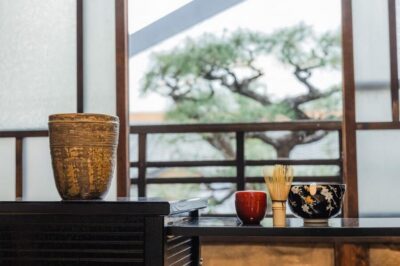
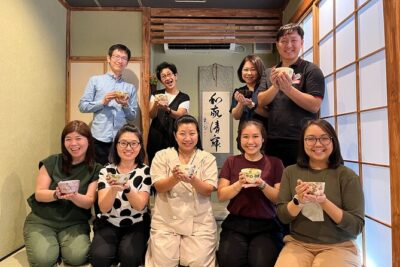
The final stop is Shofukutei, a traditional café away from the busiest tourist areas. A tea master and her husband welcome the group, and a certified tea master prepares fresh matcha in front of you.
The tea ceremony includes matcha and a handmade Wagashi, a traditional Japanese sweet served with tea. This is not simply a drink break. You get to see the preparation, taste the tea, and learn about the customs surrounding the service.
The one-hour visit is a calm finish after a long day outside. It also gives you a more direct connection to Japanese culture than a quick cup of matcha ordered at a café counter. The setting is intended to avoid crowded and expensive tourist spots, which should make the experience feel more personal.
Do not expect a completely private ceremony. The group remains together, and the experience is designed as an introduction. Still, ending here is a smart choice. The tea ceremony slows the pace and leaves you with a clear final memory of the day.
Is $110.55 a fair price?
At $110.55 per person, this tour is not the cheapest way to see Nara. You could visit the public park and several outdoor sites independently for less. The value comes from the number of included elements and the explanations that connect them.
Your price covers a bilingual guide, deer cookies, admission to Todaiji and Gangoji, the cultural activities, and the tea ceremony with matcha and Wagashi. Lunch, drinks, shopping, and souvenirs cost extra.
The knife shop may tempt you to spend more, but purchasing is not required. If you are interested in Japanese cutlery, the guided introduction adds useful context. If you are not, consider it a short cultural stop rather than a sales opportunity.
The strongest value comes from combining famous places with activities that are harder to arrange on your own. You get deer, two major religious sites, a knife maker, origami, calligraphy, a folklore-filled temple, and a tea ceremony in one organized day.
Who should book this experience?
I would choose this tour if you have one full day in Nara and want structure. It suits first-time visitors, families, small groups, and anyone who wants explanations rather than simply moving from gate to gate.
It is also a good fit if you like variety. The schedule changes often: architecture, animals, shrine traditions, shopping, crafts, folklore, and tea. You are unlikely to feel stuck doing one type of activity all day.
You should think twice if you want a very slow pace. Seven hours on foot, with eight planned parts and a timed lunch, leaves limited room to linger. People with mobility concerns should also note that this is explicitly a walking tour, even though most participants can take part.
The tour has received a top rating from the small number of published evaluations, with particular praise for friendly guides, clear explanations of religion and local stories, the deer, calligraphy, the knife maker, and the tea. That praise fits the design of the day: it is less about ticking off temples and more about giving each place a story or activity.
Should you book the Nara day tour?
Book it if you want an efficient, active introduction to Nara with a guide who can explain the religious traditions and local legends. The combination of Todaiji, Kasuga Taisha, Gangoji, deer, Japanese crafts, and tea gives you far more than a quick park visit.
Skip it if you already know Nara well, dislike group schedules, or want to spend hours inside one temple. For most first-time visitors with comfortable shoes and a full day available, the included admissions and cultural activities make the $110.55 price reasonable.
Free cancellation is available up to 24 hours before the 9:00 am start time. The tour requires a minimum number of participants, so a cancellation for that reason comes with the choice of another date or experience, or a full refund.
FAQ
How long does the Nara tour last?
The tour lasts about seven hours, beginning at 9:00 am and ending back at the meeting point.
Where does the tour begin?
It begins at the 7-Eleven at 30-1 Higashimuki Kitamachi, Nara, 630-8214, Japan.
Where does the tour end?
The experience ends back at the starting meeting point.
Is this a walking tour?
Yes. The experience is explicitly described as a walking tour through Nara.
What is the maximum group size?
The group can include a maximum of 12 participants.
Is admission to Todaiji Temple included?
Yes. The Todaiji Temple entrance fee is included.
Is admission to Gangoji Temple included?
Yes. The Gangoji Temple entrance fee is included.
Are deer cookies provided?
Yes. Deer cookies to share are included.
Is lunch included?
No. Lunch and other food and drinks are not included.
What is included in the tea ceremony?
The tea ceremony fee, matcha green tea, and a traditional Wagashi sweet are included.
Can I cancel for a full refund?
Yes. You can cancel at least 24 hours before the local start time for a full refund. Changes or cancellations made less than 24 hours in advance are not accepted for a refund.
Just added around Japan
- Yokohama : Tea Ceremony with Sweets and Souvenir★ 5.0 · 5 reviews
- Walking Tour: Yanaka,Nezu& Sendagi: Tea Ceremony & Old Tokyo★ 5.0 · 3 reviews
- Visit local home for music and tea ceremony near Disney★ 4.9 · 13 reviews
- Trip to Kamakura & Enoshima: Shrines, Seaside, Temples &Tea★ 5.0 · 11 reviews
- Yokohama: Sushi & Gyoza Cooking with Matcha & GreenTea Experience★ 5.0 · 3 reviews
- Kyoto tea town for matcha lovers★ 5.0 · 16 reviews
- Uji: Private immersion into Kyoto’s tea and reglious culture★ 5.0 · 17 reviews
- Uji Tea Ceremony and UNESCO Heritage Walking Tour★ 5.0 · 20 reviews
Tea Ceremony Experiences, compared.
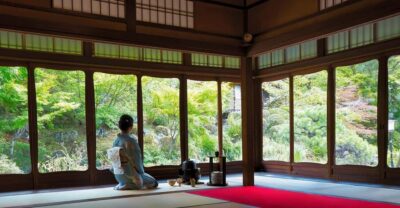
Tea Ceremony in a Traditional Tea House in Kiyomizu
Read our review →

Browse the lists this tour appears in