Review · OSAKA
Osaka: Castle, Tea Ceremony, Calligraphy, and Samurai Armor!
Osaka packs a lot into one cultural day. I like the mix of Osaka Castle and hands-on activities, especially the tea ceremony and calligraphy lesson. I also like that the route finishes in Dōtonbori, where you can trade quiet cultural traditions for takoyaki, shopping, and neon-lit streets.
The main thing to watch is the extra charge. Samurai armor and kimono wearing cost ¥4,820, and those popular photo opportunities are not included in the $135 price. The tour also uses local trains, so it may not suit you if you have back problems or prefer a slower, less active day.
Key points to know before booking
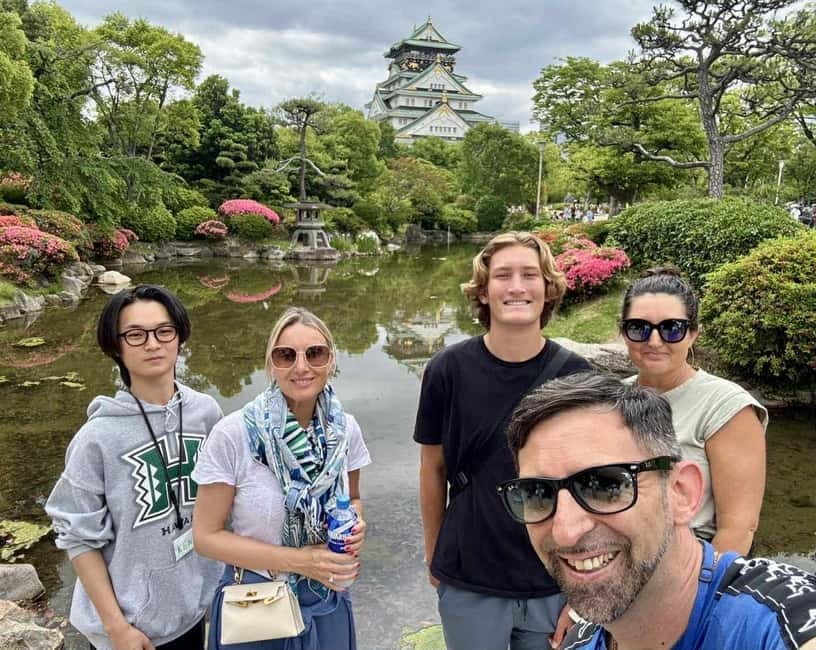
- Osaka Castle begins the day with Japan’s famous military landmark, including access to the castle and its museum.
- Tea and calligraphy turn sightseeing into participation, giving you something to do rather than simply something to photograph.
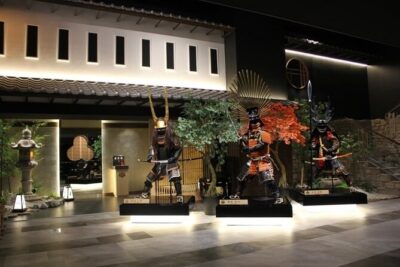
- The samurai program includes a show and traditional instruments, with armor available for adults and children at an added cost.
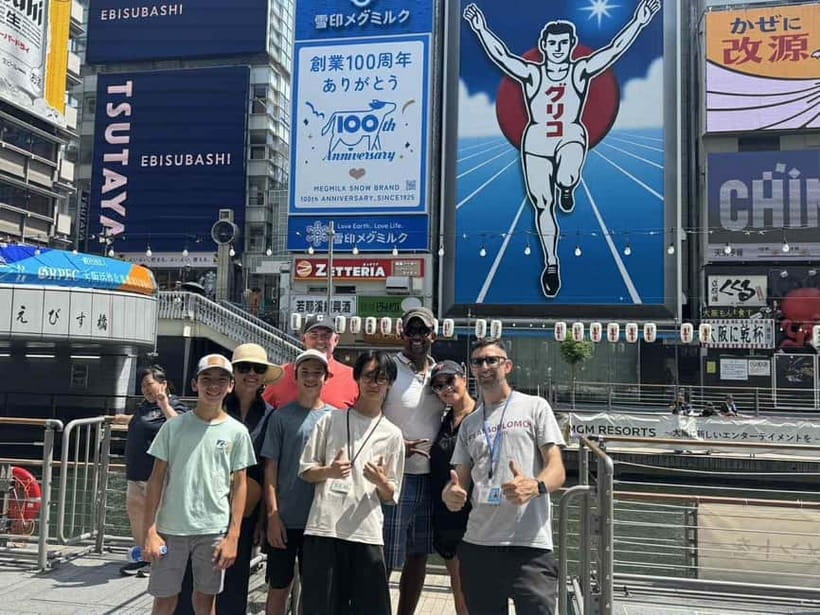
- Dōtonbori provides an easy finish, with street food, shopping, and some of Osaka’s best-known photo spots.
- The meeting point is convenient but underground, at Osaka JOINER base in Namba Walk near Exit B23.
- Guide Canned receives especially warm praise, with friendly, professional help navigating Osaka’s local train system.
Osaka Castle gives the day a grand opening
Osaka Castle is the tour’s first major stop, and it gives you the clearest sense of Osaka’s place in Japanese history. You enter the castle and visit its museum, where the city’s past is presented through the landmark itself and its exhibits.
The castle is also one of Osaka’s easiest photo subjects. You can take pictures of the building and grounds before turning your attention to the museum. The mix works well: outside, you get the iconic image; inside, you get more context about the castle and the people connected with it.
I like beginning here because the visit gives the rest of the day a useful frame. Tea, calligraphy, samurai armor, and traditional instruments are not random add-ons. They all connect to different parts of Japanese culture, and Osaka Castle gives you a place to start putting those pieces together.
The castle visit is not simply a quick photo stop. You enter the landmark and see the museum, which makes the admission more worthwhile than a pass-by view. Still, you should keep your expectations in check. The supplied details do not give a precise amount of time at the castle, and this is a guided cultural day with several stops, not a long, slow castle study.
More Kimono and Tea Ceremonies in Osaka
- Osaka: Tea Ceremony, Calligraphy, and Kimono Experience
★ 4.9 · 130 reviews - Samurai Show, Tea Ceremony, Japanese Traditional Activities
★ 5.0 · 56 reviews - Samurai dress-up and shows, plus Tea Ceremony & Calligraphy
★ 5.0 · 27 reviews
Local trains make the tour feel connected to Osaka
The route uses Osaka’s local train system between parts of the experience. That matters because you are not sealed inside a private vehicle for the day. You get a small lesson in moving around the city, with a guide helping you handle the connections.
Guide Canned is singled out for being warm, friendly, and professional, especially while helping with the local trains. That kind of support can make a real difference in Osaka, where the rail network and underground shopping passages can feel confusing at first.
You should arrive early at the meeting point. The tour starts at Osaka JOINER base on the B1 floor of Namba Walk, near Exit B23. The shop is between the Mizuno shop and Docomo Shop. If you are coming from Starbucks, walk to the other side.
This is useful information because Namba Walk is underground and can be easy to misunderstand on a first visit. Look for the businesses named above rather than simply wandering through the shopping street. The activity ends back at the same meeting point, which simplifies your plans afterward.
Bring cash. It is specifically requested, and you may need it for optional extras or personal purchases in Dōtonbori.
Tea ceremony and calligraphy put you to work
After Osaka Castle, the cultural portion becomes more hands-on. You take part in a Japanese tea ceremony and learn calligraphy. These activities give the day a welcome change of pace after the castle and train rides.
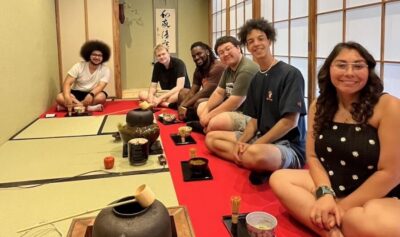
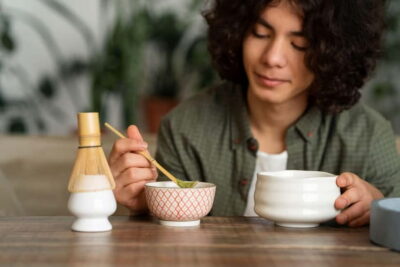
The tea ceremony is valuable because it shows a quieter side of Japanese culture. Instead of rushing from one sight to the next, you sit down and pay attention to a formal tradition. You can expect an introduction to the ceremony and a chance to take part, though the exact length and format are not specified.
Calligraphy adds a creative element. You learn how Japanese writing is made with brush and ink, then have the chance to create your own piece. It is a good activity for families and first-time visitors because you do not need prior skill to enjoy it. The result is also more personal than another souvenir photo.
I especially like this pairing. Tea asks you to slow down, while calligraphy lets you make something. Together, they help the tour avoid becoming a string of passive sightseeing stops.
The session may feel structured rather than spontaneous. That is part of the point, but it may not appeal if you want a completely free-form cultural workshop. The tour is conducted in English, so you can expect explanations in English, but the supplied information does not specify the size of the group or the amount of individual instruction.
Samurai armor adds the most memorable photos
The samurai segment includes a show, and you can also play traditional Japanese instruments such as the Shamisen, Koto, and Shinobue. These details give the cultural program more variety than a tea ceremony and calligraphy class alone.
The armor option is the most obvious choice if you want a strong souvenir image. You can try on samurai armor and pose for photos, while children can use armor made especially for them. That makes the add-on appealing for families who want a shared activity rather than a museum visit aimed only at adults.
There is an important catch: armor wearing is not included in the $135 price. The additional cost is ¥4,820, and the stated price applies until the end of August. You can ask the guide on the day, or contact the provider through WhatsApp in advance to arrange it.
The same ¥4,820 fee applies to the kimono option, which is listed for women only. If you have your heart set on a costume experience, arrange it early and confirm the price, since the information gives a time-limited rate.
The tour description groups the samurai show and traditional instruments with the included activities, while the actual armor wearing is an extra. Read that distinction carefully. You receive the show and instrument portion as part of the tour, but the costume photo session requires payment.
More Tea and Calligraphy Workshops in Japan
- Osaka: Private Tea Ceremony and Calligraphy Experience
★ 5.0 · 50 reviews - Premium Kimono Dressing, Tea Ceremony, Calligraphy, Samurai show
★ 5.0 · 18 reviews - Learn Zen in a class of making Matcha tea near Osaka Castle
★ 4.8 · 17 reviews - Osaka:Zen Tea Ceremony and Foot Bath Experience<45min>
★ 5.0 · 7 reviews
Dōtonbori ends the day with food and city energy
The final stop is Dōtonbori, Osaka’s famous entertainment and street food district. After the quieter tea and calligraphy activities, the change is dramatic. Here you can take photos, shop, and sample local specialties.
Dōtonbori works well as the last stop because it leaves you with choices. You can focus on photography, browse shops, or spend your own money on food. The tour does not promise a meal, so plan to pay separately for anything you eat.
This is also a practical place to continue your evening. Since the activity returns to the Namba meeting point, you can finish the tour and remain in the same general central area. You are not dropped somewhere unfamiliar at the end.
Keep in mind that Dōtonbori is a lively entertainment zone, not a quiet historical neighborhood. If you want a calm finish, the noise and crowds may feel like a lot after the cultural activities. If you want color, food, and a classic Osaka setting, it is a sensible ending.
Is the $135 price good value?
At $135 per person, this is not the cheapest way to see Osaka Castle. The value comes from the number of different activities packed into one guided day: castle admission, a tea ceremony, calligraphy, the samurai show, traditional instruments, local transportation help, and a visit to Dōtonbori.
You are paying for variety and guidance. If you tried to organize every part yourself, you would need to arrange the castle visit, find a tea ceremony and calligraphy activity, locate the samurai program, and connect the stops by train. The tour saves that planning time and gives you an English-speaking guide.
The value is strongest for a first visit to Osaka, especially if you want both major sightseeing and cultural participation. It is weaker if Osaka Castle and Dōtonbori are already on your schedule and you have little interest in organized workshops.
Remember to budget for the extras. The $135 price does not include armor wearing or the women’s kimono option. At ¥4,820 each, these are meaningful additions rather than small incidental fees.
The tour has a five-star rating from four listed reviews, with praise focused on the friendly guide, the enjoyable mix of activities, Osaka Castle, and reasonable pricing. That is encouraging, though the sample is small. I would treat the rating as a positive sign, not as a guarantee that every part will match your personal taste.
Who should book this Osaka cultural tour?
I would recommend it to first-time visitors who want an organized introduction to Osaka. It suits you particularly well if you enjoy learning by doing, taking photos, and moving between major sights and cultural activities.
Families may like the child-sized samurai armor and the variety of the schedule. The tour does not leave children with only museum displays to watch. Calligraphy, instruments, and costume photos give younger participants several ways to stay involved.
It is also a good match for anyone who wants a cultural overview without committing to a long specialist class. You get short introductions to several traditions rather than an intensive study of one.
I would hesitate if you have back problems, since the activity is specifically not suitable for people with back problems. It is also listed as unsuitable for people over 70. The local train travel and several changes of activity may make the day tiring.
You should also skip it if you want a private, flexible schedule. The guide-led format helps with transport and timing, but it means following the planned sequence.
Practical details that can save you trouble
The tour is offered in English, and you should bring cash. Smoking indoors is not allowed.
You can reserve now and pay later, which helps if you are still arranging your Osaka schedule. Cancellation is allowed up to 24 hours before the activity for a full refund.
For the meeting point, go to the B1 floor of Namba Walk and find Exit B23. The Osaka JOINER base is between Mizuno and Docomo. Since the activity ends at the same place, you can leave luggage and onward plans simple, though no luggage service is specified.
If you want armor or a kimono, do not assume you can add it automatically. Tell the guide on the day or contact the provider through WhatsApp, and keep the ¥4,820 extra in cash.
Should you book it?
Book this tour if you want Osaka Castle, tea, calligraphy, samurai culture, traditional instruments, and Dōtonbori in one guided experience. The strongest feature is the variety, and the most useful bonus is help with Osaka’s local trains.
I would choose the armor add-on for families and photo-focused visitors, but I would skip it if the $135 price is already at your limit. The included program still gives you plenty to do.
For a first Osaka visit, this is a practical cultural sampler with a friendly guide, a clear meeting point, and a good mix of major sights and hands-on activities. Just arrive ready to walk through the city, carry cash, and treat the costume experiences as paid extras.
FAQ
How much does the tour cost?
The tour costs $135 per person.
What is included in the tour?
The tour includes a visit to Osaka Castle, a Japanese tea ceremony, Japanese calligraphy, a samurai show, and playing traditional instruments.
Is samurai armor wearing included?
No. Samurai armor wearing is an optional extra costing ¥4,820.
Is kimono wearing included?
No. Kimono wearing is an optional extra costing ¥4,820 and is listed for women only.
Can children try the samurai armor?
Yes. Children can use specially designed samurai armor for the experience.
Where does the tour start?
It starts at Osaka JOINER base on the B1 floor of Namba Walk near Exit B23.
How do I find the meeting point?
The shop is between Mizuno shop and Docomo Shop. If you come from Starbucks, go to the other side.
Where does the tour end?
The activity ends back at the meeting point.
What language is the tour offered in?
The tour is offered in English.
What should I bring?
Bring cash. Smoking indoors is not allowed.
Can I cancel for a refund?
Yes. You can cancel up to 24 hours in advance for a full refund.
More Tea Ceremonies in Osaka
- Osaka: Tea Ceremony Experience
★ 4.9 · 1,426 reviews - Tea Ceremony Experience in Osaka Doutonbori
★ 5.0 · 754 reviews - Osaka: Japanese Traditional Sweets Making and Tea Ceremony
★ 4.7 · 118 reviews - Osaka; Japanese Tea ceremony experience, Macha and Sencha
★ 4.9 · 29 reviews
More Tea and Calligraphy Workshops in Osaka
- Osaka: Tea Ceremony, Calligraphy, and Kimono Experience
★ 5.0 · 6 reviews - ZEN therapy | Shiatsu-style massage, EnergyTherapy & Japanese Tea
★ 5.0 · 5 reviews - Tea and Calligraphy Session at a Table in Osaka
★ 5.0 · 4 reviews
Just added around Osaka
- Osaka:Zen Tea Ceremony and Foot Bath Experience<45min>★ 5.0 · 7 reviews
- Osaka Japanese Cooking And Matcha Class near Osaka Castle★ 5.0 · 22 reviews
- Osaka: Tea Ceremony, Calligraphy, and Kimono Experience★ 5.0 · 6 reviews
- Nara Deer Park, Uji Matcha, & Hot Spring Full-Day Tour from Osaka★ 4.0 · 21 reviews
- Osaka: Nara, Todaiji, Uji Matcha, and Hot Spring Tour★ 4.0 · 7 reviews
- Craft Sushi and Matcha Ice Cream in Central Osaka (3-Course Meal)★ 5.0 · 2 reviews
- Tea and Calligraphy Session at a Table in Osaka★ 5.0 · 4 reviews
- ZEN therapy | Shiatsu-style massage, EnergyTherapy & Japanese Tea★ 5.0 · 5 reviews
Tea Ceremonies in Osaka, compared.
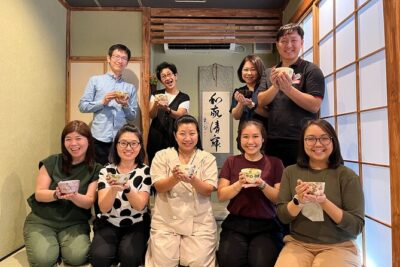
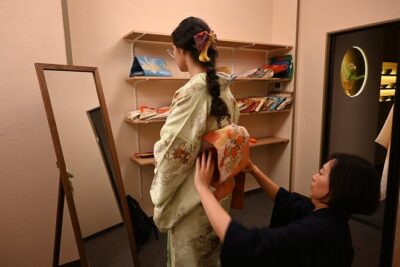
Tea Ceremony, Calligraphy, and Kimono Experience
Read our review →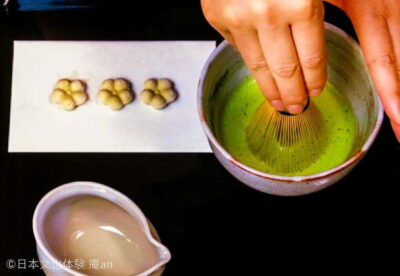
Japanese Traditional Sweets Making and Tea Ceremony
Read our review →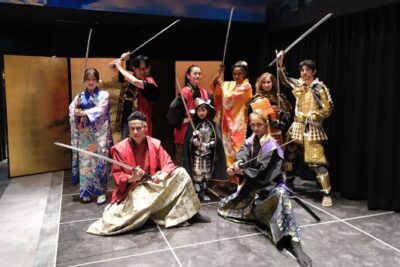
Samurai Show, Tea Ceremony, Japanese Traditional Activities
Read our review →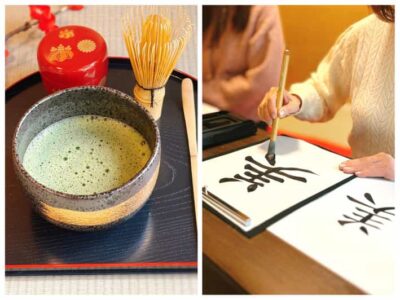
Osaka; Japanese Tea ceremony experience, Macha and Sencha
Read our review →