Review · OSAKA
Learn Zen in a class of making Matcha tea near Osaka Castle
Tea, silk, and samurai manners meet here. This one-hour Osaka tea ceremony combines matcha preparation with traditional clothing, wagashi, and a close look at Japanese hospitality. I especially like the small group of no more than six people and the chance to prepare tea for another person, not simply watch a demonstration. The main drawback is the short schedule: dressing, photos, instruction, and ceremony all share one hour.
The setting is Bushi no Homare, or Samurai Honor, in Osaka’s Joto-ku district, near Osaka Castle. You arrive 30 minutes early to change clothes and receive instructions, so plan on about 90 minutes from arrival to finish. The $40 price is fair if you value the costume, professional instruction, and photo service, though some styling and outdoor photography options cost extra.
Key details before you book
- Small group of six or fewer: You get a better chance to ask questions and prepare matcha yourself.
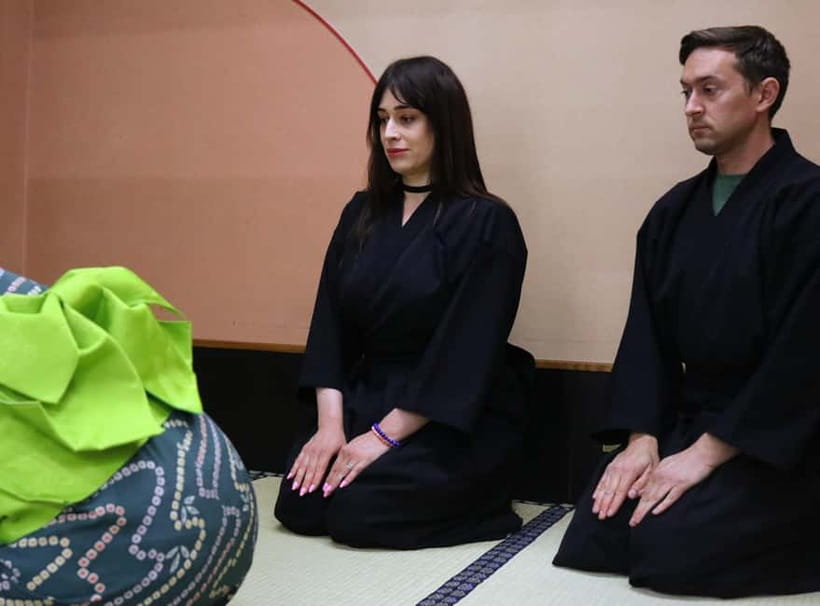
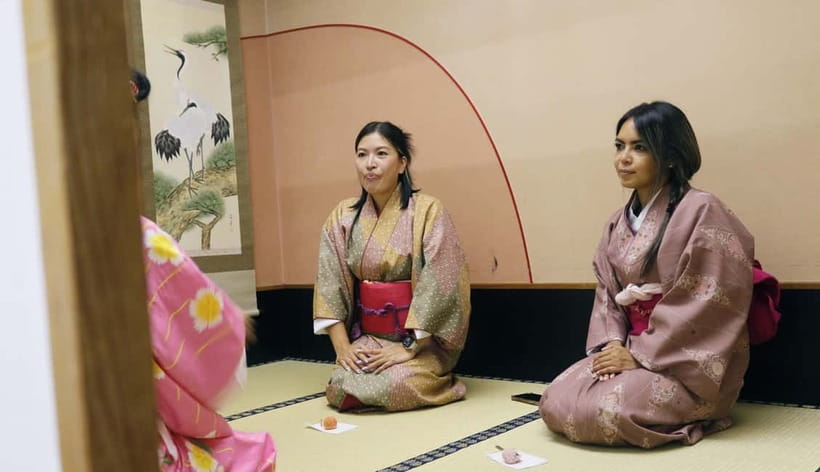
- Traditional dress is central: Men wear hakama and dogi as samurai, while women wear kimono as Yamato Nadeshiko.
- Matcha and wagashi are included: The tea ceremony includes powdered green tea and a Japanese sweet connected to the seasons.
- English support is available: The regular interpreter language is English, with Japanese also spoken.
- Photos are sent by email: A photographer takes pictures during the activity and sends the data to your designated email address.
- Arrive 30 minutes early: The extra time is needed for changing clothes and receiving instructions.
At Samurai Honor, the costume is part of the lesson
The actual venue is Bushi no Homare, located at Excellence Takayama 1F, 2-3-19 Shiginonishi, Joto-ku, Osaka-shi, Osaka 536-0014. Use Google Maps rather than Apple Maps, since the Apple Maps address is reported to be incorrect.
Look for a wooden sign reading Honor of the Samurai. A rack of Samurai Honor pamphlets sits outside, and kimonos and hakama may be hanging near the shop. Those clothing displays are useful landmarks if you are walking from the wrong direction.
You need to arrive 30 minutes before your reserved starting time. That is not wasted time. It covers changing and preparation, and the tea ceremony itself lasts one hour. Wear a T-shirt under your clothing, which is the only specific item listed as necessary.
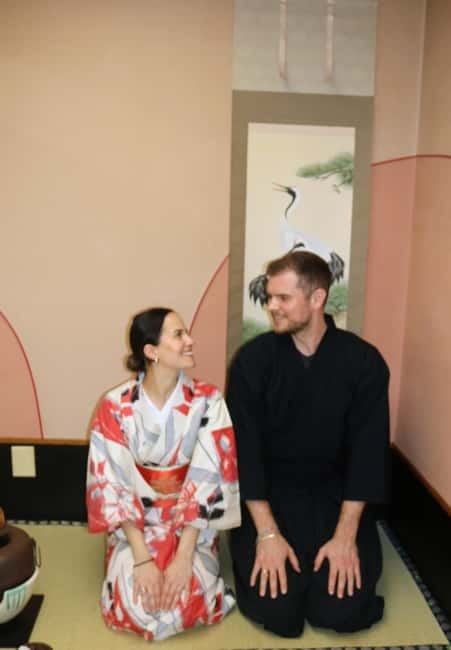
The clothing helps turn the activity from a simple tea lesson into a cultural introduction. Men wear a dogi and hakama, traditional garments that create the look of a samurai. Women wear kimono and take on the role of Yamato Nadeshiko, a traditional ideal of Japanese femininity.
The standard package includes kimono clothing, but some styling details may require an extra payment. Wagami, meaning arranged hair with kanzashi hair ornaments, is listed as a paid option. At the same time, one booking account describes hair being arranged with flowers at no extra charge. Ask about the current arrangement before booking if a formal hairstyle matters to you.
The same caution applies to outdoor photography. Indoor photo shooting and delivery of the images are included, while outdoor photographs are listed as an optional paid service. That distinction matters if you are budgeting for the full dress-up package.
More Matcha Experiences in Osaka
- Matcha Making Class in Osaka with Authentic Japanese Sweets Set
★ 5.0 · 509 reviews - Osaka: Matcha Making Experience with Japanese Sweets
★ 5.0 · 146 reviews - Osaka Temple Cool Foot Bath & Matcha Experience〈45min〉
★ 4.9 · 82 reviews
The first lesson is how to enter the tea room
The ceremony is not presented as tea alone. It begins with manners, posture, movement, and the relationship between the person serving tea and the person receiving it.
You learn how to sit, bow, stand, walk, and respond properly. These rules can feel precise, but that precision is the point. The gestures slow you down and make you pay attention to the person in front of you.
A central idea is that hospitality is not one-sided. The host prepares the room and serves the tea with care, but the guest also has responsibilities. You respond with attention, correct manners, and appreciation. The two sides create the atmosphere together.
That idea gives the class more substance than simply learning how to whisk green tea. You are introduced to chanoyu, the art of tea, as a shared act between host and guest. The instructor explains that the tea room is a place where nationality, age, gender, and social status do not determine how people are treated.
The entrance is called the nijiriguchi. Passing through it represents leaving ordinary rank and status outside. You do not need prior knowledge of Japanese customs to appreciate the symbolism. The instructor guides you through each movement, and a small group means there is room to practice instead of merely watch.
Preparing matcha gives you an active role
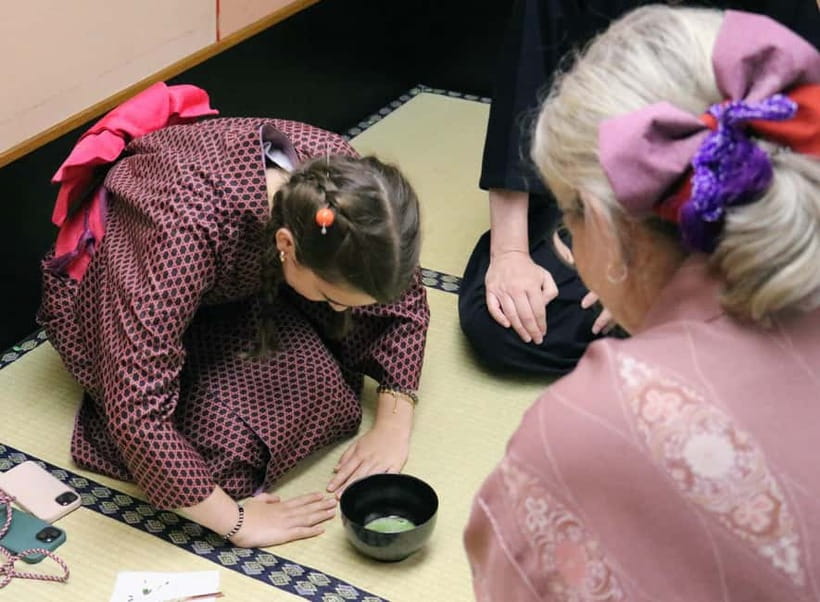
The tea master serves matcha according to traditional manners, and you learn how the drink is prepared and presented. The class is not only a staged performance for photographs. The format allows participants to prepare tea for one another, giving you a practical role in the ceremony.
That is one of the strongest reasons to choose this activity. Watching a formal ceremony can be beautiful, but taking part makes the etiquette easier to remember. You must pay attention to the bowl, your movements, and the person receiving the tea.
The matcha itself is included, as is wagashi, a traditional Japanese sweet served with tea. The tea may taste grassy or slightly bitter, which is why the sweet is important. Together, they create a balance of flavor and give the ceremony a clear rhythm.
The instructor also explains why the tea is presented in this manner. Hospitality is expressed through small actions, from how the tea is served to how the guest accepts it. You will likely notice that the ceremony rewards patience more than speed.
If you are visiting with children, this hands-on part is especially useful. Children under 10 are not permitted, but older children can share the preparation, costumes, and photo session with parents. The lesson gives them something to do while introducing manners and food culture in a direct way.
Wagashi connects tea with the four seasons
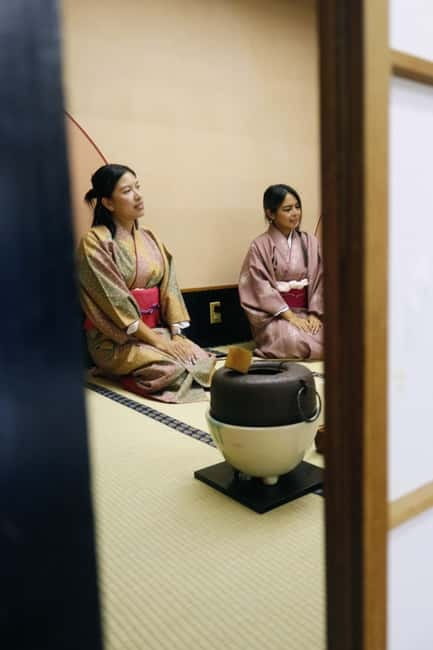
Wagashi is not simply a sweet snack placed beside the matcha. It is part of the cultural lesson.
The program uses wagashi to explain wabi and sabi, Japanese ideas associated with simplicity, imperfection, age, and quiet beauty. The sweets are made by craftspeople and often shaped with delicate colors and seasonal designs. Their appearance reflects the Japanese habit of noticing spring, summer, autumn, and winter in everyday objects.
You may find the wagashi almost too carefully made to eat. That is part of its charm. The point is not only sweetness, but also shape, color, craftsmanship, and the feeling of a particular season.
The tea ceremony and wagashi developed alongside one another over centuries. The program places this food within Japanese history and culture, helping you understand why the sweet is served with matcha instead of treating it as decoration.
This section should appeal to anyone interested in Japanese food traditions, design, or crafts. It may be less satisfying if you expect a full cooking workshop. The supplied details describe learning through wagashi and making sweets, but the one-hour schedule focuses mainly on the tea ceremony, instruction, clothing, and photographs. Confirm the exact amount of hands-on sweet making if that is your main reason for booking.
More Tea and Calligraphy Workshops in Japan
- Osaka: Tea Ceremony, Calligraphy, and Kimono Experience
★ 4.9 · 130 reviews - Osaka: Private Tea Ceremony and Calligraphy Experience
★ 5.0 · 50 reviews - Samurai dress-up and shows, plus Tea Ceremony & Calligraphy
★ 5.0 · 27 reviews - Premium Kimono Dressing, Tea Ceremony, Calligraphy, Samurai show
★ 5.0 · 18 reviews
Photos capture the part you cannot see while participating
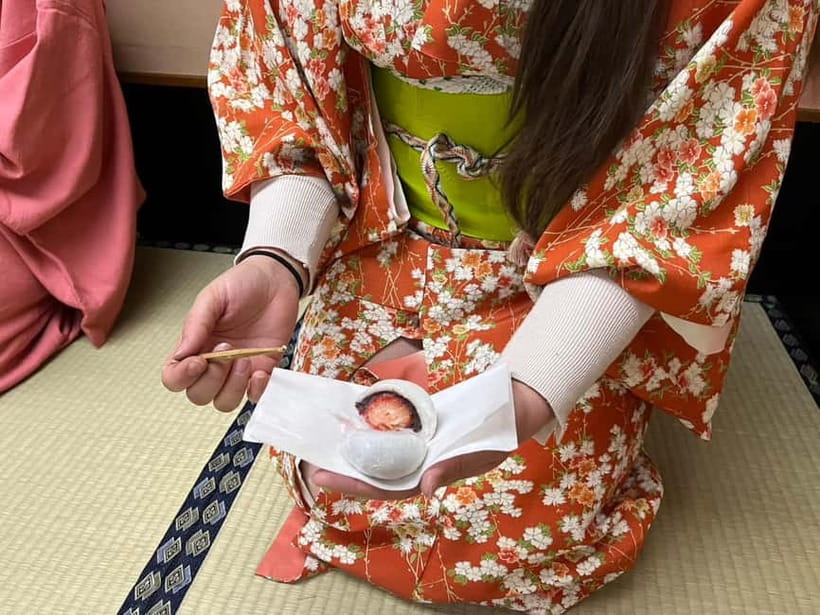
Photography is built into the activity. A photographer takes pictures during the ceremony and sends the data to your designated email address. This is useful because you can concentrate on the lesson instead of asking a companion to document every step.
The photo service also records the clothing, which is often difficult to capture well when you are busy adjusting sleeves, handling tea, and following etiquette. One participant reported receiving the images on the same day, though delivery timing is not formally promised.
The indoor photographs are included. Outdoor photography for both men and women is listed as a paid option, along with some additional clothing and accessory packages. Women may be able to add a more formal hairstyle, hair ornaments, and outdoor images. Men may add traditional footwear and outdoor photography.
The costume choices are one of the most praised parts of the activity. Kimono colors can be selected, and one account describes the clothing as especially beautiful. Still, do not assume every hairstyle, accessory, or outdoor setting is part of the $40 base price. Ask staff what is included before you arrive.
What the one-hour schedule feels like
The schedule is compact, so each stage has a purpose.
First comes arrival, instructions, and changing clothes. Since this takes place before the official one-hour activity, arriving late could cut into your ceremony time. Give yourself room to find the venue and locate the wooden sign.
Next, the instructor explains the clothing, tea, history, and basic etiquette. The teaching is available in English and Japanese. The regular interpreter service is English, while Italian, Spanish, French, Chinese, Thai, and Indonesian may be possible only if staff availability allows it. You should ask before reserving if you need one of those languages.
The host then demonstrates the prescribed manners and serves matcha. You learn how to sit, bow, walk, and receive the tea. Depending on the group and pace, you may also prepare tea for another participant.
Wagashi accompanies the matcha and provides a lesson in seasonal beauty. The instructor links the sweet to Japanese food culture and the ideas of wabi and sabi.
Finally, the photography takes place around the ceremony. Since the activity is limited to six people, you should have a better chance at personal attention than in a large cultural demonstration. Even so, one hour is not enough for a long historical lecture or a slow, highly formal tea school lesson.
How the $40 price compares with what you receive
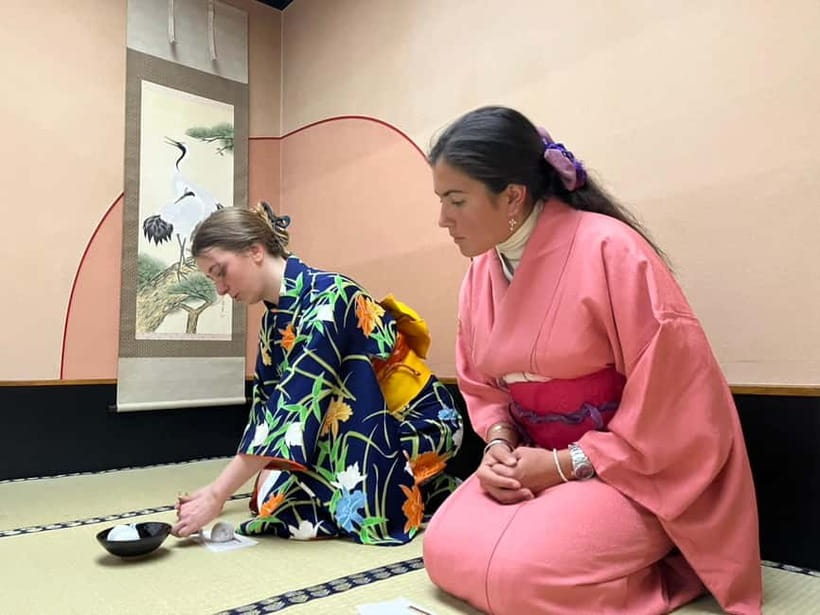
At $40 per person, the value is strongest for people who want several elements in one booking: traditional clothing, tea, a certified professional instructor, an English interpreter, wagashi, and photographs.
A simple matcha tasting would cost less in some settings, but this is not only a tasting. You are paying for a guided cultural lesson, changing into formal clothing, practice with etiquette, and photo documentation. The small group also helps justify the price.
The value is weaker if you only want to drink matcha or take a quick kimono photograph. Much of the activity is built around manners and hospitality, so people looking for a relaxed costume rental may find the instruction more extensive than expected.
Tips and tax are included. Transportation, hotel or station pickup, and personal expenses are not. You need to make your own way to the venue, and the address should be checked carefully on Google Maps.
The flexible booking terms are useful for an Osaka itinerary. You can reserve and pay later, and cancellation is allowed up to 24 hours before the activity for a full refund. Starting times vary, so check availability when choosing your date.
Who will enjoy this Osaka tea ceremony most
I would recommend this activity to you if you want a short, structured introduction to Japanese culture rather than a long museum visit or a formal full-day lesson.
It suits:
- Couples who want matching cultural photographs and a shared activity.
- Families with children aged 10 and older.
- First-time visitors who want an English explanation of tea etiquette.
- Visitors interested in kimono, samurai clothing, Japanese food, and seasonal design.
- Small groups who prefer personal instruction.
- Anyone who wants a photo record without handing a camera to a companion.
You may want another activity if you dislike dressing up, have difficulty sitting or moving according to the required manners, or want a long and highly detailed tea-school lesson. The listed restrictions exclude children under 10, people with altitude sickness, and people over 95.
The information does not describe accessibility arrangements, seating support, or changing-room facilities. If you have mobility concerns, contact the venue before booking rather than assuming the room will suit you.
Practical strengths and small cautions
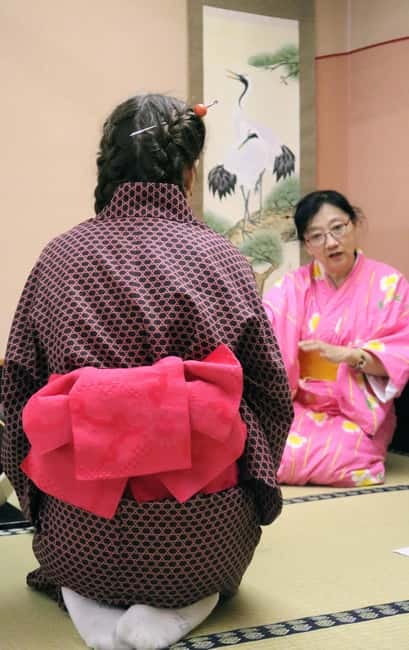
The biggest strength is the human scale. A group of six or fewer leaves room for questions, individual practice, and photographs that do not feel rushed by a crowd.
The instructors also receive strong praise for warmth, patience, and clear explanations. Kaori is specifically noted for explaining the historical and cultural context step by step. That kind of guidance helps you understand why the ceremony works as it does, rather than simply copying gestures.
The biggest caution is the mixed information about hair styling. One description lists wagami and kanzashi as paid extras, while a participant received arranged hair with flowers without an additional charge. Treat hairstyle and ornaments as something to confirm, not something automatically included.
The second caution is time. Your official activity lasts one hour, but you must arrive 30 minutes early. If you are planning a tight visit to Osaka Castle afterward, allow time for changing back and leaving the venue.
Should you book this matcha experience?
Book it if you want more than a cup of tea. The combination of kimono or samurai clothing, matcha preparation, wagashi, etiquette, seasonal ideas, and professional photographs gives you a useful introduction to several parts of Japanese culture in one compact visit.
The $40 price is reasonable for the included clothing, instruction, tea, sweet, and photo service. I would book with two questions already answered: Is arranged hair included on your date, and are you satisfied with indoor photography unless you pay for an outdoor option?
If you want a relaxed cultural activity near Osaka Castle, have at least 90 minutes available, and enjoy taking part rather than only watching, this is a good choice. If your priority is a full cooking class, a long tea-school ceremony, or extensive outdoor photography, check the added costs and exact schedule first.
FAQ
Where does the tea ceremony take place?
It takes place at Bushi no Homare, also called Samurai Honor, at Excellence Takayama 1F, 2-3-19 Shiginonishi, Joto-ku, Osaka-shi, Osaka 536-0014. Use Google Maps because the Apple Maps address is incorrect.
How early should I arrive?
Arrive 30 minutes before your reserved activity time. This allows time for instructions and changing into traditional clothing.
What languages are available?
The instructors speak English and Japanese. English is the default interpreter language. Italian, Spanish, French, Chinese, Thai, and Indonesian may be available if staff scheduling permits, so ask before booking.
Is matcha included?
Yes. Matcha and wagashi are included in the activity price.
Are photographs included?
Indoor photo shooting and delivery of the image data to your designated email address are included. Outdoor photography is listed as a paid option.
Can children join the activity?
Children under 10 are not permitted. The activity is suitable for children aged 10 or older, provided they can take part in the clothing, etiquette, and tea ceremony activities.
More Tea and Calligraphy Workshops in Osaka
- Osaka:Zen Tea Ceremony and Foot Bath Experience<45min>
★ 5.0 · 7 reviews - Osaka: Tea Ceremony, Calligraphy, and Kimono Experience
★ 5.0 · 6 reviews - ZEN therapy | Shiatsu-style massage, EnergyTherapy & Japanese Tea
★ 5.0 · 5 reviews - Tea and Calligraphy Session at a Table in Osaka
★ 5.0 · 4 reviews
Just added around Osaka
- Osaka:Zen Tea Ceremony and Foot Bath Experience<45min>★ 5.0 · 7 reviews
- Osaka Japanese Cooking And Matcha Class near Osaka Castle★ 5.0 · 22 reviews
- Osaka: Tea Ceremony, Calligraphy, and Kimono Experience★ 5.0 · 6 reviews
- Nara Deer Park, Uji Matcha, & Hot Spring Full-Day Tour from Osaka★ 4.0 · 21 reviews
- Osaka: Nara, Todaiji, Uji Matcha, and Hot Spring Tour★ 4.0 · 7 reviews
- Craft Sushi and Matcha Ice Cream in Central Osaka (3-Course Meal)★ 5.0 · 2 reviews
- Tea and Calligraphy Session at a Table in Osaka★ 5.0 · 4 reviews
- ZEN therapy | Shiatsu-style massage, EnergyTherapy & Japanese Tea★ 5.0 · 5 reviews
Matcha Experiences in Osaka, compared.
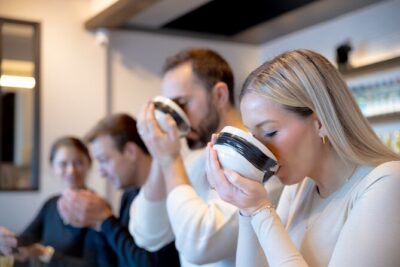
Matcha Making Class in Osaka with Authentic Japanese Sweets Set
Read our review →
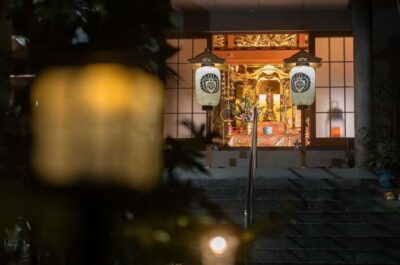
Osaka Temple Cool Foot Bath & Matcha Experience〈45min〉
Read our review →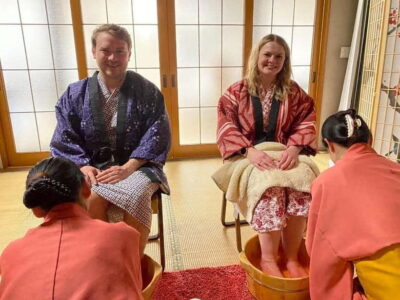
Osaka Temple Head Spa &Matcha Facial – Refresh & Glow〈90min〉
Read our review →
Osaka Japanese Cooking And Matcha Class near Osaka Castle
Read our review →
Nara Deer Park, Uji Matcha, & Hot Spring Full-Day Tour from Osaka
Read our review →