
Review · NARA
Nara:5 Type of Tea Tasting & Mindful Tea Ceremony
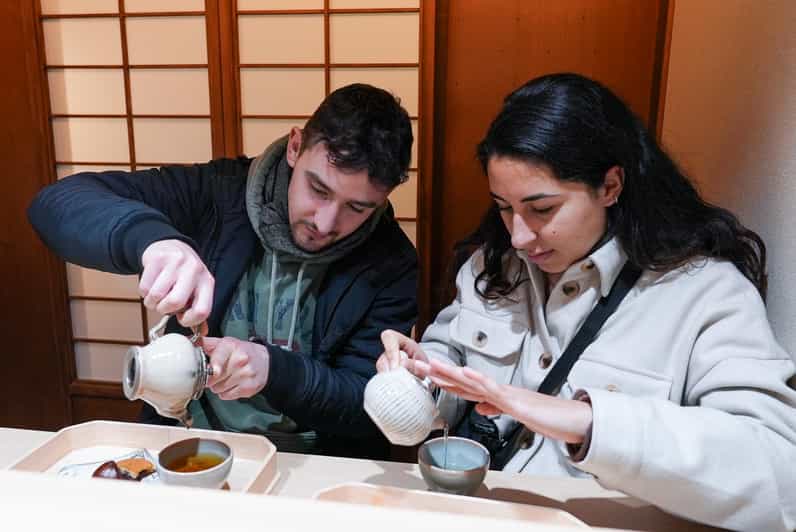
Slow tea makes Nara feel different. This 90-minute experience pairs five locally sourced teas with a quiet ceremony in a renovated traditional house. I like the chance to compare mellow roasted teas with fragrant matcha, and I like the small-group setting, where Mike can explain the tools, customs, and local places to visit. The main consideration is that you may need to sit on the floor for much of the ceremony, and the experience may run closer to two hours.
I also appreciate the hands-on matcha practice, since you do not just watch a tea master perform. You whisk your own bowl and receive personal help, then enjoy seasonal wagashi and a second kind of Japanese sweet. This is a calm, intimate cultural experience rather than a fast sightseeing stop, so plan it for a day when you can slow down.
Key points at a glance
- Five teas from Nara Prefecture: Compare matcha, roasted teas, and other Japanese varieties before choosing a favorite for a pot-brewed serving.
- A 120-year-old wooden home: The tea room offers a garden view and a peaceful setting far removed from a crowded café.
- Personal matcha instruction: You learn how to handle the whisk and practice the proper motion with help from the tea master.
- A private group format: The host welcomes only a small number of people, with some sessions limited to four.
- More than a tea tasting: You learn about ceremony tools, etiquette, history, seasonal sweets, and even the craft of making bamboo whisks.
- A practical age and comfort note: Children under 12 cannot join, and sitting still on the floor may be difficult for some people.
Five Nara teas before the ceremony
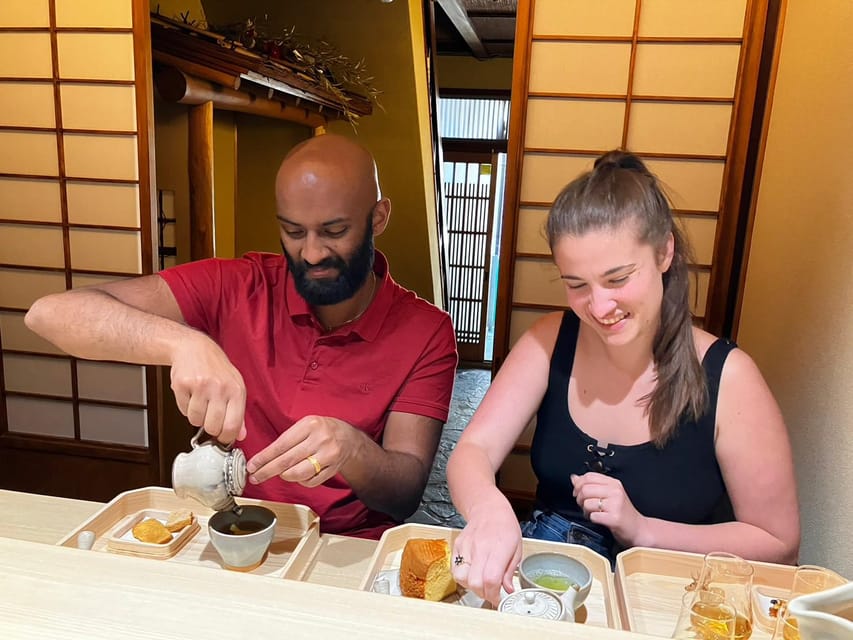
The experience begins with a flight of five Japanese teas selected by the tea master. This is the strongest part for anyone who wants to understand how much Japanese tea can vary from cup to cup.
You might start with matcha, known for its fresh aroma and savory edge, then move toward gentler or roasted styles. The exact selection is seasonal, so you should expect the tasting to change rather than follow a fixed menu. That gives the tea master room to choose teas that show different flavors and brewing methods.
I like this format because it gives you a useful point of comparison. Tasting one tea on its own can make it hard to know what you are noticing. Five cups let you compare fragrance, bitterness, sweetness, body, and the effect of roasting.
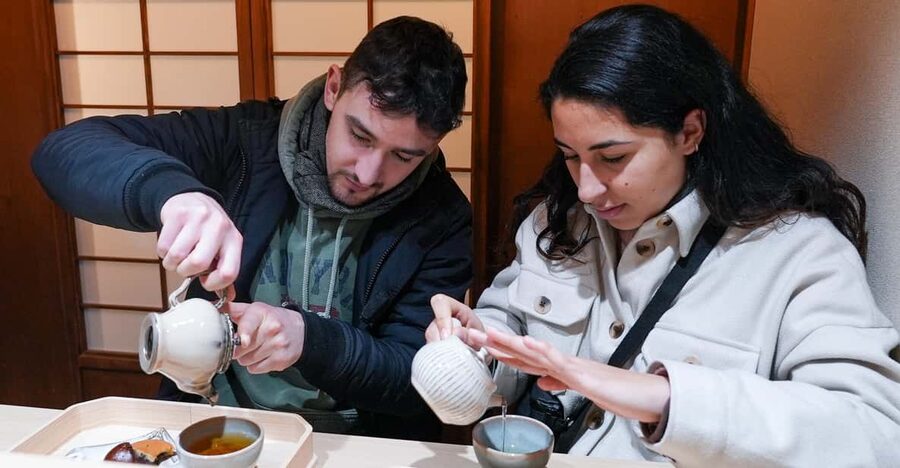
The tasting is not simply five small drinks placed in front of you. The tea master explains each variety, and you can ask questions in English. If you usually drink coffee, do not assume you will be out of your depth. Monica, who normally prefers coffee, found the tea surprisingly enjoyable, which is a good sign for first-time tea drinkers.
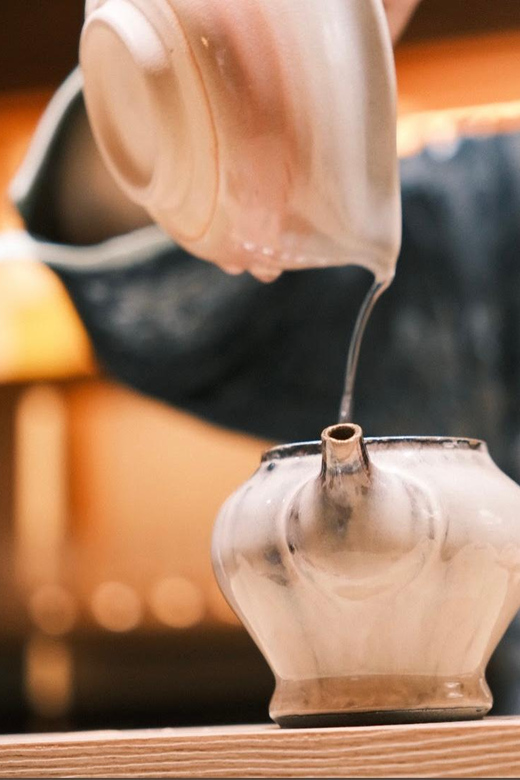
After the flight, you choose your favorite tea. The tea master then prepares a special pot-brewed serving, adjusting the brewing process to bring out the tea’s best flavor. This second serving is valuable because you get to taste the variety again in a fuller presentation.
More Tea Tastings in Japan
- Matcha Experience with of Japanese Tea Tasting in Tokyo
★ 5.0 · 31 reviews - Nara:Tea Tasting&Private Tea Ceremony -Master Matcha Making-
★ 5.0 · 19 reviews - Authentic Japanese tea tasting: sencha, matcha and gyokuro
★ 5.0 · 12 reviews
Choosing a favorite for a careful pot brew
The pot-brewed tea is where the tasting becomes more personal. Instead of moving along a set line of samples, you make a choice based on your own taste. You may prefer the lighter tea, the more aromatic cup, or the mellow character of a roasted variety.
The host handles the brewing and each pour, so you can focus on the flavor. This is useful if you are curious about Japanese tea but do not yet know how water temperature, steeping time, and pouring affect the result.
I would pay attention to the explanations here. The point is not to memorize tea names. It is to notice how the same basic drink can be floral, grassy, nutty, roasted, or soft depending on the leaf and preparation.
The tasting also gives the experience a relaxed opening. You are not asked to perform a ceremony right away. You first settle into the room, taste several styles, and get comfortable asking questions.
A quiet ceremony in a traditional Nara house
The tea room is in a renovated traditional Japanese house, described as roughly 120 to 125 years old. The wooden home overlooks a small Japanese garden, creating the calm setting that many people hope to find in a tea ceremony.
This atmosphere matters. A tea ceremony is built around attention, and it is hard to appreciate slow movements if you are squeezed into a busy commercial room. Here, the old house, garden view, and limited group size give the ceremony room to breathe.
The host Mike is praised for being warm, humorous, and easy to understand. He welcomes only a small number of people, with one account describing a maximum of four. That makes it easier to see the tools, ask questions, and receive help during the matcha practice.
You should not expect a theatrical show designed for a large audience. The ceremony is quiet and personal. Charlotta described it as authentic and engaging, with Mike explaining the symbols and rituals as he guided the group through each stage.
The listing gives the activity a 90-minute duration, but one account says you should allow about two hours, including time to walk to the house and sit through the ceremony. I would avoid scheduling a train, meal, or temple visit immediately afterward.
Learning the tools, etiquette, and meaning
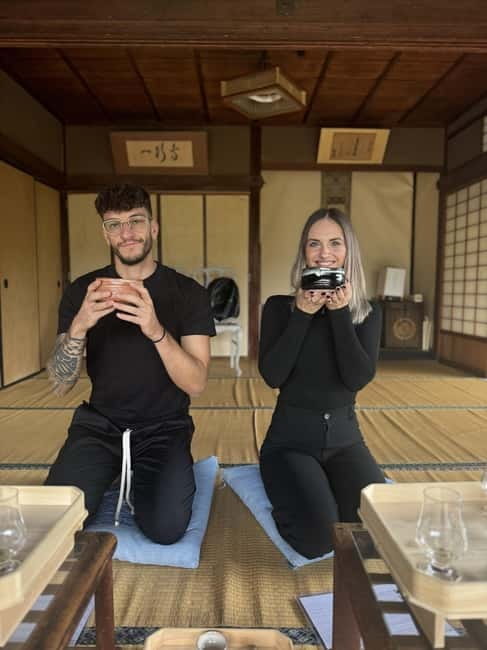
The tea master explains the history, etiquette, and equipment used in the ceremony. You learn that each movement has a purpose, even if you do not remember every name or rule by the end.
This introduction helps you understand what you are watching. Without it, the gestures can seem formal but mysterious. With it, you can see how the bowl, whisk, scoop, and other tools fit into the larger ritual.
A particularly interesting detail is the bamboo tea whisk. Monica learned about the host’s connection to the craft of making the whisks used to mix matcha. That small addition gives you a better sense of how much handwork goes into an object that many visitors treat as a simple utensil.
The session also works well for families with older children. One parent described her son being invited to serve her as a tea master in training, a personal moment that made the ceremony memorable. Children under 12 are not permitted, so this is better for teenagers and adults.
More Tea Ceremonies in Japan:
- Kyoto: Tea Ceremony in a Traditional Tea House in Kiyomizu
★ 4.9 · 3,519 reviews - Kyoto: Tea Ceremony Ju-An at Jotokuji Temple
★ 4.9 · 3,207 reviews - Kyoto: 45-Minute Tea Ceremony Lesson Experience
★ 4.3 · 2,378 reviews - Osaka: Tea Ceremony Experience
★ 4.9 · 1,426 reviews
Whisking your own matcha
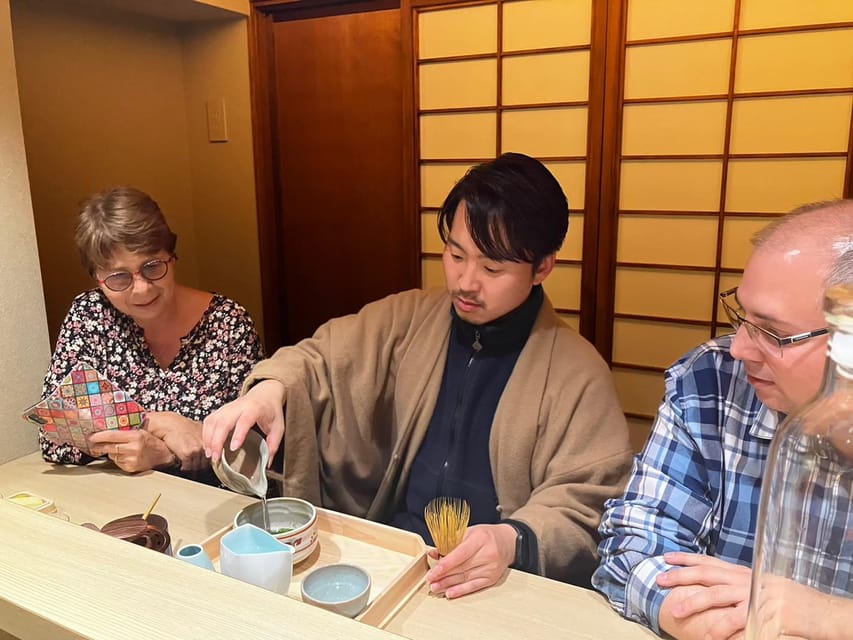
After watching and learning, you prepare matcha yourself. The tea master gives one-on-one instruction and offers personalized feedback, so you are not left guessing how to use the whisk.
This hands-on section is a major reason to choose this experience over a simple tea tasting. You get to feel the movement in your own hands and see how your technique affects the drink. The whisking should be approached slowly, with attention to the motion rather than speed.
You then taste the matcha you prepared in the same quiet room. It may not look as polished as the tea master’s bowl, and that is part of the fun. The goal is to understand the process and enjoy the result, not to pass a test.
If you dislike bitter drinks, the sweets help balance the matcha. If you already enjoy matcha, you will probably appreciate the chance to prepare it in a traditional setting rather than ordering a sweetened café version.
Wagashi and the sweet finish
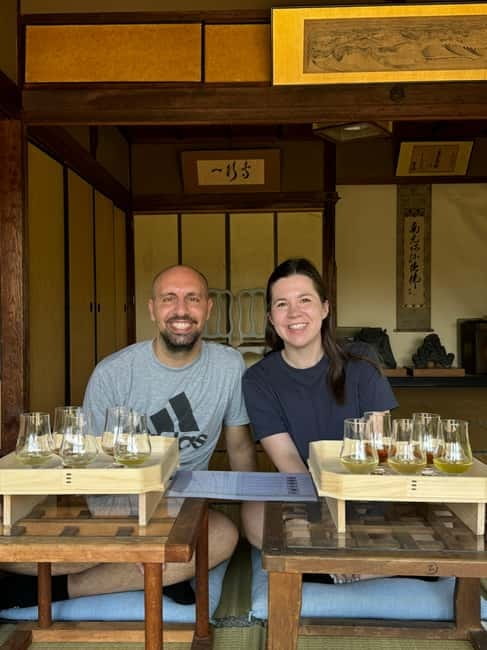
The experience includes two kinds of Japanese sweets, including seasonal wagashi. These sweets are chosen to complement the tea, not simply to provide a snack.
Wagashi often brings a gentle sweetness and carefully shaped presentation to the ceremony. The contrast with matcha is especially useful, since a small sweet can make the tea taste rounder and less sharp.
The precise sweets change with the season, so you should not expect a fixed dessert menu. That seasonal approach fits the ceremony’s focus on time, place, and freshness.
One account also mentions trying sake during the broader tea gathering, but the confirmed inclusions are five kinds of tea and two kinds of Japanese sweets. I would treat sake as a possible extra, not something guaranteed in the $61 price.
What the $61 price delivers
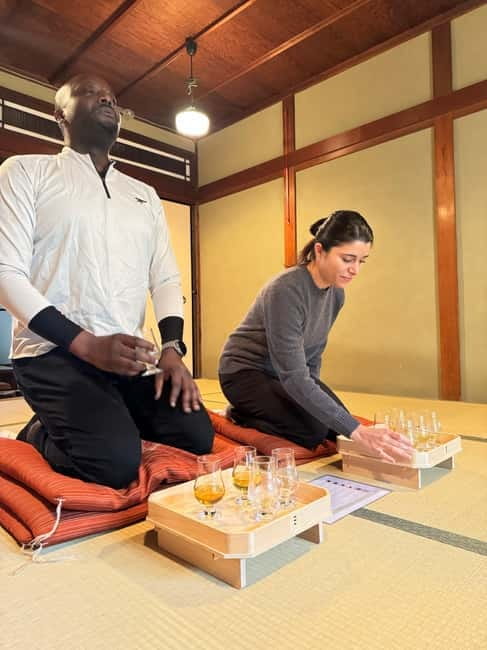
At $61 per person, this is not the cheapest way to drink tea in Nara. You can find a cup of tea for far less. The value comes from the private format, instruction, five-tea comparison, pot-brewed serving, sweets, and cultural explanation.
I think the price is fair if you want a focused cultural activity rather than a quick refreshment stop. You are paying for the tea master’s time and attention, as well as access to a traditional home setting. The personal feedback during matcha practice is especially important because it would be missing from a standard café visit.
The value is less convincing if you only want to try matcha once or if you are uncomfortable with formal customs. In that case, a casual tea shop may suit you better.
The perfect audience is a tea lover, a curious first-time visitor, or anyone who wants a quiet break from temple sightseeing. It also suits people who enjoy asking questions and learning through conversation. Since the host can offer inside tips about places to visit in Japan, you may leave with more than a favorite tea.
Group size, access, and comfort
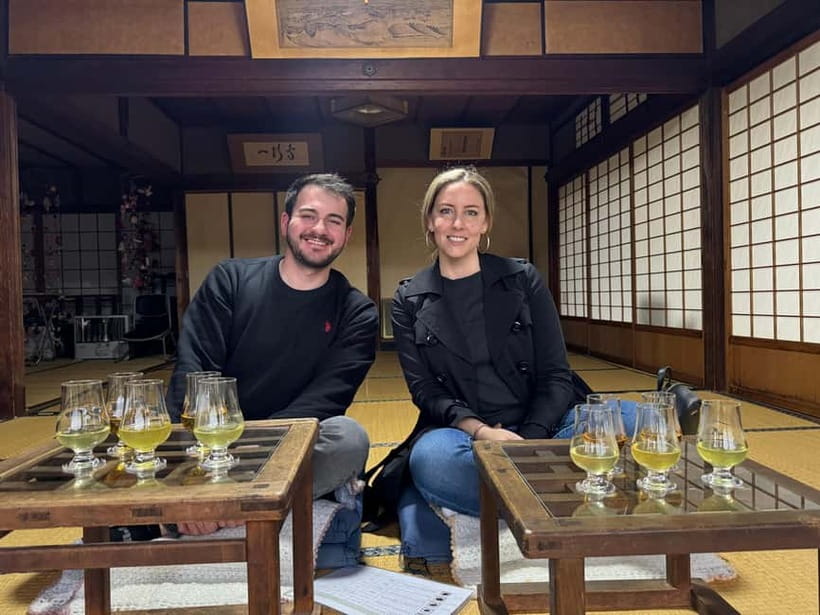
The experience is sold as a private group activity, and the small size is one of its best features. A limited group means the ceremony can respond to your questions instead of following a rigid script.
English instruction is available. That matters because etiquette and tool names can be confusing when the explanation is rushed or translated only through written signs.
The activity is listed as wheelchair accessible, but you should clarify the physical arrangement before booking if floor sitting is difficult. One account specifically says that you need to sit still on the floor for about two hours, while the official duration is 90 minutes. The old house may also require a walk to reach it, according to the practical guidance provided with the experience.
Pregnant women are listed as unsuitable for this activity, and children under 12 are not accepted. These restrictions are important to consider before you reserve.
Cancellation is flexible up to 24 hours before the start time for a full refund. You can also reserve now and pay later, which helps if your Nara plans are still changing.
How this fits into a Nara day
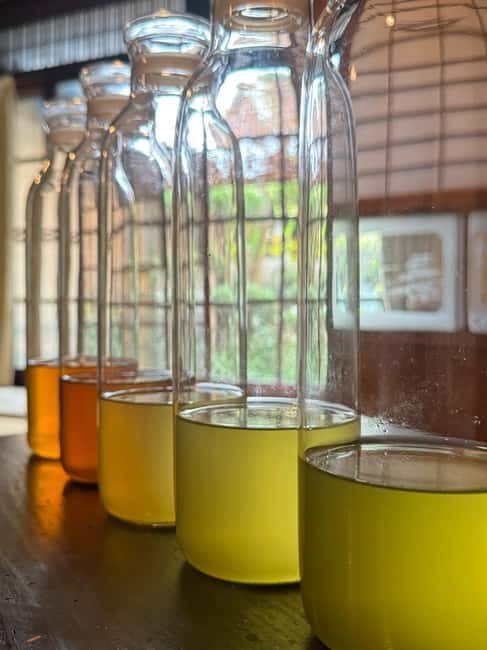
I would schedule this experience when you are ready for a slower pause, not between two tightly timed attractions. Nara has plenty of temples, shrines, and outdoor sights, but the tea ceremony asks you to sit, listen, and notice small details.
A morning booking could give your day a gentle start. An afternoon session may work well after sightseeing, when your feet need a rest and you want a calm indoor setting. Because the experience can take longer than the stated 90 minutes, leave a buffer afterward.
Do not book this as a quick stop before a train. The walk to the house, the tea flight, the ceremony, the hands-on practice, and the sweets all deserve time.
Who should book this experience?
I would recommend it most strongly to adults and older teenagers who want a personal introduction to Japanese tea culture. It is also a good match for couples, families with children over 12, and small private groups who prefer conversation over a large demonstration.
You will likely enjoy it if you like learning how everyday objects are made, asking local questions, and trying a skill yourself. The bamboo whisk story, garden view, and pot-brewed favorite tea add character beyond the standard ceremony format.
I would think twice if you dislike sitting on the floor, need a very short activity, or want a lively group event. The quiet pace is the appeal, but it may feel too formal for someone looking only for a quick cup of tea.
Should you book Kurabi’s Nara tea experience?
Yes, if you want a calm and personal look at Japanese tea. The strongest reasons are the five-tea tasting, private matcha practice, seasonal sweets, and the chance to learn in a historic wooden home rather than a busy shop.
The 5.0 rating from 28 bookings fits the experience’s clear strengths: friendly hosting, careful explanations, and a setting that feels personal. Just plan for floor sitting, allow more time than the listed 90 minutes if possible, and confirm that the physical setup works for you.
For tea lovers, this is a worthwhile $61 splurge. For everyone else, it is still a good choice if you want one thoughtful cultural activity in Nara instead of another hurried stop.
FAQ
How long does the tea experience last?
The stated duration is 90 minutes. You should allow extra time because one account advises planning for about two hours, including walking to the house and sitting through the ceremony.
How much does the experience cost?
The price is $61 per person.
How many kinds of tea are included?
You taste five kinds of Japanese tea. After the tasting, you choose a favorite for a special pot-brewed serving.
Are Japanese sweets included?
Yes. The experience includes two kinds of Japanese sweets, including seasonal wagashi.
Is the activity taught in English?
Yes. English instruction is available.
Is this a private activity?
Yes. It is offered as a private group experience, with the host welcoming only a small number of people. One account describes a group limited to four.
Can children join?
Children under 12 cannot participate. Older teenagers can join if they are comfortable sitting quietly during the ceremony.
Is the experience suitable for pregnant women?
No. Pregnant women are listed as unsuitable for this activity.
Can I cancel for a refund?
You can cancel up to 24 hours in advance for a full refund. The experience also offers a reserve-now, pay-later option.
More Food and Drink Tours in Japan
- Private Tea Ceremony and Sake Tasting in Kyoto Samurai House
★ 5.0 · 163 reviews - Experience all of Japanese culture and Japanese food experience classes “origami, udon, Japanese food, green tea, calligraphy” in 4 hours
★ 5.0 · 105 reviews - Tokyo Sushi Making Class : Sake Ceremony & Matcha Experience
★ 5.0 · 44 reviews - Tokyo: Matcha Tasting and Making Experience
★ 4.9 · 21 reviews
Just added around Japan
- Yokohama : Tea Ceremony with Sweets and Souvenir★ 5.0 · 5 reviews
- Walking Tour: Yanaka,Nezu& Sendagi: Tea Ceremony & Old Tokyo★ 5.0 · 3 reviews
- Visit local home for music and tea ceremony near Disney★ 4.9 · 13 reviews
- Trip to Kamakura & Enoshima: Shrines, Seaside, Temples &Tea★ 5.0 · 11 reviews
- Yokohama: Sushi & Gyoza Cooking with Matcha & GreenTea Experience★ 5.0 · 3 reviews
- Kyoto tea town for matcha lovers★ 5.0 · 16 reviews
- Uji: Private immersion into Kyoto’s tea and reglious culture★ 5.0 · 17 reviews
- Uji Tea Ceremony and UNESCO Heritage Walking Tour★ 5.0 · 20 reviews
Tea Tastings in Japan, compared.
Matcha Experience with of Japanese Tea Tasting in Tokyo
Read our review →
Tea Tasting&Private Tea Ceremony -Master Matcha Making-
Read our review →
Authentic Japanese tea tasting: sencha, matcha and gyokuro
Read our review →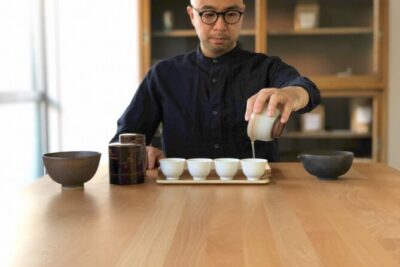
Authentic Japanese tea tasting session: sencha, matcha, gyokuro
Read our review →
Small Group Japanese Green Tea Tasting in Shizuoka
Read our review →
Private Tour in Kamakura: Matcha Tea Tasting & Photo Session
Read our review →Browse the lists this tour appears in