
Review · HIROSHIMA
Hiroshima: Kimono, Koto, and Simple Tea Ceremony Experience
Kimono, music, and Hiroshima in one room. This 90-minute private experience combines dressing in traditional clothing with koto music, matcha, board games, and photographs in a Japanese-style home. I like the personal setting, and I especially like that Kazuko Mensing brings 40 years of koto study and a lifetime in Hiroshima to the visit.
I also appreciate the chance to connect the activity to Hiroshima’s living memory, since Kazuko is a second-generation bomb survivor. The main consideration is practical: the home requires stairs, and 90 minutes can pass quickly if you want to try every activity.
Key points to know before you book
- Kazuko Mensing leads the visit in English or Japanese, making the activities easy to follow even if you know little about Japanese customs.
- You can wear a kimono and choose several hands-on activities, including koto, tea, igo, shougi, origami, and calligraphy depending on the time available.
- The home is about a 15-minute walk from the Atomic Bomb Dome, so it fits neatly into a day around central Hiroshima.
- The koto lesson is especially meaningful, since Kazuko has studied the instrument for 40 years.
- The visit works well for families, with child-friendly igo available and an easygoing host who made a special effort to include a nine-year-old child.
- Access requires climbing stairs, so wheelchair users cannot take part even though the experience is described as disability-friendly in other respects.
A cultural visit with a real personal connection
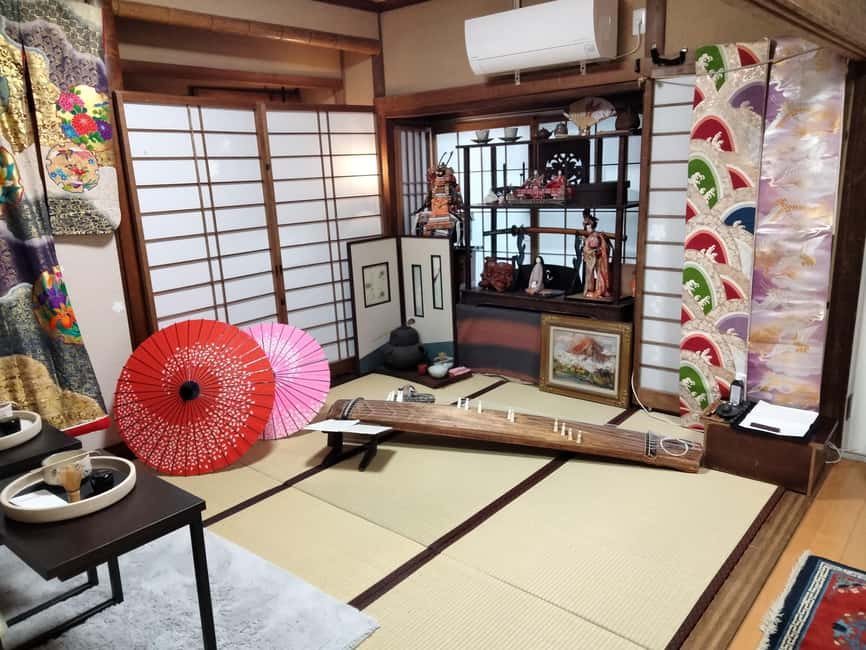
Many Hiroshima activities focus on the city’s wartime past. This one takes a quieter route. You spend time in a Japanese home, put on a kimono, handle traditional objects, and share simple customs with a local host.
That setting gives the visit a human scale. Instead of moving from one display to another, you sit, talk, try things, and ask questions. Kazuko Mensing has lived in Hiroshima all her life and speaks fluent English, so you can ask about the activities without relying on a memorized speech.
Her family connection to the bombing adds weight, but the visit is not presented as a formal memorial program. It is a cultural meeting that also gives you a chance to understand Hiroshima through one resident’s life. If you want a structured history tour, this is not the right replacement. If you want a personal encounter alongside your sightseeing, it fits well.
The private-group format also matters. You are not being hurried through a large class or sharing the room with a crowd. The pace can suit your group, though the 90-minute limit means you may need to choose your priorities.
More Tea Ceremonies in Japan:
- Kyoto: Tea Ceremony in a Traditional Tea House in Kiyomizu
★ 4.9 · 3,519 reviews - Kyoto: Tea Ceremony Ju-An at Jotokuji Temple
★ 4.9 · 3,207 reviews - Kyoto: 45-Minute Tea Ceremony Lesson Experience
★ 4.3 · 2,378 reviews
Meeting Kazuko near Toukaichi Station
The meeting point is outside the FamilyMart beside Toukaichi Station. Kazuko wears a short black kimono jacket, which makes her easier to spot.
From there, the experience takes place in a Japanese-style home about a 15-minute walk from the Atomic Bomb Dome. That location is useful if you are already visiting the Peace Memorial Park, though you should allow extra time to find the meeting point and walk to the home.
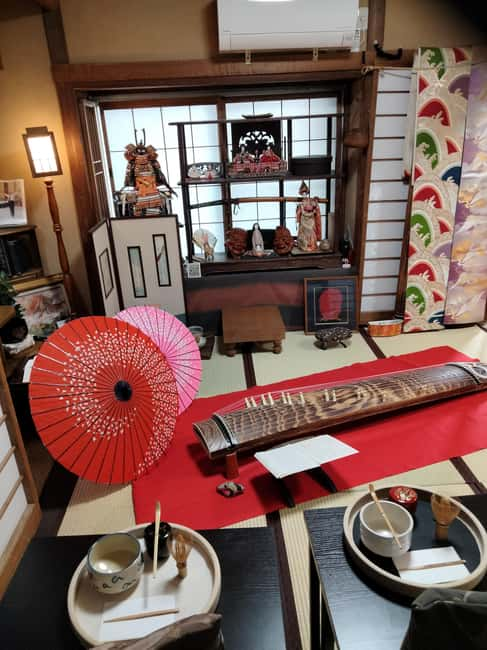
The location is not simply a neutral activity room. It is decorated with Japanese masks, statues, and traditional objects. These details help create the right mood before the activities begin. You are not just trying on clothing in a commercial studio. You are spending time in a lived-in setting connected to the host.
Because the experience takes place in a home, you should be comfortable with a more personal format. Some people will find that warm and memorable. Others may prefer a larger professional studio with a fixed routine. The private setting is one of the main reasons this experience feels different from a standard kimono photo session.
Choosing and wearing a traditional kimono
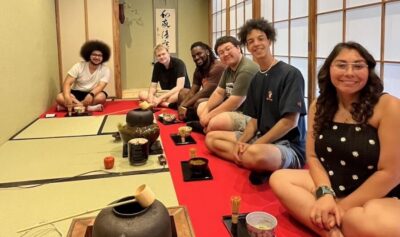
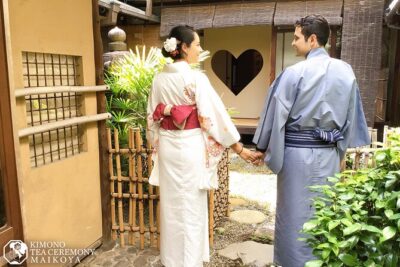
The visit includes a kimono dressing experience for both men and women. You can expect the clothing to be the visual center of the visit, with time to look at different outfits and take photographs once dressed.
Kimono are not just attractive costumes. The layers, ties, and careful arrangement explain why dressing is traditionally a specialized process. Even in a simple experience like this, wearing one changes how you move and sit. It encourages you to slow down and notice the formality of Japanese dress.
The clothing also gives families and couples a shared activity. A child can take part rather than simply watch, and adults can enjoy the photographs without needing a separate photo session. In one family visit, a nine-year-old child wore the kimono, played children’s igo, and joined the other activities.
You should keep your expectations sensible. This is a cultural activity lasting 90 minutes, not a full-day professional kimono styling appointment. The available time must cover several options, so you may not receive an extended fashion consultation or a long outdoor photo shoot.
Playing the koto with a teacher who has studied for 40 years
The koto is a long Japanese string instrument with a distinctive, delicate sound. Here, you get to try playing it rather than only looking at it.
This is one of the strongest parts of the experience because Kazuko has studied koto for 40 years. That does not turn the visit into a concert lesson, but it gives the activity a solid personal foundation. She can show you how the instrument works and help you make your first sounds.
You may also have the chance to play together with Kazuko or another member of your group. That shared moment is more engaging than a short demonstration, especially for children and anyone who enjoys music.
The koto activity is also a good reason to book even if you are not particularly interested in kimono. The experience combines sight, sound, touch, and conversation. You leave with a better sense of how a traditional instrument fits into Japanese culture, rather than simply adding another photograph to your camera roll.
Keep in mind that time is limited. If you want a longer koto lesson, ask about the available schedule when you arrive. The visit is designed to offer several cultural activities, not to teach advanced technique.
More Kimono and Tea Ceremonies in Japan:
- Kimono Tea Ceremony at Kyoto Maikoya, NISHIKI
★ 5.0 · 911 reviews - Kimono Tea Ceremony at Tokyo, Asakusa Maikoya
★ 5.0 · 638 reviews - Kyoto: Kimono Tea Ceremony at Orizuruya Gion
★ 4.9 · 618 reviews - KYOTO Tea Ceremony with kimono near by Imamiya Jinjya Shrine
★ 5.0 · 343 reviews
A simple tea ceremony without too much ceremony
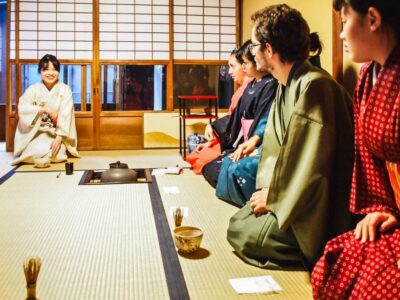
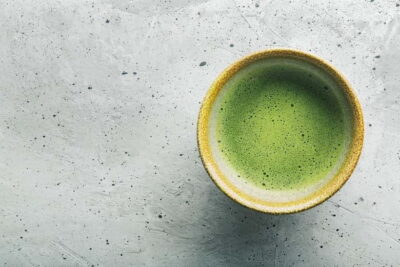
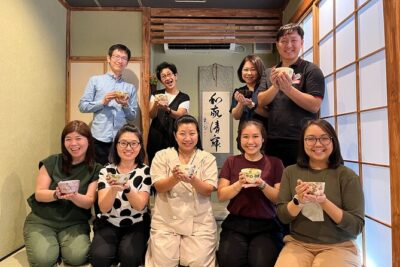
The tea portion is described as a simple tea ceremony. You can drink matcha and learn why tea preparation matters in Japanese culture.
That simplicity is useful. A full tea ceremony can involve precise movements, formal etiquette, and a long sequence that may feel difficult if you are unfamiliar with the customs. This version gives you an introduction without making the experience feel like a test.
Pay attention to the small acts of preparation and presentation. The point is not only the taste of the tea. The ceremony reflects hospitality, care, and the importance of being present with the people sharing the room.
This is a good choice for first-time visitors to Japan. You can ask questions as you go, and the private setting should make it easier to admit that you do not know which gesture comes next. Matcha can taste grassy and bitter if you are not used to it, so do not expect a sweet café drink.
The tea activity also balances the more playful parts of the visit. After dressing up, taking photos, or trying the koto, sitting down with a bowl of matcha gives the experience a calmer rhythm.
Igo, shougi, origami, and calligraphy
The visit includes traditional Japanese games such as igo and shougi. Igo is often known outside Japan by its Chinese name, go, while shougi is Japanese chess. Both games can be complicated, so the value here is in trying the basics rather than mastering a complete match.
For children, a simple version of igo can be a welcome change from sightseeing. A nine-year-old child enjoyed the children’s igo during one family visit, which shows how the experience can work across age groups. Adults can join in too, even if they have never played before.
The activities may also include folding origami cranes and writing Japanese characters. One family left its paper cranes at the memorial connected with Sadako Sasaki, giving the craft a thoughtful link to Hiroshima’s Peace Memorial story.
These options make the visit flexible. If music is not your thing, you can focus on games or writing. If you are traveling with children, you can shift attention between activities rather than expecting everyone to sit quietly for 90 minutes.
Because the session has several possible elements, you should not assume you will have unlimited time for each one. Tell Kazuko what interests you most at the beginning. That way, you are more likely to receive the mix you want.
Photos with a katana, umbrella, and kimono
You can hold a Japanese katana or umbrella for photographs while wearing the kimono. These props add a playful visual element and give you more than the standard seated kimono portrait.
The katana is for holding and photos, not sword training. The umbrella offers a softer, more traditional look and may suit children or anyone who prefers not to pose with a weapon-shaped object.
I like this part because it gives you a clear keepsake from the visit. You are not only hearing about Japanese culture. You are wearing traditional clothing and handling objects associated with Japanese aesthetics and storytelling.
Still, the photos are part of a broader cultural visit, not the entire purpose. If your top goal is a polished professional photo shoot with elaborate backgrounds, compare this with a dedicated kimono studio. Here, the photographs are tied to conversation, music, tea, and games.
Why the host makes the experience memorable
Kazuko’s warmth is central to the visit. Her English fluency allows the conversation to move beyond basic instructions, and her long connection to Hiroshima gives the discussion a local voice.
The personal tone can be especially helpful if you are traveling with a child. Kazuko made an effort to include a nine-year-old, using children’s igo and finding ways for the child to participate in the music and cultural activities.
The visit may also extend into broader conversation about Hiroshima, Japanese customs, and differences between cultures. In one case, Kazuko and her husband later shared okonomiyaki restaurant advice and suggestions for places to see in the city. Her husband, an American historian, also offered a separate two-hour tour when another city tour was canceled. That was an additional arrangement, not part of the standard 90-minute experience, so you should not book this expecting the extra tour or meal.
What you can count on is a host who is open to conversation. The four available ratings are all five stars, and the most consistent praise focuses on Kazuko’s kindness, the relaxed atmosphere, and the variety of activities. That is a strong signal for anyone who values personal contact over a slick, scripted presentation.
Is $76 a fair price?
At $76 per person, this is not the cheapest way to spend 90 minutes in Hiroshima. You can visit many public sights for far less. The price makes more sense when you consider that it includes a private-group format, kimono dressing, koto playing, tea, games, props, and time with an English-speaking host.
You are paying for access to a personal home and a guided cultural exchange, not simply for tea or a photograph. If you try several activities and ask questions, the cost can feel reasonable. It is less convincing if you only want to put on a kimono for a quick picture.
The flexible booking terms also help. You can reserve now and pay later, and cancellation is free up to 24 hours in advance for a full refund. Starting times vary, so you need to check availability for your date.
For families, the private format can offer better value than paying for several separate child and adult activities. For solo visitors, couples, or friends who enjoy culture and conversation, the price is easier to justify than for someone seeking only entertainment.
Who should book this Hiroshima experience?
I would recommend it most strongly to:
- First-time visitors who want an accessible introduction to Japanese customs
- Families with children who need several activities in one session
- People interested in music, traditional dress, or Japanese games
- Visitors who want a personal Hiroshima connection beyond the main memorial sites
- LGBTQ travelers looking for an explicitly welcoming experience
- Anyone staying near the Atomic Bomb Dome and looking for a short cultural activity
You should think twice if you use a wheelchair, since stairs are required. You may also prefer another option if you want a formal history lecture, a long koto class, or a highly polished studio photo session.
The visit is private, but the home setting means the experience has a personal rather than commercial feel. That is its main strength and also the feature that will matter most in deciding if it suits you.
Should you book it?
Book this experience if you want to slow down, meet a local Hiroshima resident, and try several customs in one sitting. The combination of kimono, koto, matcha, games, and photographs gives you plenty to do, while Kazuko’s English and long connection to the city make the visit easy to follow.
I would make it a companion to a visit to the Atomic Bomb Dome and Peace Memorial Park, not a substitute for them. Allow time to walk from the meeting point, tell Kazuko which activities matter most, and remember that stairs are part of the visit. If those points work for you, $76 buys a warm and unusually personal hour and a half in Hiroshima.
FAQ
Where does the experience meet?
Meet outside the FamilyMart beside Toukaichi Station. The guide wears a short black kimono jacket.
How long does the experience last?
The experience lasts 90 minutes.
How far is it from the Atomic Bomb Dome?
The Japanese-style home is about a 15-minute walk from the Atomic Bomb Dome.
What languages does the host speak?
The experience is available in English and Japanese. Kazuko Mensing is fluent in English.
Is the experience private?
Yes. It is offered as a private-group experience.
Can men and women wear a kimono?
Yes. Traditional kimono dressing is available for both men and women.
What activities can I try?
Activities include koto playing, a simple tea ceremony, igo, shougi, holding a katana or umbrella for photographs, and relaxing in the Japanese-style home. Additional activities mentioned in the experience include origami and Japanese calligraphy.
Is the experience suitable for wheelchair users?
No. Participants need to be able to go upstairs, so wheelchair users cannot take part.
Can I cancel for a full refund?
Yes. You can cancel up to 24 hours in advance for a full refund. You can also reserve now and pay later.
Just added around Japan
- Yokohama : Tea Ceremony with Sweets and Souvenir★ 5.0 · 5 reviews
- Walking Tour: Yanaka,Nezu& Sendagi: Tea Ceremony & Old Tokyo★ 5.0 · 3 reviews
- Visit local home for music and tea ceremony near Disney★ 4.9 · 13 reviews
- Trip to Kamakura & Enoshima: Shrines, Seaside, Temples &Tea★ 5.0 · 11 reviews
- Yokohama: Sushi & Gyoza Cooking with Matcha & GreenTea Experience★ 5.0 · 3 reviews
- Kyoto tea town for matcha lovers★ 5.0 · 16 reviews
- Uji: Private immersion into Kyoto’s tea and reglious culture★ 5.0 · 17 reviews
- Uji Tea Ceremony and UNESCO Heritage Walking Tour★ 5.0 · 20 reviews
Tea Ceremony Experiences, compared.
Tea Ceremony in a Traditional Tea House in Kiyomizu
Read our review →
Browse the lists this tour appears in