
Review · UJI
Utilising upcycled Matcha! Creating matcha incense (Uji, Kyoto)
Tea becomes fragrance here. In central Uji, you turn discarded matcha into small, sweet-shaped incense pieces during a calm temple workshop. I like the clever reuse of tea that would otherwise be thrown away, and I like that the finished pieces remain attractive after their scent fades. The setting at Eshin-in, with its seasonal garden and view toward Byodoin Temple, adds real atmosphere.
The main drawback is language. The instructor speaks Japanese, and an English interpreter costs an extra ¥8,800 per group on the day. The workshop also begins exactly on time, so you need to find the temple before the scheduled start rather than arriving at the last minute.
Key points at a glance
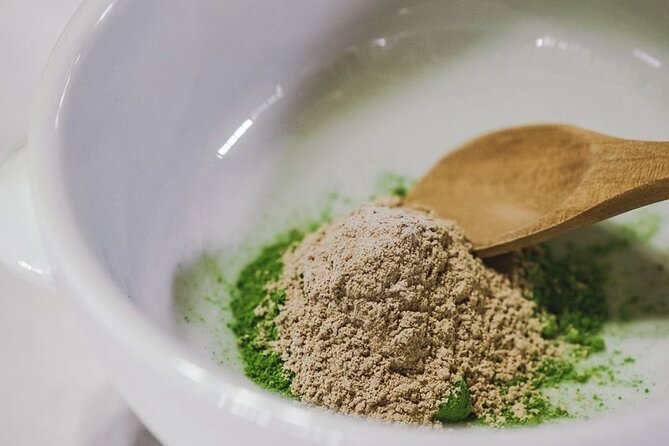
- Discarded Uji matcha becomes incense: The tea comes from powder collected in the crevices of a processing machine before the machine is cleaned and fresh matcha is added.
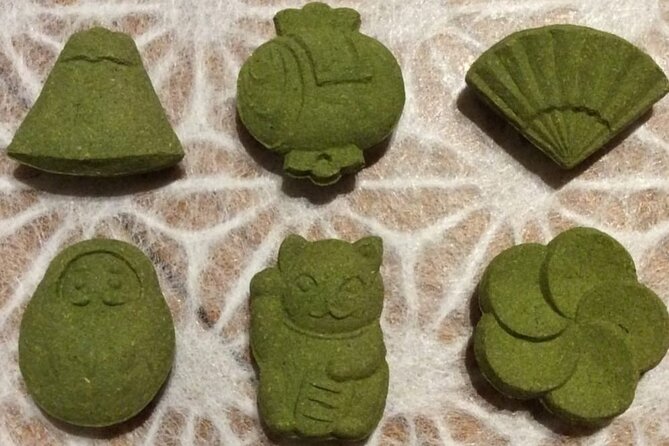
- Wooden moulds create edible-looking shapes: You make six or seven pieces using moulds with seasonal motifs, so the incense looks more like a tiny sweet than a traditional incense stick.
- Eshin-in is five minutes from Uji Bridge: The temple sits in the heart of Uji’s sightseeing area, close to the river and within easy reach of other sights.
- The scent is released by warming: These pieces are designed to warm and release tea aroma without the usual concern about smoke.
- Your booking includes useful extras: You take home your own incense, receive discount tickets for the Uji Municipal Tea House and Tale of Genji Museum, and get one free parking space.
- The group remains small: A maximum of eight people keeps this hands-on activity quieter and more personal than a large craft class.
Why this small Uji workshop is worth your time
Uji is famous for matcha, but much of a visit follows a familiar pattern: tea shops, tea sweets, tea drinks, and the celebrated Byodoin Temple. This workshop gives you a different way to understand the local tea culture. Instead of simply drinking matcha, you handle it, press it into moulds, and take home a fragrance made from material that would otherwise be discarded.
That reuse is not just a marketing detail. The matcha is collected from the narrow spaces inside the processing machine. Once it accumulates there, it is discarded and replaced with fresh tea. Using it for incense gives the material a second purpose, while also making the activity feel closely tied to Uji’s tea industry.
I also like the pace. The session lasts about an hour, with roughly 15 minutes for an introduction and 45 minutes for making the incense. That is long enough to feel like a proper activity, but short enough to fit before or after Byodoin, a river walk, or a visit to the Tale of Genji Museum.
The workshop is best understood as a quiet craft activity rather than a full lesson in Japanese incense. You learn how this matcha incense is made and how to warm it, then spend most of your time creating your own pieces. If you want a long historical lecture or a broad survey of incense traditions, this will feel limited. If you want something hands-on and unusual, the narrow focus works well.
More Tea and Calligraphy Workshops in Japan
- Kyoto: Tea Ceremony Meditation – Make Matcha with Tea Master
★ 4.8 · 406 reviews - Osaka: Tea Ceremony, Calligraphy, and Kimono Experience
★ 4.9 · 130 reviews - Tokyo: Practicing Zen with a Japanese Tea Ceremony
★ 4.7 · 105 reviews
Finding Eshin-in near Uji Bridge
Eshin-in Temple is about a five-minute walk from Uji Bridge, the main centre of Uji’s tourist area. That location matters. You can place the workshop neatly within a day in Uji rather than making a separate trip to an outlying craft studio.
The venue is the temple itself, at Yamada-67, Uji, Kyoto 611-0021. Take care with this point when planning your route: the workshop location is Eshin-in, not the provider’s office. A family once went to the wrong place because the distinction was unclear, although the staff waited and gave directions by phone. You can avoid that problem by entering the temple address directly into your map and allowing extra time.
Arrive five minutes before the start. The class begins at the scheduled time to avoid delaying the small group. This is especially important if you are coming from another Uji sight, since a short walk can take longer than expected when you are crossing the river, looking for an entrance, or stopping for photographs.
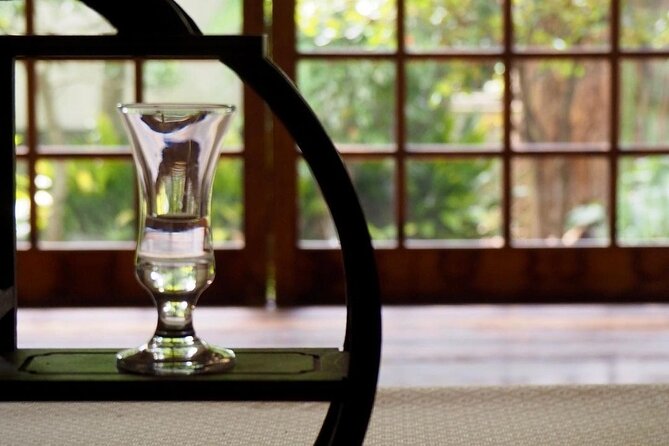
The location adds more than convenience. Eshin-in has a garden cared for by the abbot, with flowers that change through the seasons. The temple also looks across the Uji River toward Byodoin Temple. The view gives you a pleasant reason to slow down before or after the craft work.
One car can park free at the venue. If that space is occupied, you need to use a nearby paid car park. Public transport is nearby, so you do not need a car to reach the workshop.
The 15-minute introduction: tea, warmth, and incense
The first part lasts about 15 minutes. You receive an introduction to the matcha incense and learn how to warm it so the aroma is released.
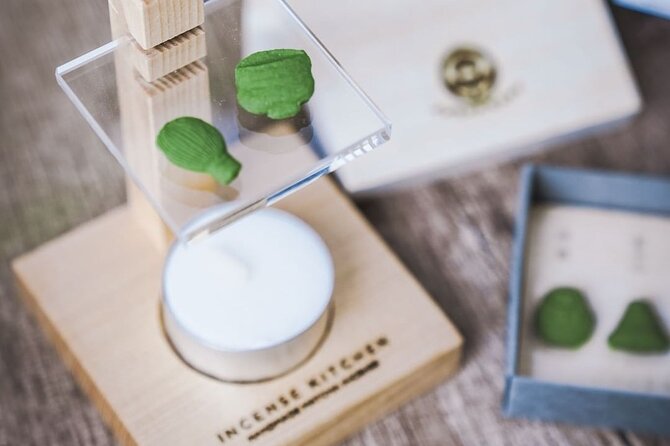
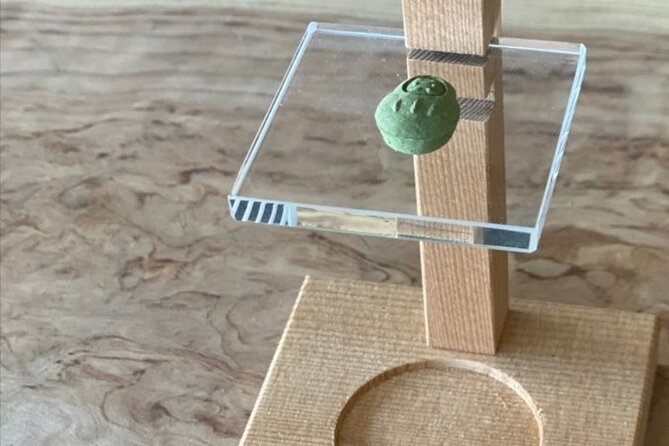
This is an important distinction. You are not making a conventional incense stick that burns with a visible trail of smoke. The pieces warm up and give off the scent of tea. The activity description specifically presents this as a way to enjoy the aroma without worrying about the health hazards associated with smoke.
You should still follow the instructor’s directions carefully. The workshop teaches you how the pieces are warmed, and the finished incense is intended to be used in that way. The supplied information does not specify the heating device or exact home setup, so listen closely during this first explanation and ask questions if you need a clearer demonstration.
The material is described as soft and clay-like while you work with it. That makes the activity approachable. You do not need advanced craft skills, and the emphasis is on shaping rather than precision carving. The soft material also gives the session a calm, tactile quality that suits the temple setting.
The instructor speaks Japanese. You can book with an English language request, but this does not mean English instruction is included in the basic price. An interpreter is arranged for an additional ¥8,800 per group, paid on site. If detailed explanations matter to you, budget for this before booking. If you are comfortable watching demonstrations and following simple hands-on directions, you may decide the extra cost is not necessary.
Making six or seven matcha incense pieces
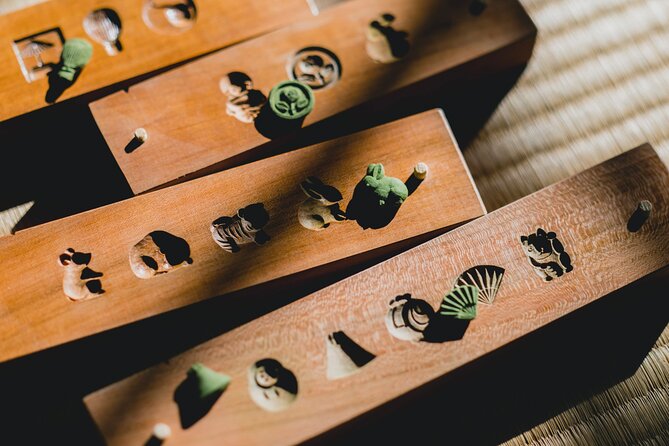
The main activity takes about 45 minutes. You make six or seven pieces of incense from the matcha material, using wooden moulds. The moulds have seasonal motifs, including spring and summer designs, so the exact appearance can vary with the time of year.
This is where the workshop becomes more personal. Everyone begins with the same unusual ingredient, but the shapes you create become your own small set of souvenirs. The pieces are shaped like edible sweets, which makes them especially appealing as gifts. Just remember that they are incense, not food. Their appearance is part of the charm, not an invitation to taste them.
The wooden moulds are a special part of the activity. The workshop is described as the world’s only matcha incense made with wooden moulds, giving the pieces a distinct look rather than the plain form associated with many incense products. The moulds also connect the finished objects to Japanese craft traditions without requiring you to master a complicated technique.
You should expect a relaxed class, not a rushed production line. A maximum of eight people keeps the number manageable, and the hour-long format leaves time to make several pieces. The instructor’s patience is useful here, especially for children or anyone who does not often work with moulds.
Children under 14 can take part with adults, while the listed per-person rate applies from age 15. One 15-year-old enjoyed making a complete set, while a seven-year-old helped an adult. That makes this a reasonable family activity, though younger children should work with an accompanying adult rather than be treated as independent participants.
More Matcha Experiences in Uji:
- Kyoto: Tea Museum Tickets and Matcha Grinding Experience
★ 4.9 · 739 reviews - Slow Cycling Tour at Uji’s Matcha Green Tea Fields and Heritage
★ 5.0 · 25 reviews - Kyoto Matcha Green Tea Tour
★ 4.5 · 23 reviews - Uji and Wazuka Matcha Farm Half Day Private Guided Tour
★ 5.0 · 21 reviews
What you take home from Eshin-in
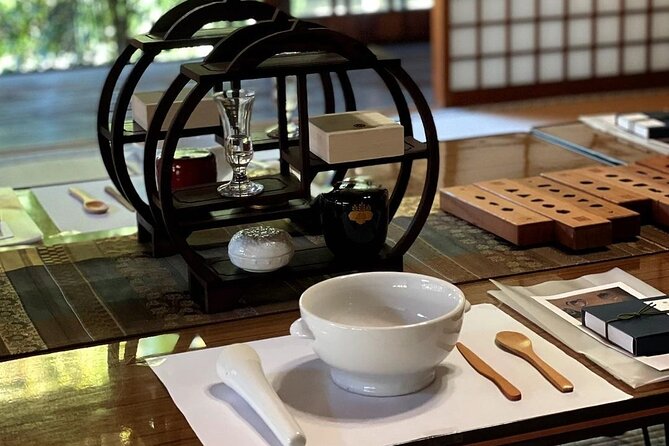
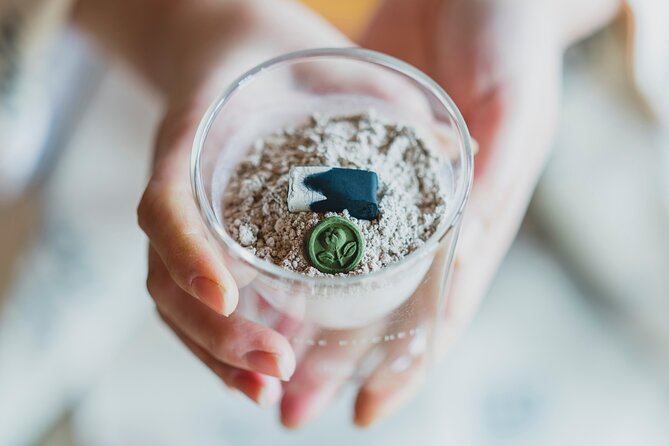
You take home the six or seven incense pieces you make. Their usefulness does not end when the tea aroma fades. The shapes remain intact, so you can continue using them as aroma stones.
That gives the souvenir more staying power than a snack or a small packet of tea. The first use connects you with Uji’s tea culture, while later uses become a reminder of the temple workshop. The pieces are also easy to give to family or friends, especially because their unusual shape invites a short explanation.
Each group booking through the website also receives a special gift box containing five pieces of matcha incense. The wording suggests this is separate from the six or seven pieces you create, so check the exact arrangement at booking if the gift box is important to you. The included gift packaging makes the activity more practical for people who want a ready-made present.
You also receive discount tickets for the Uji Municipal Tea House and the Tale of Genji Museum. These are useful additions if you already plan to visit either place. They do not transform the workshop into a full sightseeing pass, but they add some value to the $55.38 price.
Is $55.38 a fair price?
At $55.38 per person, this is not the cheapest one-hour activity in Japan. Its value comes from the combination of materials, instruction, setting, and take-home items rather than from the length alone.
You make six or seven pieces, receive the associated workshop instruction, and take home the work you create. A group booking also includes a five-piece gift box, discount tickets for two Uji attractions, and one free parking space. Those extras make the price easier to justify for a family or small group that will use them.
The temple setting is another part of the value. You are not simply making an object in a generic classroom. You are working at Eshin-in, near Uji Bridge, with a garden and a view across the river toward Byodoin. That atmosphere is especially useful if you want a break from sightseeing without giving up the sense of place.
The interpreter changes the calculation. An additional ¥8,800 per group is a sizeable extra charge, although it may be worthwhile for a group that wants detailed English explanations. Since the workshop is limited to one hour, the cost can feel high if you are mainly looking for a cheap souvenir. It makes more sense if you value the process, the setting, and the chance to make something unusual.
Who will enjoy this matcha activity most?
I would recommend it to anyone who wants a quieter side of Uji. It suits couples, families, and small groups looking for an activity that is creative without being physically demanding. It also works well for repeat visitors who have already seen the major temples and want a more local, hands-on way to spend an hour.
Tea lovers will appreciate the link to Uji matcha, but you do not need to be an expert. The concept is easy to understand: tea that would be discarded is reshaped into incense. The finished pieces give you a clear connection to the place.
Families should note the age rules. The published rate applies from age 15, while children under 14 may join with adults. The experience can work across generations because the material is soft and the process is guided, but adults should expect to help younger children.
This is less suitable if you need full English instruction without an extra fee, dislike carefully timed appointments, or want a large number of finished souvenirs. You make only six or seven pieces yourself. The additional five-piece gift box helps, but the workshop is about making and learning, not bulk shopping.
How to plan the rest of your Uji day
Because Eshin-in is near Uji Bridge, you can combine the class with the main sights in the town centre. The activity ends back at the meeting point, so you are free to continue sightseeing immediately afterward.
A practical plan is to schedule the workshop around a visit to Byodoin and a walk near the Uji River. The view from Eshin-in looks toward Byodoin across the water, giving you a useful visual connection before or after visiting the temple itself. The Tale of Genji Museum is another logical addition, particularly since the workshop includes discount tickets.
The workshop takes only an hour, but do not schedule it too tightly against a train departure. You need to arrive five minutes early, and the exact start time is enforced. Uji is easy to explore on foot, but bridge crossings and temple entrances can add small delays.
If you drive, treat the free parking space as a bonus rather than a guarantee. One car can park, but if that space is full, you will need a nearby paid lot. Public transport is a sensible choice if you are already visiting Uji by train.
Booking, cancellation, and language details
The activity usually fills bookings about 12 days ahead, so reserve early if you have a fixed Uji day. Your ticket is mobile, and confirmation is provided when you book.
Free cancellation is available up to 24 hours before the start time. Cancellations or changes made inside that 24-hour window are not refunded or accepted. The local time in Uji controls the cut-off, and the activity requires a minimum number of participants, so a cancellation by the provider may result in another date, another activity, or a full refund.
The basic workshop is Japanese-language. Select English when booking if you want an interpreter, then pay ¥8,800 per group on the day. Do not assume that choosing English removes this charge.
Should you book the matcha incense workshop?
Book it if you want a small, distinctive activity that connects directly with Uji’s tea culture. The discarded-matcha idea is clever, the wooden moulds produce attractive souvenirs, and Eshin-in gives the hour a peaceful setting that a standard craft room cannot match.
I would especially choose it for a family or small group already planning to visit Byodoin, the Uji Municipal Tea House, or the Tale of Genji Museum. The included discounts and gift box help the value, and the six or seven handmade pieces give you something personal to take home.
Skip it if your schedule is too tight for a punctual start, if you want instruction in English without paying extra, or if a one-hour craft class feels expensive at $55.38. For the right visitor, though, this is a thoughtful way to turn an overlooked part of Uji’s matcha production into a lasting souvenir.
FAQ
Where does the matcha incense workshop take place?
It takes place at Eshin-in Temple, Yamada-67, Uji, Kyoto 611-0021, Japan. The temple is about a five-minute walk from Uji Bridge.
How long does the workshop last?
The activity lasts approximately one hour. About 15 minutes are used for the introduction and incense-burning explanation, followed by about 45 minutes of making incense.
How many incense pieces will I make?
You will make six or seven matcha incense pieces during the workshop.
What is the incense made from?
The incense uses Uji matcha that would otherwise be discarded after collecting in the crevices of a processing machine. The material is described as soft and clay-like while you work with it.
Does the incense burn with smoke?
The pieces are warmed to release their tea aroma. The activity is presented as an alternative to incense that creates smoke.
Is English instruction included?
No. The instructor speaks Japanese. An English interpreter can be arranged if you select English when booking, with an additional charge of ¥8,800 per group paid on the day.
Can children participate?
Children under 14 are welcome when accompanied by adults. The listed per-person rate applies to people aged 15 and older.
Is parking available?
One car can park free at the venue. If the parking space is full, you need to use a nearby paid parking lot.
What happens if I need to cancel?
You can receive a full refund if you cancel at least 24 hours before the scheduled start time. Cancellations and changes inside 24 hours are not accepted or refunded.
More Tea and Calligraphy Workshops in Uji
- Experience all of Japanese culture and Japanese food experience classes “origami, udon, Japanese food, green tea, calligraphy” in 4 hours
★ 5.0 · 105 reviews - An Amazing set of Cultural experience: Kimono, Tea Ceremony and Calligraphy
★ 5.0 · 69 reviews - Beijing Culture: Tea Ceremony, Heritage Instrument & Calligraphy
★ 5.0 · 57 reviews - Osaka: Private Tea Ceremony and Calligraphy Experience
★ 5.0 · 50 reviews
Just added around Uji
- Kyoto tea town for matcha lovers★ 5.0 · 16 reviews
- Uji: Private immersion into Kyoto’s tea and reglious culture★ 5.0 · 17 reviews
- Uji Tea Ceremony and UNESCO Heritage Walking Tour★ 5.0 · 20 reviews
- Uji and Wazuka Matcha Farm Half Day Private Guided Tour★ 5.0 · 21 reviews
- Kyoto Matcha Green Tea Tour★ 4.5 · 23 reviews
- 7 Hours Private Guided Tour Uji and Wazuka Matcha Farm★ 5.0 · 2 reviews
- Half Day Matcha Tour in Uji, home of culture, with a local★ 4.8 · 14 reviews
- Kyoto: Tea Museum and Tsuen Teahouse Guided Tour★ 5.0 · 2 reviews
Tea and Calligraphy Workshops in Japan, compared.
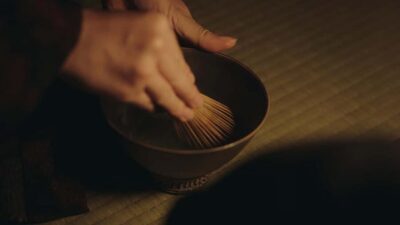
Tea Ceremony Meditation – Make Matcha with Tea Master
Read our review →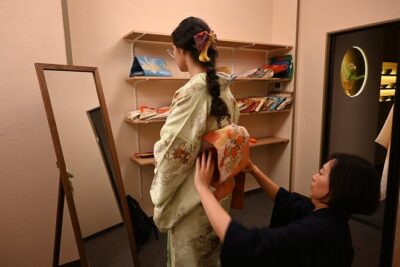
Tea Ceremony, Calligraphy, and Kimono Experience
Read our review →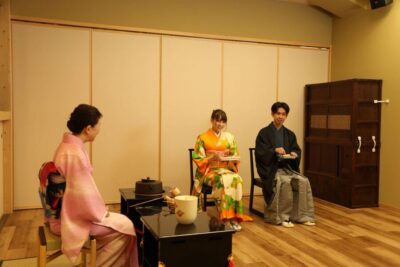
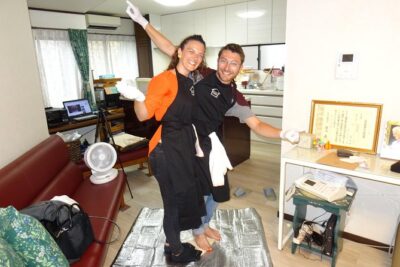
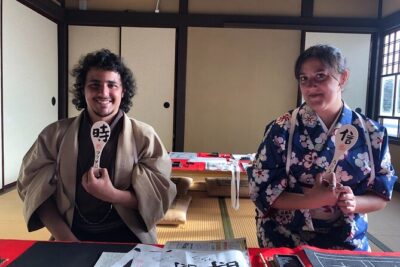
An Amazing set of Cultural experience: Kimono, Tea Ceremony and Calligraphy
Read our review →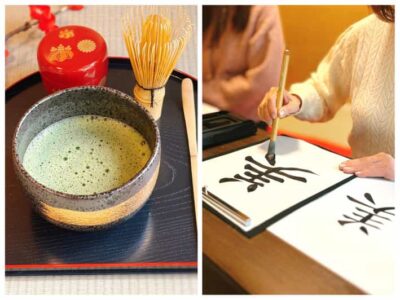
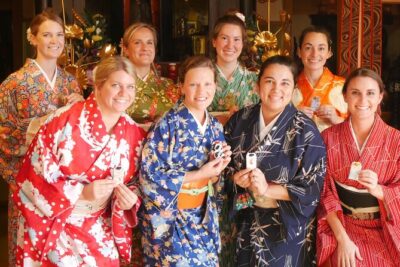
Cultural Activities :Kimono, tea ceremony, Calligraphy and Amulet
Read our review →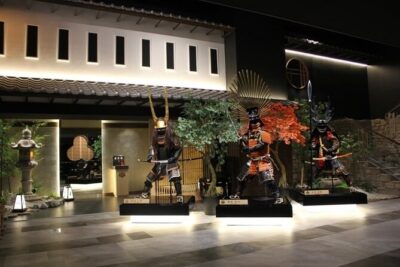
Samurai dress-up and shows, plus Tea Ceremony & Calligraphy
Read our review →Browse the lists this tour appears in