
Review · BEIJING
Beijing Culture: Tea Ceremony, Heritage Instrument & Calligraphy
Slow down in Beijing for a change. This 2.5-hour workshop brings you into a quiet private venue where you brew Chinese tea, write calligraphy, and play the Guqin, an ancient Chinese instrument. I like the small maximum group of eight, and I like that the teaching is hands-on rather than a performance you simply watch. The main drawback is the price: at $78.60 per person, it costs more than a standard sightseeing stop, and transportation to the venue is not included.
The setting at 813 Creative Park in Chaoyang gives the session a calm break from Beijing’s crowded sights. The bilingual guide has a master’s degree in history and sociology, while national-level cultural artists lead the tea and music portions. If you want a quick photo opportunity, this may feel too slow. If you want to understand what you are doing, it offers unusual value.
Key Points at a Glance
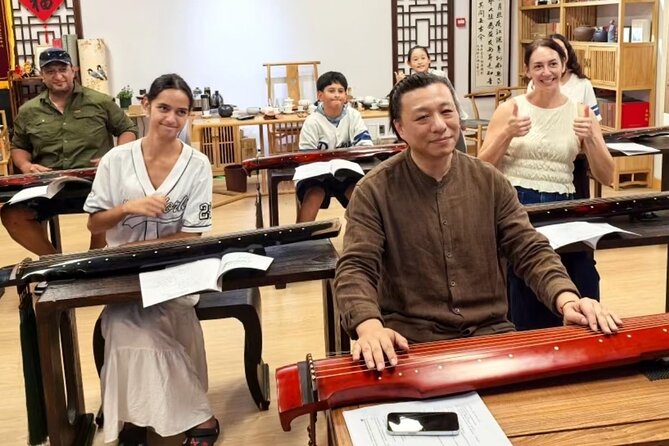
- Play a complete Guqin melody: You do not only listen to a performance. You receive hands-on help with the strings and finger positions.
- Learn tea from a certified master: The tea ceremony includes brewing, tasting, and tea snacks, with the purpose behind each step explained.
- Write meaningful Chinese characters: The calligraphy session connects brushwork with the older roots of the characters.
- Keep the group small: The maximum is eight people, which gives the artists room to offer individual guidance.
- Wear traditional clothing: Rental attire is included for the ritual and photographs, adding a visual element without turning the session into a staged show.
A Quiet Cultural Stop at 813 Creative Park
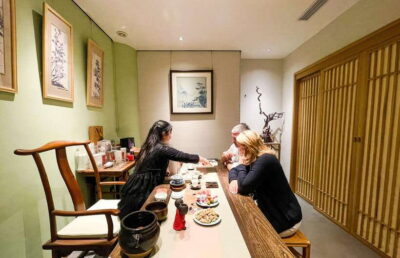
The meeting point is 813 Creative Park in Chaoyang, Beijing, at VGP3+CCX, 100124. The venue is described as a private heritage space closed to the general public, with air conditioning and a peaceful interior.
That location matters. Beijing sightseeing can be noisy, crowded, and physically tiring. A quiet room, comfortable temperature, and a small group give you a chance to pay attention. I would place this activity after a busy morning at a palace or temple, not before a packed schedule of major sights.
The venue is near public transportation, but transportation to and from the meeting point is not included. You will need to plan your own route and allow enough time to arrive. The activity ends back at the same meeting point, so you do not need to arrange a second pickup location.
Because the session is limited to eight people, the atmosphere should feel personal rather than like a large cultural demonstration. That small size is especially useful during calligraphy and Guqin instruction, when you may need someone to adjust your hand position or explain a technique again.
More Tea Ceremonies in China
- Traditional Chinese Tea Ceremony Experience
★ 4.7 · 74 reviews - Chinese Tea ceremony in Beijing Hutong courtyard
★ 4.7 · 26 reviews - Beijing Culture Event: Tradition Music, Tea Ceremony, Calligraphy
★ 5.0 · 11 reviews
Tea Ceremony: More Than a Cup of Tea
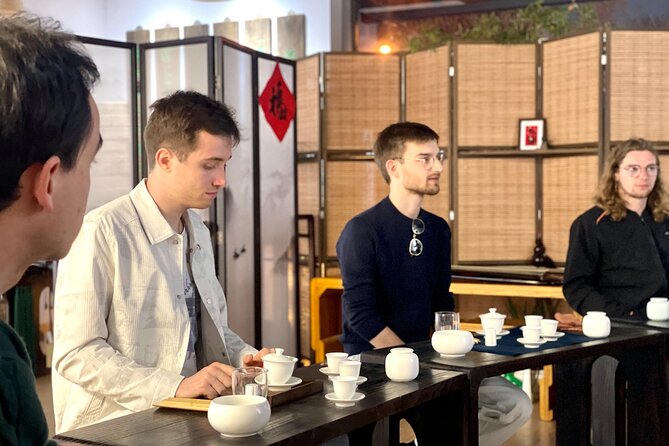
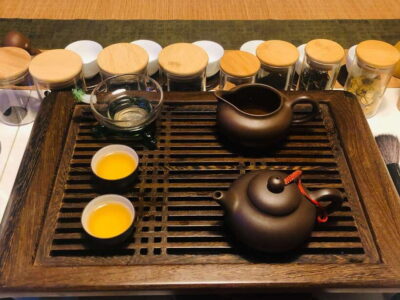
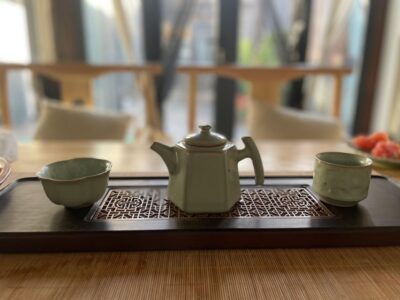
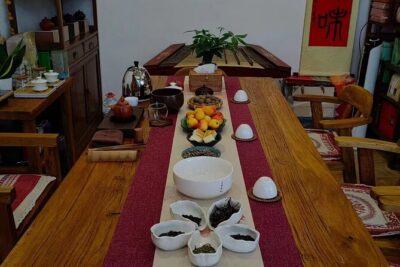
The tea portion begins with a traditional ceremony and tasting led by a certified tea master. You brew and taste Chinese tea yourself, rather than simply receiving a cup while someone talks around you.
The value is in the pace. Tea preparation gives you a practical way to notice how Chinese traditions place importance on movement, attention, and hospitality. The guide explains the meaning behind the rituals, so the process does not feel like a string of mysterious gestures.
Tea snacks are included, but this is not a meal. You should eat beforehand if you expect to need lunch or dinner. The activity includes tea tasting and snacks only, with no other meals.
I like this part for visitors who feel lost when faced with formal cultural customs. You do not need prior knowledge of Chinese tea. The structure lets you learn by doing, and the tea master can connect the physical actions with their cultural purpose.
There is also a practical benefit for the rest of your China trip. After this session, tea service in a restaurant, hotel, or teahouse may make more sense. You will have a better sense of why the process can be slow and deliberate instead of treating it as a simple way to get a drink.
The Guqin Lesson, From Listening to Playing
The Guqin is one of China’s most classical instruments, and the session includes both a live performance and a hands-on lesson. The performance gives you a chance to hear the instrument before you try it. Then the artist guides your fingers as you learn a full melody.
That sequence is smart. The Guqin can seem quiet and unfamiliar at first, particularly if you are used to louder Chinese instruments or large stage performances. Hearing an accomplished player first helps you notice its restrained sound and careful technique.
You should not expect to become a skilled musician in one afternoon. The useful goal is simpler: you learn how the strings respond, how the hands work together, and how much control is required to create a clean phrase. The lesson gives you a physical connection to an instrument you might otherwise only see behind glass.
The chance to play a melody is one of the strongest reasons to book this activity. Museums can show you instruments, and concerts can let you hear them, but neither gives you the feeling of placing your fingers on the strings. The session turns the Guqin from an object into something you can begin to understand.
The activity is particularly good for curious beginners. You do not need musical training according to the supplied information, and the instruction is designed in English. Still, if you want a polished concert or an extended music lesson, this short introduction may feel limited.
Calligraphy With a Brush and a Personal Result
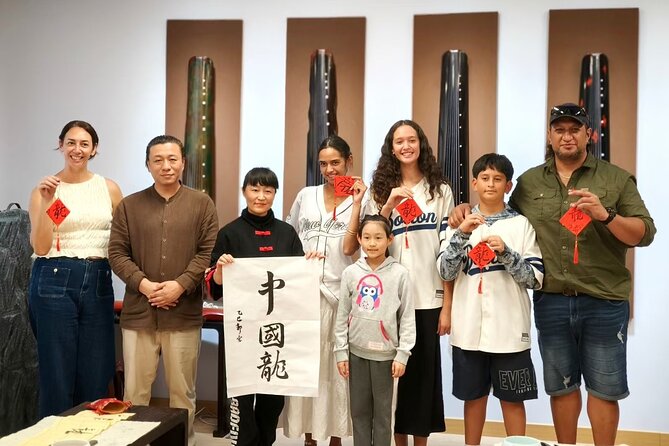
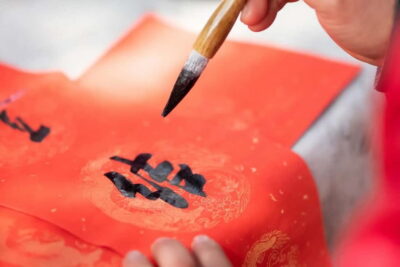
The calligraphy workshop gives you a brush, instruction from an expert, and a chance to write real Chinese characters. The guide also explains their older roots, which adds meaning beyond simply copying attractive shapes.
Calligraphy is harder than it looks. The brush responds to pressure, angle, speed, and the amount of ink. A short session will not make you proficient, but it can show you why Chinese calligraphy is treated as an art rather than ordinary handwriting.
One especially useful option is writing your Chinese name. The finished paper can be taken home, giving you something more personal than a generic souvenir. You might frame it later, or keep it as a reminder of the session.
I appreciate that the activity gives you a result you made yourself. The paper is not just a photograph of someone else performing. It records your attempt, including the uneven lines and small imperfections that make it yours.
The calligraphy lesson may be the most accessible part for families and first-time visitors. It offers a clear task, a visible result, and a cultural explanation. You should expect to need patience, though. Brush technique takes time, and the value comes from paying attention rather than rushing to finish.
More Tea Ceremonies in Beijing:
- Beijing: Temple Of Heaven+Tai Chi Class+Tea Ceremony
★ 5.0 · 8 reviews - Traditional Chinese Tea Ceremony Experience
★ 5.0 · 7 reviews - Beijing Tai Chi and Tea Ceremony Experience
★ 5.0 · 4 reviews - Beijing: Chinese Culture Tea Ceremony Reservation Service
★ 4.8 · 4 reviews
Traditional Clothing and Photos
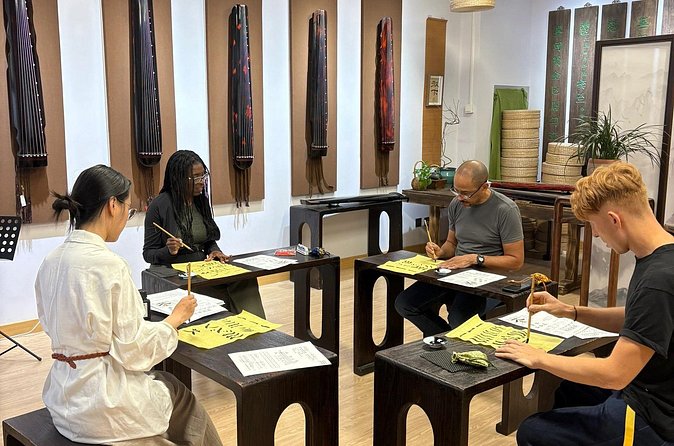
Traditional outfit rental is included for the ritual and photographs. This adds a visual layer to the workshop and can make the tea and calligraphy portions feel more connected to their setting.
The clothing is best understood as part of the presentation, not a full costume transformation or historical reenactment. The available information does not specify the exact garments, sizes, or changing arrangements, so you may want to confirm those details if they matter to your plans.
Photos are a pleasant extra, but they should not be the main reason you book. The strongest parts of this session are the teaching and the chance to use the tea equipment, brush, and Guqin. The clothing helps mark the occasion without replacing the cultural content.
English Guidance and the Meaning Behind the Rituals
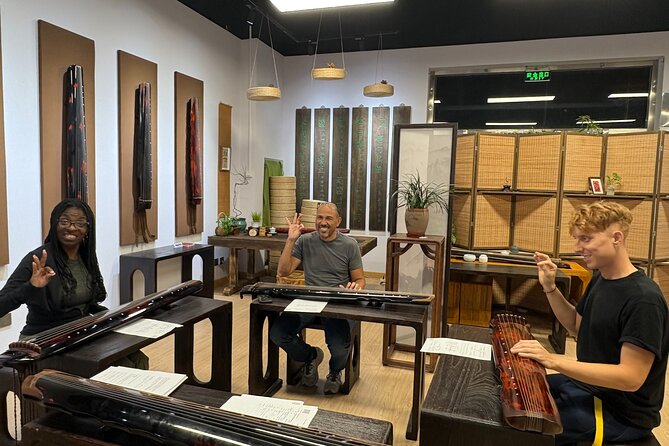
The bilingual guide has an M.A. in history and sociology and is trained in Chinese philosophy and history. That background matters because the activities involve customs that can be easy to imitate without understanding.
You receive explanations of the tea ceremony, calligraphy, and Guqin traditions in English. The guide helps connect the actions to wider ideas of patience, form, attention, and cultural memory. That context is what separates this workshop from a simple craft demonstration.
I would expect the guide to be most useful during transitions. After the tea master shows you a procedure, the guide can help explain what you just saw. Before you try the Guqin, the cultural background can make the instrument feel less remote. During calligraphy, the character explanations give purpose to the brushwork.
The teaching team is described as national-level cultural artists and heritage practitioners rather than actors hired for a stage show. That does not mean every part will suit every personality. Some people prefer independent sightseeing and may find the guided pace formal. Others will appreciate being able to ask questions in a small group.
What the $78.60 Price Buys You
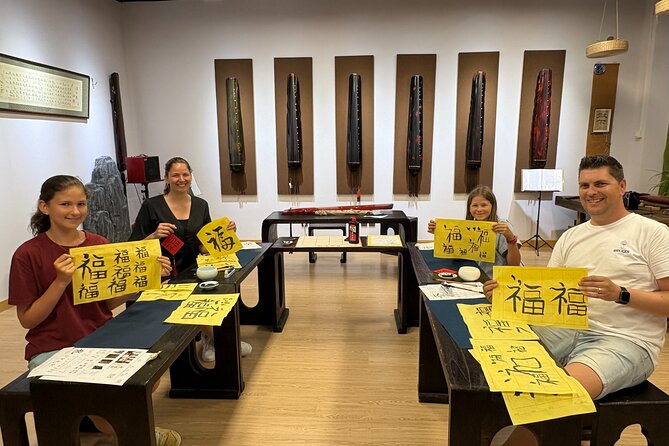
At $78.60 per person, this is not a budget activity. The price is easier to justify because it combines three separate workshops, a live Guqin performance, tea tasting, expert instruction, a bilingual guide, and traditional clothing rental.
You are paying for access to specialists and for time to practice, not just admission to a room. The group limit of eight also affects the value. Individual attention is more likely when the instructor is working with a handful of people rather than a busload.
The price makes less sense if you plan to drop in briefly for photos. You would be paying for instruction that you may not use. It is a better match for someone who enjoys learning a skill, asking questions, and taking home a handmade result.
Compared with booking separate cultural activities, the combined format is convenient. You get tea, music, and calligraphy in one two-and-a-half-hour block. The tradeoff is that each subject receives an introduction rather than a long specialist lesson.
The activity is booked, on average, 51 days in advance. That suggests you should not leave it until the last moment if it is important to your itinerary. Confirmation is sent within 48 hours of booking, subject to availability.
Timing, Group Size, and Practical Planning
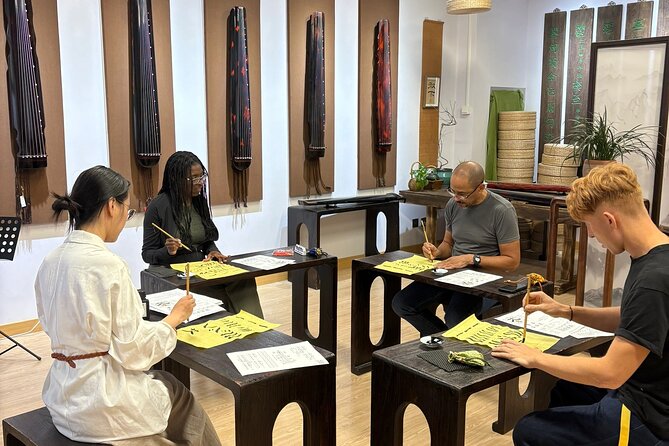
The activity lasts about 2 hours and 30 minutes. That is long enough to give each tradition some attention, but short enough to fit into a larger Beijing itinerary.
I would avoid scheduling a major timed attraction immediately afterward. Even if the workshop ends on time, your return journey from Chaoyang may take longer than expected. Beijing is a large city, and the activity does not include transfers.
The meeting and ending point are the same. You should arrive ready to stay for the full session, especially because the small group format means late arrivals may interrupt instruction.
Most people can participate, and service animals are allowed. The activity is near public transportation. The supplied information does not give detailed accessibility information for the venue, so anyone with specific mobility or seating needs should check before booking.
The experience requires good weather according to its operating policy, despite taking place in an air-conditioned cultural venue. If poor weather causes cancellation, you are offered another date or a full refund. The operator may also cancel if the minimum number of participants is not reached.
Who Will Enjoy This Most
I would recommend this workshop to you if you want a calm, thoughtful break from Beijing’s headline sights. It suits people who prefer doing over watching, especially anyone interested in tea, traditional arts, Chinese philosophy, music, or handwriting.
It is also a good choice for first-time visitors who want cultural context without committing to a full-day lecture. The English guidance makes the activities approachable, and the three-part format gives you a broad introduction.
Families may enjoy the calligraphy and clothing, while music lovers will likely focus on the Guqin. Couples and solo visitors may appreciate the quiet setting and small group. Anyone who has lived in China or studied East Asian culture may still find value in the direct contact with working artists.
I would hesitate to recommend it if you dislike structured instruction, have no interest in participating, or want a large-scale performance. It is not designed as a fast photo stop or a theatrical evening show.
Cancellation and Booking Advice
You can cancel up to 24 hours before the start time for a full refund. Changes made inside that 24-hour window are not accepted, and the cutoff follows local Beijing time.
Since confirmation depends on availability and the activity is often booked well ahead, it is sensible to reserve before your schedule fills. At the same time, do not book it for the final hours of your Beijing stay. A weather or minimum-participant cancellation could require a new date.
Should You Book This Beijing Workshop?
Book it if you want to handle Chinese culture rather than simply look at it. The chance to brew tea, play a Guqin melody, and write calligraphy gives the session real substance, while the small group and English guidance keep it personal.
At $78.60, the cost is fair for a three-part workshop led by specialist artists, but it is not the right purchase for everyone. I would choose it for a curious, unhurried day in Beijing, especially after several crowded monuments. You should skip it only if your schedule is tight, your budget is strict, or hands-on cultural learning does not appeal to you.
FAQ
Where does the experience begin?
It begins at 813 Creative Park, VGP3+CCX, Chaoyang, China, 100124.
Where does the activity end?
The activity ends back at the same meeting point.
How long does the experience last?
The experience lasts approximately 2 hours and 30 minutes.
What is included in the tea portion?
It includes a traditional tea ceremony and tea tasting led by a certified tea master, along with tea snacks.
Can I play the Guqin?
Yes. The experience includes a hands-on Guqin learning session, during which you learn to play a full melody.
Is calligraphy included?
Yes. A Chinese calligraphy workshop with expert guidance is included.
Is traditional clothing provided?
Yes. Traditional outfit rental is included for the ritual and photographs.
How many people can join?
The activity has a maximum of eight participants.
Can I cancel for a refund?
You can cancel at least 24 hours before the start time for a full refund. Cancellations made less than 24 hours before the start time are not refunded.
More History Tours in Beijing
- World Heritage Kyoto & Nara Uji Authentic Matcha Experience
★ 5.0 · 1,573 reviews - Uji: UNESCO Heritage & Tea Ceremony Walking Tour
★ 4.6 · 54 reviews - Slow Cycling Tour at Uji’s Matcha Green Tea Fields and Heritage
★ 5.0 · 25 reviews - Uji Tea Ceremony and UNESCO Heritage Walking Tour
★ 5.0 · 20 reviews
More Tea and Calligraphy Workshops in Beijing
- Beijing Hands-On Culture Tour: Tea, Instrument, Calligraphy
★ 5.0 · 6 reviews - Beijing:Learn Calligraphy & Enjoy Kung Fu Tea Ceremony
★ 5.0 · 2 reviews - Kyoto: Tea Ceremony Meditation – Make Matcha with Tea Master
★ 4.8 · 406 reviews - Osaka: Tea Ceremony, Calligraphy, and Kimono Experience
★ 4.9 · 130 reviews
Just added around Beijing
- Private Tour to the Temple of Heaven and Tea tasting at the Maliandao Tea city★ 5.0 · 3 reviews
- Traditional Chinese Tea Ceremony Experience★ 5.0 · 7 reviews
- Beijing Tai Chi and Tea Ceremony Experience★ 5.0 · 4 reviews
- Private Beijing Spiritual Tour with Lunch and Tea Ceremony★ 5.0 · 2 reviews
- Temple of Heaven Private Tour and Tea Tasting at Maliandao Tea Street★ 5.0 · 2 reviews
- 3-Hour Private Hutong Walking Tour with Drum Show at Drum Tower and Tea Tasting★ 5.0 · 3 reviews
- 3-hour Morning/Afternoon Tea Tasting on Maliandao Street & Dimsum★ 5.0 · 7 reviews
- Beijing:Learn Calligraphy & Enjoy Kung Fu Tea Ceremony★ 5.0 · 2 reviews
Tea Ceremonies in China, compared.
Chinese Tea ceremony in Beijing Hutong courtyard
Read our review →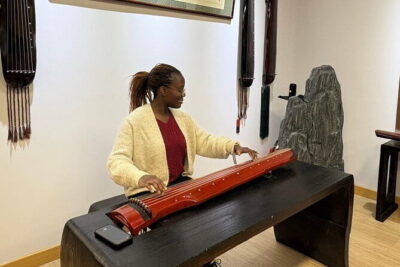
Beijing Culture Event: Tradition Music, Tea Ceremony, Calligraphy
Read our review →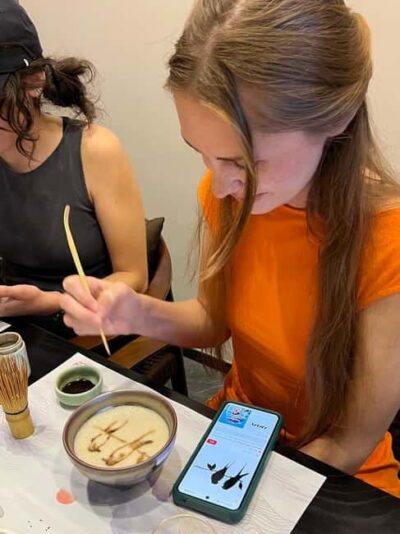
Browse the lists this tour appears in