

Review · TOKYO
Tokyo Morning Japanese Tea and Meditation Experience in Japan
Tea can be breakfast, lesson, and meditation. This one-hour experience in central Tokyo turns a single sencha into five different tea menus, including ice-brewed tea, edible leaves, and roasted leaves. You do the brewing and preparation yourself, which makes this more hands-on than a standard tea tasting.
I like the intimate size, with no more than five people, and the chance to learn about Japanese tea beyond matcha. I also like the morning schedule, especially the 7:30 a.m. start, when this quiet activity can give you a calm beginning before Tokyo gets noisy.
The main consideration is the short length. You will get a focused introduction rather than a full tea ceremony or a long lesson about every tea-producing area in Japan. At $39.25 per person, it is good value if you want active participation, but less appealing if you simply want someone to serve you tea.
Key points to know before booking
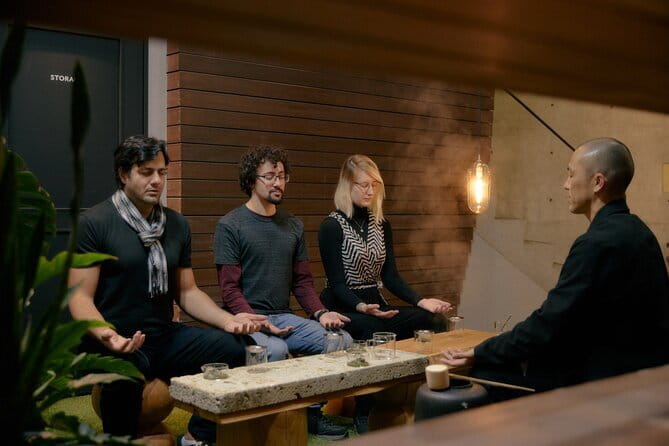
- Five preparations from one sencha: You use one single-origin tea from the Ryuso, or Dragon Claw, area of Shizuoka for several styles of eating and drinking.
- You prepare everything yourself: The instructor does not simply pour tea for you. You brew and handle the tea as part of the lesson.
- Two early start times: Choose 7:30 a.m. or 9:00 a.m., with the full activity lasting about one hour.
- Very small group: A maximum of five people keeps the session personal and gives you room to ask questions.
- English guidance and tea souvenir: The guide is available in English, and tea leaves are included to take home.
- Simple Tokyo meeting point: Meet at Shun Sudo WallArt, 3-chōme-55-18 Sendagaya, Shibuya, near public transportation.
Why this Tokyo tea session feels different
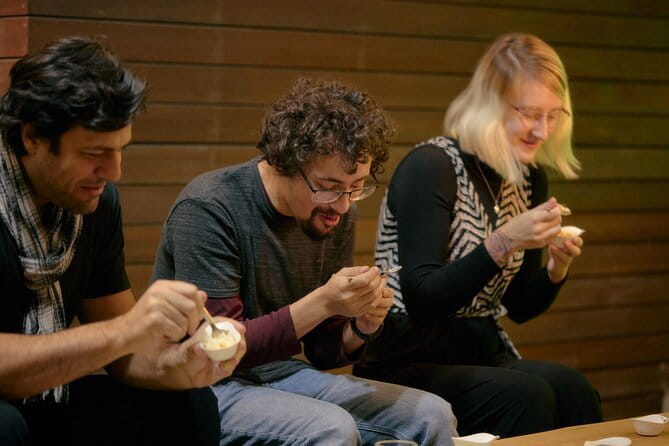
Matcha gets most of the attention in Japan, but this activity takes a different route. Its focus is sencha, the everyday green tea that many people know mainly as a drink brewed with hot water.
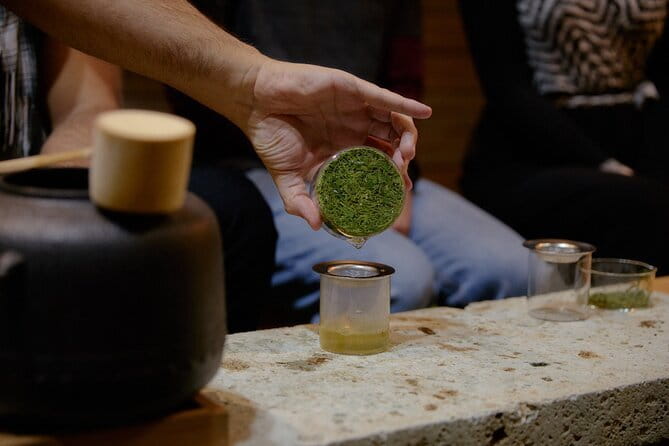
Here, that familiar idea gets expanded. You work with one tea and see how its taste changes through different methods. Ice water brings out a gentler style of brewing. Eating the leaves makes you notice their texture and flavor directly. Roasting them adds another sensory step.
That approach gives the session a clear purpose. You are not only sampling finished cups. You are learning how temperature, preparation, and handling affect what reaches your palate.
I especially like the fact that the instructor does not do all the work. In many short cultural activities, you watch a demonstration, take a photo, and leave with a few facts. This one asks you to take part. You brew the tea, prepare the food elements, and taste the results as you go.
The setting is in Tokyo, but the subject points well beyond the city. The tea comes from the Ryuso area of Shizuoka Prefecture, described as a rare tea-growing region. That gives the lesson a useful connection to farmers, picking methods, and the work behind a small amount of carefully made tea.
More Tea and Calligraphy Workshops in Japan
What happens during the one-hour session
The exact presentation may vary with the group and the instructor, but the structure is built around five menus made from one type of sencha. You can expect an introduction to the tea, instructions for each preparation, time to make your own tea, and tasting along the way.
The first important idea is the tea itself. This is not a selection of unrelated samples. The same single-origin leaves from Ryuso are used throughout the session. That lets you compare methods without wondering if a different tea is responsible for every change.
You may begin with a more familiar brewing method, then move into less expected uses. Brewing with ice water is one of the most distinctive parts. It shows that Japanese tea does not have to be linked to a steaming cup or a formal pot.
Eating the leaves is another useful lesson. Tea leaves are often treated as something that gives flavor to water and then gets discarded. This activity asks you to consider the leaves as food, too. You can pay attention to their texture and the way preparation changes their character.
Roasting the leaves adds a warm, aromatic element. It also makes the process feel a little like cooking rather than simply drinking. You are watching how the tea changes before tasting it, which brings the production process closer to your table.
The five menus are the heart of the session, but the activity also includes snacks. A tea souvenir is included, so you can continue experimenting after you leave. Since no detailed menu is provided in advance, I would treat the five preparations as a guided tasting lesson rather than expect a full breakfast.
A quiet start at 7:30 or 9:00
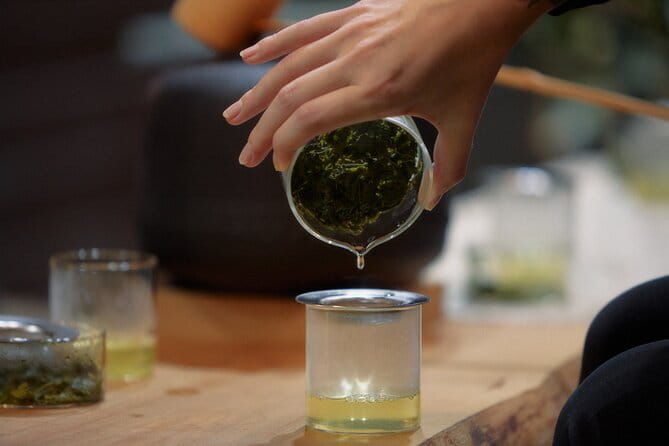
The two start times are one of the best practical features. A 7:30 a.m. booking gives you a peaceful cultural activity before a day of sightseeing. You may appreciate that early hour if you are trying to avoid filling every morning with crowded attractions.
The 9:00 a.m. option is easier for anyone who does not want to start the day at dawn. It still leaves plenty of time for other plans, since the session takes about an hour and ends back at the meeting point.
The organizers describe the experience as a morning meditation. That does not mean you should expect a separate, formal meditation class unless the guide explains otherwise. The meditative quality comes from slowing down, preparing the tea with care, and paying attention to smell, taste, texture, and temperature.
That can be a useful change of pace in Tokyo. You are still in a major city, but the activity asks you to focus on small physical details instead of rushing from one sight to another. I would choose it for the rhythm as much as for the tea.
The early timing does require planning. Your booking confirmation should show the meeting details, and you will need to reach Shun Sudo WallArt in Sendagaya on time. Private transportation is not included, though the meeting point is near public transportation.
The Shizuoka connection and the farmers behind the cup
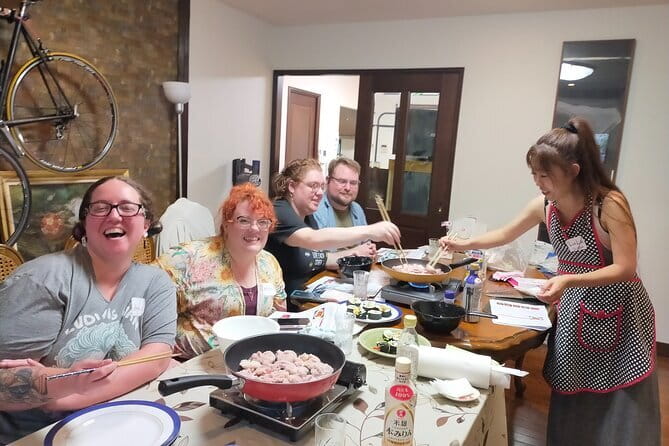
One of the strongest educational parts is the link to tea production. The tea comes from the Ryuso, or Dragon Claw, area of Shizuoka Prefecture, a region described as rare for tea growing.
The lesson can help you think about tea as an agricultural product, not just a café order. The farming methods, the picking of leaves, and the care taken with a single-origin tea all matter before brewing begins.
An educational tea session is particularly useful if you have already seen Japanese tea on menus but never understood the differences. You do not need specialist knowledge. The format gives you a direct way to compare preparations and connect those differences to the leaves themselves.
The praise for the educational side is well deserved. Learning about tea farmers and the art of picking leaves gives the tasting more weight. You leave with more than a pleasant flavor memory. You have a better sense of the work that makes the drink possible.
Still, keep the one-hour limit in mind. The session can introduce the subject, but it cannot cover every part of Japanese tea culture, farming, history, and ceremony. If you want a long lecture or a formal presentation, this may feel brief.
More Tea and Calligraphy Workshops in Tokyo:
- Japan’s Customs of Ikebana Art, Tea Ceremony & Kimono Welcome
★ 5.0 · 2 reviews - Kyoto: Tea Ceremony Meditation – Make Matcha with Tea Master
★ 4.8 · 406 reviews - Osaka: Tea Ceremony, Calligraphy, and Kimono Experience
★ 4.9 · 130 reviews - An Amazing set of Cultural experience: Kimono, Tea Ceremony and Calligraphy
★ 5.0 · 69 reviews
Why the small group matters
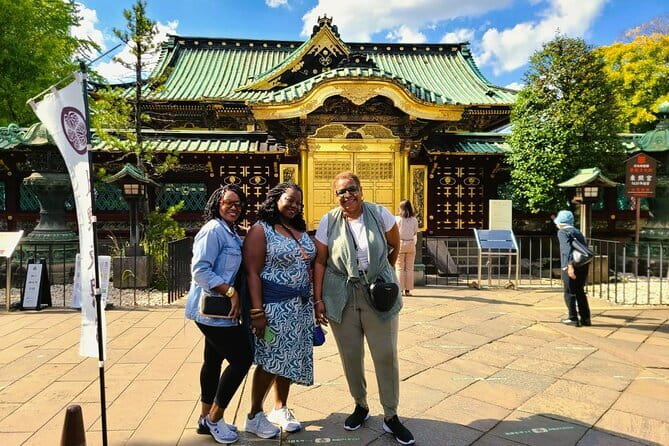
The maximum group size is five people. That is a major advantage for a practical activity where each person must brew, prepare, taste, and ask questions.
A large class could make this kind of session awkward. You might spend too much time watching others or waiting for instructions. With only a few people, you should have a better chance to follow each step and receive help in English when needed.
The small size also suits the quiet tone. This is not designed as a loud group outing. The format encourages attention and conversation, which fits the idea of a morning meditation.
English guidance is available, making the session easier to follow if you do not speak Japanese. You should still expect the experience to depend on clear demonstrations and your own participation. The instructor serves as a guide, but you are the person doing the brewing and preparation.
Service animals are allowed, and the meeting point is near public transportation. Those are useful practical details, though the activity information does not provide a full accessibility description. If you have specific mobility or seating needs, contact the provider before booking.
Is $39.25 a fair price?

At $39.25 per person, this is not the cheapest way to drink green tea in Tokyo. A café can give you a cup for much less, and a regular tea house may offer a more traditional setting.
The comparison is not quite fair, though. You are paying for instruction, ingredients, five different preparations, snacks, a small group, English guidance, and tea leaves to take home. You are also paying for the chance to handle the tea yourself rather than simply receive a finished drink.
I think the price works best for people who enjoy learning through food and drink. If you ask questions, compare the five preparations, and pay attention to how the leaves change, the hour has solid value.
The value is weaker if you only want a peaceful cup of tea with no activity. This is a workshop, not a passive tasting. The hands-on format is the reason to book it.
Meeting point and planning advice
The experience begins and ends at Shun Sudo WallArt, 3-chōme-55-18 Sendagaya, Shibuya, Tokyo 151-0051. Since private transportation is not included, plan your route before the morning of the activity.
Arrive with enough time to find the meeting point. A 7:30 a.m. start leaves little room for getting lost, checking directions, or dealing with a delayed train. The 9:00 a.m. session gives you a more forgiving start.
The activity lasts about one hour, so it is easy to fit into a larger day in Tokyo. You could schedule another attraction afterward, but leave yourself enough time for the trip from Sendagaya to your next stop.
A mobile ticket is provided, and confirmation is received at booking. Free cancellation is available if you cancel at least 24 hours before the local start time. Changes or cancellations made inside that window are not accepted for a refund.
Who should book this tea experience?
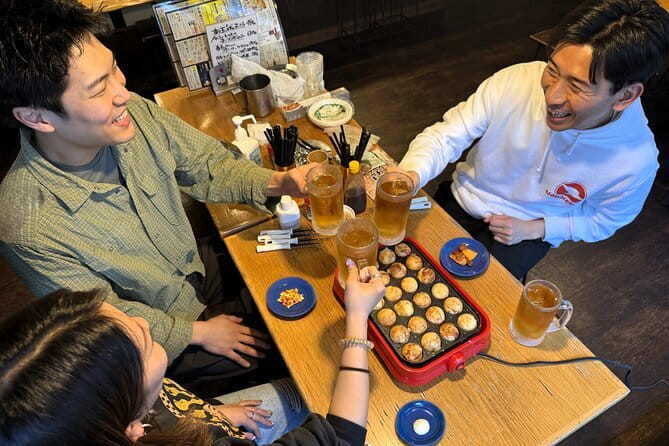
I would recommend it to you if you want a small, active introduction to Japanese tea and prefer learning by doing. It is a good match for curious food lovers, first-time visitors seeking a calm cultural activity, and anyone who wants to understand sencha beyond the usual hot-water preparation.
It also suits repeat visitors who have already seen the major Tokyo sights. The focus on one Shizuoka tea gives you a more specific subject than a broad city tour.
Families may like the hands-on format, but the short description does not provide an age range or child pricing. If you are booking with young children, confirm that the pace and preparation work for your group.
I would skip it if your main goal is a formal tea ceremony, an elaborate kimono setting, or a long historical lecture. It is more practical and experimental. You make the tea yourself, taste it in several forms, and learn how one set of leaves can do more than you expected.
Should you book it?
Book this experience if you want a quiet, practical morning and a closer look at sencha, especially if matcha is not the only Japanese tea you want to understand. The combination of five preparations, a five-person limit, English guidance, and a take-home tea souvenir makes $39.25 reasonable.
Choose the 7:30 a.m. slot if you value stillness and have an early start in you. Choose 9:00 a.m. if you want the same lesson without making the morning feel rushed. Just remember that this is a compact workshop, not a full tea ceremony. For the right visitor, that is precisely its strength.
FAQ
How long does the Japanese tea experience last?
The experience lasts approximately one hour.
What time does the activity start?
There are two start times each day, 7:30 a.m. and 9:00 a.m.
Where does the experience begin and end?
It begins at Shun Sudo WallArt, 3-chōme-55-18 Sendagaya, Shibuya, Tokyo 151-0051, Japan, and ends back at the same meeting point.
How many people can join the activity?
The experience has a maximum of five participants.
Is the experience available in English?
Yes. An English-speaking guide is available.
What is included in the price?
The experience includes the approximately one-hour Japanese tea activity, snacks, and a souvenir of tea leaves. Private transportation is not included.
More Morning Experiences in Tokyo
- Great Ocean Road Tour Plus Koalas, Forest Walk and Morning Tea
★ 4.5 · 1,068 reviews - Great Ocean Road, 12 Apostles, Rainforest & Morning Tea-Melbourne
★ 5.0 · 568 reviews - Great Ocean Road 12 Apostles & Rainforest Walk with Morning Tea
★ 4.5 · 549 reviews - Brisbane: Morning Sightseeing Cruise: 10:30am-12pm (90min)
★ 4.5 · 521 reviews
Just added around Tokyo
- Yokohama : Tea Ceremony with Sweets and Souvenir★ 5.0 · 5 reviews
- Walking Tour: Yanaka,Nezu& Sendagi: Tea Ceremony & Old Tokyo★ 5.0 · 3 reviews
- Private Kimono and tea ceremony at local home near Tokyo Disney★ 5.0 · 6 reviews
- Private Mochi・Matcha sweets Making Class Near Shibuya Area★ 5.0 · 22 reviews
- Tokyo Sweets Tour: Hidden Gems & Matcha at an Old Tea House★ 5.0 · 6 reviews
- Kimono and Tea Ceremony in Asakusa Private Food Tour With Guide★ 5.0 · 4 reviews
- 2 Hours Mochi &Nerikiri Making & Matcha Class in Bunkyo★ 5.0 · 21 reviews
- Tokyo Tea Ceremony Class at a Traditional Tea Room★ 5.0 · 2 reviews
Tea and Calligraphy Workshops in Japan, compared.
Tea Ceremony Meditation – Make Matcha with Tea Master
Read our review →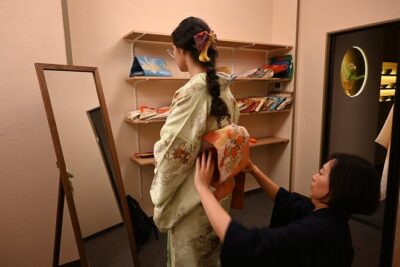
Tea Ceremony, Calligraphy, and Kimono Experience
Read our review →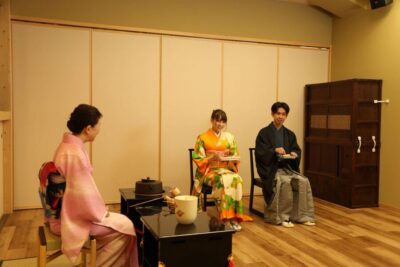
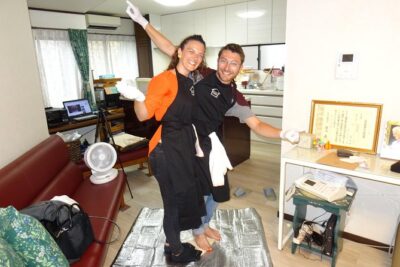
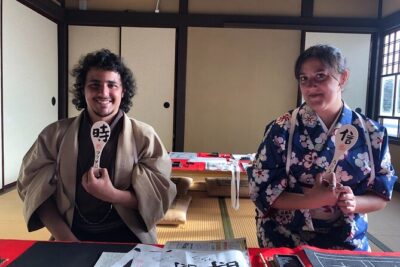
An Amazing set of Cultural experience: Kimono, Tea Ceremony and Calligraphy
Read our review →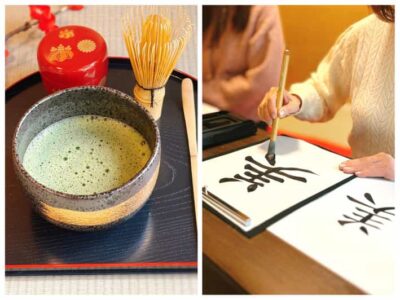
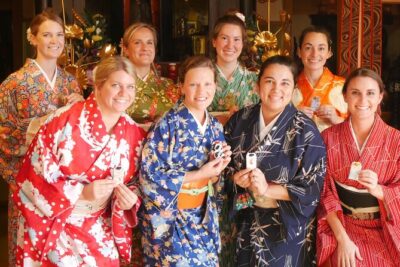
Cultural Activities :Kimono, tea ceremony, Calligraphy and Amulet
Read our review →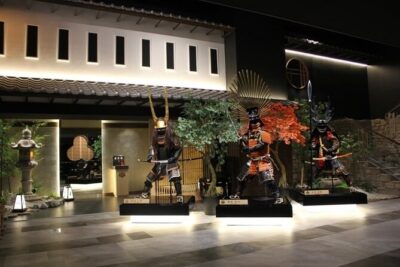
Samurai dress-up and shows, plus Tea Ceremony & Calligraphy
Read our review →Browse the lists this tour appears in