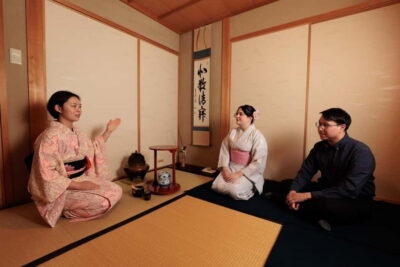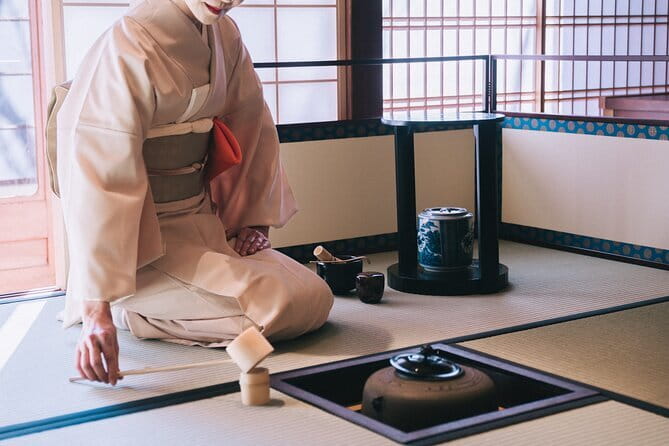
Review · KYOTO
Tea Ceremony with Kimono and Professional Photoshoot in Kyoto
Kyoto makes tea feel like a ceremony. This 1-hour-45-minute experience combines a traditional house, kimono dressing, an English-speaking tea master, hands-on matcha making, Japanese sweets, and a professional photoshoot. I especially like the chance to choose a kimono and make your own tea, rather than only watching a formal performance. The three digital photos are another useful keepsake. The main drawback is that the ceremony involves kneeling on the floor, which can be uncomfortable for some people.
The experience costs $130.78 per person and suits visitors who want a polished cultural activity without spending half a day on it. The setting and presentation may feel more like a friendly cultural introduction than a private, deeply traditional tea gathering, so your expectations matter.
Key points at a glance
- Choose your own kimono: You are escorted to the dressing room and select from a variety of traditional garments before the ceremony begins.
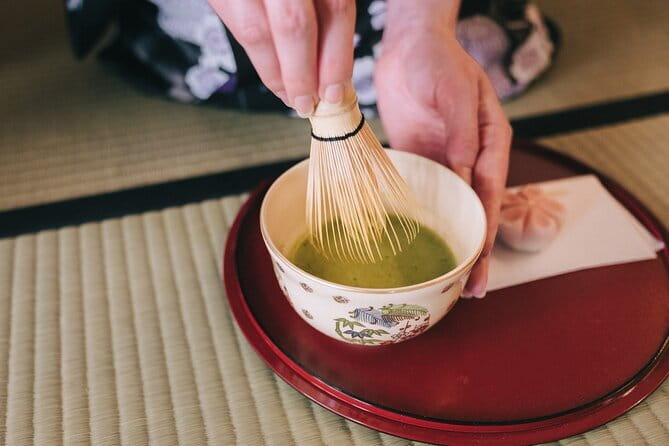
- Make matcha yourself: After watching the tea master, you prepare your own green tea and drink it with Japanese sweets.
- English instruction: The tea master explains the ritual and its customs in English, making the ceremony easier to follow.
- Professional photos included: A photographer takes pictures during the activity, and three digital images are sent by email.
- Small group size: The activity accepts a maximum of 10 people, keeping the session relatively limited in size.
- Convenient central meeting point: You meet at Nishiki Orizuruya in Nakagyo Ward and return there at the end.
Choosing a kimono at Nishiki Orizuruya
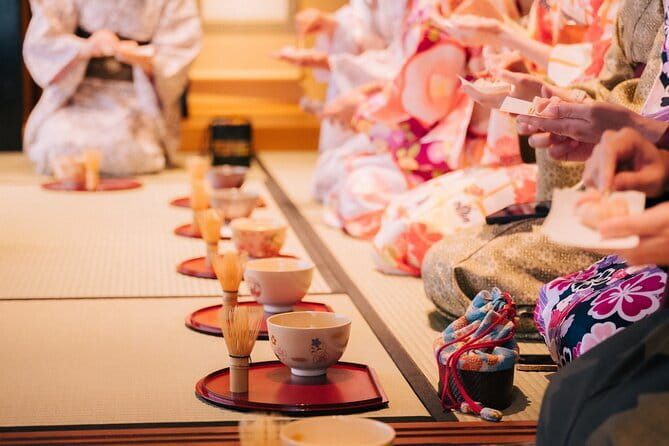
Your visit begins at Nishiki Orizuruya, at 452 Jūmonjichō in Kyoto’s Nakagyo Ward. You should arrive 10 minutes before the start time and check in at the reception desk. The meeting point is near public transportation, but hotel pickup and transportation to the venue are not included, so plan your route before the day.
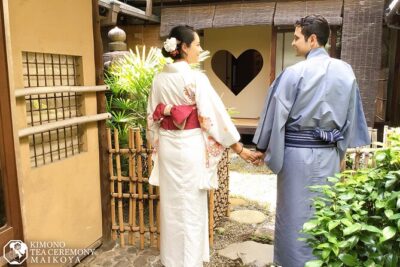
After check-in, you are escorted to the dressing room. You can choose your preferred kimono from the available selection, which adds a personal touch to the afternoon. This is one of the strongest parts of the activity for many people because the clothing is not merely a costume handed to you at random. You get a say in what you wear.
The organizers need each participant’s height and gender in advance so they can prepare an appropriate kimono. Give accurate details when booking. The dressing process is part of the activity, so allow yourself enough time to arrive calmly rather than racing through Kyoto’s streets.
Some participants especially enjoy the styling and hair arrangement, making the preparation feel like a proper occasion. You should think of this as a cultural photo session as much as a tea lesson. If your main goal is an intensive study of tea traditions, the kimono and photography elements may feel like a distraction. If you want a memorable way to dress for a classic Kyoto activity, they add real value.
More Kimono and Tea Ceremonies in Kyoto
- Kimono Tea Ceremony at Kyoto Maikoya, NISHIKI
★ 5.0 · 911 reviews - Kyoto: Kimono Tea Ceremony at Orizuruya Gion
★ 4.9 · 618 reviews - KYOTO Tea Ceremony with kimono near by Imamiya Jinjya Shrine
★ 5.0 · 343 reviews
Watching the tea ceremony demonstration
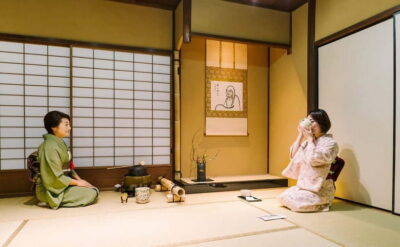
Once dressed, you watch a tea ceremony demonstration by an English-speaking tea master. The ceremony is explained as it happens, giving you a clear sense of the gestures, order, and etiquette rather than leaving you to guess why each movement matters.
This guided approach is a major strength. The tea master has been praised for explaining the ritual clearly and for creating a pleasant atmosphere. You do not need prior knowledge of Japanese tea customs. The instruction is aimed at first-time participants, so you can focus on the details without worrying about making a serious mistake.
The tea ceremony is formal, but this activity is presented in an accessible way. You see how the tea is prepared and served, then get the chance to try it yourself. That makes the event more engaging than a short performance where you simply sit and watch.
You should keep your expectations measured. This is a compact cultural experience, not a full day of study with a tea school. One critical assessment found the ceremony itself lovely but felt the overall package was closer to dressing up and trying a traditional activity than a highly private or deeply formal tea gathering. That is a fair way to view it. You receive an approachable introduction in a traditional house, not an exhaustive lesson in every school of Japanese tea.
Making matcha with Japanese sweets
After the demonstration, you learn how to make your own matcha. This hands-on step is the heart of the activity because you move from spectator to participant.
The process gives you a better feel for the care behind the drink. You prepare the tea, then enjoy it with Japanese sweets. The sweets provide the customary contrast to matcha’s strong, grassy taste and make the tasting easier for people who are new to powdered green tea.
You should tell the operator about any food allergies in advance. Extra food and drink are not included beyond what is part of the stated activity, so do not expect a larger tasting menu or a meal.
Making your own tea also helps you understand why the ceremony is about more than simply drinking matcha. The method, sequence, and attention to small gestures are part of the experience. Still, the session is fairly short, so do not expect a long workshop on tea production, regional varieties, or advanced preparation.
A photo session in traditional dress
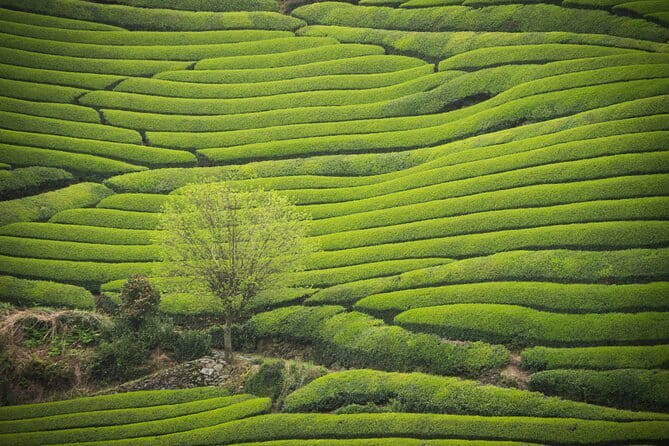
The professional photographer takes pictures during the experience. This is not a separate studio appointment listed as an additional activity. Instead, photography is worked into the tea ceremony, allowing you to leave with images of the kimono, preparation, and tea-making portions.
Three photos are sent digitally by email as your souvenir. This is useful if you want a simple memento without carrying printed photographs through Japan. It also means you should make sure you can receive email from the provider. One practical complaint concerned photo delivery, so check your inbox and spam folder after the session if the images do not appear promptly.
The photographs add value to the $130.78 price, especially if you would otherwise pay separately for kimono rental and a professional portrait session. They also make this activity appealing for couples, friends, and families with older children, although children under five are not allowed.
The photos may be one of the reasons to book this activity, but do not mistake three digital images for a full portrait package. If you want dozens of edited photographs or a long private shoot, this is probably not the right choice. Here, the camera records the ceremony as part of the memory rather than taking over the entire visit.
More Tea Ceremonies in Kyoto
- Kyoto: Tea Ceremony in a Traditional Tea House in Kiyomizu
★ 4.9 · 3,519 reviews - Kyoto: Tea Ceremony Ju-An at Jotokuji Temple
★ 4.9 · 3,207 reviews - Kyoto: 45-Minute Tea Ceremony Lesson Experience
★ 4.3 · 2,378 reviews - Kyoto: Table-Style Tea Ceremony at a Kyo-Machiya
★ 4.9 · 1,211 reviews
Seating, comfort, and the pace of the visit
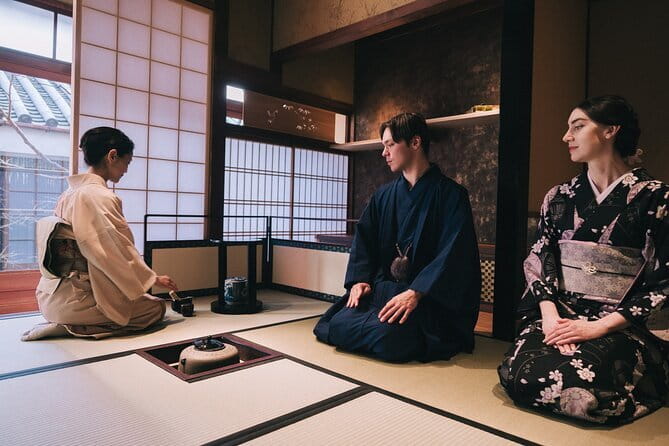
The activity lasts about 1 hour and 45 minutes, with the tea ceremony and photoshoot described as roughly 90 minutes. That is a useful length for a busy Kyoto day. You can fit it between sightseeing stops without giving up an entire afternoon.
The main physical issue is the seating. Traditional tea settings often involve kneeling on the floor, and this activity may ask you to kneel rather than sit cross-legged. That position can be difficult for older adults or anyone with knee, hip, or ankle problems.
Two chairs and tables are available, which may help, but you should still mention any concern before the ceremony begins. Do not assume the activity is fully chair-based. If kneeling is painful, ask about the seating arrangement when you arrive.
The compact format is both a strength and a limitation. You get the main elements, kimono, demonstration, matcha preparation, sweets, and photographs, without a long lecture. But the short schedule leaves little room for a slow, highly personal ceremony or extended questions.
Is $130.78 good value?
At $130.78 per person, this is not the cheapest way to drink matcha in Kyoto. You are paying for several services in one visit: kimono selection and dressing, an English-language explanation, the demonstration, hands-on tea preparation, Japanese sweets, professional photography, and three digital photos.
I think the price is reasonable if you value the combination. Booking a separate kimono experience, tea lesson, and photo session could cost more and require extra planning. The small maximum group of 10 also gives the session a more controlled feel than a large cultural show.
The price is harder to justify if you only want a cup of matcha or a quick look at a tea ceremony. Kyoto has simpler tea tastings, and this activity includes dressing and photography whether or not those features are your priority.
The strongest value comes from choosing the experience for its full package. You are not just buying tea. You are buying a carefully arranged cultural outing with a visible souvenir and a chance to wear traditional clothing in a formal setting.
The experience has a 4.8 rating from 44 reviews, with 95 percent recommending it. That points to a consistently positive visit, while the lower ratings offer useful warnings about the setting, the kneeling, and the photo delivery. I would treat it as a polished introduction rather than an expert-level tea ceremony.
Who should book this Kyoto activity?
I would recommend it to first-time visitors who want an easy introduction to Japanese tea customs. The English explanation removes much of the uncertainty, and the hands-on matcha step gives you something to do instead of simply watching.
It also suits people who want photographs in traditional clothing. Couples and friends can enjoy the shared preparation, while solo visitors can still take home professional images from the activity.
This is a good choice for:
- Visitors with limited time in Kyoto
- People curious about matcha but new to tea ceremony etiquette
- Anyone who wants a kimono and photography experience in one booking
- Adults and families with children aged five and older
- Visitors who appreciate a structured, English-speaking activity
I would be cautious if you have difficulty kneeling, dislike staged photographs, or want a very private and formal tea-school experience. You may also find the package less satisfying if your only interest is tasting tea.
Booking and arrival advice
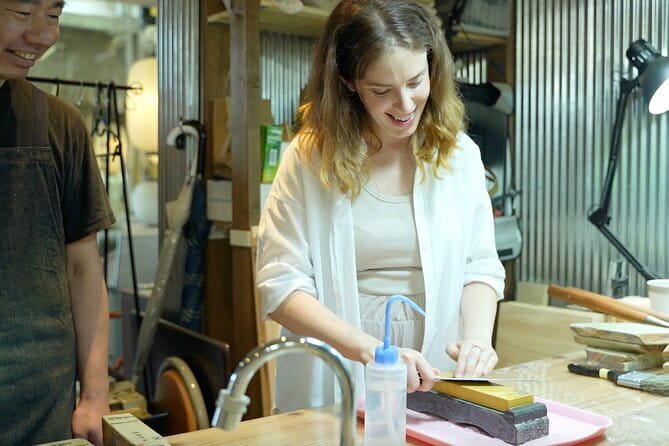
Arrive 10 minutes early at Nishiki Orizuruya and check in at reception. A late arrival of more than 30 minutes means you cannot join, and no refund is available in that case. Kyoto’s streets and public transport can be busy, so leave extra time.
Provide the requested height and gender details for every participant in advance. Also share food allergies before arrival. The activity ends back at the meeting point, and no hotel transfer or transportation to other attractions is included.
Free cancellation is available if you cancel at least 24 hours before the start time. Cancellations or changes within 24 hours are not refunded or accepted, so check your plans before the deadline.
Should you book the tea ceremony and photoshoot?
Book it if you want kimono, matcha, instruction, and photos in one tidy Kyoto activity. The English-speaking tea master, the chance to prepare your own drink, and the three digital images give the visit more substance than a quick ceremonial demonstration.
Skip it if you need a wheelchair-friendly or chair-based setting, want a long private tea lesson, or have no interest in dressing up. For most first-time visitors, the activity offers a pleasant cultural introduction and a practical souvenir, as long as you understand that it is a short, accessible presentation rather than an advanced tea ceremony.
FAQ
Where does the tea ceremony take place?
The activity begins and ends at Nishiki Orizuruya, 452 Jūmonjichō, Nakagyo Ward, Kyoto, 604-8121, Japan.
How long does the experience last?
The experience lasts approximately 1 hour and 45 minutes. The tea ceremony and photoshoot are described as taking about 90 minutes.
What happens during the experience?
You choose a kimono, watch an English-speaking tea master demonstrate the ceremony, learn to make matcha, enjoy Japanese sweets, and have photographs taken by a professional photographer.
Are photos included?
Yes. Three photos are sent to you digitally by email as a souvenir.
Do I need to provide information before booking?
Yes. The operator needs the height and gender of every participant in advance to prepare the kimonos.
Are children allowed?
Children under five years old are not allowed to join the activity.
Is transportation included?
No. Hotel pickup, hotel drop-off, transportation to and from attractions, and other personal expenses are not included.
What happens if I arrive late?
If you arrive more than 30 minutes after the start time, you will not be allowed to join and no refund will be provided.
Can I cancel for a full refund?
Yes, if you cancel at least 24 hours before the experience starts. Cancellations or changes made within 24 hours are not refunded or accepted.
More Photo Sessions in Kyoto
- Kyoto: Tea Ceremony with Kimono and Photoshoot
★ 4.9 · 90 reviews - Kyoto Tea Ceremony and Samurai Photo Session
★ 5.0 · 70 reviews - Tokyo:Genuine Tea Ceremony, Kimono Dressing, and Photography
★ 5.0 · 33 reviews - Private Tour in Kamakura: Matcha Tea Tasting & Photo Session
★ 5.0 · 6 reviews
Just added around Kyoto
- Uji Walking Tour – Byodo-in temple and Tea Ceremony from Kyoto★ 3.5 · 3 reviews
- Tea ceremony at Kyoto’s Zen Temple Teahouse★ 5.0 · 2 reviews
- Kyoto: Authentic Tea Ceremony in a Small Group★ 5.0 · 7 reviews
- Tea Ceremony in 150 Years Old Townhouse with Tables and Chairs★ 5.0 · 22 reviews
- Silent Beauty of Kyoto Zen Walk and Tea Experience★ 5.0 · 2 reviews
- Tea Ceremony Experience in Traditional Kyoto Townhouse★ 5.0 · 19 reviews
- Traditional Tea Ceremony in Kyoto★ 4.5 · 3 reviews
- Sencha-do the Japanese Tea Ceremony Workshop in Kyoto★ 5.0 · 21 reviews
Tea Ceremonies in Kyoto, compared.
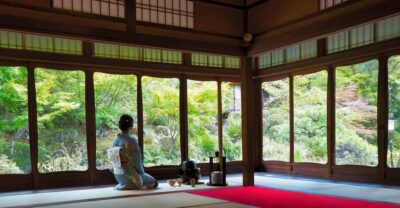
Tea Ceremony in a Traditional Tea House in Kiyomizu
Read our review →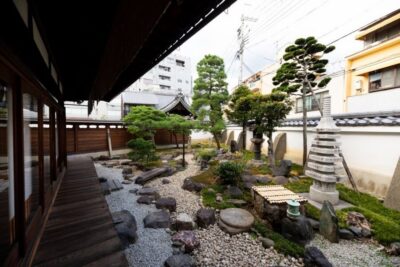
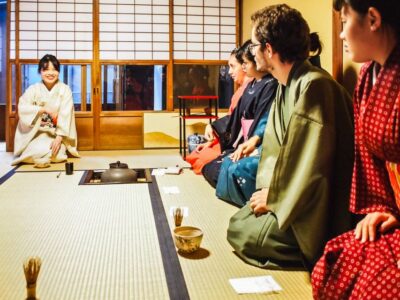
Tea Ceremony in 100-year-old Kyo-Machiya Townhouse
Read our review →