
Review · HIROSHIMA
Kimono and Tea Ceremony in Miyajima
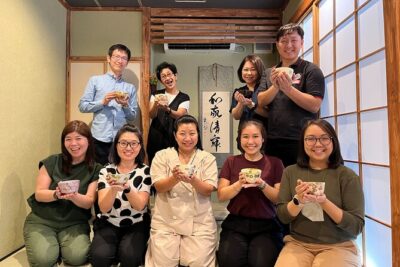
Miyajima offers more than shrines and sea views. This one-hour experience at Tokuju-ji Temple gives you a calm, hands-on introduction to Japanese tea culture, starting with a choice from more than 100 kimono and ending with your own bowl of matcha. I especially like the quiet temple setting and the kind, patient help with dressing. The small-group format also lets you watch the tea ceremony closely rather than peering over a crowd.
The main point to consider is the short running time. Dressing, photos, instruction, demonstration, and tea all fit into about an hour, so the session feels focused rather than leisurely. The tea is served at tables rather than on the floor, which some visitors may find less traditional, though the staff explain that table-style tea practice has been used in Japan for more than a century.
Key points at a glance
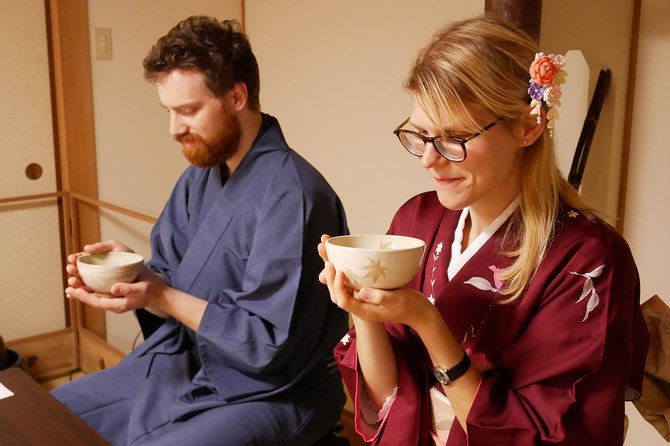
- Choose from more than 100 kimono: Staff help you select and carefully fit your outfit, with options for both women and men.
- Meet near Miyajima’s ferry port: The activity begins at Tokuju-ji Temple, at 741-1 Miyajimachō.
- Make your own matcha: You watch a tea master first, then prepare and taste your own tea.
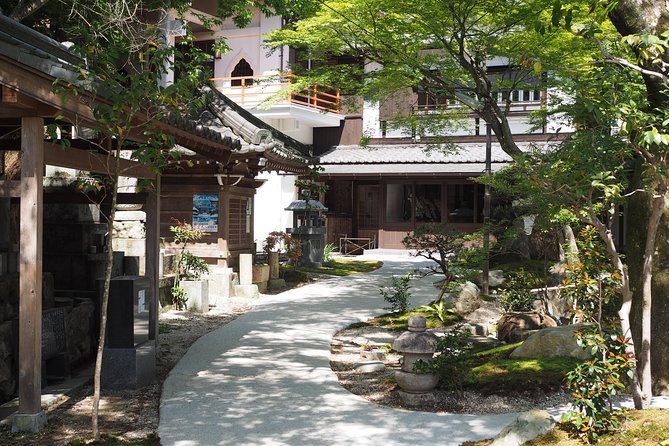
- Enjoy a quiet garden setting: The temple grounds provide a peaceful break from Miyajima’s busy commercial streets.
- Get photos during the lesson: Staff take pictures, which can be received after answering a questionnaire.
- Good for families: Children from age six can join, and several families praise the staff’s patience with children.
Arriving at Tokuju-ji Temple near the ferry port
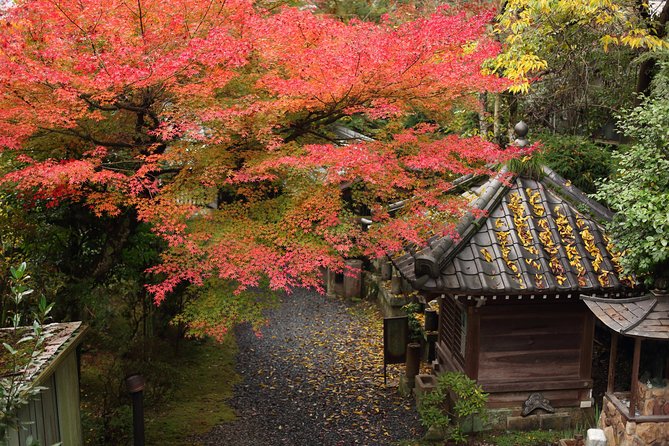
The meeting point is 徳寿寺, also written as Tokuju-ji Temple, a Sōtō Zen temple at 741-1 Miyajimachō in Hatsukaichi, Hiroshima. It is near the ferry port and public transportation, making it a practical choice if you are visiting Miyajima as a day trip from Hiroshima.
The setting matters. The activity takes place away from the island’s main business streets, where souvenir shops and snack stalls can make Miyajima feel crowded. Here, the temple grounds create a quieter start. You are not simply being dressed in a rented costume in a busy storefront. The garden and temple surroundings give the tea lesson a more fitting sense of place.
Allow yourself enough time to find the meeting point. The experience ends where it begins, so you do not need to arrange a second pickup point. Since the activity lasts only about an hour, arriving late could cut into the dressing and tea instruction.
More Tea Ceremonies in Japan:
- Kyoto: Tea Ceremony in a Traditional Tea House in Kiyomizu
★ 4.9 · 3,519 reviews - Kyoto: Tea Ceremony Ju-An at Jotokuji Temple
★ 4.9 · 3,207 reviews - Kyoto: 45-Minute Tea Ceremony Lesson Experience
★ 4.3 · 2,378 reviews
Choosing a kimono from more than 100 options
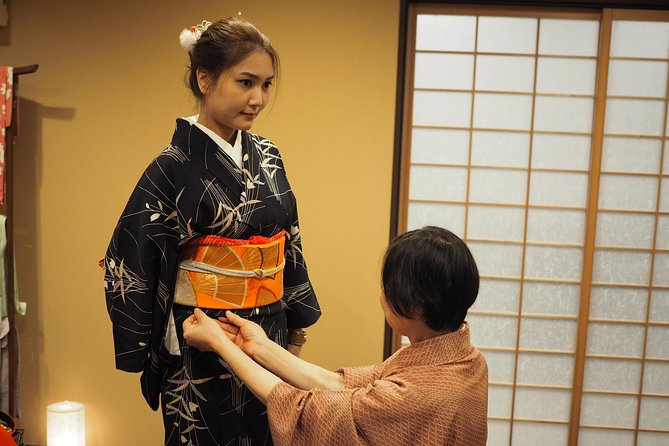
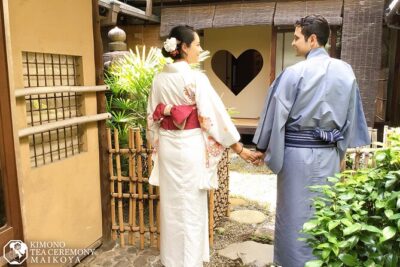
The first part of the experience is dressing. You can choose a favorite kimono from a collection of more than 100, and the staff provide what you need to complete the outfit. This is one of the strongest parts of the activity because you are not expected to know how a kimono should fit or be tied.
Staff help you step by step, adjusting the layers and making sure the final outfit looks right. Several visitors praise the care taken during this process, and one particularly useful detail is that the selection includes both male and female kimonos. The clothing is described as good quality, not just a quick costume layer designed for a photograph.
Sizing should not stop you from considering the experience. A tall visitor who wears a size 18 said the staff were able to accommodate her. That does not guarantee every size or fit, but it suggests that the team has experience dressing people with different body types. If you have specific concerns, you should ask before booking rather than assume.
The dressing itself takes time, so the one-hour schedule is fairly tight. You will have enough time to be dressed, take some photographs, and join the tea lesson, but this is not a full-day kimono outing with hours to wander around Miyajima. Think of it as a compact cultural activity that fits neatly between sightseeing stops.
Watching the tea master before making matcha
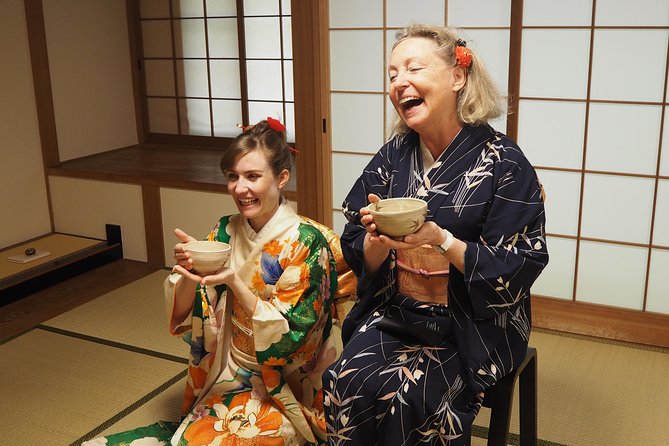
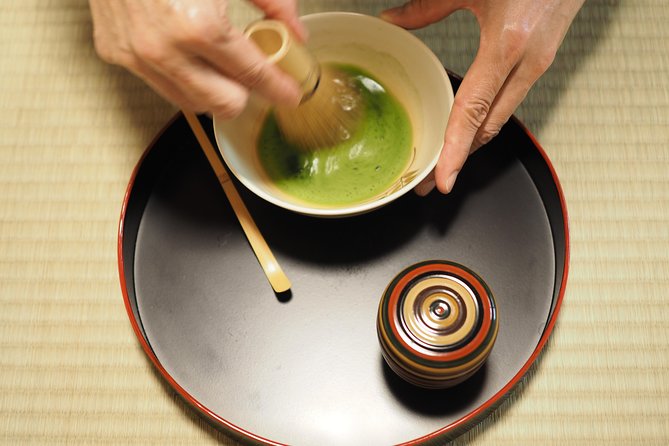
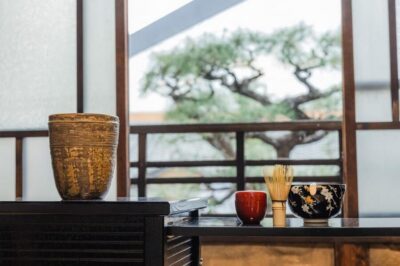
Once you are dressed, you watch a tea ceremony conducted by a tea master. The staff explain how to drink matcha and introduce the proper manners used during the ceremony. The lesson also touches on the four principles of tea-making in Buddhism, giving the ritual a little more meaning than simply whisking a green drink.
The approach is friendly and suitable for first-timers. You do not need prior knowledge of tea ceremony, and the staff guide you through the movements in a clear order. The emphasis is on learning and taking part, not on getting every gesture perfect.
The ceremony is served with a sweet. Chocolate is also offered during the experience, and the Miyajima chocolate receives special praise. It is a small detail, but it helps balance the strong, grassy flavor of matcha, especially if you are trying it for the first time.
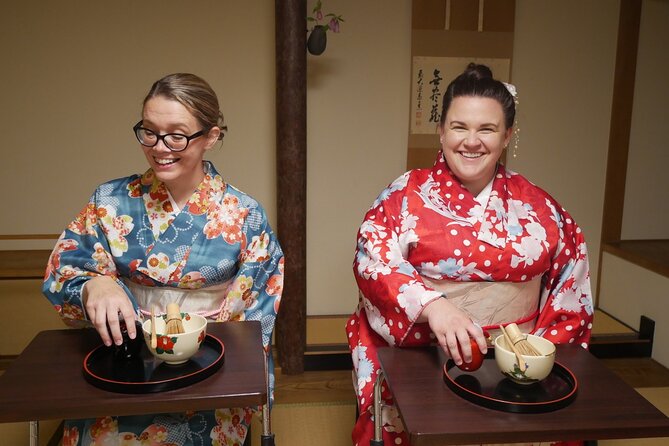
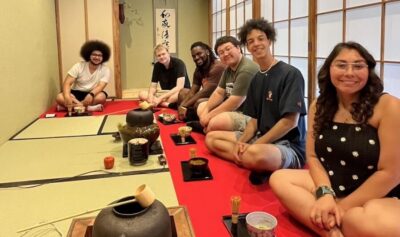
One useful point is the seating. You sit at tables rather than kneeling on tatami. If you imagined a formal ceremony entirely on the floor, this may feel less traditional at first. Yet the staff explain that table-style tea practice has been used in Japan for more than 100 years, and it is also much easier for many people, including children and anyone unused to sitting on the floor.
Making and tasting your own matcha
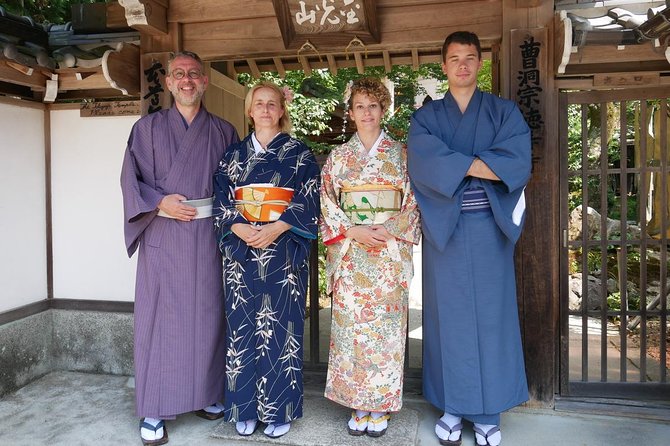
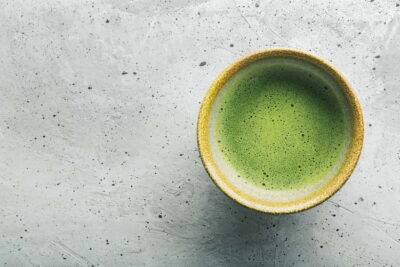
The hands-on part follows the demonstration. You learn how to make matcha yourself, then taste the tea you prepared. This is more useful than simply watching a performance because you leave knowing the basic process well enough to recreate it for friends at home.
The lesson is guided, so you are not left to guess how much effort or motion to use. The staff answer questions and explain the meaning behind the actions. English support is available, and several people specifically praise the English-speaking assistance.
For many people, this will be the most memorable part of the hour. You have the chance to take part in a ritual that can otherwise seem formal or difficult to enter. You learn how to hold the bowl, how to drink the matcha, and how the ceremony’s quiet pace differs from an ordinary cup of tea.
Do not expect a long tea-school course. The activity introduces the basics in a short session. If you want detailed training in a particular tea school or a lengthy meditation-style ceremony, this may feel brief. For a first look at matcha and Japanese hospitality, the format is well judged.
More Kimono and Tea Ceremonies in Japan:
- Kimono Tea Ceremony at Kyoto Maikoya, NISHIKI
★ 5.0 · 911 reviews - Kimono Tea Ceremony at Tokyo, Asakusa Maikoya
★ 5.0 · 638 reviews - Kyoto: Kimono Tea Ceremony at Orizuruya Gion
★ 4.9 · 618 reviews - KYOTO Tea Ceremony with kimono near by Imamiya Jinjya Shrine
★ 5.0 · 343 reviews
Photos in the temple garden
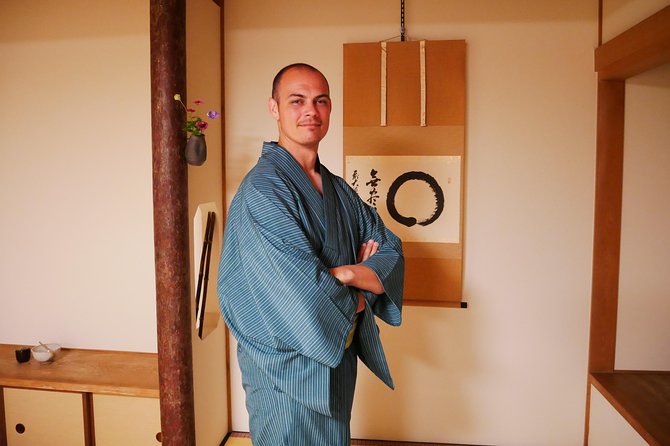
Staff take pictures during the dressing and tea lesson. You can receive the photos by answering a questionnaire, which gives you a useful record of the experience without having to arrange a photographer yourself.
The temple garden is a major part of the photo appeal. You have an opportunity to take pictures in the grounds after the ceremony, and the quieter setting makes the images feel more connected to Miyajima than a quick snapshot inside a shop. The kimono, garden, temple, and tea equipment provide plenty of visual variety.
You can also take your own pictures. Staff are described as helpful with photography, including recording the ceremony for someone attending alone. If you are visiting without companions, this detail makes the activity more practical.
The weather matters. The experience requires good weather, and poor conditions can lead to a different date or a full refund. Since the garden and outdoor photographs are important parts of the experience, check the forecast before building a tightly timed Miyajima day around it.
Why the small-group format improves the lesson
The experience is designed for a small group. The description refers to an intimate group of six, while the stated maximum is 10 people. In practice, you should expect a limited-size session rather than a large tour bus activity.
That size makes a real difference during the tea demonstration. You can see the tea master’s movements, ask questions, and receive help with your own bowl. The dressing also feels more personal when staff can give attention to each person.
The group size is especially helpful for families. The minimum age is six, and families with several children praise the staff for being patient and welcoming. Children who enjoy crafts, costumes, or trying new foods may get a lot from the session, though matcha’s bitter taste will not suit every child.
Couples and solo visitors can also fit comfortably into the setting. Couples get the pleasure of seeing each other dressed in kimono, while solo visitors can rely on staff for help with photos. A group of friends can make the activity social without turning it into a noisy event.
What the $85.89 price includes in practical terms
At $85.89 per person, this is not the cheapest short activity on Miyajima. The value comes from several elements being combined: kimono use, professional dressing help, a tea master demonstration, your own matcha-making lesson, sweets and chocolate, staff photography, and the temple setting.
You also avoid buying a kimono yourself. A rental alone would not necessarily include dressing assistance, a cultural explanation, or a tea lesson. Here, the clothing is part of a complete one-hour experience, which makes the price easier to justify if you want a structured introduction rather than a quick costume photograph.
The value is strongest for visitors who care about cultural context. If you only want to wear a kimono for a few pictures, a simple rental may cost less and give you more time to walk around. If you want to understand tea manners and prepare matcha yourself, this activity offers more substance.
The short duration also helps with planning. You can fit it into a day that includes the ferry, temple visits, food stops, and the island’s other sights. The tradeoff is that the schedule leaves little room for delays, extended photography, or a long question-and-answer session.
How this compares with a busy Kyoto costume activity
Miyajima is a strong place for this kind of experience because the setting is smaller and quieter than a major city center. The temple location gives the activity a calmer tone, and the limited group size avoids the feel of a large production.
That does not mean the experience is completely private. Other people may share the session, and the maximum group size is 10. Still, the setup offers more personal attention than a large city activity where many participants are dressed and photographed at once.
The staff’s manner is one of the most praised features. They are described as polite, welcoming, gentle, and patient. They help with the clothing, explain each stage, answer questions, and assist with photographs. That level of care is important because wearing a kimono can feel awkward if nobody explains what is happening.
Planning advice for your Miyajima day
Book this early enough to protect the time slot you want, especially if you are visiting during a busy period. The experience has been booked several times in a day, and the limited capacity can matter more than the one-hour duration.
Keep your plans before and after it flexible. The activity begins and ends at Tokuju-ji Temple, but you will want time for the meeting point, dressing, photographs, and the walk back toward the ferry area. Do not schedule the session so tightly that a small delay makes you miss a ferry.
Wear something that allows you to be dressed comfortably. The staff supply the kimono and the necessary dressing items, so you do not need to purchase traditional clothing in advance.
Free cancellation is available up to 24 hours before the start time for a full refund. Changes or cancellations inside that 24-hour window are not accepted for a refund. Poor weather is handled differently: if the provider cancels, you can choose another date or receive a full refund.
Who should book this Miyajima experience?
I would recommend it to first-time visitors who want a gentle introduction to Japanese culture without committing half a day. It is particularly well suited to couples, families with children age six and older, solo visitors who want guided help with photos, and anyone curious about matcha.
It also suits people who prefer a quiet cultural activity over another crowded attraction. The temple and garden setting give you a pause from Miyajima’s busiest streets.
I would think twice if your main goal is to spend a long time walking in a kimono, or if you want a strict, floor-seated ceremony lasting several hours. The table seating and one-hour format are practical, but they may not match the image you have in mind.
Should you book it?
Yes, if you want a well-organized first taste of tea ceremony with the fun of choosing and wearing a kimono. The best reasons to book are the attentive staff, the peaceful Tokuju-ji setting, the small group, and the chance to make your own matcha instead of only watching.
At $85.89, it is a considered purchase for one hour, but the price includes clothing, dressing assistance, instruction, sweets, photographs, and a temple setting. If those details matter to you, the experience offers solid value and a memorable change of pace on Miyajima.
FAQ
Where does the Kimono and Tea Ceremony in Miyajima take place?
It takes place at Tokuju-ji Temple, also written as 徳寿寺, at 741-1 Miyajimachō, Hatsukaichi, Hiroshima 739-0513, Japan.
Is the meeting point near the ferry port?
Yes. The meeting point is described as being near the Miyajima ferry port and public transportation.
How long does the experience last?
The activity lasts approximately one hour.
How many people can join?
The experience is intended for a small group. The description refers to an intimate group of six, and the stated maximum is 10 travelers.
What age can children be?
The minimum age is six.
Do I need to bring a kimono?
No. A kimono is provided, and you can choose from more than 100 options.
Do staff help with dressing?
Yes. Staff help you select and put on the kimono, including the items needed to complete the outfit.
Do I make my own matcha?
Yes. You watch a tea ceremony first, learn how to prepare matcha, and then taste the tea you make.
Are photographs included?
Staff take photographs during the lesson. You can receive them by answering a questionnaire, and you are also given time to take pictures in the garden.
What happens if the weather is poor?
If the provider cancels because of poor weather, you can choose another date or receive a full refund. For your own cancellation, you can receive a full refund if you cancel at least 24 hours before the start time.
Just added around Japan
- Yokohama : Tea Ceremony with Sweets and Souvenir★ 5.0 · 5 reviews
- Walking Tour: Yanaka,Nezu& Sendagi: Tea Ceremony & Old Tokyo★ 5.0 · 3 reviews
- Visit local home for music and tea ceremony near Disney★ 4.9 · 13 reviews
- Trip to Kamakura & Enoshima: Shrines, Seaside, Temples &Tea★ 5.0 · 11 reviews
- Yokohama: Sushi & Gyoza Cooking with Matcha & GreenTea Experience★ 5.0 · 3 reviews
- Kyoto tea town for matcha lovers★ 5.0 · 16 reviews
- Uji: Private immersion into Kyoto’s tea and reglious culture★ 5.0 · 17 reviews
- Uji Tea Ceremony and UNESCO Heritage Walking Tour★ 5.0 · 20 reviews
Tea Ceremony Experiences, compared.
Tea Ceremony in a Traditional Tea House in Kiyomizu
Read our review →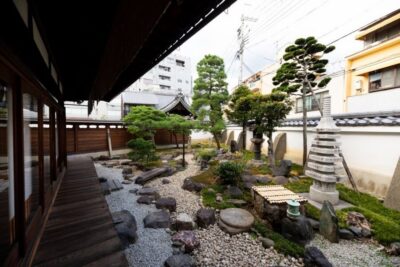
Browse the lists this tour appears in