
Review · KYOTO
Traditional Tea Ceremony Experience in Kyoto
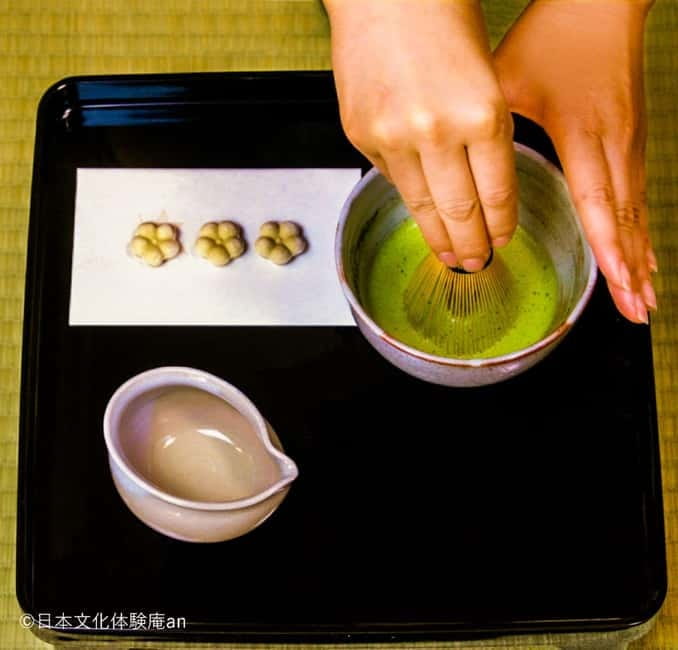
Tea can teach you to slow down. This 30-minute Kyoto experience gives you a simple, affordable way to learn about matcha in the city where the Japanese tea ceremony took shape. I like the use of single-origin matcha and the serving of ohigashi, traditional Japanese dried sweets. Sitting at tables and chairs also makes the activity easier for most people than a formal floor-seated ceremony.
The main thing to weigh is the short running time. You may get only about 25 minutes of activity, and the teaching can be basic. English support is available as much as possible, but the instructor’s main language is Japanese, and one recent session divided its explanation between English and Korean. If you want a long talk on tea history and philosophy, this may feel too light.
Key Points to Know Before You Book
- Single-origin matcha: You taste a distinct matcha rather than an unnamed powdered tea, then see how it is prepared.
- Ohigashi with your tea: The Japanese dried sweet gives you the traditional sweet-and-bitter pairing used with matcha.
- Only 30 minutes: This is an easy add-on to a day in Kyoto, not a full morning cultural class.
- Tables and chairs: You do not need to sit on the floor in the traditional kneeling position.
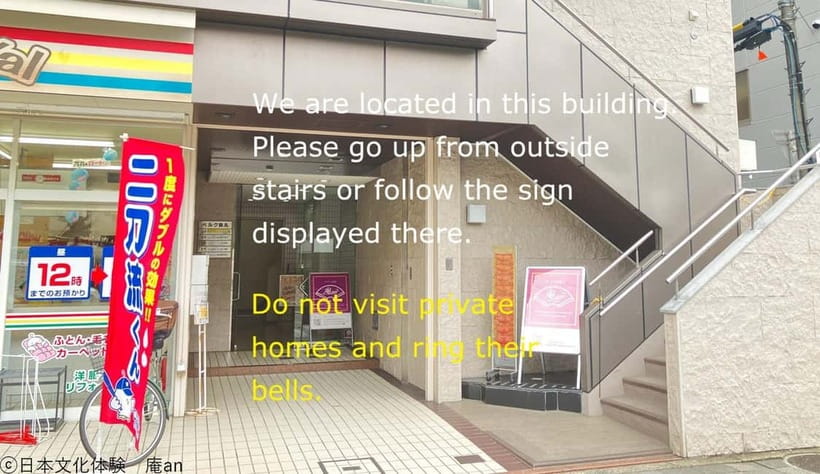
- One minute from Gojo Station: The venue is near Exit 1 of the Subway Karasuma Line Gojo Station, with its entrance facing Gojo-dori.
- Basic English help: The instructor teaches in Japanese, and English translation can be added as much as possible if you contact the provider.
What the 30-Minute Tea Session Includes
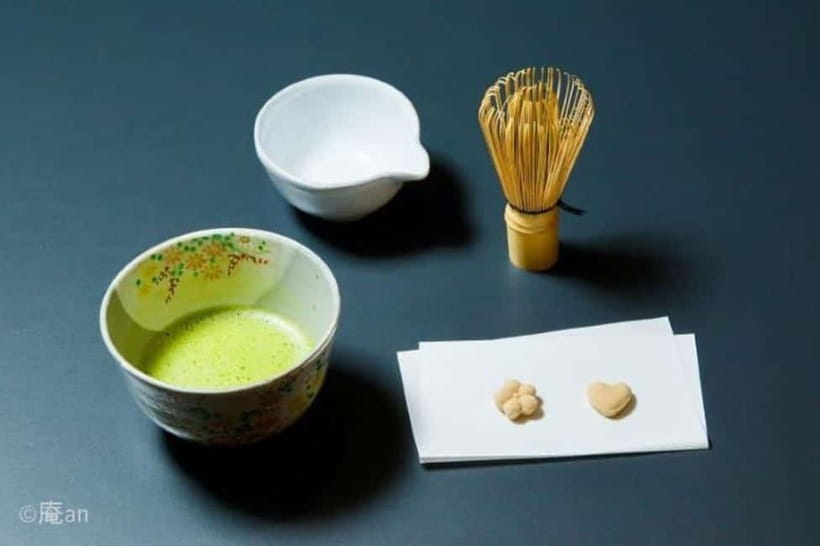
The experience centers on OTE-MAE, the Japanese tea ceremony service. This means you are not simply handed a bowl of matcha in a café. You receive an introduction to the way the tea is prepared and served, along with an explanation of the movements and tools involved.
The advertised session lasts 30 minutes. One recent booking described the actual activity as closer to 25 minutes, so I would plan on a compact lesson rather than a perfectly timed half-hour performance. That shorter length can be useful if you are fitting the experience between sightseeing stops, though it leaves little room for questions.
The class should include a demonstration of how single-origin matcha becomes the finished drink. You can expect to learn the basic preparation process and the manners connected with the tea service. The available description also promises explanation of the meaning behind the movements, utensils, and ideas of the ceremony, but the depth may depend on the language used and how busy the session is.
This is best viewed as an introduction. It gives you enough structure to understand what you are seeing, but it is not designed as an advanced tea-school lesson.
More Tea Ceremonies in Kyoto
- Kyoto: Tea Ceremony in a Traditional Tea House in Kiyomizu
★ 4.9 · 3,519 reviews - Kyoto: Tea Ceremony Ju-An at Jotokuji Temple
★ 4.9 · 3,207 reviews - Kyoto: 45-Minute Tea Ceremony Lesson Experience
★ 4.3 · 2,378 reviews
The Matcha Demonstration and Tasting
The single-origin matcha is one of the strongest reasons to choose this activity. Matcha is powdered green tea, so you drink the leaf rather than steeping and removing it. That gives the tea its dense texture and concentrated flavor.
You will see how hot water is added and how the tea is mixed. The simple steps matter because the finished bowl depends on preparation, not just the powder. One person found the explanation too basic, describing it as little more than adding hot water and mixing. If you already know matcha preparation, you may want to ask for more detail about the tea’s origin, taste, and place in Japanese customs.
For a first meeting with matcha, though, the straightforward approach has a benefit. You do not need prior knowledge, and you can focus on the feel of the ceremony rather than trying to remember a long list of rules.
The serving includes ohigashi, a Japanese dried sweet. This is a useful part of the experience, not just a small extra. The sweetness helps balance matcha’s bitter, grassy taste, and it gives you a chance to notice how Japanese tea service pairs flavors. One person described the matcha as very strong and appreciated having a snack with it.
Expect a traditional tea flavor rather than a sweet café-style matcha drink. If you prefer lattes or heavily sweetened beverages, the taste may be more intense than expected.
The Meaning Behind OTE-MAE
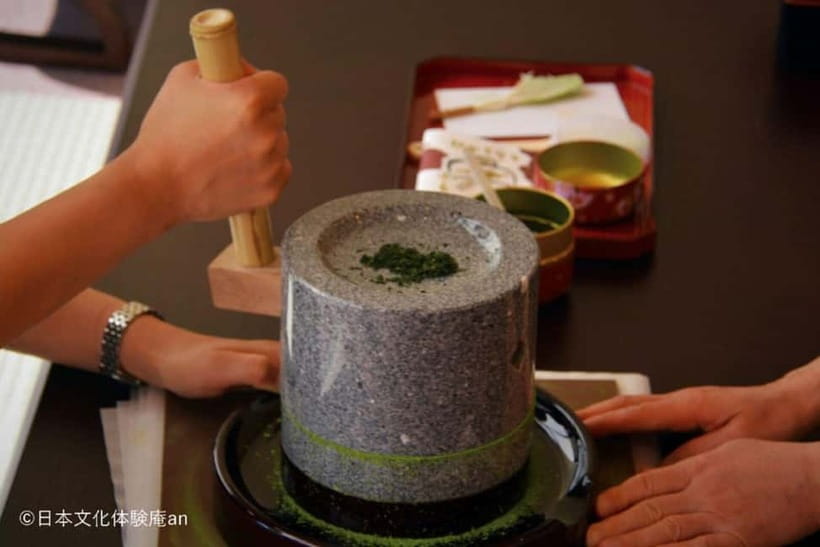
OTE-MAE refers to the manner and presentation of making tea. In a formal ceremony, the order of actions, the handling of utensils, and the way the tea is offered all carry meaning. Here, the instructor aims to show you those basic elements in a short, approachable format.
You may learn some of the do’s and don’ts of matcha service, along with a brief account of matcha’s background. One person found the explanation educational and calming, while another wanted more discussion of when matcha is normally consumed, who drinks it, and how the customs developed.
That difference tells you how to set your expectations. The experience can give you a useful first layer of understanding, but it may not answer every cultural question. If you are curious, prepare a few questions before you arrive. Ask about the role of the tea master, the use of the sweets, or the meaning of a particular utensil.
The activity is also a good reminder that a tea ceremony is not only about drinking tea. The pace, gestures, arrangement, and attention to the moment are part of the experience. Even in a short session, you can see how preparation becomes a form of hospitality.
Why Tables and Chairs Matter
The seating is practical. You sit at tables and chairs rather than on the floor, which makes the session easier for people who do not want to kneel or sit in a fixed position.
This choice also makes the experience less formal. If you are nervous about entering a traditional ceremony because you do not know the proper posture or etiquette, the chair seating lowers that barrier. You can focus on the demonstration and the taste.
There is an important access detail to note. The activity is described as wheelchair accessible, but the building has no elevator, and stairs are required to reach each venue. Those facts do not fit neatly together, so you should contact the provider before booking if you use a wheelchair or have difficulty with stairs. Do not assume that the accessibility label alone settles the question.
Same place, a different pot:
- Kyoto: Table-Style Tea Ceremony at a Kyo-Machiya
★ 4.9 · 1,211 reviews - Kimono Tea Ceremony at Kyoto Maikoya, NISHIKI
★ 5.0 · 911 reviews - Kyoto: Arashiyama Bamboo Forest, Monkeys, Matcha & Temple Tour
★ 5.0 · 759 reviews - Kyoto: Kimono Tea Ceremony at Orizuruya Gion
★ 4.9 · 618 reviews
Language, Crowding, and How Much You Will Hear
The instructor’s language is Japanese. English translation can be provided as much as possible, but you need to contact the provider if you want to request it. This is especially important because the session is short. Lost time during translation takes up a meaningful part of a 30-minute class.
One recent booking described roughly 12 minutes in English and 12 minutes in Korean. Another found the information very basic. A separate person said the location was crowded and that the guide was difficult to hear. These details do not make the experience a poor choice, but they point to its limits.
I would contact the provider before arrival and clearly state that you want English assistance. Arrive ready to watch closely, since some of the teaching may come through demonstration rather than spoken explanation. If the room is busy, sitting where you can see the tea preparation may matter as much as hearing every word.
The 4.3 rating from 64 bookings suggests a generally positive experience with some variation. The highest praise focuses on the calm mood, the educational value, the matcha, and the fun of receiving a certificate. The lower marks mainly point to short duration, crowded conditions, and limited explanation.
Finding the Venue Near Gojo Station
The meeting point is about a one-minute walk from Exit 1 of Gojo Station on the Subway Karasuma Line. The entrance faces the main street, Gojo-dori. That is a helpful detail because the building is not described as being inside the station or hidden down a side street.
Use the supplied map and coordinates, 34.99642916810299, 135.76176672966227, if you are unsure of the entrance. I would give yourself a few extra minutes to find the correct door, especially if you are navigating Kyoto’s streets for the first time.
The nearby subway access makes this a convenient stop before or after other central Kyoto plans. The activity itself is short enough to fit into a busy day, but do not arrive late. The provider will not hold the event for delays, and the short format leaves no spare time.
Is the $7 Price Good Value?
At $7 per person, this is a low-cost way to add a Japanese cultural activity to your Kyoto schedule. The price includes the tea ceremony experience, the single-origin matcha, the ohigashi, and the demonstration. For that amount, you are paying for a brief introduction rather than a long workshop.
I see the value in the low commitment. You can learn the basics, taste a traditional preparation, and decide if you want to explore tea culture further without spending much time or money. Families and first-time visitors may find that especially useful.
The price is less compelling if you expect an in-depth lesson, a quiet private setting, or extended conversation with a tea master. The activity may last closer to 25 minutes, and some sessions can feel crowded. You should judge the cost against what you want to learn, not just the bargain price.
A completion certificate is available for an additional 300 JPY. It is optional and adds a small souvenir element, but it is not part of the included experience. One person enjoyed receiving the certificate for fun, so it may appeal to children or anyone who likes a physical reminder of the activity.
Who Will Enjoy This Experience Most?
I would recommend this for first-time visitors to Kyoto who want a short introduction to matcha and tea manners. It also suits people with a tight sightseeing schedule, since the session takes only 30 minutes and is close to a subway station.
It may work well for families, provided children can remain seated and follow the demonstration. Children under two who sit on a parent’s lap are free. Everyone else needs to participate and pay as required. People who do not take part cannot enter the activity.
The table seating makes it a reasonable choice for anyone who finds floor seating uncomfortable. Still, the stairs deserve attention if mobility is a concern.
I would be more cautious about recommending it to a serious tea student or anyone seeking a detailed account of Japanese tea culture. The instructor may cover the basics well, but the available feedback points to limited historical and cultural detail. You may leave with a good first taste rather than a complete understanding.
Timing, Reservations, and Cancellation Details
Operating hours are from 10:00 to 17:00. Reservations received after 17:00 are handled the next day, so do not expect a late-evening request to receive an immediate answer.
You can reserve now and pay later, which helps if your Kyoto schedule is still moving around. Free cancellation is available up to 24 hours in advance for a full refund. After that point, cancellation charges apply, and changing the date or time after a fee has been incurred can bring another specified charge.
The provider will not cover your travel costs if you cancel. Since late arrival is not accommodated, plan your subway journey carefully and aim to be near the venue before the scheduled start.
Should You Book This Kyoto Tea Ceremony?
Book it if you want an inexpensive, chair-seated introduction to matcha, especially if you value the tea tasting, ohigashi, and a quick cultural stop near Gojo Station. The calm setting and simple demonstration can make a busy Kyoto day feel more grounded.
Skip it if you want a long, highly detailed lesson in tea history, or if you need guaranteed English instruction without contacting the provider first. For most first-time visitors, the $7 price makes the short format easy to try, as long as you arrive on time and keep your expectations modest.
FAQ
How long does the tea ceremony experience last?
The scheduled duration is 30 minutes. Some bookings have found that the actual activity lasts closer to 25 minutes.
Where is the meeting point?
The venue is about a one-minute walk from Exit 1 of Gojo Station on the Subway Karasuma Line. The entrance faces Gojo-dori.
What kind of tea is served?
The experience includes single-origin matcha. You will also see a demonstration of how it is prepared.
Are Japanese sweets included?
Yes. Ohigashi, Japanese dried sweets, are served with the matcha.
Do I need to sit on the floor?
No. Participants are seated at tables and chairs.
Is English available?
The instructor’s language is Japanese. English translation is provided as much as possible, and you should contact the provider if you would like English assistance.
Is the activity wheelchair accessible?
The activity is described as wheelchair accessible, but the building has no elevator and stairs are required to reach each venue. Contact the provider before booking to confirm that the route suits your needs.
Can I cancel for a full refund?
You can cancel up to 24 hours in advance for a full refund. Cancellation fees apply after that point.
Is a completion certificate included?
No. A completion certificate is optional and costs 300 JPY.
Just added around Kyoto
- Uji Walking Tour – Byodo-in temple and Tea Ceremony from Kyoto★ 3.5 · 3 reviews
- Tea ceremony at Kyoto’s Zen Temple Teahouse★ 5.0 · 2 reviews
- Kyoto: Authentic Tea Ceremony in a Small Group★ 5.0 · 7 reviews
- Tea Ceremony in 150 Years Old Townhouse with Tables and Chairs★ 5.0 · 22 reviews
- Tea Ceremony Experience in Traditional Kyoto Townhouse★ 5.0 · 19 reviews
- Traditional Tea Ceremony in Kyoto★ 4.5 · 3 reviews
- Silent Beauty of Kyoto Zen Walk and Tea Experience★ 5.0 · 2 reviews
- Kyoto Private Tea Ceremony at a Japanese Inns★ 5.0 · 12 reviews
Tea Ceremonies in Kyoto, compared.
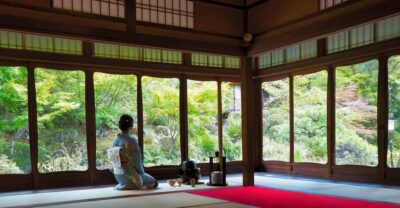
Tea Ceremony in a Traditional Tea House in Kiyomizu
Read our review →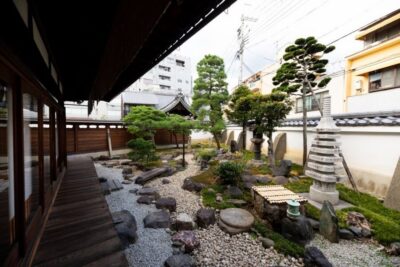
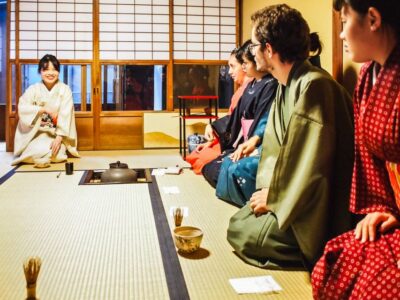
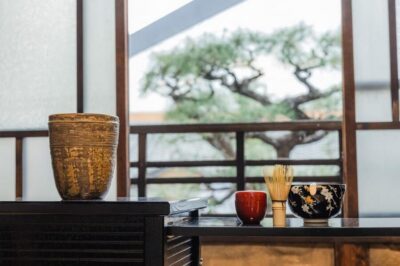
Tea Ceremony in 100-year-old Kyo-Machiya Townhouse
Read our review →
Browse the lists this tour appears in