
Review · HIROSHIMA
Tea Ceremony Experience near Atomic Bomb Dome
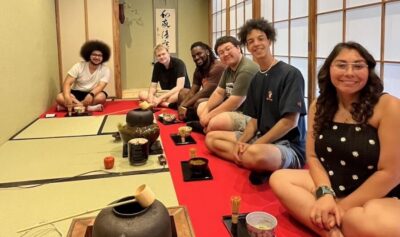
Quiet moments matter here. This one-hour tea ceremony pairs seasonal Japanese sweets with a table-style matcha lesson just five minutes from the Atomic Bomb Dome. I like the small group size, limited to six people, and the chance to hear how the confectionery shop survived the atomic bombing and rebuilt after it.
I also like the easygoing format. You sit at a table rather than kneeling for a formal ceremony, then watch matcha being prepared before making your own. The main consideration is that the experience is brief, and the tea room visit requires socks because shoes are removed on the tatami.
Key points at a glance
- Five minutes from the Atomic Bomb Dome: This is easy to fit around a visit to Hiroshima’s Peace Memorial Park.
- Choose your own seasonal sweet: You select one handcrafted confectionery before the tea gathering begins.
- Table-style matcha experience: You can enjoy the ceremony without sitting formally on the floor.
- A shop with a difficult past: The host explains how the building and business recovered after the atomic bombing.
- Small English-speaking group: With no more than six participants, the setting feels personal rather than rushed.
- Shopping after the ceremony: The first-floor shop lets you take traditional Japanese sweets with you.
A quiet cultural stop beside Hiroshima’s memorial district
Hiroshima is a place where many visitors plan every minute around the Atomic Bomb Dome, the Peace Memorial Museum, and the river. That makes this tea ceremony useful. It adds a calm cultural activity without sending you across town or taking half a day.
The venue is in Tōkaichimachi, about a five-minute walk from the Atomic Bomb Dome. The short distance matters. You can visit the dome first, let the serious weight of the memorial district settle, and then spend an hour learning about tea, sweets, and the shop’s own wartime story.
I would not treat this as a substitute for Hiroshima’s major memorial sites. It is a smaller experience with a narrower focus. But it gives you a chance to hear local history in a personal setting, while also learning a Japanese custom that can otherwise seem mysterious from the outside.
The experience is offered in English, and the small group limit of six helps the host explain details and answer questions. Several especially positive comments focus on Yurie, the guide, who explains the store’s past, the customs of tea ceremony, and the surrounding area with patience and warmth.
More Tea Ceremonies in Japan:
- Kyoto: Tea Ceremony in a Traditional Tea House in Kiyomizu
★ 4.9 · 3,519 reviews - Kyoto: Tea Ceremony Ju-An at Jotokuji Temple
★ 4.9 · 3,207 reviews - Kyoto: 45-Minute Tea Ceremony Lesson Experience
★ 4.3 · 2,378 reviews
Choosing a sweet before the tea begins
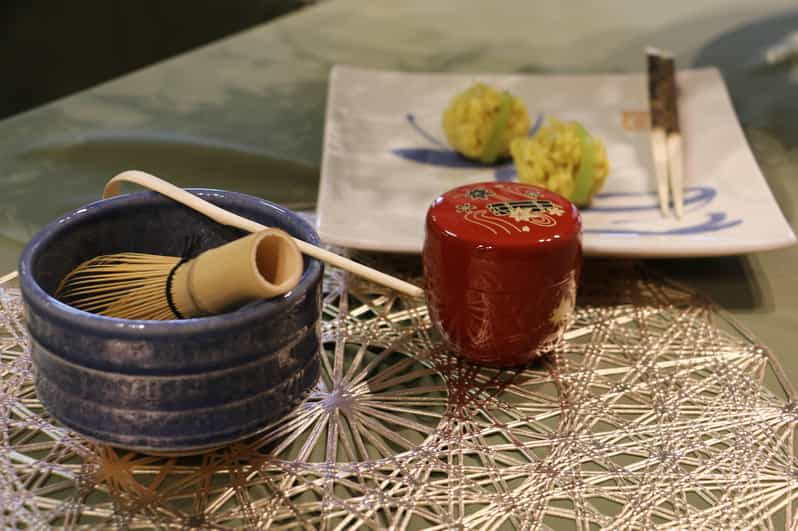
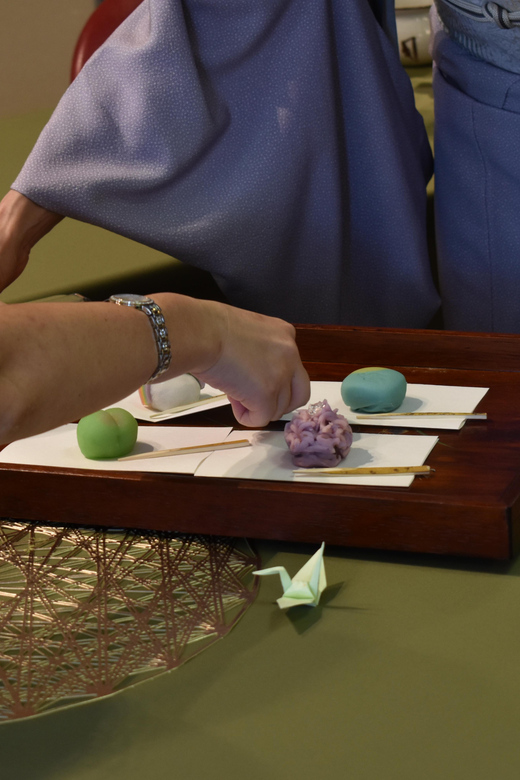
The activity starts with a practical pleasure: you choose your confectionery. The available sweets are seasonal and handmade by artisans, so the selection may change with the time of year.
This is more than a snack choice. Japanese tea sweets are selected to balance the bitter edge of matcha, and their shapes, colors, and ingredients often reflect the season. You do not need to know the names or rules in advance. The guide can help you choose, and the selection gives you a small introduction to the culture of Japanese wagashi before the tea is served.
One piece of confectionery is included in the price. If you enjoy Japanese sweets, the first-floor shop gives you a chance to buy more after the ceremony. That shopping stop is especially useful if you want gifts that feel tied to Hiroshima rather than generic souvenirs.
Keep in mind that additional food and drinks are not included. The included portion is simple: one sweet and two cups of matcha. That is enough for a focused one-hour activity, but you should not book it expecting a full meal or an extended tasting.
Seeing a working tea room on tatami
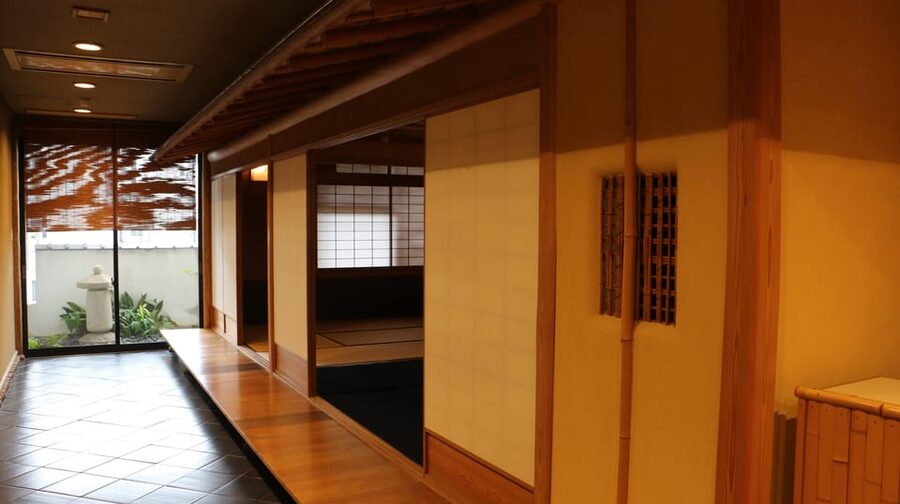
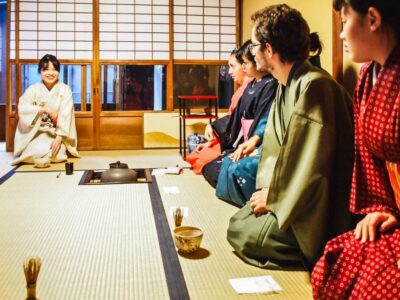
You also get to visit a tea room used by local people for tea gatherings. This is one of the strongest parts of the experience because it gives you a look at a space intended for the custom, rather than only a staged demonstration in an ordinary shop area.
The guide explains the spirit of tea ceremony and the traditions connected with the room. You may hear about etiquette, preparation, and the quiet attention given to each movement. The tone is presented as casual and approachable, which helps if you have never attended a tea ceremony before.
There is one practical rule to remember. Shoes cannot be worn on the tatami, and bare feet are not allowed. Bring socks. If you forget, socks can be borrowed, but bringing your own is easier and more comfortable.
The tea room visit is not the same as spending the entire hour in a formal floor-seated ceremony. The main gathering uses a table, which makes the activity friendlier for many people and more accessible for anyone who finds kneeling difficult.
Matcha at a table, then your turn
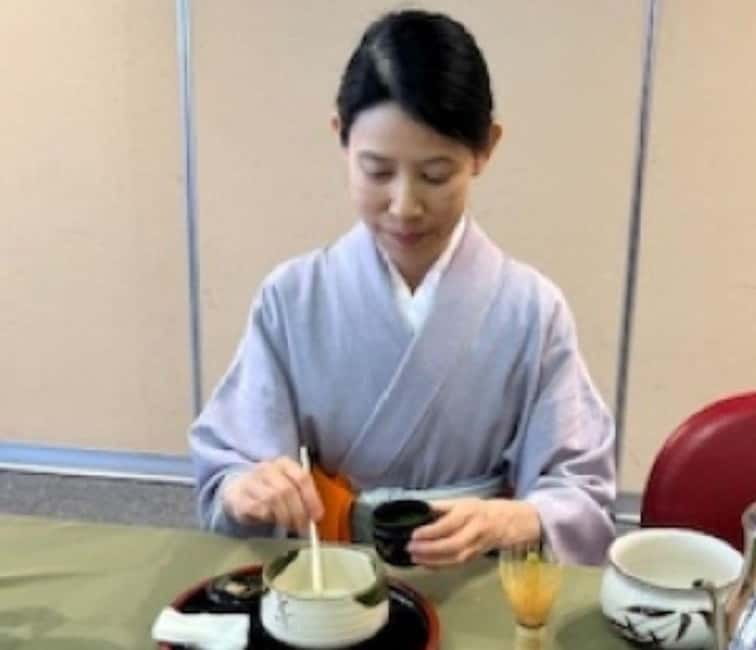
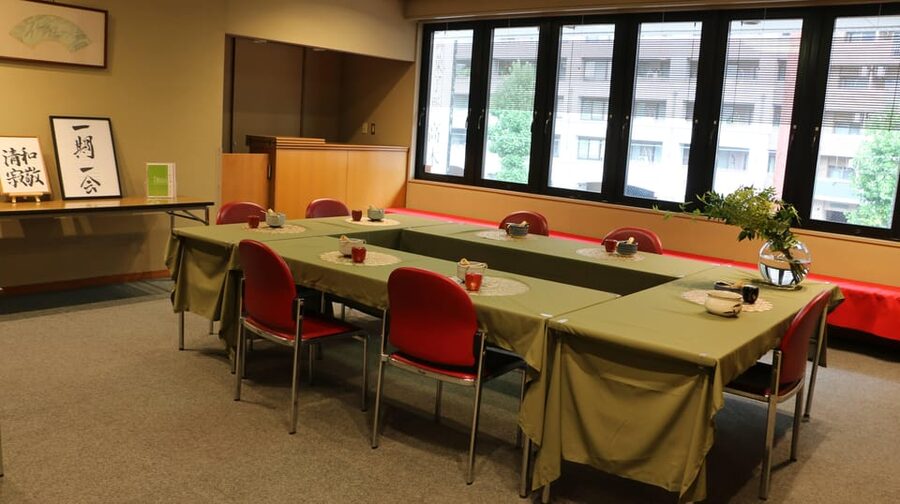
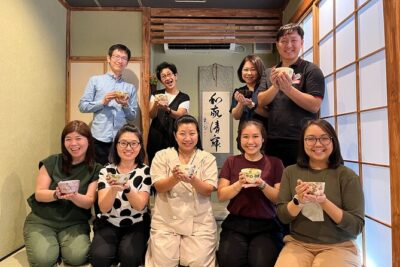
After the tea room explanation, you sit at a table for the main tea gathering. The guide prepares matcha for you, and you enjoy it with the sweet you selected.
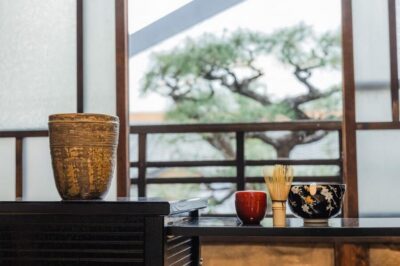
The table arrangement removes much of the pressure associated with formal Japanese etiquette. You can focus on the taste, the tools, and the rhythm of the preparation instead of worrying about whether your posture is perfect. The ceremony still introduces traditional ideas, but it does so in a relaxed format.
You receive two cups of matcha in total. The first is prepared for you, allowing you to watch the method. Then you get the chance to make matcha yourself under the guide’s direction.
That hands-on part gives the hour a good shape. You are not simply watching a demonstration, and you are not left to work out the process alone. You see how the tea is made, taste the finished drink, and then try the preparation yourself.
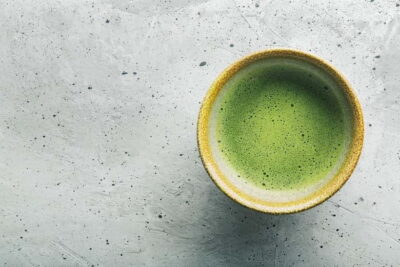
The matcha has a distinct bitterness that pairs naturally with the sweet. If you normally drink only tea bags or lightly flavored tea, the flavor may be stronger than expected. That is part of the point, and the confectionery gives you a pleasant contrast.
Yurie’s patient teaching is often singled out in the feedback, particularly her explanations of etiquette and preparation. That is important for beginners. A tea ceremony can feel intimidating when every movement seems precise, but a calm guide makes it easier to ask questions and take part.
A few more tea experiences around Japan worth a look
- World Heritage Kyoto & Nara Uji Authentic Matcha Experience
★ 5.0 · 1,573 reviews - Osaka: Tea Ceremony Experience
★ 4.9 · 1,426 reviews - Kyoto: Table-Style Tea Ceremony at a Kyo-Machiya
★ 4.9 · 1,211 reviews - Kanazawa: Kenrokuen Tea Ceremony Experience
★ 4.8 · 1,139 reviews
The shop’s atomic bombing story
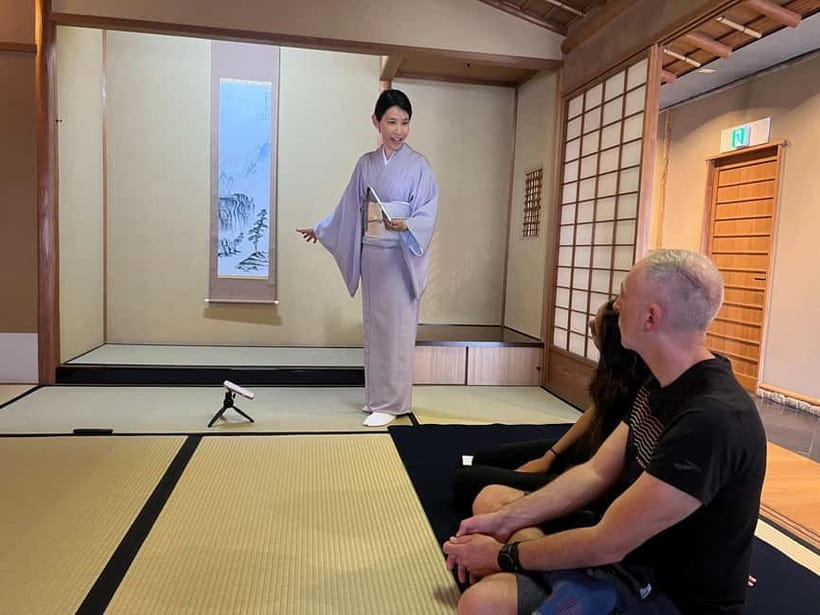
This experience has a serious local connection that sets it apart from a simple matcha class. The confectionery shop was badly damaged by the atomic bombing, and part of the hour is devoted to its recovery and post-bomb reconstruction.
The story is not presented as a broad lecture about Hiroshima. Instead, it focuses on one shop, one building, and the effort to continue after destruction. That smaller scale can make the past feel more immediate. You are standing in a place connected to the city’s rebuilding, not only looking at a memorial from a distance.
I appreciate that this subject is included without turning the tea ceremony into a solemn museum visit. The experience moves between difficult history, everyday craft, and hospitality. You learn about what happened, then sit down for tea and sweets in a business that continued into the present.
Because the activity lasts only one hour, the explanation is necessarily brief. If you want detailed historical coverage, give the Atomic Bomb Dome and Peace Memorial Museum proper time elsewhere in your schedule. This tea experience works best as a personal supplement to those sites, not as a replacement.
A first-floor shop for traditional sweets
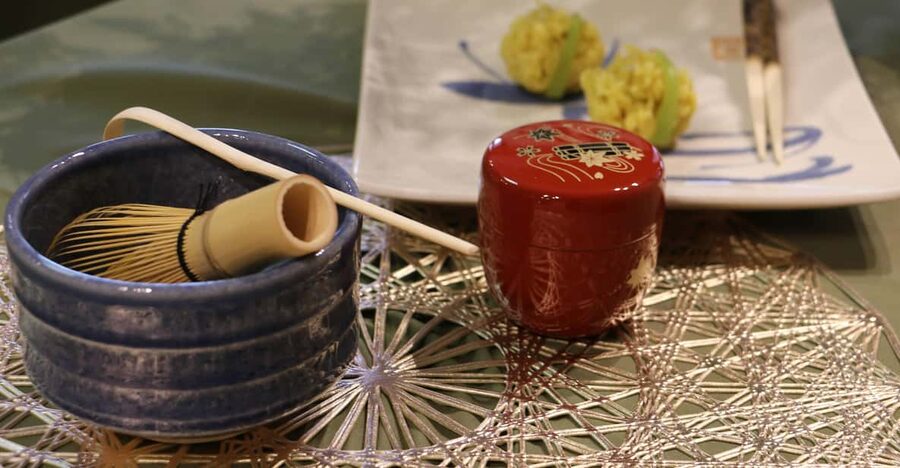
After the tea gathering, you can visit the first-floor shop and shop for traditional Japanese confectionery. This is a natural finish because you have just learned how seasonal sweets fit with matcha, and you can now choose something to take away.
The shop also makes the experience practical for people who want edible souvenirs. Traditional sweets are easier to pack than many fragile crafts, though you should check the packaging and storage information for anything you buy.
The shopping is optional, and purchases are not included in the $45 price. That keeps the base activity clear, but you should allow room in your budget if you expect to buy gifts.
The Australia-based feedback is useful here: the host helped with choosing treats to take away. That kind of assistance can make a difference when labels are unfamiliar or several seasonal options are available.
Is $45 good value for one hour?
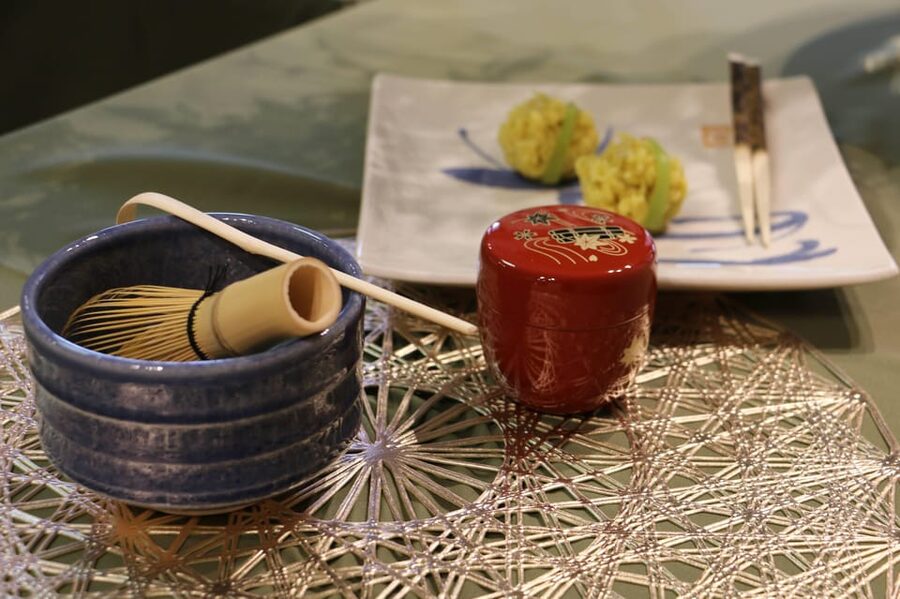
At $45 per person, this is not the cheapest way to drink tea in Hiroshima. You are paying for more than a cup of matcha, though. The price includes a guided cultural explanation, access to a tea room used for gatherings, two cups of matcha, one seasonal confectionery, and the chance to prepare tea yourself.
The small group limit also improves the value. With no more than six participants, you have a better chance to see the preparation clearly and receive help during your turn. A large public demonstration might cost less, but it would not offer the same personal attention.
I think the price is fair if you want a structured introduction to tea ceremony and a meaningful local story near the Atomic Bomb Dome. It is less compelling if you only want to taste matcha or buy sweets, since you could spend less at a shop or café.
The strongest praise centers on the host’s kindness, clear explanations, the shop’s connection to Hiroshima’s past, and the chance to make matcha. Those are the parts that justify the cost. The experience works because these elements support one another rather than feeling like separate activities.
Getting to Tōkaichimachi
From the Atomic Bomb Dome-mae Station on Hiroshima Electric Railway’s route along National Route 183, cross Aioi Bridge. Continue past Honkawa-cho Station and the Lawson Hiroshima Hongawa-cho Store. Takaki is on the left side of the next block.
If you are coming from Hiroshima Station, take the Hiroshima Electric Railway Miyajima Line and get off at Honkawa-cho Station. Cross toward the Lawson, then continue to the right. Takaki will be on your left.
The address is Hiroshima, Naka Ward, Tōkaichimachi, 1-chōme 4-26. Enter through the front entrance and take the stairs on the right to the second floor.
The directions are specific because the tea ceremony takes place upstairs, while shopping is on the first floor. I would allow a little extra time to find the building, especially if you are coming from the memorial district and are watching the clock for a starting time.
The venue is wheelchair accessible, which broadens its appeal. Still, the tea room has tatami rules, so check the practical setup when booking if you have particular mobility needs. The main activity uses a table, an advantage for many people.
Who will enjoy this experience most?
I would recommend this activity to you if you want a short cultural experience that fits neatly into a Hiroshima sightseeing day. It suits first-time visitors who are curious about matcha but do not want a highly formal ceremony.
It is also a good choice for people who enjoy food traditions. The seasonal sweet is not just an extra treat, and the shop afterward gives you a chance to continue the experience through local confectionery.
Families and mixed-age groups may appreciate the casual seating and one-hour length. The small group also makes it easier for the guide to adjust explanations and offer help during tea preparation.
You may want to skip it if your schedule is already packed with the Peace Memorial Museum, Miyajima, and other major stops. An hour sounds short, but the walk to the venue and time spent getting oriented still require a place in your day.
You should also think about your interest in matcha. The tea has a strong, bitter flavor, and the activity is about learning a custom as much as drinking something pleasant. If you want a quick sweet drink with no explanation, this is not the right choice.
Pets and smoking are not allowed. Bring socks, or plan to borrow a pair for the tatami visit.
Booking flexibility and timing
The activity lasts one hour, with starting times shown according to availability. That makes it fairly easy to place before or after a visit to the Atomic Bomb Dome.
You can cancel up to 24 hours in advance for a full refund, and the reserve-now, pay-later option lets you hold a place without paying immediately. These policies are useful in Hiroshima, where weather, museum timing, and day trips can shift your plans.
The guide language is English. Since the group is limited to six, this is a better fit for you if you want to ask questions rather than simply watch from the back of a room.
Should you book it?
Book this tea ceremony if you want a personal introduction to matcha, seasonal sweets, and Hiroshima’s post-bomb rebuilding within walking distance of the Atomic Bomb Dome. The strongest reasons to go are Yurie’s warm teaching, the working tea room, the chance to prepare your own tea, and the shop’s meaningful local story.
Skip it if you are looking for a long formal ceremony, a full meal, or a low-cost cup of tea. For most people with an hour to spare near the memorial district, though, the combination of culture, history, and sweets makes $45 a reasonable spend.
FAQ
How long does the tea ceremony experience last?
The experience lasts one hour.
How much does the experience cost?
The price is $45 per person.
Where is the meeting point?
The venue is at Hiroshima, Naka Ward, Tōkaichimachi, 1-chōme 4-26, about a five-minute walk from the Atomic Bomb Dome. Enter through the entrance and take the stairs on the right to the second floor.
How do I reach the venue from the Atomic Bomb Dome?
From Atomic Bomb Dome-mae Station, cross Aioi Bridge, pass Honkawa-cho Station and the Lawson Hiroshima Hongawa-cho Store, then find Takaki on the left side of the next block.
Is the activity offered in English?
Yes. The live guide language is English.
How many people can join the group?
The group is limited to six participants.
What does the price include?
The price includes the tea ceremony experience, two cups of matcha, and one piece of confectionery.
Are transportation and extra food included?
No. Transportation to and from the venue, along with additional food and drinks, is not included.
What should I bring?
Bring socks because shoes must be removed before stepping onto the tatami, and bare feet are not allowed. Socks can also be borrowed.
Can I cancel the booking?
Yes. You can cancel up to 24 hours in advance for a full refund. You can also reserve now and pay later.
Just added around Japan
- Yokohama : Tea Ceremony with Sweets and Souvenir★ 5.0 · 5 reviews
- Walking Tour: Yanaka,Nezu& Sendagi: Tea Ceremony & Old Tokyo★ 5.0 · 3 reviews
- Visit local home for music and tea ceremony near Disney★ 4.9 · 13 reviews
- Trip to Kamakura & Enoshima: Shrines, Seaside, Temples &Tea★ 5.0 · 11 reviews
- Yokohama: Sushi & Gyoza Cooking with Matcha & GreenTea Experience★ 5.0 · 3 reviews
- Kyoto tea town for matcha lovers★ 5.0 · 16 reviews
- Uji: Private immersion into Kyoto’s tea and reglious culture★ 5.0 · 17 reviews
- Uji Tea Ceremony and UNESCO Heritage Walking Tour★ 5.0 · 20 reviews
Tea Ceremony Experiences, compared.
Tea Ceremony in a Traditional Tea House in Kiyomizu
Read our review →
Browse the lists this tour appears in