
Review · KYOTO
Tea Ceremony Experience in Traditional Kyoto Townhouse
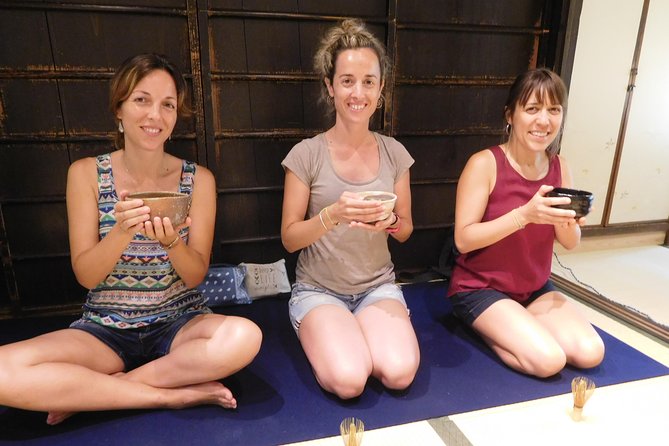
Slow down for a bowl of tea. This one-hour experience brings you into an old Kyoto machiya, where you watch a careful tea ceremony, learn the manners behind it, and prepare matcha yourself. I especially like the small six-person limit and the use of matcha from Uji City, Kyoto’s famous tea-growing area. The traditional sweets, made by a well-known Kyoto confectioner, add a pleasant local touch.
The hosts, including Kimi, are praised for clear explanations and warm manners. The main drawback is practical rather than cultural: the townhouse can be difficult to locate in a residential neighborhood, where English street names and numbers may not be obvious. Give yourself extra time to find 605 Nishidacho, and keep the supplied map link handy.
Key points at a glance
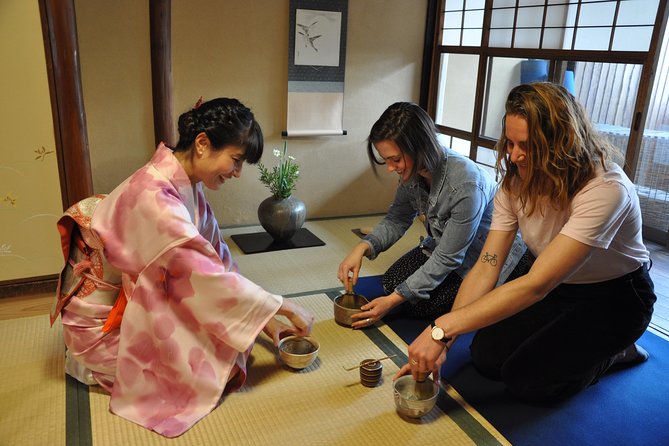
- An 80-year-old Kyoto machiya: You spend the hour inside a genuine wooden townhouse rather than a modern classroom.
- A hands-on lesson: You do not only watch. You learn how to make, serve, and drink your own bowl of matcha.
- Uji tea and Kyoto sweets: The experience includes high-quality matcha from an Uji farm and a traditional sweet from a respected local confectioner.
- A small setting: With a maximum of six people, the hosts can explain movements and answer questions without turning the ceremony into a performance for a crowd.
- A compact one-hour format: The session fits neatly into a Kyoto sightseeing day and gives you a focused introduction without taking half a day.
- Good value at $27.74: For a guided cultural activity in a historic townhouse, the price is reasonable, especially because tea and sweets are included.
Why this short Kyoto experience works
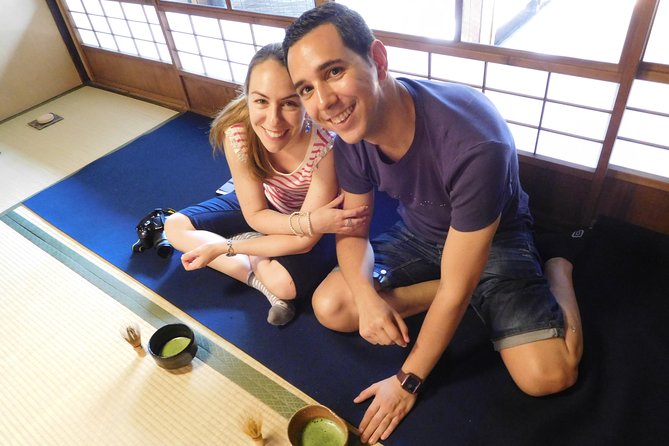
Tea ceremony can seem formal from the outside. There are precise movements, careful gestures, and rules about how to enter, sit, bow, receive the bowl, and drink. Without explanation, you might see only a beautiful ritual. Here, the hosts explain the purpose behind the actions, which makes the ceremony easier to understand and appreciate.
I like the balance between demonstration and participation. You first watch the hosts perform the process, then receive guidance as you prepare your own matcha. That order matters. It lets you see the rhythm of the ceremony before you try to copy it.
The experience is also small enough to feel personal. A group of six leaves room for questions, gentle corrections, and conversation. One account describes a session with only three other participants, which is the kind of setting that allows the ceremony to feel calm rather than staged.
The one-hour length is another strength. You get a real introduction, not just a quick photo opportunity, but you are not committing to an elaborate formal ceremony lasting several hours. I would consider it a good fit for a first encounter with Japanese tea culture.
More Tea Ceremonies in Kyoto
- Kyoto: Tea Ceremony in a Traditional Tea House in Kiyomizu
★ 4.9 · 3,519 reviews - Kyoto: Tea Ceremony Ju-An at Jotokuji Temple
★ 4.9 · 3,207 reviews - Kyoto: 45-Minute Tea Ceremony Lesson Experience
★ 4.3 · 2,378 reviews
Entering an old Kyoto machiya
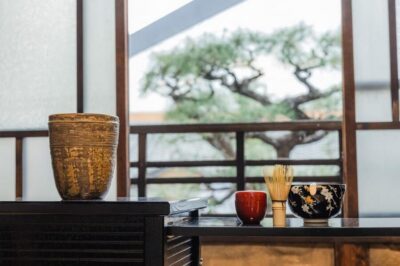
The setting is Ami Kyoto, a traditional wooden townhouse in the Nishidacho area of Shimogyo Ward. The building is described as about 80 years old, and some descriptions of the experience refer to it as roughly 100 years old. Either way, the important point is that this is an older neighborhood home, not a purpose-built tourist venue.
Kyoto machiya were once common throughout the city. These narrow wooden houses combine living and working space and are closely tied to the older shape of Kyoto. Spending time inside one gives the tea lesson a useful sense of place. You are not simply learning about Japanese customs in a generic room. You are sitting in a building that reflects the city’s older domestic architecture.
The house itself is part of the appeal, but it also creates the main arrival challenge. It blends into the surrounding residential streets, and English signs, street names, and address numbers may be hard to spot. One visitor had difficulty finding it at first. I would not treat that as a reason to skip the experience, but I would avoid arriving at the last minute.
The meeting address is 605 Nishidacho, Shimogyo Ward, Kyoto, postal code 600-8397. It is near public transportation, but hotel pickup and drop-off are not included. Plan your route before leaving, and use the map information sent with your confirmation.
Watching the tea ceremony from start to finish
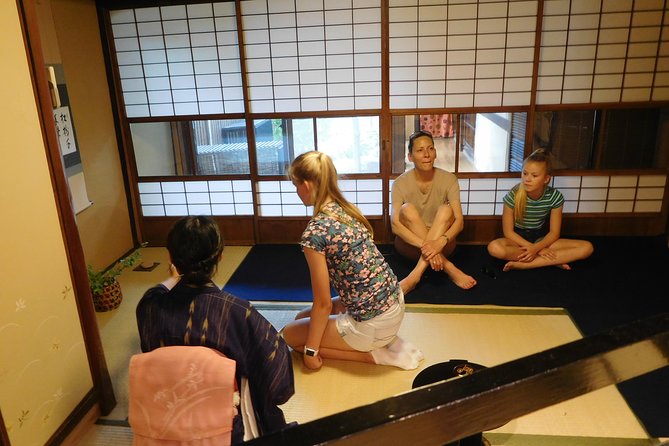
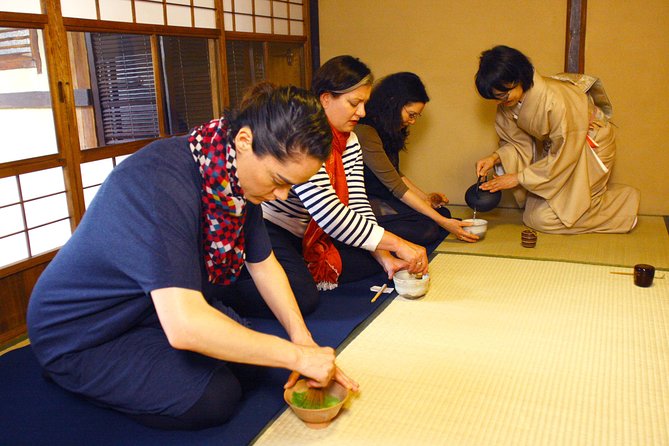
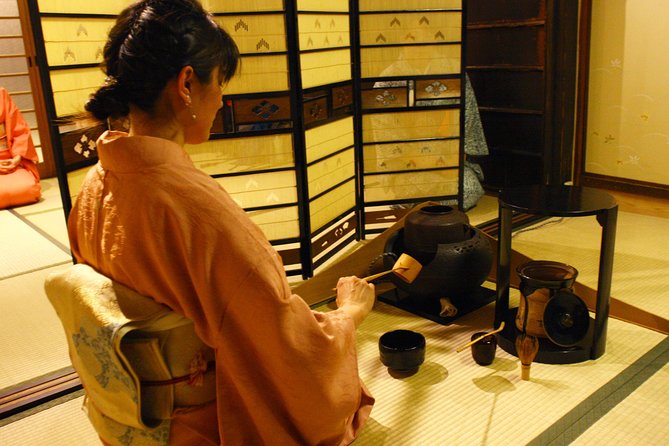
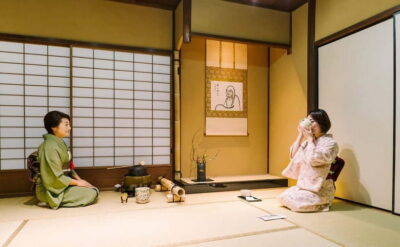
The first part of the session is a demonstration. The hosts show the process from beginning to end and explain the basic etiquette along the way. You learn that tea ceremony is not just about whisking green tea. The way you enter the room, handle the bowl, receive the sweet, and take each sip has meaning and practical purpose.
The demonstration is one of the most praised parts of the experience. The hosts are described as friendly, patient, and clear, with Kimi often singled out for her warm and informative style. The explanations help take the pressure off. You do not need to arrive with any prior knowledge of tea ceremony, and you are not expected to know the correct gesture before being shown.
Some of the most memorable details are small. The movements are deliberate, the room is quiet, and the ceremony has a measured pace. The hosts explain the symbolic side of the actions as well as the practical side, so you can see how ritual and hospitality work together.
I also like that the lesson does not treat tea ceremony as a mysterious performance. It presents the practice as a way of sharing tea and sweets with care. That makes it accessible even if you are more interested in daily Japanese culture than in formal ritual.
Making your own bowl of Uji matcha
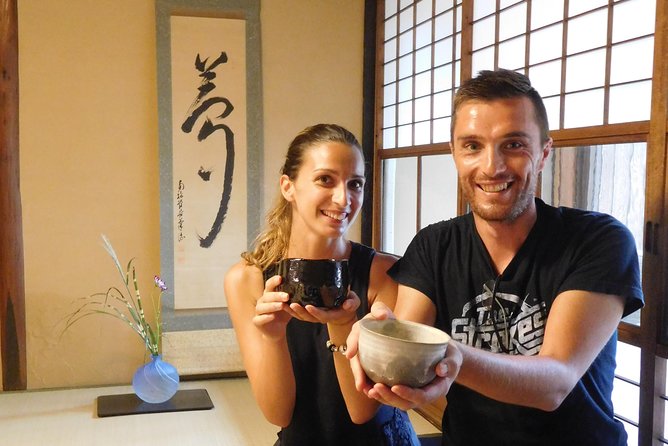
After watching the demonstration, you have the chance to make your own tea. The hosts guide you through the steps, so this is not a test of coordination or etiquette. You follow the instructions, prepare the bowl, and then learn how to drink it correctly.
For many people, this will be the most useful part of the experience. You move from passive watching to doing. The lesson gives you a basic understanding of how matcha is prepared and how the bowl is received and enjoyed.
The matcha comes from a tea farm in Uji City. Uji is strongly associated with high-quality Japanese green tea, so this detail adds value to the session. The tea is not treated as a prop. It is central to the experience, and several comments praise its flavor.
Matcha can be grassy, bitter, and unfamiliar if you usually drink black tea or coffee. That is part of the fun, but the accompanying sweet helps balance the taste. The hosts explain how to drink the tea, so you are not left guessing about the correct method.
If you enjoy the matcha, selected tea products may be available to buy afterward. That is not part of the stated inclusion, so think of it as an optional extra rather than a reason to book. Still, it can be useful if you want to continue the experience at home.
Same place, a different pot:
- Kyoto: Table-Style Tea Ceremony at a Kyo-Machiya
★ 4.9 · 1,211 reviews - Kimono Tea Ceremony at Kyoto Maikoya, NISHIKI
★ 5.0 · 911 reviews - Kyoto: Arashiyama Bamboo Forest, Monkeys, Matcha & Temple Tour
★ 5.0 · 759 reviews - Kyoto: Kimono Tea Ceremony at Orizuruya Gion
★ 4.9 · 618 reviews
Traditional sweets from a Kyoto confectioner
The tea is served with a Japanese sweet. The experience includes a traditional confection from a famous Kyoto maker, and one sweet identified by a host is suhama.
The sweet is more than a small snack. In tea ceremony, the food helps prepare your palate for the matcha and provides another example of seasonal and visual care in Japanese food culture. The combination gives the hour a pleasing structure: watch, taste, prepare, and drink.
The sweets have received especially warm praise, and they help make the experience approachable for people who are unsure about matcha. If the tea tastes strong to you, take your time with the sweet and follow the hosts’ instructions about the order of eating and drinking.
What the one-hour schedule feels like
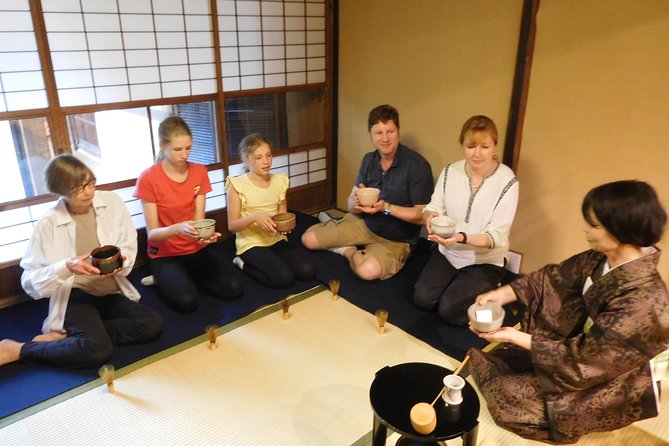
The session lasts about one hour. That is enough time for an explanation, a full demonstration, your own preparation, and a chance to ask questions, based on the described format.
I see the length as a clear advantage for most Kyoto itineraries. You can fit it between temple visits, shopping, or a meal without giving up an entire afternoon. It also suits families and first-time visitors who want cultural context but may not have the patience for a long formal ceremony.
The tradeoff is that this is an introduction, not an advanced study of tea ceremony. You will learn the basic concepts and etiquette, but you should not expect an exhaustive lesson on every school, tool, historical period, or regional variation. The experience works best when you want a meaningful first look rather than specialist training.
Several start times are available, which makes planning easier. Confirmation is sent within 48 hours of booking, subject to availability, so book before building a tightly timed day around one particular session.
The value of $27.74
At $27.74 per person, this is a strong-value cultural activity in Kyoto. You are paying for access to a traditional townhouse, instruction from hosts who explain the ceremony carefully, a bowl of matcha, Japanese sweets, and the chance to prepare tea yourself.
The price looks especially fair because the group is capped at six. Larger demonstrations can be cheaper per person, but they often give you less room to ask questions or practice. Here, the small scale supports the personal feel that people repeatedly praise.
You should still be clear about what the price does not cover. There is no hotel pickup or drop-off, and transportation to the meeting point is your responsibility. The session also ends where it begins, so you are not being transported onward to another Kyoto sight.
For a visitor who wants a low-cost cultural activity with real participation, I think the value is better than a simple tea tasting. You are learning the etiquette and movements, not just being handed a cup of matcha.
Who should book this tea ceremony?
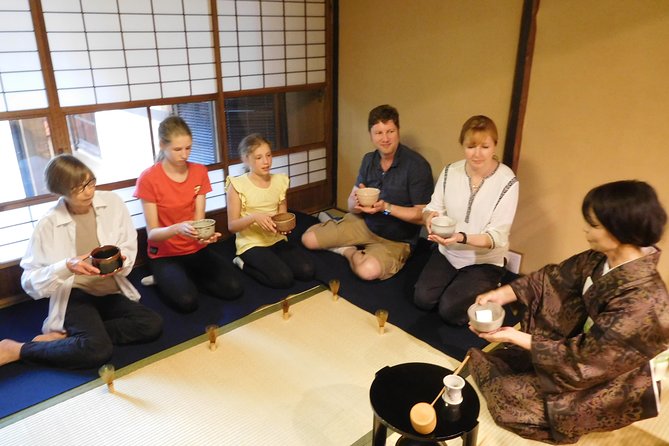
I would recommend this experience to you if you:
- Want a gentle introduction to Japanese tea ceremony
- Prefer a small group over a large demonstration
- Enjoy traditional buildings and local customs
- Like activities where you take part rather than only watch
- Have about an hour available in your Kyoto schedule
- Want a cultural experience that works for adults, families, and first-time visitors
It also suits people who already enjoy matcha. The quality of the Uji tea gives you something to pay attention to, and the hosts can answer questions about preparation and drinking.
Families should find the one-hour format manageable. One family of four particularly appreciated the clear explanations and the chance for everyone to make tea. The hosts have also accommodated a participant using a wheelchair, though the available information does not provide detailed access specifications. If accessibility is important for your party, contact Ami Kyoto before booking so you can confirm that the townhouse works for your needs.
This may not be the best choice if you want an elaborate, highly formal ceremony with extensive historical study. It is also less suitable if you dislike matcha, sweets, quiet rituals, or sitting through careful demonstrations.
Practical advice before you go
Give yourself extra time to reach the townhouse. The building can blend into the neighborhood, and the English address details may not be easy to read on the street. Keep the meeting address and map link available on your phone rather than relying on signs.
Wear clothing that allows comfortable sitting and movement. The supplied information does not specify a required dress code, so you should not need special clothing, but tea ceremony involves manners and careful handling of the bowl. Arriving calm and unhurried will improve the experience.
Choose your start time with the rest of your day in mind. Since the session ends back at the meeting point, consider pairing it with nearby sightseeing rather than expecting a ride to your next stop.
The booking has free cancellation up to 24 hours before the start time for a full refund. Cancellations or changes made less than 24 hours before the session are not accepted for a refund, with cut-off times based on local Kyoto time.
Should you book it?
Yes, if you want an affordable, personal introduction to Japanese culture. The strongest reasons are the traditional townhouse, the small group, the well-explained demonstration, and the chance to prepare your own Uji matcha.
I would book it early if your Kyoto schedule is fixed, since the experience is popular and is often reserved well ahead of time. Just plan carefully for the residential meeting point. If you can handle a little address-hunting and have one free hour, this offers a thoughtful look at tea ceremony without the cost or time commitment of a larger cultural program.
FAQ
How long does the tea ceremony experience last?
The experience lasts approximately one hour.
Where does the experience begin?
It begins at Ami Kyoto, located at 605 Nishidacho, Shimogyo Ward, Kyoto, 600-8397, Japan.
Where does the experience end?
The activity ends back at the meeting point.
How many people can join the session?
The maximum group size is six people.
Is matcha included?
Yes. The experience includes one bowl of matcha green tea, made with tea from a farm in Uji City.
Are Japanese sweets included?
Yes. Traditional Japanese sweets are included with the tea.
Is hotel transportation provided?
No. Hotel pickup and drop-off are not included.
Just added around Kyoto
- Uji Walking Tour – Byodo-in temple and Tea Ceremony from Kyoto★ 3.5 · 3 reviews
- Tea ceremony at Kyoto’s Zen Temple Teahouse★ 5.0 · 2 reviews
- Kyoto: Authentic Tea Ceremony in a Small Group★ 5.0 · 7 reviews
- Tea Ceremony in 150 Years Old Townhouse with Tables and Chairs★ 5.0 · 22 reviews
- Silent Beauty of Kyoto Zen Walk and Tea Experience★ 5.0 · 2 reviews
- Tea Ceremony Experience in Traditional Kyoto Townhouse★ 5.0 · 19 reviews
- Traditional Tea Ceremony in Kyoto★ 4.5 · 3 reviews
- Sencha-do the Japanese Tea Ceremony Workshop in Kyoto★ 5.0 · 21 reviews
Tea Ceremonies in Kyoto, compared.
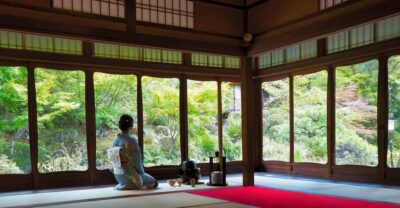
Tea Ceremony in a Traditional Tea House in Kiyomizu
Read our review →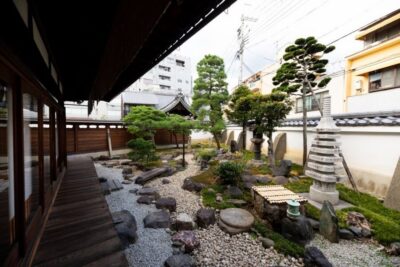
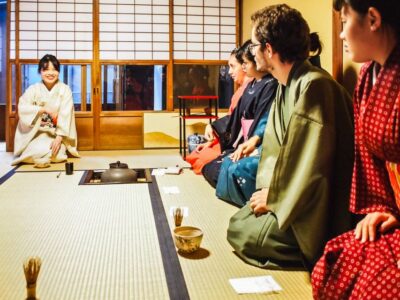
Tea Ceremony in 100-year-old Kyo-Machiya Townhouse
Read our review →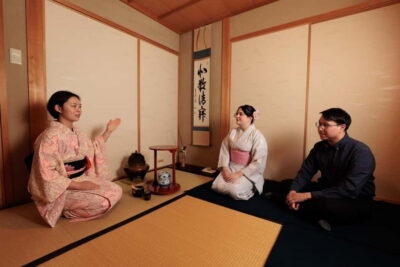
Browse the lists this tour appears in