
Review · OSAKA
Live the Shōgun Story Samurai Knives and Tea Ceremony in Sakai
Craftsmanship meets ceremony in Sakai. This private five-hour experience brings together traditional knife-making, seasonal kaiseki cuisine, and the quiet ritual of tea in a city long linked with samurai culture and trade. I like the way the tour connects practical objects with larger stories: you do not just hear about Sakai’s blades, you help fit a knife handle and take home a personalized piece.
I also like the balance between active and quiet moments. Lunch at Ume-no-Hana and the tea ceremony at Rishō-no-Mori slow the pace, while the workshop gives you something to do with your hands. The main consideration is the $379 price, which is high for a five-hour activity, and the non-refundable booking policy leaves little flexibility if your plans change.
Key Details Before You Book
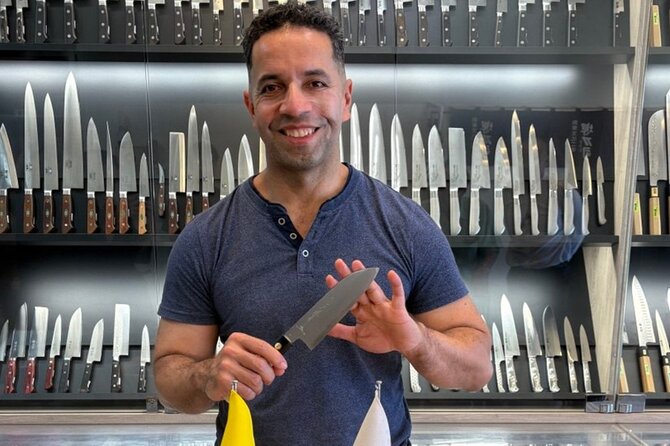
- A personalized Sakai knife is the main keepsake: You take part in fitting a knife handle and leave with an engraved blade.
- The day includes authentic food and tea: A multi-course kaiseki lunch is followed by a traditional tea ceremony.
- You explore several sides of Sakai: The route links Porto no Suke Bridge, a knife workshop, Rishō-no-Mori, and Xavier Park.
- The tour is private: Only your own group participates, allowing the pace and food discussion to feel more personal.
- Guide Junya adds a friendly local touch: He explains Sakai’s past in an accessible way and can adjust the experience when traditional food is not to your taste.
- The start is easy to identify: Meet at the taxi stand beside Sakai Station’s East Exit at 10:50 a.m., then return to the same meeting point.
Why Sakai Makes a Better Setting Than a Generic Cultural Show
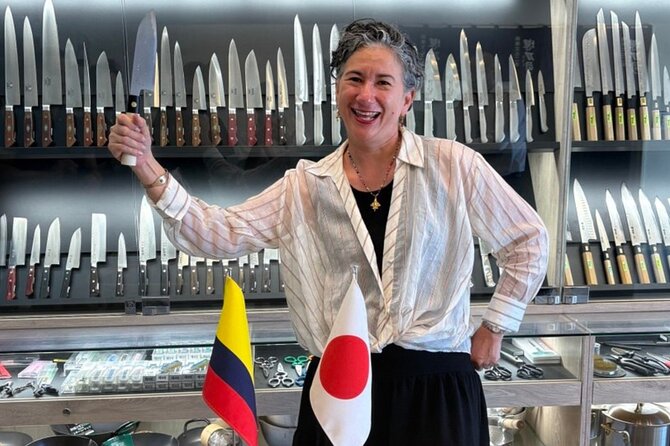
Sakai is presented here as a city shaped by trade, metalwork, food, religion, and contact with the outside world. That mix matters. You are not moving between unrelated attractions simply to fill five hours. Each stop adds another part of the city’s character.
The tour begins at Porto no Suke Bridge, where you hear how Sakai functioned as a trade hub during the Edo period. This gives the day a useful starting point. Before you handle a blade or sit for tea, you learn why the city had the connections and commercial energy to support skilled makers.
I like this approach because history is easier to remember when it leads somewhere physical. The bridge is not just a photo stop. It introduces the movement of goods and people that helped shape Sakai’s identity.
The experience also links Sakai with Sen no Rikyu, the famous tea master associated with the city. That connection helps explain why the tea ceremony is not included as a decorative extra. Tea, tools, food, and careful presentation all belong to the same cultural conversation about restraint and craftsmanship.
More Kimono and Tea Ceremonies in Osaka
- Osaka: Tea Ceremony, Calligraphy, and Kimono Experience
★ 4.9 · 130 reviews - Samurai Show, Tea Ceremony, Japanese Traditional Activities
★ 5.0 · 56 reviews - Samurai dress-up and shows, plus Tea Ceremony & Calligraphy
★ 5.0 · 27 reviews
Meeting at Sakai Station at 10:50 a.m.
Your meeting point is 堺駅東口タクシー乗り場3, the taxi stand at Sakai Station’s East Exit, at 10:50 a.m. The address is 3 Chome Ebisujimacho, Sakai Ward, Sakai, Osaka 590-0985.
This is a practical starting point because the location is near public transportation. You should allow enough time to find the East Exit and the correct taxi stand, especially if you are unfamiliar with Sakai Station. The tour ends back at the same meeting point, which makes the day easier to fit around other plans.
The mobile ticket is useful for a simple check-in. Since this is a private activity, only your group takes part. That makes a real difference here. A tea ceremony and a knife-making workshop can feel rushed or impersonal in a large group, but a private format gives you more room to ask questions and work at a comfortable pace.
The published start time is specific, so arriving early is sensible. The experience lasts about five hours, placing the finish in the afternoon. You will want to keep the rest of your schedule reasonably open rather than booking a tight connection immediately afterward.
Porto no Suke Bridge and Sakai’s Trading Past
The first stop is Porto no Suke Bridge, where the guide explains Sakai’s importance during the Edo period. The focus is on the city as a trade hub, which gives you a wider view than a simple samurai story.
This part will suit you if you like knowing why a place became important. Sakai’s craft traditions did not appear in isolation. Trade created access to materials, customers, ideas, and outside contacts. The bridge helps set up the later discussion of knives and European missionaries.
The tour is not built around a long museum visit or a stack of dates. Instead, the historical information is attached to the places you see. Junya has been praised for making Sakai’s history fun and easy to follow without making it feel like a lecture. That is useful if you want context but do not enjoy formal history lessons.
You should expect this stop to be more about explanation than activity. If you are looking for constant hands-on work, the early portion may feel slower. I see that as a fair trade, since the background makes the later craft experience more meaningful.
Kaiseki Lunch at Ume-no-Hana
Lunch at Ume-no-Hana is one of the day’s central experiences. You are served a multi-course kaiseki meal built around seasonal cuisine, with vegan options available.
Kaiseki is not simply a large meal. The appeal is the sequence, presentation, and attention given to seasonal ingredients. Here, lunch also prepares you for the tea ceremony and knife workshop. You see how Japanese traditions value care in small details, from the food itself to the way it is arranged and served.
The meal may be a highlight if you enjoy traditional Japanese food and like trying several small courses rather than ordering one large dish. If you are selective about food, it is important to communicate that clearly. Junya has shown flexibility when a participant was not comfortable with all the traditional dishes, so the experience is not treated as a test of culinary bravery.
Still, you should not book this expecting a familiar Western-style lunch. The food is part of the cultural content. Vegan choices are available, but the provided information does not specify other dietary arrangements, so you should ask about any requirements before booking.
Lunch also affects the value of the price. A private guide, a multi-course meal, a tea ceremony, and a craft activity are bundled into the same half-day. That makes the cost easier to understand than if you compare it with a basic walking tour. You are paying for several hosted experiences, not just transportation and sightseeing.
More Tea Ceremonies in Osaka
- Osaka: Tea Ceremony Experience
★ 4.9 · 1,426 reviews - Tea Ceremony Experience in Osaka Doutonbori
★ 5.0 · 754 reviews - Osaka: Japanese Traditional Sweets Making and Tea Ceremony
★ 4.7 · 118 reviews - Osaka: Private Tea Ceremony and Calligraphy Experience
★ 5.0 · 50 reviews
Rishō-no-Mori and the Quiet Logic of Tea
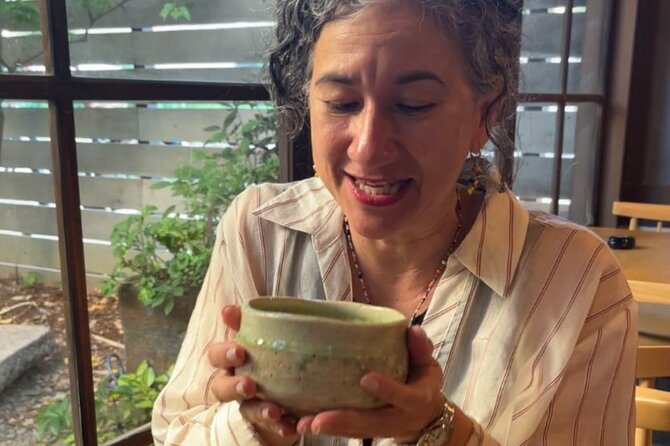
After lunch, you visit Rishō-no-Mori for a traditional Japanese tea ceremony. This is the calmest part of the day, and its slower rhythm is intentional.
A tea ceremony asks you to pay attention. The movements, setting, and preparation create a pause between the meal and the workshop. You do not need to know the rules in advance to appreciate the experience. The guide’s role is to provide enough context so the ceremony feels understandable rather than mysterious.
I like the placement of this stop. After the sociable meal, tea gives you a chance to reflect. Then the schedule moves back toward practical craftsmanship. The changes in pace keep the day from becoming one long history walk.
This is also where the Sen no Rikyu connection becomes especially relevant. Sakai is associated with the tea master, and the ceremony gives that connection a living form. You are not only hearing that tea mattered to the city. You are sitting within a tradition that still values simplicity, control, and respect for the moment.
The ceremony may be less appealing if you prefer noisy, fast-moving attractions. It is meant to be quiet. Treat that quiet as part of the experience rather than empty time.
Sakai Tōji and Your Personalized Knife
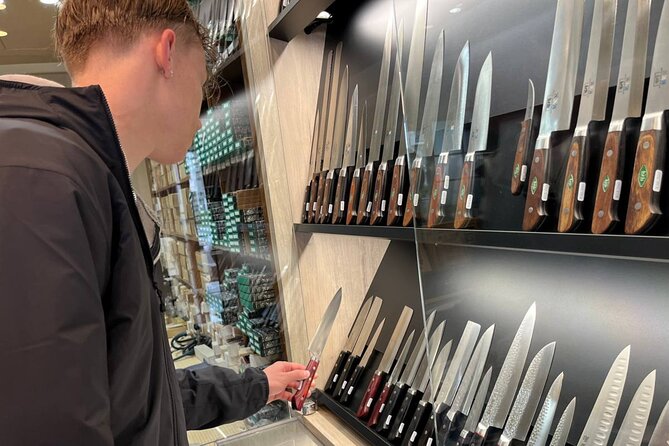
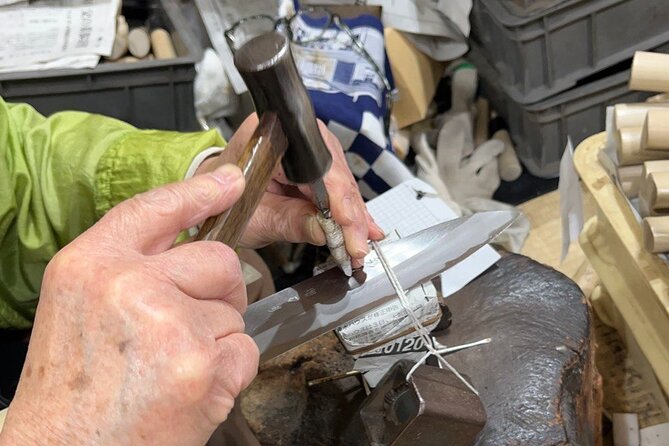
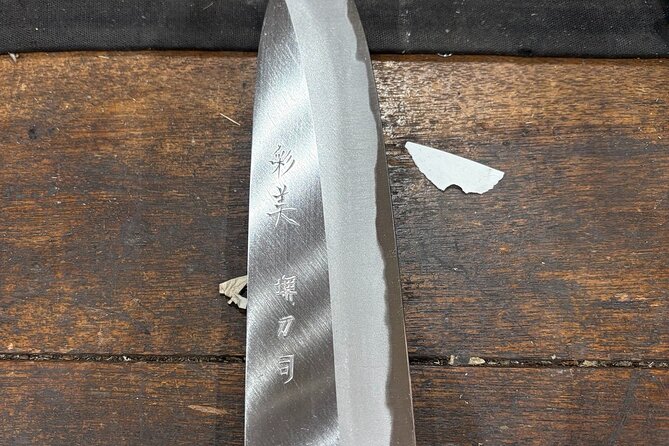
The most memorable part for many people will be Sakai Tōji, the workshop known for traditional blade-making. Here, you take part in a hands-on knife handle fitting activity and receive your own engraved, personalized blade.
This is a strong feature because it gives you a lasting connection to Sakai. You are not merely buying a knife from a shop after hearing about local craft. You take part in one stage of its creation, then carry the finished object home as a reminder of the day.
The activity is also practical. Knives are tools, and the handle fitting makes the craft feel less distant than a demonstration behind glass. You gain a clearer sense of the care involved in producing something made for regular use.
The engraving adds another personal detail. The supplied information does not specify the exact engraving options, so you should ask what can be added before you arrive. You may also want to check any airline or baggage rules if you are flying after the tour, since the item is a blade.
This workshop is likely to appeal most to people who value making, cooking, design, or Japanese metalwork. It also works well for couples, families with older children, and small private groups looking for a souvenir with a real story behind it.
Do not expect to become a master bladesmith in one session. The activity centers on handle fitting, not a full course in forging. That is not a flaw, but it is useful to understand the scope. The real value comes from the guided participation and the connection to Sakai’s craft tradition.
Xavier Park and Sakai’s International Connections
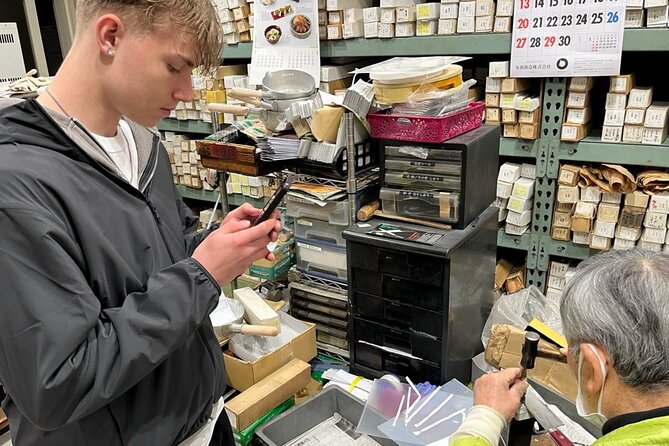
A short walk brings you to Xavier Park, where you learn about European missionaries, including Francis Xavier, who visited Japan in the 16th century.
This final stop broadens the story again. The day begins with trade, moves through Japanese food and tea, then returns to Sakai’s place in international history. The focus on missionaries shows that the city’s past was not sealed off from the wider world.
Xavier Park may be a modest ending compared with the knife workshop or tea ceremony, but it rounds out the tour. It also gives you another reason to see Sakai as a meeting point for people, ideas, and goods.
The short walk matters here. You are not being driven from one isolated activity to another. The route ties the sites together on foot, so you get a better sense of the area between the formal stops. Wear comfortable shoes and be prepared for a half-day that includes walking.
How the $379 Price Measures Up
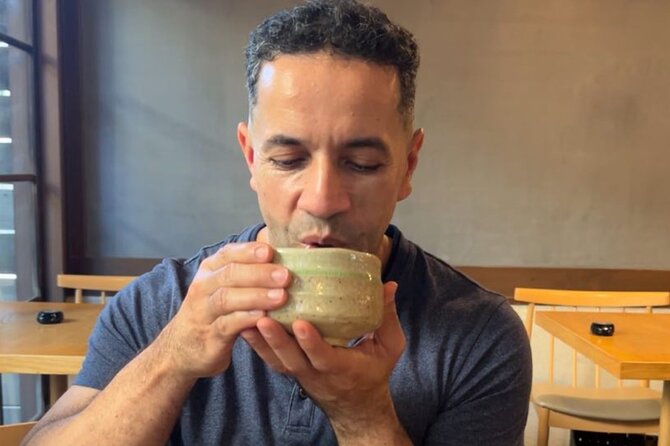
At $379 per person, this is a premium experience. The price makes the most sense if you actively want several cultural elements in one private outing: a local guide, a seasonal multi-course lunch, a tea ceremony, a workshop, and a personalized knife.
It is less convincing if you mainly want a quick look at Sakai or a simple food tour. You could likely spend less on individual sightseeing, but that would not provide the same combination of instruction, private guiding, and a handmade keepsake.
The private format is an important part of the calculation. Your group does not share the day with strangers, which can make the food discussion, tea ceremony, and knife activity more comfortable. It also gives the guide more freedom to respond to your interests.
The main value is personal rather than purely financial. You leave with an object, a meal experience, and a clearer understanding of why Sakai is associated with blades and tea. If those themes matter to you, the price may feel justified. If not, the package may be more elaborate than you need.
What to Know About the Food, Pace, and Guide
Junya is a notable part of the experience. His style is described as friendly, flexible, and educational without becoming dull. That matters because the day covers several topics that could easily feel disconnected.
You should expect the guide to explain history in an approachable way. If you are not fond of traditional Japanese food, say so. The experience can adjust to your preferences, though vegan options are the only dietary choice specifically confirmed.
The five-hour length is another strength. It is long enough to include a meal, ceremony, craft session, and several historical stops without turning into a full-day commitment. At the same time, you should be ready for a full schedule. There is not much room for unrelated shopping or wandering.
This tour is best for you if you enjoy small-group or private activities, hands-on crafts, Japanese food traditions, and local history. It is also a good choice for a repeat visitor to Osaka who wants to see a side of the prefecture beyond the main city sights.
Booking Details and Important Limits
Confirmation is provided when you book, and the experience accepts a mobile ticket. It is near public transportation, begins at Sakai Station’s East Exit taxi stand, and returns to the same meeting point.
The activity is non-refundable and cannot be changed for any reason. If you cancel or request an amendment, the amount paid will not be returned. Because of that strict policy, confirm your date, group size, meeting point, and food needs before paying.
The experience currently has a small number of published ratings, all at the top score. That is encouraging, but it is still a limited sample. I would treat the strongest evidence as the clear praise for the personal guide, the enjoyable historical explanations, the flexible approach to food, and the lasting knife-making activity.
Should You Book This Sakai Experience?
Book it if you want a private cultural day with substance. The best reasons are the personalized knife, Junya’s friendly guiding style, the seasonal kaiseki lunch, and the way the schedule connects Sakai’s trade past with tea, blades, and international contact.
Think twice if $379 feels too high for a five-hour activity, if you dislike traditional food, or if you want a fully hands-on forging lesson rather than handle fitting. The strict no-refund rule also means you should book only after your schedule is firm.
For the right person, this is more than a sightseeing loop. You return to Sakai Station with a useful object, a better sense of the city, and several traditions that fit together in a clear, memorable way.
FAQ
Where does the tour begin?
It begins at the taxi stand beside Sakai Station’s East Exit, at 3 Chome Ebisujimacho, Sakai Ward, Sakai, Osaka 590-0985, Japan.
What time does the experience start?
The start time is 10:50 a.m.
How long does the tour last?
The experience lasts approximately five hours.
Where does the tour end?
It ends back at the meeting point near Sakai Station.
Is the tour private?
Yes. Only your own group participates in the activity.
Are vegan meal options available?
Yes. Vegan options are available at the multi-course lunch at Ume-no-Hana.
Just added around Osaka
- Osaka:Zen Tea Ceremony and Foot Bath Experience<45min>★ 5.0 · 7 reviews
- Osaka Japanese Cooking And Matcha Class near Osaka Castle★ 5.0 · 22 reviews
- Osaka: Tea Ceremony, Calligraphy, and Kimono Experience★ 5.0 · 6 reviews
- Nara Deer Park, Uji Matcha, & Hot Spring Full-Day Tour from Osaka★ 4.0 · 21 reviews
- Osaka: Nara, Todaiji, Uji Matcha, and Hot Spring Tour★ 4.0 · 7 reviews
- Craft Sushi and Matcha Ice Cream in Central Osaka (3-Course Meal)★ 5.0 · 2 reviews
- Tea and Calligraphy Session at a Table in Osaka★ 5.0 · 4 reviews
- ZEN therapy | Shiatsu-style massage, EnergyTherapy & Japanese Tea★ 5.0 · 5 reviews
Tea Ceremonies in Osaka, compared.
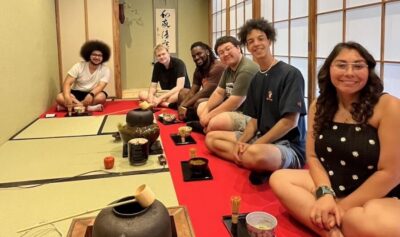
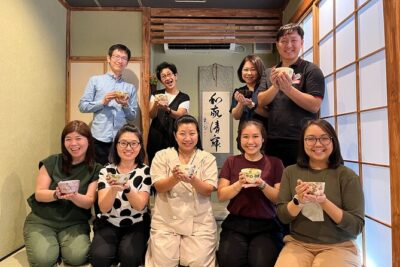
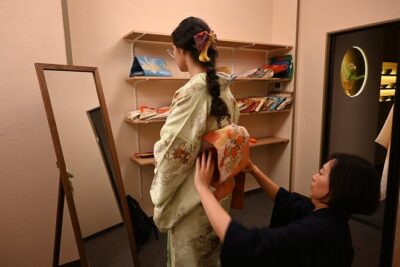
Tea Ceremony, Calligraphy, and Kimono Experience
Read our review →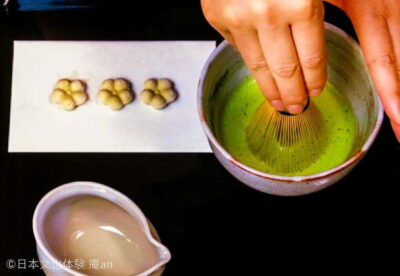
Japanese Traditional Sweets Making and Tea Ceremony
Read our review →
Samurai Show, Tea Ceremony, Japanese Traditional Activities
Read our review →

Osaka; Japanese Tea ceremony experience, Macha and Sencha
Read our review →
Samurai dress-up and shows, plus Tea Ceremony & Calligraphy
Read our review →Browse the lists this tour appears in